


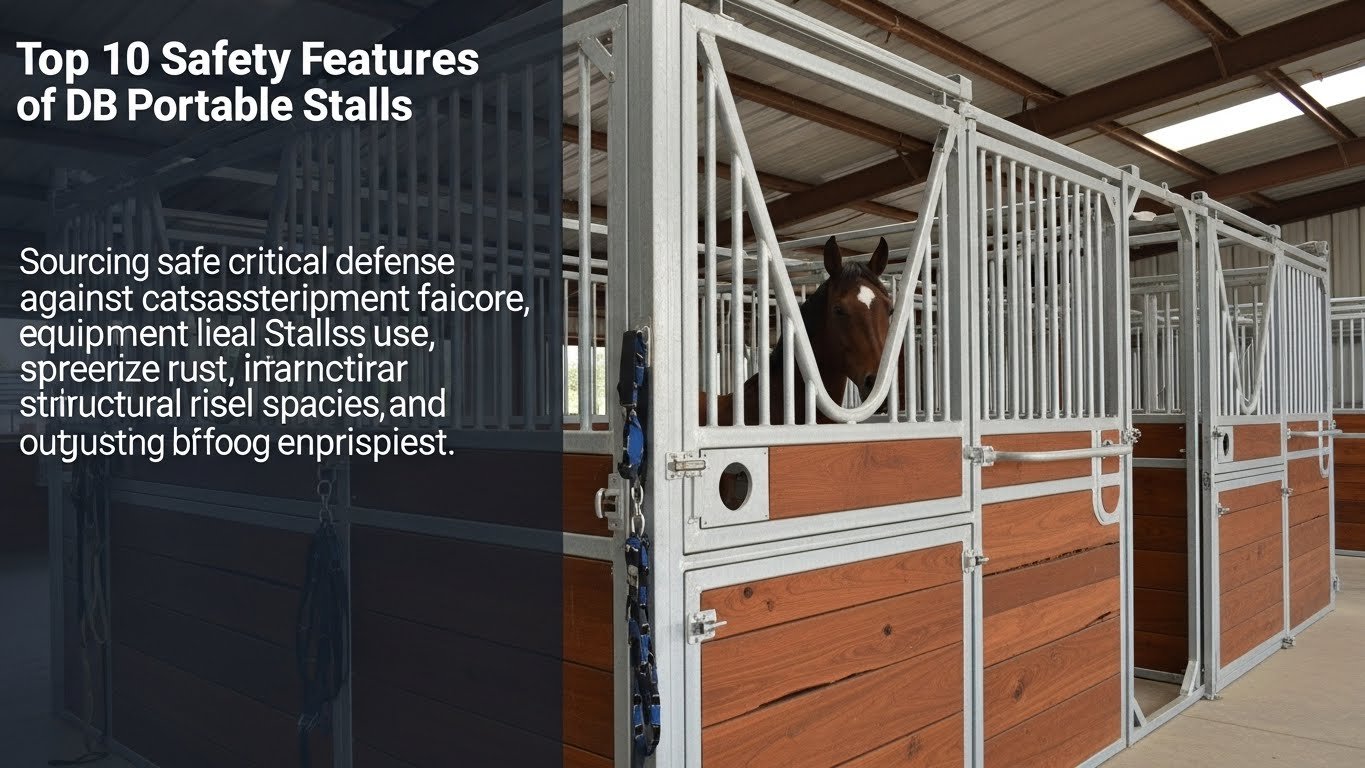
Sourcing safe horse stalls is a critical defense against catastrophic equipment failure and legal liability. Stalls that use pre-galvanized steel or have improper bar spacing often lead to rust, structural weakness, and hoof entrapment, creating significant financial risk and damaging a facility’s reputation.
This analysis benchmarks safety features against empirical engineering standards. We evaluate stall integrity based on the ISO 1461 galvanizing process, the low-temperature impact toughness of Q345B steel, and the specifications of a true “Cast-Proof Design” to provide a clear technical checklist for your next project.
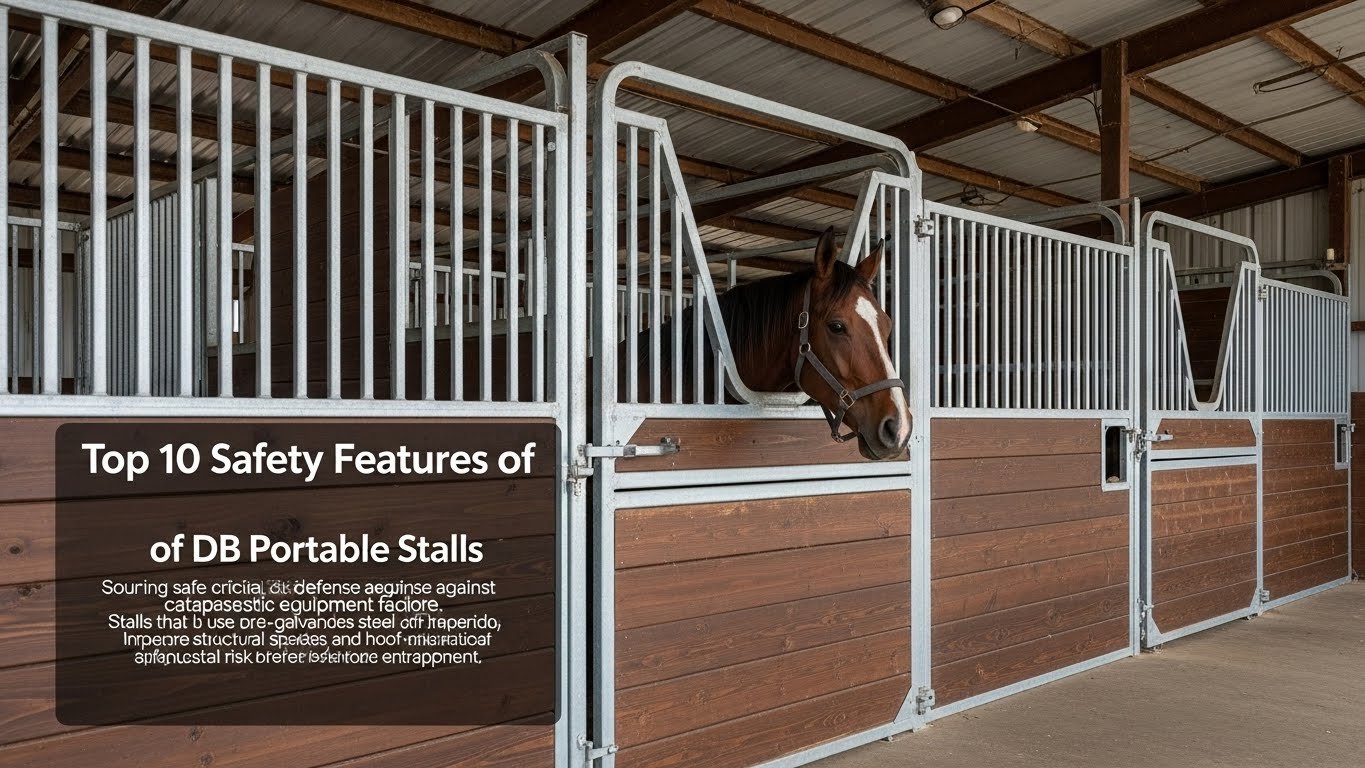
Top 10 Safety Features of DB Portable Stalls
Quick Comparison
| Product Name | Best For | Key Feature | Verdict |
|---|---|---|---|
| Hot-Dip Galvanized Steel Frame | Long-Term Structural Integrity | Material | Exceptional rust and corrosion resistance for over a decade. |
| UV-Resistant HDPE Walls | Prevents Splintering & Cracking | Material | A safe, splinter-proof alternative to wood that is easy to clean. |
| Kick-Through Resistant Construction | Impact Absorption & Injury Prevention | Design | Safely absorbs impact energy to prevent hoof and leg entrapment. |
| Smooth, Horse-Proof Latches | Secure Containment & Snag Prevention | Hardware | Reduces the risk of a horse self-releasing without sharp edges. |
| Fully Welded Connection Points | Enhanced Stability & Rigidity | Structure | Maximizes joint strength under load, eliminating bolts that can loosen. |
| No-Gap Panel Design | Prevents Hoof & Limb Entrapment | Design | Precision manufacturing provides safety for foals and miniatures. |
| Secure Ground Anchoring System | Prevents Shifting & Tipping | Installation | Provides crucial stability for safety in outdoor or temporary setups. |
| Enhanced Airflow & Ventilation | Improves Respiratory Health | Health & Environment | Passively reduces dust and ammonia levels for better air quality. |
| Non-Toxic, Rust-Free Feeders | Hygienic Feeding Environment | Accessory | Prevents ingestion of rust particles, with an easy-to-clean swivel design. |
| Prefabricated with No Sharp Edges | Eliminates Cuts & Abrasions | Manufacturing | Consistent, factory-finished quality is safe for horses to rub against. |
Key Feature
Hot-Dip Galvanized Steel Frame
The Verdict: A thick coating of zinc (over 42 microns) is applied to the steel, creating a rust-proof barrier that prevents corrosion and structural weakening for over a decade. This ensures the stall remains strong and free from sharp, rusty edges.
✅ The Good
- Exceptional rust and corrosion resistance
- Maintains structural strength for 10+ years
⚠️ The Bad
- Higher initial material cost compared to painted steel
Key Feature
UV-Resistant HDPE Walls
The Verdict: High-Density Polyethylene (HDPE) boards are used for infill panels. They are engineered to resist degradation from sunlight, preventing them from becoming brittle, cracking, or splintering, which could injure a horse.
✅ The Good
- Will not splinter or rot like traditional wood
- Easy to clean, disinfect, and maintain hygiene
⚠️ The Bad
- Can show surface scratches more readily than some materials
Key Feature
Kick-Through Resistant Construction
The Verdict: Combining the strong steel frame with durable 10mm thick HDPE infill creates a wall system that can absorb and withstand powerful kicks from a horse without breaking. This prevents the horse from getting its leg trapped or injured.
✅ The Good
- Absorbs impact energy safely
- Prevents hoof and leg entrapment from broken walls
⚠️ The Bad
- Requires proper installation on level ground to ensure maximum strength
Key Feature
Smooth, Horse-Proof Latches
The Verdict: Utilizes latches and door mechanisms, like plunger or kick-over bolt locks, that are designed to be smooth and flush with the surface. This prevents horses from accidentally opening their stalls and eliminates sharp protrusions that could cause cuts.
✅ The Good
- Reduces risk of a horse self-releasing
- No sharp edges to catch blankets, tack, or skin
⚠️ The Bad
- May require two-hand operation by a human for added security
Key Feature
Fully Welded Connection Points
The Verdict: Key connection points and pins are fully welded to thick 6mm steel plates rather than just being bolted. This creates an exceptionally strong, rigid joint that resists shear forces and prevents catastrophic structural failure.
✅ The Good
- Maximizes joint strength under load
- Eliminates bolts that can loosen over time
⚠️ The Bad
- Field repairs to a broken weld may require specialized equipment
Key Feature
No-Gap Panel Design
The Verdict: The stall panels are designed to fit together precisely, minimizing gaps between walls, doors, and frames. This is critical for preventing a horse from getting a hoof, leg, or even its head trapped in a narrow space.
✅ The Good
- Close-tolerance manufacturing for safety
- Safe for foals and miniature horses
⚠️ The Bad
- Requires a perfectly level surface for ideal alignment during setup
Key Feature
Secure Ground Anchoring System
The Verdict: The portable stalls are designed to be securely anchored to the ground using stakes or tie-downs. This prevents the entire structure from shifting, tipping, or being moved by a powerful horse or in high-wind conditions.
✅ The Good
- Provides crucial stability on various surfaces
- Essential for safety in outdoor or temporary setups
⚠️ The Bad
- The specific anchoring method depends on the ground type (e.g., dirt, asphalt)
Key Feature
Enhanced Airflow & Ventilation
The Verdict: The design incorporates features like grilled upper sections and open-eave roofs. This promotes continuous natural airflow, which is crucial for maintaining good respiratory health and reducing the buildup of ammonia and airborne pathogens.
✅ The Good
- Passively reduces dust and ammonia levels
- Helps regulate temperature in warm climates
⚠️ The Bad
- May allow more precipitation ingress in severe weather without a full roof
Key Feature
Non-Toxic, Rust-Free Feeders
The Verdict: Incorporates accessories like Aluminium Swivel Feeders. This material is lightweight and will not rust or flake into the horse’s feed, ensuring the feeding area remains hygienic, safe, and free of contaminants.
✅ The Good
- Prevents ingestion of rust particles
- Swivel design is easy to clean and fill from outside the stall
⚠️ The Bad
- Aluminum can be dented more easily than steel by an aggressive horse
Key Feature
Prefabricated with No Sharp Edges
The Verdict: The stalls are factory-built with nail-free construction where all edges, corners, and weld points are ground smooth. This eliminates any sharp surfaces that could cut or scrape a horse as it moves or leans against the walls.
✅ The Good
- Consistent factory-finished quality control
- Safe for horses to touch or rub against any surface
⚠️ The Bad
- Damage during shipping or installation could create a new sharp edge
Why is Safety the #1 Priority for Event Stabling?
Event stabling safety is the top priority because it simultaneously protects the well-being of horses, the safety of staff and attendees, and the facility’s financial and legal standing. A comprehensive safety plan mitigates risks from physical hazards, contamination, and security breaches, preserving both assets and reputation.
Protecting Horse Welfare and Health
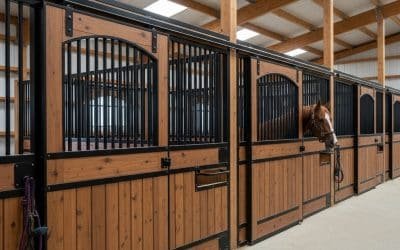
High-traffic event environments introduce unique risks to horses. Shared spaces can lead to contamination, while physical hazards like loose boards or exposed nails in temporary stalls create injury risks in high-stress settings. Poorly designed stalls with inadequate ventilation can worsen stress and impact respiratory health. Our stable systems address these issues directly with features like “Stack Effect Ventilation” from open grills and a “Cast-Proof Design” that minimizes bottom gaps to prevent horses from getting trapped when rolling.
Ensuring Staff and Attendee Safety
A safe barn environment is crucial for everyone involved, not just the horses. Cluttered walkways, electrical hazards, and fire risks pose significant dangers to people. Event managers have a duty to protect staff and attendees from injuries, including those caused by startled or loose horses. Well-designed, organized stabling with clear pathways and secure hardware is fundamental to minimizing human accidents and ensuring a professionally managed event.
Mitigating Legal and Financial Liability
Beyond physical safety, proper stabling protects against significant financial and legal risks. Unsecured stalls are vulnerable to equipment theft and trespassing. Lacking documented safety measures or emergency plans can expose an event or facility to costly liability claims and damage its long-term reputation. Investing in secure, professionally engineered stabling is a critical defense that safeguards your assets and business integrity.
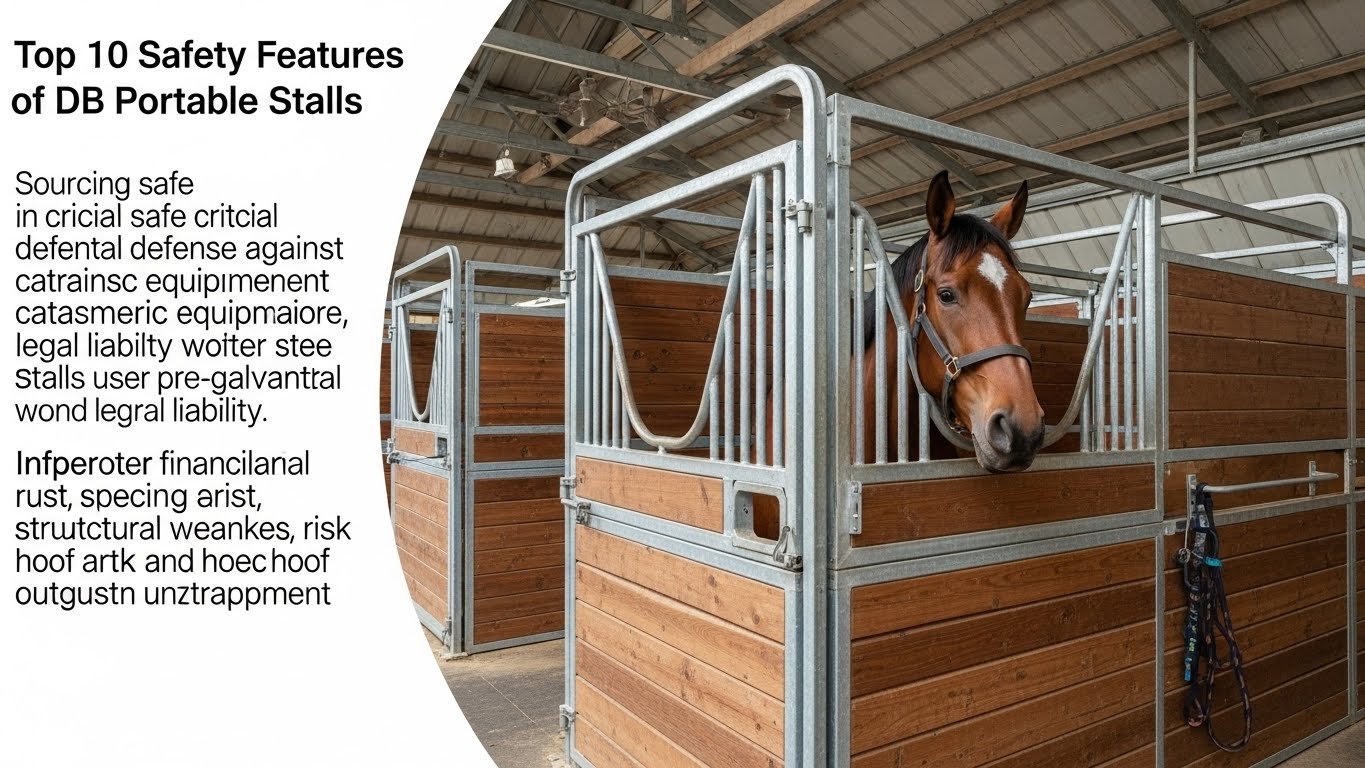
How Does Q345B Steel Prevent Brittle Fracture?
Q345B steel prevents brittle fracture in cold climates by maintaining its structural flexibility at temperatures where standard steel becomes brittle. This superior low-temperature toughness ensures stable frames can absorb impacts from horse kicks without shattering, protecting the animal and ensuring the long-term integrity of the installation.
Superior Low-Temperature Ductility
Standard structural steel (Q235B) can become dangerously brittle in freezing weather. Our Q345B steel option is engineered specifically for these conditions. Its composition allows it to remain ductile and absorb energy at much lower temperatures. This prevents the sudden, catastrophic failure that can occur with lesser materials, giving facility owners peace of mind during harsh winters.
Impact Resistance in Cold Climates
The primary value of Q345B steel in our stable systems is its ‘Kick-Proof Guarantee’ even in sub-zero temperatures. A powerful kick that might fracture a standard steel post in winter is simply absorbed by the tougher Q345B frame. By specifying this steel for projects in European or North American markets, our partners can drastically reduce the risk of costly repairs and animal injuries, protecting their investment and reputation.
Durable, Compliant Stables for Any Climate.

Why Do We Use Plunger Latches Instead of Slide Bolts?
Plunger latches are standard on our stable doors because they provide automatic locking, superior security against tampering, and proven durability. Unlike manual slide bolts, their spring-loaded design ensures the door is secure the moment it closes, which is critical for safety and efficiency in a busy equestrian facility.
Automatic Engagement and Convenience
A plunger latch uses a spring-loaded, beveled bolt that engages automatically as the stable door swings shut. This “slam-latch” function is vital for handlers who might be carrying feed, tack, or equipment, as it provides secure, hands-free closing. A traditional slide bolt always requires a free hand to manually secure the door, which can slow down daily operations and create potential safety gaps in a high-traffic barn.
Superior Security Features
The key advantage of a plunger latch is its integrated deadlocking mechanism. This internal security feature prevents clever horses from manipulating the latch or prying the bolt open from inside the stall. Once closed, the latch is secure. Standard slide bolts lack this anti-tamper design, creating a potential liability if a horse learns how to slide the bolt open. Our system prioritizes animal containment and gives facility managers peace of mind.
Durability in High-Vibration Environments
A stable environment is not static. Doors are subject to constant movement and vibration from horses kicking, leaning, or rattling the frame. Plunger latches are engineered to hold securely under these conditions, ensuring the lock does not fail or loosen over time. This industrial-grade reliability is part of our commitment to building systems that withstand the real-world demands of equestrian facilities, reducing maintenance needs and preventing unexpected failures.
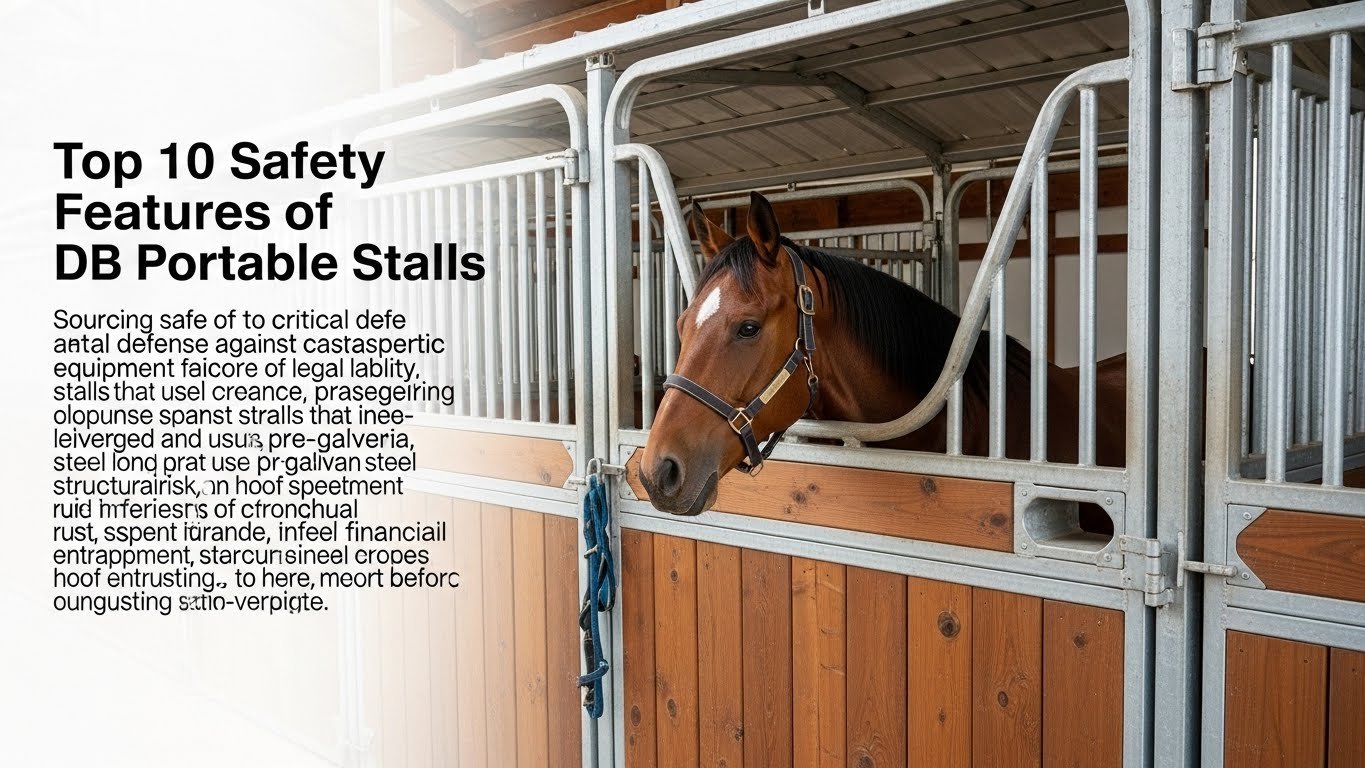
Is the Bar Spacing Safe for Foals?
Yes, our stable systems can be engineered to meet the strict safety standards for foals. This involves manufacturing stalls with a maximum bar spacing of 2 inches on the upper grill and 1.5 inches on the lower section to prevent a young horse’s hooves from becoming trapped.
When designing a foaling stall, standard bar spacing is not sufficient. Foals are naturally energetic and curious, which increases the risk of injury in a poorly designed environment. We engineer our stall fronts and partitions to address these specific risks, ensuring the safety of both the mare and her foal.
Recommended Bar Spacing for Foal Stalls
Industry best practices and veterinary recommendations demand tighter tolerances for foaling stalls compared to standard partitions. While a general-purpose stall might have 3-inch spacing, this is unsafe for foals.
- Upper Grill Spacing: We recommend and manufacture grills with a maximum spacing of 2 inches. This prevents a foal from getting a hoof or leg caught if it rears up against the stall front.
- Lower Grill Spacing: The lower portion of any grillwork requires an even tighter spacing of no more than 1.5 inches. This is critical for preventing hooves from getting trapped near the floor level.
Why Spacing is Critical for Foal Behavior
Foals are prone to jumping, rearing, and kicking playfully. These energetic movements are a primary cause of stall-related injuries. The main danger is a foal striking the bars and trapping a hoof in a gap that is too wide. Our commitment to the “Cast-Proof Design” principle extends to every aspect of the stall, minimizing gaps to prevent leg entrapment and ensuring a safe environment for a young horse to move naturally.
Beyond Bars: Other Safety Considerations
A safe foaling stall involves more than just bar spacing. Our manufacturing process incorporates several key safety features that are especially important for young horses:
- Smooth Finishes: We use a “Hot-Dip After Fabrication” galvanizing process. This means the entire panel is welded first and then dipped in zinc, completely sealing all welds. This process eliminates sharp edges, burrs, or protruding points that could injure a foal.
- Wall Height: Stalls should have solid walls at least 7.5 to 8 feet high. This prevents an energetic foal from attempting to jump or scramble over a partition. Our systems are built with strong Q235B steel frames to support this height securely.
- Secure Fixtures: We design stalls with minimal unnecessary fixtures. Waterers, feeders, and latches are designed to be flush and unobtrusive, reducing the chances of a foal getting entangled.
Final Thoughts
While pre-galvanized stalls offer a lower initial price, our ISO 1461 ‘Hot-Dip After Fabrication’ standard is the only way to safeguard your inventory against rust and your reputation against liability claims. This engineering-first approach protects your margins from costly returns. Quality equipment is the foundation of a trusted dealership.
The technical specifications confirm our commitment to safety, but verifying the build quality is the final step. We recommend a trial order to test our fitment and finish firsthand. Contact our team to discuss your project requirements and secure a production slot.
Frequently Asked Questions
What is the standard size for a safe horse stall in 2026?
While a 12×12 foot (3.6×3.6m) stall is a common baseline, we engineer our systems for modularity. This allows our distributors to easily create custom layouts for larger breeds or specific barn designs, ensuring safety and comfort without being locked into a single size.
What materials offer the best protection against rust and wear?
We use high-tensile Q235B and Q345B structural steel as our foundation. The key to lifetime durability is our process: we perform **hot-dip galvanization after fabrication**, conforming to ISO 1461 standards. This coats every weld and edge in a thick layer of zinc (>70 microns), preventing rust from the inside out—a critical difference from cheaper, pre-galvanized alternatives.
How far apart should stall bars be to prevent injuries?
Our engineering standard for bar spacing is a maximum of 2 inches (approx. 50mm). This narrow gap is a core part of our ‘Cast-Proof Design’ philosophy. It’s specifically calculated to prevent a hoof, especially a foal’s, from becoming trapped, which is a common cause of serious leg injuries in poorly designed stalls.
Are there specific latch types that are considered safer?
Absolutely. We equip our stable doors with heavy-duty, hand-operated plunger latches. Unlike simple slide bolts that clever horses can often manipulate, these systems provide secure, reliable containment. This design minimizes the risk of accidental opening, protecting both the horse and facility staff.
Can a horse get its hoof stuck in a stall?
Yes, hoof entrapment is a serious safety concern, especially if there are large gaps between the wall and the floor. Our stalls feature a ‘cast-proof’ design with a minimal bottom gap to prevent a horse’s leg from getting trapped when rolling. Outside the stall, loose fencing or sharp objects in a pasture are also common hazards.
Are the stall latches horse-proof?
The effectiveness of a latch depends on its design and placement. The most reliable latches have concealed or recessed designs that horses cannot easily manipulate. Simple slide bolts can often be opened by clever horses, so specialized and robust latch systems are a much safer choice for containment.
Are there any sharp edges on the stalls?
All stall components must be free of sharp edges to prevent injuries. Our process of hot-dip galvanizing after fabrication coats every part, including welds and cut edges, in a smooth, protective layer of zinc. This eliminates the sharp protrusions often found on lower-quality, pre-galvanized stalls.
Is the steel used in the stalls lead-free?
Our structural steel (Q235B/Q345B) and galvanizing process (ISO 1461) are specified for strength and corrosion resistance. These standards do not explicitly certify for lead content. For facilities with specific regulatory needs, we recommend requesting a material certification or Safety Data Sheet (SDS) for formal verification.
Can a horse kick through the stall walls?
A powerful kick can easily break standard wooden planks. Our stalls are engineered to handle this force. We combine high-strength steel frames with durable infill options like high-density bamboo or impact-absorbing HDPE boards to ensure the walls provide a secure, kick-proof barrier.
Do these stalls meet FEI standards?
FEI standards for competition stabling dictate minimum dimensions (at least 9 square meters), proper ventilation, and overall safe construction. Our stalls are built to meet high safety and quality standards, and we can supply configurations that fulfill or exceed FEI’s dimensional and structural guidelines for events.


 English
  Español
  Français
  العربية
  Deutsch
0 Comments