



Implementing safety retrofits with safe horse stall doors is the primary defense against liability from outdated barn infrastructure. Legacy stalls with wide bar spacing or large under-door gaps are a direct cause of preventable injuries, leading to costly vet bills and eroding client trust.
This guide details the essential upgrades based on modern engineering standards. We cover the non-negotiable specifications for eliminating these risks, including the ‘Cast-Proof Design’ that mandates sub-2-inch clearances and tight grill spacing to prevent hoof entrapment.

Best 10 Safety Features to Retrofit in 2026
Quick Comparison
| Product Name | Best For | Key Feature | Verdict |
|---|---|---|---|
Durable, Kick-Resistant Wall Materials | Prevents Wall Damage & Injury | Material | Excellent for withstanding high impact forces, but requires heavy-duty materials like hardwood or steel to be fully effective. |
Smooth Interior Finishes | Injury Prevention | Safety | Drastically reduces cuts and scrapes, though it necessitates a thorough inspection of all surfaces and hardware. |
Proper Bar and Grill Spacing | Prevents Trapped Limbs | Design | Directly prevents hoof and leg entrapment by following modern standards, but older barns may require costly replacement. |
Sliding Stall Doors | Safer Aisleways | Accessibility | Maximizes aisle space and eliminates collision hazards, but requires high-quality, well-maintained tracks for smooth operation. |
Adequate Door Dimensions | Safe Entry & Exit | Design | Accommodates larger breeds and reduces injury risk, but widening or raising a doorway can require structural modifications. |
Secure, Horse-Proof Latches | Prevents Escapes | Security | Smartly designed to foil equine curiosity while allowing easy human access, but simple latches are often not secure enough. |
Interlocking Rubber Stall Mats | Improved Traction & Comfort | Flooring | Provides crucial joint cushioning and stable footing, but effectiveness is highly dependent on a properly prepared, level base. |
Proper Floor Drainage | Reduces Odors & Bacteria | Hygiene | Improves respiratory health and simplifies cleaning, though it is best implemented during a major floor renovation. |
Elevated Ceilings with Ventilation | Improved Air Quality | Ventilation | Effectively reduces harmful ammonia at horse-level, however older barns may have structural limits that prevent raising ceilings. |
Protected Lighting and Electrical Fixtures | Fire & Electrical Safety | Utilities | Greatly reduces fire and electrocution risks, but it’s critical that all associated wiring is run through protective metal conduit. |
KEY FEATURE
Durable, Kick-Resistant Wall Materials
The Verdict: Installing robust materials like 2-inch hardwood or steel panels is essential for preventing wall damage and injuries from kicks. Adding rubber liners enhances protection, making it a crucial upgrade for any stall housing an aggressive kicker.
✅ The Good
- Withstands high impact forces
- Reduces risk of splinters or cracks
⚠️ The Bad
- Requires heavy-duty materials like hardwood or steel for full effectiveness.
KEY FEATURE
Smooth Interior Finishes
The Verdict: By eliminating sharp edges and exposed fasteners, this safety feature creates a snag-free environment that is essential for preventing common cuts and scrapes inside the stall.
✅ The Good
- Drastically reduces cuts and scrapes
- Improves overall in-stall safety
⚠️ The Bad
- Requires a thorough inspection of all surfaces, corners, and hardware.
KEY FEATURE
Proper Bar and Grill Spacing
The Verdict: Setting the space between stall bars to a precise 1.5-2 inches is a critical design choice that directly prevents horses from getting a hoof or leg dangerously trapped.
✅ The Good
- Directly targets hoof and leg entrapment
- Follows modern equine safety standards
⚠️ The Bad
- Older barns often have dangerously wide spacing that needs replacement.
KEY FEATURE
Sliding Stall Doors
The Verdict: Sliding doors are a crucial safety upgrade, saving aisle space and preventing dangerous swing-out collisions common with traditional doors.
✅ The Good
- Maximizes usable aisle space
- Eliminates the swing-out collision hazard
⚠️ The Bad
- Requires high-quality, well-maintained tracks and rollers for smooth operation.
KEY FEATURE
Adequate Door Dimensions
The Verdict: Ensuring stall doorways are at least 4 feet wide and 8 feet high is a critical safety measure. This prevents common injuries to a horse’s hips, withers, and poll, especially for larger breeds.
✅ The Good
- Accommodates larger modern horse breeds
- Reduces risk of common hip and poll injuries
⚠️ The Bad
- Widening or raising a doorway may require structural modifications.
KEY FEATURE
Secure, Horse-Proof Latches
The Verdict: Install latches that are simple for handlers to operate (even one-handed) but are specifically designed to be difficult for a horse to manipulate with its mouth. This is essential for preventing unwanted escapes.
✅ The Good
- Designed to outsmart equine curiosity
- Allows for quick, one-handed human operation
⚠️ The Bad
- Simple hook or pin latches are often not secure enough.
KEY FEATURE
Interlocking Rubber Stall Mats
The Verdict: Cover a compacted crushed stone base with heavy-duty interlocking rubber mats. The interlocking design prevents the mats from shifting or creating dangerous gaps, providing a stable, cushioned surface with excellent traction.
✅ The Good
- Provides crucial joint cushioning
- Prevents mats from shifting and creating gaps
⚠️ The Bad
- Effectiveness depends on a properly prepared and level base underneath.
KEY FEATURE
Proper Floor Drainage
The Verdict: Proper floor drainage is a critical hygiene feature that prevents urine pooling by using graded floors. This system directly reduces harmful ammonia, limits bacteria, and improves overall air quality in the stall.
✅ The Good
- Improves respiratory health for the horse
- Simplifies stall cleaning and maintenance
⚠️ The Bad
- This is best implemented during a major floor renovation.
KEY FEATURE
Elevated Ceilings with Ventilation
The Verdict: Aim for ceilings between 9 and 12 feet high. This height allows heat, dust, and ammonia gases to rise away from the horse’s breathing zone, significantly improving air quality and reducing respiratory irritation.
✅ The Good
- Reduces concentration of ammonia at horse-level
- Promotes natural, passive air circulation
⚠️ The Bad
- Older barns may have structural limitations that prevent raising the ceiling.
KEY FEATURE
Protected Lighting and Electrical Fixtures
The Verdict: Enclosing all lighting and electrical systems in durable, moisture-proof, and impact-resistant covers is a critical safety measure. You must install all fixtures out of a horse’s reach to minimize the severe risks of fire and electrical shock.
✅ The Good
- Protects against electrocution risk
- Greatly reduces fire hazards from dust and moisture
⚠️ The Bad
- All associated wiring should be run through protective metal conduit.

Is Your Old Barn a Safety Trap for Modern Horses?
Yes, many older barns contain outdated structural designs and materials that pose significant safety risks to modern horses. Deficiencies in aisle width, door construction, and ventilation can lead to preventable injuries, creating liability for facility owners and distress for the animals.
Structural Deficiencies and Outdated Designs
Older barn layouts often fail to meet contemporary safety standards. Aisleways are frequently narrower than the modern 12-foot recommendation, which restricts horse movement and can block access for emergency equipment. Similarly, low ceilings under 8 feet create a serious head injury risk if a horse rears. Many legacy barns also feature flooring made of aged concrete or wood, which can become extremely slippery when wet and lack the level, non-slip surfaces needed for secure footing.
Pervasive Fire Hazards
Fire safety is a major concern in vintage structures. Most were built before modern fire codes and lack essential systems like smoke detectors, heat sensors, or adequate fire extinguishers. Old, frayed wiring is a common ignition source, while the use of highly flammable construction materials accelerates the spread of a fire. The common practice of storing hay and bedding within the main structure further elevates this risk, turning a potential spark into a catastrophe.
Common Stall and Door Safety Failures
Stall components are a frequent source of injury in old barns. Doors are often too narrow (less than the recommended 4 feet) and may swing inward, creating a situation where a distressed horse can become trapped. Latches are rarely finger-safe for quick human operation and can often be manipulated by clever horses. More critically, these older stalls feature protruding hardware, sharp metal corners, and dangerously wide gaps under doors, increasing the risk of lacerations and creating “cast traps” where a rolling horse can get a leg stuck. Our systems address this directly with a **Cast-Proof Design**, ensuring bottom gaps are minimal.
Poor Environmental and Air Quality Controls
Air quality and lighting are vital for equine health but are often overlooked in older facilities. Inadequate ventilation traps ammonia, dust, and moisture, leading to respiratory problems for both horses and staff. Our open-grill stable fronts are engineered to promote **Stack Effect Ventilation**, encouraging healthy vertical airflow. Insufficient natural lighting and outdated fixtures also contribute to animal stress and create trip hazards for handlers, compromising the overall safety and well-being within the barn.

Why You Must Replace Old Bar Spacing (3-Inch Rule)?
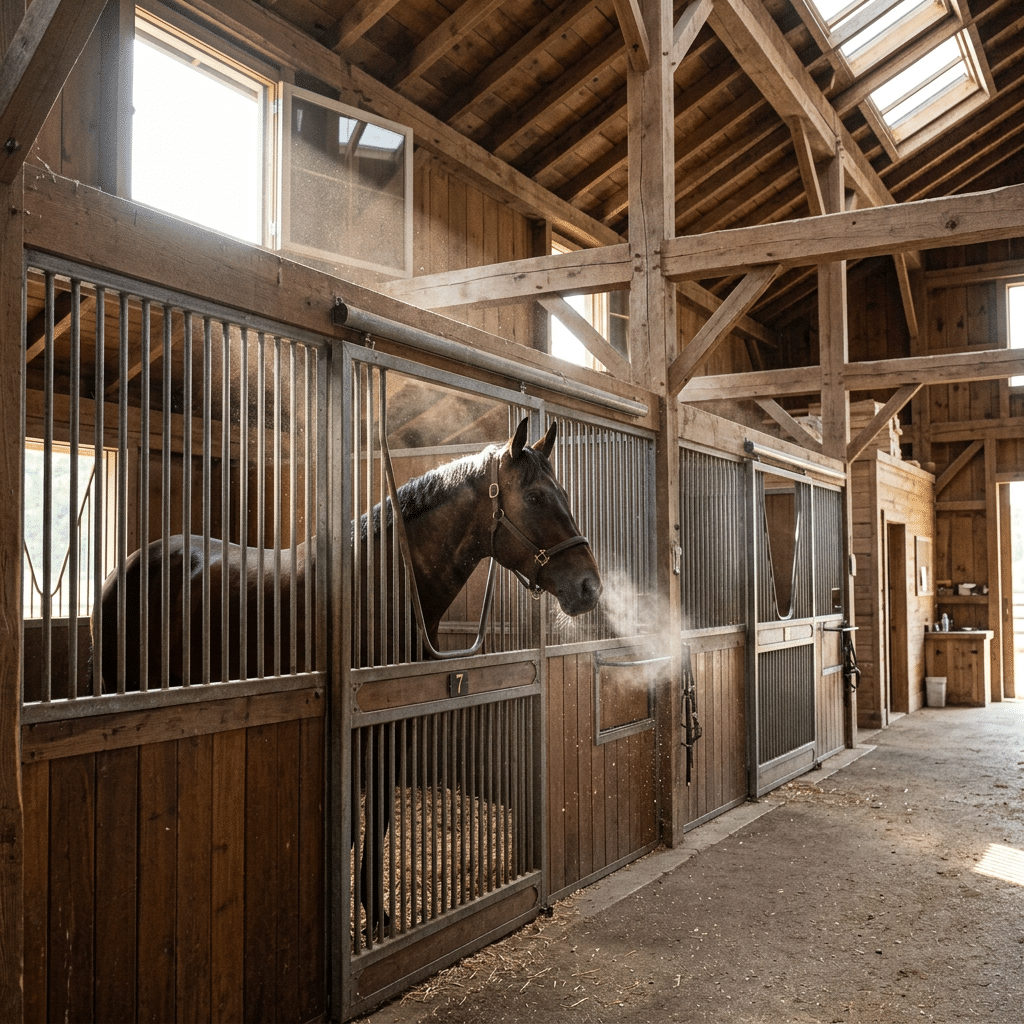
Older stall fronts with bar spacing of 3 inches or more present a serious safety liability, as they are wide enough for a horse’s hoof to become trapped. This can lead to severe injury and costly vet bills for your clients. Upgrading to modern stalls with spacing under 2 inches is a critical safety retrofit that eliminates this risk, protecting both the animal and the owner’s investment.
The Hoof-Trapping Hazard of 3-Inch Gaps
Bar spacing between 3 and 4 inches, common in older or budget-built stalls, creates a dangerous trap. When a horse kicks, paws at the door, or rears, this gap is just large enough for a hoof to slip through but not easily retract. The resulting panic can lead to fractures, torn ligaments, and other catastrophic injuries—a major risk that facility owners and distributors must address to prevent liability claims.
The Modern Safety Standard for Bar Spacing
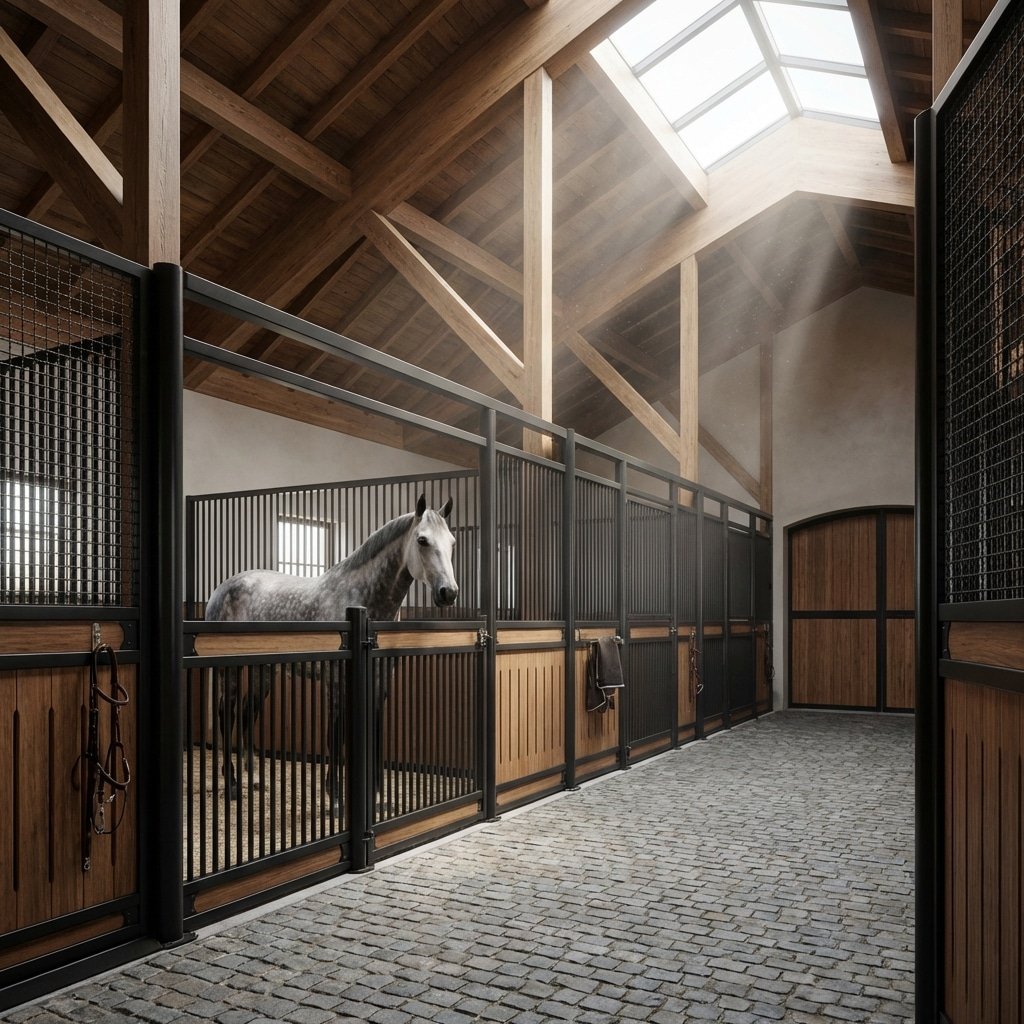
Current equine safety standards mandate much tighter spacing to engineer out this hazard. We build our stall systems to meet these modern requirements. Safe spacing is typically 2 inches or less between bars on upper grill sections. These measurements are specifically designed to be too small for even a foal’s hoof to pass through, effectively designing a “cast-proof” grill system.
Eliminating a Top Fear for Horse Owners
For distributors, offering a solution to a primary fear for horse owners is a powerful selling point. Upgrading old stalls with properly spaced grills is a fundamental safety retrofit that provides immediate peace of mind. By reducing the gap from a hazardous 3+ inches to a safe sub-2-inch standard, you deliver a product that ensures a safer stall environment and protects your client’s most valuable assets.
Weatherproof Horse Stables for Global Facilities
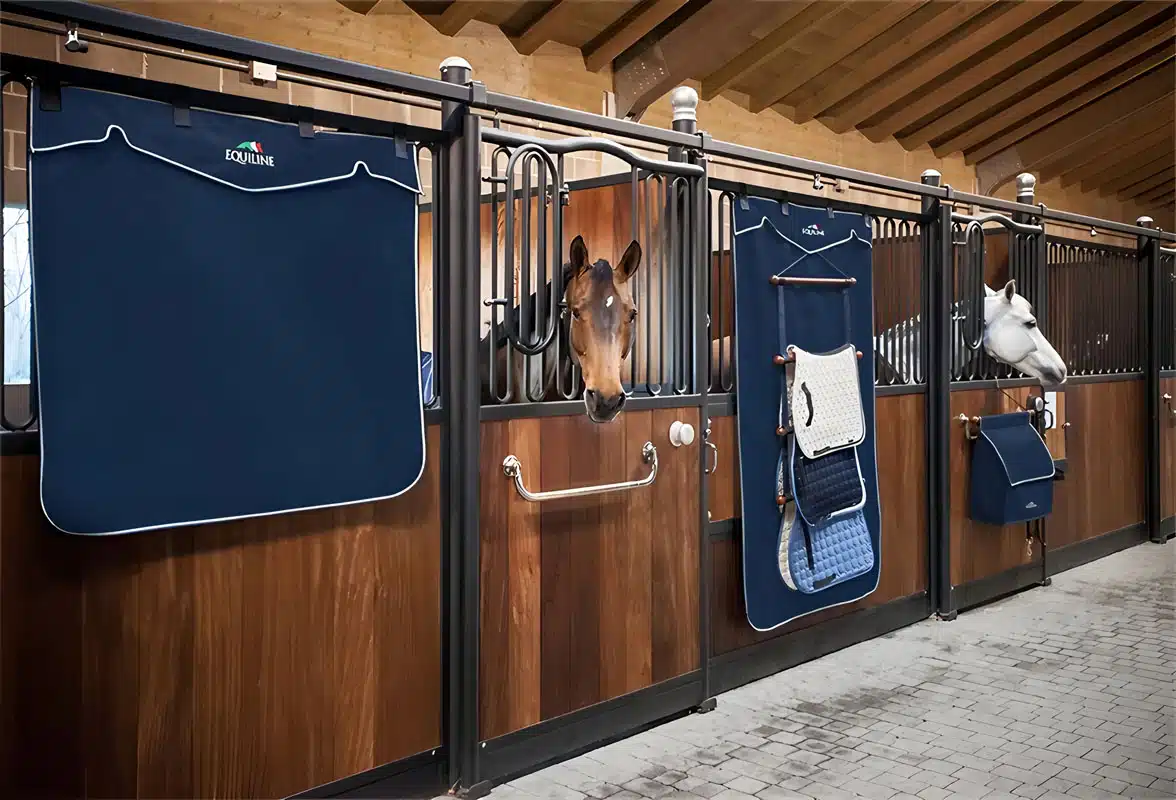

How to Fix “Cast Traps” Under Old Doors?
A “cast trap” is a dangerous gap under a stall door where a horse can wedge a leg while rolling, leading to severe injury. The solution is to reduce this clearance to a safe, minimal space. Our stable systems are engineered with a “Cast-Proof Design” from the factory, which eliminates this common hazard in older barns.
Identifying the Gap: The Real Danger of a Cast Trap
A “cast trap” is a specific and high-risk hazard found in many older stables. It’s the space between the bottom of the stall door and the floor. When a horse lies down and rolls over, it can easily get a leg or hoof stuck in a gap that is too large. This can cause panic, leading to serious injuries like fractures or severe soft tissue damage.
Old wooden doors that have warped over time or poorly fitted metal doors often create these excessive clearances. The main goal for any barn manager is to identify and eliminate any space under a door where a hoof could become wedged, ensuring the horse can roll safely within its stall.
The Modern Standard: Adopting a Cast-Proof Design
Modern animal welfare and safety standards require a minimal bottom gap, typically around 50mm (about 2 inches). This clearance is carefully calculated. It is too small for a horse’s leg to pass through but remains large enough to allow for proper stall drainage and the movement of bedding.
Our stable systems are built around this safety principle. Every one of our stable fronts features a built-in **Cast-Proof Design**, guaranteeing this minimal 50mm gap right from installation. This proactive engineering prevents the hazard from ever existing, protecting both the animal and your business from preventable injuries and claims.
Simple Methods for Closing the Gap on Existing Doors
For existing doors, you can implement a few retrofit solutions. Attaching a heavy-duty rubber strip or a solid piece of hardwood to the bottom of the door can effectively close the gap. Another option is to install a raised, beveled threshold on the floor beneath the door, though this may impact drainage.
These fixes can work, but they often require ongoing maintenance. For a permanent and more reliable fix, replacing the entire door with a modern system is the most effective approach. This not only solves the cast trap problem but also upgrades the stall with stronger materials and superior rust protection, ensuring long-term safety and durability.

Are Your Old Latches Finger-Safe?
Outdated stall latches often pose a significant risk of finger injuries due to sharp edges, exposed bolts, and pinch points. Modern systems, like ours, prioritize hand safety by using snag-free designs, concealed mechanisms, and corrosion-resistant materials to eliminate these hazards and reduce liability for facility owners.
Key Safety Hazards in Outdated Latches
Older latches were often designed for simple function without today’s safety standards in mind. Common risks include exposed bolts, protruding metal points, and sharp edges that can easily pinch or cut fingers during operation. As lower-grade metals corrode and wear down, they develop rough burrs and sharp surfaces, increasing the risk of injury. The exposed slide and hinge mechanisms on these latches also create dangerous pinch-point hazards for handlers’ hands.
Modern Designs That Protect Your Hands
Our stable systems address these risks directly. We engineer our latches with snag-free designs featuring smooth, rounded edges that prevent skin or clothing from catching. Many of our Professional and Royal Series systems use concealed mechanisms, keeping the moving parts safely enclosed and away from hands. We use high-quality materials that last. Every piece of hardware, from bolts to connectors, is 304 stainless steel, and the steel framework is hot-dip galvanized after fabrication. This prevents corrosion and ensures the latch surfaces remain smooth and safe for years of use.
The Recommended Upgrade Path for 2026
Upgrading to modern hardware with snag-free construction is the most effective way to reduce finger injury risk and protect your staff and clients. A complete replacement of the stall front ensures the entire system, including the latch and door track, meets current animal and human safety standards. Choosing systems built with high-quality, corrosion-resistant materials provides long-term operational reliability and protects your investment.
Final Thoughts
Patchwork repairs and low-bid stalls seem cost-effective upfront, but they transfer the liability for animal injury directly to you. Our systems engineer out common hazards like cast traps and hoof-trapping gaps from the factory. Selling a certified, safer product protects your clients and defends your business against costly claims.
The best way to evaluate our engineering is to see it yourself. Request our latest catalog or arrange a small trial order to confirm the quality of our galvanization and the precision of our flat-pack system. Our team is ready to provide a quote for your next container-load project.
Frequently Asked Questions
Do I need to rebuild my barn to install safer stall doors?
No. Our stable systems are engineered specifically for retrofitting into existing structures. We work directly with our B2B partners to manufacture fronts and partitions to custom dimensions, allowing for a seamless safety upgrade without the high cost and downtime of a full barn reconstruction. Our flat-pack delivery system further simplifies on-site logistics for any project size.
Are sliding doors safer than hinged doors for a retrofit?
Yes, sliding doors are the preferred choice for safety and efficiency, particularly in barns with narrow aisles. They operate flush with the stall front, eliminating the risk of a swinging door striking a horse or handler. Our Professional Series features a hidden track system that removes overhead obstacles and ensures smooth, quiet operation for a less stressful environment.
What hardware is essential for a safe stall door?
Essential hardware must be both horse-proof and corrosion-resistant. Our systems include horse-proof latches that are easy for staff to operate but prevent escapes. All hardware, including bolts and connectors, is 304 Stainless Steel for maximum durability. Crucially, our “Hot-Dip After Fabrication” process coats every weld and edge in zinc, resulting in a completely smooth, snag-free surface that prevents injuries.
Can I install a new stall door myself?
As a B2B manufacturer, we design our systems for professional installation to ensure safety and structural integrity. Our flat-pack steel pallet system is engineered for easy handling and efficient assembly by construction crews or experienced barn builders. Each kit includes all necessary 304 stainless steel hardware and pre-cut infill planks, which significantly reduces on-site labor time and protects your project’s profit margins.
Can I just weld new bars in?
Welding new bars onto a galvanized stall front compromises its core rust protection. Our stables undergo a process called “Hot-Dip Galvanization After Fabrication,” where the entire welded panel is submerged in molten zinc. This creates a seamless, durable coating. On-site welding burns away this protective layer at the joint, exposing the raw steel to corrosion. While you can apply a cold galvanizing spray from our touch-up kit, it’s a surface repair and doesn’t offer the same lifetime protection as the original factory process.
Is a 4-inch gap dangerous for horse stalls?
Yes, a 4-inch gap is an outdated standard and poses a significant risk. A foal or smaller horse can easily trap a hoof or leg. Our modern stable systems adhere to higher safety standards, featuring grill bar spacing of approximately 2 inches (about 50mm). This tighter spacing is a key part of our “Cast-Proof Design,” engineered specifically to prevent a horse from getting a leg stuck while rolling or lying down, ensuring greater animal welfare.
How do I close the bottom gap in a horse stall door?
Our stall doors are engineered with a deliberate bottom gap of approximately 50mm (2 inches) as a critical safety feature. This is part of our “Cast-Proof Design” and prevents a horse’s leg from being trapped underneath the door if it lies down or rolls close to it. We advise against completely closing this gap, as it could create a dangerous pinch point. The gap is designed for safety, not to be sealed like a residential door.
Are yokes safe for all horses?
We do not manufacture stalls with yoke openings. Our design philosophy prioritizes open-top grill systems. This approach provides excellent “Stack Effect Ventilation,” allows for safe social interaction between horses, and avoids the potential complications or horse-specific suitability concerns that can arise with yoke designs. We focus on simple, robust, and universally safe solutions like full-grill sliding and hinged doors.
Can I retrofit a night latch?
Yes, retrofitting latches is generally possible, but the mounting’s strength is critical. Our complete stable systems include a full hardware kit with heavy-duty 304 Stainless Steel components. These are engineered to anchor securely into the system’s structural steel posts (Q235B or Q345B), not just thin face boards. Using the correct, high-quality hardware designed for the frame ensures the latch is secure and cannot be compromised by the horse.
Do you sell safety grills separately?
As an OEM/ODM source factory, our primary focus is providing complete, engineered stable systems to distributors and for large-scale projects. We supply the full package—stable fronts, partitions, and infill planks (HDPE or Bamboo)—to ensure consistent quality and simplified logistics for our B2B partners. We typically do not sell individual components like grills for retail retrofitting, as our model is built around delivering integrated, container-sized orders.

 English
  Spanish
  French
  Arabic
  German
0 Comments