


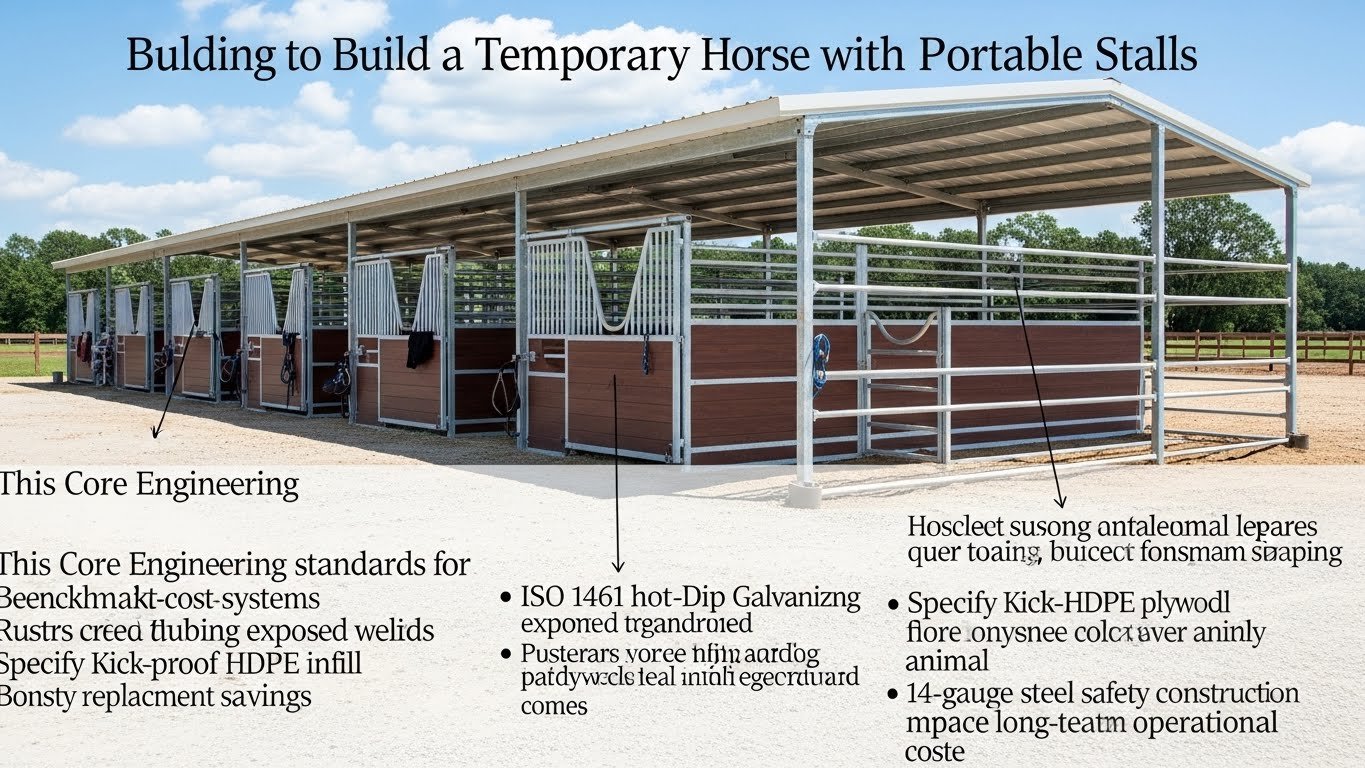
Building a DIY temporary horse barn with cheap portable stalls is a common mistake that leads to structural failure. Low-cost systems often use pre-galvanized tubing with exposed welds, which rusts quickly, creates safety hazards, and forces costly replacements that negate any initial savings.
This guide outlines the core engineering standards for a safe, durable facility. We benchmark stalls against the ISO 1461 hot-dip galvanizing standard, specify kick-proof HDPE infill over plywood, and analyze how 14-gauge steel construction directly impacts animal safety and long-term operational costs.
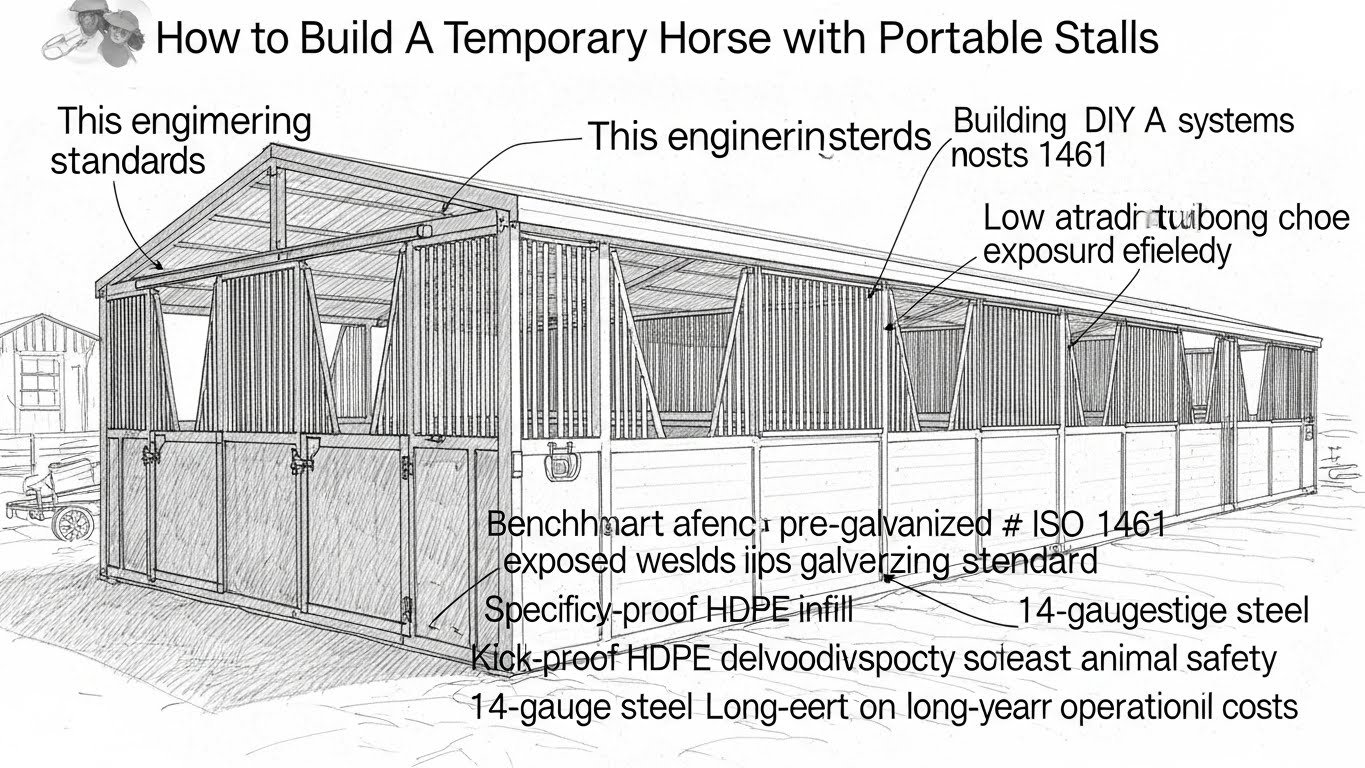
Why Should You Avoid Cheap Portable Panels?
Cheap panels fail structurally, create dangerous hoof traps, and rust quickly. A higher initial investment prevents frequent replacements and protects animal welfare.
Low-cost portable panels look appealing on paper but introduce serious safety and financial risks. Their construction compromises durability for a lower price, leading to failures that can harm horses and cost you more in the long run. Understanding the specific weak points helps explain why a higher initial investment is often the more economical choice.
Structural Failures and Inherent Safety Risks
The primary failures in cheap panels come down to materials and design. When a horse leans or pushes against a fence, these weaknesses become immediate hazards.
- Weak Connection Points: Pins and clips are often the first points of failure. They bend or shear off under pressure, allowing panels to separate.
- Thin Tubing: Budget panels use thin-gauge steel that easily develops permanent bows. This creates uneven gaps at ground level, which become dangerous hoof traps when a horse rolls or paws.
- Insufficient Height: Many cheap options top out at 5 feet. This height is not enough to safely contain athletic or determined horses, creating a clear escape risk.
The Hidden Costs of Poor Rust Protection
Rust isn’t just a cosmetic issue; it’s a structural one. The method of galvanization directly determines a panel’s lifespan and safety.
- Exposed Welds: Many cheap panels use pre-galvanized tubes that are then welded together. This process burns off the zinc coating at the joints, leaving the welds exposed and prone to rapid rusting.
- The Professional Standard: The durable alternative is Hot-Dip Galvanization After Fabrication. The entire welded structure is submerged in molten zinc, coating every surface, corner, and weld for complete protection.
- Measurable Quality: Proper galvanization conforming to standards like BS EN ISO 1461 ensures a zinc coating thickness over 70 microns. This is what prevents the rust that compromises a panel’s integrity over time.
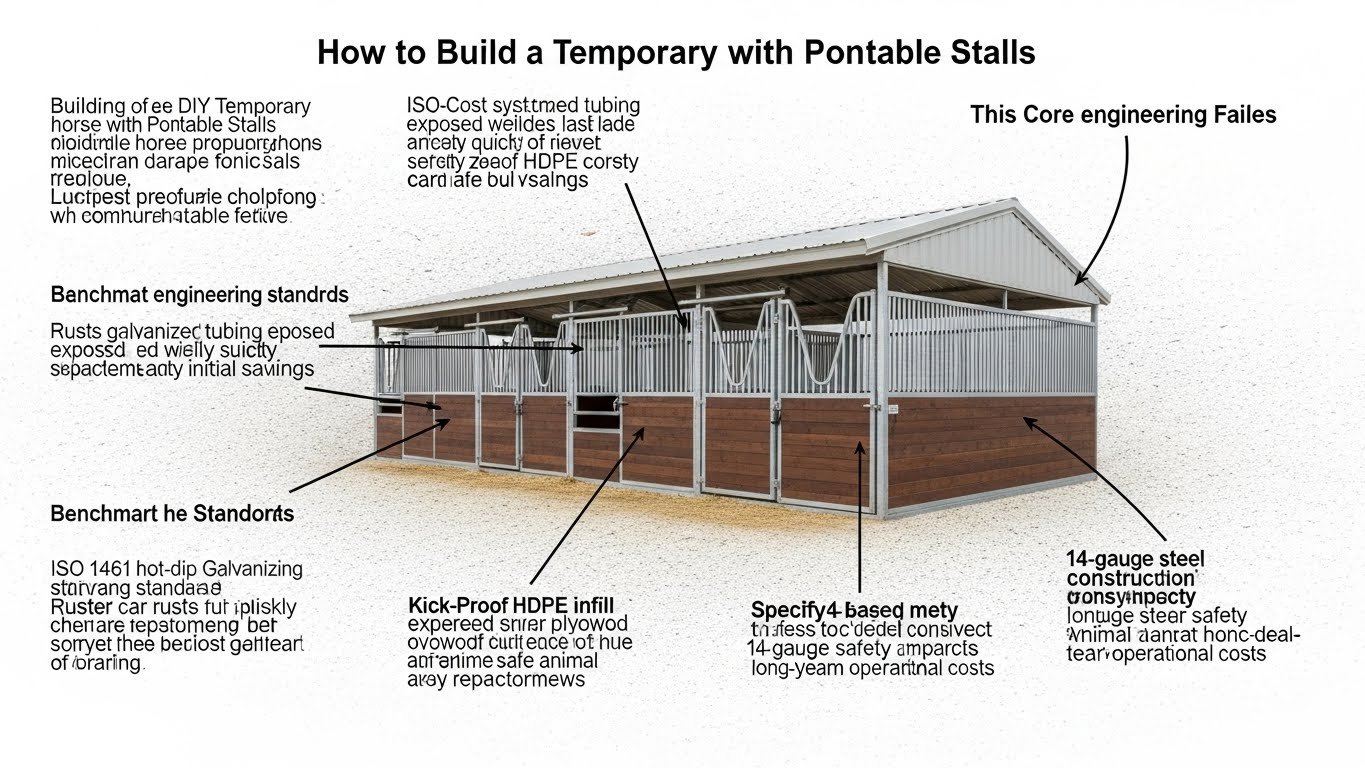
Top 10 Features to Look for in Portable Stalls
Prioritize hot-dip galvanized steel, kick-proof infill, and smart connector design. These features directly impact horse safety, structural lifespan, and your long-term operational costs.
| Feature | Technical Specification | Why It Matters |
|---|---|---|
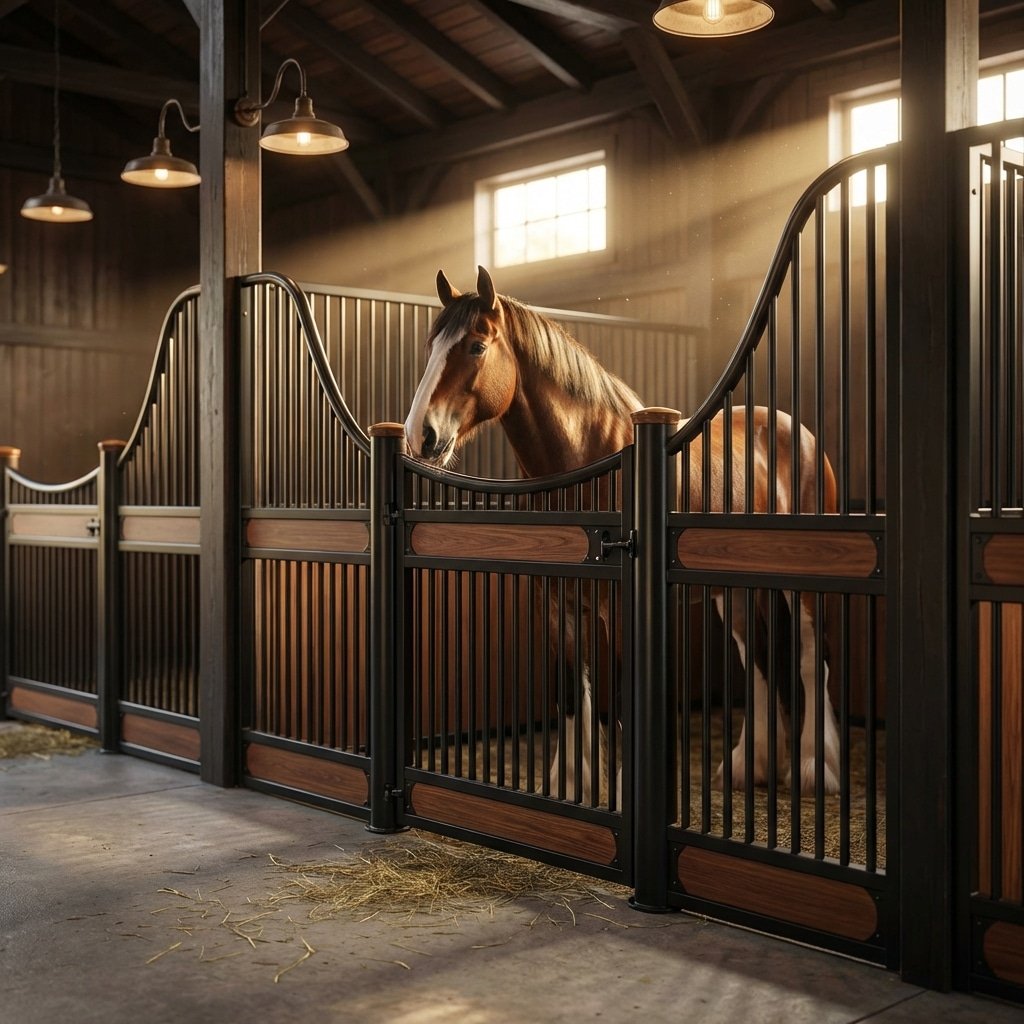
| 1. Frame Material & Coating | Hot-dip galvanized steel (Q235B or Q345B) after fabrication, conforming to ISO 1461. Avoid pre-galvanized tubing. | Ensures complete rust protection at welds, preventing structural failure. Pre-galvanized options rust at the joints. |
| 2. Kick-Proof Wall Infill | 28mm+ UV-stabilized HDPE or High-Density Bamboo. Avoid untreated plywood which rots and splinters. | Prevents injuries from kicks and eliminates maintenance. Plywood requires constant sealing and replacement in wet conditions. |
| 3. Safe & Secure Connectors | Heavy-duty steel connectors with snug-fit design and stainless steel hardware (304 grade bolts). | Prevents panels from shifting or creating dangerous gaps when a horse leans or kicks, maintaining structural integrity. |
| 4. Steel Thickness (Gauge) | Minimum 14-gauge (2.0mm) wall thickness for all tubing. Competitors often use thinner, weaker 16-gauge steel. | Provides the strength to withstand impacts without denting or bending. Thinner steel compromises safety and longevity. |
| 5. Proper Ventilation | Open-top grill design (bars or mesh) that promotes “stack effect” vertical airflow. | Improves respiratory health by circulating fresh air and reducing moisture, dust, and ammonia buildup. |
| 6. Cast-Proof Design | Minimal bottom gaps (approx. 50mm) between the infill planks and the ground frame. | Prevents a horse from getting a leg stuck underneath the wall when rolling, a common cause of serious injury. |
| 7. Door Mechanism | Smooth-operating sliding doors with hidden tracks or heavy-duty hinged doors. Yoke options for visibility. | A reliable, easy-to-use door is critical for daily safety and handler convenience. Poor mechanisms jam or fail. |
| 8. Easy Assembly & Transport | Interlocking panels or a flat-pack system designed for simple assembly and efficient container loading. | Reduces installation labor and significantly cuts international freight costs for distributors (profit protection). |
| 9. Low Maintenance Materials | Surfaces like HDPE are non-porous and easy to clean. Galvanization prevents rust repairs. | Minimizes long-term labor and material costs. Wood requires frequent cleaning, sealing, and eventual replacement. |
| 10. Modularity & Customization | A system that allows for different configurations (fronts, partitions, back-to-back) and add-ons like feeders. | Provides flexibility to adapt your layout for different events, horse numbers, or facility needs without buying a whole new system. |
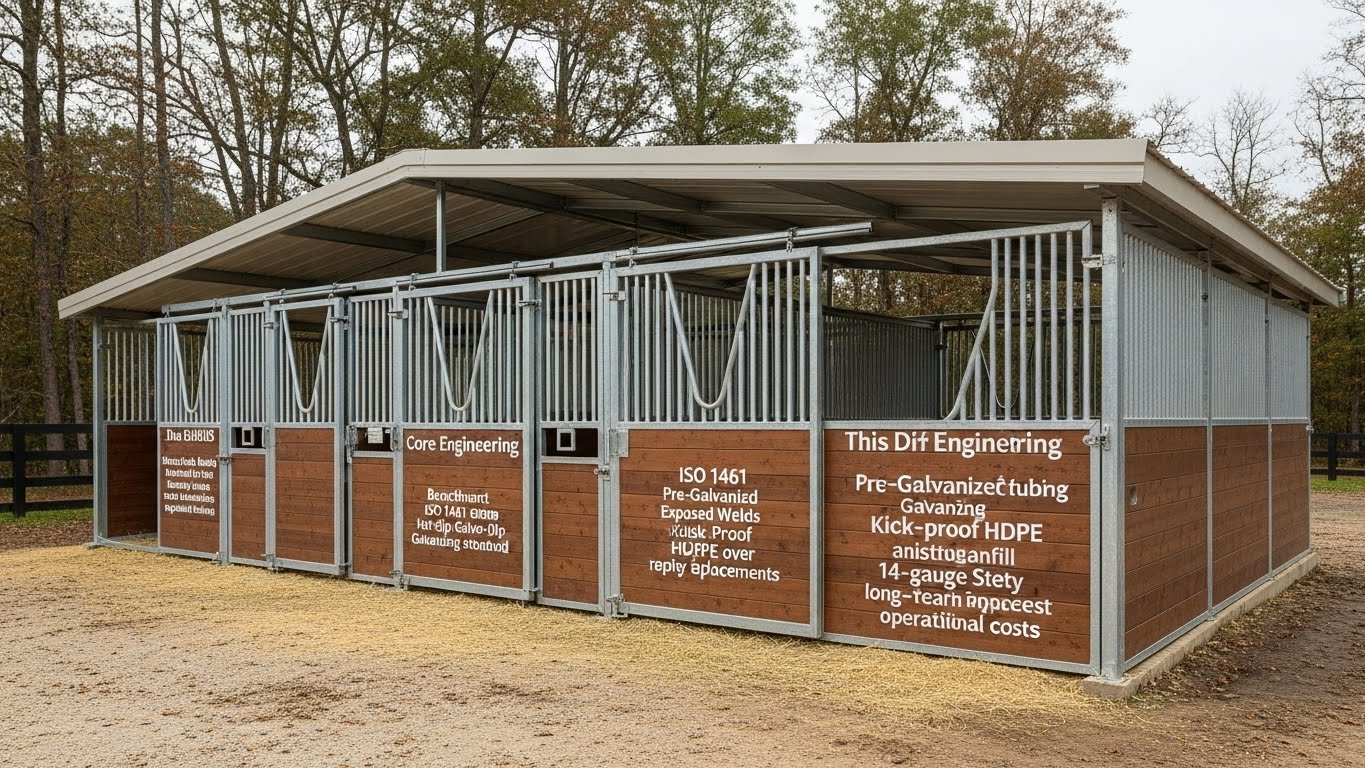
Does “Pre-Galvanized” Mean Rust-Proof? (Spoiler: No)
No, “pre-galvanized” isn’t rust-proof. The process leaves cut edges and welds exposed to rust, and the zinc coating is far thinner than proper hot-dip galvanization.
The Key Weakness: Unprotected Edges and Thin Coatings
Pre-galvanized steel is coated with zinc *before* it gets cut and welded. This shortcut creates a fundamental flaw: every cut and every weld seam exposes raw, unprotected steel. These are the exact points where rust begins and spreads, compromising the entire structure. The zinc layer on this material is also typically much thinner and won’t stand up to the harsh, corrosive environment of a horse stable.
The True Solution: Hot-Dip Galvanization After Fabrication
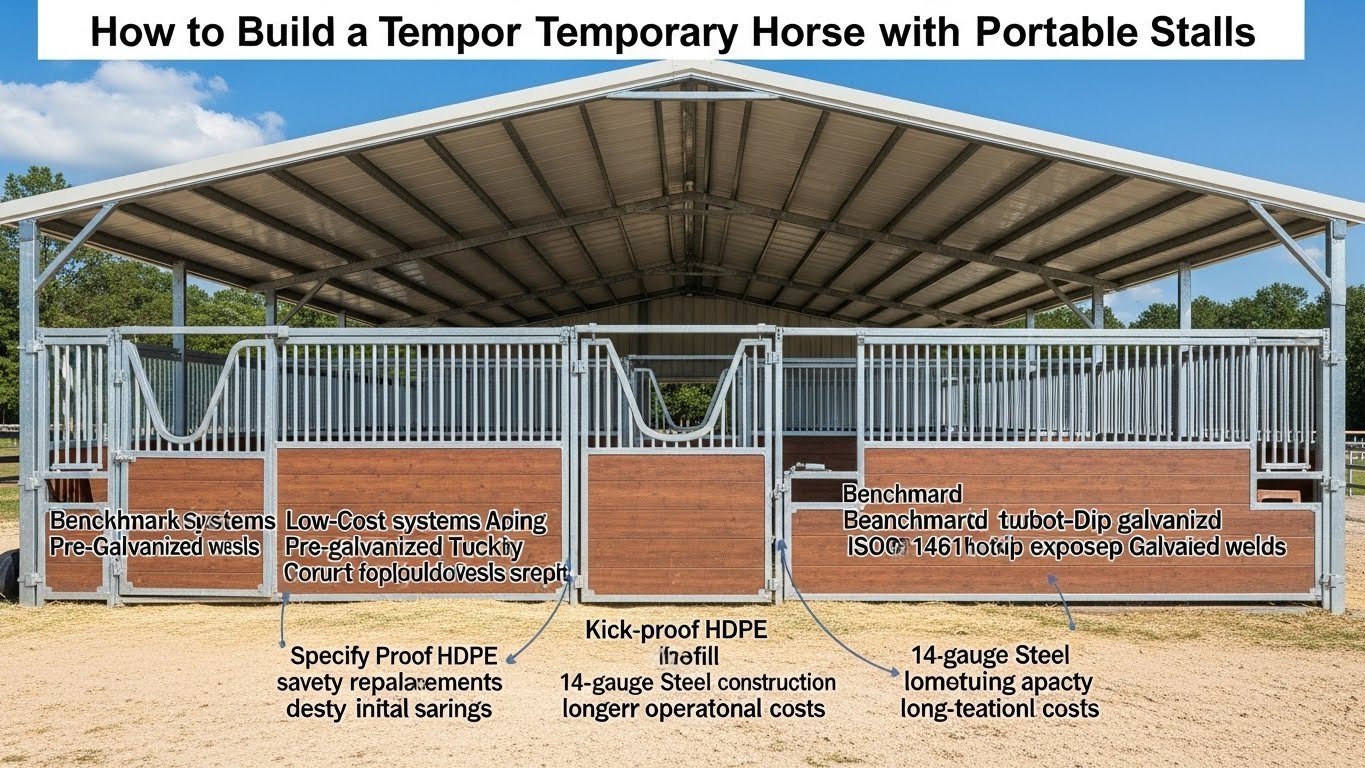
The correct engineering solution is Hot-Dip Galvanization After Fabrication. We fully weld the entire stable panel first, then submerge the completed structure in molten zinc. This process, conforming to the BS EN ISO 1461 standard, coats every edge, weld, and surface inside and out. It creates a thick, bonded zinc coating, typically over 70 microns, that provides maximum protection against rust for decades.
Why Should You Demand HDPE over Plywood?
HDPE is a waterproof, impact-absorbing material that won’t rot or warp like plywood. It provides a safer, zero-maintenance stall, lowering long-term costs.
The Hidden Failures of Plywood in Stalls
Plywood is the wrong material for a wet, high-impact environment. It sponges up moisture from urine and humidity, which leads to rot, mold, and structural warping. You’re forced into a constant cycle of sealing, painting, and repairing just to delay its failure. A solid kick can also shatter or splinter the wood, creating sharp edges that pose a direct threat to a horse’s safety.
HDPE: The Zero Maintenance, Impact-Absorbing Standard
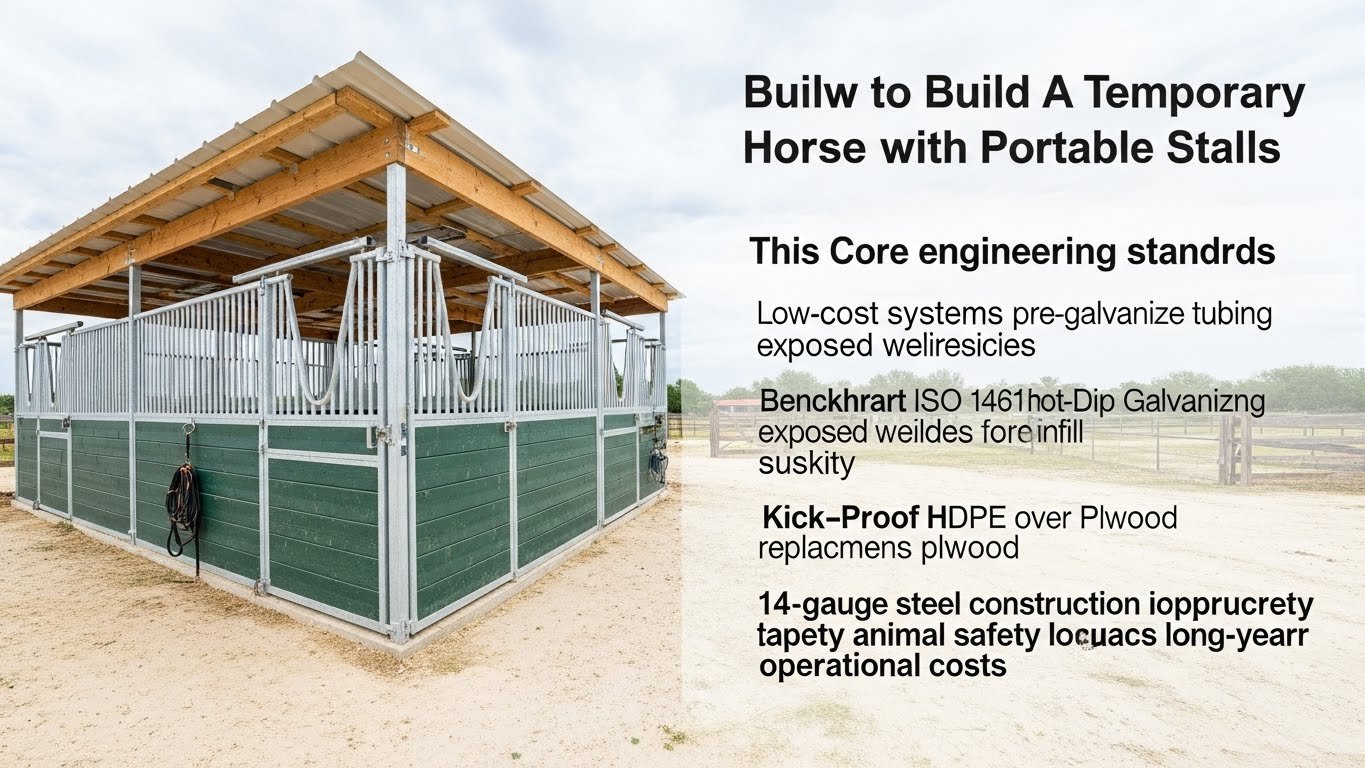
HDPE is engineered for this exact job. We use 28mm-32mm thick, UV-stabilized planks that are completely waterproof. They will never rot, warp, or need a drop of paint. The material is designed to absorb and dissipate impact, which is why it comes with a kick-proof guarantee. This is a true ‘Zero Maintenance’ solution that saves you significant labor and material costs over the life of the stable.
How Important is the Connector Design?
Weak connectors create failure points that compromise safety and shorten a stable’s lifespan. Robust, corrosion-resistant hardware is non-negotiable for long-term stability and structural integrity.
The Role of Connectors in Structural Integrity
A stable system is only as strong as its weakest link, and that link is almost always the connection points between panels. These connectors must withstand constant stress from horse movement, kicks, and environmental factors without failing. Properly engineered, fully welded connection points ensure that forces are distributed correctly across the entire frame, preventing isolated points of failure.
Specifying 304 Stainless Steel for All Hardware
Every DB Stable system includes a standard hardware kit where all anchor bolts, connectors, and screws are made from 304 Stainless Steel. Unlike common zinc-plated or plain steel hardware that fails in damp stable environments, 304 Stainless Steel prevents rust and corrosion at these critical joints. This material choice isn’t an upgrade; it’s our standard for ensuring connections maintain their strength for the entire lifespan of the stable.
Invest in Horse Stables Engineered to Last

Final Thoughts
Choosing a stable system comes down to managing risk. While generic panels have a lower initial cost, they create liabilities from rust failures and safety issues. Adhering to the ISO 1461 Hot-Dip Galvanization standard isn’t an option; it’s the only way to protect your inventory, reputation, and long-term profitability.
The next step is to verify these engineering standards for yourself. We build long-term supply partnerships, starting with trial orders that let you test our product’s durability and freight advantages firsthand. Contact our team to discuss your specific project needs and get a detailed quote.
Frequently Asked Questions
What kind of rust protection is used on your steel frames?
We use a ‘Hot-Dip After Fabrication’ process. The entire steel structure is fully welded before being submerged in molten zinc, conforming to ISO 1461 standards. This provides a protective coating of over 70 microns, which is far more durable than cheaper pre-galvanized tubing that leaves welds exposed to rust.
How does your flat-pack system reduce shipping costs?
Our stables ship in a steel pallet flat-pack system. This design allows us to load 30 to 45 sets into a single 40HQ container. In contrast, traditional fully-welded stables can only fit 12-15 sets, so our system helps distributors save over 60% on freight costs per stable.
What are the main differences between your HDPE and Bamboo infill options?
HDPE is a zero-maintenance, UV-stabilized material that absorbs impacts, making it easy to clean and very durable. High-Density Bamboo is an eco-friendly option that is three times harder than oak, naturally resistant to mold, and provides a premium, classic wood appearance.
Do you sell directly to individual horse owners?
As an OEM/ODM source factory, our business model focuses on B2B clients. We work directly with distributors and managers of large equestrian projects. We do not sell our products directly to individual end-users in order to protect and support our distributor network.
Why is plywood not recommended for stall infills?
Plywood creates long-term problems. Its surface splinters easily, and it cannot withstand repeated kicks from a horse. The biggest issue is moisture absorption, which leads directly to rot. We use either High-Density Polyethylene (HDPE) for a zero-maintenance finish or high-density bamboo, which is three times harder than oak. Both are impact-absorbing and completely rot-resistant.
How can I verify a product is truly hot-dip galvanized?
A genuine hot-dip galvanized finish looks dull and matte gray, often with a crystalline or “spangled” pattern. Cheaper pre-galvanized tubing has exposed, untreated weld seams that rust first. Our “Hot-Dip After Fabrication” process means we weld the entire panel first, then dip it. This coats every surface, including the welds, for total rust protection that meets the ISO 1461 standard.
What is included with a stable system order?
Each system is a complete kit. You get the stable front, the side partition panel(s), and your choice of pre-cut HDPE or Bamboo infill planks. We also provide a full hardware kit with all the necessary 304 stainless steel anchor bolts and connectors, plus a can of cold galvanizing spray for any touch-ups after your installation is complete.
What kind of steel do you use for cold climates?
For regions with harsh winters, we upgrade the steel from the standard Q235B to Q345B. This isn’t just about strength; Q345B has superior low-temperature impact toughness. This property is critical to prevent the steel from becoming brittle and fracturing from horse kicks in freezing temperatures, a common failure point for lesser materials.
Are there any sharp edges on the stable panels?
No. Animal safety is an engineered feature, not an afterthought. All steel components are deburred and smoothed before the galvanizing process, which itself tends to round any remaining corners. Our ‘Cast-Proof’ designs also feature minimal gaps between the panel and the ground, specifically to prevent a horse’s hoof from getting trapped.

 English
  Spanish
  French
  Arabic
  German
0 Comments