



Your clients need horse feeders that are safe, durable, and right for the job. But choosing between plastic and galvanized steel isn’t straightforward. A feeder that works perfectly in a stall might fail in a pasture, and a material prized for its strength might create hygiene challenges.
This guide breaks down the key differences to help you select the best feeder material for any application. We compare poly and metal on sanitation, safety, and structural integrity, explaining why a poly feeder supporting 225 pounds is ideal for stalls, while 16-gauge steel provides the rugged durability needed for pastures.

Quick Comparison Table
Corner hay feeders are typically compared by their material (poly, steel, mesh), capacity (1-6 flakes), and design (wall-mount vs. ground-level). Poly offers corrosion resistance, steel provides durability, and specific models add features like natural grazing postures or integrated grain compartments.
| Feeder Type | Primary Material | Typical Capacity | Design & Key Features |
|---|---|---|---|
| Ground-Level Feeder (e.g., Stall Grazer) | Molded Poly | Large / Multi-Flake | Promotes natural grazing posture; may include grain/salt compartments. |
| Wall-Mount Bar Rack (e.g., Behlen StallMate) | Powder-Coated Steel | ~3 Flakes | Durable 3/8″ smooth bar construction with 360° welds for strength. |
| Wall-Mount Poly (e.g., Tarter PCMHF) | Molded Poly | 1–4 Flakes | Impact and corrosion-resistant; seamless one-piece design for safety. |
| High-Capacity Feeder (e.g., Porta-Grazer) | Molded Poly | ~6 Flakes (24-hr supply) | Large volume for continuous feeding; includes a drain plug for soaking hay. |
| Mesh Feeder (e.g., Dura-Tech) | Textile / Mesh | 2–3 Flakes | Flexible and lightweight; mounts to stall corners with grommets and plates. |
Key Comparison Criteria
When selecting a corner hay feeder, the main decision points are material, capacity, and feeding position. Materials generally fall into three categories: one-piece molded poly, powder-coated welded steel, or flexible mesh. Poly feeders are valued for their impact resistance and inability to rust, making them ideal for wet environments. Steel bar racks offer superior durability against chewing and kicking. Mesh systems provide a lightweight, flexible alternative. Capacity ranges from small units holding 1–4 flakes for individual meals to large models holding around 6 flakes for a full day’s supply. The design dictates whether the horse eats from a raised wall-mount unit or a ground-level feeder that mimics a natural head-down grazing posture.
Specifications and Features
Most standard wall-mounted corner feeders, both poly and steel, measure around 30 to 34 inches high and weigh between 12 and 17 pounds. Durability is a key focus in their engineering. Steel models like the Behlen StallMate use 3/8-inch smooth bar stock with 360-degree welds and a powder-coat finish to prevent sharp edges and corrosion. Poly feeders feature seamless, injection-molded bodies with rounded edges to enhance safety and resist cracking. Some feeders also include specialized functions. For example, the Stall Grazer incorporates separate compartments for grain and salt, while the Porta-Grazer includes a drain plug that simplifies the process of soaking hay and cleaning the unit.
Understanding Poly Feeders (Clean/Safe)
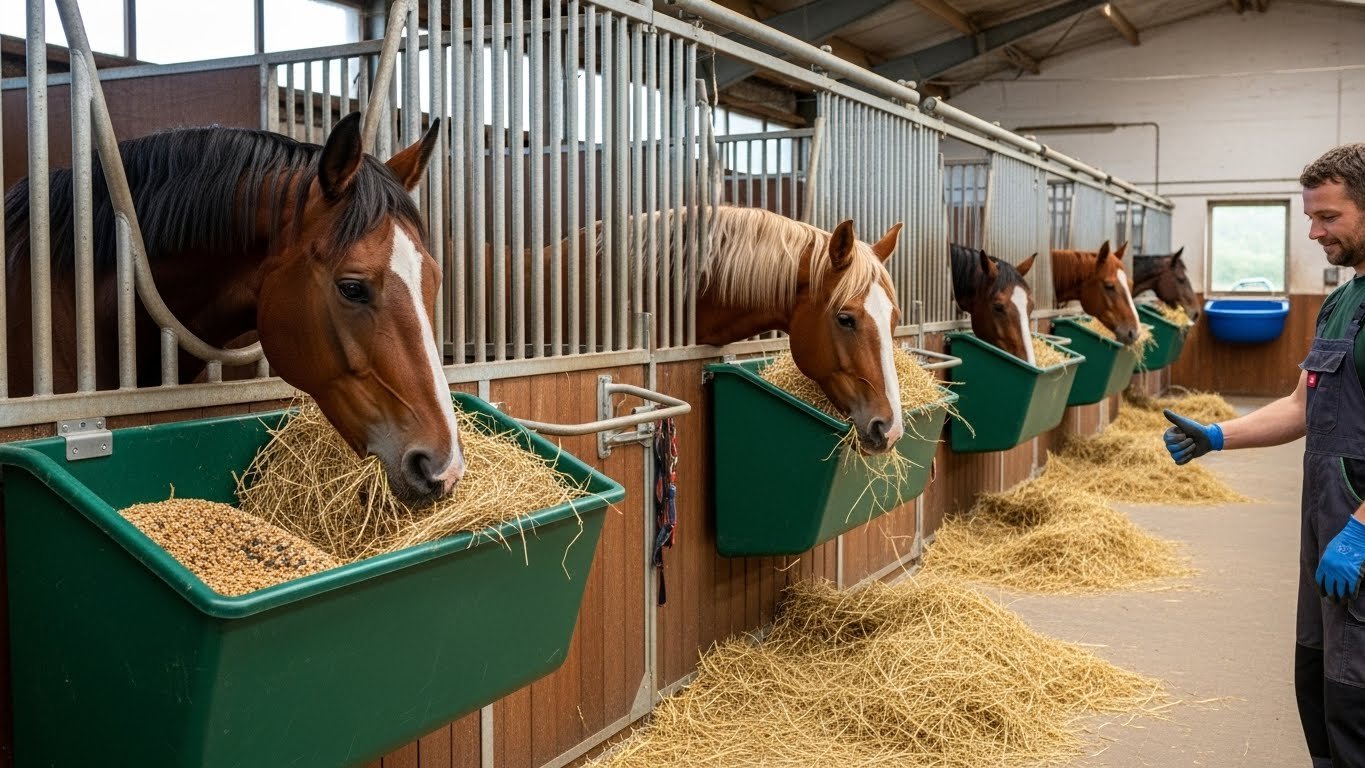
Poly feeders, made from materials like HDPE, are designed with smooth, rounded edges to prevent injuries. Their non-porous, corrosion-free surfaces reduce bacteria buildup and make them easy to clean, ensuring a safe and hygienic feeding environment for horses.
Engineered for Safety and Hygiene
Poly feeders are engineered to improve safety and cleanliness through specific material and design choices. Construction often features smooth, one-piece poly tubs and rounded ‘bull-nose’ edges, which eliminate sharp corners that could injure a horse’s sensitive nose or lips. Materials like HDPE and polypropylene are corrosion-free, which stops rust from forming and contaminating feed. The non-porous surface of FDA-approved, food-grade polyethylene also limits bacteria and grime buildup, making feeders simple to wash down and maintain.
Material Specifications and Structural Reinforcement
The durability of poly feeders comes from their material composition and structural design. Manufacturers use impact-resistant materials such as 100% virgin HDPE and “No-Break” polypropylene. These feeders are engineered with a wall thickness between 0.10 and 0.90 inches (2.5–23 mm), enabling them to support feed loads of up to 225 pounds. For added structural stability, many designs combine the poly tub with a 1¾-inch tubular steel frame or a heavy-duty galvanized steel lid.

Understanding Galvanized Feeders (Strong/Rust?)
Galvanized feeders are made from steel coated in zinc to prevent rust, a process called galvanization. They use heavy-gauge steel, like 16-gauge tubing, for strength and durability. This makes them a strong, long-lasting option for outdoor feeding, though the quality of the zinc coating matters.
How Galvanization Works for Rust Protection
Galvanized feeders get their rust resistance from a protective zinc coating applied over a steel base. This coating acts as a sacrificial barrier, preventing moisture and oxygen from reaching the steel and causing oxidation. The most common method for equine equipment is hot-dipped galvanization, which involves submerging the steel in molten zinc to create a durable, bonded layer. Some models add a powder-coated finish over the galvanized tubing, offering an extra layer of defense against weather and daily wear.
Material Thickness and Build Quality
A feeder’s structural integrity comes from the thickness of its steel components. High-quality feeders often use heavy-gauge steel, such as 16-gauge tubing for legs and frames, with panels and braces made from 18- to 20-gauge metal. Heavy-duty designs can weigh over 120 pounds, providing stability in the pasture. Other construction elements, like 1-inch round bars or 3/8-inch smooth bars, further enhance strength. The quality of the galvanization also varies, and some manufacturers specify a zinc coating thickness, such as over 42 microns, for superior, long-term rust prevention.
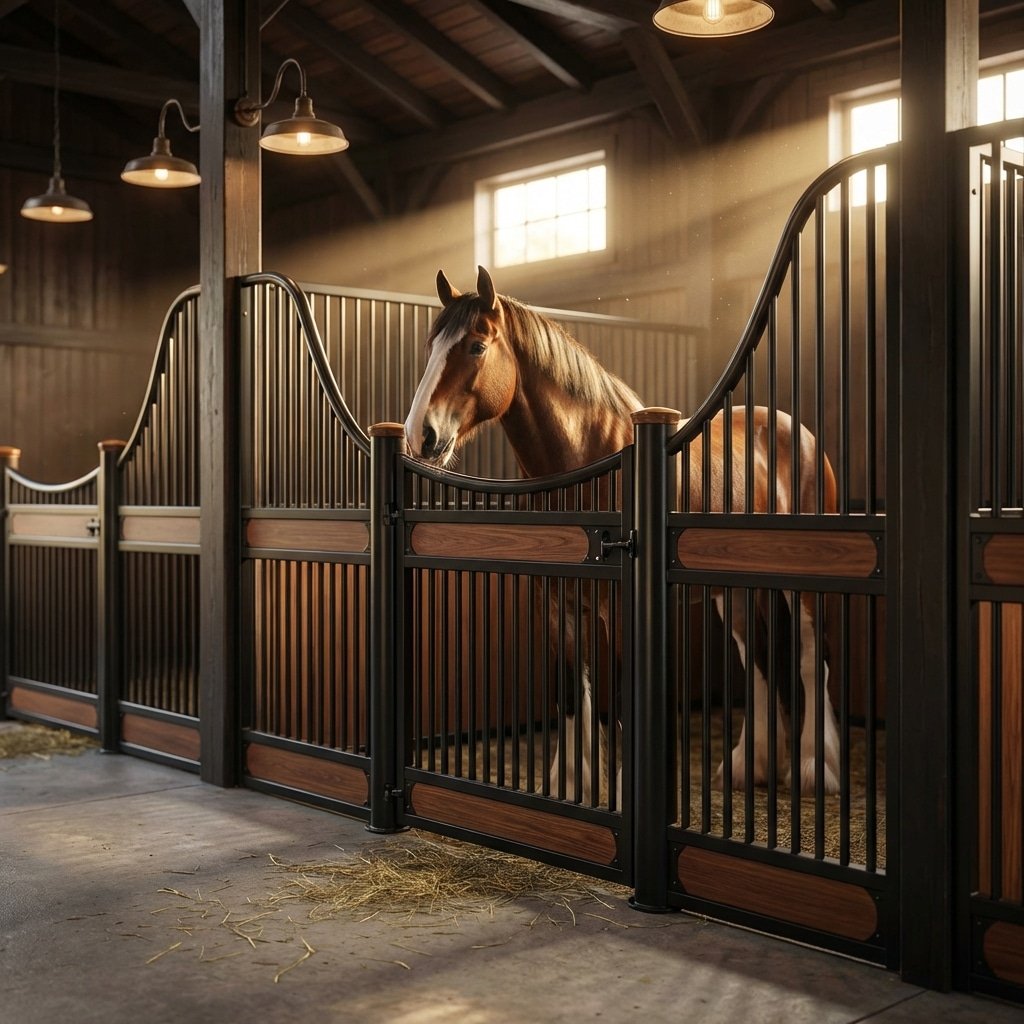
Custom Horse Stables Built to Endure Any Climate.


The Sharp Edge Risk
The “Sharp Edge” Risk
A sharp edge is any corner with a radius smaller than what contacts it, creating a high risk of laceration or entrapment for horses. This danger arises from design flaws like unfinished metal, poor welds, protruding bolts, and using steel thinner than 14-gauge, which can deform and create hazards.
What Makes an Edge ‘Sharp’ for a Horse?
From an engineering perspective, an edge becomes “sharp” when its corner radius is smaller than the diameter of the object touching it. For a horse, this means any thin metal lip, unfinished frame, or burr can concentrate force and act like a knife. Horses often rub, push, or get cast near feeders, so any unfinished surface presents a significant risk for deep cuts, abrasions, or trapping skin and equipment like halters.
Common Design Flaws That Create Hazards
Certain manufacturing defects are primary sources of danger in horse feeders. Key risks include unprotected sheet steel edges, protruding bolts, and poorly finished welds that leave behind sharp burrs or create pinch points. Using steel thinner than the recommended 14-gauge minimum (approximately 1.9 mm) makes the feeder susceptible to denting and deformation, which can introduce new sharp points over time. Equine safety guidelines require that all barn hardware, including feeders, must have “smooth, rolled, or welded edges” to remove these injury hazards.
| Design Flaw | Description of Hazard | Safe Alternative |
|---|---|---|
| Unprotected Metal Edges | Raw, cut edges of sheet steel possess a near-zero radius, creating a knife-like hazard that can cause severe lacerations. | Edges should be rolled, folded, or fully welded to create a smooth, rounded surface. |
| Thin-Gauge Steel | Steel thinner than 14-gauge can easily dent or tear under pressure, creating new, unpredictable sharp points. | Use steel of at least 14-gauge (~1.9 mm) thickness for structural integrity. |
| Poor Welds & Protruding Bolts | Unfinished welds leave behind sharp slag and burrs. Exposed bolt threads and heads can snag halters, blankets, or skin. | All welds must be ground smooth. Hardware should be recessed or use carriage bolts for a flush finish. |
The Verdict
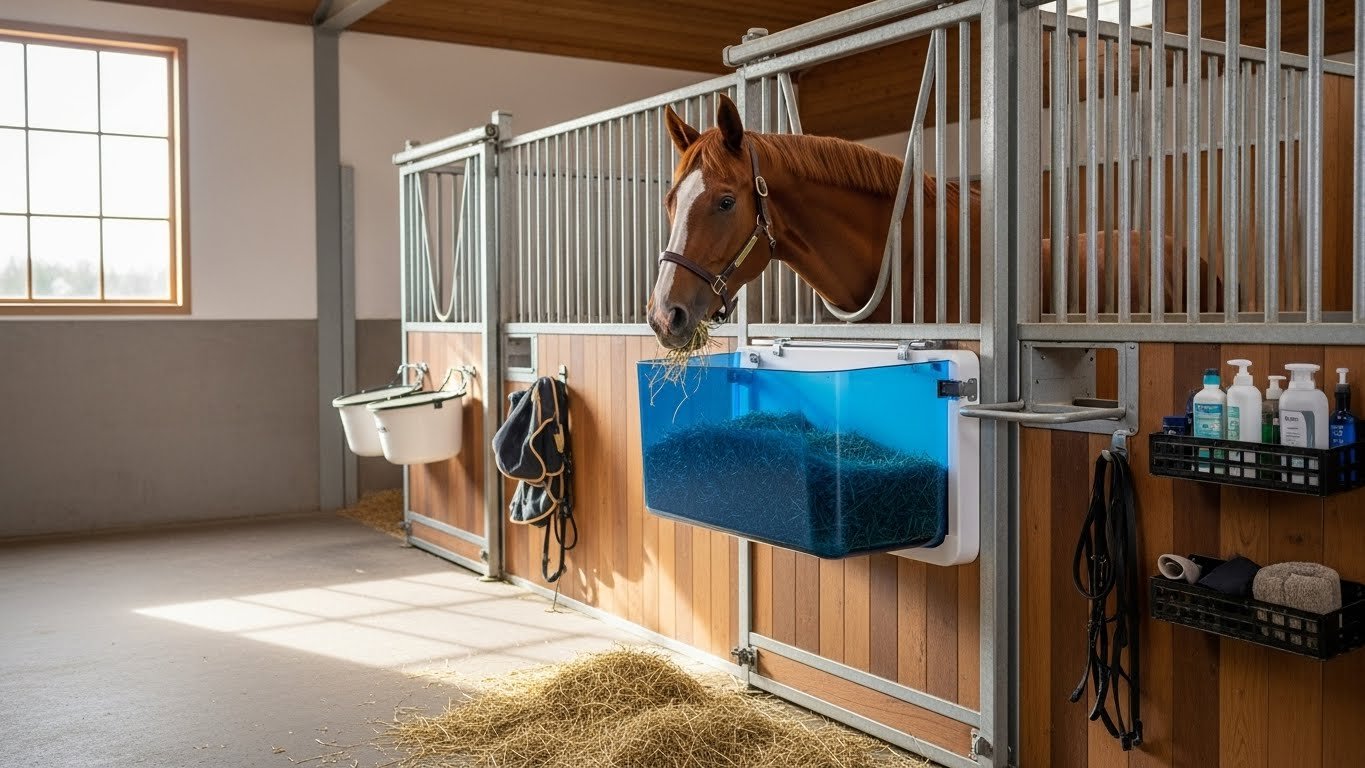
For individual horse stalls, one-piece molded polyethylene feeders are the superior choice. Their smooth, joint-free design and impact-resistant material prioritize daily safety and durability. Heavy-gauge steel feeders are better suited for large-bale, outdoor group feeding where structural strength is the main concern.
Polyethylene for Stall Safety and Durability
One-piece molded polyethylene construction offers superior safety for individual stalls by eliminating joints, hardware, and potential sharp points. These feeders often feature smooth interiors and curled-under edges that prevent cuts and help reduce feed waste. The polyethylene material is typically UV-stabilized to resist sun damage and is engineered to remain strong and pliable under heavy impact, even at temperatures as low as -40°F. This design directly supports animal welfare regulations that require feed to be accessible without risk of injury, making it a reliable choice for daily use.
Steel for Outdoor Group Feeding Strength
Heavy-gauge steel feeders are built for a different purpose: withstanding the immense force of multiple large animals in a pasture. Constructed from materials like 16-gauge sheet steel and 14-gauge tubing, their primary function is to hold large round bales and resist deformation in high-pressure herd environments. Unlike polyethylene stall feeders, their fabrication involves multiple welds and joints that may require periodic inspection to ensure no sharp edges develop over time. Their strength-focused engineering makes them ideal for outdoor group feeding but less suitable for the confined space of a horse stall.

Final Thoughts
Choosing between a plastic or metal feeder depends entirely on where and how you plan to use it. Polyethylene feeders are the clear choice for individual stalls because their smooth, seamless design prioritizes hygiene and safety for daily use. For outdoor, group feeding situations, heavy-gauge galvanized steel provides the raw strength needed to withstand the pressure of multiple animals and hold large hay bales securely.
The best approach is to match the material’s strengths to your horse’s environment. Polyethylene offers a safe, clean surface for stall feeding, while steel delivers the structural integrity for pasture life. No matter which material you pick, regular inspections for damage or sharp edges are essential. A well-maintained feeder ensures your horse stays safe and your investment lasts.
Frequently Asked Questions
Which is better: a metal or plastic hay feeder?
Sheet metal hay feeders are the industry standard over plastic, offering superior durability and lower hay waste. A well-designed steel feeder with a sheeted bottom can reduce hay waste to as low as 5.5%, while plastic feeders often have similar waste levels but face higher risks from chewing and general wear.
Are metal feeders dangerous for horses?
Metal feeders are not dangerous if properly designed and maintained. The risk comes from damaged, rusted, or poorly made feeders that can create sharp edges, entrapment points, or have grates that damage a horse’s teeth. Safety guidelines recommend designs with no sharp edges and where teeth do not contact any metal grating.
What makes a horse feeder easy to clean?
Easy-to-clean feeders use non-porous, smooth materials like one-piece polyethylene plastic, stainless steel, or aluminum. Many feature removable basins, such as a 13-quart stainless steel bowl, that can be rinsed and sterilized in seconds.
How do you prevent rust in metal feeders?
To prevent rust, choose feeders made from rust-resistant materials like hot-dip galvanized steel, stainless steel, or polyethylene. A protective powder-coat finish adds another layer of defense. Regular inspection and repair of any chips or scratches are key to stopping rust before it becomes a hazard.
What makes a hay rack durable?
Durable hay racks are typically built from hot-dip galvanized steel, often using 16-gauge, 1⅝-inch round tubing for the frame. Heavy-duty polyethylene is another rust-free, impact-resistant option. The most robust industrial-grade steel feeders can weigh from 230 to 1,250 lbs, reflecting the heavy construction needed for a long service life.

 English
  Spanish
  French
  Arabic
  German
0 Comments