


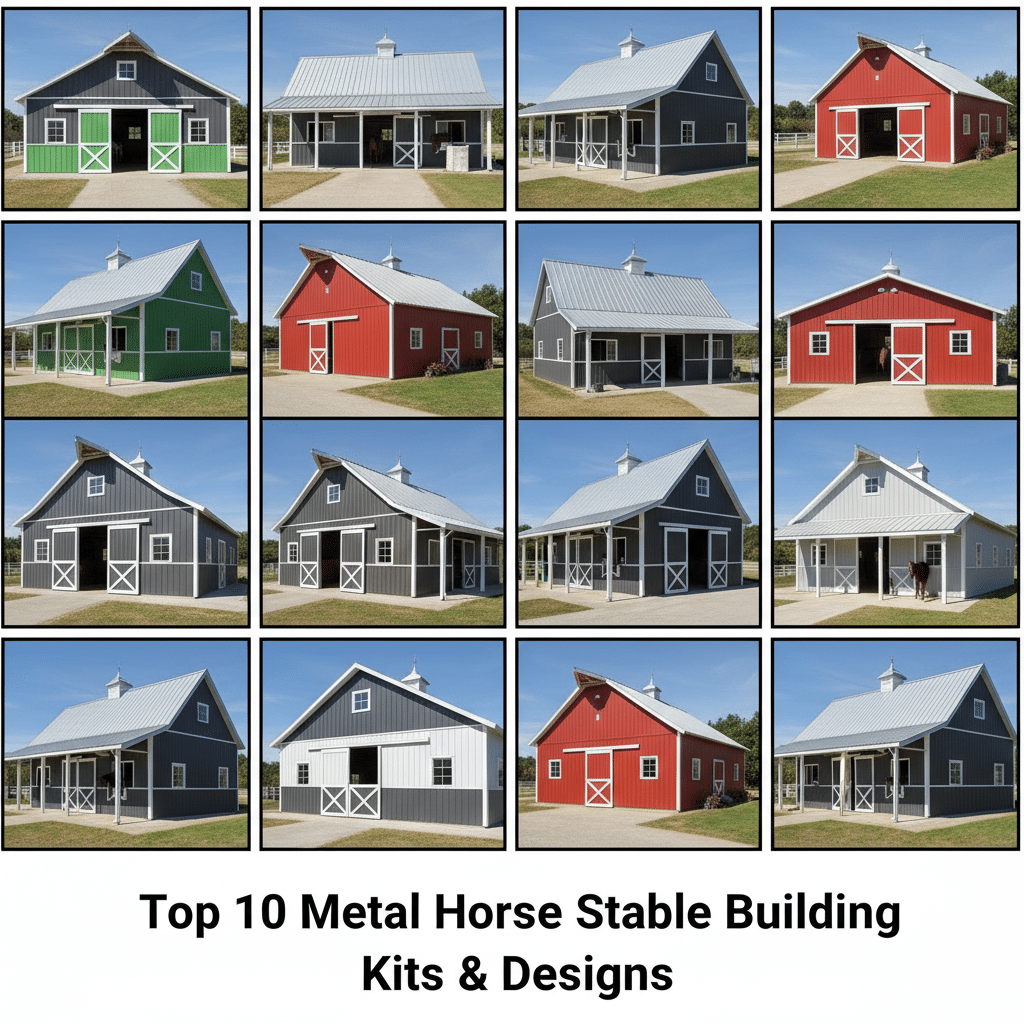
Why Choose Metal Horse Stables?
For operations managing multiple horses, performance is about resilience, not appearance. Facilities must withstand constant use, unpredictable weather, and the demands of both animals and staff. Metal horse stables offer the strength, efficiency, and adaptability procurement teams rely on to maintain margins and service continuity.
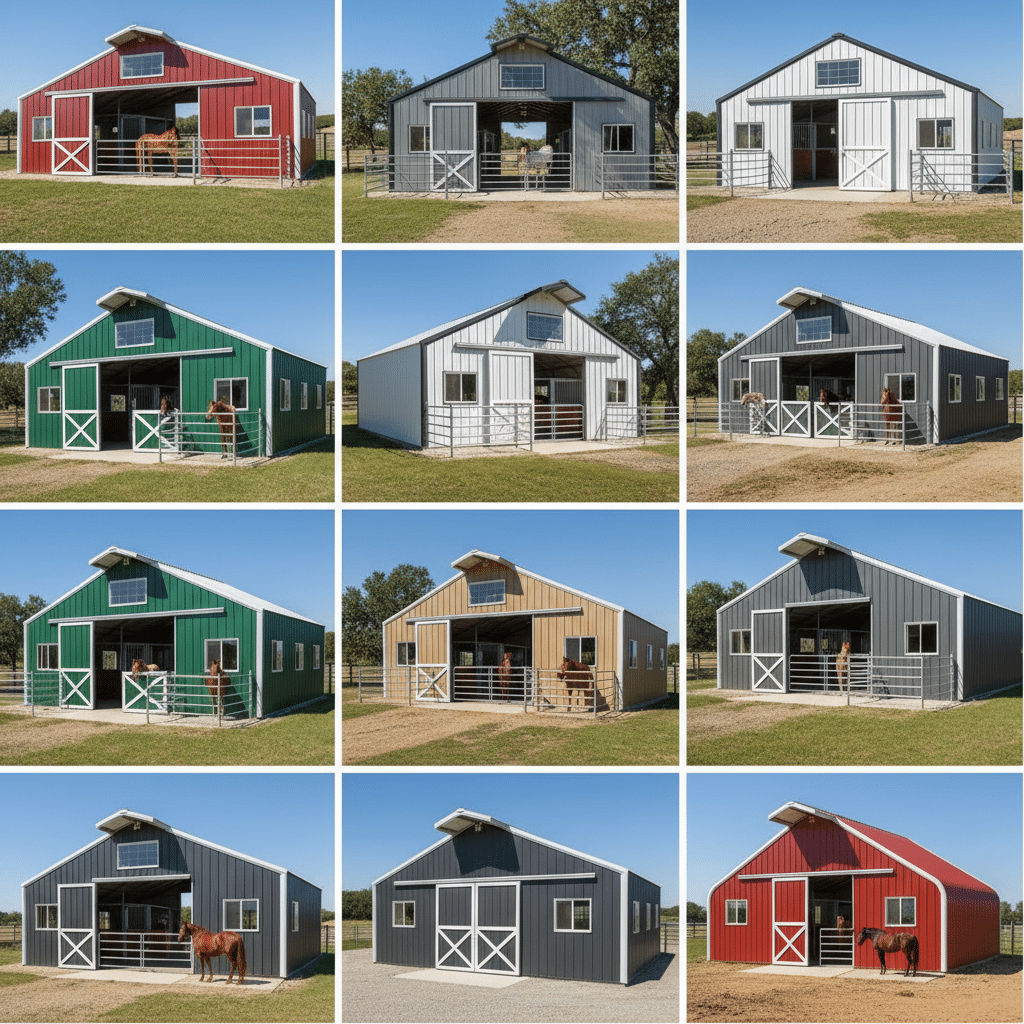
Exceptional Durability and Weather Resistance
Well-engineered metal stables perform for years in heavy rain, snow, high winds, and even seismic zones. In climates from humid coasts to frigid interiors, galvanized steel frames with UV-protected infill resist warping and weakening. They eliminate rot, mold, termite damage, and other pest risks, reducing repair cycles. Steel’s non-combustible nature cuts fire hazards—helping lower insurance premiums and stabilize long-term operating costs.
Cost-Effective Investment with Low Maintenance
Pre-engineered systems install fast with minimal labor, stretching your construction budget and accelerating time-to-operation. Lower upfront spend reflects efficient capital use, not compromised quality. With resistance to pests and harsh weather, repair interruptions are infrequent, turning durability into measurable cost savings and dependable budgeting for long-term operations.
Customization and Scalability to Fit Your Needs
Metal stables adapt to specific programs: stall dimensions, ventilation, insulation, and climate control can all be specified for local conditions to support horse welfare and performance. Modular designs make expansion or layout changes simple, allowing facilities to scale or reconfigure with minimal disruption as herd sizes or service requirements evolve.
Popular Metal Building Designs
Choosing the right metal stable design directly impacts horse safety, workflow efficiency, and long-term maintenance costs. Focus on layouts and construction options that meet current operational demands while allowing for future expansion. From years of supplying portable stables to diverse equine operations, the most successful builds combine durability with efficient space planning.
Common Layouts and Modular Systems
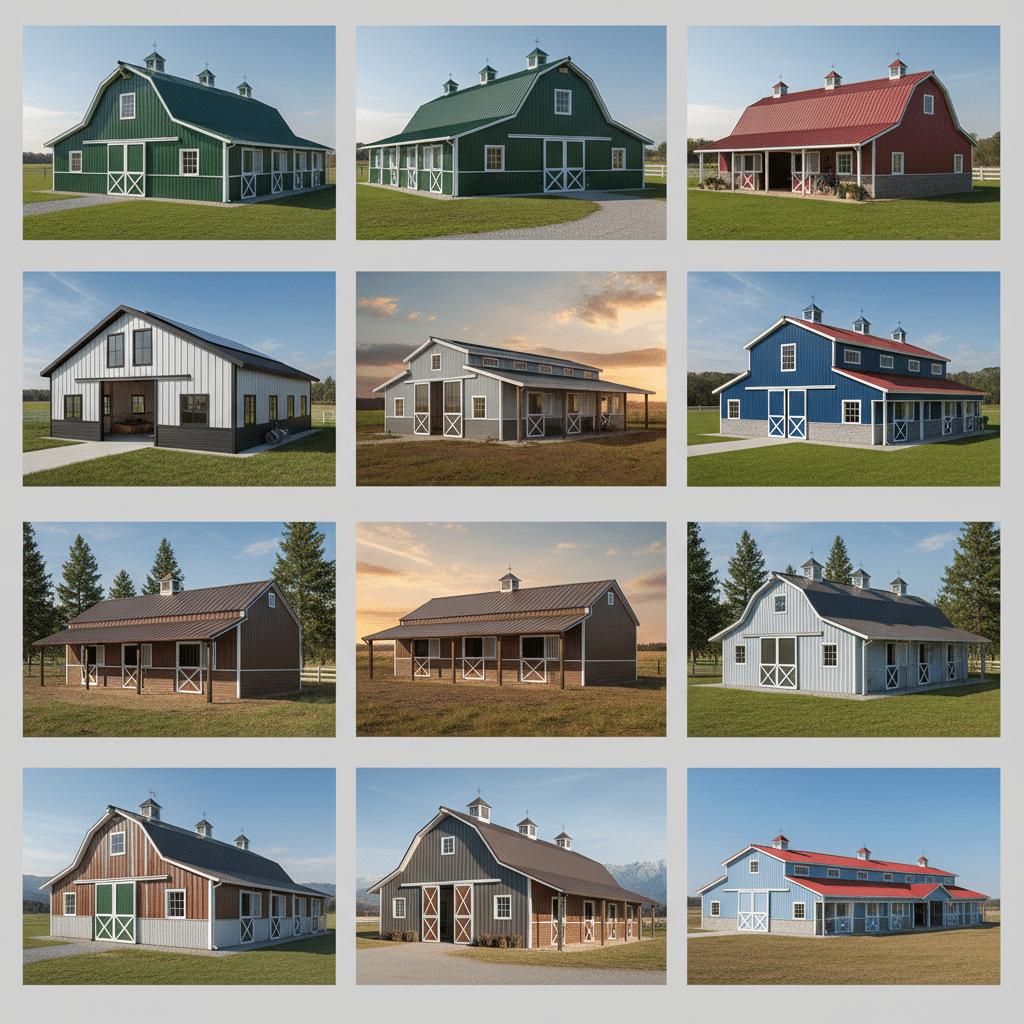
L-shaped and U-shaped barns are proven choices for streamlining movement between stalls, feed rooms, and work areas. Their angular layouts control traffic and reduce wasted space, valuable when managing multiple horses daily. Two-story designs maximize usable area on limited land by placing storage above stalls—ideal for high-cost or restricted zones. Prefabricated modular systems enable rapid addition of tack rooms, feed storage, or grooming areas as needs grow, minimizing downtime and reducing construction overhead.
Key Design Considerations for Metal Horse Stables
Use kick-proof and chew-proof materials to prevent costly damage and protect horses from injury. Reinforced metal framing delivers strength without compromising comfort. Prioritize fire resistance and effective ventilation to control risks and maintain horse health; proper airflow reduces ammonia buildup, while fire-rated components meet insurance and compliance requirements. Choose finishes and layouts that speed daily cleaning, with moisture- and debris-resistant materials cutting labor hours and sustaining hygiene.
Additional Functionalities and Customization
Covered arenas and multipurpose structures extend training schedules year-round, shielding horses from heat, rain, and wind—keeping lessons and events on track to protect revenue. Custom options such as integrated living quarters or carports increase property utility and market appeal. Align architectural styles with existing buildings for a cohesive footprint, critical for commercial equine centers hosting clients. Favor designs with strong warranties and proven low-maintenance performance to reduce repairs over time and safeguard operational stability.
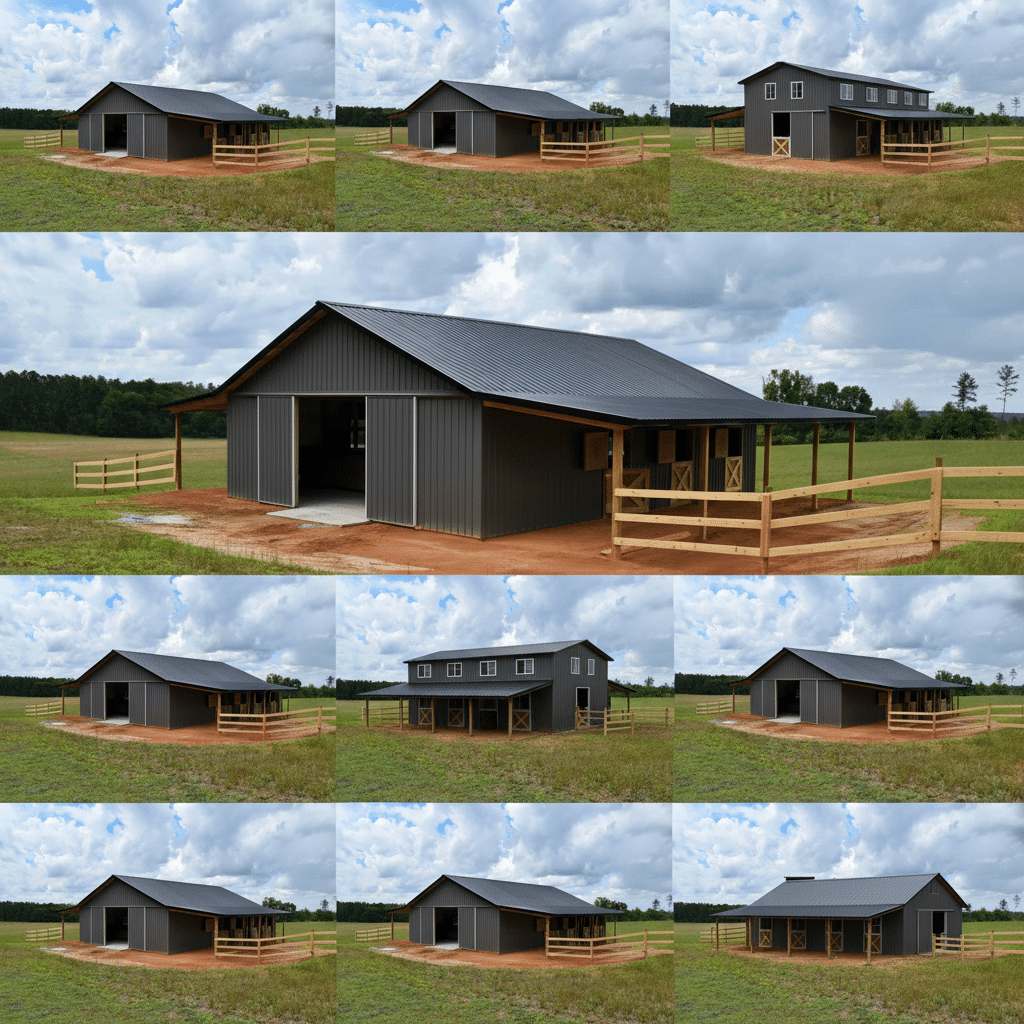
Metal vs. Other Materials
Evaluating stable construction materials requires clear insight into performance, upkeep, and lifetime risk. This comparison streamlines decision-making for procurement teams by mapping how metal, wood, brick, and concrete differ in durability, maintenance, safety, cost, energy efficiency, sustainability, and aesthetics—helping buyers match their priorities to the right structure type.
| Criteria | Key Considerations for B2B Buyers |
|---|---|
| Durability and Strength | Steel stables resist rot, pests, fire, and extreme weather, delivering decades of service with minimal repairs. Wood’s exposure to moisture, insects, and fire shortens its lifespan and drives higher maintenance. Brick and concrete match or exceed steel in longevity but their construction costs limit adoption in most stable projects. |
| Maintenance Requirements | Galvanized steel keeps corrosion at bay, reducing upkeep to periodic inspections. Wood demands regular sealing, painting, and pest mitigation, adding ongoing expense. Brick and concrete need little routine care but repairs require specialized trades, which can delay work in rural supply chains. |
| Fire Resistance and Safety | Steel is non-combustible, critical in fire-prone operations with hay and bedding. Wood ignites easily, increasing insurance load. Brick and concrete offer excellent fire resistance, but add impact hazards for horses unless lined—same applies to unlined steel, where wood kick panels mitigate injury risks. |
| Cost and Insurance Considerations | Steel’s higher upfront price often delivers lower total cost of ownership via reduced upkeep and better insurance terms. Wood’s entry cost is lower but erodes budgets through maintenance and premiums. Brick and concrete impose the largest initial outlay, potentially exceeding typical stable project budgets. |
| Energy Efficiency | Steel requires supplementary insulation to control temperature fluctuation. Wood’s inherent insulation moderates seasonal climate shifts. Brick and concrete retain heat and cool effectively but demand engineered ventilation systems to maintain livestock air quality. |
| Sustainability and Environmental Impact | Steel can be recycled indefinitely and its long service life lowers replacement frequency. Responsibly sourced wood supports sustainability but loses advantage if repairs are frequent. Brick and concrete recycle partially, yet their high-energy production raises environmental impact. |
| Customization and Aesthetics | Steel frames adapt easily to modern layouts and integrated systems but lack wood’s classic character. Wood provides heritage appeal and flexible styling options. Brick and concrete offer fewer design permutations and convey a utilitarian style. |
Durable Horse Stables Built for Every Climate
DB Stable offers customizable, weather-resistant horse stables engineered for safety and comfort worldwide. Designed to meet international standards and built with premium materials, they provide reliable protection from extreme heat to harsh winters.

Durability and Insulation Choices
When selecting a metal horse stable, focus on both material resilience and insulation performance. The right pairing reduces maintenance cycles, keeps operating costs predictable, and ensures animal welfare over the long term. A methodical spec review lets you match structural strength with insulation suited to climate and usage, avoiding expensive retrofits later.
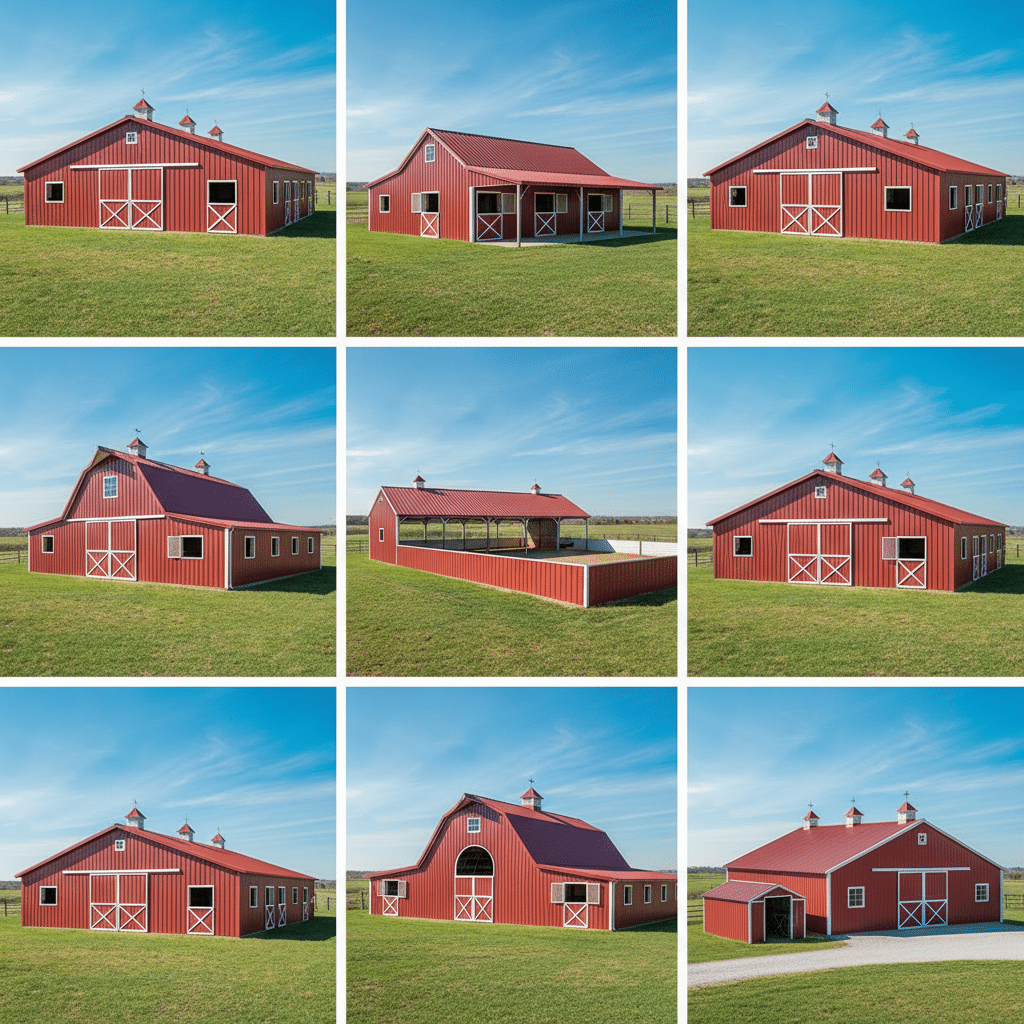
Durability Factors in Metal Horse Stables
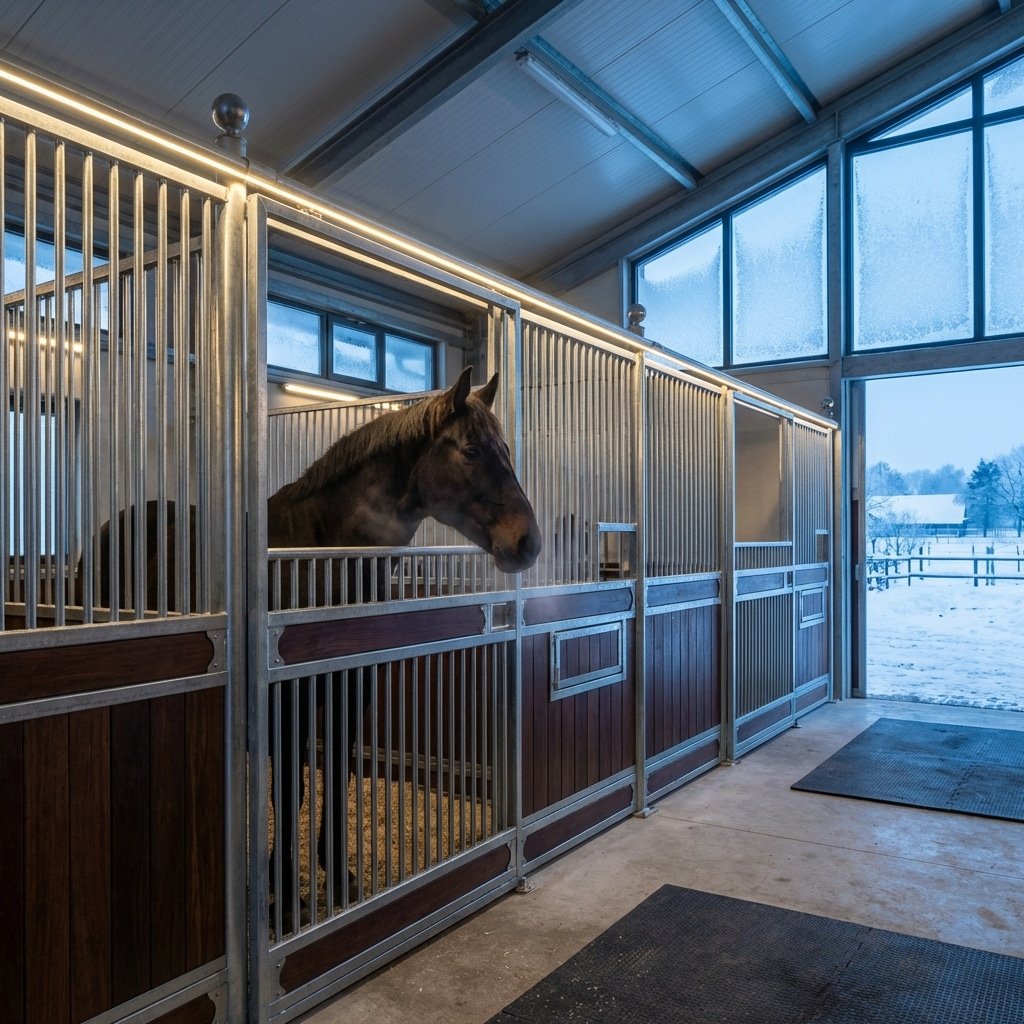
Metal stables resist pests, fire, and rot, offering a safer, longer-term investment than timber structures. Real-world performance depends on structural choices: heavy-duty framing and coatings such as hot-dip galvanization guard against corrosion in coastal or damp regions. Hot-dip galvanized steel with coatings over 40 microns can keep frames rust-free for a decade or more. UV-resistant HDPE boards for stall infill retain color and shape under constant sun exposure and require far less upkeep than timber panels—both upgrades cut maintenance and extend service life.
Insulation Options and Their Impacts
Closed-cell spray foam delivers the highest R-value per inch while sealing against air and vapor ingress, preventing condensation and corrosion, though it can challenge capital budgets. Fiberglass batts are cheaper and quicker to install but require added vapor barriers and pest deterrents in livestock environments. Reflective bubble insulation reduces radiant heat in hot regions but is insufficient alone in colder zones. Insulated metal panels combine weatherproof metal with integrated insulation for strong thermal and moisture control over decades; higher cost and limited design flexibility may deter some custom builds.
Choosing Insulation for Your Stable
Define the required R-value based on local codes and seasonal temperatures—livestock buildings need higher insulation than equipment sheds. Build the budget around both upfront spend and long-term energy and maintenance savings. Always specify vapor barriers and pest-resistant materials. Partner with installers experienced in stable construction to ensure sealed joints and flush panel fit; poor installation negates even premium materials.
Benefits of Proper Insulation and Durable Construction
Effective insulation stops condensation inside metal walls, preventing rust and mold. Stable interiors stay within comfortable temperature ranges, supporting horse health and minimizing stress during extreme weather. Better thermal control lowers heating and cooling costs, improving year-round operating economics. Durable, moisture-resistant materials reduce repairs, freeing budget for growth. This combination of longevity and efficiency protects margins and aligns with commercial buyers’ operational priorities.
Vendor Profiles and Comparisons
For procurement managers and facility planners, accurate vendor insights are critical for aligning supplier capabilities with operational priorities. The table below distills essential strengths, limitations, and trade-offs so you can quickly identify which partner fits your project scope, budget, and performance standards.
| Vendor | Key Considerations |
|---|---|
| Armstrong Steel | US-based supplier delivering highly customizable metal barns and prefab kits engineered for rapid installation and weather resilience. Enables precise specification matches, though aesthetics lean toward modern steel over traditional barn profiles and initial investment exceeds wood construction. |
| Worldwide Steel Buildings | Produces modular stalls, barn kits, and accessories made in the USA with minimal upkeep and flexible layouts. Strong 50-year warranty and DIY-ready kits cut contractor needs. Be prepared for steel price variability and ensure design input for optimal results. |
| General Steel Corporation | Supplies prefab steel barns prioritizing safety and flexible layouts. Non-combustible, low-maintenance builds come with transparent pricing. Requires concrete foundations and higher upfront spend; verify HOA compliance before purchase. |
| FCP Barns and Buildings | Established US manufacturer offering fully custom equine facilities with complete domestic production and broad product variety. Allows high-spec tailoring but entails longer lead times and premium pricing due to bespoke craftsmanship. |
| MBMI Metal Buildings | Specializes in steel riding arenas and barns with fast production and competitive rates. Efficient in delivering tailored designs, though international presence is limited and aesthetic variety is narrower than some competitors. |
| Morton Buildings | Offers metal and post-frame barns emphasizing safety, functional layouts, and robust warranties. Strong regional recognition in the USA, but higher costs and territory-specific availability may impact procurement timelines. |
| Garage Buildings | Delivers affordable, low-maintenance metal barns with multiple roof styles. Best suited for cost-sensitive buyers; limited design scope restricts suitability for luxury or large-scale equine developments. |
| Viking Steel Structures | Provides metal barns with educational buyer resources to highlight steel advantages. Focuses less on full custom or luxury builds, making them less aligned to premium design objectives. |
FAQs About Metal Stables
Procurement teams often encounter the same key issues when evaluating metal horse stable investments. The following answers draw on operational data and field expertise to help you assess safety, performance, total cost, and configuration options before committing to a build.
Are Metal Stables Safe for Horses?
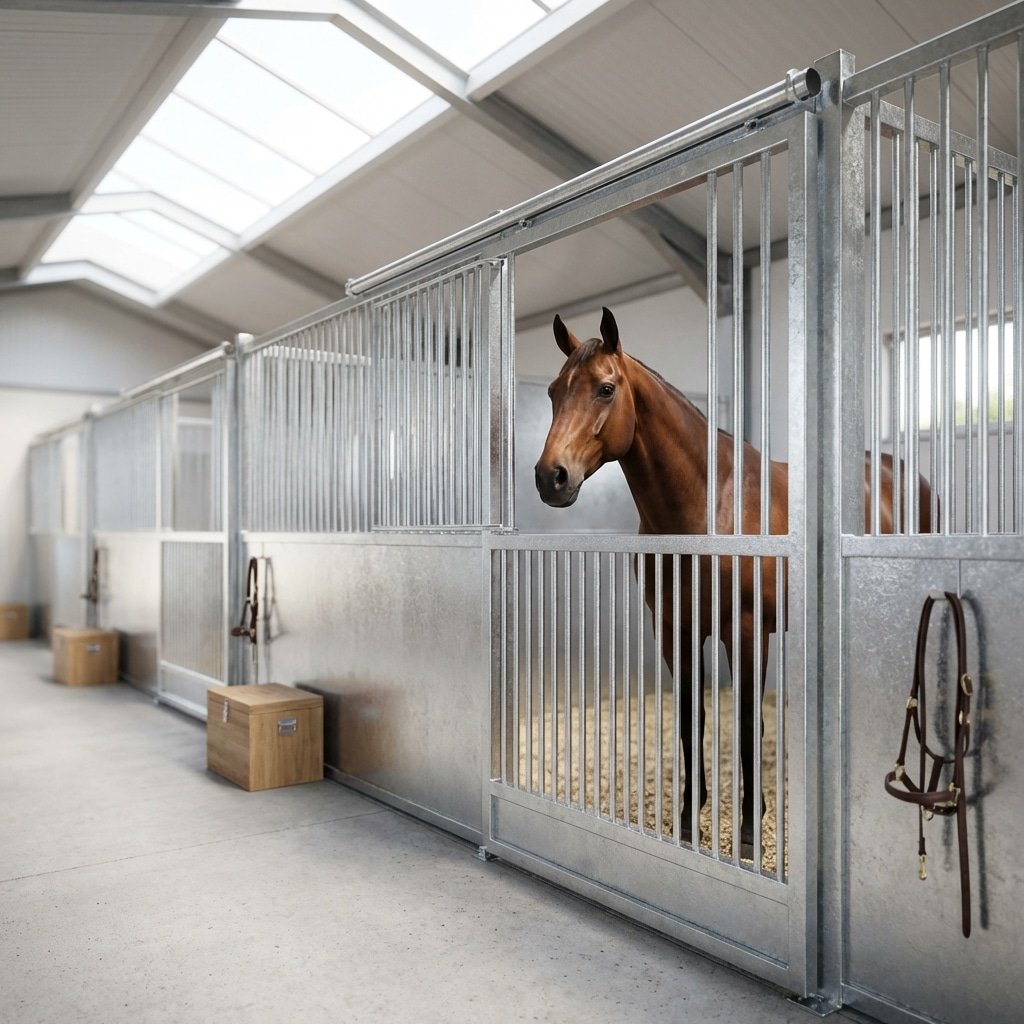
Quality metal stables use hot-dip galvanized steel frames and UV-resistant HDPE panels that retain structural integrity under heavy use, minimizing risks from collapse or sharp edges. Integrated ventilation and efficient stall layouts reduce heat stress and maintain airflow. Operators choose metal for its proven resistance to kicks, chewing, and impact, ensuring horses remain secure without frequent repairs.
How Does the Cost of a Metal Stable Compare to Wood?
Upfront, metal stables may be similar or marginally higher in price than basic wood builds. Over time, resistance to rot, insect damage, and weathering sharply reduces maintenance costs. Fast installation and portability can lower site preparation expenses, making long-term service life a decisive factor in total cost evaluation.
Are Metal Stables Hotter in Summer and Colder in Winter?
Metal transfers heat faster than wood, so summer designs must provide shading and ventilation. UV-resistant panels and roof overhangs help maintain cooler conditions. In winter, insulation or windbreaks paired with airflow management protect comfort and air quality. These measures control seasonal temperature swings while preserving durability.
How Long Do Metal Horse Stable Buildings Last?
Hot-dip galvanized steel frames with thick protective coatings typically deliver 10+ years of service without rust or structural loss. UV-resistant HDPE prevents warping and cracking, keeping panels secure. With scheduled maintenance, many operators achieve consistent performance even under heavy use by active breeds.
Can I Customize the Layout of a Pre-Engineered Metal Stable?
Modular systems allow linking single, double, or quadruple units to match herd size and workflow. Options include swing or sliding doors, varied panel designs, and roof thickness for climate control. Skilled fabricators can adjust dimensions for site constraints and handling routines, preventing wasted space and inefficient stall movement.
Strategic Insights for Your Next Stable Project
Metal horse stable buildings deliver the structural strength, rapid installation, and low-maintenance performance essential for long-term efficiency. Incorporating hot-dip galvanized framing, UV-resistant HDPE panels, and modular configurations ensures resilience in demanding climates while accommodating herd growth.
For best value, match insulation to local conditions to cut energy costs and maintenance cycles. Partner with vendors who combine engineering quality with layout flexibility, and confirm warranty coverage to protect margins and support steady operational growth.


 English
  Spanish
  French
  Arabic
  German
0 Comments