


Benefits of Indoor Stabling
Indoor stabling delivers tangible operational, health, and commercial advantages for equestrian centers. It lets you control training schedules, environmental settings, and facility usage—driving better horse performance, lowering risks, and ensuring smoother management. Strategically, it enables new revenue streams and strengthens client confidence.
Consistent Training and Year-Round Use
Indoor stabling eliminates disruptions from rain, wind, or extreme heat, enabling horses to maintain a consistent regimen in every season. This reliability sharpens conditioning and preserves skills while keeping lessons and operations on schedule, ensuring stable cash flow. Clients expect both skill progress and dependable service, so making training weather‑proof directly elevates your offer.

Optimized Environment for Horse Health
Indoor facilities allow precise control of lighting, temperature, and humidity, reducing stress and common health issues such as respiratory irritation or joint strain. Pairing these controls with durable materials like UV‑resistant HDPE panels and insulated roofing protects both equine well‑being and your capital investment. Controlled spaces also simplify monitoring, enabling early intervention and efficient vet coordination.
Enhanced Safety for Horses and Riders
Bringing training indoors minimizes wildlife encounters, traffic exposure, and sudden noises that can spook horses. Incorporating impact‑absorbing footing and kick walls further protects against falls and hoof injuries. Lower hazard levels build confidence for group lessons and events, reduce liability, and strengthen customer loyalty.
Operational Efficiency and Maintenance
Enclosed stables enable year‑round upkeep and streamlined workflows. Staff can feed, groom, and clean in a secure, organized setting with equipment stored properly, cutting labor hours and preventing weather‑related wear. Well‑planned layouts reduce operating costs and increase staff satisfaction, supporting efficient, long‑term operations.
Business Value and Revenue Opportunities
Indoor arenas and stables increase property value and expand service capacity. Market to serious riders, host competitions, and rent arena time to generate multiple income streams while enhancing your reputation. High‑quality construction with low‑maintenance materials attracts premium clientele and investors, making indoor stabling both an infrastructure upgrade and a growth engine.

Layout & Design Considerations
When designing an indoor horse stable for a high-volume equestrian center, every layout choice affects workflow efficiency, animal health, and long-term adaptability. Developers and managers should plan configurations, dimensions, zoning, and materials for sustained operational performance. A well-structured design reduces staff strain, supports welfare standards, and minimizes costly future modifications.
Core Stable Layouts
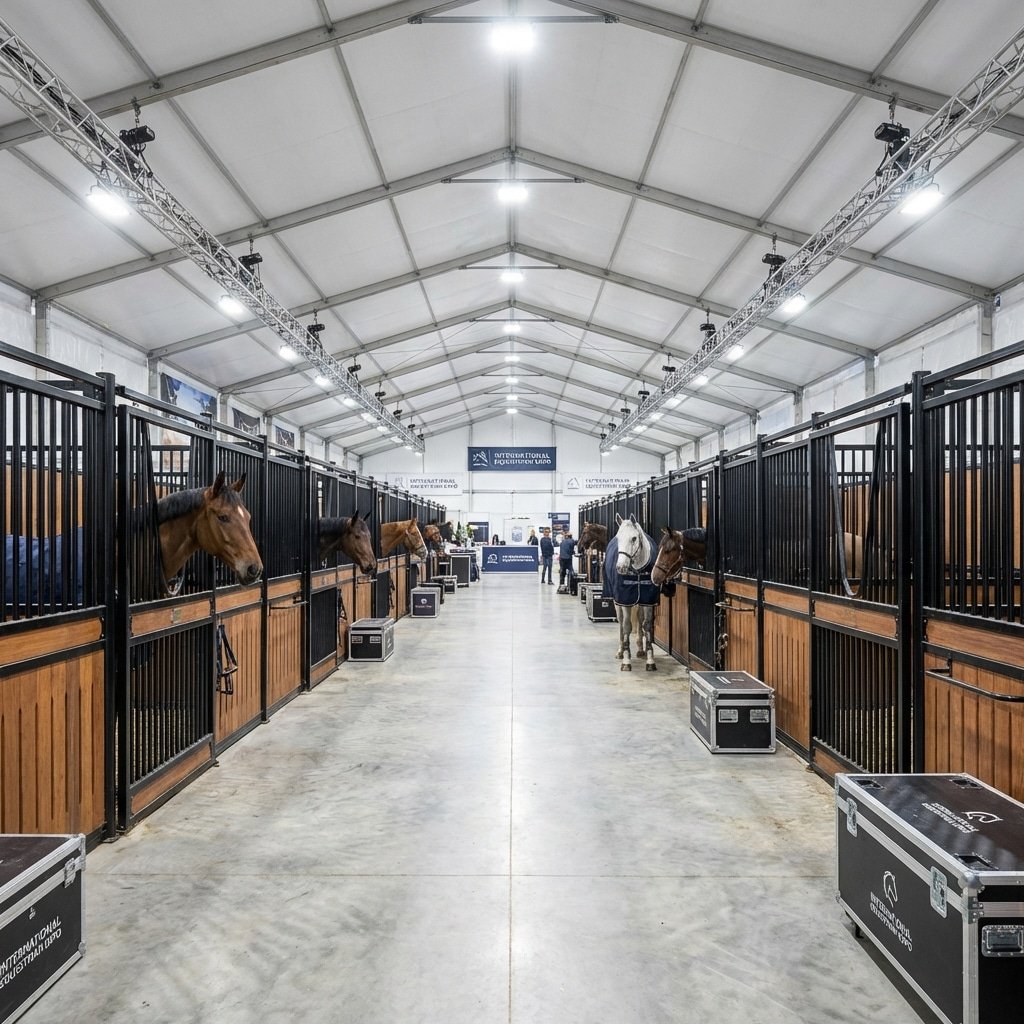
Choose layouts that directly enhance daily operations. Center-aisle barns provide all-weather stall access, critical in extreme climates. L- and U-shaped layouts separate activity zones, improving oversight and ventilation without sacrificing access. On space-constrained sites, two-story barns maximize land use with care areas below and storage above, keeping functions clearly segmented.
Stall and Aisle Dimensions
Stalls of at least 12×12 feet suit most horses; larger sizes are required for breeding or large breeds. Aisles 14–16 feet wide allow safe movement of horses and equipment and enable stall-front storage. Wider aisles also improve airflow and allow rapid emergency response without congestion.
Functional Zoning for Efficient Workflow
Locate feed and tack rooms at central junctions to shorten travel between key areas. Position wash bays near stalls with durable, well-drained flooring to prevent hazards. Place grooming and preparation zones adjacent to the main arena to streamline training and event flow. Logical zoning reduces wasted motion and staff fatigue.
Ventilation and Lighting Strategies
Use windows, ridge vents, and open stall fronts to draw fresh air throughout the stable. Add ceiling fans where natural flow is insufficient. Skylights or large windows keep horses calm and lower energy usage, while daylight-spectrum arena lighting ensures visibility in winter and supports both horse and staff well-being.
Safety Features and Material Selection
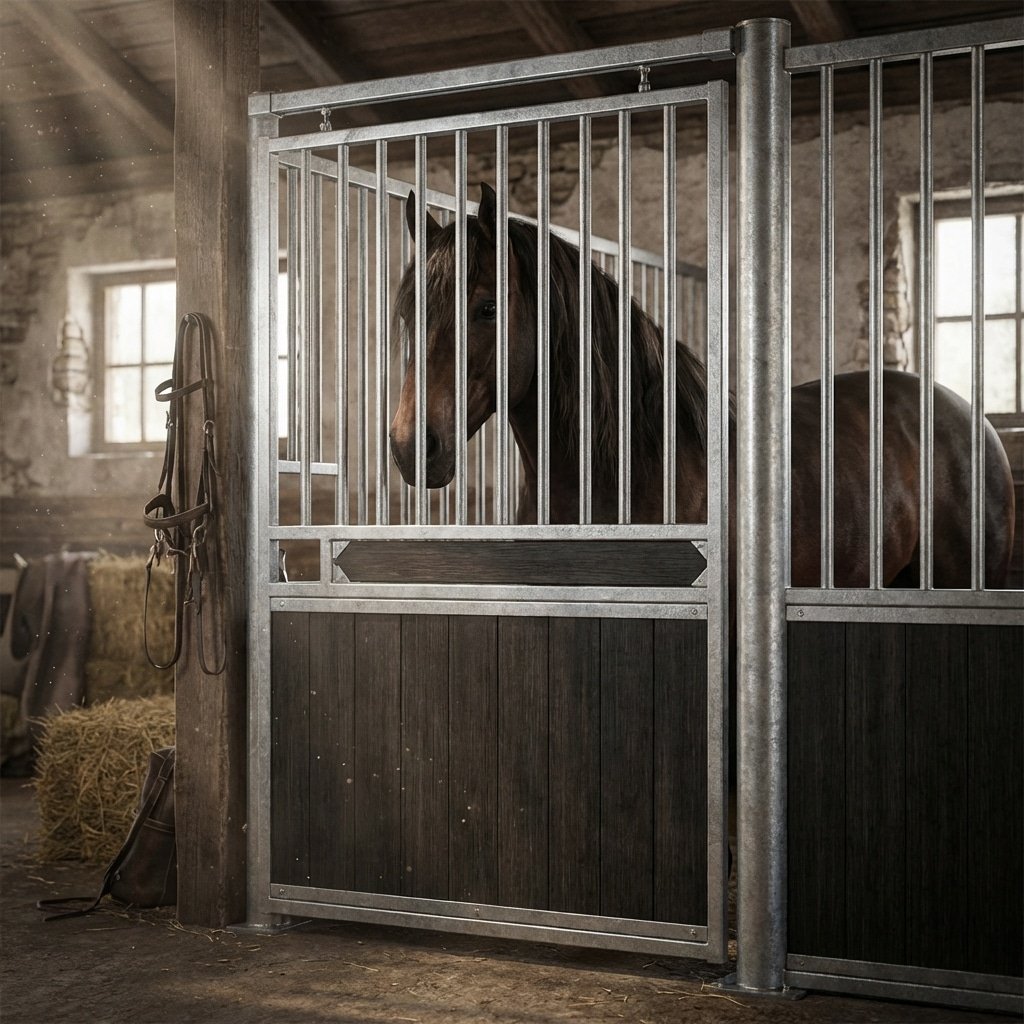
Solid stall walls up to 4.5–5 feet prevent kicking injuries; open panels above maintain sightlines and airflow. Install one-hand-operable latches positioned out of horse reach. Non-slip surfaces such as rubber pavers or textured concrete reduce falls. Rounded edges on doors and partitions eliminate sharp hazards during movement.
Regulatory Compliance and Facility Expansion
Confirm zoning and building code compliance before construction to avoid mid-project redesigns. Incorporate capacity for additional stalls or arenas so growth can occur without disrupting operations. Planning for expansion safeguards investment and ensures updates fit seamlessly into existing workflows.
Maintenance and Cleanability Considerations
Washable surfaces and sloped stall floors improve drainage and cut mucking labor. Central vacuum systems in busy aisles aid dust control, while washable wall materials in high-traffic areas preserve hygiene. These measures strengthen biosecurity and create a healthier environment for horses and staff.

Key Features of an Indoor Stable
In a commercial equestrian center, every design choice must balance horse welfare with workflow efficiency and cost control. Select durable, low-maintenance materials and configurations proven to withstand heavy use while keeping horses healthy and staff operations smooth.
Stall Design and Door Configurations
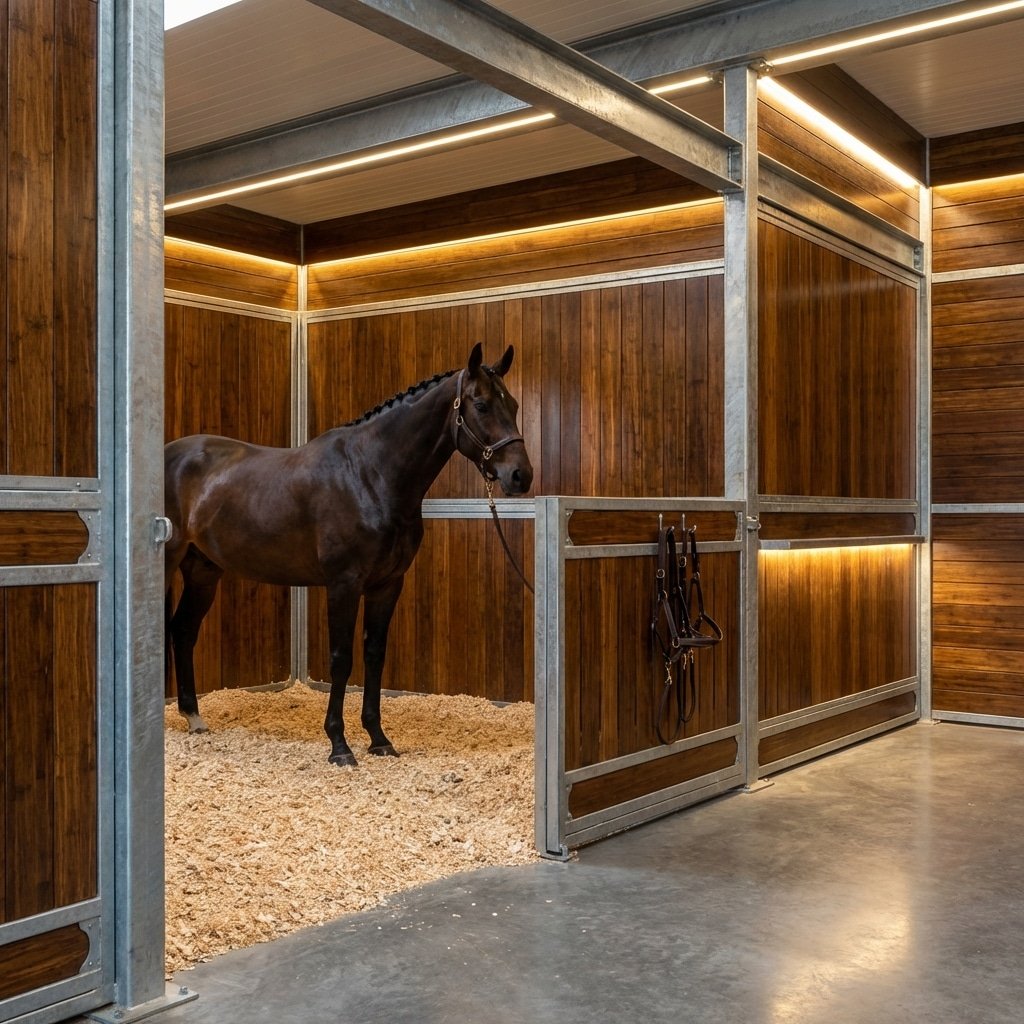
Use stall dimensions of at least 12’x12′ to allow movement without creating hazards, and keep wall height at or above 8 feet with solid lower partitions to block drafts and prevent bites or kicks—reducing injury-related vet costs. Install sliding doors to save aisle space and maintain traffic flow, with secure latches inaccessible to horses. Where exterior access is beneficial, Dutch doors enable ventilation or feeding without opening the entire stall.
Ventilation, Lighting, and Flooring
Ensure continuous airflow with ridge vents, cupolas, and partially open stall fronts to reduce respiratory issues and bedding moisture. Combine daylight with well-mounted artificial lighting to keep visibility consistent year-round, improving grooming precision and reducing accidents. For flooring, choose non-slip surfaces, slope for drainage, and top with climate-appropriate bedding or mats to prevent leg strain.
Support Facilities: Tack Rooms and Grooming Areas
Design tack rooms to be secure, organized, and climate-controlled to protect equipment from moisture. Allocate about 100 sq ft per 5–6 horses and incorporate lockers with keypad access to reduce theft and disputes. Grooming and vet spaces should have 500 lux lighting, non-slip floors, rated tie-up rings, clear vehicle access for professionals, and sufficient power outlets to improve service efficiency and minimize disruption.
Indoor Arenas and Layout Options
An indoor arena extends training hours and ensures consistency in all weather. Choose footing that balances grip with dust control and manage moisture to safeguard respiratory health. Insulated walls with planned ventilation stabilize temperature without trapping odors or moisture. Layout choices—L-shaped or U-shaped for noise separation, or two-story/courtyard for expansion—help manage horse movement patterns to reduce stress and prevent accidents.
Safety and Security Features
Install fire detection and suppression systems—smoke detectors, extinguishers, sprinklers—early in construction, as insurers often require proof of their maintenance. Use CCTV and motion-sensor lighting to deter theft and monitor incidents. Small measures like well-placed mirrors to reduce visual isolation and removing sharp hardware further cut injury risk during sudden reactions.

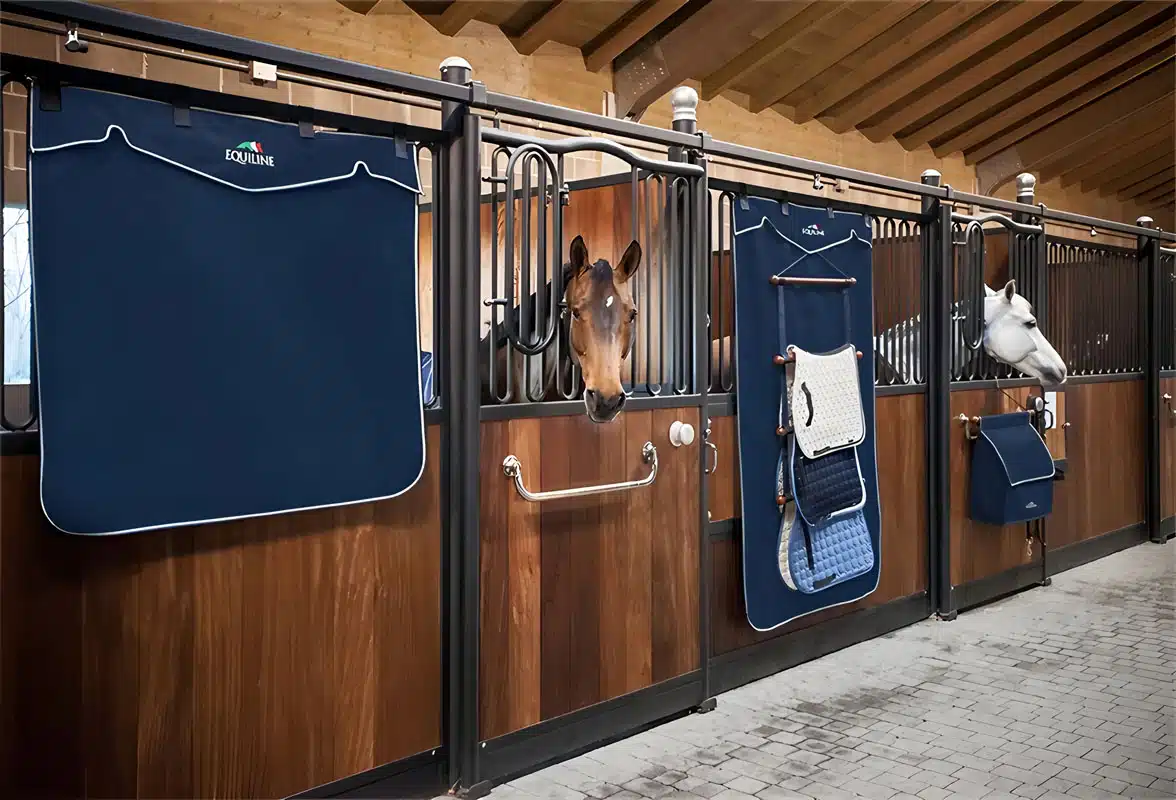
Durable Horse Stables Built for Every Climate
Explore sturdy, customizable stables designed to withstand extreme weather and meet global safety standards. Whether you need lasting steel frames, efficient ventilation, or specialized insulation, DB Stable delivers quality solutions tailored to your region’s needs.
Climate & Air Quality Management
In indoor equestrian facilities, climate and air quality control hinge on smart design coupled with disciplined daily routines. Managers must safeguard horse respiratory health and protect structures from moisture and contaminant buildup. This means integrating effective ventilation, selecting non‑emitting materials, and aligning operations to sustain a safe, efficient environment year‑round.
Ventilation System Design and Impact
Mechanical systems with regulated fans and ducting maintain low levels of carbon dioxide, ammonia, ultrafine particles, and allergens—especially critical in winter when air exchange falls. Natural ventilation depends on building orientation and open pathways, making it unreliable in sealed structures. High ceilings and wide open spans boost air volume and dispersal, while low ceilings and solid stall dividers trap pollutants. Treat airflow as an adjustable asset, tuning it to stable activity and season.

Stable Layout and Building Materials
Layouts with high ceilings move warm, stale air upward and out, reducing dust and particulates. Narrow passages and low roofs slow circulation, creating zones where irritants linger and impact horse and worker health. Source inert materials such as sealed timber or HDPE panels free of volatile compounds, and verify supplier specs to avoid coatings or fillers that degrade indoor air quality.
Daily Management Practices to Control Airborne Particles
Coordinate cleaning so ventilation runs at higher rates during and after dust‑producing tasks, and stagger high‑dust operations to limit exposure. Use low‑dust bedding and feeds, and position ammonia and dust monitors in poorly ventilated areas. Data from these sensors should guide timely adjustments to fan speeds and vent positions before thresholds are breached.
Climate and Environmental Influences
Weather dictates how much intervention is needed. Damp conditions reduce airborne dust, while hot, dry climates increase suspension and demand faster ventilation cycles and added suppression strategies. Implement integrated climate control that balances air changes with humidity regulation, and set operational thresholds so systems respond automatically when metrics exceed safe limits.
Best Practices for Optimizing Stable Air Quality
Choose bedding and feed designed for minimal dust release, match cleaning frequency to activity in each zone, and align these tasks with active ventilation to prevent contaminant resettling. Maintain balanced airflow—too much can re‑circulate settled dust—and use ongoing ammonia and particle readings to fine‑tune system output. When upgrading climate control, ensure solutions address both airflow and humidity to reduce allergens, protect respiratory health, and sustain operational efficiency across all seasons.
Mistakes to Avoid in Indoor Design
Design flaws in an indoor horse stable can drive up operating costs, create safety hazards, and trigger long-term structural issues. For facility developers and managers, every measurement, material, and site decision directly affects horse welfare and profitability. Avoiding the following missteps will improve safety, efficiency, and lifespan of your investment.
Inadequate Stall Sizing
Stalls smaller than the 12’x12′ industry norm restrict movement, increasing stress-related injury risks. Size stalls to the breed and purpose; larger breeds and foaling mares require extra space to prevent harm. Skimping here leads to higher medical bills and lost client confidence.
Poor Site Selection and Drainage Issues
Building on low-lying land without an engineered drainage plan results in chronic pooling, muddy turnout, and foundation damage. Persistent moisture fosters bacteria and parasites. Conduct an elevation, soil absorption, and wind exposure survey before construction to protect stable integrity and animal health.
Insufficient Ventilation and Low Ceilings
Stagnant air traps dust and ammonia, damaging respiratory health and inflating vet costs. Use ridge vents, open soffits, and higher ceilings to maintain airflow and control moisture. Effective ventilation shields valuable horses from preventable respiratory illness.
Inadequate Lighting Design
Poor lighting increases handling risks and stresses horses. Maximize daylight with strategic window placement and supplement with zoned, color-consistent LEDs for glare-free visibility. Balanced lighting reduces accidents in grooming, feeding, and tack areas.
Neglecting Proper Drainage and Flooring
Flat floors without adequate drains or slip-resistant surfaces complicate cleaning and encourage bacterial growth. Incorporate slight slopes toward drains, use durable non-slip materials, and protect high-traffic zones with appropriate matting to extend stable life and lower hygiene costs.
Other Common Design Oversights
Narrow aisles or undersized doorways hinder horse movement and raise collision risk. Design aisles wide enough for safe passage of horses, staff, and equipment. Allocate designated storage to avoid clutter, and protect wooden surfaces with chew-resistant coverings to reduce repairs. These adjustments boost daily efficiency and prevent needless damage.

FAQs About Indoor Horse Stables
Indoor horse stable projects demand designs that integrate safety, air quality control, and efficient daily operations. The following guidance addresses core planning decisions for facility managers and developers who combine stabling with arenas in large enclosed environments.
What is the best layout for an indoor stable with an arena?
Arrange stables and the arena to allow horses direct access without crossing high-traffic human zones. Create separate aisles to minimize horse–human intersections and reduce accident risk. Position tack rooms and storage adjacent to the arena to eliminate unnecessary hauling and keep sessions on schedule, boosting staff productivity.
How do you properly ventilate such a large building?
Combine natural airflow via windows and vents with mechanical systems such as high-capacity fans. Configure vents for cross-ventilation to expel dust and ammonia, safeguarding respiratory health. Incorporate seasonal controls to retain heat in winter and reduce humidity in summer, lowering veterinary costs and supporting year-round training.
What type of lighting is best for an indoor arena?
Install evenly spaced LED fixtures to prevent shadows that can unsettle horses or obscure footing. Choose daylight-simulating color temperatures to maximize visibility and equine comfort. Use dimmable, energy-efficient fittings to match light levels to activities, reducing electricity costs without compromising safety for evening training or events.
What are the key safety features for a large boarding stable?
Specify stall walls and doors made from durable, horse-safe materials that resist breakage and toxins. Equip the facility with fire extinguishers and clearly marked emergency exits accessible from any location. Keep pathways clear and slip-resistant to enable rapid evacuation and reduce injury risk in emergencies.
How can design improve daily workflow efficiency?
Locate feed storage near stalls to cut handling time and maintain consistent feeding schedules. Build wide aisles for equipment movement without forcing staff or horses into tight spaces. Position wash and grooming areas beside stabling to streamline prep and cleanup, allowing more hours for training and client services.
Strategic Insights for Effective Stable Design
To build an indoor horse stable that meets welfare standards and maximizes operational efficiency, align layout, materials, and environmental controls with long‑term performance goals. Specify stalls and aisles that minimize injury risks while enabling smooth workflows. Integrate durable, low‑maintenance finishes and safety systems from the outset to safeguard assets and limit liabilities.
Plan for seasonal climate shifts with adjustable ventilation and humidity management, using biosecure, easy‑clean surfaces. In large facilities, these measures protect revenue streams, enhance brand credibility, and position the stable to adapt to future market demands.

 English
  Spanish
  French
  Arabic
  German
0 Comments