


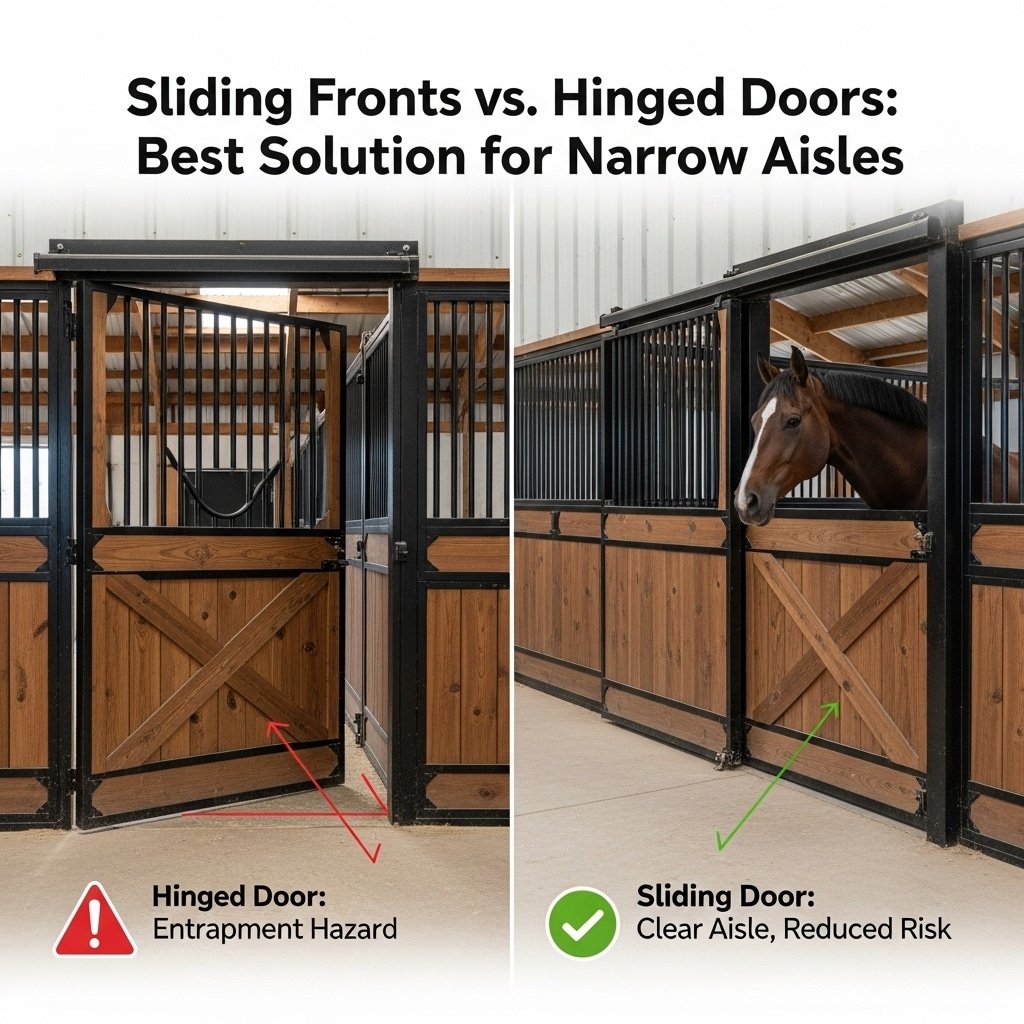
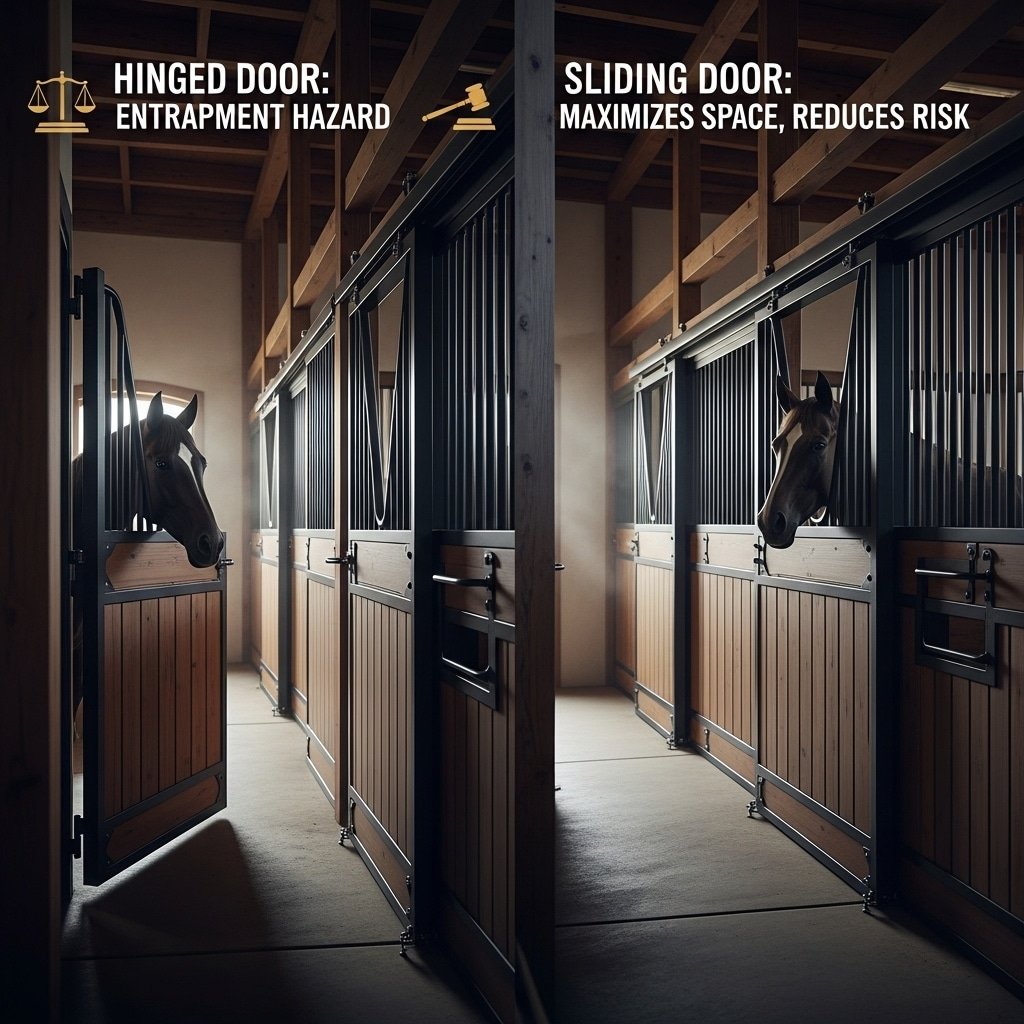
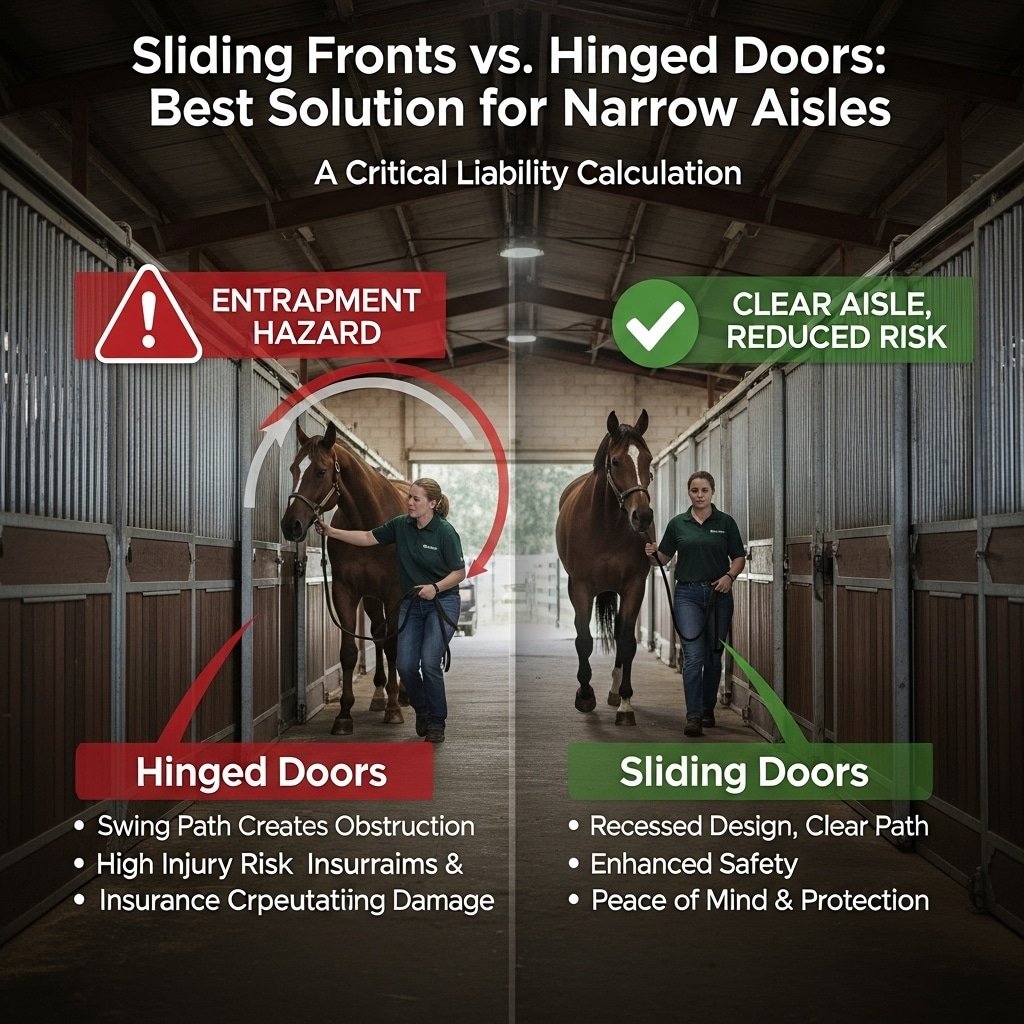
Choosing between Sliding vs Hinged stall doors for narrow aisles is a critical liability calculation, not just a layout preference. A traditional hinged door’s swing path creates a clear entrapment hazard, exposing facilities to significant injury risks and potential insurance claims that damage both finances and reputation.
This analysis benchmarks both door systems against non-negotiable safety metrics. We evaluate performance based on ‘Cast-Proof’ bottom gap specifications (approx. 50mm) and the structural integrity of kick-proof materials like Q235B steel to provide a definitive engineering-based solution.
Is Your Old Barn a Safety Trap for Modern Horses?
Yes, old barns are often safety traps. Outdated layouts, splintering wood, poor airflow, and improper stall gaps cause entrapment, injuries, and respiratory issues for modern horses.
Hidden Dangers in Traditional Construction
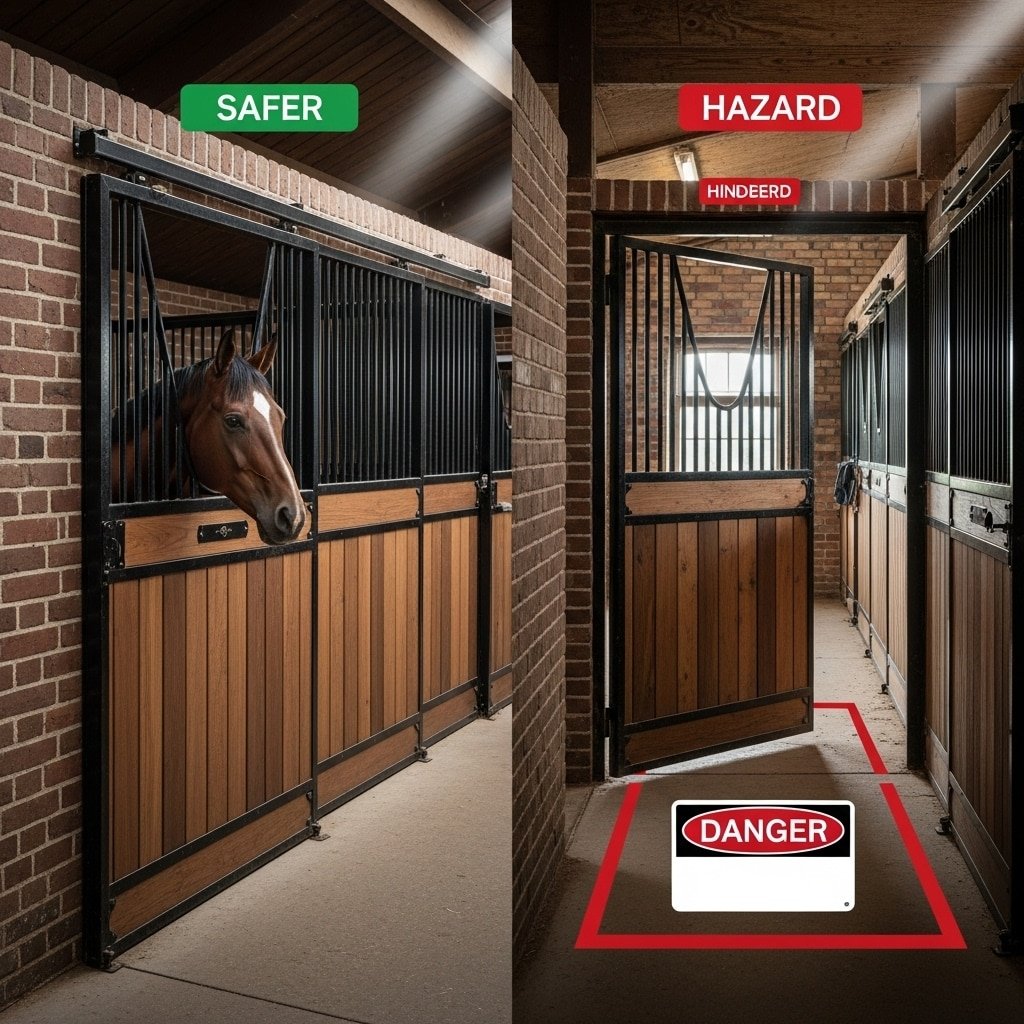
Many older barns were not designed for the size or behavior of today’s horses. Aisles are often too narrow, creating serious risks when combined with traditional hinged doors. A swinging door can easily trap a horse or handler against a wall, turning a simple movement into a dangerous situation.
The construction materials themselves present another layer of risk. Over time, wood splinters, nails work their way loose, and metal components rust, creating sharp edges that can cause serious lacerations. These are not just cosmetic issues; they are active hazards waiting for contact.
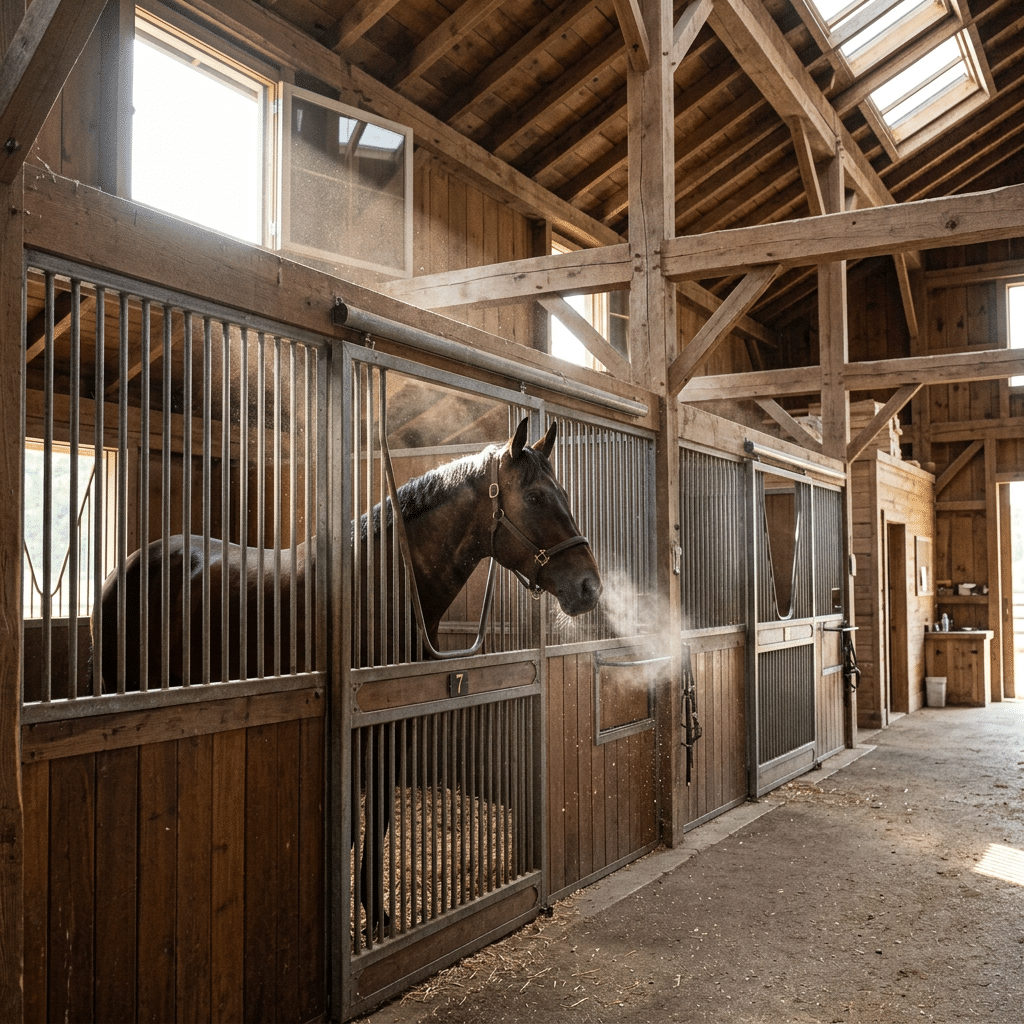
Poor ventilation is a chronic problem in older structures. Dust from hay and bedding accumulates with nowhere to go, and stale air traps ammonia and moisture. This environment directly contributes to respiratory problems that can compromise a horse’s health and performance.
Modern Solutions for a ‘Cast-Proof’ Environment
Engineered stall systems directly address these legacy failures with specific safety standards. The goal is to create an environment that anticipates and prevents common injuries, not just contain the horse. This is achieved through deliberate design choices.
- ‘Cast-Proof Design’: A horse that gets “cast” (stuck against a wall while rolling) can panic and get its legs trapped under a partition or door. Our systems are engineered with a minimal bottom gap of approximately 50mm, making it impossible for a hoof or leg to become wedged underneath.
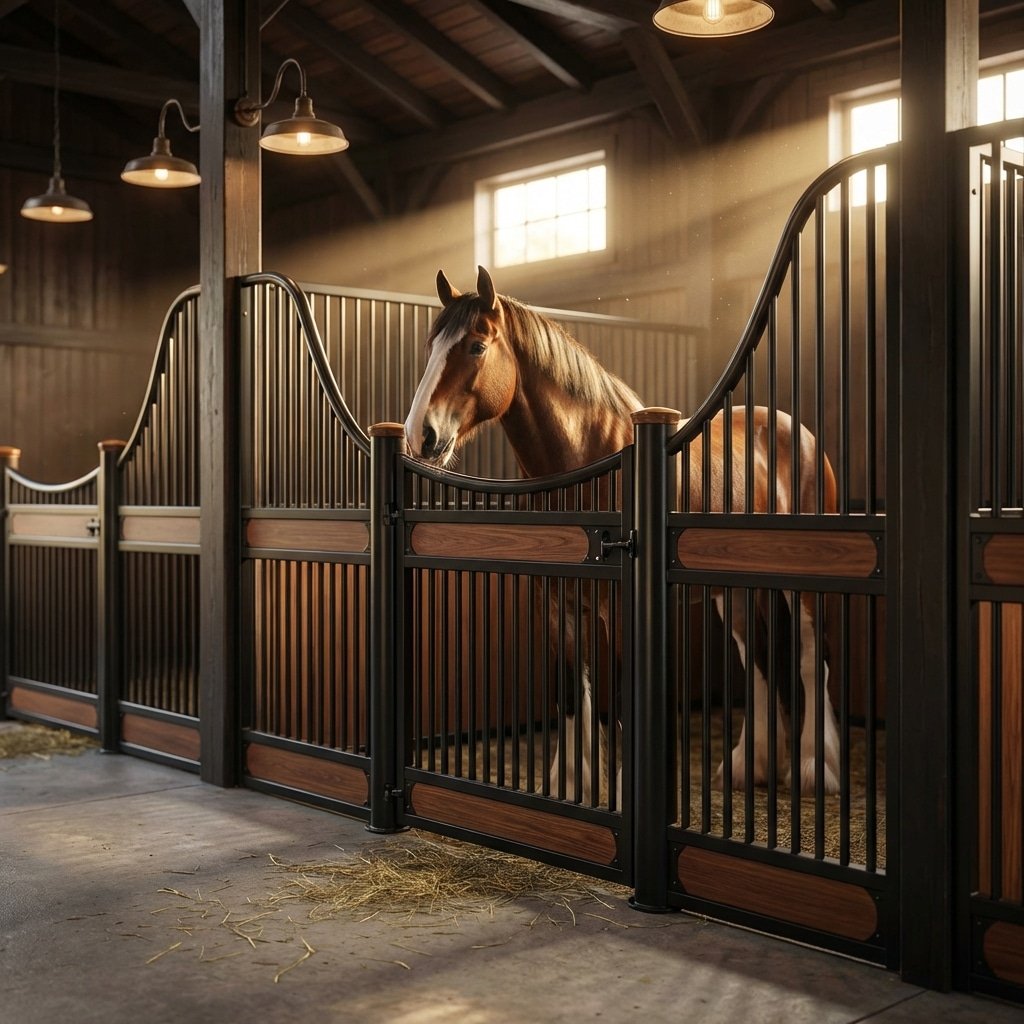
- Kick-Proof Materials: A kick can shatter old wooden planks or bend cheap metal, creating a new hazard of sharp points. We use high-strength Q345B steel frames and impact-absorbing HDPE infill. These materials are built to take a direct hit without splintering, cracking, or creating a dangerous failure point.

Best 10 Safety Features to Retrofit in 2026
Key retrofits for 2026 focus on kick-proof materials, cast-proof designs, proper ventilation, and smooth track systems to address common injury and health risks in older barns.
| Safety Feature | Why It’s a Priority / Key Spec |
|---|---|
| 1. Durable, Kick-Proof Walls | Replace splintering wood with Q235B steel frames and impact-absorbing infill like 28mm+ HDPE or high-density bamboo. This prevents catastrophic failure from kicks. |
| 2. Smooth, Snag-Free Finishes | Eliminate all sharp edges. Welds must be ground smooth before galvanization, and all fasteners should be countersunk 304 stainless steel to prevent cuts and scrapes. |
| 3. Tight Bar & Grill Spacing | The old 3-4 inch gap standard is a known entrapment hazard. Modern safety requires a maximum 2-inch gap between bars to prevent horses from trapping a hoof. |
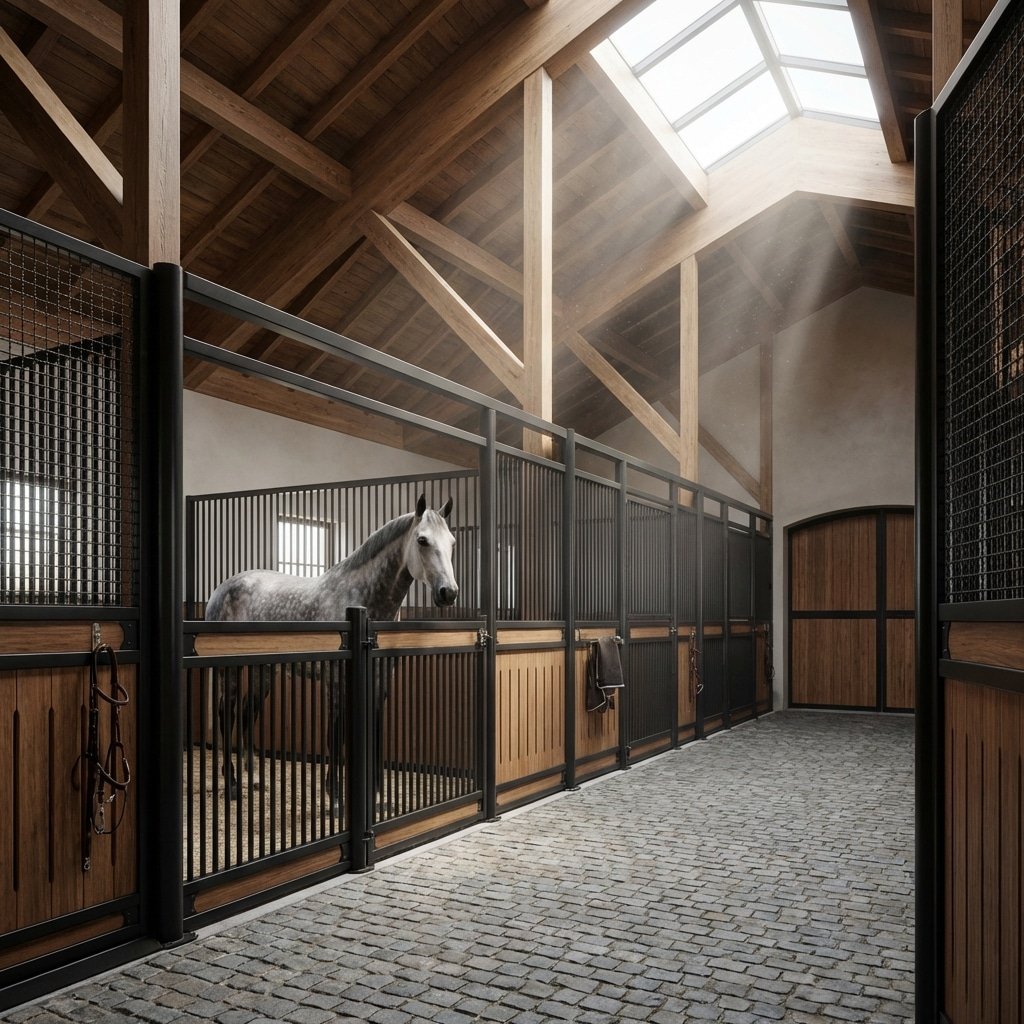
| 4. Sliding Stall Doors | These are non-negotiable for narrow aisles. They eliminate swing-path hazards and entrapment risks. Systems with hidden tracks reduce maintenance and debris buildup. |
| 5. Proper Door Dimensions | Stall openings must be at least 4 feet wide and 8 feet high. Anything smaller increases the risk of hip or head injuries during entry and exit, especially in emergencies. |
| 6. Secure, Horse-Proof Latches | Upgrade to snag-free latches that are simple for humans to operate with one hand but impossible for a horse to manipulate. This prevents escapes and handler finger injuries. |
| 7. “Cast-Proof” Bottom Gaps | The gap between the bottom of the stall door/wall and the floor must be minimal (approx. 50mm). This prevents a rolling horse from getting a leg stuck underneath. |
| 8. Interlocking Rubber Flooring | Install interlocking mats over a compacted, level base. This provides a non-slip, cushioned surface that reduces leg fatigue and stops mats from shifting to create hazardous gaps. |
| 9. Enhanced Ventilation | Use open-top grill designs to promote “stack effect” ventilation. This allows hot, ammonia-laden air to rise and escape, protecting the horse’s respiratory system. |
| 10. Protected Electrical Systems | Encase all wiring in metal conduit and use lighting fixtures rated for agricultural use (dust and moisture-proof). This is a critical fire prevention upgrade for any barn. |
Build World-Class Stables That Last Decades
Why You Must Replace Old Bar Spacing (3-Inch Rule)?
The old 3-inch bar spacing rule is a known hoof-trap hazard. Modern standards mandate narrower gaps, like a ‘cast-proof’ design under 50mm, to prevent trapped limbs and severe injuries.
The Hoof-Trap Hazard of Outdated Spacing
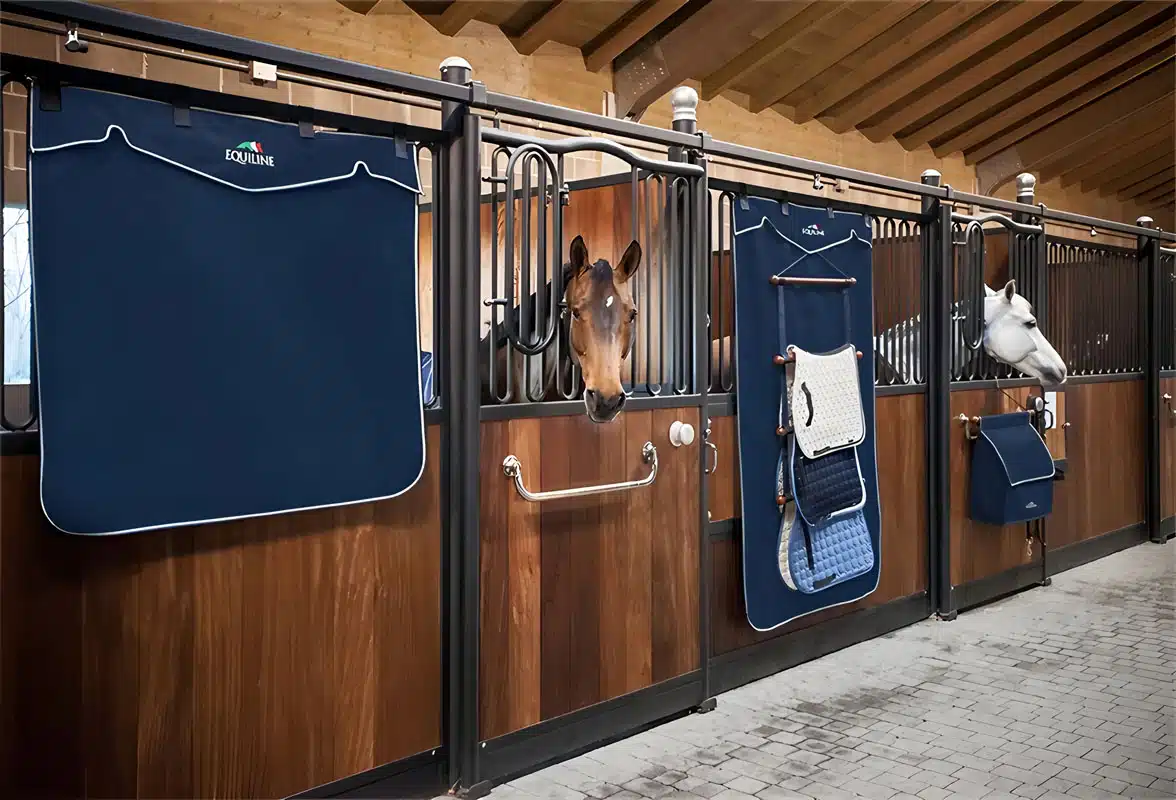
A 3-inch gap is dangerously deceptive. It’s just wide enough for a horse’s hoof to slip through during a kick or while pawing, but it’s too narrow for the larger fetlock joint to pass. This creates a perfect trapping point, turning a simple stall into a high-risk liability.
Once a limb is trapped, the horse’s instinct is to panic and pull back violently. This struggle often leads to catastrophic injuries like fractures, dislocations, or severe tendon damage. It’s a preventable accident that stems directly from an outdated and unsafe design measurement.
Engineering a Cast-Proof Design Below 50mm
The modern engineering solution is simple: eliminate the hazard entirely. At DB Stable, our systems are built on a ‘Cast-Proof Design’ principle. We engineer the bottom gaps to be approximately 50mm (under 2 inches), making them too narrow for a hoof to penetrate in the first place.
This specification isn’t just an upgrade; it’s a fundamental safety feature. It prevents a horse’s legs from getting caught when rolling or lying down near the stall walls. Adhering to this tight tolerance is a core part of meeting high animal welfare standards and removing one of the biggest fears for any stable owner.
How to Fix “Cast Traps” Under Old Doors?
A “cast trap” is a dangerous gap under a stall door. The fix is a modern door with a minimal, engineered gap—around 50mm—to prevent trapped legs.
Understanding the Risk of a Cast Horse
A “cast trap” is the space between the bottom of a stall door and the floor. This becomes a serious hazard when a horse rolls over close to the wall and gets stuck, a situation known as being ‘cast’. A panicked horse will thrash its legs trying to get up. If the gap under the door is too large, a leg can easily slide underneath and get trapped, leading to severe fractures or other catastrophic injuries.
Implementing a Cast-Proof Design Standard
The only real fix is to replace the old door with one that has a proper Cast-Proof Design. This standard engineering practice specifies a minimal bottom gap of approximately 50mm. This clearance is too small for a hoof to pass through, effectively eliminating the trap. It’s still large enough to allow the door to swing freely over common bedding materials. This safety feature isn’t an optional upgrade; it’s a non-negotiable component of modern stall engineering focused on animal welfare.
Are Your Old Latches Finger-Safe?
Sliding door systems often create pinch hazards between the door and frame. Hinged doors, with simpler hardware and predictable motion, generally pose fewer risks to fingers.
Identifying Pinching Hazards in Sliding Systems
Many older sliding door setups have inherent mechanical flaws that create specific risks for hands and fingers. The danger isn’t always obvious until an accident happens.
- Fingers can get caught in the gap between the sliding panel and the door frame as it closes.
- Tracks clogged with dirt or bedding can jam, leading to unpredictable and forceful movements when someone tries to force the door open or closed.
- The internal track and roller mechanisms contain moving parts that present a direct pinching risk during operation or maintenance.
The Advantage of Simple, Well-Maintained Hardware
Finger safety isn’t just about the type of door; it’s about the quality and design of the hardware itself. Robust components and straightforward designs reduce the chance of injury.
- Hinged doors typically use simpler latch mechanisms with fewer moving parts, which means there are fewer potential points to catch a finger.
- Using durable, corrosion-resistant materials like 304 Stainless Steel for all hardware components ensures smooth operation and prevents failures that could lead to injury.
Frequently Asked Questions
What makes your stables rust-proof for long-term use?
Our stables undergo a process called Hot-Dip Galvanization After Fabrication. We construct the entire steel panel first, then immerse it completely in molten zinc. This creates a protective coating over 70 microns thick that conforms to ISO 1461 standards, sealing every weld and surface against corrosion.
Why do you offer Q235B and Q345B steel options?
Q235B is our standard high-grade structural steel. For projects in colder climates, we recommend upgrading to Q345B. This steel grade has superior low-temperature impact toughness, ensuring it remains resilient and does not become brittle from horse kicks during freezing winter conditions.
Is a large gap at the bottom of the stall door dangerous?
Yes, a large gap poses a significant risk. Our stalls feature a ‘Cast-Proof Design’ with a minimal bottom gap of approximately 50mm (2 inches). This precise spacing is engineered to prevent a horse from getting a leg trapped underneath while rolling, a common cause of serious injury.
Do you sell individual stall components like grills or doors?
As a B2B manufacturer focused on distributors and large projects, we provide complete, engineered stable systems. Our products are supplied in integrated kits that include fronts, partitions, infill, and hardware. We do not retail individual components separately.
How does your packaging system reduce shipping costs?
We use a Steel Pallet Flat-Pack system. Traditional fully-welded stables are bulky, allowing only 12-15 sets in a 40HQ container. Our flat-pack design enables us to load 30-45 sets in the same space, saving our distributors over 60% on freight costs and protecting their profit margins.
Final Thoughts
Choosing a stable isn’t about price; it’s about managing risk. Our engineered standards, like the ‘Cast-Proof’ 50mm gap and Hot-Dip Galvanization after fabrication, prevent catastrophic failures. This protects your reputation from liability claims and builds long-term client trust.
Verify our engineering for yourself. We recommend a trial order for distributors to confirm our build quality and finish firsthand. Contact our team to discuss your project specifications and get a detailed quote.

 English
  Spanish
  French
  Arabic
  German
0 Comments