



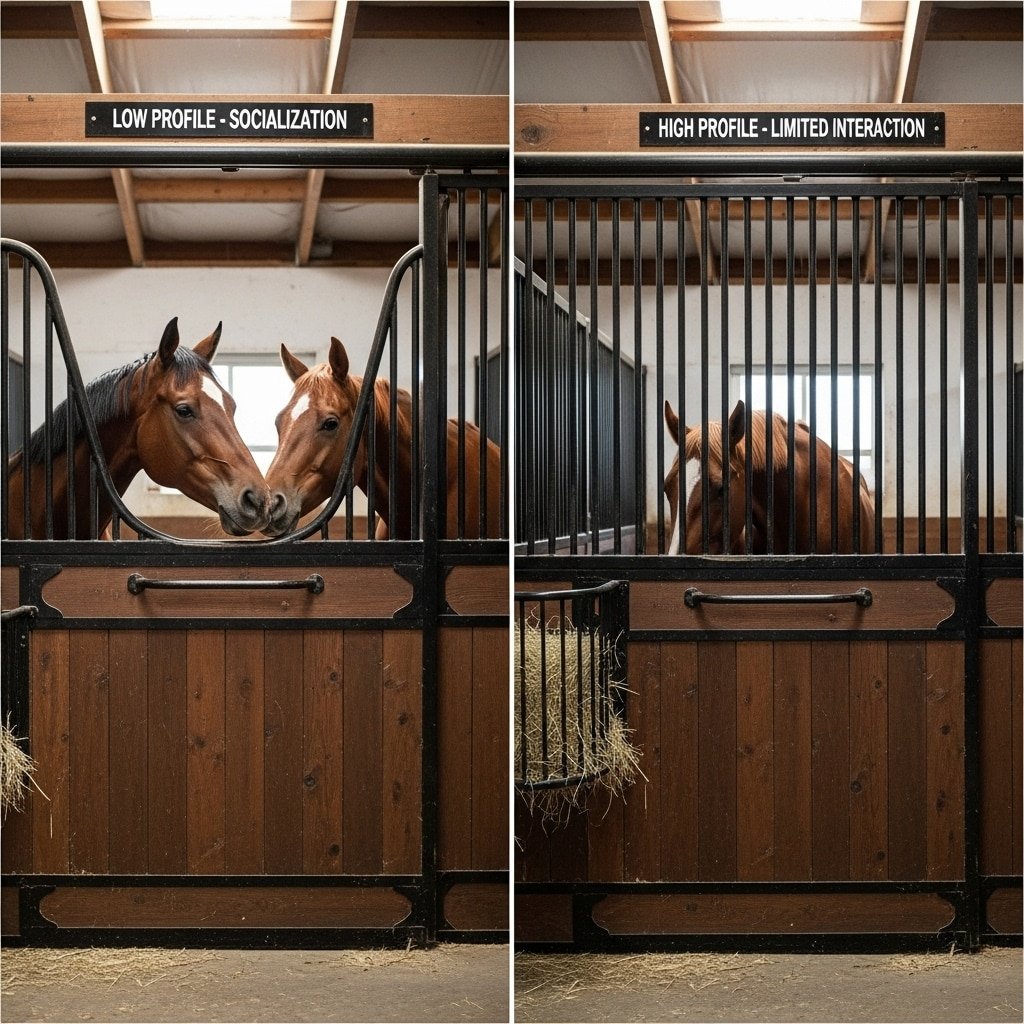
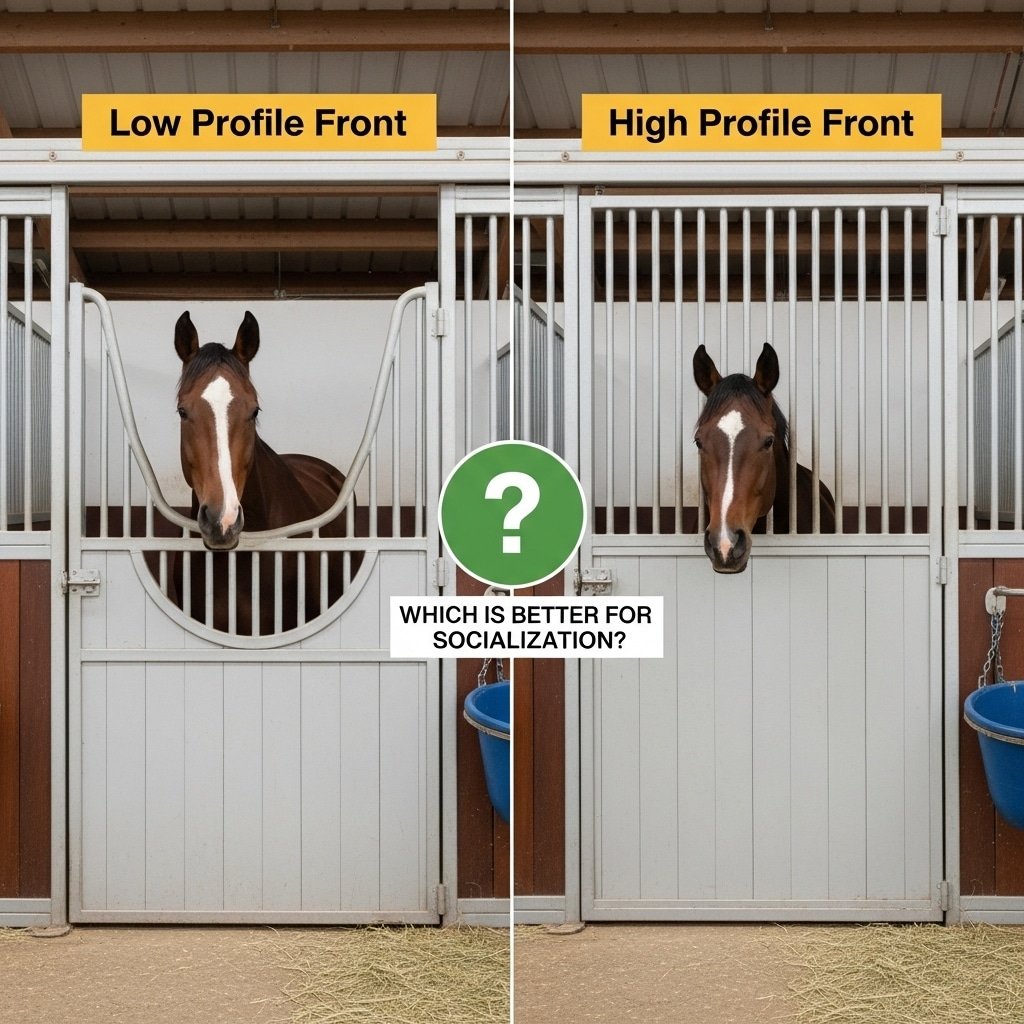
Deciding between low vs high profile stall fronts directly impacts herd socialization and operational risk. The wrong choice can foster stress-related vices or lead to preventable injuries, costing facilities thousands in veterinary bills and devaluing high-value animals.
This analysis moves beyond preference to empirical data. We benchmark designs against modern safety metrics like ‘cast-proof’ bottom gaps and hoof-safe bar spacing to define how proper engineering supports behavioral health without compromising safety.

Is Your Old Barn a Safety Trap for Modern Horses?
Older barns often have narrow aisles, low ceilings, and poor ventilation, creating serious safety traps. Modern stable systems use engineered steel and impact-absorbing materials to eliminate these risks.
Key Flaws in Outdated Barn Designs
Many older barns were not built with today’s equine safety standards in mind. These structures often contain hidden dangers that can lead to injury for both horses and handlers. The most common issues are fundamental design flaws that create daily risks.
- Narrow Aisles: Passageways under 12 feet wide create stress, limit a horse’s ability to turn safely, and can block access for emergency equipment.
- Low Ceilings: Anything under 8 feet poses a significant head injury risk for a rearing horse. This is a common and dangerous oversight in older buildings.
- Poor Airflow & Lighting: Stagnant air from inadequate ventilation directly contributes to respiratory problems. Poor lighting makes it hard to spot hazards and increases the risk of accidents.
- Deteriorated Materials: Old wood can splinter, rot, or harbor pests. Aging masonry can crack and collapse. Both compromise the structural integrity and safety of the stall.
Engineered Solutions for Today’s Safety Standards
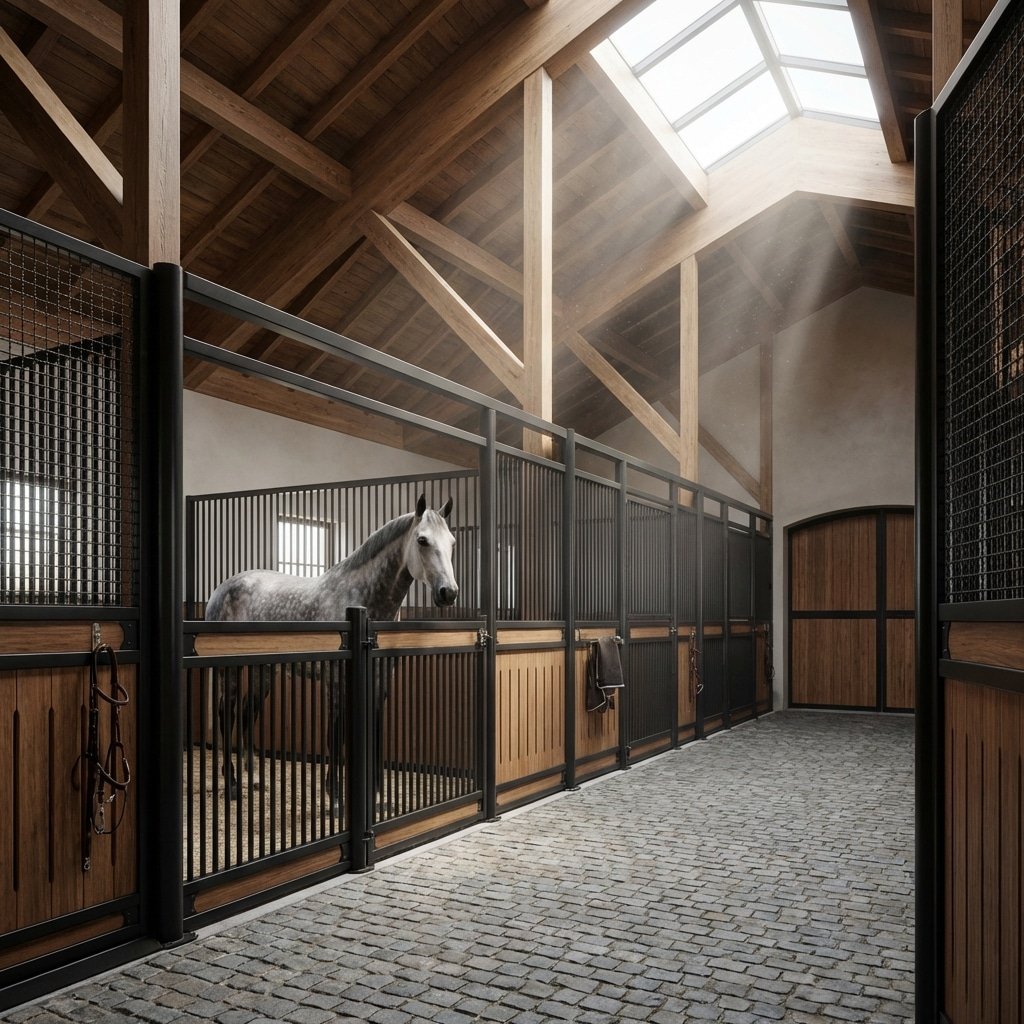
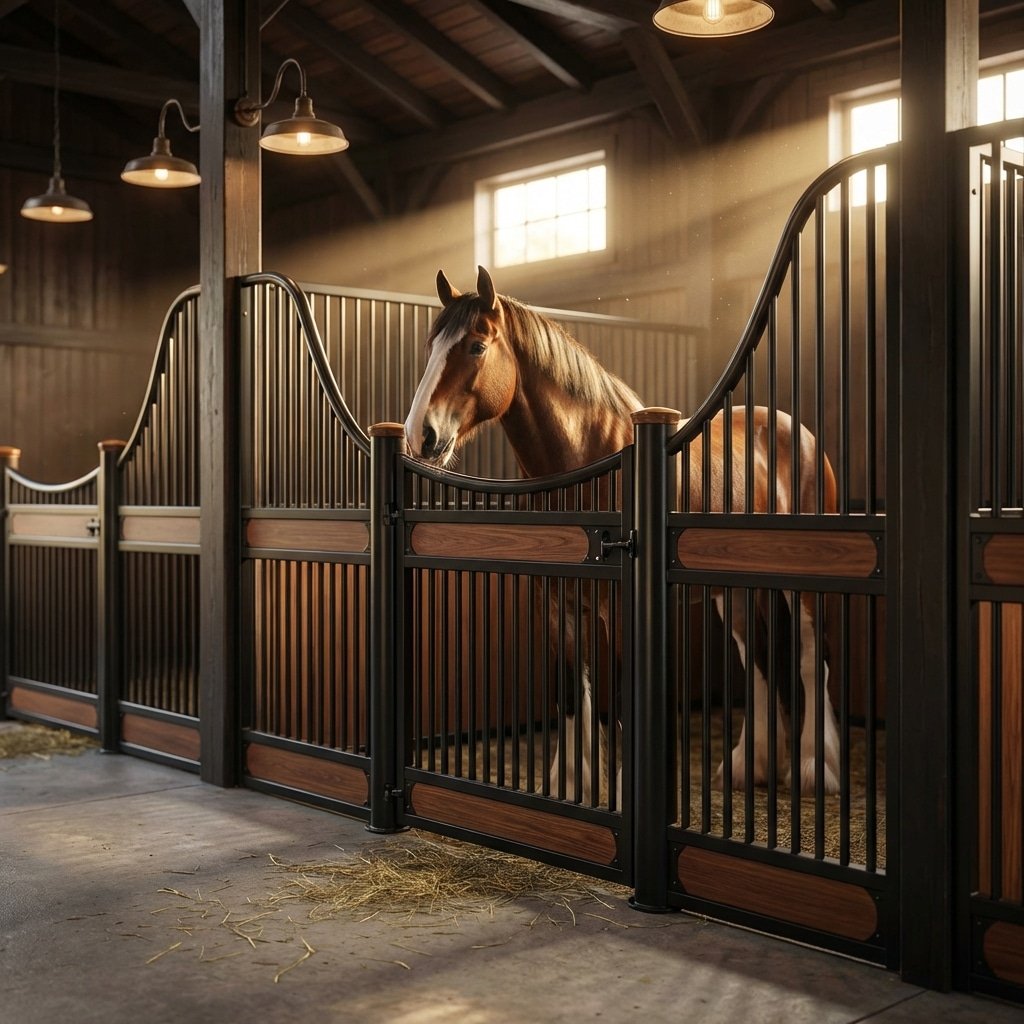
Modern stable systems directly counteract the dangers found in old barns. The focus is on material science and design that anticipates horse behavior, providing a safe and controlled environment. These aren’t just upgrades; they are essential safety features.
- ‘Kick-Proof’ Steel: We use Q345B high-strength steel, which has superior low-temperature toughness to prevent brittle fractures from kicks, especially in colder climates.
- ‘Cast-Proof’ Gaps: Our stall fronts feature a minimal floor gap (around 50mm), specifically designed to prevent a horse from getting a leg trapped underneath when rolling.
- Impact-Absorbing Infill: You can choose between UV-stabilized HDPE for zero maintenance or high-density bamboo that is three times harder than oak. Both materials absorb and dissipate impact from kicks.
- Stack Effect Ventilation: Standard open-grill designs promote natural air circulation. This effect pulls warm, stale air up and out, continuously drawing fresh air into the stall at the horse’s level.

Best 10 Safety Features to Retrofit in 2026
Old barns are liability traps. Prioritize retrofits that prevent common injuries like hoof entrapment and head trauma, and mitigate fire risks with modern materials and systems.
| Safety Feature | Why It’s Critical |
|---|---|
| 1. Kick-Resistant Wall Materials | Replace old wood with 28-38mm high-density bamboo or impact-absorbing HDPE. These modern infills don’t splinter or crack under kicks, preventing serious leg injuries. |
| 2. Smooth Interior Surfaces | Systematically eliminate all sharp edges, exposed bolt threads, and rough welds. A horse can get a serious laceration on a single protruding screw head. |
| 3. Tighter Bar & Grill Spacing | Rip out old 3-4 inch spaced bars. The modern safety standard is 1.5–2 inches to make it physically impossible for a hoof to get trapped. |
| 4. Sliding Stall Doors | Swap out old swinging doors. Sliding doors don’t obstruct narrow aisles, reducing the risk of collisions and panic when moving horses. |
| 5. Proper Door Dimensions | Widen openings to a minimum of 4 feet wide and 8 feet high. This prevents hip and poll injuries, especially with larger breeds moving through the doorway. |
| 6. Horse-Proof, Human-Safe Latches | Install modern, snag-free latches that horses can’t manipulate with their mouths but handlers can open quickly in an emergency without pinching their fingers. |
| 7. Interlocking Rubber Flooring | A compacted base with interlocking mats provides critical traction and cushioning. It eliminates gaps where hooves can get caught and reduces leg strain. |
| 8. Engineered Floor Drainage | Stalls must be graded to drain effectively. This isn’t just about smell; it reduces ammonia buildup and bacterial growth that cause respiratory and hoof issues. |
| 9. High Ceilings & Ventilation Grills | Ceilings should be at least 9 feet high. Combined with open top grills, this creates a “stack effect ventilation” that pulls ammonia and dust up and away from the horse. |
| 10. Shielded Electrical Systems | Enclose all lights, outlets, and wiring in durable, moisture-proof, and chew-proof conduits. Install them well out of a horse’s reach to prevent fire and electrocution. |
Invest in 20-Year Rust-Proof Horse Stables.
Why You Must Replace Old Bar Spacing (3-Inch Rule)?
Old 3-inch bar spacing is a serious entrapment hazard for horses, especially foals. Modern stalls with engineered, narrower gaps are essential to prevent severe injuries and ensure safety.
The Entrapment Risk of Wide Bar Gaps
Gaps of 3 inches or more are a significant liability. A foal can easily get a small hoof or even its head wedged in a space that wide. Once a horse is trapped, it will panic. That panic response often leads to catastrophic injuries like fractures, torn ligaments, or dislocations.
For any breeding facility or barn housing young horses, these older stall designs are not just outdated—they represent a direct and preventable risk to the animals and the business.
Modern Standards for ‘Cast-Proof’ Design
Today’s stall engineering prioritizes animal safety with bar spacing significantly narrower than a foal’s hoof. This isn’t just about the vertical bars; it’s about the entire structure.
Our “Cast-Proof Design” specifically addresses the gap at the bottom of the stall. We engineer this space to be minimal—around 50mm (under 2 inches)—to stop a horse’s leg from getting trapped underneath the wall while rolling. This focus on engineered safety meets the higher animal welfare standards expected in the industry and is becoming a non-negotiable requirement for professional operations.

How to Fix “Cast Traps” Under Old Doors?
A “cast trap” is a hazardous gap under a stall door where a horse can get a leg stuck. The fix is a purpose-built stable front with a Cast-Proof Design and minimal bottom clearance.
Identifying an Equine Cast Trap
First, let’s be clear on the terminology. A ‘cast’ horse is one that has rolled over in its stall and is now stuck against a wall, unable to stand up on its own. It’s a dangerous situation that can lead to panic and injury.
A ‘cast trap’ exploits this vulnerability. It’s not just a drafty gap. It’s a specific opening under an old stall door—just big enough for a hoof to slide through but small enough to trap the leg when the horse struggles. This can cause catastrophic leg injuries.
The Engineering Solution: A Cast-Proof Design
You don’t fix a cast trap by simply sealing the gap. The real solution is an engineered stable front with a ‘Cast-Proof Design.’ These modern systems maintain a minimal bottom clearance, typically around 50mm (about 2 inches), which is too small for a hoof to get through.
The structural integrity also matters. We use high-strength Q235B structural steel for the frame. This prevents the gap from bending or widening if a panicked animal puts its full weight against the door.
Are Your Old Latches Finger-Safe?
Old-style latches often lack modern finger-safe designs, creating trapping hazards. Current standards and quality materials are essential to prevent accidents, especially in high-traffic barns.
The Trapping Risks in Traditional Latch Designs
Many older stall latches were designed before anyone seriously considered finger-trapping injuries. Their exposed mechanisms, sharp metal points, and protruding hardware can easily catch fingers or clothing during operation. This risk is not just theoretical; trapping accidents between a door and its frame can cause serious harm.
Modern safety standards, like BS 8613, now set clear requirements to prevent these inadvertent injuries. The risk is much higher in busy facilities such as riding schools or training centers, where many different people handle the doors daily.
How 304 Stainless Steel Hardware Improves Safety
A safe latch is a reliable one. If a latch jams, corrodes, or breaks, it can lead to unexpected door movements that cause injuries. This is why material quality is non-negotiable.
Every DB Stable installation kit includes a complete hardware set made from 304 Stainless Steel. We use this specific grade because it prevents rust and mechanical failure over the long term. A smooth, corrosion-free latch operates predictably, eliminating the sticking points and sudden failures that create safety hazards.
Frequently Asked Questions
How can I prevent bedding from spilling out of stalls with ventilated bottoms?
The primary solution is to install a Shavings Guard, which is typically a solid steel sheet or a frame welded to the bottom of the stall front. This addition effectively contains bedding material inside the stall, keeping aisles clean, and is especially useful for stall designs that feature open bars or mesh for airflow.
Are stall grills sold separately, or only as part of a complete kit?
Yes, safety grills are available for separate purchase. This allows you to customize them to fit existing structures or unique barn designs. Grills can be tailored with different dimensions, styles, and operational features to meet specific safety and ventilation needs.
Final Thoughts
Retrofitting with random parts creates inconsistent safety and future maintenance issues. A complete stable system, engineered with “Cast-Proof” gaps and kick-resistant materials, is the only way to eliminate liability risks from old barn designs. This investment protects your animals and safeguards your professional reputation.
You can’t verify structural integrity from a brochure. We recommend a small trial order to test our material quality and hot-dip galvanization finish for yourself. Contact our engineering team to get the technical drawings and specifications for your facility.

 English
  Spanish
  French
  Arabic
  German
0 Comments