


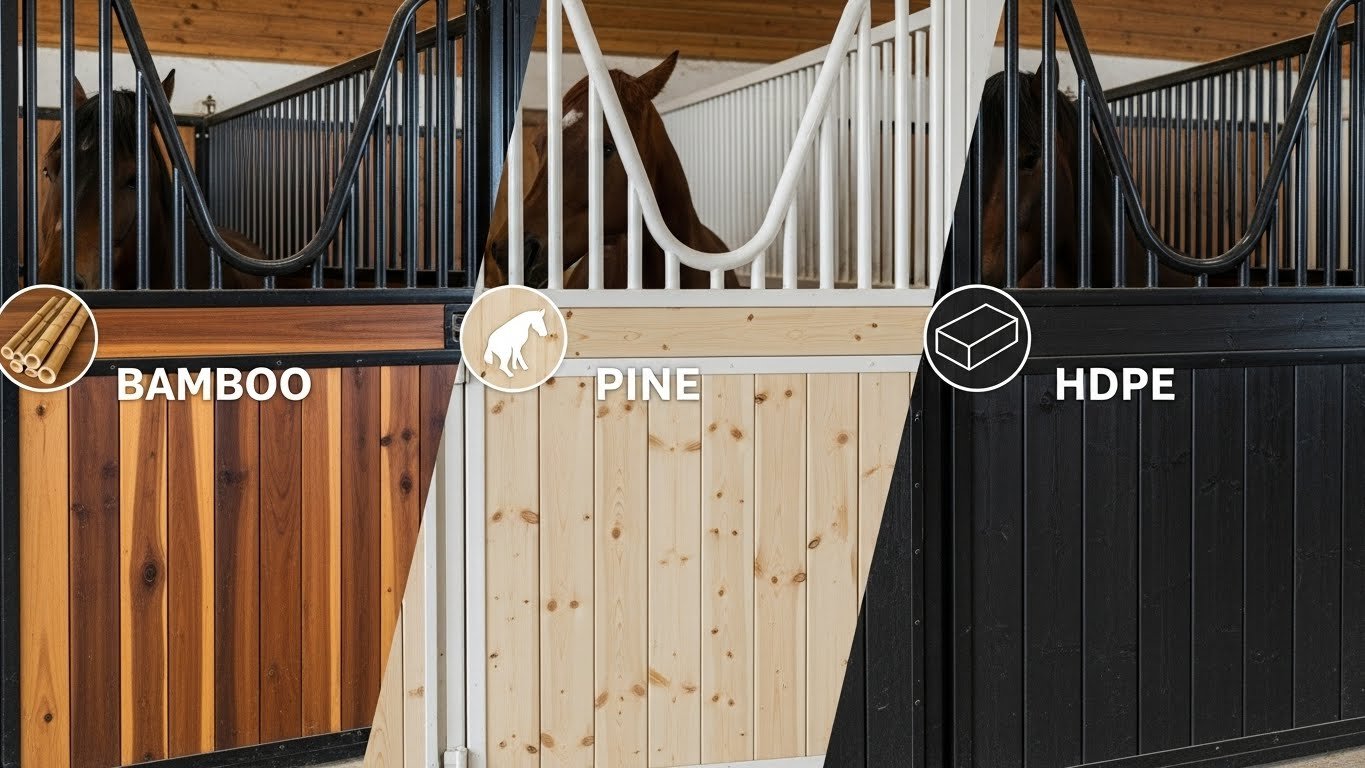
Choosing the right infill for your horse stalls goes beyond aesthetics; it directly impacts equine safety, stable longevity, and your long-term budget. Many stable operators face the challenge of balancing upfront costs with durable performance against the daily demands of a busy barn.
This guide cuts through the noise, comparing common options like traditional pine, engineered bamboo, and modern HDPE plastic. We break down how each material performs in real-world scenarios, considering everything from impact resistance and moisture handling to maintenance requirements and total cost. For example, engineered bamboo panels are up to twice as strong as ordinary wood plywood, offering superior durability, while HDPE boasts virtually zero water absorption for minimal upkeep.

Industry Manufacturers List
Quick Comparison: Top Picks
| Manufacturer | Location | Core Strength | Verdict |
|---|---|---|---|
| Bamboo Boards | Industry Wide | Horse stall infill panels, plywood; high hardness, anti-corrosion, natural texture | Superior strength, wear-resistant, moisture-proof, renewable. High durability and safety. |
| Pine Boards | Industry Wide | Horse stall infill panels, shavings for bedding; softer wood, prone to humidity damage | Less durable, prone to cracks, mold, and damage. Budget option requiring frequent replacement. |
Bamboo Boards
Bamboo boards provide excellent strength, toughness, and impact resistance. Their dense fiber structure helps prevent breaking, cracking, and splintering, even under conditions like horse kicks. These boards are also highly wear-resistant and, after heat treatment, are moisture-proof and mold-resistant. Their smooth, safe surface helps reduce injury risks.
Beyond their physical properties, bamboo boards are a sustainable option. Bamboo is a rapidly renewable resource, maturing in just 3-5 years. This fast growth cycle contributes to lower long-term costs and supports environmental standards, offering a responsible choice for construction needs.
At a Glance:
- 📍 Location: Industry Wide
- 🏭 Core Strength: Horse stall infill panels, plywood (high hardness, anti-corrosion, natural texture)
- 🌍 Key Markets: High-end horse stables, equestrian clubs, race tracks
Why We Picked Them:
| ✅ The Wins | ⚠️ Trade-offs |
|---|---|
|
|
Pine Boards
Pine boards serve as an economical material for horse stall infill panels and bedding, often chosen for their lower initial cost. However, this type of wood is inherently less durable, frequently exhibiting insufficient toughness. It is prone to cracks and fragmentation from impacts, and its surface wear can easily expose internal materials.
Pine boards age, expand, and develop mold in humid stable environments, offering a softer surface more susceptible to scratches and horse damage. This necessitates more frequent replacement compared to more robust alternatives, making them a higher maintenance option in the long run despite initial savings.
At a Glance:
- 📍 Location: Industry Wide
- 🏭 Core Strength: Horse stall infill panels, shavings for bedding; softer wood, prone to humidity damage
- 🌍 Key Markets: Budget horse stables, general livestock
Why We Picked Them:
| ✅ The Wins | ⚠️ Trade-offs |
|---|---|
|
|
Bamboo Boards
Bamboo boards offer high toughness due to their dense fiber structure. This makes them resistant to breaking, cracking, and the impacts from horse hooves. They are heat-treated and coated, giving them excellent moisture-proof, pest-proof, and mold-resistant qualities. Their smooth, unknotted surface also helps reduce injury risks for horses.
As a renewable resource, bamboo matures quickly, typically within 3-5 years, making it a sustainable choice for construction. This rapid growth cycle supports consistent availability for high-end stables and equestrian facilities. The material is also known for its wear resistance and natural aesthetic, fitting well into sustainable barn building practices.
At a Glance:
- 📍 Location: Industry Wide
- 🏭 Core Strength: Horse stall infill panels, plywood for equestrian clubs and race tracks
- 🌍 Key Markets: High-end horse stables, equestrian facilities, sustainable barn building
Why We Picked Them:
| ✅ The Wins | ⚠️ Trade-offs |
|---|---|
|
|
Pine Boards
Pine boards are often utilized for their initial softness, which provides good cushioning in horse stall applications. This makes them a viable, budget-friendly infill option, particularly where cost-effectiveness is a key factor for livestock stables.
Despite their initial benefits, pine boards are prone to cracking, fragmentation under horse impacts, and surface wear, which can expose internal materials. They also tend to age, expand, and develop mold in humid stable environments, significantly lacking the inherent toughness and long-term durability found in alternatives like bamboo.
At a Glance:
- 📍 Location: Industry Wide
- 🏭 Core Strength: Horse stall infill panels, wood shavings for bedding
- 🌍 Key Markets: Budget-friendly livestock stables, basic horse bedding
Why We Picked Them:
| ✅ The Wins | ⚠️ Trade-offs |
|---|---|
|
|
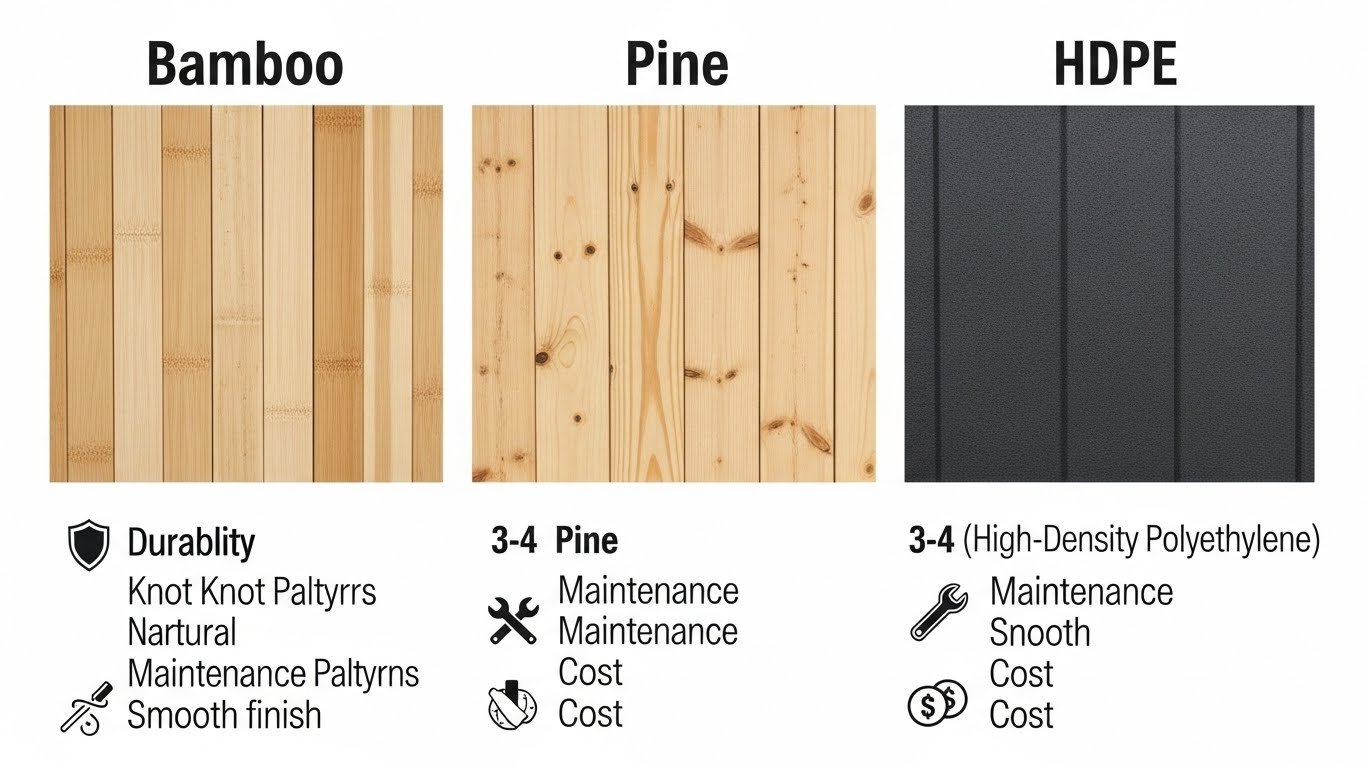
Introduction
The Importance of Horse Stall Infill Materials in 2026
Selecting appropriate horse stall infill materials is crucial for equine safety, comfort, and the long-term durability of stable structures.
Effective infill protects horses from injury, contributes to stable hygiene, and ensures structural integrity against daily wear and environmental challenges.
Overview of Common Infill Options
Pine boards remain a common choice due to their affordability and ease of workability, although they are a softwood more prone to wear and environmental damage.
Engineered bamboo boards, made from laminated fiber, offer superior strength, impact resistance, and sustainability as a rapidly renewable resource.
HDPE (High-Density Polyethylene) plastic panels, known for UV resistance and minimal maintenance, are gaining traction for their durability and long lifespan.
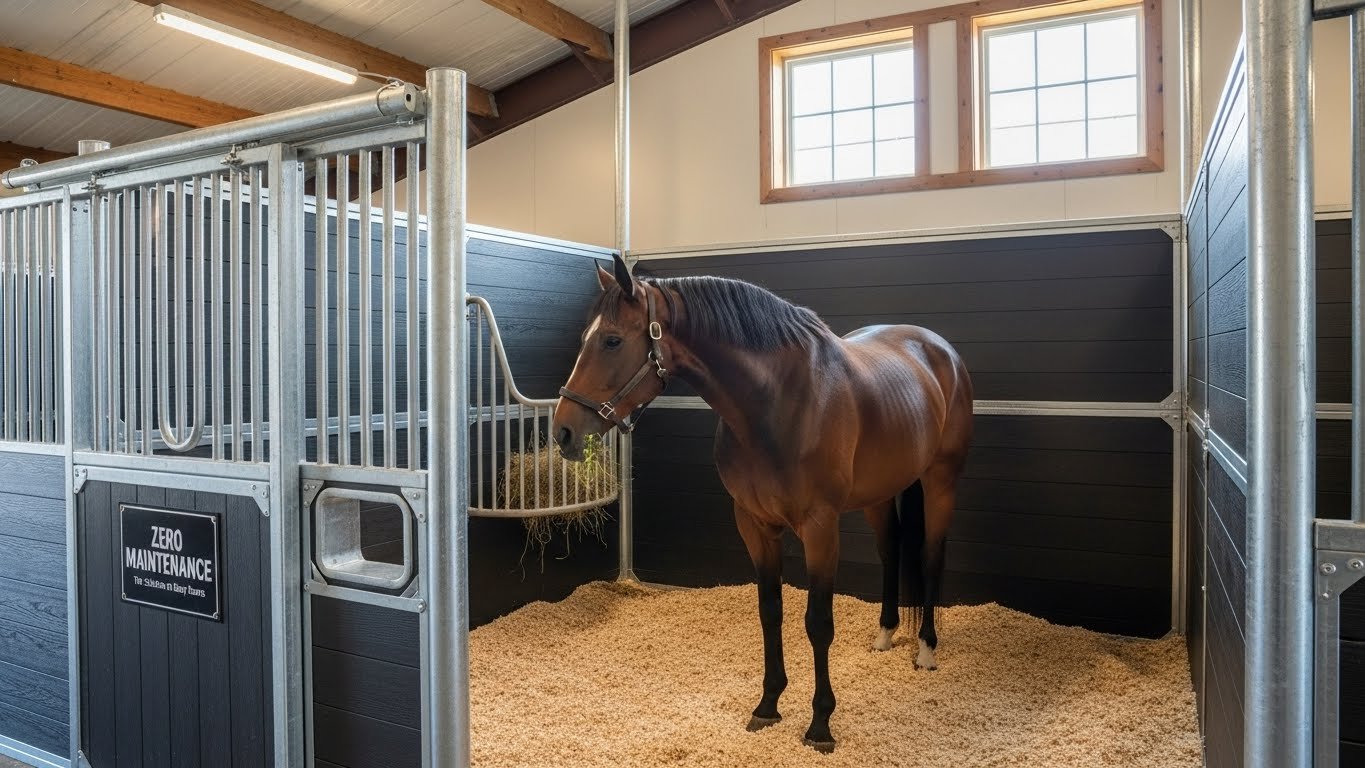
Understanding Pine (Softwood/Cheap)
Softwood Characteristics and Mechanical Weaknesses
Pine is a softwood, typically Southern Yellow Pine, chosen as a budget option where durability is limited.
It is less dense and less tough than engineered bamboo boards, making it vulnerable to impact damage.
Pine is more prone to cracking, splintering, or fragmenting if kicked by horses.
Its softer surface quickly wears and scratches under rubbing or chewing, exposing inner fibers.
Dimensional Instability and Moisture Susceptibility
Pine boards are prone to warping, twisting, and shrinkage, particularly with fluctuating barn humidity and temperature.
In humid or wet stable conditions, pine swells and expands, which can lead to cupping, gaps, and surface degradation.
This reduced dimensional stability shortens service life and increases maintenance needs compared to more stable materials.
By 2026, experts still view pine as a compromise, even when using the highest grades.
Cost-Effectiveness and Typical Applications in 2026
Pine remains a low-cost, budget-friendly infill choice for livestock and horse stable panels.
It is commonly available in thicknesses around 25–38 mm, allowing for aggressive stall price points.
Pine is attractive for economical or temporary facilities due to its low initial material cost.
However, its shorter lifespan, higher damage rates, and increased long-term replacement/maintenance costs often outweigh upfront savings.
World-Class Horse Stables, Custom-Built for Any Climate.
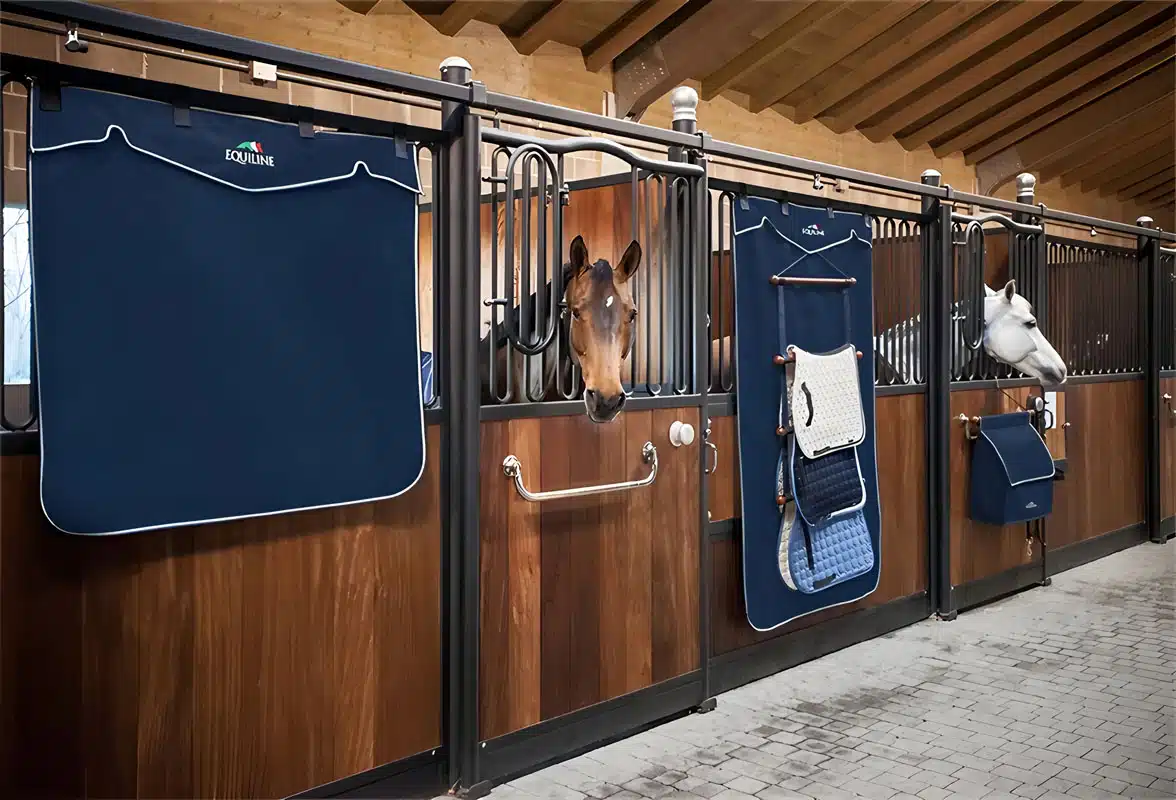
Understanding Bamboo (Hardwood/Durable)
Bamboo: An Engineered Hardwood Alternative
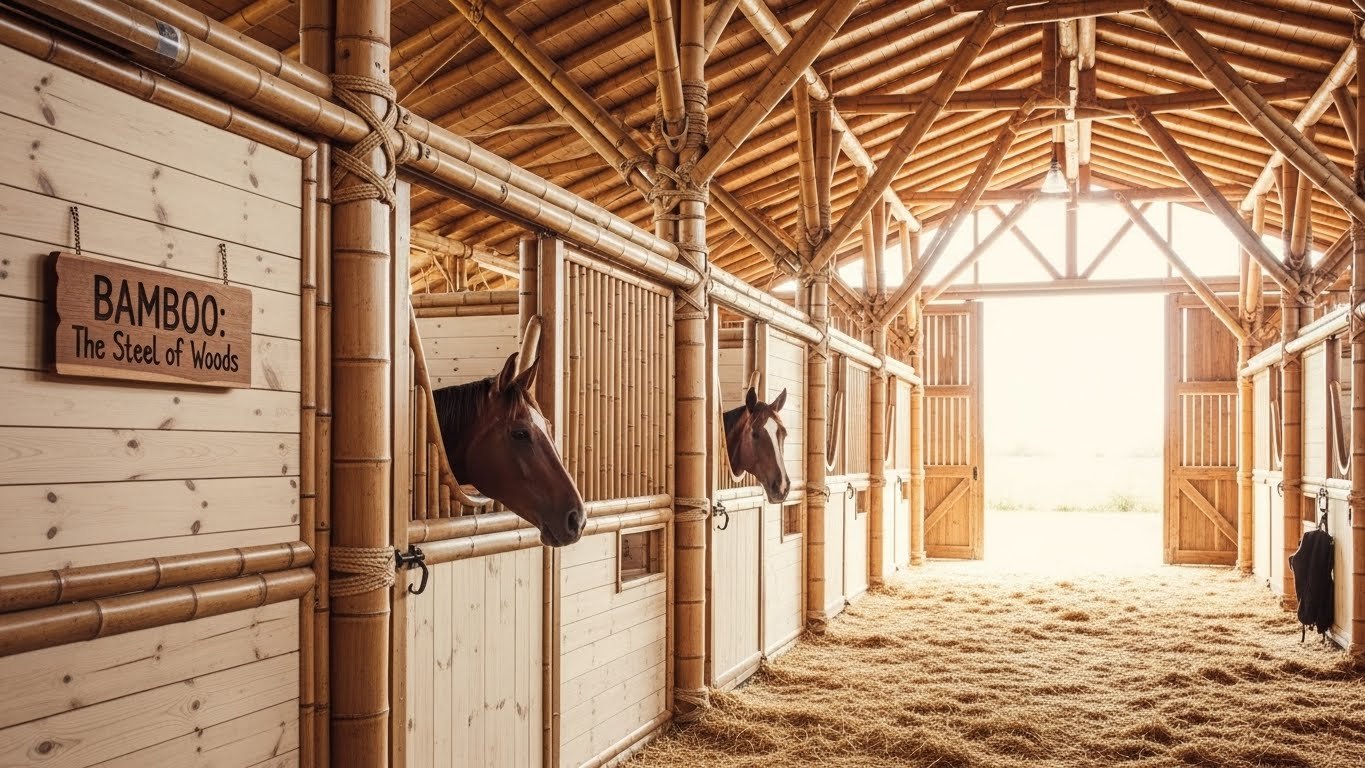
Bamboo, a grass-derived engineered panel product, offers strength and dimensional stability comparable to hardwoods.
It is manufactured from laminated strips or fibers, resulting in a dense, tight grain.
Bamboo is naturally more moisture-resistant than typical wood plywood due to its dense grain structure.
Strength, Stability, and Longevity in Stalls
High toughness allows bamboo boards to withstand horse kicks, making them less prone to breaking.
Certain engineered bamboo panels are up to twice as strong as ordinary wood plywood.
A hard, smooth surface resists scratching and gouging, reducing splinter risks.
Laminated construction and dense fibers maintain flatness, resisting warping or cracking over extended use.
Treated panels exhibit strong resistance to moisture, mold, and decay in humid stable environments.
These properties extend service life, reducing replacement frequency compared to softwood boards.
Safety, Aesthetics, and Long-Term Value
Smooth, knot-free surfaces reduce injury risks from splinters or sharp edges for horses.
A natural, linear grain and warm color provide a high-end, modern stable appearance.
Bamboo is a rapidly renewable resource, typically maturing in 3–5 years, enhancing environmental sustainability.
Though initial purchase price is higher than pine, vendors highlight lower long-term costs through reduced maintenance and extended durability.
Understanding HDPE Plastic (Maintenance Free)
HDPE (High-Density Polyethylene) is a durable, maintenance-free plastic known for its exceptional resistance to moisture, chemicals, corrosion, pests, and abrasion, making it superior to materials like wood or pine in demanding environments such as outdoor applications or horse stalls.
Core Properties Driving Maintenance-Free Benefits
HDPE’s virtually zero water absorption (<0.01%) prevents rot, mold, and mildew, eliminating the need for wood-like treatments.
It is impervious to acids, bases, solvents, and cleaning agents, ensuring excellent chemical and corrosion resistance.
HDPE naturally resists insects, mold, and mildew without requiring any special treatments or emitting substances.
Cleaning requires only soap and water, removing the need for finishes, frequent repairs, or replacements often associated with other materials.
Durability, Longevity, and Ideal Applications
Known for exceptional durability, HDPE boasts a tensile strength of 26-33 MPa and can last over 100 years in various applications.
It maintains integrity across a wide temperature range, from -80°F to 180°F (-62°C to 82°C), and handles freeze/thaw cycles.
HDPE offers wood-like moldability, enabling it to be cut and shaped similar to timber while providing a slip-proof surface.
Using HDPE results in long-term cost savings in applications like horse stalls, due to the absence of maintenance, treatments, and frequent material replacement.
It is FDA/NSF-approved for safety, non-toxic, recyclable, and supports LEED credits for sustainable building practices.

The Verdict
Stall Infill Boards: A Clear Choice for Durability
Engineered bamboo boards demonstrate high strength, impact resistance, and toughness, resisting breakage under kicks and blows.
They offer superior moisture, mold, and pest resistance, maintaining a hard, wear-resistant, and scratch-proof surface.
Pine boards are softer and more prone to warping, twisting, shrinkage, surface wear, and moisture-related issues, leading to a shorter effective service life.
Equine Bedding: Performance and Efficiency Gains
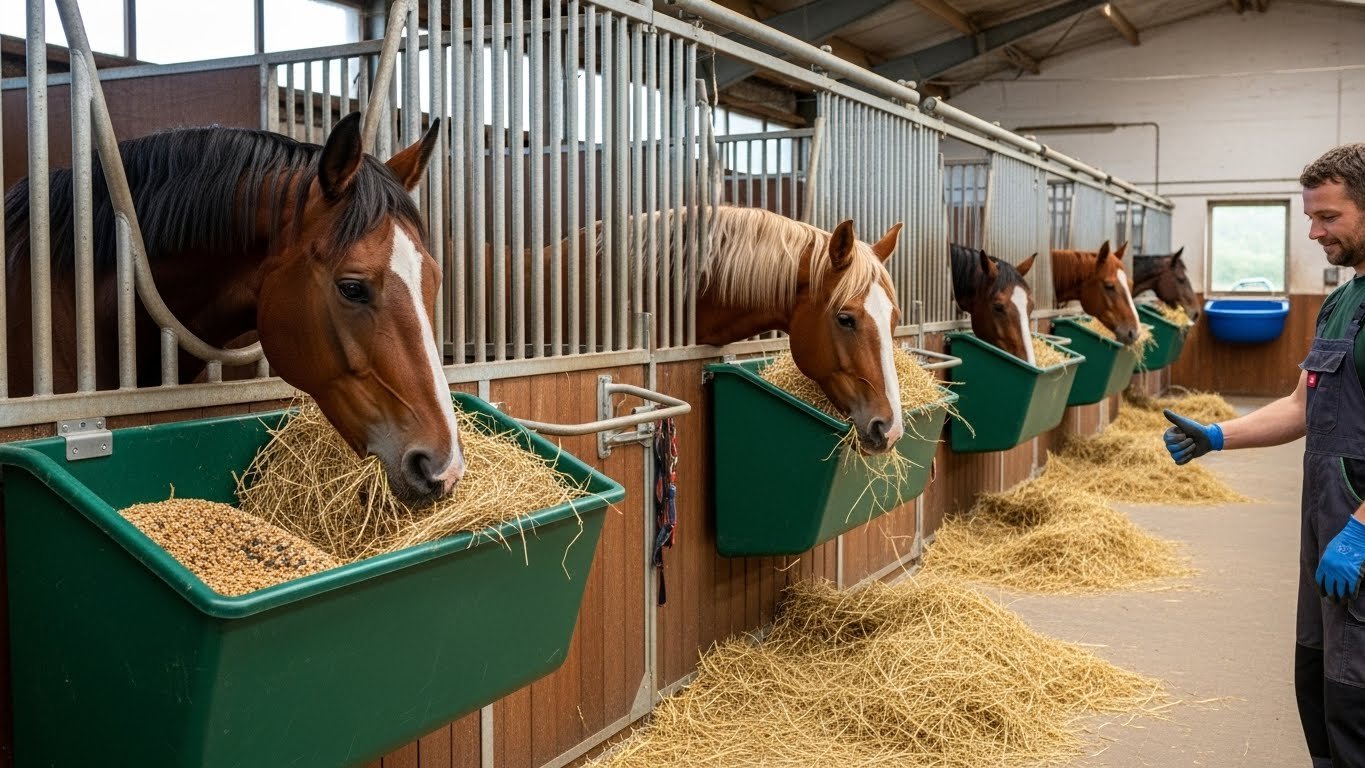
Bamboo bedding significantly outperforms pine shavings, absorbing approximately 2x more liquid and showing 75% less residual water after 1 minute.
Using bamboo bedding reduces stall cleaning time by about 35–50%, requires 50% less bedding removal, and produces less airborne dust.
Pine shavings lead to lower absorbency, more visible residual liquid, increased stripping and rebedding frequency, and longer stall-picking times due to higher dust and waste volumes.
Weighing Upfront Cost Against Long-Term Value
While pine materials (boards and shavings) offer a lower initial material cost, they often lead to higher long-term maintenance, increased labor, and more frequent replacement.
Bamboo, whether for infill boards or bedding, represents a greater upfront investment but delivers superior durability, performance, and efficiency, resulting in significant operational savings and improved horse welfare over its extended lifespan.

Frequently Asked Questions
Is bamboo wood good for horse stalls?
Yes. Engineered bamboo boards are generally superior to pine for horse stall infill in strength, durability, and environmental performance when properly treated and installed. Bamboo fiber has a dense structure and high toughness, making it more resistant to kicking impact, cracking, and surface wear than pine, while providing a smooth, knot-free surface that reduces injury risk. Heat-treated and coated bamboo boards are also more moisture-, mold-, and pest-resistant than pine in humid stall environments, and bamboo is a rapidly renewable, lower-carbon material.
Why is pine bad for horse stalls?
Pine is generally a softwood, which means it is more prone to warping, twisting, shrinkage, and surface damage under the heavy impact and abuse typical in horse stalls. Its relatively soft surface can be gouged, chewed, or kicked through more easily than denser materials, increasing maintenance needs and potential injury risk. In the high-moisture, high-ammonia environment of stalls, pine boards also tend to age, swell, and degrade faster, especially compared with more moisture-resistant options like engineered bamboo boards.
Is plastic board better than wood for stables?
For internal stall and stable lining, plastic (HDPE) boards are often functionally better than softwood but not categorically better than all hardwoods; choice depends on priorities. Recycled plastic lumber is highly resistant to rot, moisture, urine, and insects, and needs virtually no sealing or repainting, which reduces long-term maintenance versus wood. It also withstands kicks and impact with some flex without splintering and can be pressure-washed and disinfected without risk of rot, advantages over many softwoods used in stable partitions. However, high-quality hardwood stall boards offer excellent strength and security, avoid long-term UV fading and potential brittleness of plastics, and are often preferred by some experienced barn owners for durability and appearance, though they require ongoing maintenance against chewing, rot, and moisture.
Do horses chew on HDPE plastic?
Horses may mouth or attempt to chew HDPE plastic rails or posts out of curiosity, but HDPE fencing and plastic lumber are described by manufacturers and equine users as chew-resistant and not something horses can effectively chew through or eat.
What is the most durable stall material?
Bamboo boards are the most durable stall material compared to pine for horse stalls. Bamboo boards excel in durability due to their high hardness, dense fiber structure, and toughness, which resist scratches, impacts from horse hooves, cracking, and wear even after long-term use. They also feature superior moisture-proofing and mold resistance via heat treatment and coatings, preventing expansion or aging in humid stable environments, unlike pine boards that soften, scratch easily, and degrade. In direct comparisons, bamboo withstands kicking without splintering and maintains a flat, safe surface, making it preferable for high-end stables, while pine is softer and more prone to damage. Other options like HDPE offer low-maintenance durability but lack bamboo’s natural strength and sustainability.
Cost difference between bamboo and pine?
Available vendor data for bamboo vs. pine horse stall infill rarely shows exact side-by-side price per stall, but multiple manufacturers explicitly state that pine is cheaper than bamboo for stall boards. In practical terms, quotes from suppliers and plywood benchmarks suggest bamboo boards/panels typically run about 20–40% higher in material cost than comparable pine softwood products of similar thickness and stall application, with the exact premium depending on thickness (20–38 mm bamboo vs. 30–40 mm southern yellow pine), finish, and order size.
![horse stall Solid vs. Grille Partitions Balancing [Privacy and Airflow] (1)](https://dbhorsestable.com/wp-content/uploads/2025/12/horse-stall-Solid-vs.-Grille-Partitions-Balancing-Privacy-and-Airflow-1.jpeg)
Final Thoughts
Choosing the best horse stall infill comes down to balancing initial cost against long-term performance and horse welfare. Pine boards offer a low upfront price, but their inherent softness and susceptibility to moisture and damage mean higher maintenance and replacement costs over time. Bamboo, an engineered hardwood, stands out for its strength, impact resistance, and natural durability, providing a safer, more stable environment for horses and a longer service life. HDPE plastic panels offer exceptional low maintenance and resistance to moisture and chemicals, presenting a robust, non-natural alternative.
Ultimately, while initial material cost might favor pine, the true value lies in long-term performance. Bamboo and HDPE materials, despite a higher upfront investment, significantly reduce labor, maintenance, and replacement frequencies. This not only results in considerable operational savings over the lifespan of the stable but also greatly enhances horse welfare and safety. For stable owners prioritizing durability, safety, and reduced ongoing costs, engineered bamboo or HDPE offers a superior, more sustainable solution compared to traditional pine.

 English
  Spanish
  French
  Arabic
  German
0 Comments