
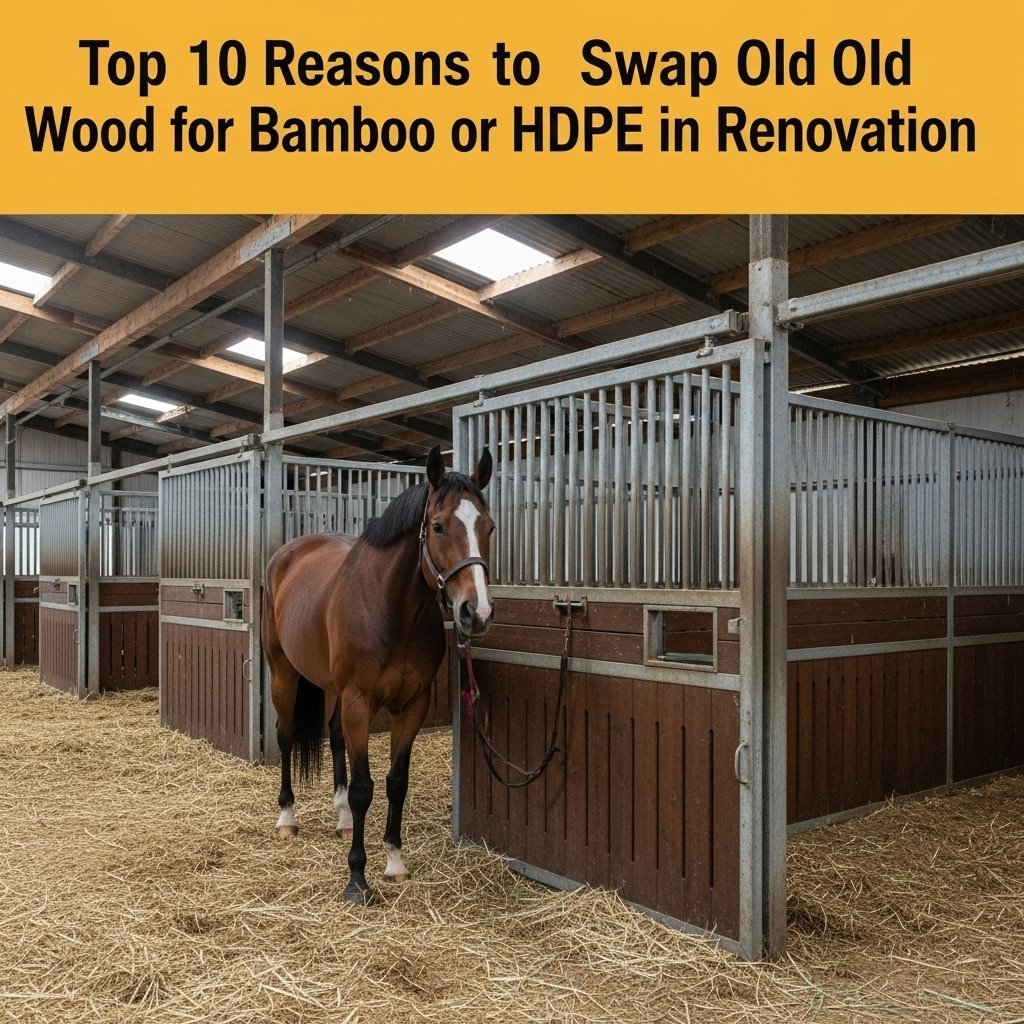
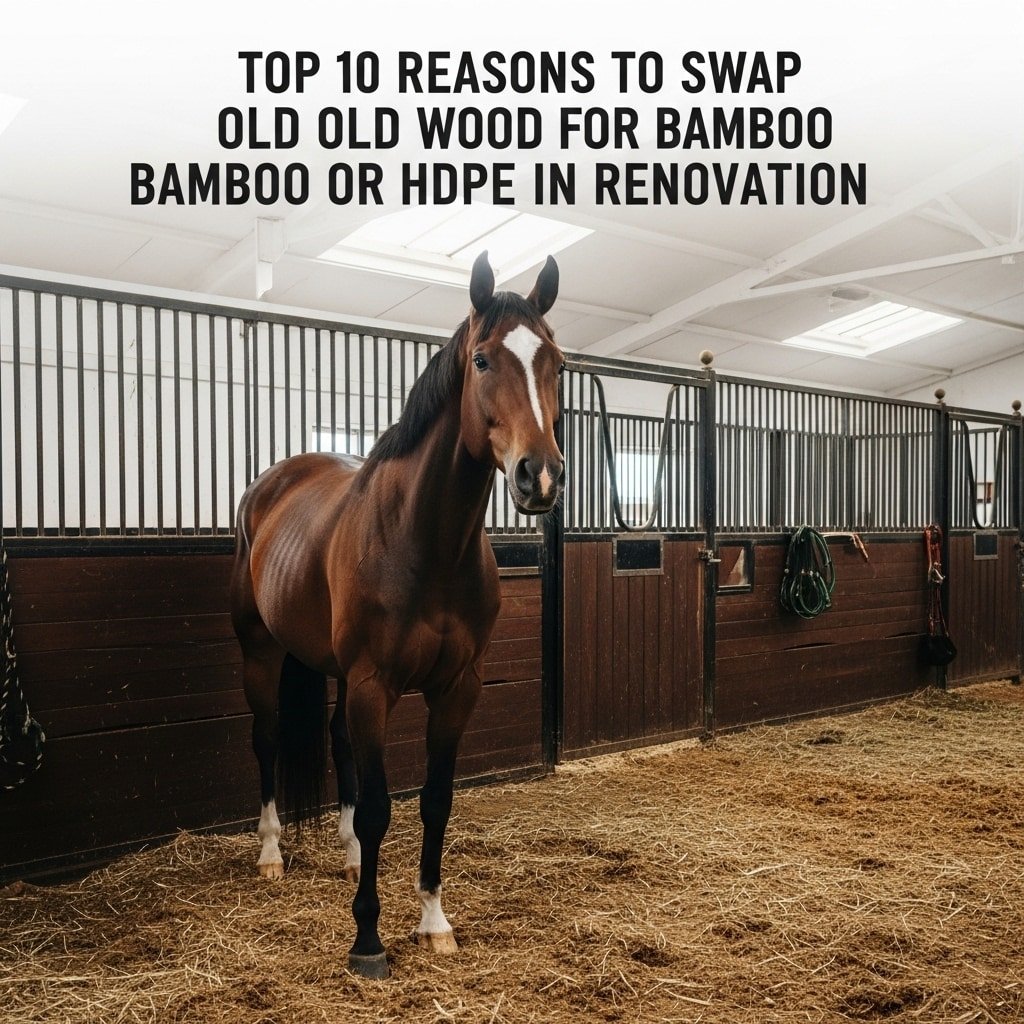
The decision to replace stall wood is a direct response to mitigating operational risk and long-term costs. Porous lumber absorbs moisture and urine, creating environments with high ammonia levels and mold that lead to increased vet bills and facility liability. This constant cycle of repair and replacement drains labor resources and compromises animal welfare.
This analysis compares wood against non-porous, UV-stabilized HDPE and High-Density Bamboo with a Janka hardness over 3000 lbf. We evaluate the 10-year maintenance math, structural benefits for old frames, and installation requirements to protect your operational budget and equine assets.
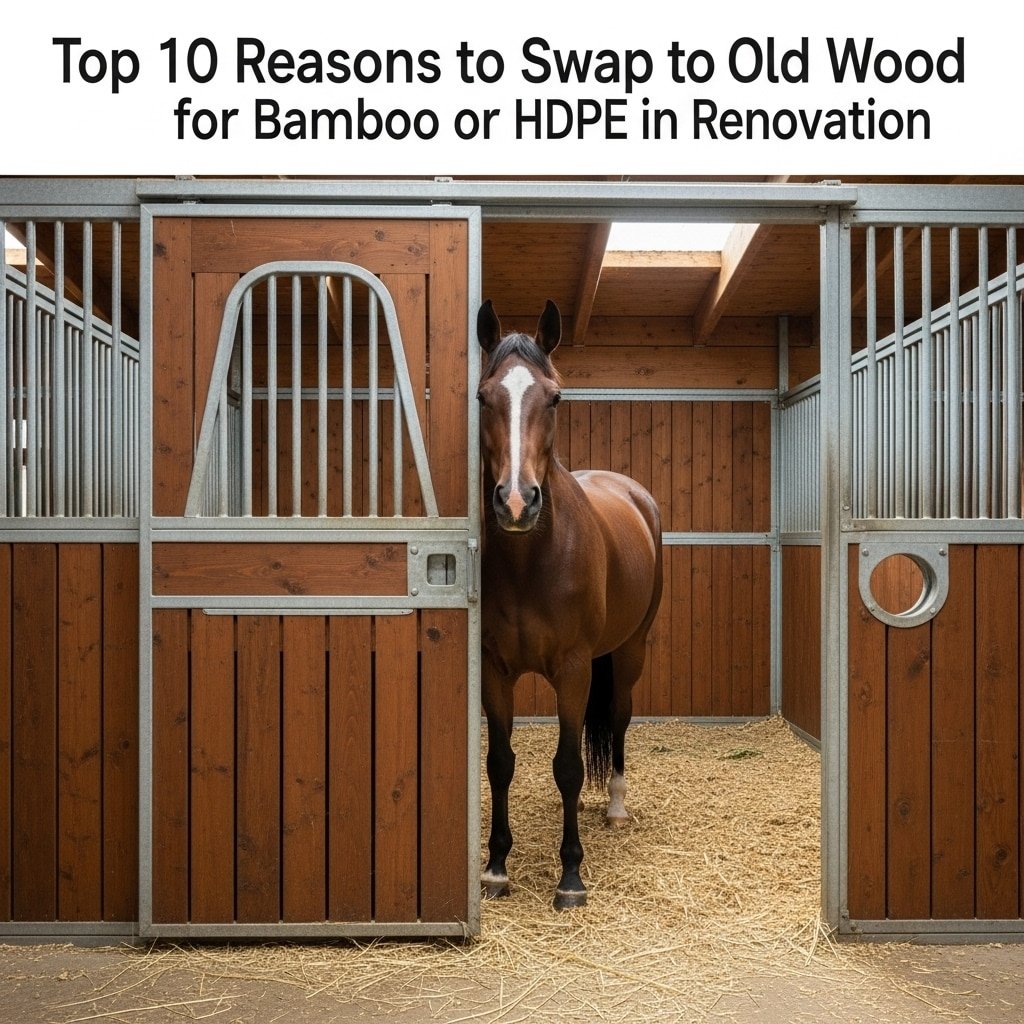
Top 10 Reasons to Upgrade to HDPE or Bamboo
Quick Comparison
| Product Name | Best For | Key Feature | Verdict |
|---|---|---|---|
Superior Durability & Impact Resistance (HDPE) | Material Strength | Resists Cracking & Breaking | Ideal for high-impact environments, its flexibility absorbs kicks and bumps without cracking, ensuring stall longevity. |
Unmatched Tensile Strength (Bamboo) | Material Strength | Increases Stall Security | Offers steel-like tensile strength in a lighter profile, providing exceptional structural security against powerful animals. |
Excellent Chemical & Moisture Resistance (HDPE) | Health & Hygiene | Prevents Rot & Mold | A top choice for a healthier stall, as its non-porous surface is easy to sanitize and prevents bacterial growth. |
Rapidly Renewable & Sustainable (Bamboo) | Sustainability | Promotes Forest Preservation | An excellent eco-friendly option that reduces deforestation by regenerating to harvestable size in just 3-5 years. |
Long-Term Weather & UV Resistance (HDPE) | Longevity | Maintains Outdoor Integrity | Perfect for stalls with outdoor-facing walls, as it resists sun and weather damage without becoming brittle or fading. |
Improved Animal Safety | Animal Safety | Reduces Splintering Hazards | Significantly enhances safety by providing smooth, non-splintering surfaces that prevent injuries from kicks or chewing. |
Low Maintenance Burden | Maintenance | Saves Time & Money | A great long-term investment that eliminates the need for painting or sealing, saving significant time and upkeep costs. |
Eco-Friendly & Recyclable Material (HDPE) | Sustainability | Reduces Environmental Footprint | A responsible choice for sustainable stables, as it is 100% recyclable and free of toxic chemicals found in treated wood. |
Stable & Consistent Material Quality | Quality Control | Guarantees Uniform Strength | Ensures reliable performance and a clean look across all boards by eliminating natural weak points like knots and voids. |
Enhanced Mechanical Properties in Composites | Advanced Materials | Superior Structural Performance | Offers the best of both worlds, combining the flexibility of HDPE with the rigidity of bamboo for superior strength. |
KEY FEATURE
Superior Durability & Impact Resistance (HDPE)
The Verdict: HDPE stands out for its flexibility and ability to absorb significant impacts from horses without cracking. This resilience makes it a prime choice for creating safe, long-lasting stalls in demanding equestrian environments.
✅ The Good
- Highly flexible to absorb impacts
- Resistant to long-term stress cracking
⚠️ The Bad
- Higher initial cost compared to some untreated woods
KEY FEATURE
Unmatched Tensile Strength (Bamboo)
The Verdict: With a tensile strength often compared to steel, bamboo provides exceptional structural integrity and damage resistance, making it a superior choice for high-impact environments.
✅ The Good
- Steel-like tensile strength
- Harder and lighter than most hardwoods
⚠️ The Bad
- Requires sharp, high-quality blades for clean cuts during installation
KEY FEATURE
Excellent Chemical & Moisture Resistance (HDPE)
The Verdict: HDPE’s non-porous surface provides exceptional resistance to moisture and chemicals, preventing rot and bacterial growth. This makes stalls easier to clean and promotes a healthier environment for horses.
✅ The Good
- Easy to sanitize and pressure wash
- Performs exceptionally well in corrosive environments
⚠️ The Bad
- Can be slippery when wet if not properly textured
KEY FEATURE
Rapidly Renewable & Sustainable (Bamboo)
The Verdict: Bamboo’s rapid growth cycle, regenerating in just 3-5 years, makes it a highly sustainable building material that significantly reduces the demand on traditional hardwood forests.
✅ The Good
- Harvesting does not kill the root system
- Reaches full maturity in a fraction of the time of trees
⚠️ The Bad
- Ensure sourcing from reputable suppliers to confirm sustainable harvesting practices
KEY FEATURE
Long-Term Weather & UV Resistance (HDPE)
The Verdict: HDPE includes UV inhibitors that resist degradation from sunlight and harsh weather, ensuring the stall infill won’t become brittle, fade, or weaken over time—especially in stalls with walls exposed to the elements.
✅ The Good
- Does not get brittle from sun exposure
- Ideal for stalls with run-outs or outdoor-facing walls
⚠️ The Bad
- Color options can be more limited than custom-painted wood
KEY FEATURE
Improved Animal Safety
The Verdict: Unlike wood, which can splinter and create sharp, dangerous edges when kicked or chewed, HDPE and dense bamboo are far less likely to splinter. This significantly reduces the risk of injury to the horse from punctures or ingestion.
✅ The Good
- Provides smooth, non-splintering surfaces
- HDPE’s flexibility absorbs impact without shattering
⚠️ The Bad
- Edges should be properly routed and finished during installation to ensure smoothness
KEY FEATURE
Low Maintenance Burden
The Verdict: Both HDPE and bamboo boards drastically reduce the time and money spent on annual stall upkeep because they don’t require painting, staining, or sealing and are naturally resistant to chewing, warping, and insects.
✅ The Good
- No need for annual sealing or repainting
- Resistant to cribbing and insect damage
⚠️ The Bad
- Requires occasional cleaning with soap and water to maintain original appearance
KEY FEATURE
Eco-Friendly & Recyclable Material (HDPE)
The Verdict: HDPE offers a sustainable, non-toxic, and fully recyclable alternative to traditional materials like pressure-treated wood, making it a responsible choice for modern stable construction.
✅ The Good
- Fully recyclable material at end-of-life
- Contains no toxic chemicals like chlorine or arsenic
⚠️ The Bad
- Confirm that local facilities can recycle large-format HDPE sheets
KEY FEATURE
Stable & Consistent Material Quality
The Verdict: Manufactured materials like HDPE and engineered bamboo provide uniform properties, eliminating the knots and weak spots found in natural lumber for reliable strength and a consistently clean appearance.
✅ The Good
- No natural weak points like knots
- Consistent color, density, and texture
⚠️ The Bad
- Lacks the unique grain variation of natural wood, which some may prefer aesthetically
KEY FEATURE
Enhanced Mechanical Properties in Composites
The Verdict: Reinforcing an HDPE matrix with bamboo fibers creates a superior composite that combines the flexibility of plastic with the rigidity of bamboo, resulting in significantly enhanced strength and structural performance.
✅ The Good
- Increased storage modulus (a measure of strength)
- Combines the flexibility of HDPE with the rigidity of bamboo
⚠️ The Bad
- May be a specialty product that is less readily available and more expensive
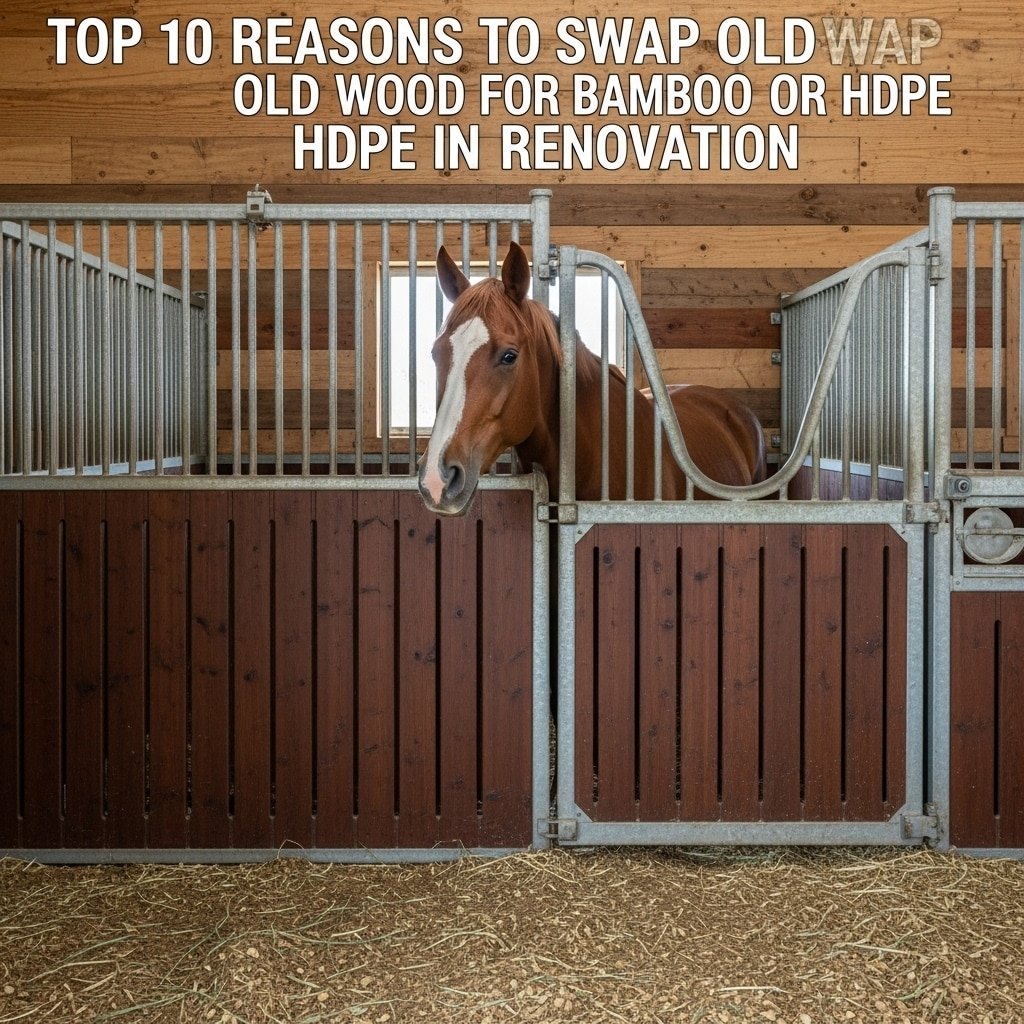
Is Your Old Wood Infill Making Your Horses Sick?
Old or improperly sourced wood infill can expose horses to toxins, mold, and high ammonia levels, leading to serious health issues like laminitis and respiratory disease. Switching to non-porous, engineered materials eliminates these risks, protecting animal welfare and reducing operational liability for facility owners.
Traditional wood stall walls seem like a natural choice, but they can hide significant health risks that affect both horses and stable operators. Porous, aging wood creates an environment where toxins, bacteria, and respiratory irritants can thrive, leading to increased vet bills and potential liability for your business.
The Danger of Toxic Wood Species
Not all wood is safe for equine environments. Certain species are highly toxic and can cause severe illness from simple contact. Black walnut, for instance, is extremely dangerous and can cause severe laminitis within hours, even if it only makes up a small percentage of the shavings or boards. Other woods like maple can also be toxic, while aromatic woods such as cedar can irritate a horse’s sensitive respiratory tract, leading to chronic breathing problems or allergic reactions.
Respiratory Risks from Ammonia and Mold
Over time, wood boards absorb urine and moisture. This creates a perfect breeding ground for mold and bacteria deep within the planks where surface cleaning can’t reach. As the organic material and urine decompose, they release high concentrations of ammonia gas. This airborne irritant is a well-documented cause of respiratory inflammation and disease in stabled horses. Poor air quality not only impacts animal health but also creates an unhealthy working environment for stable staff.
Identifying Safer Infill Solutions
Protecting horses and your clients’ investment starts with choosing the right materials. Modern, engineered infills are designed to eliminate the problems inherent in traditional wood.
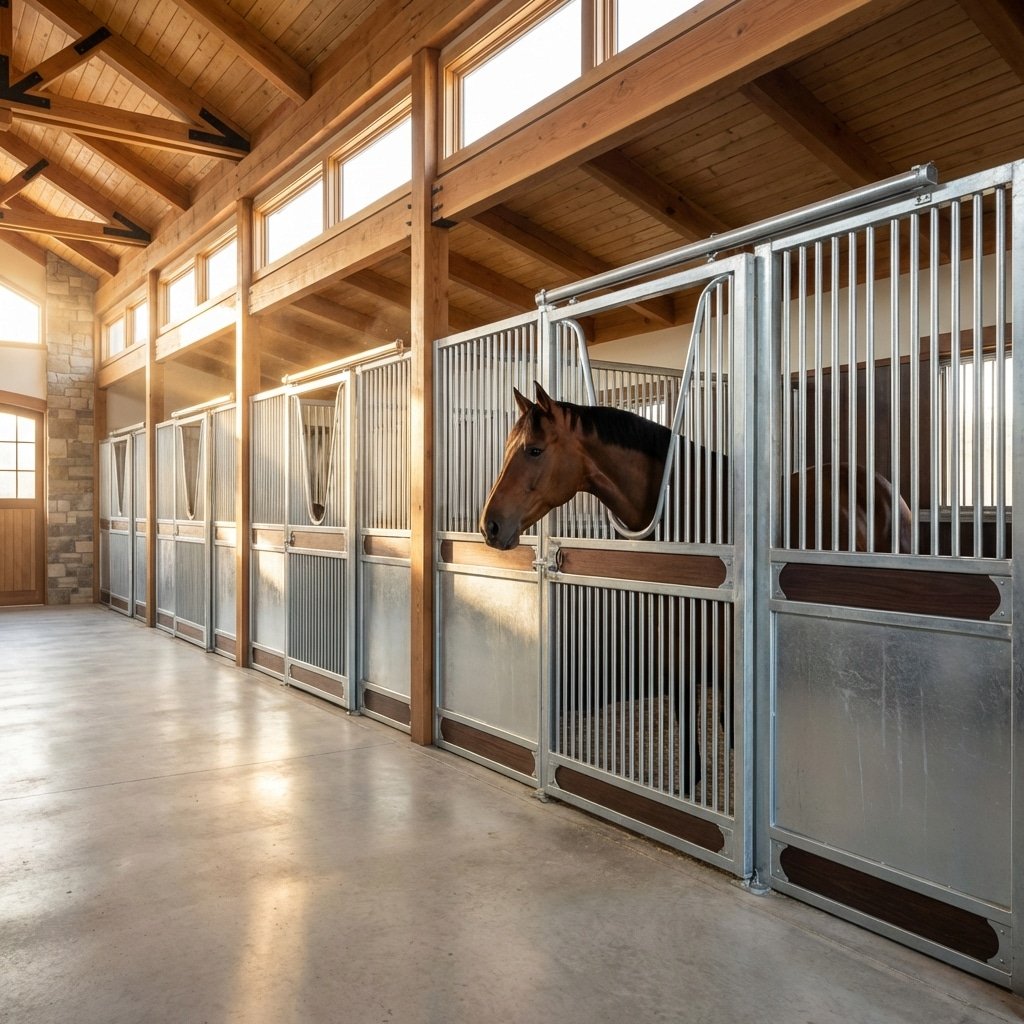
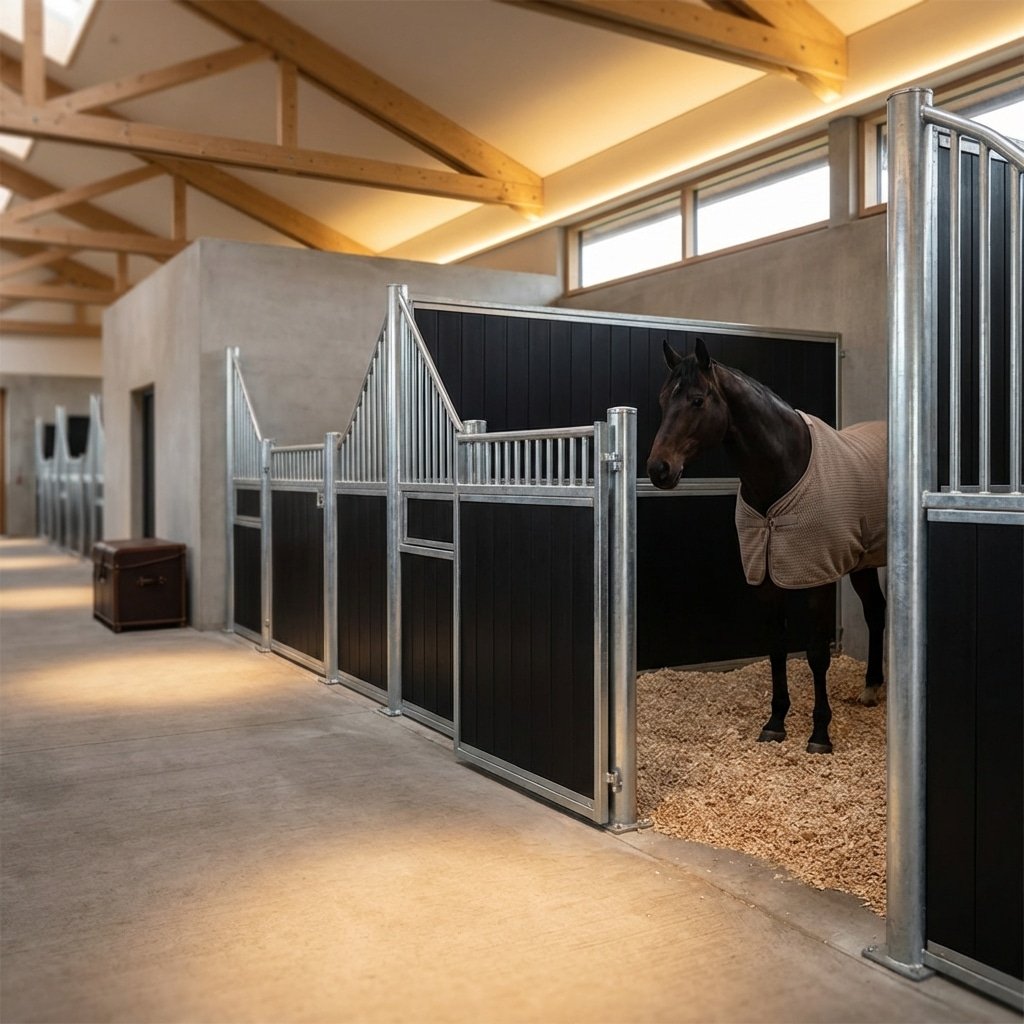
- UV-Stabilized HDPE: Our 28-32mm High-Density Polyethylene planks are completely non-porous. They cannot absorb moisture or urine, which stops ammonia and mold growth at the source. This “Zero Maintenance” material is easy to sanitize, ensuring a hygienic environment and drastically reducing labor costs.
- High-Density Bamboo: As an alternative, our 28-38mm strand-woven bamboo offers incredible durability. With a Janka hardness over 3000 lbf, it is three times harder than oak and naturally resistant to mold and rot. It provides the classic look of wood without the health risks of softwoods.
By upgrading to these advanced infill options, distributors and project managers can offer a superior product that ensures animal safety, promotes long-term durability, and protects the health of valuable equine assets.
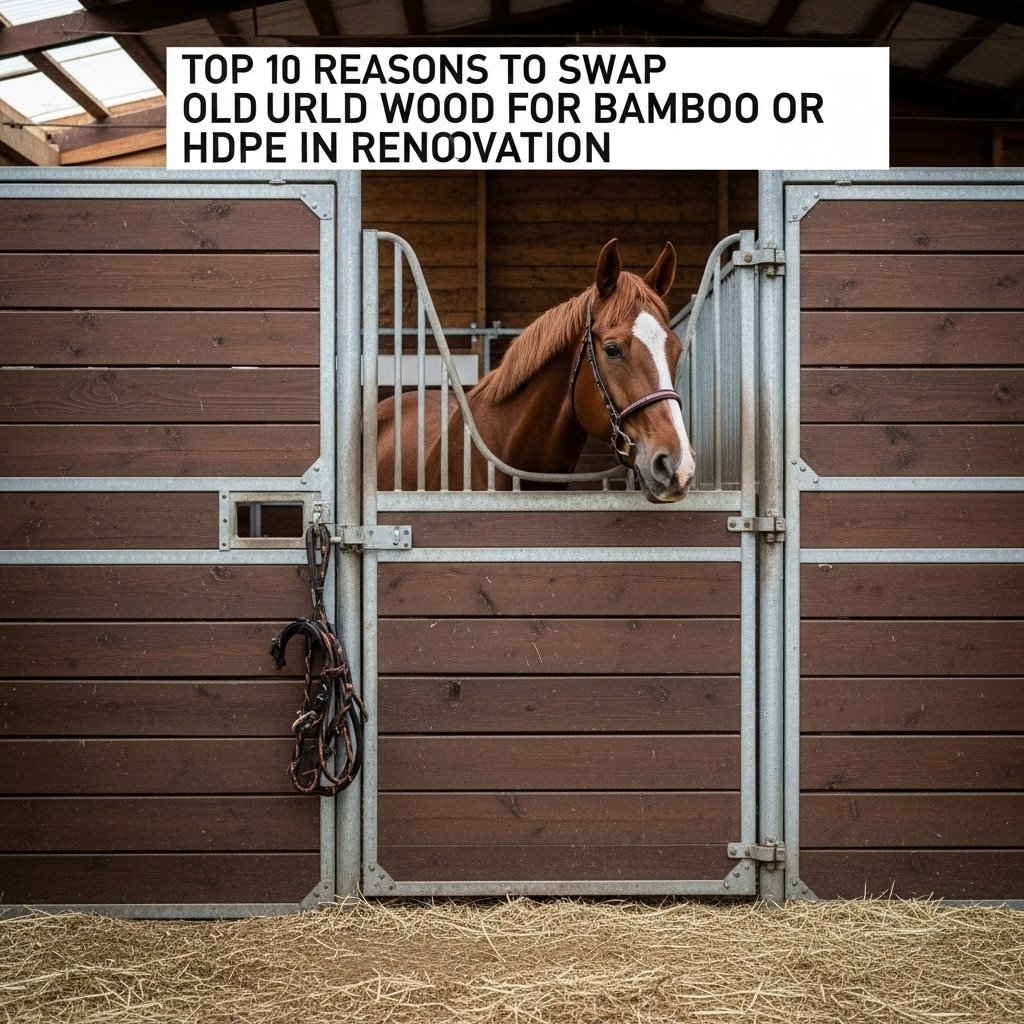
Why Does Bamboo Add Structural Stiffness to Old Frames?
Bamboo enhances the stiffness of structures through its unique internal composition. The material’s strength comes from its natural composite structure, where dense fibre sheaths and rigid cellulose microfibrils provide exceptional resistance to bending and deformation. This makes our high-density, strand-woven bamboo planks an ideal choice for reinforcing stable panels.
Microstructural Properties Driving Stiffness
The remarkable stiffness of bamboo originates from its internal architecture. It functions as a natural composite, with the arrangement of dense fibre sheaths around its vascular bundles providing the core of its strength. Within its cell walls, crystalline cellulose microfibrils create an incredibly rigid and strong foundation. Our high-density, strand-woven bamboo planks are engineered to leverage this advanced microstructure, delivering maximum durability and structural integrity for your stables.
Mechanical Performance Characteristics
On a mechanical level, bamboo outperforms many traditional materials. It has a higher modulus of elasticity than steel, allowing it to resist deformation and stretching more effectively. This makes it exceptionally good at handling bending loads. With a Janka hardness rating that exceeds 3000 lbf, our strand-woven bamboo is about three times harder than oak, providing a dense and durable barrier that withstands the rigors of equestrian environments.
Practical Structural Advantages
Using bamboo infill provides immediate structural benefits. The wide surface area of the planks distributes impact and pressure across the stable frame, which minimizes deflection and adds crucial stability. This is especially useful when retrofitting older structures. Because our bamboo is naturally resistant to mold and rot, it maintains these structural properties for years, protecting your investment and ensuring a safe environment for your horses.
Get 20-Year Rust-Proof Stables Installed Fast
Can You Install New Boards in Old Channels?
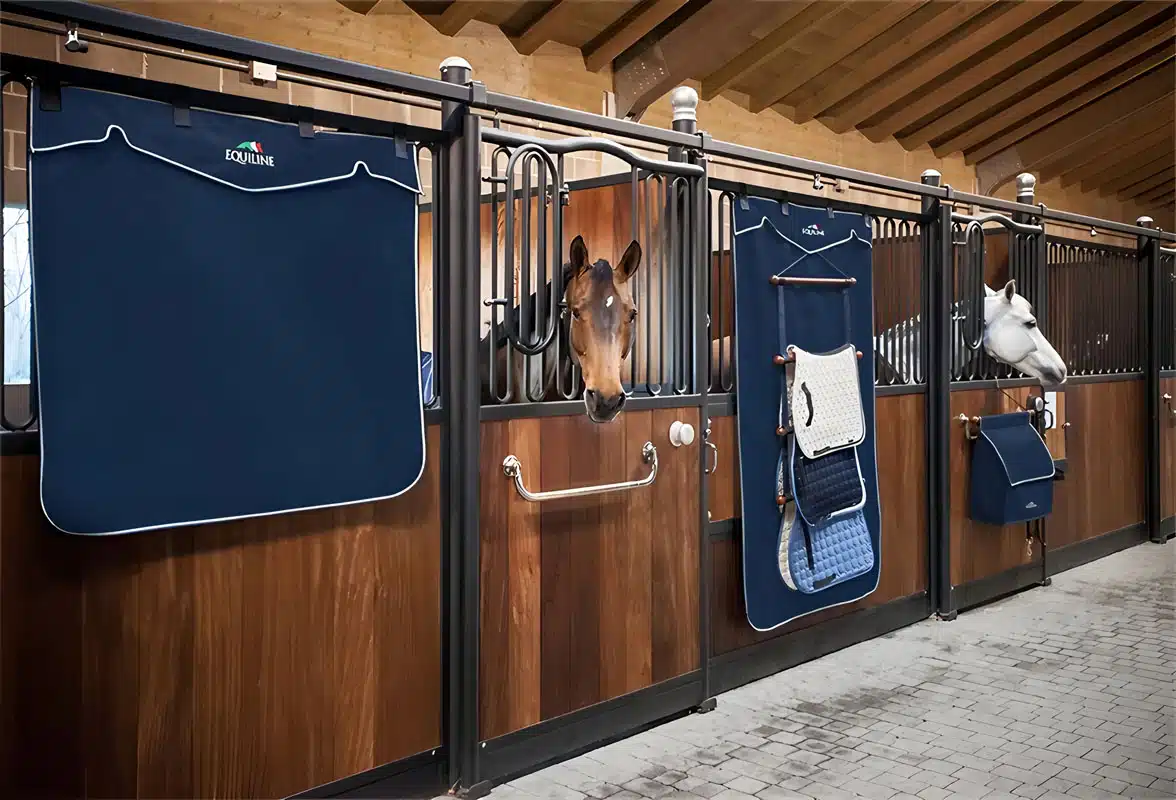
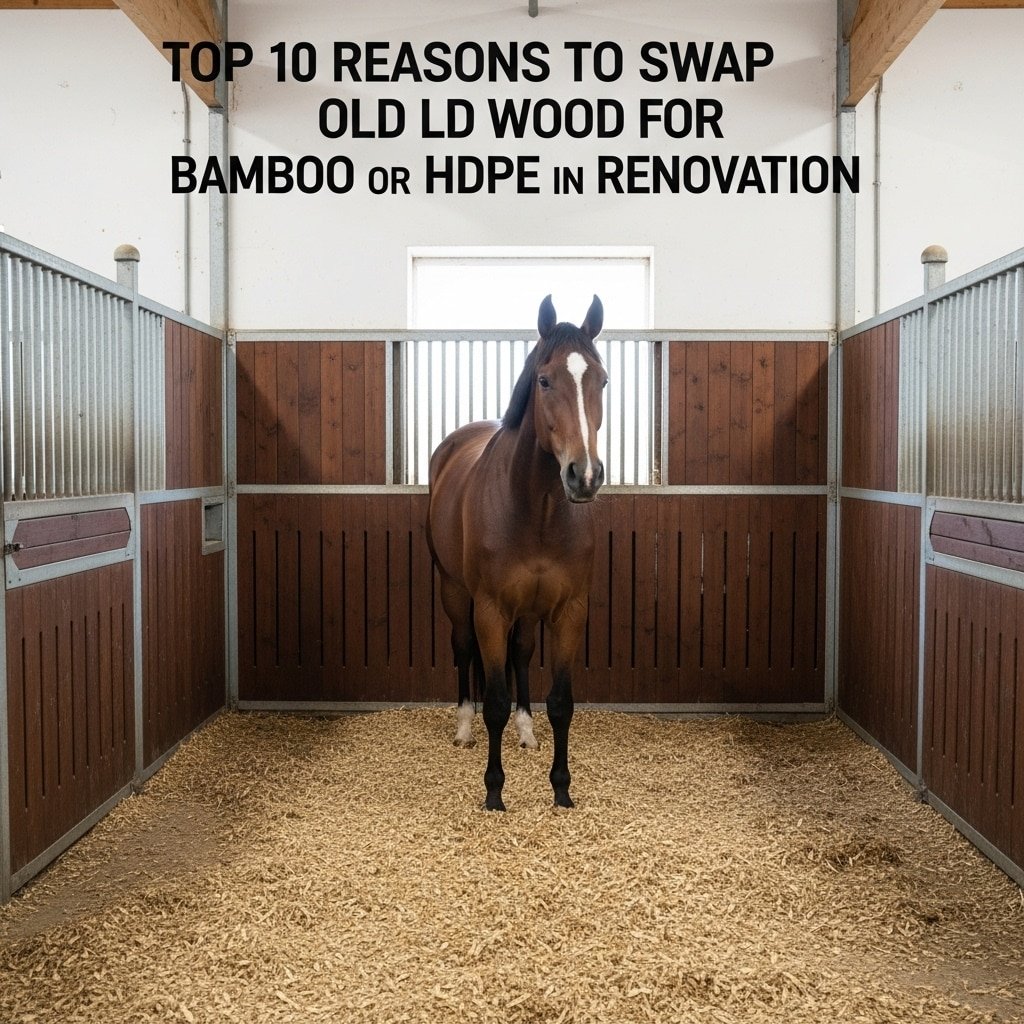
Yes, retrofitting older horse stalls with new infill boards is an effective way to upgrade your facility. The success of the project depends on the condition of the original steel frame. If the existing channels are structurally sound, straight, and free of significant rust or damage, you can replace old wood with modern materials like our HDPE or high-density bamboo.
Assessing Your Existing Stall Frame and Channels
Before ordering new infill, a thorough inspection of your existing stall structure is essential. Check the steel posts and channels for any signs of deep rust, corrosion, or physical damage that could compromise safety. It’s also important to confirm the frame is still plumb and the channels are straight. Warped or bent channels will make it difficult to install uniform, pre-cut planks like our zero-maintenance HDPE or kick-proof bamboo, which require a true fit for optimal performance.
The Retrofitting Process: From Old Wood to New Infill
Once you’ve confirmed the frame is sound, start by carefully removing the old wood boards. After the channels are clear, take precise measurements of the interior channel dimensions (length and depth) to ensure your new boards are cut to the correct size. The new HDPE or Bamboo planks should then slide smoothly into the channels, creating a snug and secure wall without excessive gaps that could cause rattling or create pinch points.
Ensuring a Safe and Secure Installation
A secure fit is critical for both durability and animal safety. If your system requires them, use high-quality fasteners like the 304 Stainless Steel screws included in our hardware kits to prevent rust streaks. Double-check that all boards are tightly fitted to eliminate rattling and maintain the wall’s structural integrity. Finally, ensure the bottom plank is installed with a minimal gap to the ground, adhering to our ‘Cast-Proof Design’ standard to prevent a horse’s hoof from getting trapped.
How Much Maintenance Will You Save (The 10-Year Math)?
Choosing a modern infill over traditional wood provides substantial long-term savings for your facility. By eliminating annual costs for sealing, painting, board replacement, and the associated labor, our systems protect your operational budget. This turns a recurring maintenance liability into a durable, long-term asset that keeps your stalls consistently safe and available.
Comparing Annual Costs: Wood vs. Zero-Maintenance Infill
Traditional wood infill creates a cycle of recurring expenses. Every year, you have to budget for the labor and materials needed to seal, paint, and replace boards that have been chewed, kicked, or damaged by moisture. These small but constant costs add up, eating into your profit margins over the life of the stable.
Our UV-stabilized HDPE infill offers a clear alternative with its ‘Zero Maintenance’ design. It completely eliminates the need for paint, sealants, or repairs from chewing and rot. For a more classic look, our high-density strand woven bamboo is naturally resistant to mold and rot. With a Janka hardness over 3000 lbf, it is three times harder than oak, dramatically reducing replacement frequency compared to softer woods like pine.
The 10-Year Projection for Material Replacement
The financial benefit becomes clear when you project costs over a decade. Simply multiply your estimated annual wood maintenance expenses by ten. Then, subtract the one-time initial investment for the HDPE or bamboo upgrade to see your net savings. This proactive investment is significantly more cost-effective than performing emergency repairs after a broken board compromises stall security.
Our stable systems are built for longevity. The entire steel frame undergoes hot-dip galvanization after fabrication, meeting the strict BS EN ISO 1461 standard. This process provides a protective zinc coating that is designed to last for decades, ensuring the structural frame will easily outlive the typical maintenance cycle of wood.
Factoring in Labor and Stall Downtime
Beyond materials, the biggest hidden cost of wood is labor and operational disruption. Upgrading to a maintenance-free infill eliminates the recurring hours your team spends sanding, painting, and fitting replacement boards. More importantly, it prevents costly stall downtime. A stall that’s out of commission for repairs is a stall that isn’t generating revenue or available for your training program. Our HDPE and bamboo systems ensure your stalls are always safe, functional, and ready for use.
Final Thoughts
Cheaper stalls often use pre-galvanized tubes, leaving welds exposed to rust from day one. Our strict “Hot-Dip After Fabrication” standard (ISO 1461) protects every edge and weld. This is the difference between a quick sale and a long-term, trusted supply partnership.
The next step is to verify our engineering in person. A small trial order allows you to assess the material quality and flat-pack system before committing to a full container. Contact our team to get a quote and discuss your OEM requirements.
Frequently Asked Questions
Why is “Hot-Dip Galvanized After Fabrication” so important?
This process is our core quality guarantee. We construct the entire stable panel from raw structural steel first, then immerse the completed structure in molten zinc. This method, certified to ISO 1461, seals every weld, corner, and edge against rust. Competitors often weld pre-galvanized tubes, leaving the critical weld points exposed and vulnerable to corrosion from the start. Our method ensures decades of structural integrity, dramatically reducing replacement costs and safety risks.
What’s the difference between your HDPE and Bamboo infill options?
Both options are engineered to outperform traditional wood. Our UV-stabilized HDPE (28-32mm thick) offers zero maintenance, is easy to clean, and absorbs impact, making it ideal for high-use environments like quarantine or rental stables. Our High-Density Strand Woven Bamboo (28-38mm thick) provides a premium look with extreme durability—its Janka hardness rating is over 3000 lbf, making it three times harder than oak and virtually kick-proof. It is also naturally resistant to mold and rot.
How does your flat-pack system benefit distributors?
Our flat-pack system is designed for profit protection. By packing panels and infill securely onto steel pallets, we can load 30-45 stable sets into a single 40HQ container. Traditional fully-welded stables can only fit 12-15 sets. This efficiency cuts per-unit sea freight costs by over 60%, directly improving your profit margins. It also ensures safer, faster, and more organized unloading at your destination warehouse, reducing labor costs and potential for damage.
What is included in a standard stable system?
Each complete set is a full kit designed for straightforward installation. It includes one stable front panel (with your choice of door), one side/partition panel, all pre-cut infill planks (HDPE or Bamboo), a full hardware kit with 304 stainless steel connectors and anchor bolts, and a can of cold galvanizing spray for touching up any scratches that may occur during assembly. Everything you need is on the pallet.
Do you offer a steel option for very cold climates?
Yes. While our standard Q235B steel is robust for most regions, we specify Q345B low-alloy high-strength steel for projects in markets with severe winters, such as parts of Europe and North America. Q345B steel has superior low-temperature impact toughness, which prevents the steel from becoming brittle and fracturing from horse kicks in freezing conditions. It’s a critical safety feature for ensuring year-round structural integrity.
Will your boards fit my existing stalls?
As a B2B OEM/ODM manufacturer, we specialize in producing complete stable systems for distributors and large-scale projects, not individual retail parts. Our system includes pre-cut infill planks designed to fit our steel frames perfectly. For distributor orders, we can manufacture entire stable fronts and partitions to match custom dimensions, ensuring compatibility with specific project requirements.
Can I cut your bamboo planks with a regular saw?
Our high-density strand-woven bamboo is three times harder than oak and requires appropriate tools. While it can be cut, you will need a power saw equipped with a high-quality carbide-tipped blade designed for dense hardwoods. To protect our clients’ profit margins and ensure a perfect fit, all our bamboo planks are precision cut to size at our factory and shipped as part of a complete flat-pack system, eliminating the need for on-site cutting.
Do you offer tongue and groove boards?
Yes, both our high-density bamboo and UV-stabilized HDPE infill planks are milled with a tongue-and-groove profile. This design ensures a tight, seamless fit within our steel frames, creating a solid wall with no gaps. This is a key feature of our “Cast-Proof Design,” preventing horses from getting limbs stuck and increasing the overall structural integrity of the partition.
What thickness do I need for stall infill boards?
We have engineered specific thicknesses for optimal performance and safety. Our UV-stabilized HDPE planks are 28mm-32mm thick, providing excellent impact absorption. Our high-density strand-woven bamboo is offered in 28mm-38mm thicknesses for superior strength. For our luxury Royal Series, we offer planks up to 40mm thick. These thicknesses guarantee resilience against kicks and provide long-term durability.
Can I stain your infill boards to a custom color?
Our materials are designed to eliminate the need for on-site finishing. Our HDPE infill is a solid color throughout and is completely maintenance-free. Our strand-woven bamboo is factory-finished with a protective layer that resists mold and moisture, preserving its natural appearance. This saves our B2B clients significant labor costs and ensures a consistent, durable finish that won’t chip or fade like traditional wood stain.
Is your bamboo fire resistant?
Our strand-woven bamboo is manufactured under extreme pressure, resulting in a plank far denser than natural bamboo or softwoods like pine. While any wood-based material can burn, this high density gives it a slower char rate, which can contribute to overall barn safety in the event of a fire. It offers a more robust performance compared to many traditional lumber options used in stall construction.

 English
  Spanish
  French
  Arabic
  German
0 Comments