


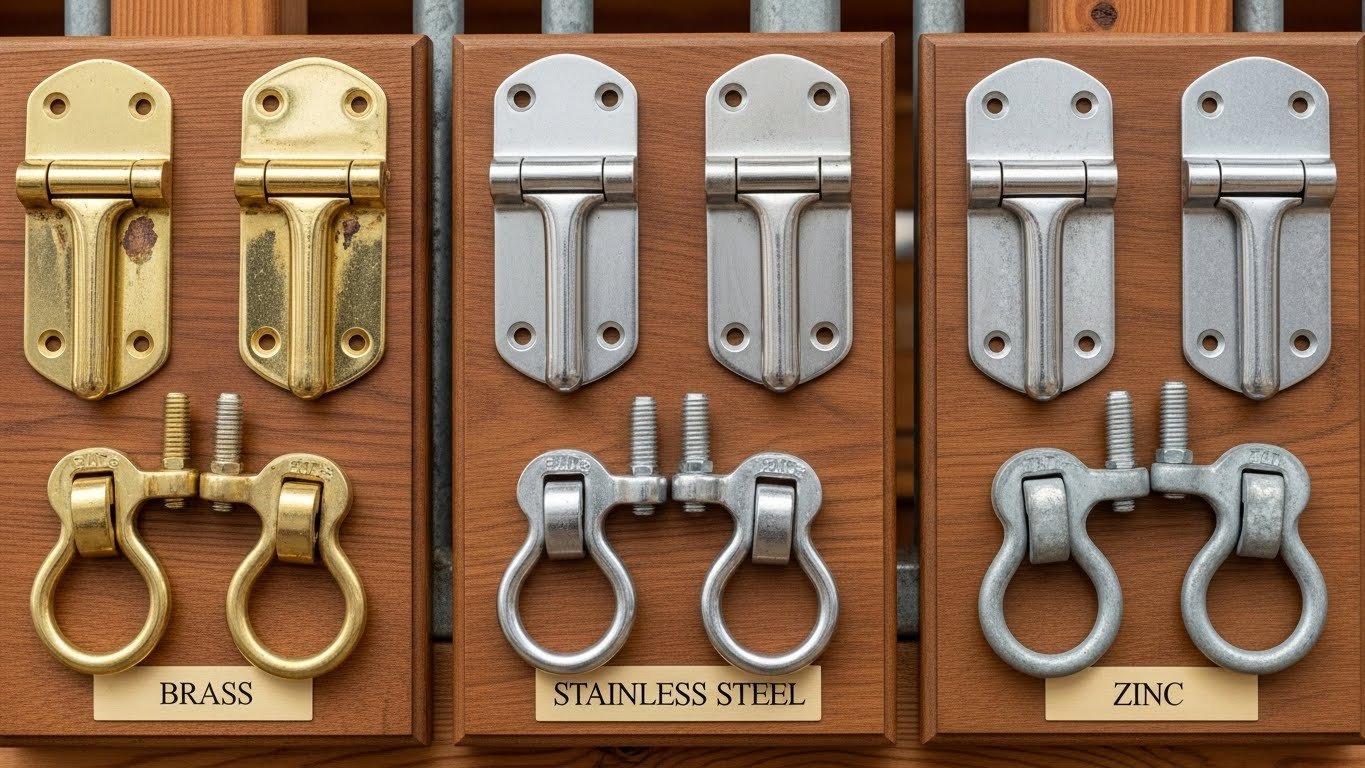
Selecting the right hardware for your horse stalls impacts more than just immediate costs; it shapes your facility’s long-term durability, aesthetic appeal, and operational budget.
This guide compares brass, stainless steel, and zinc-plated options for horse stall hardware, focusing on their strength, corrosion resistance, and expected lifespan. We’ll show how premium choices, like solid brass, can deliver over 20 years of service, significantly outperforming the 5-10 year life typical of zinc-plated alternatives. You’ll also learn how a strategic investment in quality materials can reduce your overall lifecycle hardware costs by 20-40%.
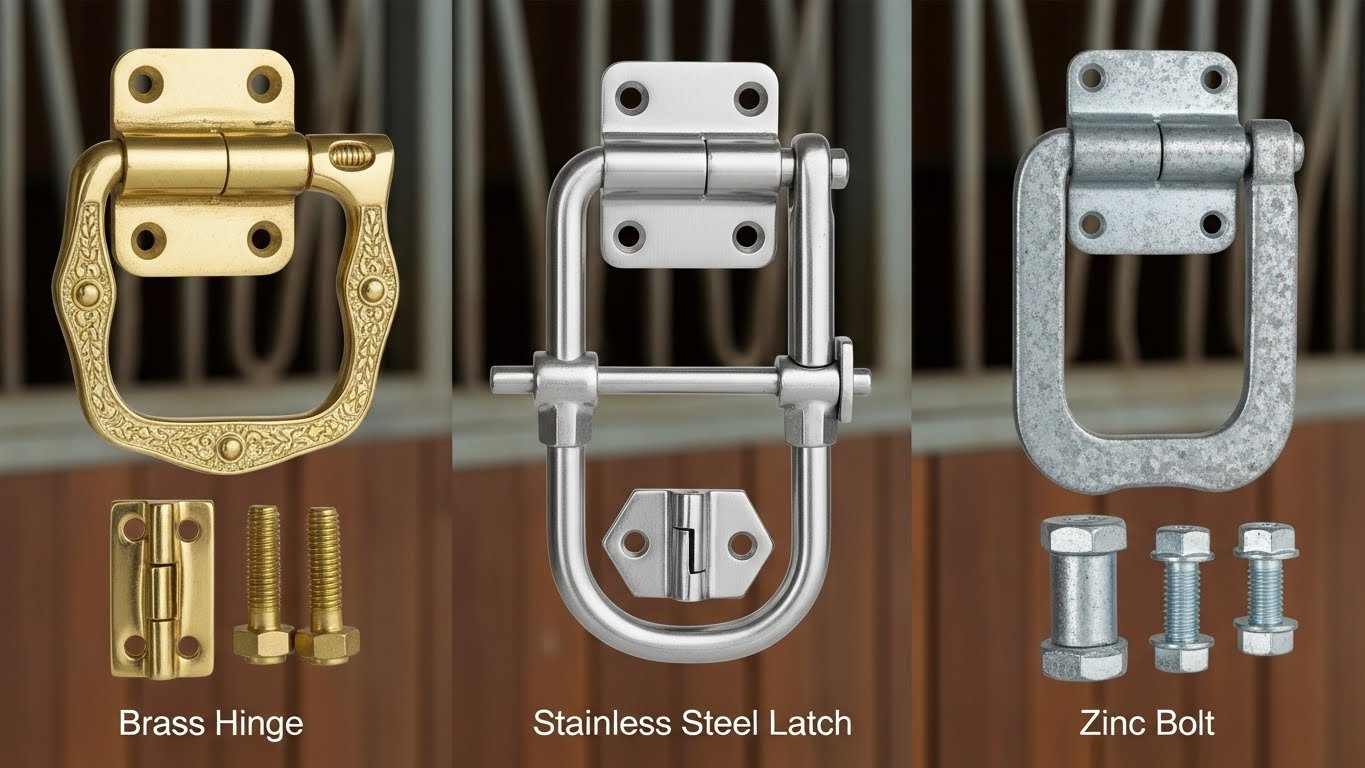
Industry Manufacturers List
Quick Comparison: Top Picks
| Manufacturer | Location | Core Strength | Verdict |
|---|---|---|---|
| Brass Finials and Post Caps | Industry Wide | Decorative brass post caps and finials used on stall fronts and partitions as a visual termination and design accent.[1][2][3] | Brass finials and post caps sit atop grill posts and stall fronts, providing a warm metallic accent that visually finishes the line of the stall while tying into other brass hardware. They are typically solid or cast brass pieces polished for high reflectivity, and are used to signal premium, custom stall construction.[1][2][3] |
| Brass Door Pulls, Handles, and Strikers | Industry Wide | Brass pull knobs, strikers, and equestrian‑themed handles (e.g., horse‑head profiles) engineered for barn, Dutch, and stall doors.[1][4] | Brass pull knobs, strikers, and decorative handles turn sliding or swinging stall doors into focal points, adding tactile weight and a jewelry‑like sheen at the point of contact.[1][4] These parts are often cast or machined brass offered in multiple finishes such as polished, antique brass, and dark chrome to coordinate with the rest of the stall hardware.[4] |
| Brass Hooks and Tack Hardware | Industry Wide | Solid brass bridle hooks, strap hooks, and decorative barn hooks designed for bridles, halters, and stable accessories.[5][6][9] | Brass bridle hooks and tack hooks function as both organization hardware and visual detailing, bringing a consistent metallic language from the stall fronts into the tack and grooming areas.[5][6][9] High‑end collections use solid brass bodies with hand polishing and durable coatings to maintain luster in humid barn environments.[6][9] |
| Decorative Barn Hardware Accents | Industry Wide | Decorative hooks, brackets, cross‑tie rings, and similar hardware in brass and other metals with equestrian motifs.[5][7] | Decorative barn hardware such as brass horse‑head hooks, buckle motifs, and horseshoe designs provide small, repeatable accents that visually link stalls, aisles, and tack spaces.[5] Offered in brass, chrome, patina metals, and wood‑combination pieces, these items act as the fine detailing that elevates a barn from utilitarian to boutique finish quality.[5][7] |
| Brass Nameplates and Stall Plates | Industry Wide | Engraved brass stall plates, bridle plates, and saddle plates in standardized small formats.[5][8] | Custom brass stall and saddle plates provide engraved identification while acting as a jewelry‑like detail on doors, partitions, and tack storage.[8] Typically made from polished brass plate stock, they are customized with horse names, owner details, or logos and mounted with matching brass screws to maintain visual continuity with other stall hardware.[5][8] |
Brass Finials and Post Caps
Brass finials and post caps offer a distinctive metallic finish for grill posts and stall fronts. These components visually complete the stall line and complement other brass hardware. Often crafted from solid or cast brass and polished to a high sheen, they are a hallmark of custom, high-end stall construction.
The production focuses on quality and aesthetic detail, creating decorative brass post caps and finials. These items serve as both visual terminations and design accents, catering to the specific needs of luxury equestrian environments where custom design and material quality are prioritized.
At a Glance:
- 📍 Location: Industry Wide
- 🏭 Core Strength: Decorative brass post caps and finials used on stall fronts and partitions as a visual termination and design accent.
- 🌍 Key Markets: High‑end equestrian barns, show facilities, and custom private stables focused on luxury aesthetics.
Why We Picked Them:
| ✅ The Wins | ⚠️ Trade-offs |
|---|---|
|
|
Brass Door Pulls, Handles, and Strikers
Brass pull knobs, strikers, and decorative handles transform sliding or swinging stall doors into distinct focal points. These parts add tactile weight and a jewelry-like sheen where they are touched. They are often crafted from cast or machined brass, available in multiple finishes such as polished, antique brass, and dark chrome, designed to coordinate seamlessly with other stall hardware.
The manufacturing process for these components typically involves precision casting and machining of brass. This ensures high-quality finishes and robust durability, making them suitable for demanding equestrian and designer installations.
At a Glance:
- 📍 Location: Industry Wide
- 🏭 Core Strength: Brass pull knobs, strikers, and equestrian‑themed handles (e.g., horse‑head profiles) engineered for barn, Dutch, and stall doors.
- 🌍 Key Markets: Premium stall front systems, designer barns, tack rooms, and residential barn‑inspired interiors.
Why We Picked Them:
| ✅ The Wins | ⚠️ Trade-offs |
|---|---|
|
|
Brass Hooks and Tack Hardware
Brass hooks and tack hardware serve as essential organizational tools and decorative elements, extending a consistent metallic aesthetic from stable fronts to tack and grooming areas. These products are designed for durability and visual appeal, integrating seamlessly into equestrian environments.
High-end collections in this category are crafted from solid brass bodies, enhanced with hand polishing and robust coatings. This meticulous production process ensures that the hardware maintains its luster and integrity, even in the humid conditions often found in barn environments.
At a Glance:
- 📍 Location: Industry Wide
- 🏭 Core Strength: Solid brass bridle hooks, strap hooks, and decorative barn hooks designed for bridles, halters, and stable accessories.
- 🌍 Key Markets: Tack rooms, grooming bays, wash stalls, and decorative wall storage in equestrian facilities and homes.
Why We Picked Them:
| ✅ The Wins | ⚠️ Trade-offs |
|---|---|
|
|
Decorative Barn Hardware Accents
Decorative Barn Hardware Accents offers a distinctive collection of hardware, featuring items like brass horse-head hooks, buckle motifs, and horseshoe designs. These pieces serve as small, repeatable accents that visually connect various barn areas such as stalls, aisles, and tack spaces. The meticulous detailing of these components is key to their aesthetic impact.
Available in a range of materials including brass, chrome, patina metals, and elegant wood-combination pieces, these hardware elements go beyond mere functionality. They provide the fine finishing touches that transform a barn from a purely utilitarian structure into one with a boutique quality and refined appearance. This focus on material variety and craftsmanship ensures a luxurious feel for equestrian facilities.
At a Glance:
- 📍 Location: Industry Wide
- 🏭 Core Strength: Decorative hooks, brackets, cross‑tie rings, and similar hardware in brass and other metals with equestrian motifs.
- 🌍 Key Markets: Barn aisles, tack rooms, blanket rooms, and crossover residential spaces using equestrian design language.
Why We Picked Them:
| ✅ The Wins | ⚠️ Trade-offs |
|---|---|
|
|
Brass Nameplates and Stall Plates
Custom brass stall and saddle plates offer engraved identification for equestrian settings. These plates also add a jewelry-like detail to doors, partitions, and tack storage. Crafted from polished brass stock, they are personalized with horse names, owner details, or logos. Matching brass screws ensure visual consistency with other stall hardware when mounted.
The production focuses on quality and customization, allowing for precise engraving and fabrication of plates in standardized small formats. This ensures each piece meets specific design requirements for various equestrian applications, from individual stalls to entire tack rooms.
At a Glance:
- 📍 Location: Industry Wide
- 🏭 Core Strength: Engraved brass stall plates, bridle plates, and saddle plates in standardized small formats.
- 🌍 Key Markets: Stall fronts, tack rooms, saddle racks, and award or memorial displays in detail‑oriented equestrian facilities.
Why We Picked Them:
| ✅ The Wins | ⚠️ Trade-offs |
|---|---|
|
|
Living Unlacquered Solid Brass
Unlacquered solid brass is a living finish, starting with a warm golden tone. It gradually develops a soft, darkened patina as it oxidizes, especially in humid or high-touch environments. This evolving surface adds visual depth, subtle color variation, and a sense of age. Detail-oriented owners prize this quality in visible hardware like latches, hinges, and bridle hooks.
Main products include bare, unlacquered brass bar, sheet, and cast hardware. These are designed to patinate naturally over time, emphasizing a color shift from bright gold to deeper, earthier tones. The focus is on authentic evolution and character, rather than a fixed, glossy appearance.
At a Glance:
- 📍 Location: Industry Wide
- 🏭 Core Strength: Bare, unlacquered brass bar, sheet, and cast hardware designed to patinate naturally over time, emphasizing color shift from bright gold to deeper, earthier tones.
- 🌍 Key Markets: High‑end architectural hardware, luxury equestrian barns, and interiors where visible evolution and character are preferred over a frozen, glossy finish.
Why We Picked Them:
| ✅ The Wins | ⚠️ Trade-offs |
|---|---|
|
|
Sealed aged / antique brass patina
Aged or antique brass is typically solid brass that has been chemically darkened, then sealed with lacquer or matte clear coat to lock in a controlled, time‑worn look. This process delivers the warmth and richness of patinated brass without allowing further oxidation. It keeps stall hardware color-stable while still reading visually as aged and refined.
This finish is commonly achieved through factory‑applied methods, where a brown, bronze, or antique patina is applied to the brass. A satin or matte clear topcoat then resists further patina development and minimizes fingerprints. This ensures a consistent aesthetic across various products and projects.
At a Glance:
- 📍 Location: Industry Wide
- 🏭 Core Strength: Factory‑applied brown, bronze, or antique patina on brass with satin or matte clear topcoat to resist further patina and fingerprints.
- 🌍 Key Markets: Premium cabinetry and door hardware, equestrian facilities seeking a consistent “old brass” tone, and hospitality projects needing aged aesthetics with low maintenance.
Why We Picked Them:
| ✅ The Wins | ⚠️ Trade-offs |
|---|---|
|
|
Blackened / graphite patina on solid brass
Blackened or graphite patina provides a dark, almost black surface treatment for solid brass. This finish is sealed with lacquer, enhancing its durability and reducing maintenance needs. It creates a strong visual contrast against lighter woods and light-colored stall fronts, delivering a premium, tailored aesthetic for horse hardware while effectively hiding minor handling marks.
This process typically involves chemically blackening or graphite-toning the brass, then applying a clear lacquer seal. Such finishes are widely marketed as premium blackened brass and are commonly found in applications like lighting, pulls, and architectural hardware.
At a Glance:
- 📍 Location: Industry Wide
- 🏭 Core Strength: Chemically blackened or graphite‑toned brass finishes with clear lacquer seal, often marketed as premium blackened brass for lighting, pulls, and architectural hardware.
- 🌍 Key Markets: Modern and minimalist interiors, designer barns combining contemporary lines with traditional brass, and fixtures where a deep, low‑gloss black metal is desired.
Why We Picked Them:
| ✅ The Wins | ⚠️ Trade-offs |
|---|---|
|
|
Brushed or satin aged brass sheets and panels
Brushed or satin aged brass sheets and panels feature a linear or satin mechanical texture combined with a controlled brown or bronze patina. These materials are typically supplied as thin sheets or composite panels. They provide a soft, low-reflective glow with visible grain, making them suitable for applications like stall fronts, kick plates, nameplates, and trim where glare reduction and subtle depth are important.
Production focuses on 0.5–0.8 mm brass or brass-look panels. These panels feature an aged patina and a matte or satin two-component clear finish, designed for both vertical and horizontal decorative use. The primary markets include high-end millwork, wall cladding, cabinetry fronts, and decorative equestrian elements, catering to needs for patinated brass aesthetics on larger surfaces rather than just small fittings.
At a Glance:
- 📍 Location: Industry Wide
- 🏭 Core Strength: 0.5–0.8 mm brass or brass-look panels with aged patina and matte or satin two-component clear finish for vertical or horizontal decorative use.
- 🌍 Key Markets: High-end millwork, wall cladding, cabinetry fronts, and decorative equestrian elements that require patinated brass aesthetics on larger surfaces rather than small fittings.
Why We Picked Them:
| ✅ The Wins | ⚠️ Trade-offs |
|---|---|
|
|
Artistic bronze‑tone patina on brass
This process involves applying premium patinas to brass, creating a bronze-like surface with deep, nuanced tones. Each piece is individually treated, showcasing subtle highlights and unique patterning. This approach emphasizes a one-of-a-kind character, making it ideal for focal hardware elements like stall name plates or custom latch escutcheons.
They provide hand-finished brass plates and components, expertly treated to develop a complex, layered dark-bronze patina. Surfaces are sealed, ensuring durability for interior applications. These products are particularly suited for boutique hospitality, statement residential hardware, and luxury barn projects, where hardware serves as both decorative metalwork and a storytelling element.
At a Glance:
- 📍 Location: Industry Wide
- 🏭 Core Strength: Hand-finished brass plates and components treated to achieve complex, layered dark-bronze patina with sealed surfaces for interior use.
- 🌍 Key Markets: Boutique hospitality, statement residential hardware, and luxury barns where hardware doubles as decorative metalwork and visual storytelling element.
Why We Picked Them:
| ✅ The Wins | ⚠️ Trade-offs |
|---|---|
|
|
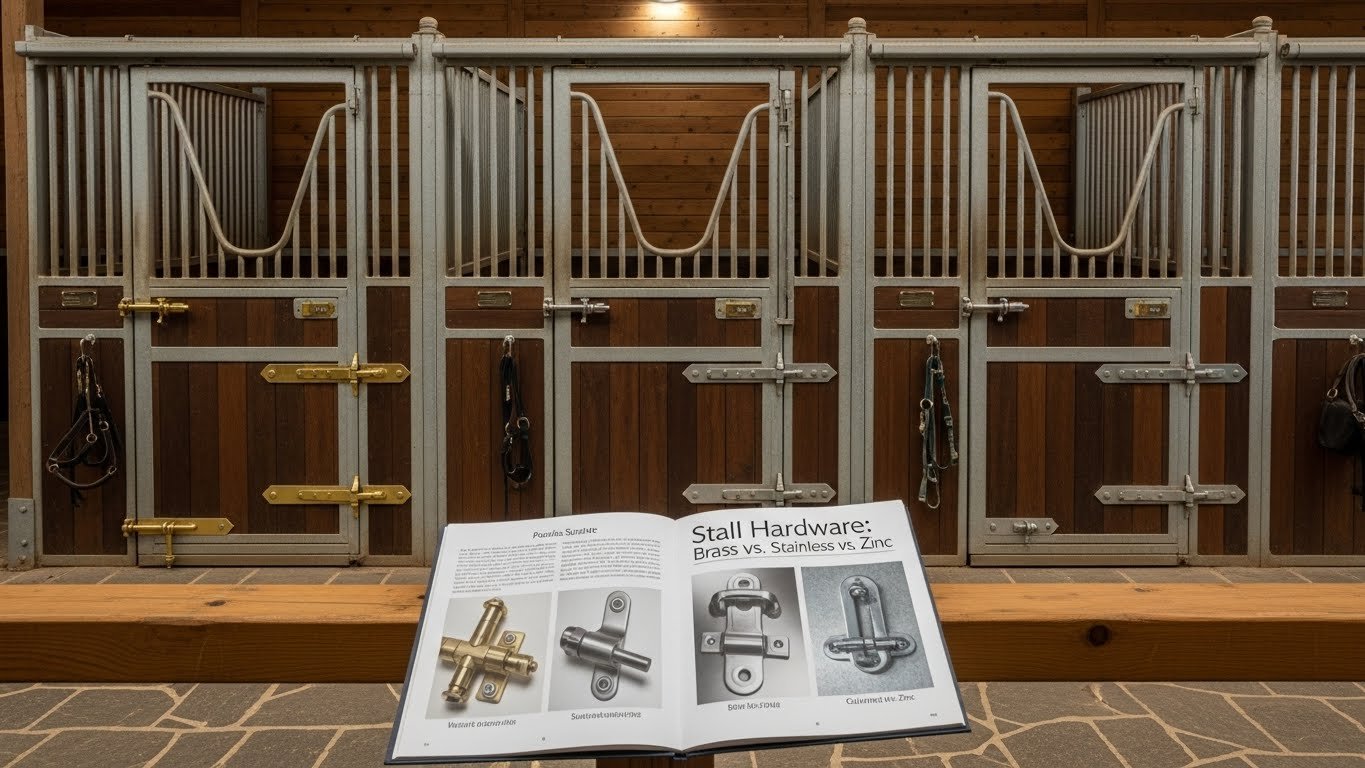
Introduction
Brass horse stall hardware merges robust functionality with elegant barn aesthetics, offering the necessary strength for equestrian use and the visual warmth of polished metal. These components, such as post caps, finials, hooks, and handles, serve as intentional visual accents, defining a stable’s character in premium private barns, training facilities, and architect-designed equestrian estates where both durability and refined detailing are highly valued.
The Blend of Strength and Style
Brass horse stall hardware combines structural function with refined barn aesthetics, offering the necessary strength for daily equestrian use and the visual warmth of polished metal.
These components become deliberate visual accents, chosen by designers and barn owners to define a stable’s character, moving beyond simple utilitarian fittings.
Key Hardware Components and Premium Applications
Typical brass stall hardware encompasses items such as post caps, finials, bridle and tack hooks, decorative pulls and handles, latch and striker sets, and engraved name plates, designed to coordinate across a stall front system.
Primary applications for this hardware are found in premium private barns, professional training facilities, show and breeding stables, and architect-designed equestrian estates, where visual cohesion, finish quality, and custom detailing are highly valued alongside safety and durability.
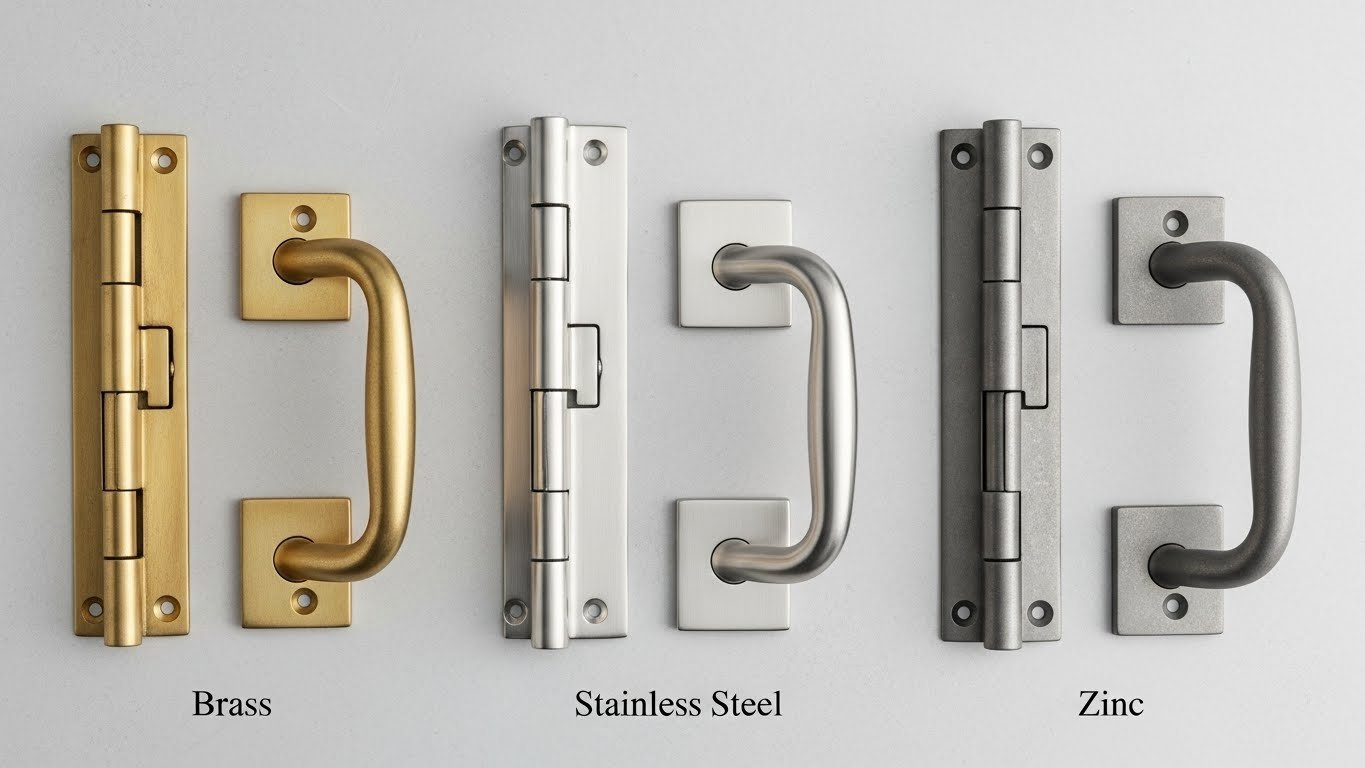
Stainless Steel (The Modern Workhorse)
Stainless steel hardware serves as a modern and reliable choice in equine environments. It provides superior strength, excellent corrosion resistance through its chromium-based protective layer, and an appealing aesthetic. This material performs well in demanding conditions, including humid and ammonia-rich barn atmospheres, offering long-term durability and reliability for critical hardware like stall latches.
Understanding Stainless Steel in Stable Hardware
Stainless steel stands out as a strong material for modern stable hardware, combining inherent strength with resistance to rust. Its properties come from containing at least 10.5% chromium, which creates a thin, protective oxide layer on the surface. This layer effectively prevents corrosion, even in challenging environments. Stainless steel also proves stronger than zinc alloys and brass. For example, specific grades like 304 stainless steel are selected for critical parts such as pin lock latches in sliding horse stalls, and full stainless steel is used for plunger latches in hinged European stall fronts, showcasing its structural importance.
Advantages for Equine Environments in 2026
Using stainless steel hardware in equine settings offers many benefits. Its excellent corrosion resistance means it remains rust-proof in the humid and ammonia-rich atmosphere common in barns, which is vital for cleanliness and long-term use. The material’s superior strength delivers durability and impact resistance, ensuring safety and dependability for hardware interacting with horses daily. This high durability leads to a longer lifespan, cutting down on the need for frequent replacements. Beyond function, stainless steel has a shiny, attractive finish that polishes well, matching the visual standards of high-end barn interiors and adding to a premium appearance.
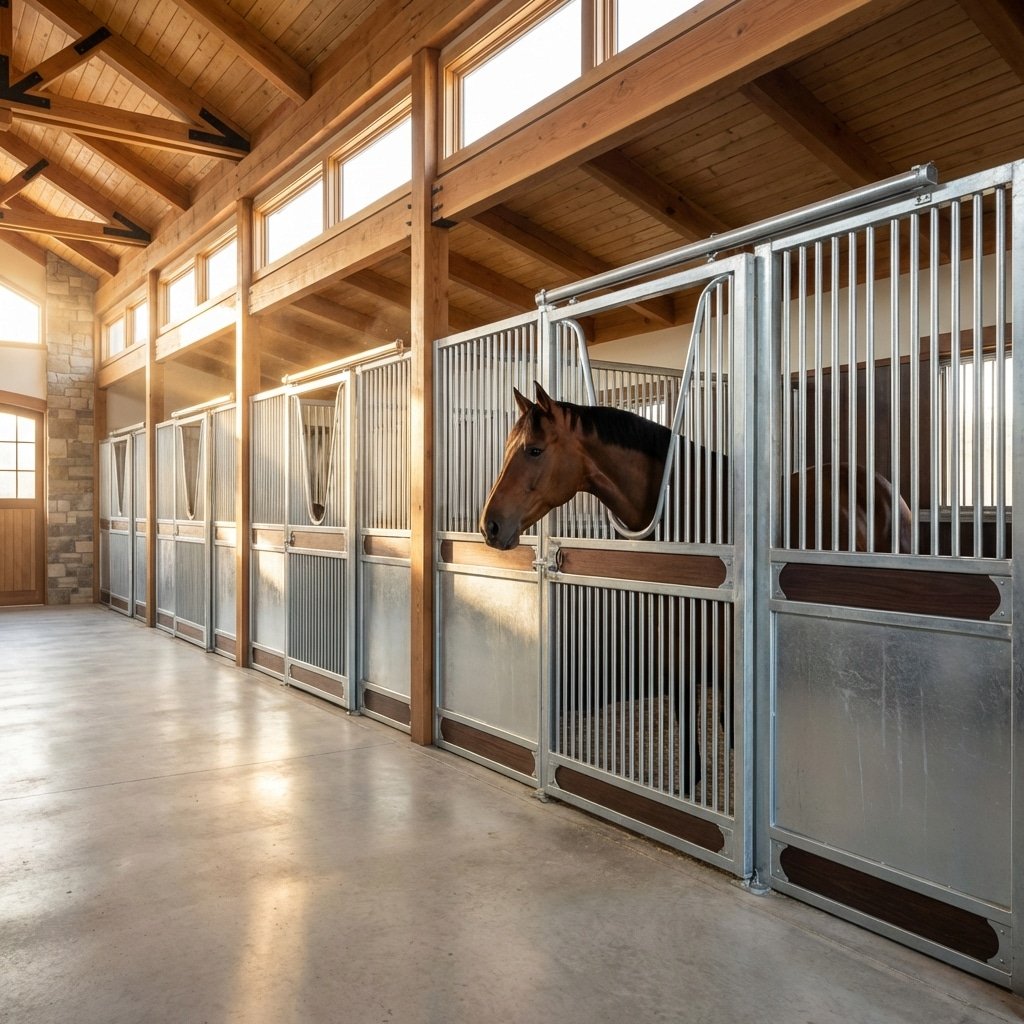
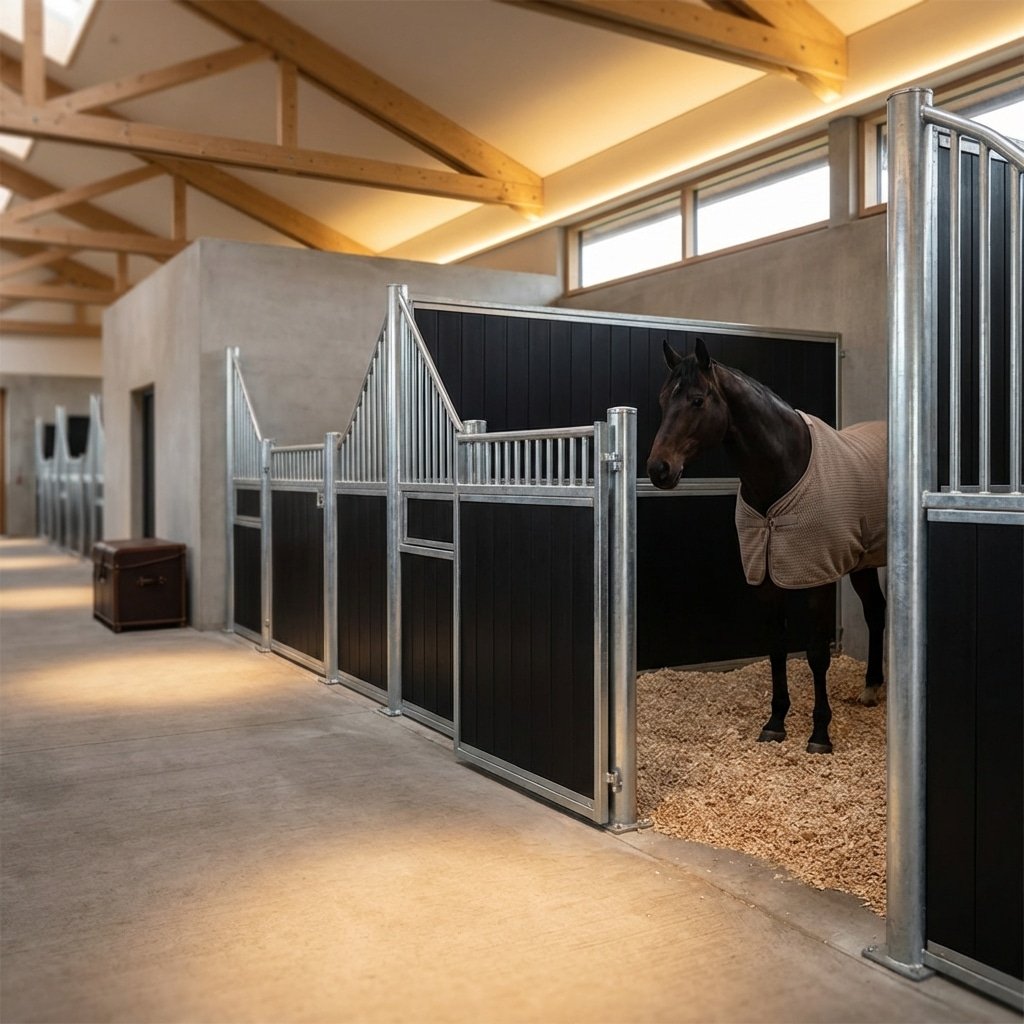
Your Dream Stable, Built for Any Climate, Anywhere.

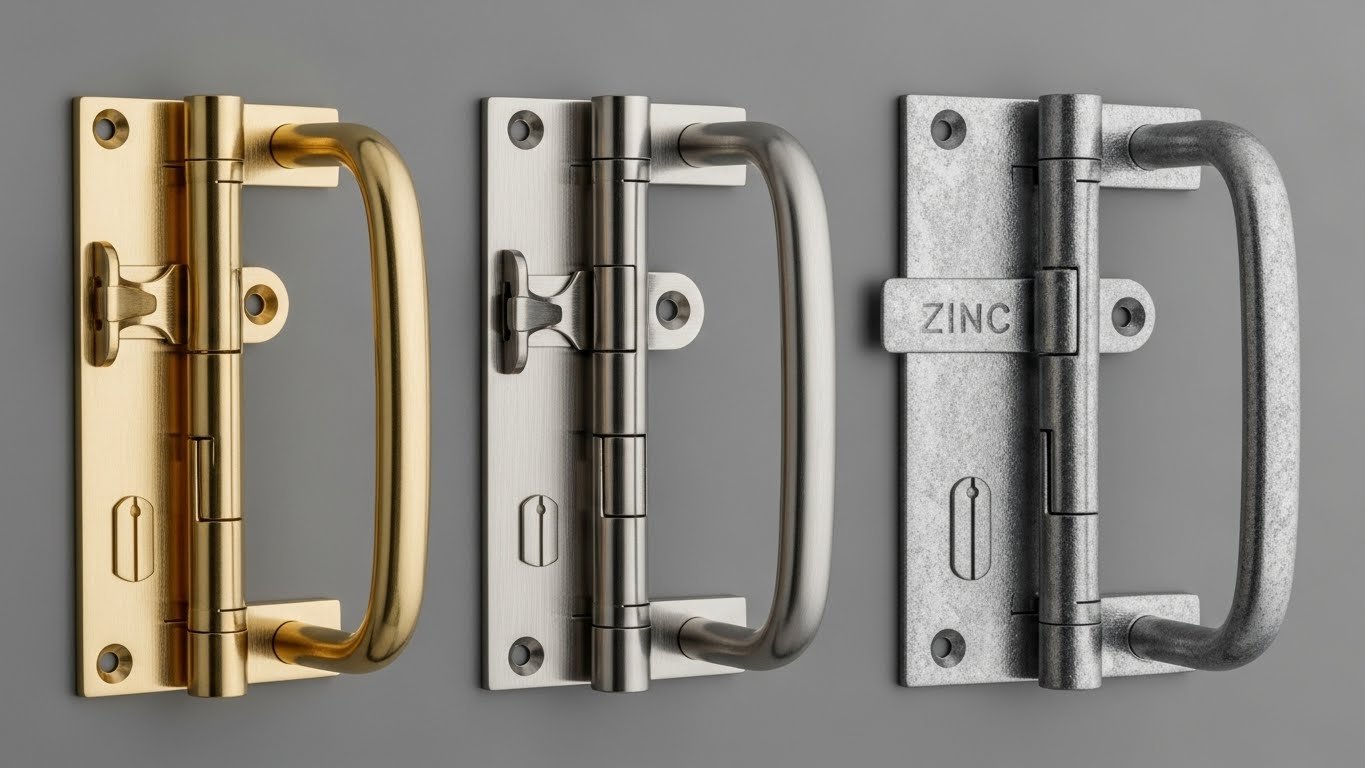
Zinc Plated (The Budget Choice)
Zinc plating is a cost-effective surface treatment for steel hardware used in horse stalls. It offers basic corrosion resistance through a thin zinc layer, serving as a budget-friendly option compared to premium materials.
Zinc Plating: Purpose and Appearance
Zinc plating is a cost-effective surface treatment applied to steel hardware for horse stalls.
It provides basic corrosion resistance through a thin layer of zinc, acting as a budget-friendly alternative to premium materials.
The process often involves electroplating or hot-dip galvanizing, applying zinc layers of 5-50 microns.
Zinc plating gives a dull, silvery finish that may yellow over time, generally less aesthetic than polished brass.
Performance and Typical Applications
Zinc plated hardware offers good corrosion resistance indoors and fair resistance in moist barn conditions, protecting steel through a sacrificial coating.
Its expected lifespan ranges from 5-10 years in typical stall environments before showing signs of pitting.
It commonly features in budget galvanized hinges, latches, and fasteners (e.g., 8-inch tee hinges, 12-inch strap hinges).
Brands use zinc plating in hardware for doors, including 1/4-inch lag bolts, with powder-coated variants enhancing longevity.
Aesthetic and Environmental Considerations
While economical, zinc plating lacks the luxurious, non-tarnishing luster of solid brass, potentially detracting from upscale barn designs.
In corrosive, manure-rich environments, it underperforms materials like stainless steel or brass without additional protective topcoats.
Choosing solid brass provides superior detail and longevity for aesthetics-focused users, aligning with higher-end barn visuals.
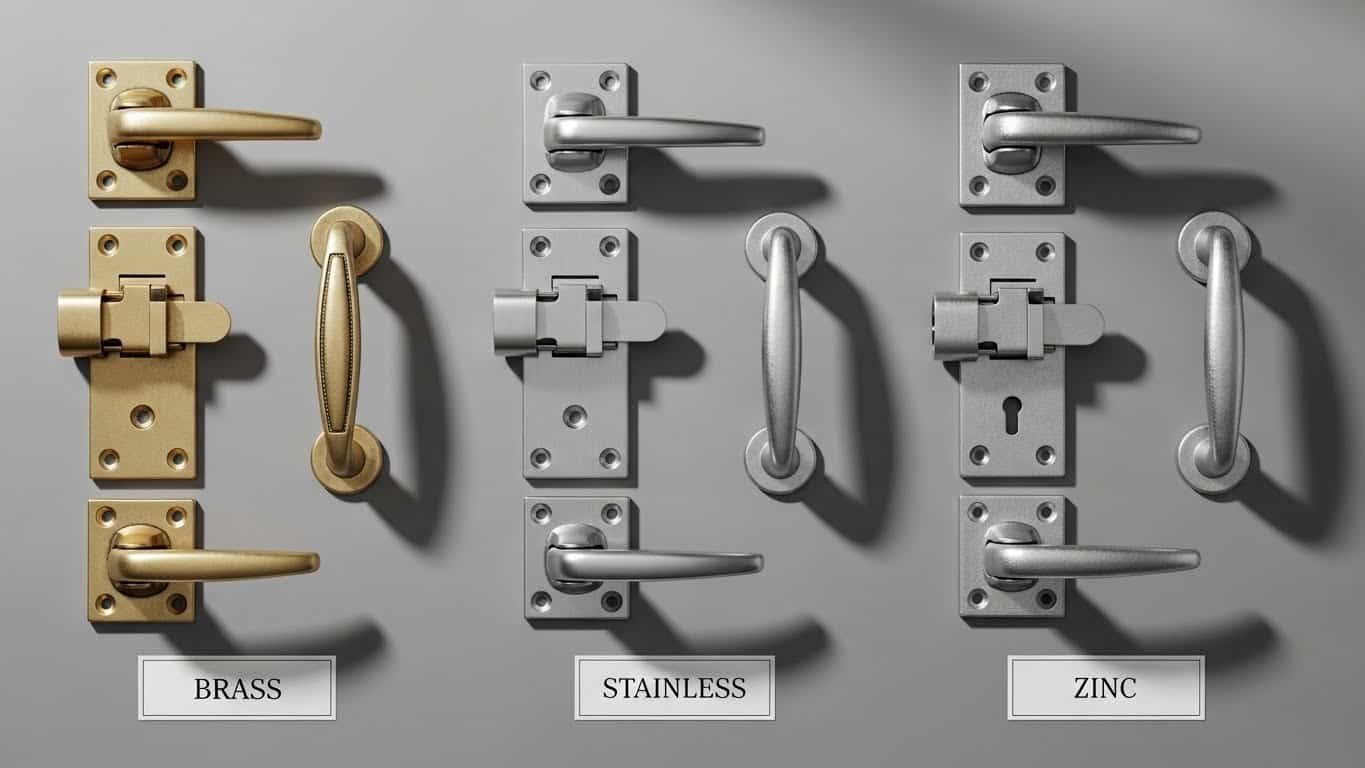
ROI of Premium Hardware
Upgrading from standard plated steel or zinc hardware to solid or architectural brass stall hardware typically increases upfront hardware cost by about 50–200%, but delivers 10–20+ years of service life in barns where lower-grade plated hardware may need replacement every 3–7 years. Facilities that factor in reduced replacement frequency, lower corrosion-related failures, and higher barn value often see lifecycle hardware cost per year drop by 20–40% despite the higher initial spend. For aesthetic-focused barns, premium brass also supports higher board rates and property value, providing additional indirect ROI.
| Aspect | Zinc Plated (Budget) | Brass (Premium) |
|---|---|---|
| Corrosion Resistance | Good indoors; fair in moist conditions (sacrificial coating protects steel) | Excellent; naturally tarnish-resistant |
| Cost | 30-50% lower than brass (e.g., hinges ~$10-20 vs. $30+) | Higher due to material (e.g., solid brass hooks, plates) |
| Lifespan | 5-10 years in stalls before pitting | 20+ years with minimal wear |
| Aesthetics | Functional, industrial look | Warm, golden shine for high-end barns |
Long-Term Value and Durability
Premium hardware delivers a service life of 10–20+ years, significantly outperforming lower-grade options that often require replacement every 3–7 years.
Despite an initial cost increase of 50–200%, the reduced replacement frequency and lower corrosion-related failures can decrease the lifecycle hardware cost per year by 20–40%.
Designed to resist corrosion, deformation, and finish breakdown in challenging barn environments, premium options reduce failure rates and associated downtime.
Minimizes labor and operational disruptions from frequent hardware replacements and emergency repairs.
Enhanced Aesthetics and Revenue Potential
Premium hardware elevates barn aesthetics, transforming functional spaces into high-end, visually cohesive environments.
The sophisticated appearance supports higher boarding rates, event pricing, and improves overall property resale appeal.
High-end presentation attracts positive attention from clients, visitors, and prospective buyers, fostering a professional brand image.
Visual appeal can lead to increased occupancy, a higher quality clientele, and opportunities for ancillary sales.
Operational Benefits and Risk Reduction
Engineered for safety, premium hardware minimizes protrusions and failures that could injure horses or handlers.
Reduces risks associated with bent, broken, or rusted components, potentially avoiding vet bills, liability exposure, and reputational damage.
Smooth, durable surfaces and robust finishes ensure easy cleaning and reduce ongoing maintenance time and effort.
Contributes to overall labor savings by minimizing the need for refinishing, rust remediation, and organizing cluttered spaces.
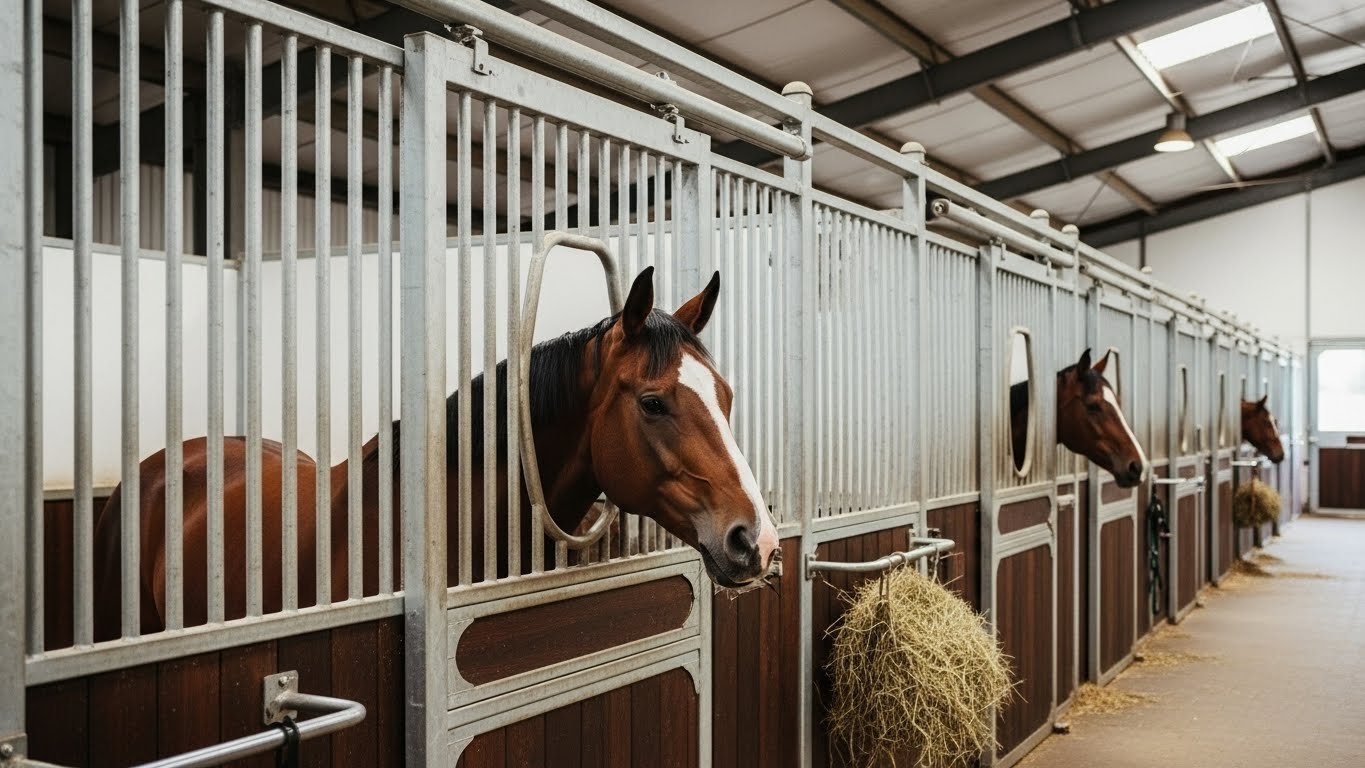
Frequently Asked Questions
Does brass hardware rust?
Brass hardware does not rust because rust is iron oxide, and brass contains no iron. However, in moist or corrosive environments, brass can corrode and tarnish, forming a dull brown, blue, or green patina. This patina is a surface effect that can be polished off or controlled with clear coatings and typically does not indicate the deep structural damage associated with rust on iron-based hardware.
How to clean brass stall fittings?
To clean brass stall fittings, use non-abrasive methods to preserve their appearance. Begin by wiping off dust and loose debris with a soft microfiber cloth. Wash with warm water and a few drops of mild dish detergent using a soft cloth, rinse, and dry completely. For tarnish, make a paste from lemon juice and baking soda or white vinegar and baking soda. Apply a thin layer, let it sit for 5–15 minutes, gently rub with a soft cloth or toothbrush, rinse, and buff dry. After cleaning, apply a dedicated brass polish, then buff to restore shine. For long-term protection, especially in barn environments, seal the polished brass with a clear metal lacquer or specialist wax. For small fasteners, wash in warm soapy water, agitate to remove grime, scrub with a soft brush, rinse, and dry. Avoid harsh household cleaners, bleach, or gritty powders, and always ensure the hardware is solid brass, as polishing brass-plated items too vigorously can remove the plating.
What are the key differences between stainless steel and zinc hardware for horse stalls?
Stainless steel hardware generally outperforms zinc hardware in strength, corrosion resistance, and aesthetics, making it preferable for demanding environments. Stainless steel offers superior strength (tensile strengths typically 500–1100 MPa), excellent corrosion resistance due to its chromium content, and a shiny, appealing finish. It is, however, more costly. Zinc, while more economical, is generally weaker, more susceptible to rust without protective plating, and has a plainer appearance. For applications where aesthetics and longevity in humid or harsh conditions are crucial, stainless steel is the better choice. Zinc is suitable for less critical, budget-sensitive, or indoor applications not exposed to significant moisture.
Is brass stronger than steel?
No. Common steels, including stainless and carbon steels, are generally stronger than brass in terms of both tensile and yield strength. Typical stainless steels have tensile strengths around 500–1100 MPa, while brass is usually in the 340–470 MPa range. Steel is chosen when high load-bearing strength is critical, whereas brass is often selected for its aesthetics and corrosion resistance in specific applications where strength is a secondary concern.
Why is horse stall hardware often expensive?
Horse stall hardware, particularly brass, is expensive due to premium material costs, specialized manufacturing labor, and custom design requirements for luxury horse stalls. High-quality brass is chosen for its durability, corrosion resistance, and aesthetic appeal but comes with a higher initial cost. Manufacturing involves labor-intensive fabrication like hand-polishing brass end caps, additional welding for components, and CAD design for complex parts (e.g., hinges, latches, yokes). Customization options further add to the cost, as these require more materials and hardware, all contributing to the overall expense, particularly for high-end, detail-oriented installations.
What are the best types of latches for horse stalls?
The best latches for horse stalls vary based on the stall type and specific needs. Pin Lock Latches are a best-selling option for sliding stalls, crafted from 304 stainless steel, galvanized steel, and aluminum for durability in moist environments. They feature a stainless steel pin, are designed for safe, hidden placement, high visibility, quick emergency use, and easy bolt-on replacement. Flip Latches are another heavy-duty choice for sliding stalls, built from powder-coated galvanized steel, offering similar benefits regarding durability, safety, and maintenance. Plunger Latches are ideal for hinged European stall fronts and doors, featuring full stainless steel construction with a striker plate and a stainless steel pull (upgradable to brass) for aesthetics, designed for easy, long-term replacement. Offset Stall Latches are recommended for swinging stall doors to prevent accidental opening from animal pressure, with a simple reversible design that fits left or right doors and is compatible with padlocks.

Final Thoughts
Selecting the right stall hardware means balancing initial costs with long-term durability and appearance. Brass offers a premium look and lasting value, naturally resisting tarnish and enhancing high-end barns. Stainless steel provides exceptional strength and corrosion resistance, proving reliable for critical components in tough environments. Zinc plating, a budget-friendly option, gives basic protection for less demanding uses.
Your hardware choice should align with your barn’s specific goals and budget. While zinc-plated options help control immediate costs for standard fittings, investing in solid brass or stainless steel often brings greater value over time, cutting down on replacements and improving performance. Premium materials also boost a barn’s aesthetic and property value, potentially attracting higher-paying clients. Weigh these aspects to find the ideal hardware for your equestrian facility.

 English
  Spanish
  French
  Arabic
  German
0 Comments