


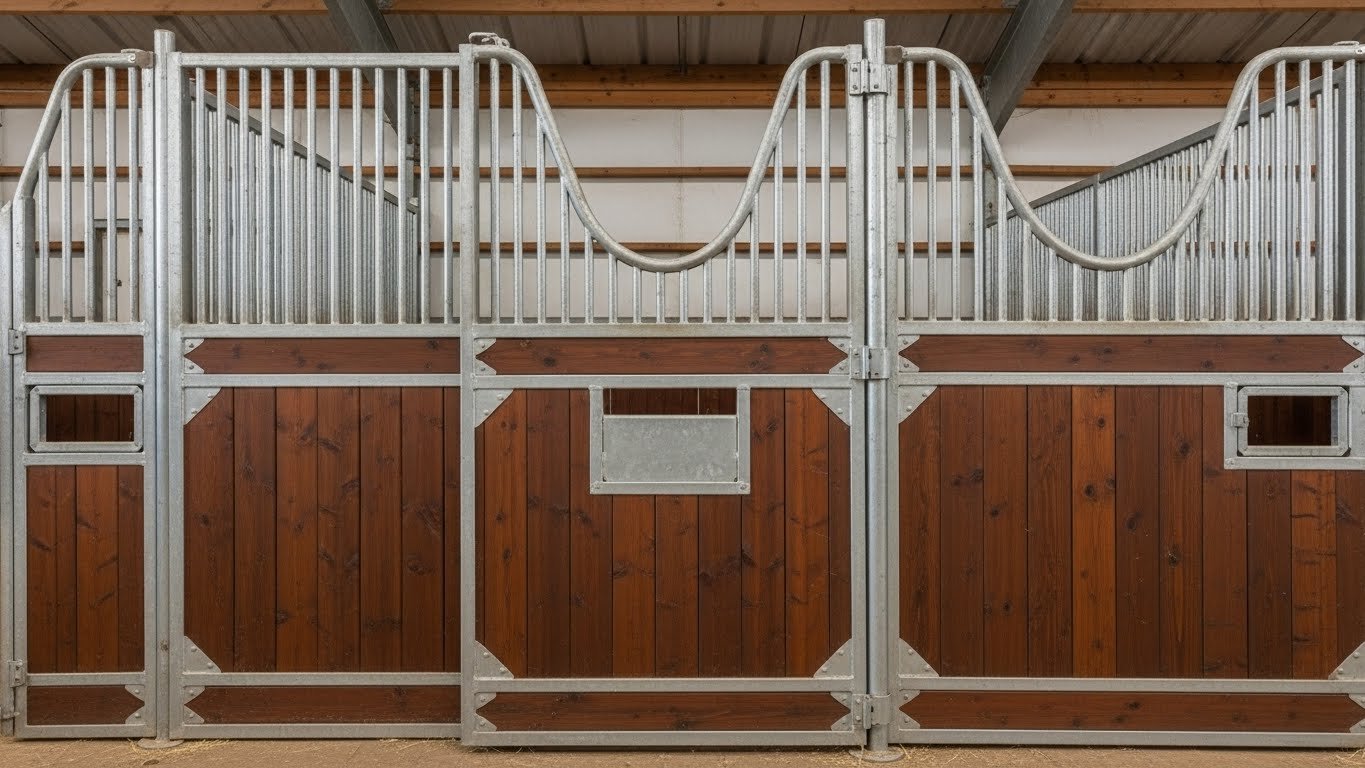
Choosing the correct renovationhorse stall fronts is a decision where initial material cost is misleading. A fronts-only approach seems cheaper, but ignores two critical profit drains: the high freight cost of inefficiently shipped welded units and the long-term risk of attaching new steel to older, potentially failing partitions.
This analysis benchmarks the two approaches by total project cost, not just panel price. We compare the structural integrity of systems built to the BS EN ISO 1461 hot-dip galvanization standard against the significant freight savings offered by flat-pack logistics.
Stall Fronts vs. Full Stalls: What’s the Difference?
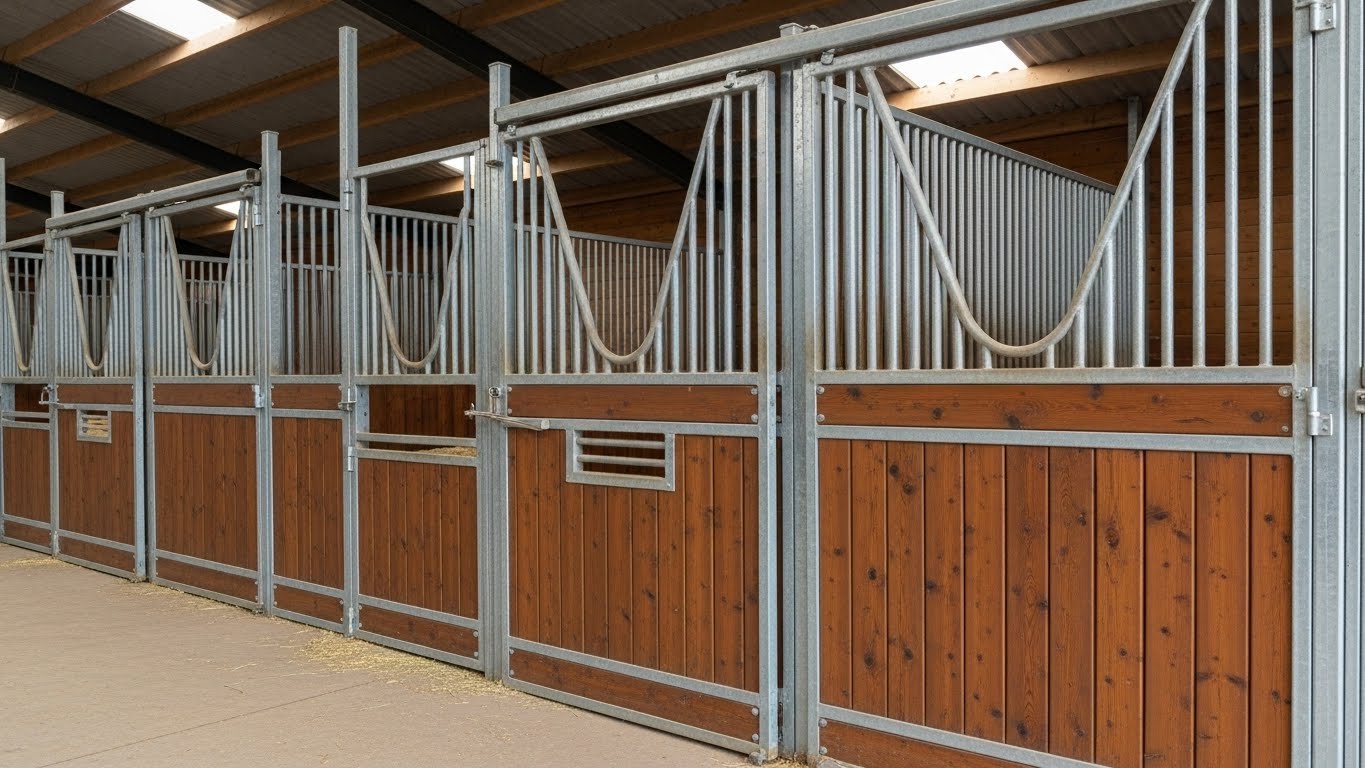
A stall front is just the door panel, used for upgrading existing walls. A full stall is a complete engineered system with matching partitions and hardware for new builds.
The Stall Front: The Face of the Operation
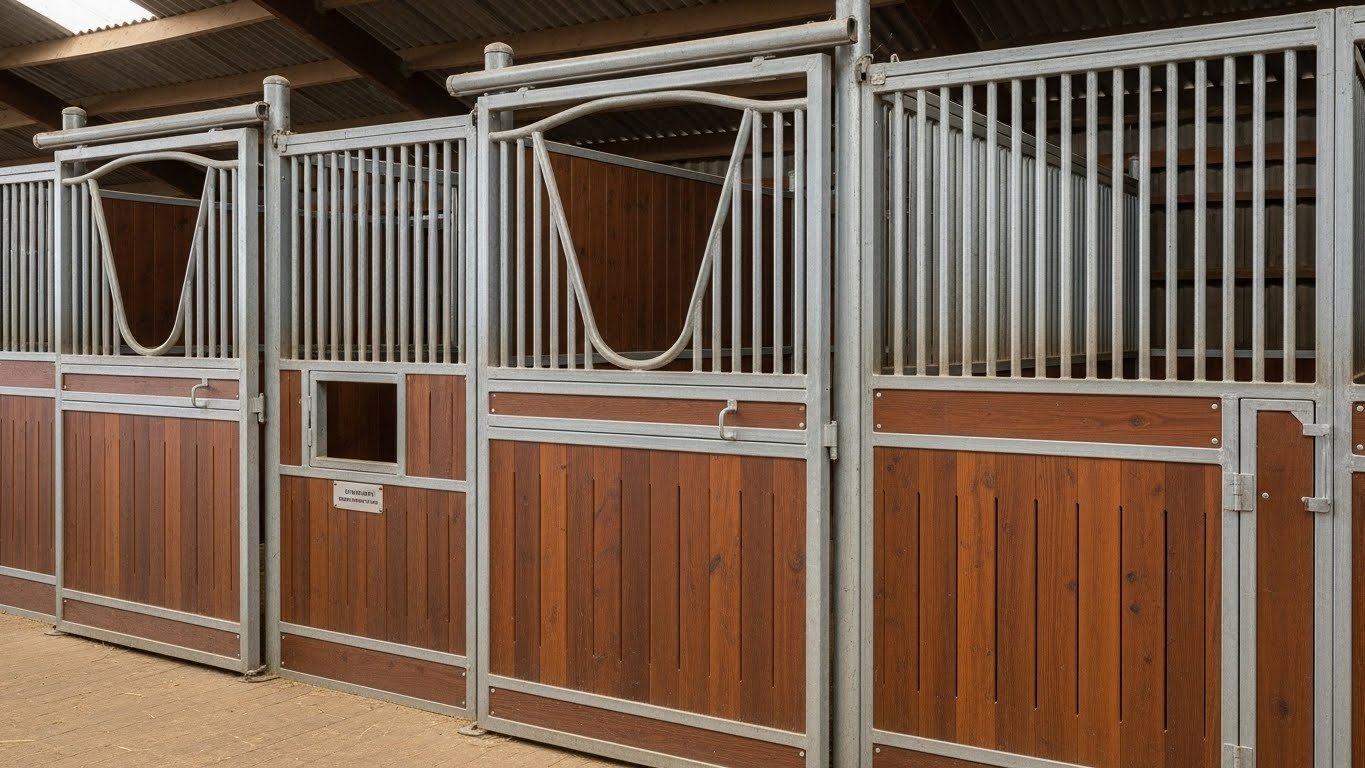
A stall front is the primary operational panel of a horse stall. It contains the door, either sliding or hinged, and the upper grill section. This grill isn’t just for visibility; it’s critical for promoting ‘Stack Effect Ventilation.‘ Barns often replace just the fronts during a facelift because it’s the component that sees the most use and defines the barn’s aesthetic.
The Full Stall: A Complete Structural System
A full stall is not just a collection of parts. It’s a complete, pre-engineered system where every component is designed to work together. This ensures structural integrity and a perfect fit, from the Q235B steel frame to the infill boards. You get everything needed for a new installation, ensuring total material compatibility.
- Front Panel: The main door and grill assembly.
- Partition Panels: Matching side or back walls.
- Infill Material: Pre-cut boards, like high-density bamboo or zero-maintenance HDPE.
- Hardware Kit: A full set of 304 Stainless Steel connectors, anchor bolts, and screws for a secure, ‘Cast-Proof’ installation.
Is Replacing Fronts Only the Most Cost-Effective Choice?
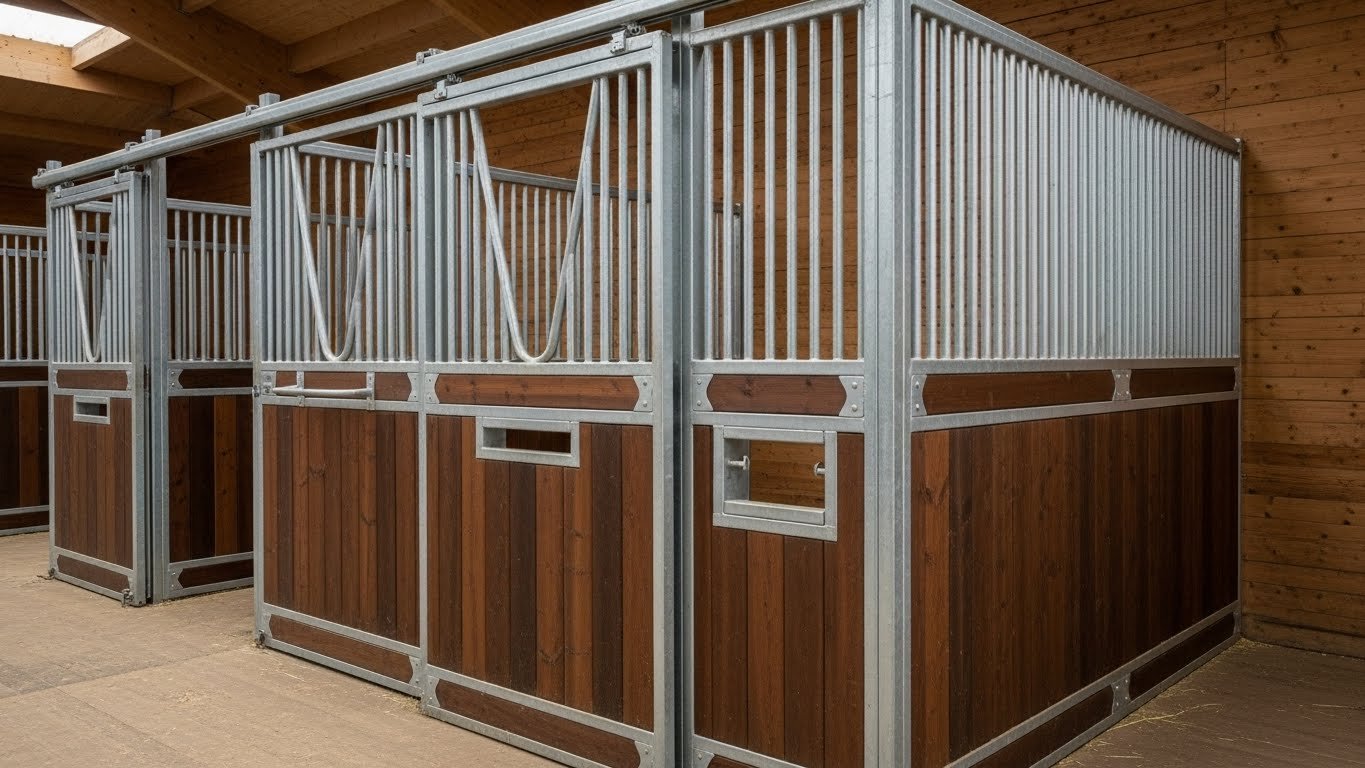
Replacing only stall fronts seems cheaper upfront, but isn’t always the best value. True cost depends on your existing partitions and, most importantly, shipping costs.
| Factor | Replacing Fronts Only | Complete Flat-Pack System |
|---|---|---|
| Initial Material Cost | Lower | Higher |
| Logistics Efficiency | Very Low (Bulky, welded units) | High (30-45 sets per container) |
| Freight Savings | None | Over 60% savings |
| Long-Term Risk | High (Mismatched, failing old partitions) | Low (Uniform materials and durability) |
Comparing Upfront Material Costs with Future Maintenance
Buying just a new front panel is obviously cheaper than a full set. This approach only works if your existing side and back partitions are structurally perfect. If those older partitions fail down the line, any initial savings are gone. Mismatched components can create unforeseen maintenance headaches and compromise the integrity of the entire stall.
The Impact of Flat-Pack Logistics on Total Project Cost
Shipping is where the real cost difference shows up. A fully welded stall front is a large, awkward item that takes up a lot of space. You can only fit about 12-15 complete welded stable sets into a 40HQ container. Our flat-pack system fits 30-45 stable sets in the same container, cutting freight costs by over 60%. This logistical advantage, what we call ‘Profit Protection,’ often makes a complete, efficiently shipped system a much better financial decision for our B2B clients than paying high freight for just the fronts.
When Is a Full Rebuild Necessary? (Royal Series)
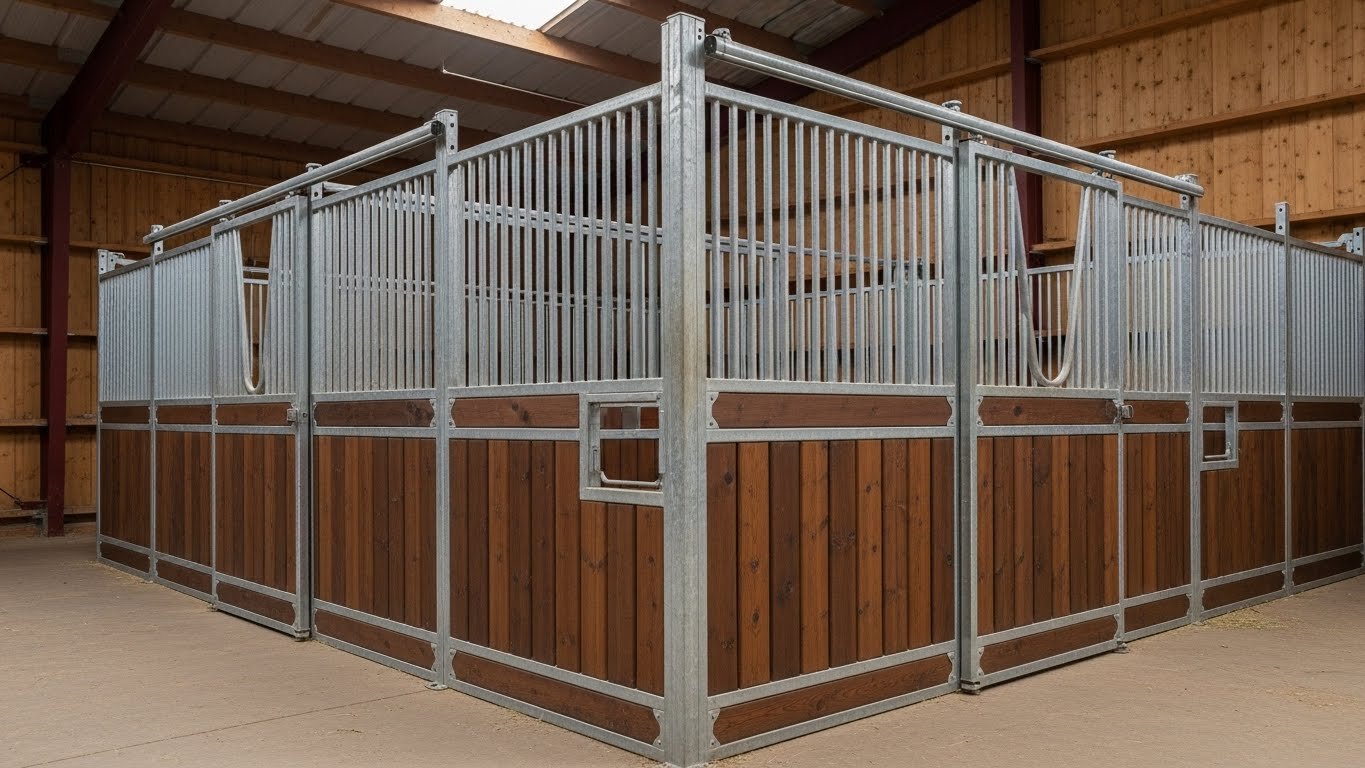
A full rebuild is needed when core posts and partitions are compromised by rust or damage. It’s also the right choice for upgrades to a higher durability standard.
| Consideration | Fronts-Only Replacement | Full Rebuild (Royal Series) |
|---|---|---|
| Structural Scope | Addresses only the visible stall face. | Corrects the entire structure, including posts and partitions. |
| Safety | Can miss hidden rot and outdated, unsafe layouts. | Updates the entire system to modern ‘Cast-Proof Design’ standards. |
| Rust Protection | New fronts may attach to a failing, rusted structure. | Implements a dual-layer system: powder coat over hot-dip galvanization. |
| Ideal Application | Superficial cosmetic upgrades in a sound barn. | Private estates and premier farms demanding longevity. |
Assessing Structural Failure Beyond the Stall Front
Replacing only the fronts is a cosmetic fix. It doesn’t solve deeper problems. Look for signs of systemic failure like corrosion or rot at the base of support posts, where moisture collects. Warped or damaged partition walls indicate the entire structure is losing stability. An outdated layout that fails to meet modern ‘Cast-Proof Design’ safety standards is another critical reason for a complete rebuild, not just a facelift.
The Royal Series Standard: Powder Coat Over Galvanization
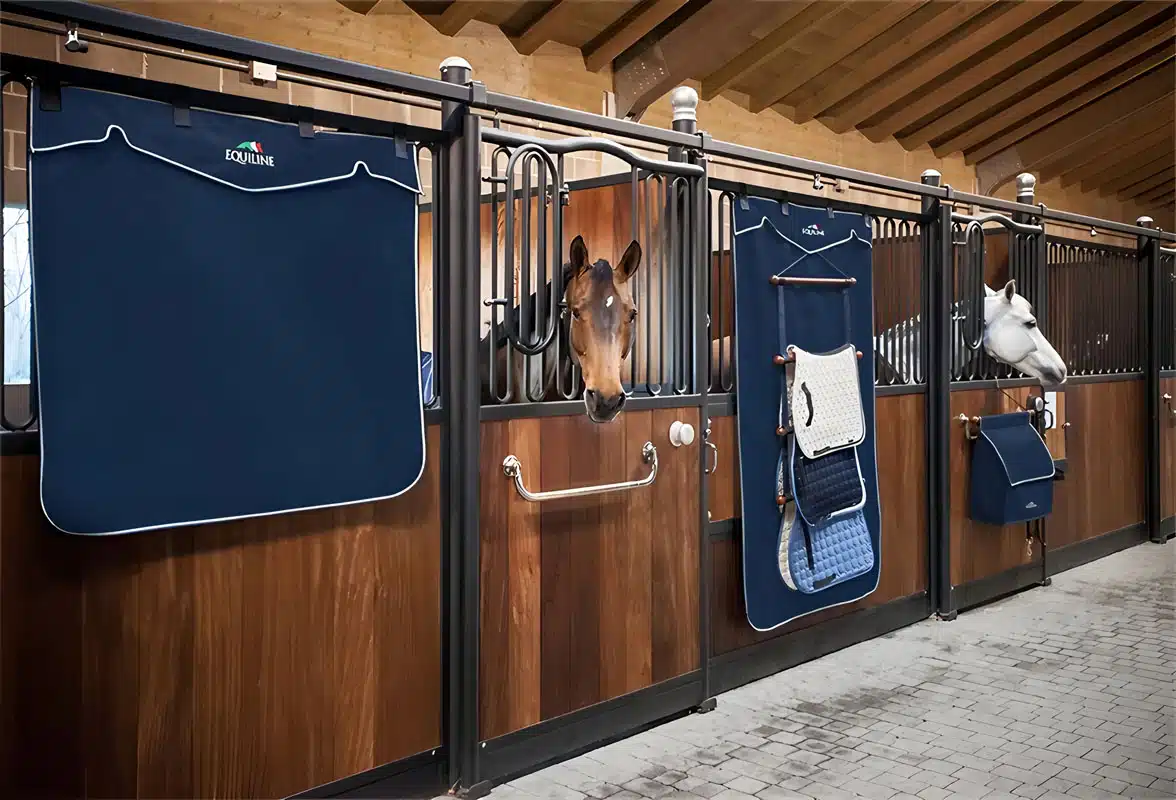
For projects demanding maximum longevity, the Royal Series is the specification. The process begins with a foundational layer of Hot-Dip Galvanization After Fabrication, which protects the entire steel frame—inside and out—from rust. Then, a durable powder coat finish is applied over the galvanized steel. This dual-protection system is specifically engineered for private estates and premier stud farms where both appearance and decades-long performance are non-negotiable.
Globally Compliant Stables Built for Decades.
How Much Can You Save by Retrofitting? (Cost Analysis)
Retrofitting saves on materials and demolition. The biggest win is logistics: flat-pack shipping cuts freight costs over 60% compared to fully welded stalls.
Analyzing Core Renovation Expenses
When you retrofit stall fronts, you avoid the significant costs tied to a full tear-down. You’re not paying for demolition crews or dumpsters. You also reuse the existing partitions and back walls, which eliminates the material expense and labor for rebuilding two-thirds of the stall.
This approach reduces the total weight and volume of materials needed for the project, leading to initial savings on transport before you even consider overseas freight.
How Flat-Pack Logistics Protect Your Budget
Logistics is where the most significant, and often overlooked, savings occur. Shipping traditional, fully welded stalls is extremely inefficient. You can only fit about 12 to 15 sets in a single 40HQ container due to their bulky, awkward shapes.
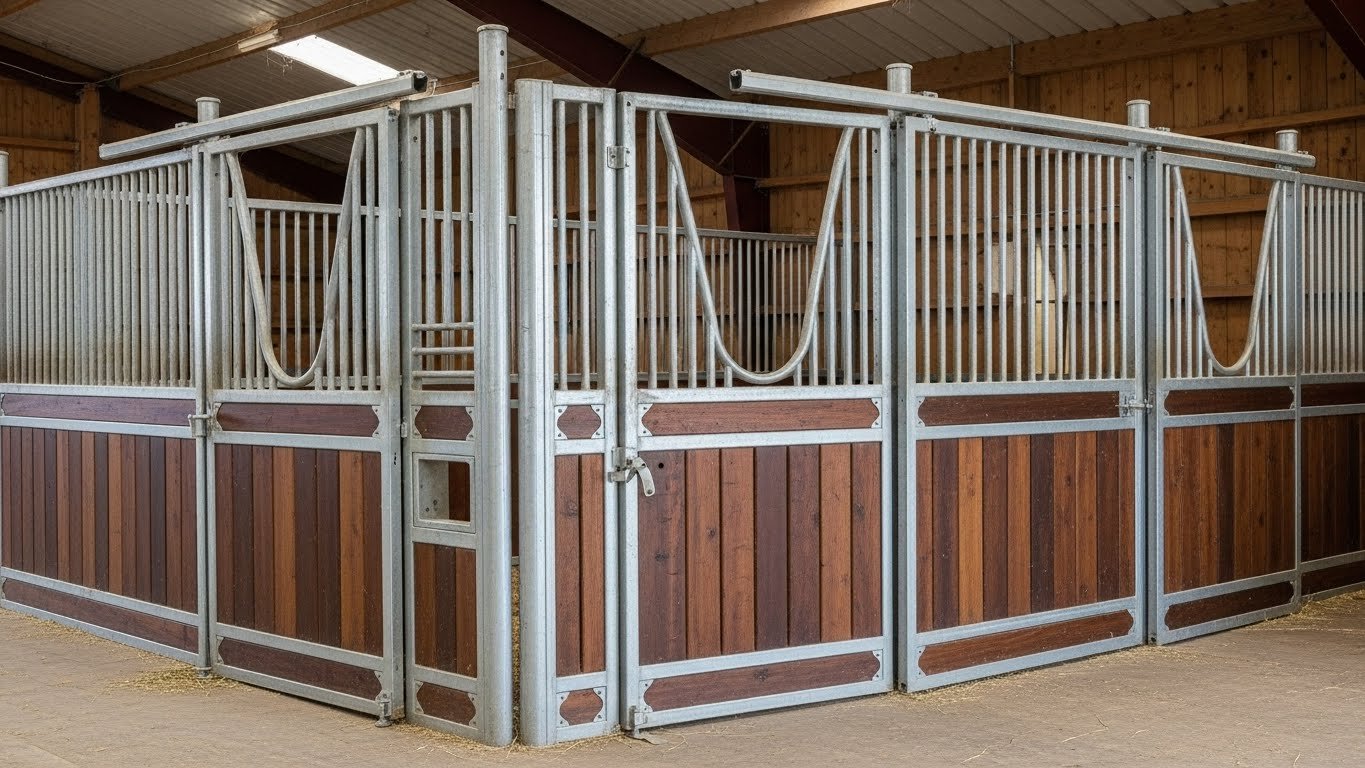
Our steel pallet flat-pack system changes that calculation entirely. By shipping components compactly, we can load 30 to 45 stable sets into the same 40HQ container. This efficiency directly protects your project profit by saving over 60% on freight costs alone.
What is the Verdict for Renovation Projects?
For renovations, prioritize systems that solve core failure points like rust. Hot-dip galvanized steel and impact-absorbing HDPE offer the best long-term value over short-term savings.
Focus on Materials That Solve Common Failure Points
Many renovations underperform because they reuse old frames or choose materials susceptible to rust and impact damage. Paint chips, pre-galvanized tubing rusts at the welds, and wood gets chewed. The right decision is to invest in components that fix these issues from the start. Impact-absorbing HDPE infills eliminate maintenance from chewing or rot, and fully protected steel frames stop corrosion before it can begin.
The Advantage of Hot-Dip Galvanization After Fabrication
Unlike painted or pre-galvanized steel, Hot-Dip Galvanization After Fabrication means we weld the entire steel frame first, then dip the complete structure into molten zinc. This process coats every weld, corner, and edge, creating a seamless barrier against rust. It conforms to BS EN ISO 1461, ensuring a zinc coating over 70 microns thick. This level of protection is essential for the high-moisture, high-ammonia environment of a stable.
Final Thoughts
Replacing only fronts seems cheaper but introduces risks from mismatched components and failing old partitions. The true cost is hidden in logistics, where shipping bulky, welded items erodes your profit. Our flat-pack system, built on the Hot-Dip Galvanization After Fabrication standard, protects both your project’s integrity and your final margin.
Verify the engineering and logistics advantage for yourself. We recommend a trial order of 3-5 stables to test our fitment and finish firsthand. Contact our team to get a detailed container loading plan and discuss your OEM branding requirements.
Frequently Asked Questions
Is it cheaper to repair rust or replace a stall door?
Replacement is the better choice if repair costs exceed 50% of a new door’s price. Extensive structural rust always warrants replacement. Minor surface rust on poorly protected doors can be repaired, but it’s a temporary fix. Doors that are hot-dip galvanized after fabrication shouldn’t have these issues, making the initial investment in a quality door more cost-effective than cycles of repair.
Can I mix and match different stall front styles in my barn?
Yes, stall systems are modular. You can mix different styles and materials. For example, a large facility might use our Professional Series for the main client-facing stalls and our Economy Series with HDPE infill for quarantine or utility areas. The key is ensuring all components share the same core engineering for safety, like consistent post dimensions and partition heights.
What is the typical lead time for custom-sized stall fronts?
The general industry lead time varies widely from 4 to 16 weeks, depending on complexity and production schedules. For our Hot-Dip Galvanized systems, the standard production lead time is 35-45 days. This accounts for the time required to properly schedule with the galvanizing plant, which is a necessary step for ensuring lifetime rust protection.

 English
  Spanish
  French
  Arabic
  German
0 Comments