



Horse chewing and cribbing behaviors can quickly turn new stable construction or renovations into costly, frustrating repairs. Protecting your investment and ensuring the safety of your horses means selecting materials that effectively resist these persistent oral vices.
This article explores material choices for horse stalls that withstand chewing and cribbing. We look at how hardwoods, like hard maple with its 1,450 lbf Janka hardness, outperform softwoods. We also examine the protective role of 18-20 gauge galvanized steel chew guards and the “tooth-proof” advantage of engineered bamboo, which boasts a 104 MPa hardness.
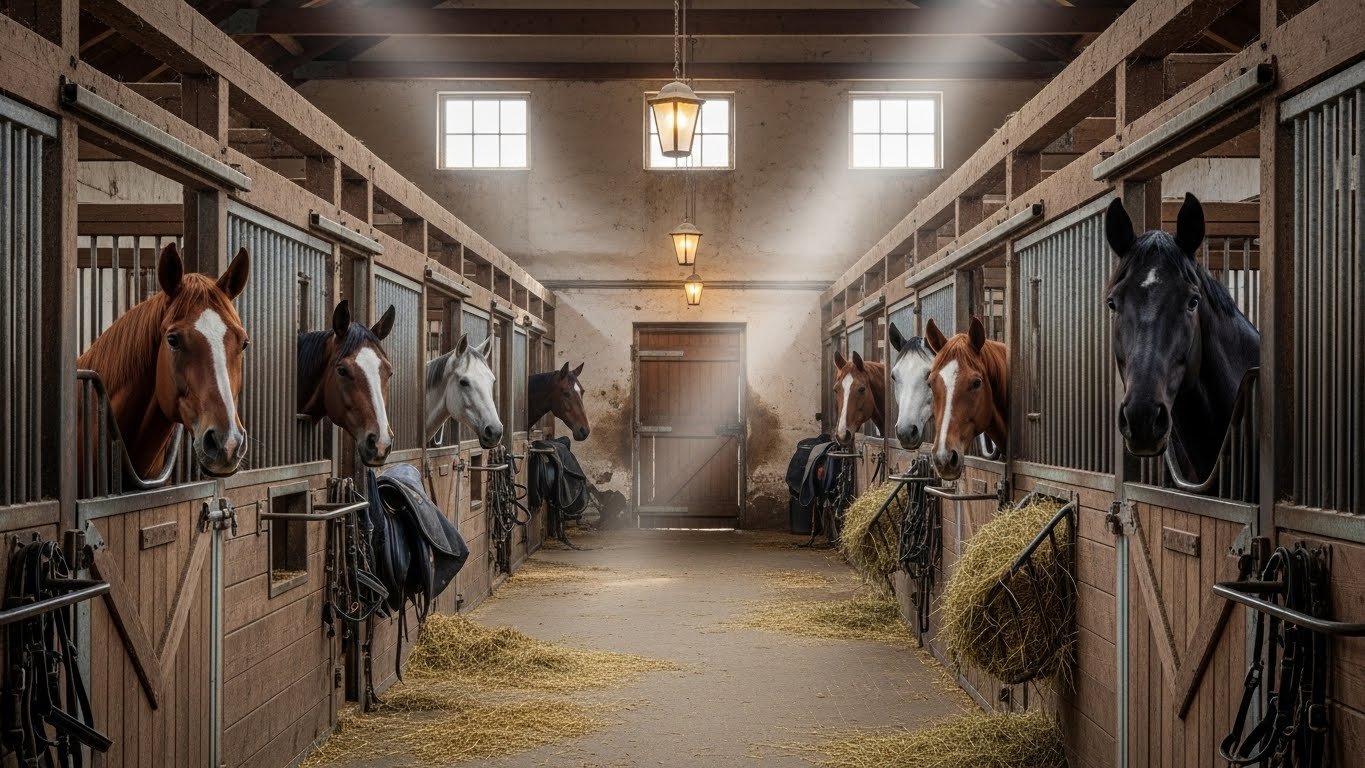
Why Horses Crib and Chew
Horses crib by grasping fixed objects with their upper incisors, arching their neck, and drawing air into their cranial esophagus, a behavior distinct from wood chewing. This oral stereotypy is linked to altered dopamine receptor activity and is often exacerbated by management practices that limit natural grazing time, leading to significant dental and digestive health issues.
Understanding Cribbing: Behavior and Brain Chemistry
Horses crib by grasping objects at chest level with only their upper incisors. They arch their neck, pulling back to draw air into the cranial esophagus. This oral stereotypy is different from wood chewing, which uses both upper and lower teeth, often for boredom relief rather than air intake.
This behavior connects to changes in dopamine receptors within the brain. Elevated D1 and D2 dopamine receptors in the nucleus accumbens, alongside reduced levels in the caudate nucleus, promote habit formation. Management approaches, such as feeding horses two large meals daily instead of allowing up to 16 hours of natural grazing, often trigger and worsen this compulsive behavior.
Physical Effects and Health Implications
Cribbing causes significant wear on incisors, sometimes reducing them to nubs in horses that crib frequently. This makes it harder for them to graze properly. Horses that crib also have higher gastrin levels, which can trigger stomach acid production, and face an increased risk of certain types of colic, such as epiploic foramen entrapment and colonic obstruction distension.
Cribbing can take up several hours of a horse’s day, reducing time they could spend on essential activities like eating and socializing. This energy used for cribbing after meals impacts their ability to maintain weight and reduces the lifespan of their teeth, especially for older horses.
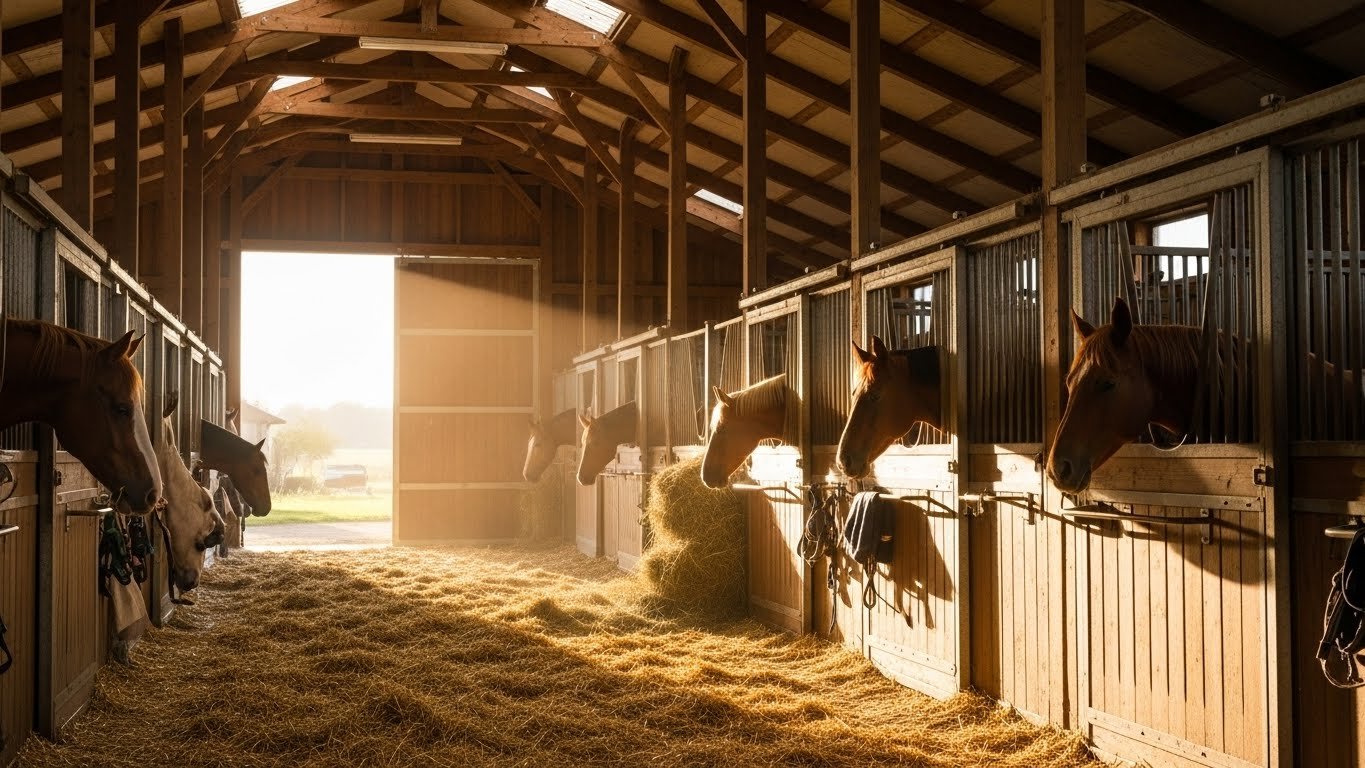
Material Ranking: Softwood (Fail) vs Hardwood (Pass)
Hardwoods, such as oak and maple, offer significantly greater chew and impact resistance than softwoods like pine or cedar. This difference is primarily quantified by the Janka hardness test, with hardwoods scoring 2–4 times higher, making them a ‘pass’ for abuse-prone areas in horse stalls, unlike ‘fail’ softwoods.
| Wood Type | Janka Hardness (lbf) | Key Characteristic / Grading |
|---|---|---|
| Eastern white pine (Softwood) | ≈ 380 | Softwood grading (PS 20) for structural integrity, prone to damage. |
| Western red cedar (Softwood) | ≈ 350 | Softwood grading (PS 20) for structural integrity, prone to damage. |
| Douglas-fir (Softwood) | ≈ 660 | Softwood grading (PS 20) for structural integrity, prone to damage. |
| Red oak (Hardwood) | ≈ 1,290 | Hardwood grading (NHLA FAS/Select) for clear faces, excellent wear resistance. |
| White oak (Hardwood) | ≈ 1,360 | Hardwood grading (NHLA FAS/Select) for clear faces, excellent wear resistance. |
| Hard maple (Hardwood) | ≈ 1,450 | Hardwood grading (NHLA FAS/Select) for clear faces, excellent wear resistance. |
Janka Hardness: The Core Durability Metric
The Janka hardness test, detailed in the ASTM D143 method, provides a quantifiable measure of wood’s resistance to indentation. This directly indicates its durability against chewing and impact.
A higher Janka value demonstrates greater resistance to denting, gouging, and overall surface damage that can result from horse activity. The notable difference in Janka values between softwoods and hardwoods is why softwoods typically ‘fail’ and hardwoods ‘pass’ for demanding equine environments.
Comparative Hardness and Industry Grading Standards
Common softwoods, such as Eastern white pine at approximately 380 lbf and Douglas-fir at around 660 lbf, show low Janka values. This makes them susceptible to damage in areas where horses might chew or kick.
In contrast, hardwoods suitable for horse stalls, like Red oak (≈ 1,290 lbf) and Hard maple (≈ 1,450 lbf), are 2 to 4 times harder than typical softwoods. This significant difference translates to better performance against impact and wear.
Softwood grading, governed by the American Softwood Lumber Standard (PS 20), focuses primarily on structural integrity. It does not prioritize the surface durability needed for areas exposed to abuse. Hardwood grading, established by the NHLA, uses categories such as FAS and Select. These grades emphasize clear, defect-free faces, which are essential for long-term wear in applications like flooring and stall liners. For example, standard hardwood flooring dimensions, often 19–20 mm thick, demonstrate their proven resistance to abuse in heavily used environments.

Metal Chew Guards: Are They Enough?
By 2026, metal chew guards serve as an effective physical deterrent to protect wood stall components from chewing damage. They are engineered with durable materials like 18-20 gauge galvanized steel or aluminum to withstand equine abuse. While highly successful in preventing wood destruction, they do not address the underlying behavioral causes of cribbing or chewing in horses.
| Feature | Description | Typical Values/Examples |
|---|---|---|
| Typical Metals | Galvanized carbon steel angles; all-aluminum angles | 18–20 gauge (0.9–1.2 mm), corrosion-resistant |
| Dimensions | Angle profiles | 3/4″ × 3/4″ or 1-1/2″ × 1-1/2″, lengths 36″, 42″, 48″, up to 93.5″ |
| Wall Thickness / Gauge | Galvanized steel; Post edging; Generic stall edge guards | 20-ga (0.9 mm); 18-ga steel (1.2 mm); 1.2 mm wall thickness |
| Finishes / Coatings | Corrosion resistance and durability; Extra protective layer | Galvanized steel, Galvalume; Optional powder-coat finishes (black, green) |
| Mounting Details | Attachment to wood framing; Fasteners included | Pre-drilled with staggered mounting holes; Screws for lumber installation |
| Coverage Approach | Protects wood edges and corners; Full perimeter coverage | “destructive wood chewing and cribbing”; 12 pieces × 42″ for standard stall |
| Market Offers Examples | Specific product examples | All-aluminum crib trim; 20-ga pre-drilled galvanized steel edging; 18-ga Galvalume/powder-coated post edging |
The Role and Limitations of Metal Guards by 2026
Metal chew guards function as a sacrificial, high-hardness edge to protect vulnerable wood surfaces by 2026, preventing direct equine contact.
They primarily serve as a physical deterrent, significantly reducing wood damage, splinter risk, and the frequency of maintenance tasks.
These guards do not address underlying cribbing or chewing behaviors in horses, which may require separate management or veterinary interventions.
Stable managers often combine metal guards with behavioral management strategies or veterinary consultation for horses exhibiting persistent severe cribbing by 2026.
Material Specifications and Installation Standards in 2026
Typical materials by 2026 include galvanized carbon steel angles, commonly 18–20 gauge (0.9–1.2 mm thick), and all-aluminum angles for enhanced corrosion resistance.
Common dimensions feature 3/4″ × 3/4″ or 1-1/2″ × 1-1/2″ angle profiles, available in lengths ranging from 36 inches up to 93.5 inches to cover various edges.
Finishes such as galvanized steel (zinc-coated) or Galvalume (aluminum-zinc alloy) provide durability against high-moisture barn environments and ammonia exposure.
Guards come pre-drilled with staggered mounting holes, facilitating secure screw attachment into wood framing, often including fasteners for lumber installation.
Global Horse Stable Solutions: Engineered for Extreme Conditions, Built for Life.

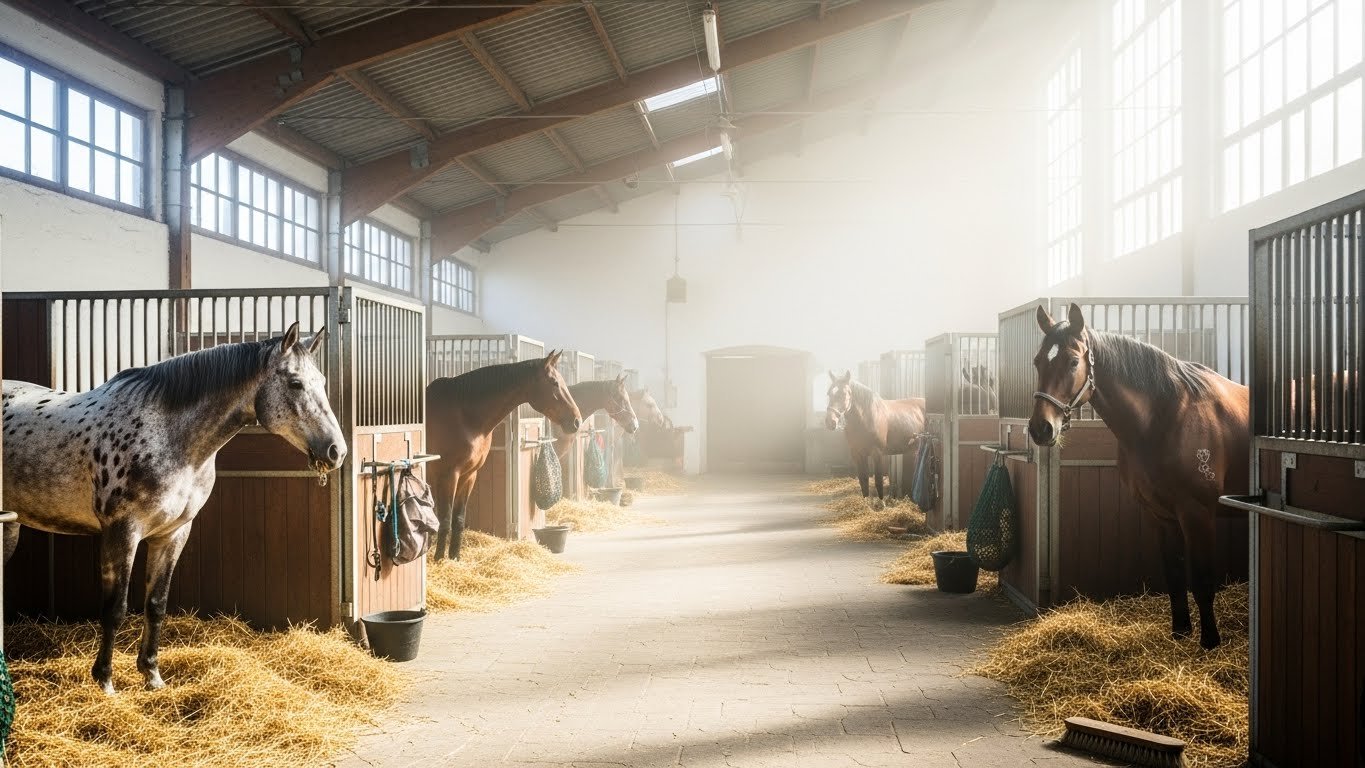
The Bamboo “Tooth-Proof” Advantage
Bamboo stall boards provide a “tooth-proof” advantage through their strand-woven, high-density construction. With a density of 1150–1200 kg/m³ and 104 MPa hardness, they effectively resist gnawing and splintering. This durable material, often 32–38 mm thick, ensures a safer surface, significantly reducing risks of splintering or chemical ingestion for horses in stables by 2026.
Engineered Resistance: Why Bamboo Outlasts Traditional Woods
High-density strand woven bamboo resists the gouging, notching, and splinter formation typically caused by horse incisors. Its dense, resin-bonded structure, engineered by compressing bamboo fibers to around 1150–1200 kg/m³ and achieving a hardness of about 104 MPa, prevents the surface from tearing or breaking apart under localized chewing forces.
The unique, resin-bonded fiber matrix of strand woven bamboo wears smoothly under abrasive chewing. This differs from softwoods, which tend to tear along their grain, creating rough edges and splinters. When horses rasp the bamboo surface, the material wears down evenly rather than fragmenting.
Selecting bamboo infill eliminates the risk of splinter-related injuries. Traditional treated timber can splinter and poses a risk of chemical ingestion if horses chew on it. Bamboo stall boards are explicitly described as non-splintering, non-toxic, and resistant to kicks and bites, offering a safe alternative.
Performance Metrics: The Technical Edge of Bamboo Stalls
Strand woven bamboo boasts a density of ≥1150–1200 kg/m³ and a mechanical hardness of 104 MPa. This is significantly higher than most woods, including common softwoods used in stalls which typically range from 400–700 kg/m³. This high density and hardness contribute to the material’s resistance to chewing and wear.
An impact toughness of 114.7 kJ/m³ allows bamboo to absorb energy from kicks and bites without cracking or splintering. This ensures the board can withstand the combined forces of a horse kicking and chewing the same area, preventing sharp fragments that could harm lips or gums.
Typical heavy-duty boards are 32–38 mm thick. Manufacturers often mount these boards in galvanized or powder-coated steel frames, which contain the edges and enhance resistance by preventing horses from prying or leveraging boards with their teeth. These frames often use robust sections like 50×50 mm RHS and 25 mm OD grill tubes.
Advanced bamboo products offer E0/E1 formaldehyde emissions, Bfl-s1 fire ratings, and come with 10-year warranties for 2026 installations. These specifications ensure compliance with strict indoor air quality standards, provide enhanced fire safety, and indicate long-term durability and resistance to wear, kicking, and chewing in harsh barn environments. The controlled moisture content of 8–10% further reduces swelling, warping, and crack initiation.
Frequently Asked Questions
How to stop horses chewing wood?
Install metal chew guards (stall edge protectors) on wood edges, apply bitter deterrents like Farnam Chew Stop or No Chew sprays, or run electric hot wire along fences; combine with feeding 2% bodyweight in long-stem hay daily and chopped straw bedding to address root causes like boredom and low forage.
Is bamboo crib-proof?
There is no crib standard or technical specification that designates bamboo as “crib-proof”; U.S. safety rules (CPSC 16 CFR 1219/1220 and ASTM F1169) regulate crib design and performance, not wood species, and they do not define any material—including bamboo—as chew‑ or crib‑proof. These standards require minimum structural strength of slats and hardware and limit slat spacing to about 2 3/8 in (60 mm), but they do not claim that any compliant crib material can’t be chewed, only that it must not break or create entrapment or injury hazards under specified mechanical tests.
Do metal chew guards work?
Yes, metal chew guards do work as a physical barrier to stop horses from getting their teeth on wood edges, and they are an accepted, standard hardware solution in stall construction. If the guard completely covers the bite surface and is securely fastened, horses cannot directly chew the wood, so wood damage is effectively prevented. Behavior (cribbing) may persist but will be redirected away from the protected edges. Typical heavy-duty stall chew guards are 16‑gauge steel, 8 ft (96″) long, with 1.5″ x 1.5″ legs for edge protection.
Why do horses eat pine boards?
Horses eat pine boards primarily due to insufficient dietary fiber (roughage) from low forage intake, boredom from stall confinement, and limited exercise or turnout, prompting them to chew wood as a substitute for natural grazing behavior.
Best stall material for cribbers?
For confirmed cribbers, the most durable stall “material” strategy is hot‑dip galvanized steel framing (ASTM A123, ≥98% zinc coating) with protected 2″ lumber or composite boards fully covered by steel crib/chew guards on all exposed edges and posts.
Does creosote stop chewing?
Creosote is not an industry‑standard or recommended solution to stop horses chewing wood; it may reduce chewing somewhat because of its strong taste and odor, but veterinary and agricultural guidance notes that horses often remain motivated to chew wood and that creosote‑treated wood in stalls poses toxicity and exposure risks for horses that chew or crib.

 English
  Spanish
  French
  Arabic
  German
0 Comments