



Structural failure in stables often results from impulse rather than peak force, as hooves deliver up to 400 Joules of energy in milliseconds. Relying on standard timber or unverified welds risks catastrophic injury and entrapment gaps when materials shatter under this rapid loading.
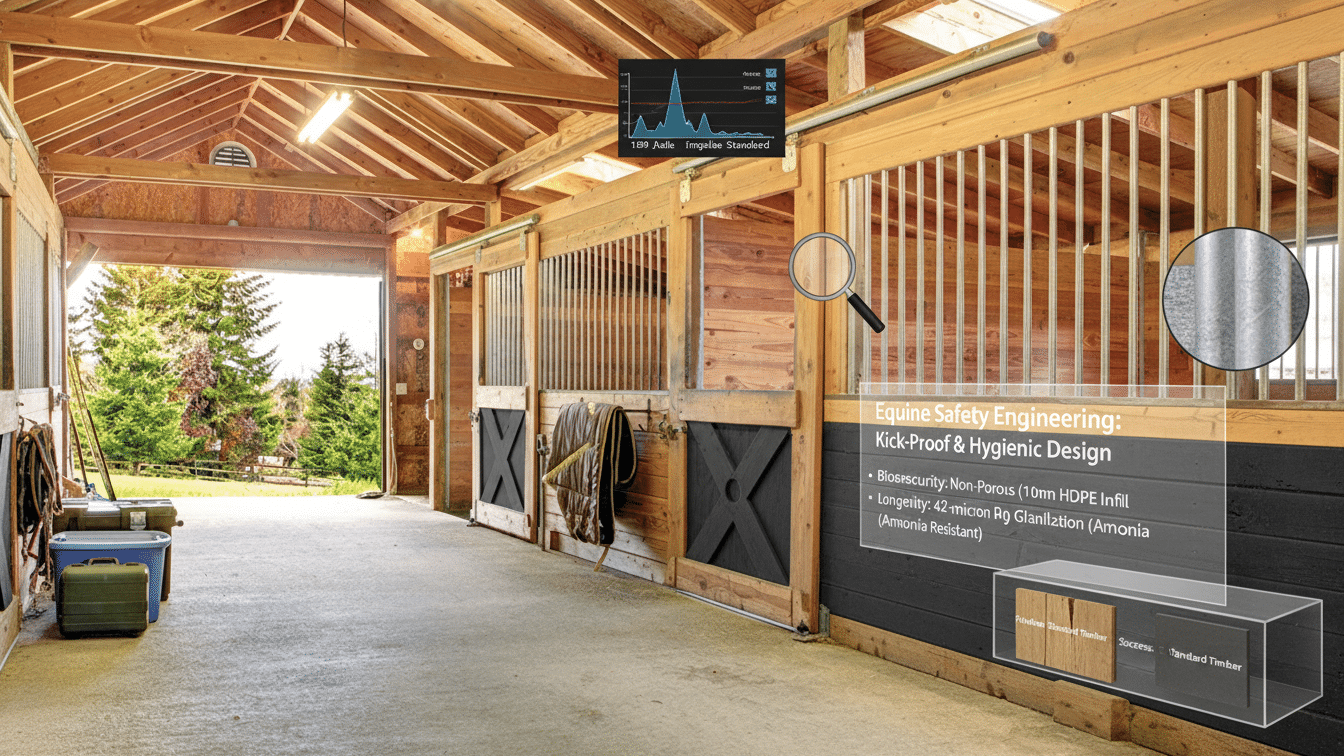
This engineering analysis examines the 150 N·s impulse standard required to withstand thoroughbred impacts. We detail the biosecurity benefits of non-porous 10mm HDPE infills and validate the longevity provided by 42-micron hot-dip galvanization against corrosive ammonia environments.
The Physics of a Horse Kick: Structural Load Requirements
Structural safety in stables relies on calculating impulse rather than just peak force. While research records maximum kick forces of 8,722 N, the critical industry standard requires fixtures to withstand an impulse of 150 N·s (including safety margins) for horses up to 700 kg. This ensures materials can absorb approximately 400 Joules of energy delivered in under 0.03 seconds without catastrophic failure.

Understanding Impact Dynamics: Force vs. Impulse
When designing safe enclosures, engineers look beyond the simple strength of a kick. Research shows that peak impact forces in a single horse box can reach as high as 8,722 N. This number sounds massive, but force alone does not tell the whole story. The real danger to a structure comes from impulse.
Think of force as a snapshot of intensity, while impulse is the total effort delivered over time. It is similar to the difference between a quick sting and a heavy push that follows through. The push transfers more energy and stresses the material more deeply. In stable kicks, this energy transfer happens incredibly fast. Most impacts last less than 0.03 seconds. This requires materials to handle concentrated loads almost instantaneously without shattering.
- ✅ Peak Force Reality: Recorded impacts reach 8,722 N in confined spaces.
- ✅ Impulse Factor: Force applied over time dictates whether a wall survives.
- ✅ Rapid Loading: Structures must absorb energy in milliseconds.
- ✅ Kick Types: Data shows no difference in power between provoked and unprovoked kicks.
Critical Load Specifications and Safety Margins
To ensure safety, we rely on specific engineering numbers derived from field studies. The maximum impulse recorded in these studies is 131 N·s. Engineers do not design for the exact limit because that leaves no room for error. Instead, a 15% safety margin is added to the calculation.
This brings the industry requirement to 150 N·s for stable fixtures. This standard assumes a reference horse mass of 700 kg, which covers most riding breeds. When converted to energy, this impulse corresponds to a theoretical impact of 400 Joules hitting a surface at a 45-degree angle. Any material used in a stall must be able to absorb this energy without bending permanently or breaking.
- ✅ Max Recorded Impulse: Field studies show a top limit of 131 N·s.
- ✅ Design Standard: Engineers require 150 N·s to account for safety buffers.
- ✅ Energy Equivalent: Materials must handle roughly 400 Joules of impact energy.
- ✅ Mass Reference: Calculations protect horses up to 700 kg.
Testing Methodologies: Validating Structural Integrity
Manufacturers cannot simply guess if a material will hold up. They validate resistance using controlled experiments that mimic the physics of a kick. The most common method is the drop hammer test. This involves dropping a known weight from a specific height to generate kinetic energy.
A standard validation test uses a 16 kg mass dropped from 2 meters. This generates 324 Joules of energy. Mathematical analysis proves there is a linear relationship between these lab tests and actual hoof impacts. This testing is vital for preventing penetration risks. It ensures that tubular steel grids and panels will not puncture or fail dangerously when struck.
How DB Stable Materials Meet High-Impact Standards
DB Stable applies these physics principles directly to product design to ensure long-term safety. The frames use 40x40mm square metal tubes that are fully welded to 6mm steel plates. This robust connection is critical because joints are often the first point of failure under the 150 N·s impulse load.
For the walls, 10mm thick HDPE boards are selected specifically for their impact absorption capabilities. Unlike some rigid materials that might crack, HDPE absorbs the shock of a 400 Joule impact. We also address the long-term strength of the steel. Rust eats away at metal, lowering its yield strength and making it brittle. To prevent this, all steel components undergo hot-dip galvanization with a coating thickness over 42 microns. This creates a permanent shield that maintains the structural integrity of the stall against repeated impacts over many years.
- ✅ Reinforced Joints: Fully welded 40x40mm tubes and 6mm plates prevent snap failures.
- ✅ Shock Absorption: 10mm HDPE boards handle high-energy impacts without cracking.
- ✅ Strength Retention: Galvanization (42+ microns) prevents rust from weakening the steel frame.
- ✅ Standard Compliance: Designs are built to exceed the 150 N·s safety impulse requirement.

Biosecurity Engineering: Why Non-Porous Surfaces Matter
Non-porous surfaces function as the primary engineering control in biosafety labs, creating a durable, monolithic, and impermeable enclosure. These materials prevent pathogen absorption and withstand rigorous chemical decontamination. Standards mandate specific construction methods, such as sealed penetrations and moisture-resistant gypsum, to ensure the facility maintains integrity against biological agents.
The Engineering Defense: Cleanability and Chemical Resistance
The fundamental requirement for any surface in a high-containment environment is the ability to repel biological agents rather than absorb them. Porous materials act much like a dry sponge, pulling liquids and microscopic pathogens deep into their structure where surface cleaning agents cannot reach. Once inside, these contaminants can multiply, effectively turning the wall or benchtop into a vector for disease transmission.
To counter this, engineering controls rely on materials that offer a complete seal against air leakage and liquid absorption. This creates a cohesive containment system where every contact surface resists biological agents. Whether in a high-level BSL-4 laboratory or a veterinary quarantine zone equipped with DB Stable non-porous HDPE panels, the goal is identical: keep the danger on the surface where it can be neutralized.
- ✅ Contamination Prevention: Surfaces must refuse to harbor microorganisms, ensuring that pathogens have no place to hide during wash-downs.
- ✅ Chemical Durability: Materials must withstand repeated exposure to harsh organic solvents, acids, and alkalis used in daily decontamination cycles.
- ✅ Gas Containment: The enclosure must facilitate gas and vapor decontamination processes, requiring a hermetic seal that prevents fumigants from escaping.
Critical Construction Standards: Walls and Work Surfaces
Achieving a biosecure environment requires strict adherence to material science and installation metrics. Standard construction materials are often insufficient for these rigorous settings. For example, standard drywall acts like a wick for moisture, which is why moisture-resistant gypsum board is mandatory. Think of this as drywall wearing a permanent raincoat; it provides the necessary fire resistance while refusing to absorb water that could lead to mold or structural failure.
Structural integrity is equally vital. Wall assemblies often utilize light-gauge steel studs with a minimum thickness of 18-gauge to ensure rigidity under pressure. This focus on robust metal framework mirrors the engineering behind DB Stable portable units, which utilize hot-dip galvanized steel to prevent rust and maintain structural strength over decades of use.
- ✅ Bench Top Materials: Surfaces must use epoxy, stainless steel, or phenolic resin to ensure resistance to extreme heat and chemical corrosion.
- ✅ Fastener Precision: Vertical screw spacing in wallboard assemblies must not exceed 152 mm (6 inches) to withstand the physical stress of room pressurization.
- ✅ Regulatory Compliance: Equipment must meet standards like NSF/ANSI 49-2024, which governs Class II laminar flow biosafety cabinets for handling infectious agents.
System Integration: Sealing the Monolithic Enclosure
A truly biosecure facility functions as a monolithic unit. Imagine the room as a seamless plastic bag; there are no corners, cracks, or seams where air or water can escape uncontrollably. This monolithic design requirement means that all seams in floors, walls, and ceilings must be sealed to eliminate crevices. Even a microscopic gap can compromise the negative pressure required to keep dangerous pathogens inside the lab.
Floor and ceiling systems complete this containment shell. Flooring must feature a slip-resistant finish, with penetrations for pipes or wires protected by raised curbs to prevent fluid leaks. Similarly, ceilings often utilize epoxy-painted gypsum or panelized composite systems. These elements work together to form a single, impermeable unit capable of holding specific pressure differentials, ensuring that safety is never compromised.

Gap Analysis: Preventing Entrapment Injuries
Gap analysis in equine safety is a systematic audit of physical spaces within a stable—specifically between bars, under doors, and at latch points. The goal is to ensure no opening allows a hoof (typically 3-5 inches wide) or head to pass through and become wedged, while also verifying that materials are rigid enough to prevent gaps from widening under impact.
Analyzing the physical gaps in a stable is a critical safety step. This process helps identify where a horse might get a leg or head stuck. It focuses on the specific measurements that turn a safe stall into a dangerous trap.
Identifying High-Risk Entrapment Zones
Entrapment injuries often occur in specific areas where dimensions do not align with the anatomy of a horse. These zones require careful measurement and regular inspection.
- Vertical Bar Spacing: Identify zones where spacing exceeds safe limits, allowing hoof entry during rearing or kicking behaviors.
- Door and Floor Gaps: Analyze the clearance between the bottom of the stall door and the floor. Excessive clearance creates a rolling hazard for cast horses.
- Latch Protrusions: Highlight risks associated with protruding hardware where halters or eyelids can snag, leading to panic-induced pullback injuries.
Structural Integrity and Material Rigidity
Material failure often causes entrapment incidents. When materials bend or break, they create new, unintended gaps that were not present in the original design.
- Flexion Risks: Standard steel must possess sufficient yield strength to resist bending under the force of a horse kick. Weak metal tubes can bow, widening a safe 2-inch gap into a dangerous 4-inch trap.
- Connection Failure: Welds and pins must withstand lateral pressure. If a connector snaps, panels separate, creating immediate entrapment voids.
- Corrosion Impact: Rust significantly reduces the diameter and strength of steel bars over time, making them susceptible to snapping and creating sharp, jagged entrapment points.
How DB Stable Engineers for Safety
Our manufacturing specifications are designed to mitigate these specific risks. We focus on material strength and connection stability to maintain safe gaps throughout the life of the stable.
- Reinforced Connections: DB Stable uses 6mm steel plates for connection points and fully welded 40*40mm square metal tubes to prevent structural separation and gap formation.
- Corrosion Resistance: We apply hot-dip galvanization over 42 microns. Think of this as a thick, permanent shield that protects the steel from rust for over 10 years, preventing material weakening.
- Shatter-Proof Infill: Our designs utilize 10mm thick HDPE boards (High-Density Polyethylene). Unlike wood which can splinter and trap legs, this material absorbs impact without shattering.
- Design Consistency: The 9 Parts Stable Panel configuration minimizes thermal expansion issues, maintaining consistent gap tolerances regardless of weather changes.
Engineered for Safety and Extreme Climates
Protect your horses with precision-built stables designed to withstand harsh environments, from -10°C winters to 40°C summers. Featuring hot-dipped galvanized steel and impact-resistant bamboo, our modular systems ensure international compliance and 20 years of rust-free durability.

Latch Safety: Preventing Escapes and Injury
Effective latch safety relies on using 304 stainless steel hardware to resist corrosion and structural stress. Key design requirements include two-sided operation for emergency access, one-hand functionality for handler safety, and rounded edges to eliminate laceration risks. Proper installation mandates positioning latches out of equine reach and maintaining a minimum 4-foot door width to prevent hip injuries during passage.
Design Principles: Operation and Edge Safety
The primary function of a stall latch extends beyond simply keeping a door closed. It acts as the primary interface between the horse and the handler during routine care and critical emergencies. The design must account for the physical strength of a horse and the dexterity constraints of a human handler under pressure.
- ✅ Two-Sided Operation: Latches must function from both inside and outside the stall to ensure rapid handler access during emergencies like fire or injury.
- ✅ One-Hand Functionality: Hardware should allow operation with a single hand, enabling handlers to control the horse simultaneously.
- ✅ Injury Elimination: All hardware must feature rounded edges and proper beveling to remove sharp protrusions that cause cuts or bruises.
- ✅ Behavioral Countermeasures: Designs must prevent animals from ‘problem-solving’ or forcing gates open through learned manipulation.

Material Standards: The Role of 304 Stainless Steel
Stables are chemically harsh environments due to the presence of moisture and ammonia found in animal waste. If standard metal is used, it acts like a sponge for these corrosive elements, leading to rust and structural failure. We utilize 304 stainless steel because it acts as an impermeable shield, resisting this chemical attack while maintaining the strength needed to contain a large animal.
- ✅ Material Grade: 304 stainless steel is the industry standard for latches due to its high resistance to ammonia and moisture corrosion found in stable environments.
- ✅ Structural Integrity: Solid machined steel is required to withstand repeated stress from pushing and pulling behaviors.
- ✅ Hardware Types: Common reliable mechanisms include Pin Lock Latches, Flip Latches, and Plunger Latches, all designed with flush mounts to prevent snagging.
- ✅ Surface Finish: Smooth, machined finishes are critical to prevent abrasion injuries during accidental contact.
Installation Metrics: Positioning and Door Width
Even the strongest latch fails if it is installed incorrectly. The geometry of the installation dictates how safe the passage is for the animal. We adhere to strict spatial dimensions to prevent common injuries, such as hip checking, which occurs when a horse tries to rush through a space that is too narrow.
- ✅ Minimum Dimensions: Stall doors must meet a minimum 4-foot width standard to allow safe passage and prevent hip injuries from collision with door frames.
- ✅ Strategic Positioning: Latches must be mounted out of the horse’s natural reach to negate their ability to manipulate the mechanism.
- ✅ Escape Prevention: Correct positioning prevents panic-driven escape attempts that often result in damage to the facility and injury to the animal.
- ✅ Synergistic Safety: Combining wide clearances with secure latching prevents the ‘squeeze’ injuries that occur when horses attempt to rush through partially opened gates.
How DB Stable Ensures Hardware Durability
At DB Stable, we translate these general safety standards into our manufacturing process through over-engineering. We recognize that thoroughbreds and other active breeds often do not stand patiently, testing the limits of their containment. To address this, we reinforce the connection points that usually fail first in standard stables.
- ✅ Galvanized Protection: DB Stable utilizes hot-dip galvanized steel for connection pins and cleeks, with a coating thickness exceeding 42 microns to ensure a 10-year lifespan against rust.
- ✅ Robust Connections: Critical stress points feature 40*40mm square metal tubes fully welded with 6mm steel plates, exceeding standard durability requirements.
- ✅ Secure Fittings: The integration of heavy-duty components ensures that doors and latches remain secure even under the pressure of active thoroughbreds.
- ✅ Safety-First Design: Prefabricated components are designed to be ‘super sturdy,’ addressing the need for containment of horses that do not stand patiently.

Fire Safety Protocols and Egress Design
Fire safety in animal housing relies on strict adherence to NFPA 150 and OSHA 29 CFR 1910.39 standards. Effective egress design mandates a minimum 50-foot evacuation distance, automated suppression systems, and clear protocols for handling anesthetized animals during emergencies to prevent loss of life and property.
Regulatory Standards: NFPA and OSHA Compliance
The foundation of a safe stable lies in following specific rules designed to protect both humans and animals. The primary standard used across the industry is NFPA 150, which specifically covers fire and life safety in animal housing facilities. Additionally, OSHA 29 CFR 1910.39 requires a detailed fire prevention plan for the workplace. Compliance ensures that facility managers actively reduce risks rather than just reacting to emergencies.
Facilities must conduct hazard assessments to find potential dangers before they cause harm. This involves identifying ignition sources, such as open flames, electrical sparks from generators, or stored chemicals. The goal is to eliminate the root causes of fire through proper handling and storage of combustible materials.
- NFPA 150: Serves as the primary standard for fire and life safety in animal housing facilities.
- OSHA 29 CFR 1910.39: Mandates comprehensive fire prevention plans for workplaces.
- Hazard Assessment: Identifies ignition sources like open flames and electrical sparks.
- Objective: Focuses on eliminating fire causes through proper handling of combustible materials.
Critical Infrastructure and Egress Requirements
Egress refers to the path used to exit a building during an emergency. In animal facilities, the design must ensure a clear path to safety for both staff and large animals. A crucial rule is maintaining a minimum evacuation distance of 50 feet from the building structure. This creates a buffer zone safe from smoke, heat, and falling debris.
Physical infrastructure plays a vital role in early detection and suppression. Facilities require automated sprinkler systems and smoke detectors to catch fires early. For visibility during power outages, fire-rated emergency exit doors must be equipped with glowing exit signs. Essential hardware also includes red fire alarm pull stations placed in hallways and near floor exits.
- Evacuation Distance: Design strictly maintains a minimum of 50 feet from the building structure.
- Essential Hardware: Red fire alarm pull stations are located in hallways and floor exits.
- Detection Systems: Facilities require automated sprinkler systems and smoke detectors.
- Emergency Equipment: Stations must stock fire-resistant first aid kits and emergency axes.
Emergency Procedures and Evacuation Roles
When an alarm sounds, specific staff members must perform designated roles to ensure an orderly evacuation. It is vital to assign one person per exit as a door guard. This individual prevents anyone from re-entering a dangerous building once they have left. Another staff member acts as a room sweeper to check critical zones like surgery and ICU areas to ensure all non-essential personnel have evacuated.
Handling animals under anesthesia requires specific medical protocols. If a fire occurs during surgery, the veterinarian should close unsutured incisions with towel clamps and sterile towels. The animal remains anesthetized until fire wardens provide specific instructions for transport. Effective planning also involves bimonthly inspections of electrical equipment to prevent malfunctions.
- Door Guard Protocol: Assign one individual per exit to prevent re-entrance during evacuation.
- Room Sweeper Role: A designated staff member ensures non-essential personnel clear critical zones.
- Anesthesia Protocol: Close unsutured incisions with towel clamps and wait for transport directives.
- Maintenance: Involves bimonthly inspections of electrical equipment and heat-producing machinery.
Enhancing Safety with DB Stable Structural Design
Choosing the right materials significantly impacts fire safety. DB Stable utilizes hot-dip galvanized steel frames with a 42-micron coating. Think of this coating as a fire-resistant shield that offers superior protection compared to traditional timber structures, which are highly combustible. Reducing the amount of fuel for a fire inside the stable is essential for slowing the spread of flames.
The design of the stable also aids in meeting regulatory requirements. Because these barns are prefabricated and portable, facility managers can easily arrange the site layout to meet the 50-foot clearance requirement from other structures. Furthermore, the inclusion of 10mm HDPE infill boards reduces the combustible fuel load compared to standard wood planks.
- Material Resistance: Hot-dip galvanized steel frames offer superior fire resistance compared to timber.
- Reduced Fuel Load: The use of 10mm HDPE infill boards reduces combustible materials in the stable.
- Site Flexibility: Prefabricated designs allow for layouts that meet the 50-foot clearance requirement.
- Rapid Egress: Robust sliding and swing door options facilitate rapid opening for emergency animal egress.

Ventilation and Respiratory Health Standards
Proper ventilation standards for animal facilities generally require 10–15 air changes per hour (ACH) for secondary enclosures and 15–20 ACH for holding rooms to manage heat and odors. Modern protocols emphasize performance-based monitoring to keep carbon dioxide below 5,000 ppm, ammonia differentials under 5 ppm, and volatile organic compounds (VOCs) below 500 μg/m³.
| Metric | Standard Threshold | Health Impact |
|---|---|---|
| Air Exchange Rate (ACH) | 10–15 ACH (General) 15–20 ACH (Holding Rooms) | Removes heat loads and prevents stale air pockets. |
| Carbon Dioxide (CO2) | Below 5,000 ppm | Prevents lethargy and respiratory stress in animals. |
| Ammonia (NH3) | Below 5 ppm differential | Avoids lung irritation and damage to airway linings. |
| Volatile Organic Compounds | Below 500 μg/m³ | Reduces chemical stress from cleaning agents or plastics. |
Evolution of Air Quality Guidelines
Regulatory bodies like ILAR, ASHRAE, and the CCAC establish the rules for air quality. In the past, these groups focused primarily on moving air around. Think of this like flushing a toilet repeatedly to clear the water. The old standard relied on a simple count of 10 to 15 air changes per hour (ACH). While this remains a foundational guideline, modern engineering looks deeper.
Current protocols use a performance-based approach. Instead of just counting air movement, experts measure how well the system actually removes dirt and heat. This is similar to testing the water quality rather than just counting the flushes. Engineers now account for specific factors like the size of the animal, the type of bedding used, and heat loads. The CCAC now mandates infrastructure capable of 15 to 20 ACH in conventional holding rooms to ensure clean air is always available.
Critical Contaminant Thresholds and Metrics
Maintaining respiratory health requires strict adherence to chemical and particulate limits. If levels rise above these specific points, the ventilation system must work harder to clear the room.
- ✅ Carbon Dioxide (CO2): Keep levels below the ACGIH limit of 5,000 ppm over an 8-hour period. Short-term spikes should never exceed 30,000 ppm.
- ✅ Ammonia (NH3): Ventilation fans should speed up if ammonia levels differ by more than 5 ppm from fresh air. This prevents burning the respiratory tract.
- ✅ Volatile Organic Compounds (VOCs): Total chemical vapors must stay under 500 μg/m³ (200 ppb) to ensure safety.
- ✅ Cage Ventilation Efficiency: Placing exhaust vents low on the wall works best. This improves airflow efficiency by up to 27% compared to ceiling vents because it pulls heavy gases down and out.
Structural Design for Effective Airflow
The physical shape of a building determines how well air moves. Air travels effectively for about 75 feet from the inlet fan. Beyond this distance, the air becomes stale and loses its ability to carry away contaminants. To fix this, designers must place fans and inlets within this specific range.
Building width matters as well. Structures up to 38 feet wide function well with simple ceiling slots along the walls. Wider buildings need extra inlets in the center of the ceiling to prevent dead zones. Effective zoning is also necessary to isolate infected areas from healthy ones, ensuring the HVAC system does not spread illness between rooms.
How DB Stable Designs Support Ventilation
We design our portable horse stables to align with these rigorous airflow standards. Our upper panels and doors utilize hot-dip galvanized mesh rather than solid walls. This open-mesh design reduces resistance, allowing facility fans to easily achieve the recommended 10 to 15 ACH air exchange rates. It functions like a screen door, letting fresh air wash over the animal while keeping them secure.
Material choice plays a significant role in chemical control. We use HDPE infill boards which are dense and non-porous. Unlike wood, which acts like a sponge for urine, HDPE prevents moisture absorption. This assists facility managers in keeping local ammonia levels below the critical 5 ppm threshold. Furthermore, the modular nature of our stables allows you to position them exactly where your airflow is best, ensuring animals stay within the effective 75-foot air travel zone.
Flooring Safety: Traction and Cushioning
Flooring safety in animal care environments relies on balancing traction control and impact absorption. Industry standards require a minimum Dynamic Coefficient of Friction (DCOF) of .42 for indoor wet and dry conditions to prevent slips. Simultaneously, materials must offer sufficient cushioning often via rubber or specialized aggregates to protect animal joints, while maintaining a non-porous, seamless seal to meet biosecurity protocols.
Quantitative Safety Standards: DCOF and AAHA Guidelines
To ensure a safe environment for horses and livestock, we rely on precise engineering metrics rather than guesswork. The primary measure used is the Dynamic Coefficient of Friction (DCOF). Think of DCOF as the “grip score” of a surface. Just as tires need a specific tread depth to hold the road in rain, flooring needs a specific friction level to prevent hooves from sliding when fluids are present.
- ✅ DCOF Benchmarks: Indoor flooring products must meet a friction score of .42 or greater in both wet and dry conditions. Outdoor areas require even more grip, with a standard of .60 or greater.
- ✅ AAHA Compliance: The American Animal Hospital Association guidelines mandate surfaces that are seamless and non-porous. This is similar to the difference between a sponge and a glass plate; non-porous surfaces prevent bacteria from hiding inside the material.
- ✅ Slip Risks: These standards specifically address zones where urine, water spills, and cleaning fluids create hydroplaning hazards, which is when a layer of water separates the foot from the floor.
Material Engineering for Impact Absorption
Safety extends beyond just grip; it also involves how the floor handles the weight and movement of large animals. We analyze material composition to ensure it provides adequate cushioning without sacrificing durability. This balance is critical because a floor that is too hard can cause joint fatigue, while a floor that is too soft may tear under heavy hooves.
- ✅ Rubber Functionality: Rubber is frequently used for its dual nature. It provides surface texture for slip resistance and material elasticity for shock absorption, acting like a shock absorber in a car to protect joints from heavy impact.
- ✅ Aggregate Composition: Advanced flooring systems often incorporate aluminum oxide aggregates. These are small, hard particles embedded in the surface to maintain high friction levels, even in areas that use sensitive veterinary equipment.
- ✅ Surface Logic: The engineering priority is to maintain traction under wet conditions while preserving cushioning through the resilience of the material itself, rather than relying solely on a rough surface texture.
Installation Protocols: Sealing and Flash Coving
Even the best material will fail if it is not installed correctly. Proper installation creates a biosecurity seal that prevents fluids from seeping into the subfloor or walls. Just as DB Stable utilizes hot-dip galvanization to seal our metal frames against rust, flooring installation uses specific techniques to seal the room against biological contaminants.
- ✅ Flash Coving Standard: The flooring material must extend 6 inches up the walls. This creates a “tub effect,” similar to the rim of a bathtub, which prevents water and waste from seeping behind the wall panels.
- ✅ Seam Integrity: We require waterproof, welded seams to prevent fluids from penetrating the subfloor. This aligns with infection control mandates by eliminating gaps where pathogens could grow.
- ✅ Monolithic Construction: Epoxy and resin systems are preferred because they create a continuous, single-piece surface. This eliminates cracks and crevices, ensuring there is nowhere for dirt or bacteria to accumulate.
Electrical Safety Standards
Electrical safety in animal facilities mandates strict adherence to OSHA 29 CFR 1910.305 and NEC standards. Key requirements include automatic circuit breakers that disconnect at fault, maintaining a fatal current threshold below 10 mA, and installing GFCI protection in all wet or damp locations. Permanent wiring is required over temporary cords to prevent fire and electrocution hazards.
Electrical Hazards in Animal Environments
Electricity poses a unique threat in stables and veterinary clinics because of the wet conditions and conductive materials often present. A current as low as 10 mA is enough to cause fatal heart issues. Think of this small amount of electricity like a tiny leak in a high-pressure pipe; even a small stream can cause massive damage if it hits the wrong spot. In this case, that spot is the heart’s electrical rhythm.
Safe facility design relies on automatic circuit breakers. These devices act like a specialized security guard that watches the flow of electricity. If the guard sees electricity going somewhere it should not, like into a metal gate or a wet floor, it cuts the power instantly. This prevents the equipment from remaining “live” and dangerous.
- Fatal Current Threshold: Currents exceeding 10 mA passing through the body can induce ventricular fibrillation and death.
- Environmental Risks: Conducting floors, wet areas, and animal handling create high-risk scenarios for electrocution.
- Fault Current Mechanics: Equipment with insulation breakdown or disconnected earth leads creates live cases; automatic circuit breakers must sense these faults immediately.
Regulatory Specifications and Clearances
Compliance with safety standards involves specific measurements that keep both animals and handlers safe. For example, the 3-foot clearance rule around electrical panels creates a necessary “safety bubble.” This ensures that if a technician needs to work on the panel quickly, they have enough room to move without accidentally touching live wires or being pinned against equipment.
Using the correct equipment is also vital. In patient care areas, normal plugs are not sufficient. Facilities must use hospital-grade plugs designed to hold on tighter and resist damage. This prevents loose connections that could spark or fail during critical procedures.
- Panel Clearance: Facilities must maintain a minimum 3-foot clearance to the front and sides of all electrical panels.
- Cord Length Limits: Surge protector cords are capped at 15 feet for direct wall plugs; lengths up to 25 feet require specific fire department approval.
- Exit Signage: Signs must feature lettering at least 5 inches high with a ½ inch wide stroke for visibility.
- Patient Care Equipment: Must utilize hospital-grade plugs; personally owned line-powered devices are prohibited in patient areas.
Common Violations and Wiring Protocols
Data from OSHA reveals that the most frequent electrical violation is the use of temporary wiring for permanent tasks. Extension cords are meant for short-term use only. When a facility relies on extension cords for daily operations, the risk of fire and tripping increases significantly. Since DB Stable structures use hot-dip galvanized steel frames built to last over 10 years, they provide a stable and long-term environment suitable for installing permanent, code-compliant wiring rather than relying on dangerous temporary fixes.
Water and electricity are a dangerous mix often found in stables. To combat this, Ground-Fault Circuit Interrupters (GFCI) are mandatory. A GFCI monitors the electricity leaving and returning to the outlet. If even a tiny amount “leaks” out—perhaps through water on the floor—the GFCI shuts off the power in a fraction of a second.
- OSHA Violation Data: Records indicate 1,405 total violations in veterinary facilities, with temporary wiring used in lieu of permanent wiring being the most frequent citation.
- Extension Cord Rules: Temporary cords are prohibited for permanent use; necessary temporary solutions must feature automatic circuit breakers and built-in overload protection.
- Wet Location Safety: Ground-fault circuit interrupters (GFCI) are mandatory for all damp locations to prevent water contact hazards.
- Cord Management: Retractable cord reels must be fully unreeled during use to prevent heat buildup.
Quarantine Stalls Design
Quarantine stall design requires a biosecurity-first approach compliant with USDA APHIS standards (9 CFR 93.308). Key requirements include an 8-foot perimeter fence, a 16-foot (5-meter) isolation buffer between animals, and impervious, skid-resistant flooring to prevent pathogen transmission and ensure effective decontamination.
Core Biosecurity and Containment Principles
Effective quarantine design goes beyond standard housing to function as a medical containment system. The primary goal is to adhere to strict regulatory standards, such as those from USDA APHIS Veterinary Services, which prioritize physical containment and the complete isolation of disease vectors. This approach treats the facility as a barrier against biological threats rather than just a shelter.
The structural philosophy relies on the concept of layered containment. Think of this like a medieval castle with multiple lines of defense. The first layer is the outer perimeter fencing, while the inner layer consists of secure, self-contained buildings. This redundancy ensures that if one barrier is breached, another remains to stop the escape of an animal or the entry of unauthorized personnel.
Operational design also plays a massive role in reducing transmission risks. Facilities are arranged to support no-contact protocols, allowing staff to inspect and feed animals without entering the stall or allowing direct interaction. Furthermore, air handling systems must be separated between different animal lots to cut off aerosol transmission pathways, effectively stopping airborne pathogens from drifting from a sick horse to a healthy one.
Critical Dimensional and Material Specifications
Research dictates specific measurements and materials to maintain the integrity of the quarantine zone. These dimensions act as physical firebreaks against disease spread.
- Perimeter Fencing: This must be a minimum of 8 feet (2.4 meters) high to prevent unauthorized entry and ensure that horses cannot jump out.
- Isolation Buffer: A minimum distance of 5 meters (16 feet) is required between the quarantine area and the general population. This gap prevents droplets from sneezes or coughs from bridging the divide.
- Vector Control: Windows and vents require double-screen mesh with a minimum 3-inch air gap between the screens. This gap traps insects effectively, preventing mosquitoes or flies from transferring blood-borne diseases.
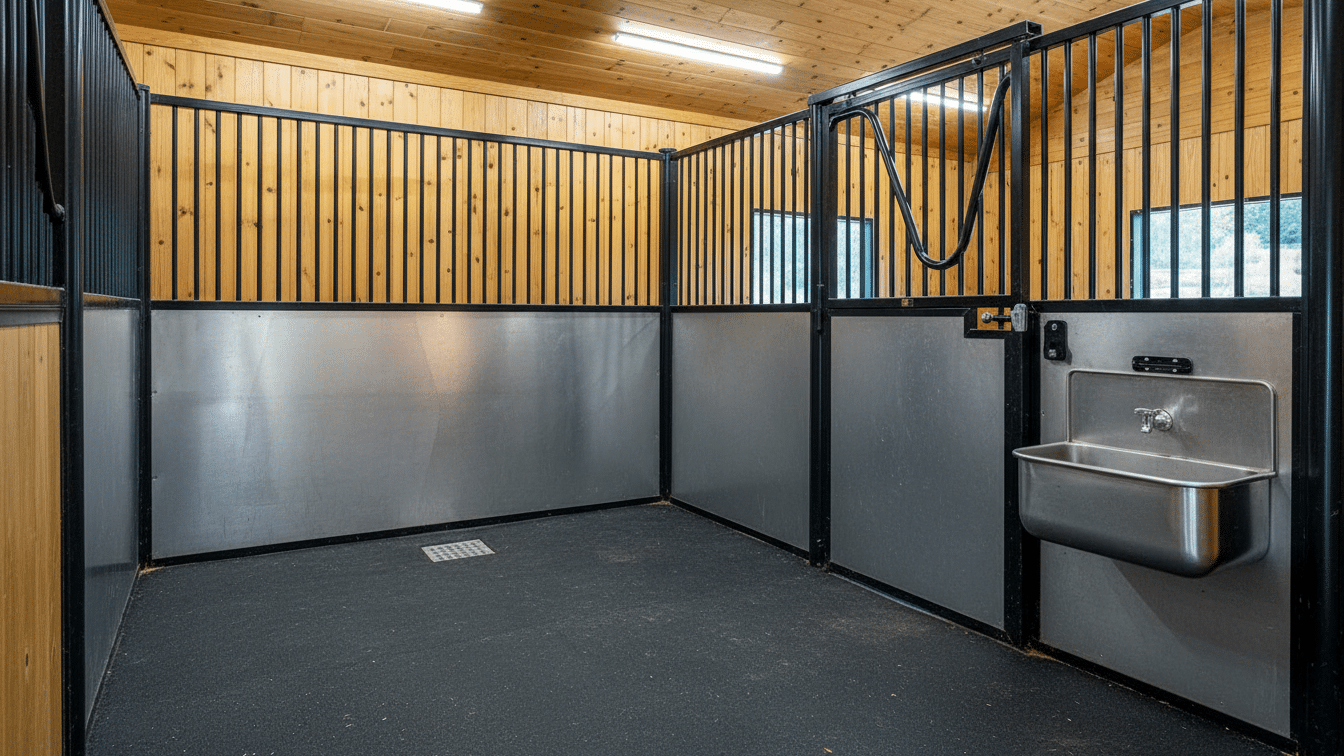
- Flooring: Surfaces must be skid-resistant and impervious to moisture, such as sealed concrete or specialized rubber. Porous materials act like a sponge for bacteria, whereas impervious surfaces allow for complete chemical decontamination.
- Aisle Width: Walkways must be wide enough to prevent nose-to-nose contact between horses in facing stalls, ensuring that a horse stretching its neck cannot reach its neighbor.
Facility Infrastructure and Airflow Management
The mechanical systems within a quarantine facility are as important as the walls. HVAC segregation is critical; ventilation systems must be designed so that air from one isolation unit does not recirculate into another. This ensures zero cross-contamination of air, which is vital for controlling respiratory viruses.
Entry points require solid, self-closing doors that can be sealed to maintain the containment barrier. Beyond the living quarters, the facility needs dedicated zones for hygiene and diagnostics. Necropsy areas must be equipped with autoclaves, freezers, and proper drainage, entirely separate from where live animals are housed. Additionally, decontamination zones featuring showers and changing areas should be located at the entrance of each unit, forcing staff to sanitize before and after handling animals.
How DB Stable Materials Align with Quarantine Needs
The material specifications for quarantine stalls align closely with the construction standards used in DB Stable products. When building isolation units, the materials must resist both biological hazards and the harsh chemicals used to destroy them.
- Impervious Infill: DB Stable utilizes 10mm HDPE boards instead of traditional wood. Wood is porous and can harbor bacteria deep within its grain. HDPE acts like a sealed plastic shield, resisting moisture absorption and allowing for complete surface sanitation.
- Chemical Resistance: Quarantine zones undergo frequent, aggressive cleaning with potent disinfectants. The steel frames from DB Stable feature hot-dip galvanization with a coating thickness of over 42 microns. This thick zinc layer serves as a sacrificial anode, preventing rust and structural degradation even after years of chemical exposure.
- Rapid Isolation Deployment: During an unexpected outbreak, speed is essential. The prefabricated nature of these portable designs allows facility managers to quickly erect a temporary isolation block the required 16 feet away from the main barn.
- Hygiene Maintenance: The HDPE boards used are designed with minimal thermal expansion. This ensures that gaps do not form between the board and the frame as temperatures change, eliminating hard-to-clean crevices where pathogens could hide.
Frequently Asked Questions
How much impact force can a stable wall withstand?
A horse can deliver over 1,000 pounds of force in a single kick. Therefore, stable walls must be engineered to absorb this massive impact without catastrophic failure. We utilize high-density polyethylene (HDPE) infills and stress-graded steel frames to manage this load. The material acts like a shock absorber, dissipating the energy of the kick rather than shattering like brittle wood might.
To ensure longevity, the structural reinforcement typically includes galvanized steel tubes. This combination prevents the wall from bowing or snapping under pressure, protecting both the animal and the integrity of the barn structure.
What gap size is required to prevent hoof entrapment?
To prevent hoof entrapment, fence and stall openings should be less than 3 inches square. This dimension is critical because it is too small for a hoof to enter. Gaps between 3 and 5 inches create a high-risk zone where a hoof can slip in but cannot easily retract, leading to panic and injury.
Additionally, we recommend maintaining a minimum 8-inch clearance at the bottom of stall walls or fences. This ensures that if a horse rolls or lies down near the edge, their legs have enough room to move freely without getting wedged against the ground or framework.
Why are non-porous surfaces critical for biosecurity?
Non-porous surfaces, such as hot-dip galvanized steel and HDPE boards, are essential because they allow for the complete removal of pathogens. Testing shows that cleaning these surfaces results in a drastically higher reduction of bacteria compared to wood or concrete. Porous materials contain microscopic voids that act like caves for germs, protecting them from chemical disinfectants.
Government biosecurity protocols often mandate these materials for treatment zones. Using non-porous components ensures that water or ethanol can flush away chemical residues and contaminants entirely, rather than allowing them to soak into the material structure.
What are the emergency egress requirements for barn fires?
Safety standards mandate that facilities must have at least two distinct exit routes to permit prompt evacuation during a fire. It is also required that fire extinguishers be positioned within 50 feet of travel distance throughout the facility. This setup ensures that you are never too far from safety equipment or an exit.
For stall configuration, we advise designs that limit center aisle stalls and favor dual-door setups. This allows access from both the inside aisle and the outside of the barn, significantly reducing the distance a horse must travel to escape a burning structure.
Are yoked windows safer than grilled windows?
Neither style is inherently safer; they simply serve different purposes. Yoked windows prioritize socialization, allowing the horse to put its head into the aisle for mental stimulation. Grilled windows differ by prioritizing physical protection and preventing horses from tampering with latches or accessing glass.
For safety in either design, we ensure heavy-duty construction with 360-degree hand welds. This eliminates sharp edges that could cut the horse and prevents rust from forming in crevices. The choice depends on whether your horse needs more social interaction or stricter containment.
What flooring standards ensure the best traction?
The industry standard for safe wet flooring is a Dynamic Coefficient of Friction (DCOF) of 0.42 or higher. This metric measures the grip of the floor when water is present. For high-risk areas like wash bays or veterinary clinics, a range of 0.42 to 0.60 is considered best practice.
Think of this rating like the tread on a tire; a higher number means the floor grips the hoof more effectively, preventing slips even when the surface is slick with water or cleaning fluids. Under European standards, a Pendulum Test Value of 36 or higher indicates a similarly low risk of slipping.
Final Thoughts
True equine safety relies on engineering that withstands specific impulse loads rather than just peak force. Integrating 150 N·s impact resistance with non-porous biosecurity zones turns a standard shelter into a fortified containment system for high-value assets.
DB Stable prioritizes these physics-based specifications to eliminate structural failure points before they occur. Investing in galvanized steel and shatter-proof HDPE ensures your facility meets rigorous safety standards, protecting your horses and your bottom line for the long haul.



 English
  Español
  Français
  العربية
  Deutsch
0 Comments