



Lighting Needs for Horse Stables
Effective stable lighting protects animal welfare and supports efficient work. Requirements vary by zone, so set, position, and control fixtures intentionally to manage both performance and operating costs. Experience in export-grade installations shows the strongest outcomes come from matching precise light levels to task, selecting robust fixtures, and integrating reliable controls.
Lighting Levels and Zones
Align brightness with activity. For stalls, target 150 lux to provide clarity for feeding and cleaning without unsettling horses. Maintain similar or slightly lower levels in aisles and storage to conserve energy while ensuring safe movement. In veterinary and grooming bays, increase levels substantially—detailed work such as wound care or hoof trimming demands sharp visibility to avoid mistakes and reduce stress.

Fixture Selection and Durability
Specify fixtures able to resist dust, moisture, and impact. High IP-rated housings prevent dirt ingress and water damage, extending service life. LEDs suit most areas with strong output, low power draw, and reduced maintenance needs. Opt for cool-running designs to avoid heat build-up, which can compromise safety and animal comfort.
Light Positioning and Comfort
Install lights for even coverage, avoiding direct glare into a horse’s line of sight. Eliminate shadowed zones that can hide risks or alarm animals. Use high bay fixtures for tall ceilings to focus light downward efficiently, and low bay units in confined areas. Well-distributed, glare-free lighting makes night checks and urgent interventions safer for handlers and horses.
Additional Features and Controls
Integrate smart controls to adapt lighting to demand. Timers and motion sensors reduce energy use by dimming or switching off unused areas. Maintain up to 16 hours of light daily in active spaces to stabilise circadian rhythms, supporting feeding patterns and temperament. Keep glare within industry comfort limits to protect vision and reduce stress for all stable occupants.
Types of Fixtures & Technologies
Lighting in horse stables must balance safety, efficiency, and durability across varied environments. Match fixture type and technology to ceiling height, space size, moisture exposure, and daily usage to reduce maintenance costs and create optimal working conditions for horses and staff.
Indoor Lighting Fixtures
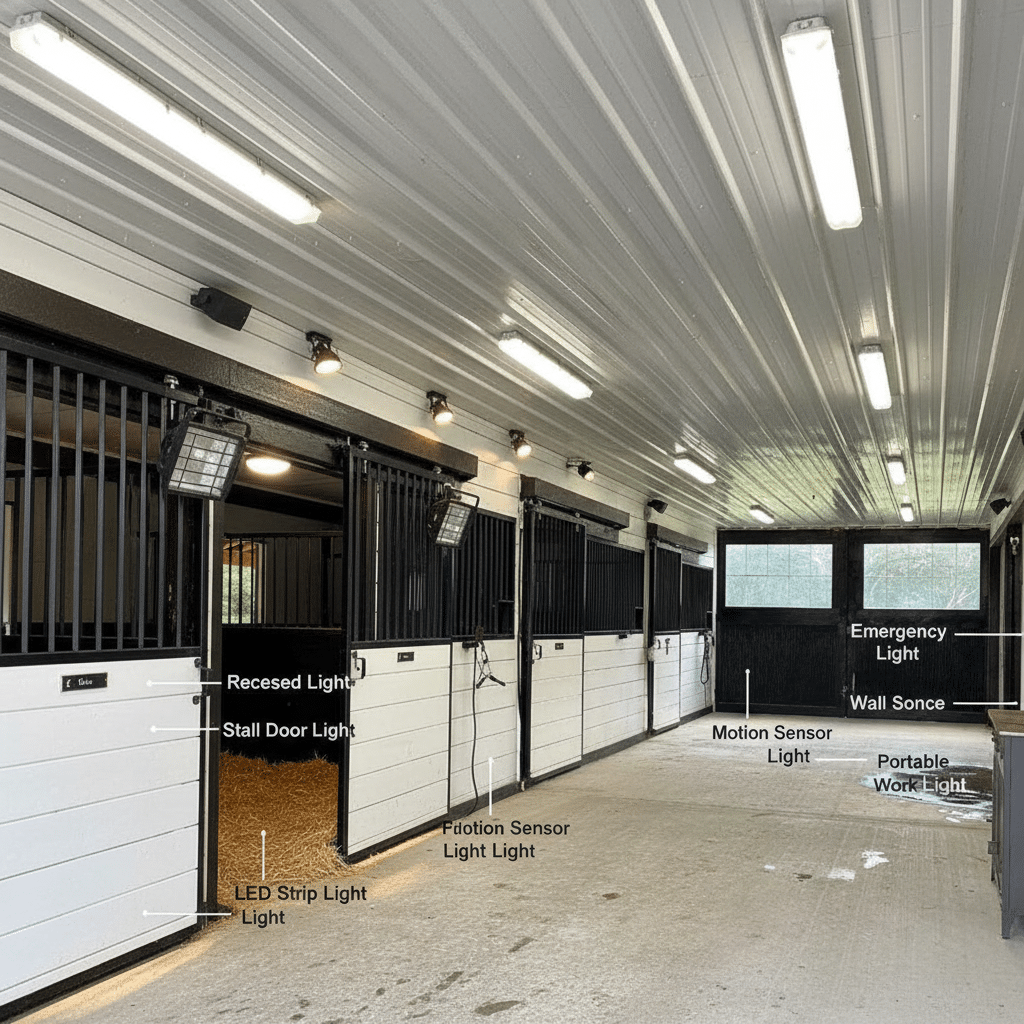
In arenas and large barns with high ceilings, LED high-bay lights provide uniform, shadow-free coverage that improves safety during training and handling. Narrower spaces like aisles benefit from linear LED strips or low-bay fixtures that cut energy costs while maintaining visibility for feeding, mucking, and veterinary care. Stalls and tack rooms should use vapor-tight fixtures with sealed, shatterproof housings to withstand moisture, dust, and frequent cleaning.
Outdoor and Security Lighting
Outdoor arenas, racetrack perimeters, and barn exteriors require LED flood or sport lights mounted on high poles for controlled, glare-free projection. Motion-sensor or dusk-to-dawn controls lower energy use by illuminating only when needed. Select wet-location-rated fixtures with shatterproof lenses or protective cages to endure rain, debris, and routine washing without loss of performance.
Key Technological Considerations
Choose a 4000K–5000K color temperature for daylight-like illumination that reduces staff eye strain and minimizes horse glare. LEDs cut energy usage by up to 75% versus incandescent or halogen options, saving on utilities. Match mounting solutions to ceiling height and space footprint, adjusting brackets or poles for even coverage. A professional lighting plan optimizes fixture layout and pole placement for safety and efficiency across the stable.

Placement Strategies for Safety
Lighting in horse stables must be positioned to minimize accidents and safeguard animal wellbeing. Poor placement can cause glare, shadows, or expose components to damage. Setting fixtures at the correct height and location protects handlers, horses, and equipment while keeping maintenance budgets under control.
Optimal Fixture Height and Positioning
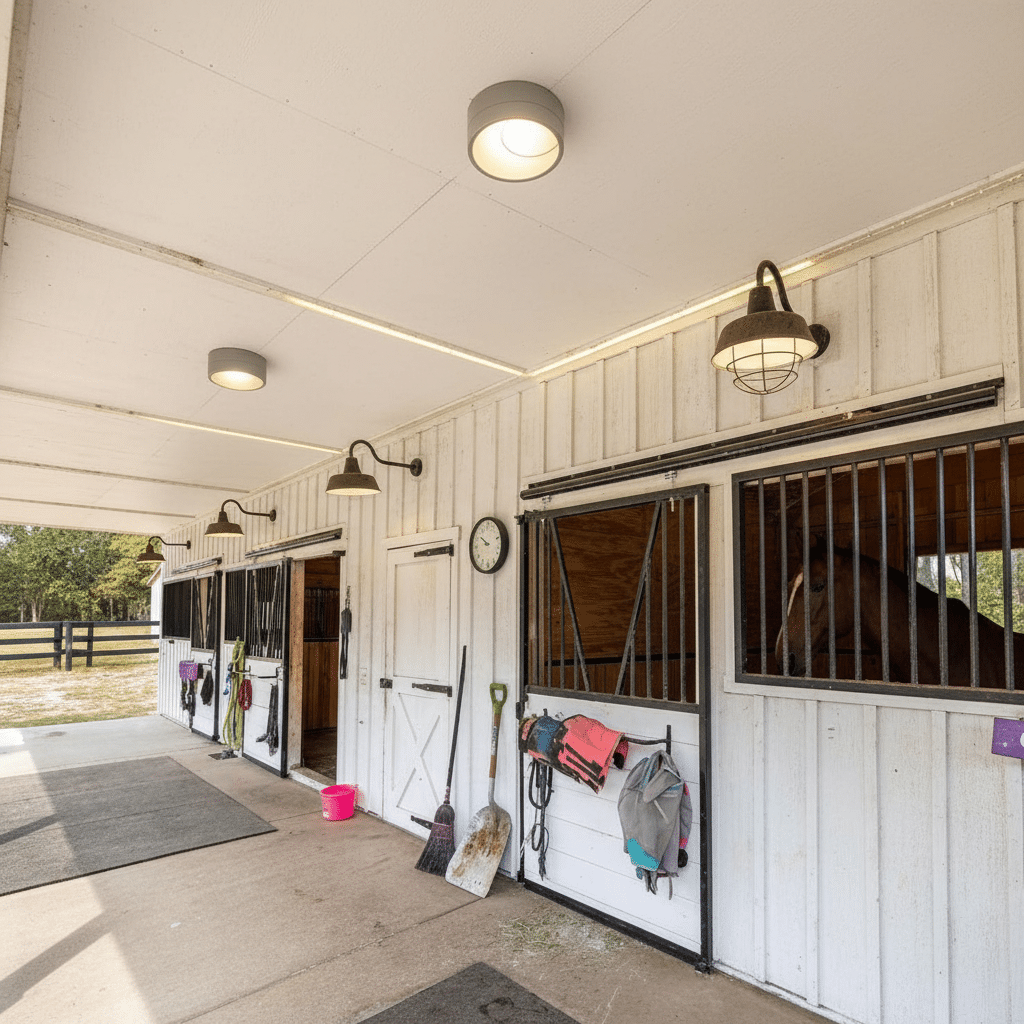
Mount general barn fixtures 10–14 feet above floor level to keep bright sources out of reach and reduce glare into horses’ eyes. In grooming or tacking zones, use heights of 8–10 feet to avoid shadows during detail work. Along busy aisles, install two parallel rows of lights to balance coverage and eliminate uneven dark areas that can lead to slips or startle reactions.
Safety Features for Fixtures and Wiring
Fit fixtures with plastic covers or wire cages to contain shards if struck, and use shatterproof or recessed designs to cut breakage risk. Run cables in durable conduits to prevent chewing damage from horses or rodents. Position switches high or behind door panels to block access and avoid accidental activation.
Considerations for Exterior and Moisture-Prone Areas
Place entrance and yard lighting at least 12 feet high to clear truck cabs and ensure safe night access without glare for drivers. In wash racks or damp zones, select fixtures with high IP and IK ratings to resist water and impact. Mount them above splash zones to avoid contact during operation.
Ensuring Even Illumination
Space fixtures to deliver uniform light in aisles, stalls, and workstations, removing shadowed spots where footing hazards hide. Supplement electrical lighting with daylight from windows or skylights to stabilize color temperature, cut energy costs, and improve working conditions.
Durable Horse Stables Built for Every Climate
Explore DB Stable’s precision-engineered horse stables designed for safety, comfort, and long-lasting performance worldwide. Customizable to meet local regulations and extreme weather challenges, our modular designs simplify installation and deliver trusted quality.

Energy Efficiency in Lighting
Reducing energy costs in horse stables without compromising visibility or safety requires strategic decisions in technology, layout, and controls. Focus on high-performance solutions that deliver measurable savings and withstand the demands of equine facilities. Field results show the most effective strategies pair efficient light sources, robust fixtures, and adaptive systems that respond to usage patterns.
Advantages of LED Technology
Switching to LEDs can cut power consumption by up to 75% compared with incandescent or halogen lamps, lowering utility bills and shrinking carbon footprint. LEDs last beyond 50,000 hours, reducing replacements, downtime, and maintenance costs. Their resistance to temperature swings and tolerance for dusty, moist conditions ensures consistent output even in winter barns or busy wash areas—critical for uninterrupted year-round operations.
Durability and Protection Ratings
Fixtures in harsh barn environments need high IP ratings to resist moisture and dust ingress; IP65 prevents performance issues from cleaning spray or airborne debris. Combine this with a strong IK rating so units withstand impact from tools, tack, or restless horses. Selecting products built to these standards extends service life and controls total cost of ownership in large facilities.
Smart Controls for Energy Savings
Integrating motion sensors or dusk-to-dawn controls stops lights from running unnecessarily, ideal for storage rooms, seldom-used aisles, or turnout paths. Dimmable LEDs add flexibility: adjust brightness for grooming versus feeding to keep animals comfortable and reduce excess consumption. Over a season, these measures sustain operational efficiency and stable ambience.
Optimizing Lighting Layout and Use of Natural Light
Proper layout is as important as fixture choice. Dual rows of LEDs in aisles remove dark spots and minimize the need for higher wattage units, while targeted lights over wash racks and stalls focus illumination where needed most. Incorporating skylights or well-placed windows reduces daytime reliance on electric lighting and supports horses’ exposure to natural daylight cycles, enhancing both efficiency and wellbeing.
Maintenance Advice
In high-use barns, dust, moisture, and accidental impacts can rapidly compromise electrical fittings, leading to downtime or safety risks. A disciplined maintenance program keeps light output consistent while preventing costly repairs.
Regular Inspection and Cleaning
Establish a fixed inspection schedule for all aisles and stalls, checking each fixture closely. Remove dust promptly to maintain brightness and prevent heat buildup. In areas prone to splashing or washing, verify seals and replace compromised components. Clean lenses and housings with an appropriate solution, and examine wiring and conduit—repair or replace any exposed or damaged sections immediately to eliminate hazards.
Choosing Durable and Protective Fixtures
Select fixtures with high IP and IK ratings to ensure resistance to dust, water, and impact, reducing replacement costs. Use protective covers or cages to guard against animal contact and equipment knocks. In exterior or wash-down zones, choose weatherproof, anti-corrosion designs that withstand rain, humidity, and detergents, prolonging service life and safeguarding your capital investment.
Benefits of LED Lighting
LED fixtures deliver long lifespans, reducing service calls and operational interruptions. Their performance remains stable in extreme temperatures, making them ideal for unheated or ventilated spaces. Lower energy consumption cuts monthly operating costs, supporting margins. For new builds or retrofits, LEDs combine reliability and savings in a single, strategic choice.
Safe Positioning of Controls
Install switches and controls out of reach of horses, using elevated panels or locked enclosures. Damaged controls can disrupt operations and create safety hazards. Including these checks in routine maintenance ensures critical systems remain secure and operational during peak activity.
FAQs About Stable Lighting
Seasoned stable operators recognize lighting as critical to safety, animal well‑being, and workflow efficiency. These FAQs deliver clear, practical direction for choosing and positioning fixtures and controls in active horse barns.
What type of light fixture is safest for a horse stall?
Specify vapor‑proof or explosion‑proof fixtures to keep moisture and dust out, minimizing electrical faults and fire risks in humid or dusty areas. Install shock‑resistant housings well out of reach to prevent breakage or injury. Opt for LED units to cut heat output, extend lifespan, and reduce maintenance costs.
How bright should stable lighting be?
Target 300‑500 lux to ensure safe, accurate work during grooming, feeding, and emergencies without glare or deep shadows. Integrate dimmable or zoned controls to reduce levels during rest periods, balancing operational visibility with animal comfort.
Should I use LED lights in my stable?
LED lighting reduces energy use versus incandescent or halogen, runs cool to lower fire risk, and supports comfortable stall temperatures. Its long service life minimizes labor for replacements and avoids disrupting horses with frequent maintenance.
What are ‘vapor-proof’ or ‘explosion-proof’ lights?
Vapor‑proof fixtures are sealed to block moisture and dust from internal parts, preventing corrosion and shorts. Explosion‑proof models contain sparks or flames inside the housing, a must in areas with combustible dust or gas. Both extend safe, reliable electrical operation under harsh conditions.
Where should light switches be located for safety?
Position switches outside or adjacent to each entrance so staff can light spaces before entering. Mount at heights inaccessible to horses, and design circuits with multiple switches to control zones quickly, improving efficiency and avoiding power waste.
Strategic Lighting for Safer, Smarter Stables
In stables, a precise lighting strategy enhances safety, animal comfort, and operational control. Install durable fixtures with high IP and IK ratings to withstand impact and moisture, positioning them to eliminate glare and shadow.
Adjust illumination by zone—brighter in grooming bays, softer in stalls—to maintain workflow accuracy without stressing horses. Leverage LED fixtures with motion or timed controls for consistent output, low heat, and reduced energy costs, and integrate natural daylight to improve welfare while keeping year‑round operating expenses in check.

 English
  Spanish
  French
  Arabic
  German
0 Comments