


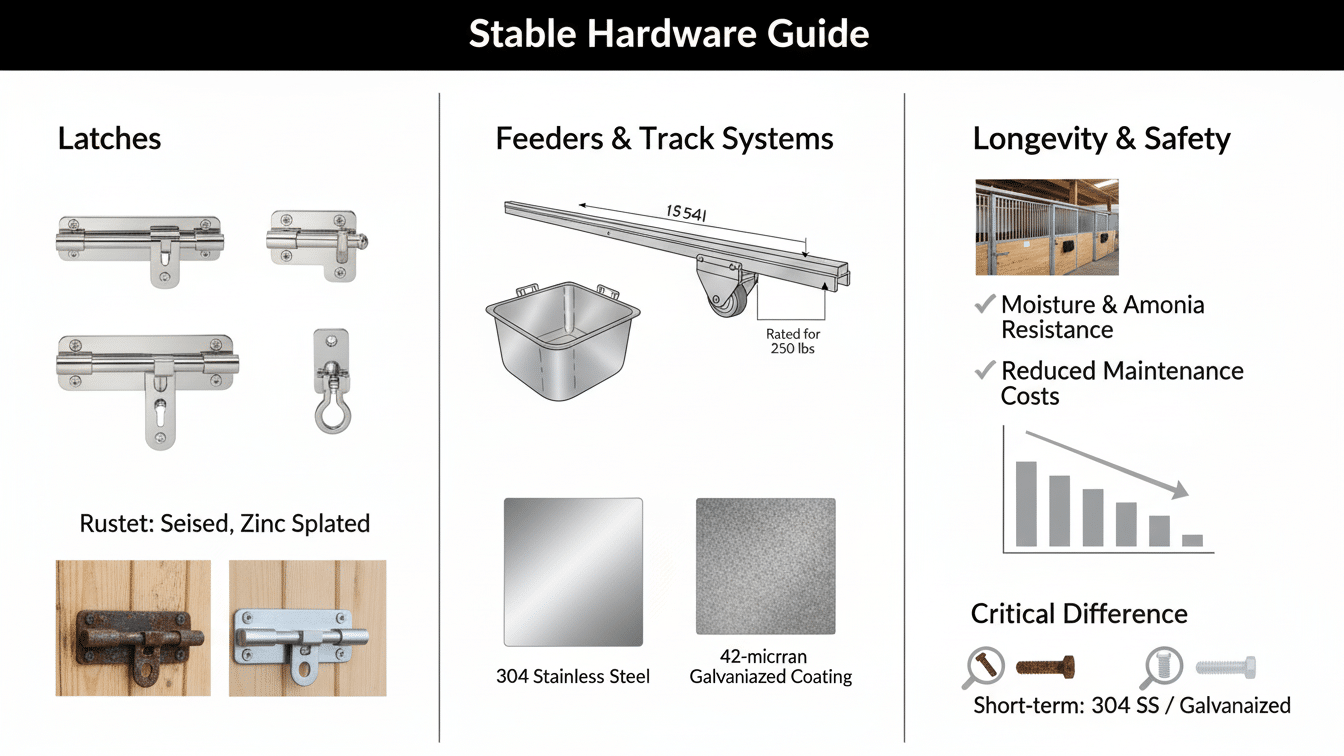
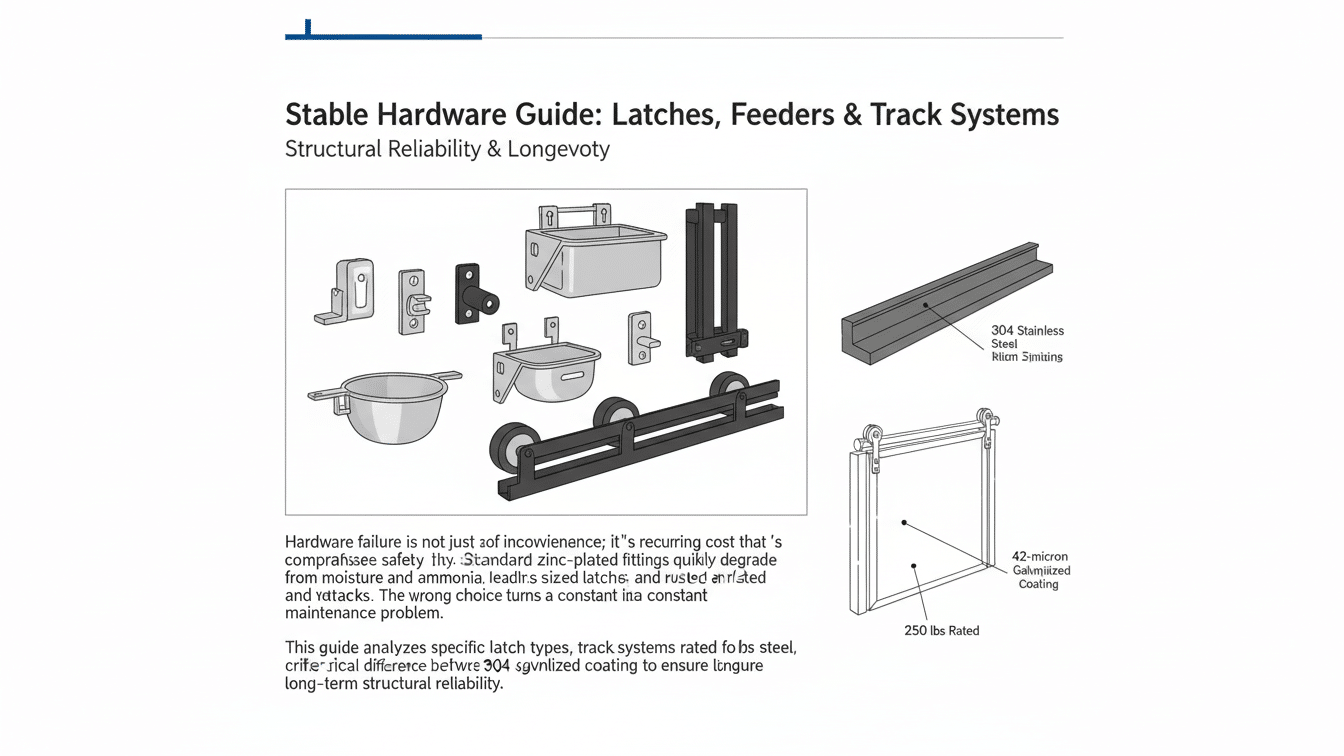
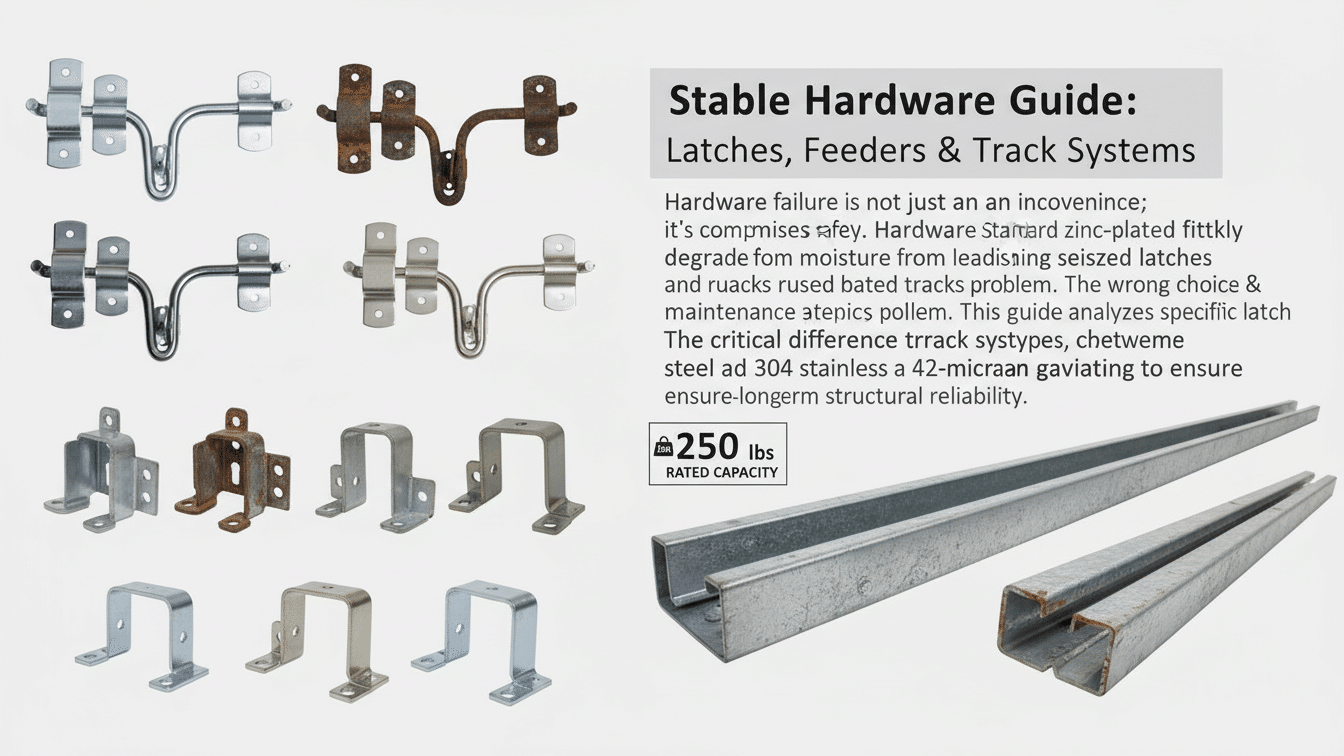
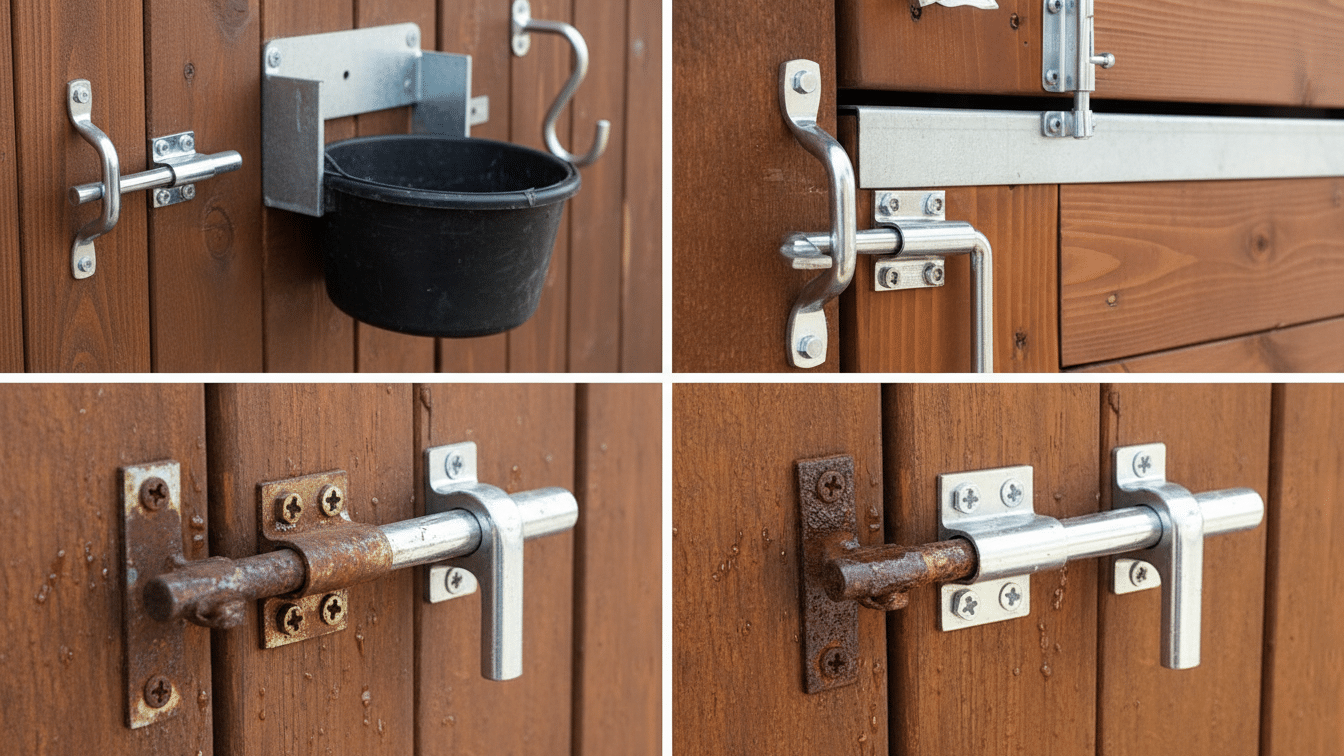
Hardware failure is not just an inconvenience; it’s a recurring cost that compromises safety. Standard zinc-plated fittings quickly degrade from moisture and ammonia, leading to seized latches and rusted tracks. The wrong choice turns a capital expense into a constant maintenance problem.
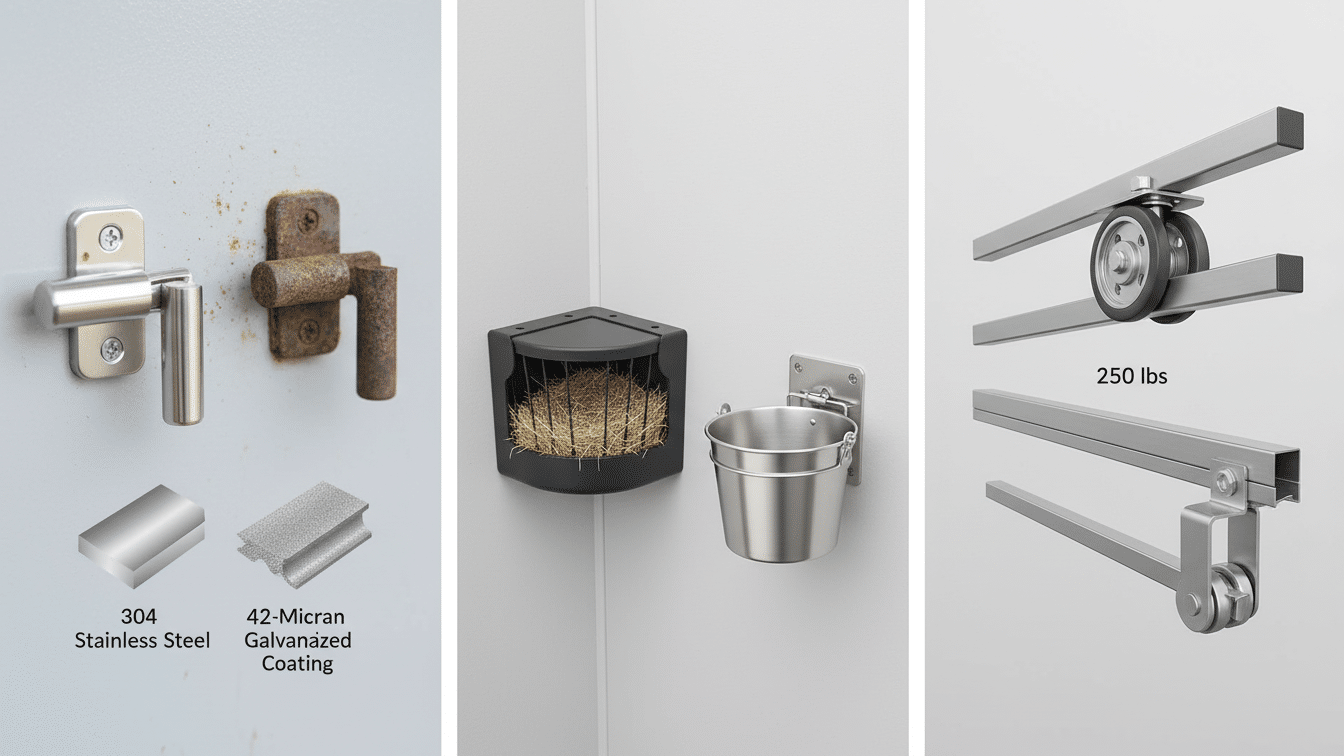
This guide analyzes specific latch types, track systems rated for 250 lbs, and the critical difference between 304 stainless steel and a 42-micron galvanized coating to ensure long-term structural reliability.
The Importance of Hardware Durability
Hardware durability refers to a component’s ability to operate reliably in harsh environments, defined by its material strength, thermal resilience, and resistance to shock. It is validated through rigorous testing standards like MIL-STD-810H, ensuring a longer lifespan and lower total cost of ownership compared to standard commercial-grade equipment.
Core Factors Defining Industrial-Grade Hardware
True durability isn’t accidental; it’s a result of deliberate engineering choices. The right materials and design ensure equipment can withstand daily wear and tear, especially in demanding environments like a barn.
- Material Selection: Industrial hardware often uses stainless steel, aluminum, or titanium. These materials are chosen for their natural ability to resist rust and physical damage, making them ideal for outdoor or high-moisture settings.
- Thermal Management: Equipment must work reliably in extreme temperatures, from freezing winters (-40°C) to hot summers (85°C). This is achieved with designs that include heat sinks or fans to manage temperature swings.
- Mechanical Resilience: Moving parts are often the first to fail. Using solid-state drives (SSDs) instead of traditional hard drives eliminates these fragile components, providing excellent resistance to shocks and vibrations.
- Protective Finishes: Special coatings add another layer of defense. Finishes like powder coating or anodizing act as a shield against moisture, preventing corrosion and extending the hardware’s life.
Key Standards and Metrics for Durability
You can measure durability with objective standards and ratings. These certifications help you know exactly what level of performance to expect from a piece of hardware, removing guesswork.
- Environmental Testing: The MIL-STD-810H is a series of tests used by the U.S. military to prove equipment can survive harsh field conditions. It simulates challenges like intense vibrations, shocks, and extreme temperatures.
- Industry-Specific Certifications: Different environments have unique demands. Certifications like ATEX are required for hardware used in potentially explosive atmospheres, while standards like IEC 61850-3 are for industrial settings.
- Vibration Resistance: A key military test, Method 514.8 (Category 4), confirms that equipment can handle the same level of vibration you’d find in a tracked vehicle moving over rough ground.
- Longevity Metric: Mean Time Between Failures (MTBF) is a simple metric that estimates how long a component is expected to operate before it fails. A higher MTBF rating suggests a more reliable and long-lasting product.
How DB Stable Prioritizes Durability in Horse Stables
At DB Stable, we apply these same principles of industrial durability to our horse stables, ensuring every component is built to last. Our design choices are focused on safety, longevity, and low maintenance.
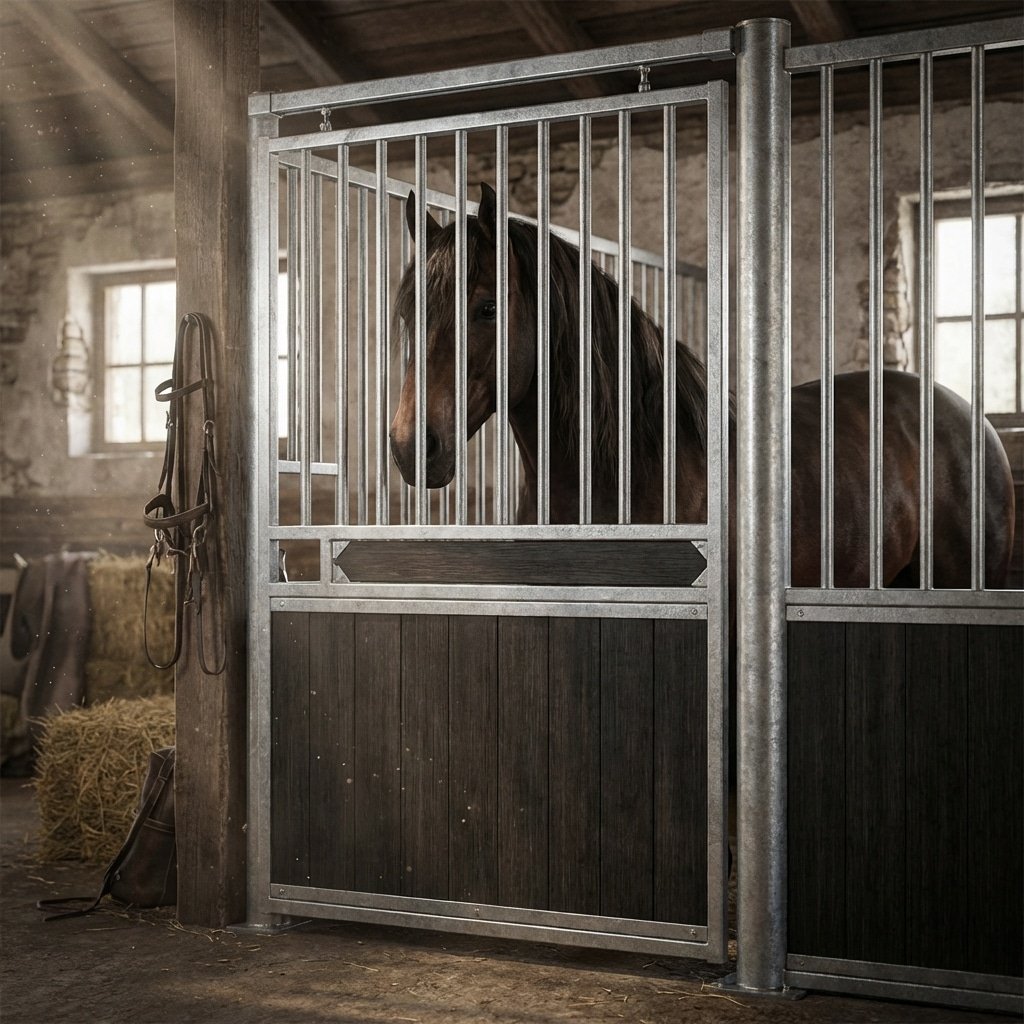
- ✅ Corrosion Resistance: We use a process called hot-dip galvanization for all frame tubes and connection pins. This coats the steel in a thick layer of zinc (over 42 microns), providing a shield against rust for more than 10 years.
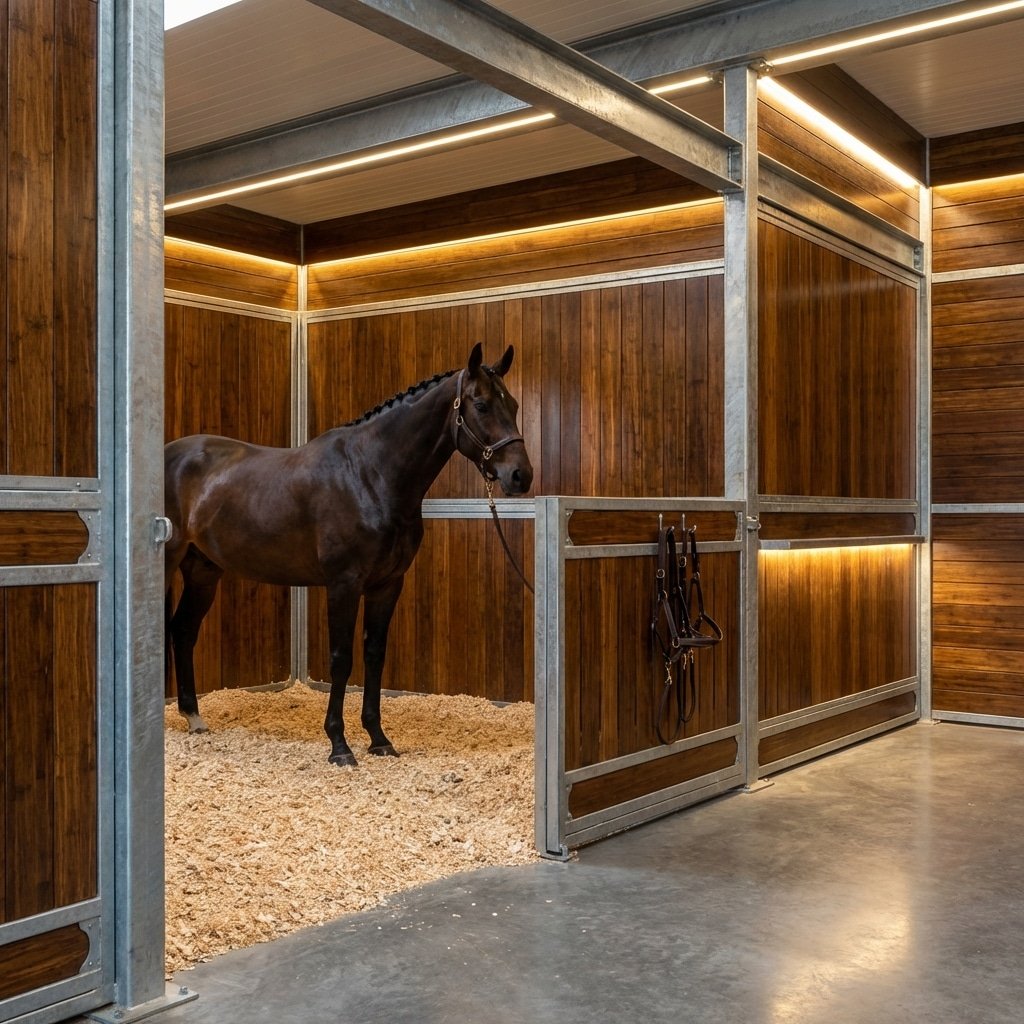
- ✅ Material Resilience: Our stalls feature 10mm thick High-Density Polyethylene (HDPE) boards. This material is not only tough but also contains UV inhibitors, which prevent the sun from making the boards brittle or warped over time.
- ✅ Structural Strength: The connectors are a critical stress point. We use 40*40mm square metal tubes that are fully welded to 6mm steel plates. This creates an exceptionally strong, rigid connection that enhances the overall safety and sturdiness of the stable.
- ✅ Lightweight Durability: The Aluminium Swivel Feeder is a perfect example of smart material choice. Aluminum is light enough for easy operation but completely rust-proof, ensuring smooth, reliable performance for years.
Latch Types: Plunger vs. Spring vs. Gravity
Latches are categorized by mechanism and material strength. Industrial plunger and spring latches use materials like AISI 316Ti stainless steel for precision indexing and high loads. In contrast, application-specific latches scale from heavy-duty 3/4-inch steel gate latches to lightweight 7/32-inch nylon window latches for specific load requirements.
Choosing the right latch comes down to its specific job, its environment, and how it needs to lock. A latch for a precision machine is engineered differently from one on a farm gate. The mechanism and materials are always matched to the load and wear it will face, ensuring it works reliably whether it’s indexing a machine part or securing a horse stall door.
| Application | Common Mechanisms | Materials & Finishes | Key Specifications |
|---|---|---|---|
| Industrial (Precision Indexing) | Rotational-locking plungers require a 180° turn to secure. Automatic-latching plungers use a chamfered pin to click into place on contact. | AISI 316Ti Stainless Steel (high strength, corrosion resistant) or Zinc-plated steel with blue passivation (standard protection). | Small, precise plungers, such as a 6mm head with a 4mm rod. Standardized for DIN 912 and DIN 934 screws. |
| Heavy-Duty (Gates & Trailers) | Simple, robust spring-loaded plungers designed for high shear forces and straightforward operation. | Thick-gauge stainless steel or carbon steel to withstand heavy loads and physical impact. | Large plunger diameters, typically 3/4 inch (0.75″), for maximum load-bearing capacity. |
| Lightweight (Screens & Windows) | Basic spring clips or small plungers designed for retention and simple manual release. | Polymer materials like Nylon for non-structural applications where corrosion is not a concern and weight is minimal. | Small plunger diameters around 7/32 inch, suitable for aluminum frames and light panels. |
| High-Stress (Portable Horse Stables) | Mechanisms must be secure against high dynamic loads (impacts from animals) yet simple for handlers to use safely. | Hot-dip galvanized steel is a must. This process creates a thick, bonded zinc shield over the steel for ultimate corrosion resistance. | For maximum durability, like the hardware on DB Stable enclosures, the galvanization layer should exceed 42 microns to resist moisture and ammonia for years. |
Connecting Industrial Standards to Real-World Durability
The principles of industrial hardware design directly apply to demanding agricultural environments like portable horse stables. A latch on a stall door must endure powerful impacts from large animals and resist constant exposure to moisture and corrosive ammonia. This is where material selection becomes critical for safety and longevity.
Using hot-dip galvanized steel with a protective layer over 42 microns thick, as DB Stable does for its hardware, ensures these critical components do not fail. The robust coating prevents rust and degradation, keeping the latching systems secure and functional over the long term, protecting both the animals and their handlers.
Sliding Door Tracks: Rollers and Maintenance
Sliding door track systems are engineered around material durability, load distribution, and smooth operation. Key components include anodized aluminum or galvanized steel tracks and tandem rollers with ball bearings. These systems support door weights from 33–132 lbs, with individual trolley assemblies rated for up to 250 lbs each.
Core Components and Mechanical Principles
A sliding door system works by distributing the door’s weight across several trolley assemblies. Each individual assembly is strong enough to handle up to 250 lbs. For most standard barn or facility doors, which typically weigh between 33 and 132 lbs (15–60 kg), two trolley assemblies are sufficient to ensure stability and smooth movement. The rollers are the key to quiet, effortless operation. They often use a tandem design with maintenance-free ball bearings, which allows the door to glide along the track with minimal friction. For glass doors, nylon rollers are used to prevent scratching and further reduce noise.
Material Specifications and Performance Standards
The track material determines the system’s lifespan and resistance to wear. For most applications, tracks are made from anodized aluminum, a material treated to resist corrosion without needing frequent maintenance. For heavier doors or more demanding environments, heavy-duty 14 gauge galvanized steel is used. Tracks come in standard lengths, including 72, 96, and up to 144 inches, fitting a wide range of openings. These systems are designed for doors up to 96 inches tall and with specific minimum widths, like 20 inches for a standard setup or 27.5 inches for a double soft-close mechanism. Top-tier hardware complies with industry benchmarks like the ANSI/BHMA A156.9-2003 performance standards, ensuring reliability.
How DB Stable Prioritizes Hardware Durability
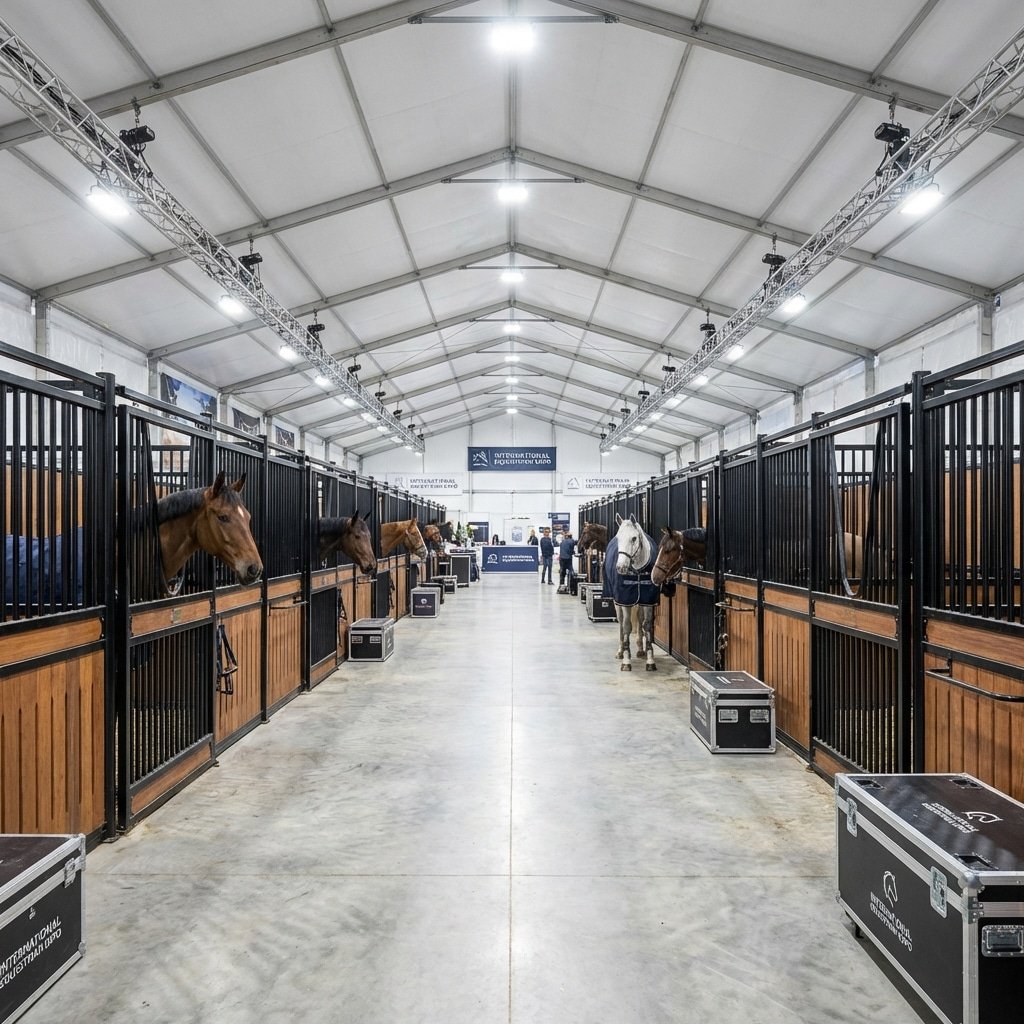
For demanding environments like portable horse stables, hardware durability is non-negotiable. DB Stable outfits its stables with robust hardware for both swing and sliding door options, ensuring they can withstand daily agricultural use. The company uses hot-dip galvanized steel for its frames and connection components. This process creates a protective coating over 42 microns thick, which shields the steel from rust for more than 10 years. By choosing strong, corrosion-resistant materials for every part, including tracks and rollers, DB Stable builds systems that operate reliably and safely for the long term.
Precision-Engineered Stables Built to Last
Give your horses the safety and comfort they deserve with a stable built for longevity. Our structures use hot-dipped galvanized steel and specialized infill panels like UV-resistant HDPE or heavy-duty bamboo to withstand any climate, from 40°C heat to -10°C cold. Each design is customized to meet local standards and ensure lasting durability.
Feeder Options: Swivel vs. Fixed Systems
The choice between feeder systems involves a trade-off between mobility and stability. Swivel systems provide 360° rotation for high maneuverability in tight spaces but have lower load capacity. Fixed systems offer superior stability and durability for straight-line movement and heavy loads but lack rotational freedom.
Core Differences: Mobility vs. Stability
The primary difference comes down to movement. A swivel castor can rotate a full 360°, making it perfect for navigating tight corners and changing directions quickly. Think of the front wheels on a shopping cart. A fixed castor, on the other hand, only moves in a straight line, forward and backward. This restriction provides greater stability, preventing the wobbling or “castor flutter” that can happen with swivel systems at higher speeds or under heavy loads.
Technical Comparison: Durability, Load Capacity, and Cost
Structurally, fixed castors are simpler. With fewer moving parts, there is less that can break down, giving them a longer lifespan and lower maintenance needs. This simple design also allows them to support a higher load capacity than a swivel castor of the same size. The rotating mechanism in a swivel castor is an extra point of stress and wear, which also makes them slightly more expensive to produce.

Application Guide: When to Use Swivel, Fixed, or Combination Setups
Choosing the right system depends entirely on the job. For heavy equipment that moves along a predictable path, fixed systems are the clear winner. For tight spaces that require constant repositioning, swivels are essential. A popular solution is a combination setup, using two fixed and two swivel castors. This gives a cart or trolley the stability to move straight efficiently but also the agility to turn when needed.
| Application Type | Recommended System | Reasoning |
|---|---|---|
| Heavy Machinery Transport | Fixed | High load capacity and stability are critical. |
| Warehouse & Barn Trolleys | Combination (2 Fixed + 2 Swivel) | Balances straight-line control with turning ability. |
| Long, Straight Corridors | Fixed | Best for predictable movement with minimal turning. |
| Tight, Confined Spaces | Swivel | Allows for easy repositioning and sharp turns. |
How DB Stable Selects Feeders for Portability
For portable horse stables, quick access and maneuverability are critical. DB Stable uses Aluminium Swivel Feeders because they allow handlers to position the feeder from outside the stall. This enhances safety and makes feeding more efficient. The swivel design works perfectly in the close quarters of a stable environment. The aluminium construction also means the feeder is lightweight and will not rust, ensuring it remains durable for years.
Window Guards and Glass Safety
Window guards and glass safety standards in 2026 mandate specific dimensional and material requirements to mitigate impact-related hazards. This includes protective bars capable of withstanding a 50 lb/ft load and the use of certified safety glass in high-risk locations, defined by pane size, height from the floor, and proximity to walking surfaces.
When Safety Glass and Guards Are Required
Building codes define specific triggers for when you must use safety glass or install guards. These rules are designed to prevent accidental injuries in areas where people might fall into or through glass. The requirements are based on the glass’s size, location, and proximity to walking paths, which is crucial in active environments like barns and stables.
- Pane Size: Any glass pane larger than 9 square feet must be safety glass.
- Low Placement: If the bottom edge of the glass is less than 18 inches above the floor, it requires safety glass.
- High Placement: If the top edge of the glass is more than 36 inches above the floor, it also needs to be safety glass.
- Proximity to Walkways: Glass is considered a hazard if a walking surface is within 36 inches of it, mandating safety glass.
- Guard Rail Height: Protective bars must be installed between 34 and 38 inches from the floor on any accessible side of the glass.
Technical Specifications and Compliance Standards
Protective bars must meet specific engineering standards to be effective. Each bar needs a minimum diameter of 1½ inches. They must be strong enough to handle a horizontal force of 50 pounds per linear foot without bending enough to touch the glass behind them. This ensures they can stop an accidental impact without causing the glass to break.
Different regions follow specific safety codes to certify glass. Think of these codes as a guarantee that the glass has passed rigorous impact tests.
- United States: CPSC 16 CFR 1201 and ANSI Z97.1 are the primary standards.
- Canada: Compliance is governed by the CAN/CGSB 12.1 standard.
- Europe: The EN 12600 standard uses a pendulum test to measure how the glass breaks upon impact.
Material Testing and Labeling
To keep their certification, manufacturers of tempered and laminated glass must have their products re-tested every two years. These tests are performed at labs approved by the Safety Glazing Certification Council (SGCC) to confirm they still meet ANSI Z97.1 impact standards.
For overhead glass like skylights, laminated glass is required. The lower pane must contain a polyvinyl butyral (PVB) interlayer at least 0.76 mm thick. This PVB layer is a tough, flexible plastic sheet that holds the glass together if it shatters, preventing sharp pieces from falling.
You can verify compliance by looking for a permanent label etched onto the glass. In a multi-pane window, at least one pane must have this mark. If other panes are smaller than one square foot, they might only be marked with “16 CFR 1201” to show they comply.
Material Grades: 304 Stainless vs. Zinc Plated
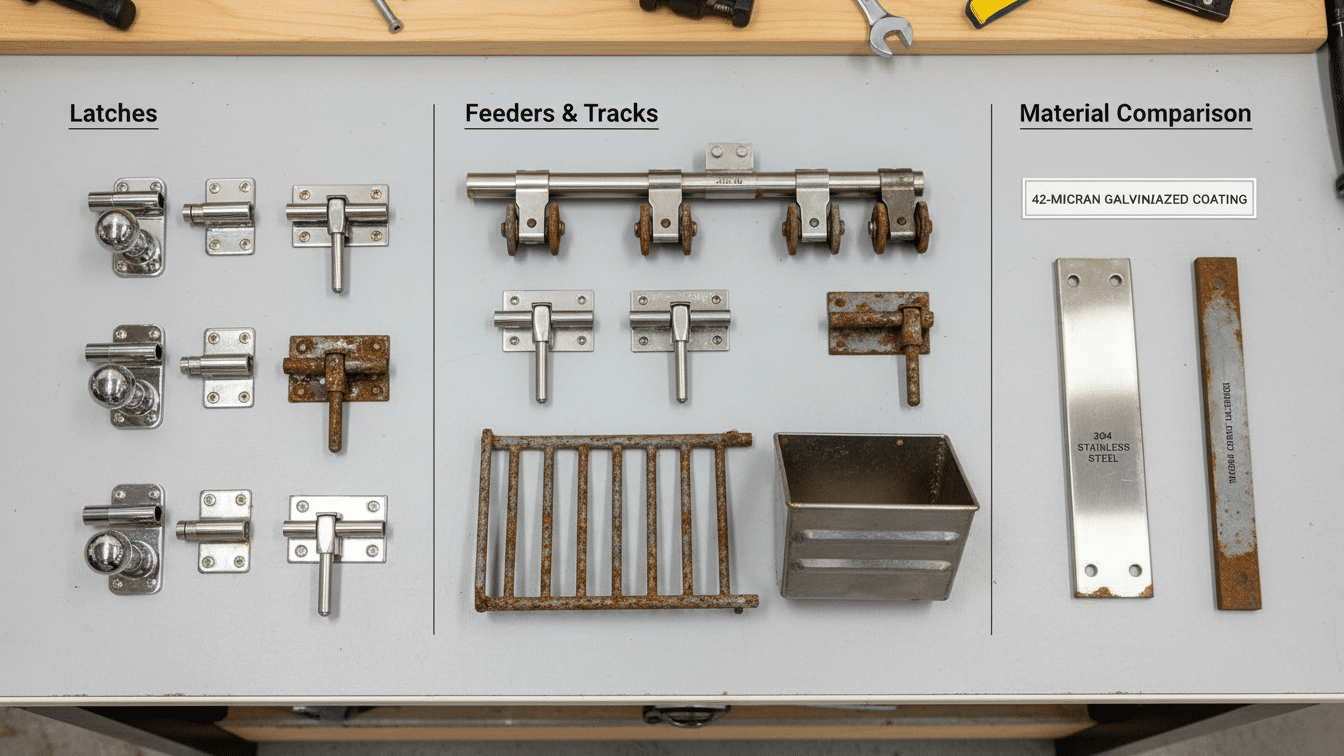
304 stainless steel offers intrinsic, self-healing corrosion resistance through its chromium alloy composition, making it ideal for harsh outdoor or structural applications. Zinc-plated steel relies on a thin, sacrificial zinc coating over carbon steel, providing moderate protection for light-duty, indoor use where cost is a key factor.
Core Differences in Corrosion Resistance
The way these two materials fight rust comes down to their basic design. Stainless steel has its protection built right into the metal itself, while zinc-plated steel wears a temporary protective jacket.
- 304 Stainless Steel: This material is mixed with chromium, which creates an invisible, self-repairing shield on the surface. If you scratch it, the chromium reacts with the air to instantly rebuild that protective layer. This makes it a permanent, long-term solution against rust.
- Zinc-Plated Steel: This is standard carbon steel with a very thin layer of zinc applied to its surface. The zinc layer corrodes first, sacrificing itself to protect the steel underneath.
- Failure Mechanism: Protection in stainless steel regenerates on its own. Protection in zinc-plated steel is finite; once the coating is scratched or worn away, the steel underneath is exposed and will begin to rust.
Technical Comparison: Strength, Durability, and Composition
When choosing hardware, understanding the material’s properties is key to ensuring safety and longevity. Here’s how they compare side-by-side.
| Feature | 304 Stainless Steel | Zinc-Plated Steel |
|---|---|---|
| Composition | A chromium-based alloy with built-in corrosion resistance. | A carbon steel base with a thin, electroplated zinc coating. |
| Tensile Strength | Higher strength, capable of handling greater stress and weight. | Lower strength, suitable for light-duty applications. |
| Environmental Durability | Maintains integrity in extreme temperatures and high-moisture settings. | Deteriorates quickly if the coating is breached in wet conditions. |
| Coating Type | No coating needed; the material itself is resistant. | Relies on a thin zinc layer (electroplating) or a thick layer (hot-dip galvanization). |
Application Guide: When to Use Each Material
Choosing the right material prevents premature failure and costly replacements. Follow these guidelines for your project.
Specify 304 Stainless Steel for:
- ✅ Outdoor installations and structural components.
- ✅ Marine environments or areas with salt exposure.
- ✅ Food processing and chemical equipment.
- ✅ Heavy-duty applications requiring high strength.
Specify Zinc-Plated Steel for:
- ✅ Indoor furniture assembly and light fixtures.
- ✅ Temporary structures or prototyping.
- ✅ Light industrial use in dry environments.
- ✅ Projects where low initial cost is the main goal.
DB Stable’s Material Choice for Outdoor Durability
For equipment that lives outdoors, like a portable horse stable, standard zinc plating isn’t enough. The thin coating can easily get scratched, leading to rust. That’s why DB Stable uses a far more robust process called hot-dip galvanization.
Think of it as giving the steel a permanent, thick armor. The entire steel frame is dipped into a bath of molten zinc, which bonds to the steel and creates a much thicker protective shield than simple electroplating. Key components like frame tubes and connection pins on DB Stable products are specified with a hot-dip galvanized coating of over 42 microns, a thickness engineered to provide more than 10 years of rust-free performance in tough outdoor conditions.
Automatic Waterers vs. Buckets
By 2026, automatic waterers reduce daily labor with a constant water supply but often have high installation costs and make it difficult to monitor a horse’s water intake. Buckets require manual filling yet offer precise visibility into water consumption, a key health indicator. The choice balances convenience against the need for monitoring.
| Feature | Automatic Waterers | Manual Buckets |
|---|---|---|
| Core Trade-Off: Labor vs. Monitoring | Reduces daily labor significantly with a self-filling float-valve mechanism. Its main drawback is “water intake opacity,” which means you cannot easily see how much a horse drinks. Advanced systems with sensors can track intake but are much more expensive. | Requires manual labor to fill and clean daily. This process provides precise, visible monitoring of water consumption, a vital indicator of a horse’s health. |
| Technical Specifications & Frost-Protection | Modern units are made of stainless steel or heavy-duty plastic for better hygiene and durability. In cold climates, they rely on electric heating elements (ranging from 250W to 900W) or frost-free hydrants with valves buried below the frostline to keep water flowing. | Simple and effective. Buckets are typically made of durable plastic or rubber. There are no complex parts to fail. For winter, heated bucket options are available but require individual electrical outlets. |
| Installation & Operational Realities | The installation expense often exceeds the cost of the unit. Setup requires digging trenches for new water lines, which is a major project in an existing barn. Many facilities adopt a hybrid approach: waterers in pastures and buckets in stalls. | No installation is required, and the initial cost is minimal. The main operational cost is the time spent on daily filling and cleaning. |
| Material Philosophy & Durability | The reliance on robust materials is critical for longevity and safety. This same principle applies to the entire stable environment. Just as quality waterers use non-corrosive steel, DB Stable constructs its portable stalls with hot-dip galvanized steel frames to ensure they resist rust for years. | A simple system like a bucket depends heavily on the integrity of the stall around it. DB Stable’s use of UV-resistant HDPE boards for infill panels prevents cracking and degradation, ensuring the stall remains a safe and secure environment for the horse, regardless of the watering method. |
Grooming and Wash Bay Fittings
Grooming and wash bay fittings are specialized hardware designed for wet, high-use equine environments. Key components, often made from corrosion-resistant materials like stainless steel, must meet specific structural and installation standards, such as ground clearance, to ensure safety, durability, and proper drainage in a stable.
Core Materials and Design Principles
The hardware used in a wash bay is constantly exposed to water, cleaning agents, and physical stress. Choosing the right materials from the start prevents premature rust and failure. The entire design must balance strength with effective water management.
- Stainless steel is the preferred material for fittings in wet conditions because it naturally resists rust and corrosion, ensuring a long service life.
- Structural integrity is crucial. Components like a 1-inch square stainless steel arm provide the strength needed to safely support equipment and tie points.
- Good designs promote drainage and are easy to clean. The material choice is the most important factor in withstanding frequent washing without breaking down.
Technical Specifications and Installation Requirements
Proper installation is just as important as the quality of the fittings. Following technical guidelines ensures the equipment functions correctly, drains properly, and remains safe for both horses and handlers.
- A ground clearance between 150mm and 200mm is typically required for wash bay systems to allow for plumbing and ensure water drains away efficiently.
- Some modern grooming systems integrate advanced controls, such as an 11-inch touchscreen, to manage wash cycles and water temperature.
- While engineers rely on standards like ASTM A276 for stainless steel strength, these codes are not always listed in user manuals. It is best to confirm compliance directly with the manufacturer for specialized projects.
How DB Stable Ensures Durability in High-Moisture Areas
DB Stable applies these principles by selecting materials designed for longevity in high-moisture environments. This focus on corrosion resistance ensures that every component contributes to the stable’s overall durability.
- ✅ Frames and connection pins are protected by hot-dip galvanization. Think of this as a thick, protective zinc coat fused to the steel, creating a barrier against rust for more than a decade with a coating over 42 microns.
- ✅ Key accessories like our Aluminium Swivel Feeder are chosen for their material properties. Aluminum is lightweight and cannot rust, making it a perfect, low-maintenance choice for long-term use in any stable.
Retrofitting Hardware on Existing Stalls
Retrofitting hardware involves upgrading existing horse stalls with modular, pre-fabricated components, often made from heavy-duty galvanized steel. This approach allows for integration into existing barn structures using specialized fasteners, enhancing durability and safety without requiring complex on-site assembly.
Core Principles of Stall Retrofit Hardware
Think of retrofit hardware as a ready-to-install kit for your existing barn. Instead of building from scratch, these systems use fully welded, pre-fabricated components designed to fit right into your barn’s columns and structure. This means no complex assembly is required on-site, which simplifies installation.
The engineering behind this hardware focuses on durability. It’s built to maintain its strength even if the barn shifts or settles over the years. This avoids sudden, complete failures at connection points, making it a reliable choice for both upgrading older stalls and for new construction in post-frame barns.
Material and Fastener Specifications for Durability
The strength of any stall comes down to its materials. Most quality retrofit kits use heavy-duty galvanized 14-gauge steel tubing. Galvanization is a process that coats the steel in a layer of zinc, acting as a permanent shield against rust and corrosion.
Connections are just as important. These systems rely on specific, high-strength fasteners to ensure everything stays secure. This includes hardware like ½ inch by 5 inch Titen HD anchors to connect to the foundation and Simpson SDS ¼ x 3 screws for assembling components. These are engineered to meet strict building codes, providing reliable strength.
Practical Application and Customization Options
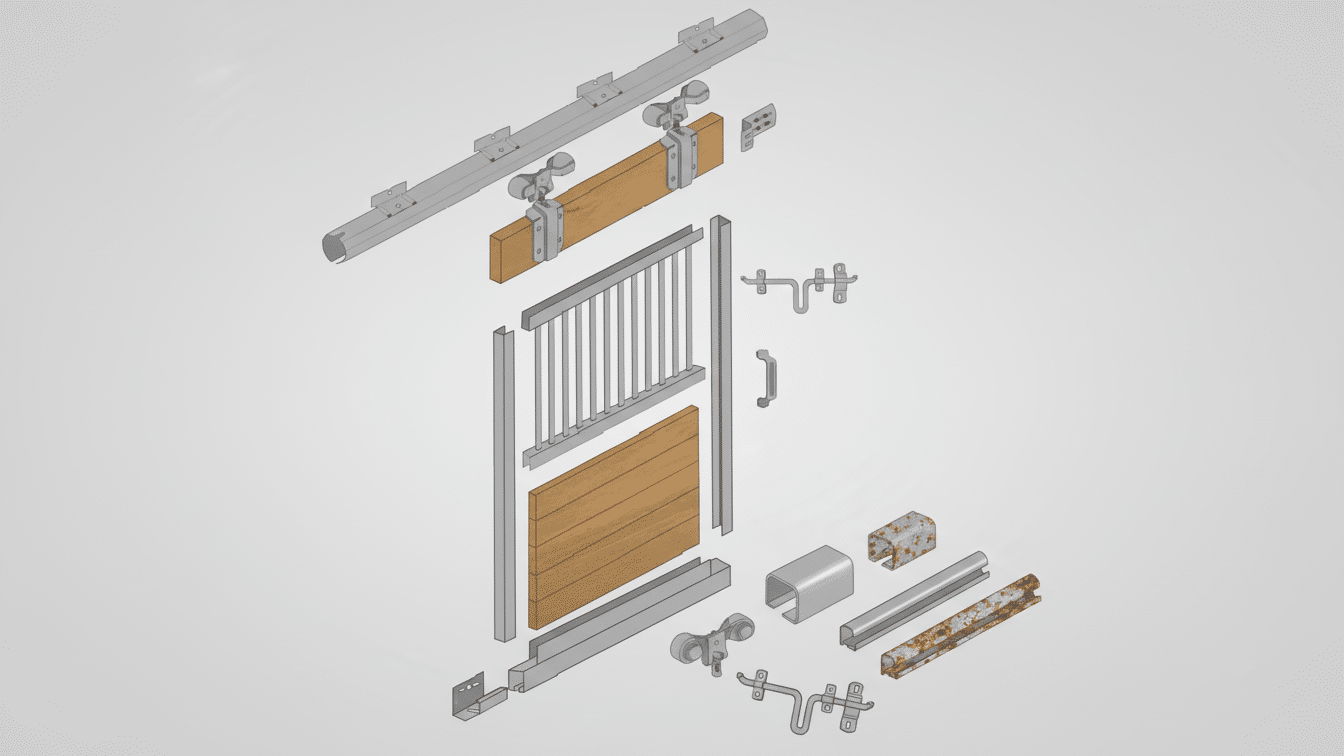
When upgrading stalls, you have options to fit your needs. There are two primary door systems: sliding doors that save aisle space and traditional hinged doors. You can also customize the stall fronts with different features.
- ✅ Grill or Mesh: Choose between vertical bars (grill) or woven steel (mesh) for the top sections to improve airflow.
- ✅ Wood Fill: Add wood panels to the bottom half for a classic look and added privacy.
- ✅ Yokes and Feeders: Include an open yoke so your horse can comfortably look out or integrate a built-in feeder for convenience.
Complete kits provide all the necessary tracks, guides, and mounting hardware to fit different barn layouts and column placements.
How DB Stable’s Material Standards Align with Retrofit Principles
The principles of durable, pre-fabricated hardware are central to how DB Stable manufactures its products. For instance, DB Stable uses hot-dip galvanized steel with a coating over 42 microns thick. This heavy-duty coating ensures superior rust resistance, which is essential for the longevity of hardware in a barn environment.
Furthermore, DB Stable’s connectors are made from fully welded 40*40mm square metal tubes with 6mm steel plates. This reflects the same high-strength, pre-fabricated design philosophy found in top-tier retrofit kits, ensuring all connections are robust and built to last.
Frequently Asked Questions
Which Latch Mechanism Is Most ‘Horse-Proof’?
The EZ Gate Latch is engineered specifically to stop horses from opening gates. It uses a durable, heat-treated steel drop-plate system that resists manipulation and force.
Under typical farm conditions, this type of latch has a life expectancy of over 15 years.
Which Lasts Longer for Stable Hardware: 304 or 316 Stainless Steel?
316 stainless steel lasts significantly longer in environments exposed to saltwater, chlorides, or de-icing salts. Its superior longevity comes from a 2% molybdenum content, which acts as a shield against chloride corrosion.
In mild or indoor environments without these corrosive elements, 304 stainless steel offers similar durability at a lower cost. For coastal applications, 316 hardware can outlast 304 by more than 10 years.
How Should I Maintain Sliding Door Tracks in a Dusty Barn?
The standard process is to vacuum and wipe the tracks clean every few months. Apply a silicone-based lubricant only to the roller assemblies, not directly onto the track itself.
Avoid using oil-based lubricants or WD-40, as they attract dust and create a sticky buildup that causes jamming. The correct sequence is: clean with a vacuum and cloth, ensure the track is completely dry, and then apply silicone lubricant to the rollers.
Are Swivel Feeders Safe for Aggressive Horses?
Yes, swivel feeders are specifically designed and recommended for aggressive horses due to their safety features. The design allows handlers to safely fill the feeder from outside the stall, which protects them during feeding time.
Many facilities report up to a 30% reduction in feeding labor after switching to swivel feeders. For safe operation, proper installation requires 6–8 inches of clearance on all sides so the feeder can rotate without getting stuck.
What Is the Salt Spray Test Standard for Stable Fittings?
The most common standard is ASTM B117, which evaluates how well metal hardware resists corrosion from salt spray. The test uses a 5% sodium chloride solution in a chamber kept at a steady 35°C (95°F).
High-performance stable fittings are often required to endure 1,500 hours of exposure in this test with no signs of red rust.
Can Modern Hardware Be Retrofitted onto Old Wooden Stalls?
Yes, retrofitting is possible, but it requires a careful structural check of the old wood’s condition before you install anything. There are no universal industry standards for this process, so a professional evaluation is critical.
Key factors to check include the load-bearing capacity of the aged wood and the material compatibility between the new fasteners and old timber to prevent corrosion or failure.
Final Thoughts
Stable hardware components like latches, tracks, and feeders aren’t minor details—they are the primary points of daily interaction and potential failure. Choosing hardware based on material science, such as hot-dip galvanized steel, is what separates a safe, functional stall from a high-maintenance liability.
Investing in industrial-grade fittings reduces long-term operational costs by preventing premature rust and breakage. Stalls specified with corrosion-resistant hardware deliver a higher return on investment through years of reliable, low-maintenance performance and improved safety.

 English
  Spanish
  French
  Arabic
  German
0 Comments