



Key Flooring Materials
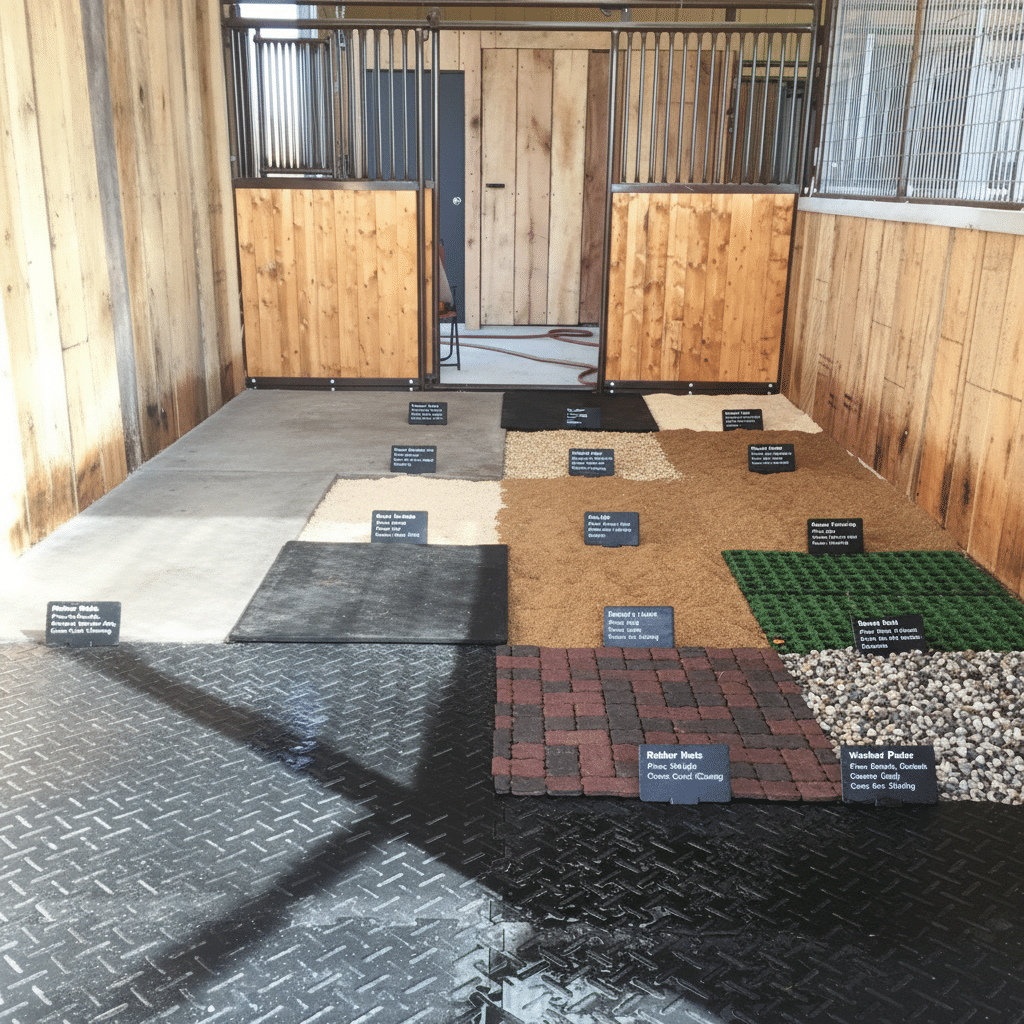
Selecting stable flooring directly influences animal safety, upkeep demands, and long-term investment value. Clay and clay/sand blends are cost-effective with moderate cushioning and drainage but wear quickly under heavy use—grade and refill regularly, and install over a well-drained base to prevent slick, hazardous spots. Sand drains well and is inexpensive but should be kept under a firmer layer to avoid ingestion risks; compacted limestone dust delivers a non-slip, hard surface suited to aisles, though it requires mats or bedding to protect joints.
Treated hardwood offers a warmer, forgiving surface with lower abrasiveness but demands higher upfront spend and control measures against moisture and rodent damage. Concrete and asphalt bring durability and efficient cleaning for service areas yet need mats or deep bedding in stalls to offset hardness and cold retention; both benefit from traction treatments. Interlocking bricks and pavers add strength and aesthetics, while rubber options improve shock absorption, drainage, and slip resistance—particularly in high-traffic zones—often justifying their higher initial cost through reduced injuries and maintenance.

Pros & Cons of Common Flooring Types
When selecting stable flooring, evaluate durability, comfort, hygiene, and long-term cost. Match each material to its functional zone—stall interiors, heavy-use aisles, or wash bays—rather than defaulting to a single solution.
Rubber Mats
Available in interlocking tiles or rolled sheets, rubber mats cushion joints, improve posture, and reduce slip risk. Easy cleaning supports reduced bedding use and labor. Higher upfront cost and potential shifting require secure installation and periodic adjustment to maintain safe footing.
Concrete Floors
Concrete’s load-bearing strength suits heavy equipment areas and its smooth surface disinfects quickly for robust biosecurity. Offset hardness with mats or deep bedding, and add texture to prevent wet-surface slipping. Cold, hard floors can discourage lying down, so manage comfort proactively.
Dirt, Clay, and Sand Floors
These natural substrates are softer and improve drainage, benefiting hoof health. They install economically but need routine leveling. In wet weather they can become muddy, increasing odor and sanitation issues. Factor extra maintenance against initial savings for large facilities.
Gravel and Crushed Stone
Quick to install and cost-effective, gravel drains well but is uncomfortable without mats. Loose stone shifts, so schedule raking or replenishment to maintain level, safe surfaces and avoid sharp-edge hazards.
Asphalt and Interlocking Pavers
Durable with solid traction, these surfaces work well in high-traffic areas. Synthetic pavers improve comfort and drainage but raise installation costs. Confirm performance gains justify expense for your operational scale.
Wood Floors
Wood insulates naturally and offers comfortable footing, conserving heat in cold climates. Vulnerable to rot, it needs regular sealing and inspection. Wet conditions make it slick, so manage drainage to protect safety and lifespan.
Foam Mats and Specialty Materials
Foam mats are lightweight, portable, and easy to clean—ideal for temporary setups—but wear faster than rubber and puncture under heavy use. Specialty materials must be chosen to match specific load and climate demands.
Matching Flooring to Stable Needs
Assign flooring by zone: stalls need impact absorption and hygiene control; aisles require traction and durability; wash bays must resist constant moisture. Balance budget, cleaning efficiency, and horse comfort to achieve cost-effective, welfare-focused results across the facility.
Drainage and Moisture Control
Effective drainage in horse stable flooring is non-negotiable for animal health and facility longevity. Across diverse climates, we’ve seen poor drainage drive up cleaning time, odors, and repairs. Selecting the right system and building it to spec protects your investment from day one, while disciplined maintenance keeps performance high.
Approaches to Drainage in Stable Flooring
Porous systems like sand, gravel, or grid panels allow liquids to move into a prepared sub-base, cutting standing water and ammonia exposure. They require a solid, well-compacted base to avoid pooling or movement under load. Impervious floors such as concrete or asphalt must be graded at roughly 1 inch per 5 feet toward channels or perimeter drains—precision here prevents costly fixes later.
Key Construction Practices for Optimal Drainage
Build stable floors at least 12 inches above surrounding grade and contour adjacent ground to divert water away. Under any floor, use layered compacted subsoil, gravel, and sand or pea gravel to promote airflow and drainage. Side channels or gravel trenches clear surface water faster and avoid the maintenance burden of central drains. In high-moisture areas, install grid flooring or perforated mats to protect surfaces and reduce bedding waste. Where the water table is high, integrate sub-drainage such as drain rock beds or tile lines to eliminate persistent damp zones.
Moisture Control Through Maintenance and Environmental Considerations
Choose bedding with strong absorbency to capture urine early and replace it before saturation. Remove waste daily to prevent acidic damage and odors. Align your drainage strategy with local climate, stall traffic, and realistic maintenance capacity—matching design to conditions ensures animal comfort and keeps the facility operational with minimal unscheduled repairs.

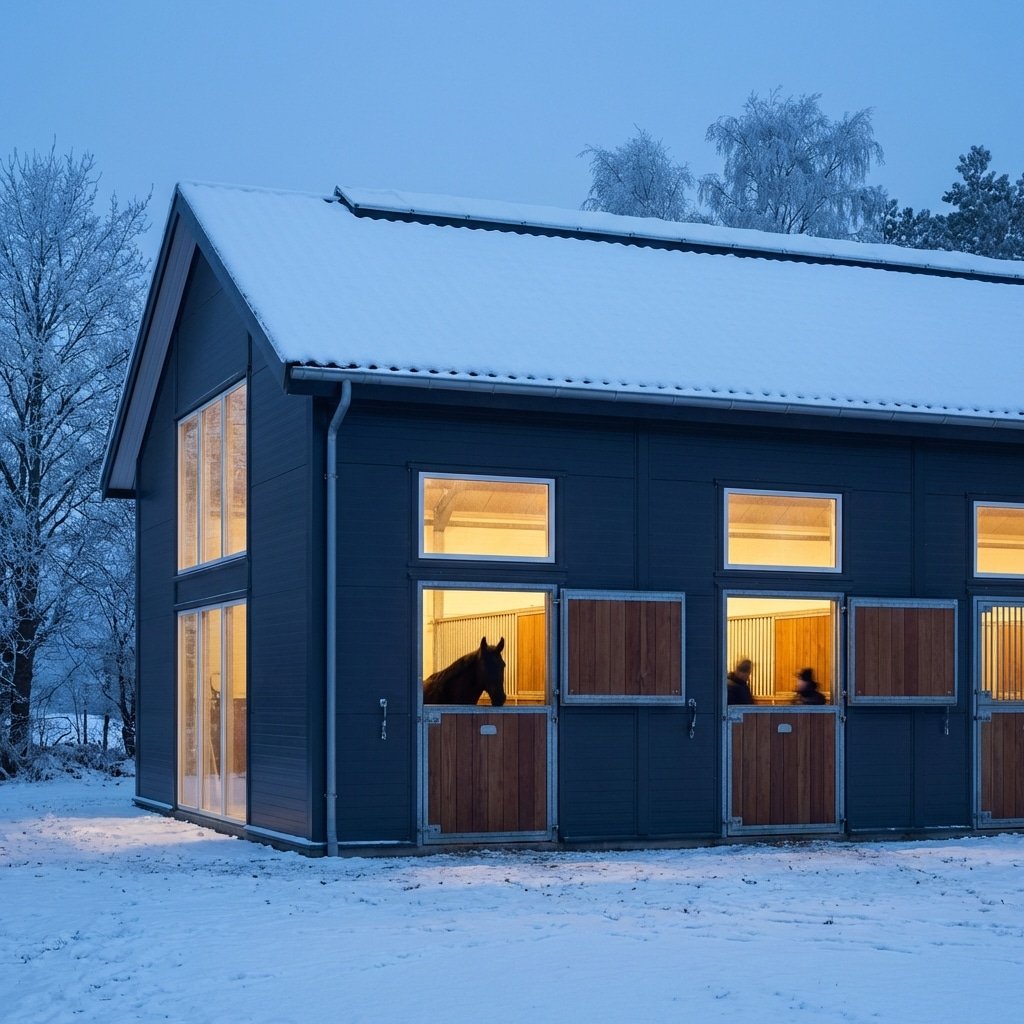
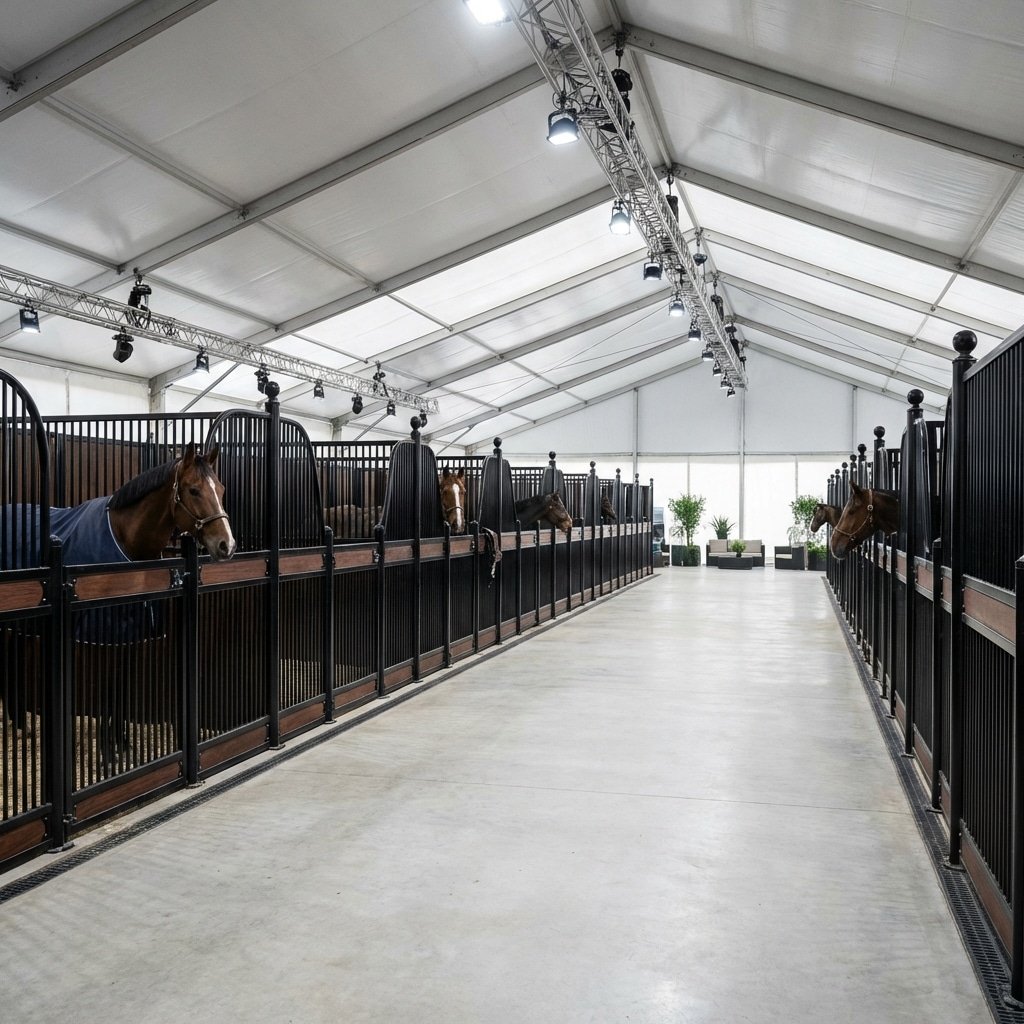
Durable Horse Stables Built for Every Climate
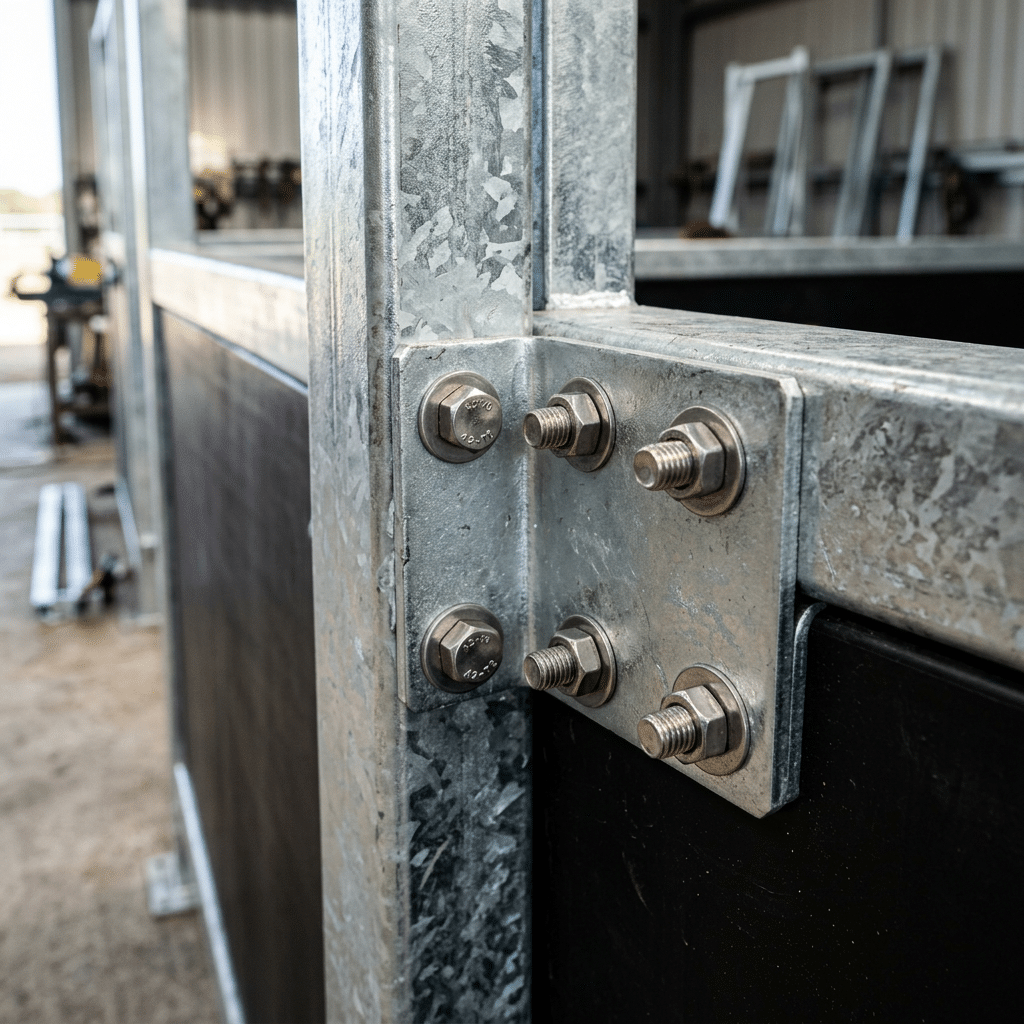
DB Stable crafts galvanized steel frameworks and weather-resistant panels designed to keep horses safe and comfortable worldwide. With customizable options meeting regional standards, our stables resist extreme heat, cold, and weather while simplifying installation and maintenance.
Installation & Maintenance Tips
Well-installed, stable flooring with consistent upkeep delivers longer service life, enhances horse comfort, and keeps daily operations efficient. Focus on solid groundwork, disciplined maintenance, and moisture control to avoid costly replacements and safety risks. These recommendations reflect proven practices from commercial equestrian facilities and large-scale portable stable setups.
Proper Installation Procedures
Begin with a site assessment to ensure the base stays dry and drains well year-round, positioning stalls away from pooling or run-off zones. Plan measurements and layouts before cutting to minimize waste and cost. Level and compact the subfloor with a slight slope for drainage, whether dirt, gravel, or concrete. For mat systems, cut precisely and fit edges tightly to prevent trip hazards; in heavy-use zones, apply adhesive to stop shifting and curling.
Routine Maintenance Best Practices
Remove manure and soiled bedding daily with non-abrasive tools to preserve traction and surface integrity, and wash down mats or poured rubber periodically using material-safe cleaners plus equine-approved disinfectants to control pathogens. At set intervals, lift mats to ventilate the base and check for damp patches, mold, or pests. Rotate mats seasonally to balance wear, and arrange professional inspections at least 2 times a year to identify curling, slick spots, or other hazards. Replace damaged panels and refresh non-slip coatings before safety is compromised.
Optimizing Ventilation and Drainage
Ventilate stables effectively to reduce humidity and prevent mold beneath mats, protecting base integrity and controlling odor. Position vents or fans for airflow across all stall levels, and maintain consistent drainage under and around flooring to avoid water stagnation and material breakdown. Proactive moisture management extends installation lifespan and prevents care disruptions for repairs or deep cleaning.

Flooring Safety and Comfort
When selecting horse stable flooring, prioritize features that directly impact animal welfare, staff safety, and operational costs. The right surface reduces injuries, supports hoof health, and keeps maintenance demands under control. For procurement teams, specifying safe, comfortable flooring lowers veterinary claims and simplifies compliance with welfare regulations—protecting both brand reputation and profit margins.
Key Characteristics of Safe and Comfortable Stable Flooring
Choose flooring with sufficient cushioning to absorb impact and reduce strain on tendons and joints during long stall periods. Pair this with consistent traction to prevent slipping when horses lie down or rise, and ensure surfaces remain dry without trapping odors. Moist floors increase respiratory risks and harbor parasites, driving up vet costs and biosecurity measures. Durability is critical—materials must withstand pawing, turning, and heavy use without early degradation. Avoid floors that are overly soft, which can cause leg issues, or too hard or slick, which heighten injury risk.
Industry Standards and Safety Compliance
In professional settings, prioritize products certified to DIN 7861 or DIN 3762. These standards verify elasticity, abrasion and acid resistance, and slip resistance, ensuring flooring performs under both the mechanical demands of horses and exposure to waste and cleaning chemicals. They also restrict harmful substance migration into the stable environment, protecting horses and staff. Procuring to these standards streamlines safety audits and welfare compliance, reducing the chance of costly retrofits.
Material Selection Based on Stable Areas and Usage
For stalls, rubber mats offer proven cushioning, drainage, and ease of cleaning—enhancing rest quality and protecting hooves from moisture damage. In high-traffic aisles, grid flooring promotes superior drainage and resists wear from constant movement. Concrete delivers exceptional longevity but requires rubber overlays to improve traction and comfort. Clay and other natural bases may suit certain traditional or open layouts, yet their limited durability and uneven grip raise maintenance and safety concerns. Assess every material for drainage capability, cleaning efficiency, installation demands, total cost of ownership, and compatibility with waste management workflows—the wrong choice drives up daily labor and health risks.
Operational Benefits of Proper Flooring Choice
Well-chosen flooring protects horses from slips and strain, cutting vet costs and extending their usable working life. Durable, low-maintenance surfaces let crews work efficiently while minimizing repair or replacement expenses. Strong drainage and odor control maintain healthy air quality, supporting respiratory health and reducing unpleasant chores. Flooring that integrates with daily routines keeps operations smooth, benefiting horses, handlers, and the long-term financial performance of the stable.

FAQs About Flooring
Stall and stable flooring decisions directly affect horse safety, maintenance demands, and operating costs. Below are concise, experience-based answers that help you evaluate options for durability, comfort, and budget in a high-traffic stable environment.
What is the safest flooring option for horse stalls?
Choose a surface that cushions impact, resists slipping, and supports joint health. Heavy-duty rubber mats provide excellent shock absorption and traction, making them a proven choice in professional stables. Install over a level base and maintain a consistent cleaning schedule to preserve an even, secure surface.
What is the cheapest flooring for a horse stable?
Sand offers a low upfront cost but demands frequent leveling and strict hygiene controls. Concrete is inexpensive to pour but requires mats or bedding to protect horses. Assess total lifecycle costs—installation, lifespan, and daily upkeep—before committing, as the cheapest initial option can become the most expensive to operate.
Are rubber mats difficult to install and clean?
Quality modular mats are simple to position and lock together, minimizing install time on a level subfloor. Fit them tightly to eliminate gaps and shifting. Daily cleaning is fast—hose, sweep, or scrape as needed—to keep hygiene high and extend mat lifespan in heavy-use stalls.
What flooring provides the best drainage?
A compacted gravel or crushed rock base beneath rubber mats promotes liquid runoff and reduces moisture retention. Perforated mats direct urine into bedding and down to the drainage layer. Grade stall floors correctly and maintain the base to keep drainage efficient year-round.
Can I use sand as the only flooring in my stalls?
Sand is soft and impact-absorbing but compacts over time, leading to uneven footing. It also retains moisture, which can encourage bacteria when drainage is insufficient. Most facilities layer mats or bedding over sand to improve durability, cleanliness, and overall stall health.
Final Takeaways for Stable Flooring Choices
Choose stable flooring by balancing comfort, drainage, durability, and hygiene with budget realities. Use rubber mats in stalls for joint protection and traction, and pavers or grids in aisles to control moisture. Hard bases like concrete or limestone dust require cushioning layers to reduce strain and prevent slips.
Align each zone’s material with its role, and commit to professional installation and upkeep. A mixed-material approach often optimizes cost, efficiency, and horse welfare in high-demand facilities.

 English
  Spanish
  French
  Arabic
  German
0 Comments