



This analysis dissects the tariff implications of HS Code 7308.90.9090 and models the ROI of durable specifications. We evaluate how 42-micron galvanized steel and UV-resistant 10mm HDPE infill impact the long-term 1.25:1 cost-benefit ratio.
What Key Factors Influence the Price of Horse Stables?
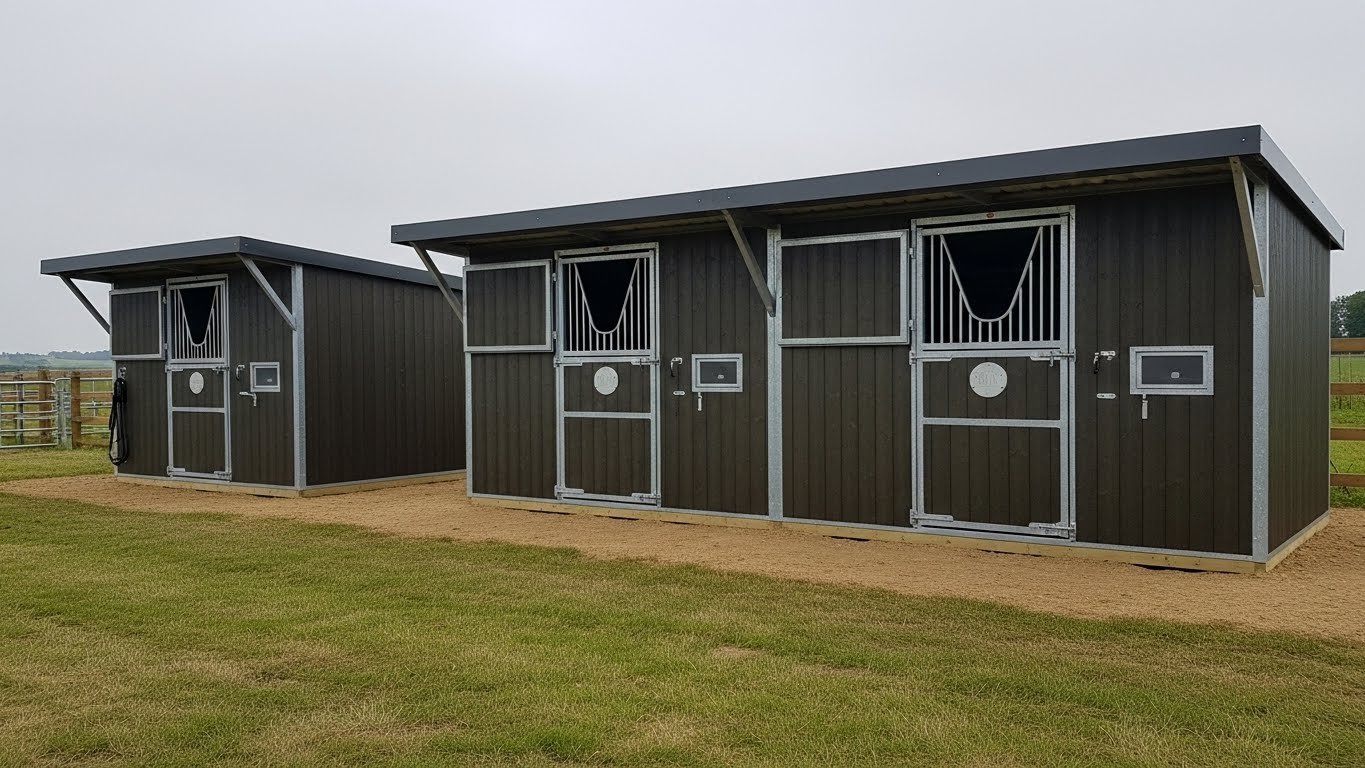
Stable pricing typically follows a benchmark of $100–$300 USD per square foot, with single prefabricated stalls in Australia ranging from $4,000 to $7,000 AUD. Final costs depend heavily on materials (steel vs. timber), layout complexity, and labor choices, where DIY kit assembly can reduce total project expenses by 45–65% compared to turnkey installation.

Size, Configuration, and Base Metrics
The total footprint and internal layout of the barn are the primary drivers for the initial cost baseline. Larger structures simply require more raw materials, but the complexity of the design also plays a significant role. Adding specialized areas like wash bays or tack rooms increases the price faster than adding simple stall bays because they require different fixtures and finishes.
- Market Tiers: Budget single-stall kits generally start at $4,000 AUD (approx. $2,600 USD), while mid-range multi-bay facilities span $20,000–$50,000 USD.
- Scaling Costs: Expanding a facility compounds costs; for example, adding an adjacent bay often incurs an extra $400 AUD in installation labor per unit in the Australian market.
- Standard Dimensions: Pricing baselines often assume a standard 4m x 4m (Australia) or 12ft x 12ft (US/UK) stall; increasing dimensions or roof height (above standard 2.4m) increases material volume exponentially.
Material Selection: Timber vs. Steel Durability
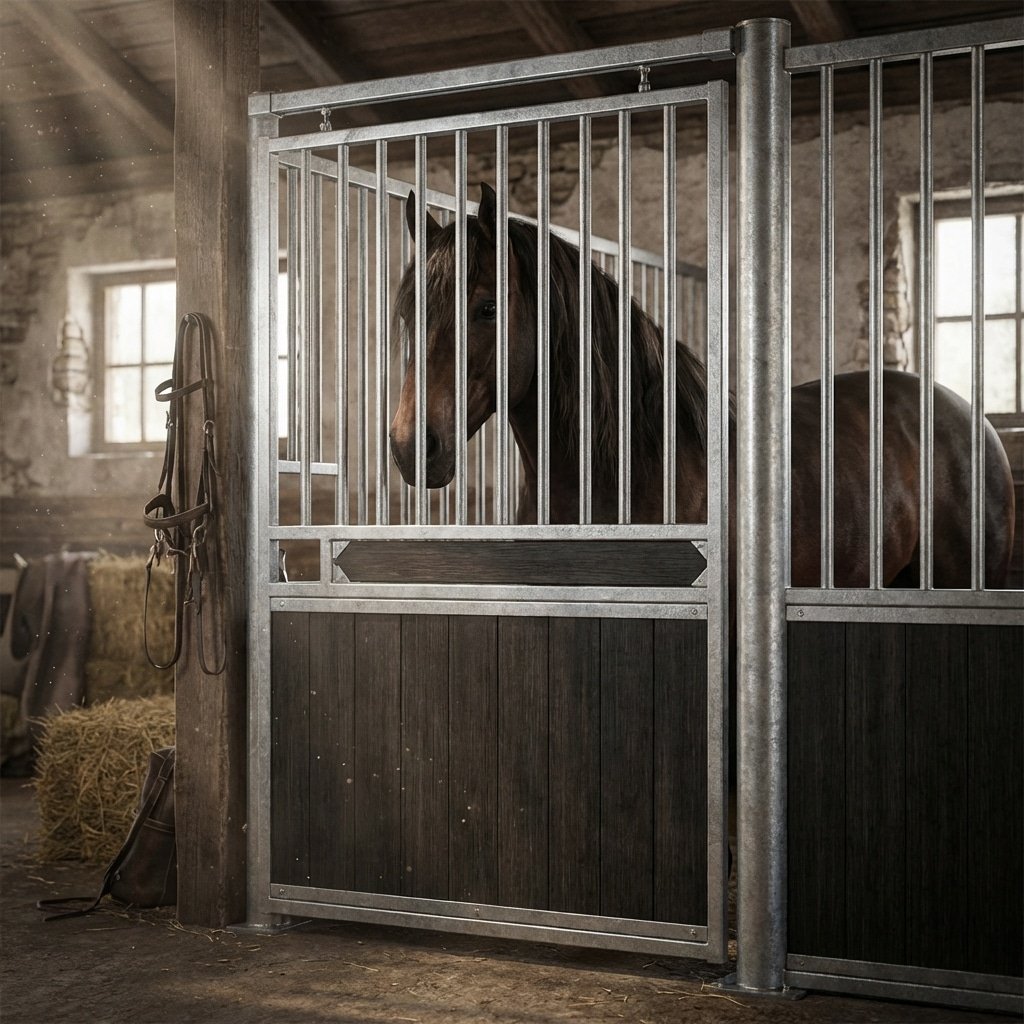
Choosing between timber and steel is a balancing act between upfront affordability and long-term value. While wood offers a traditional aesthetic, it is susceptible to chewing and rot over time. Steel acts as a skeleton for the structure, offering rigidity that withstands heavy impact from large animals.
- Cost vs. Longevity: Steel structures often command a 40–50% higher initial cost than standard timber but offer superior durability and reduced maintenance over time.
- Infill Variation: In the UK market, a 12-foot front panel varies significantly by material: £610 for softwood, rising to £795 for hardwood, with plastic/steel hybrids sitting in the middle range.
- Component Premiums: Specific features like sliding doors (anti-weave or full grill) can add approximately £180 per unit compared to standard swing doors.
Site Variables and Hidden Installation Costs
The physical location where the stable will sit introduces variable costs that are often not included in the kit price. The condition of the ground determines how much preparation is needed before construction can begin. Flat, stable soil is cheaper to build on than sloped or sandy terrain.
- Foundation Variance: Site preparation, including leveling and concrete piers or columns, creates a 15–25% variance in total project price depending on soil stability.
- Labor Rates: Choosing DIY assembly for prefabricated kits can save 45–65% on labor costs versus professional turnkey installation.
- Regional Differences: Market conditions significantly affect pricing; Australian (AUD) pricing is typically 30–40% lower per unit than equivalent structures sold in USD or GBP markets due to regional manufacturing and material availability.
How DB Stable Optimizes Material Value
Importing directly from a factory can significantly alter the price-to-quality ratio. By removing the middleman, buyers can access higher-grade materials that would usually be reserved for premium price brackets in local markets. DB Stable utilizes this model to provide robust specifications without the standard retail markup.
- Factory-Direct Pricing: By manufacturing in China and exporting directly to Australia/NZ, the supply chain removes intermediary markups, aiming to deliver the ‘lowest price’ for established quality tiers.
- Premium Specs at Standard Rates: Structural components utilize hot-dip galvanized steel with a 42-micron coating. Think of this process as dipping the metal into a bath of molten zinc to create a permanent shield that prevents rust for over 10 years.
- Material Durability: Usage of 10mm thick HDPE boards provides UV resistance and eliminates thermal expansion issues. This ensures the plastic panels do not warp or bend under the intense sun, reducing long-term replacement costs.
How Do Material Choices (Bamboo vs. Pine) Impact Cost?
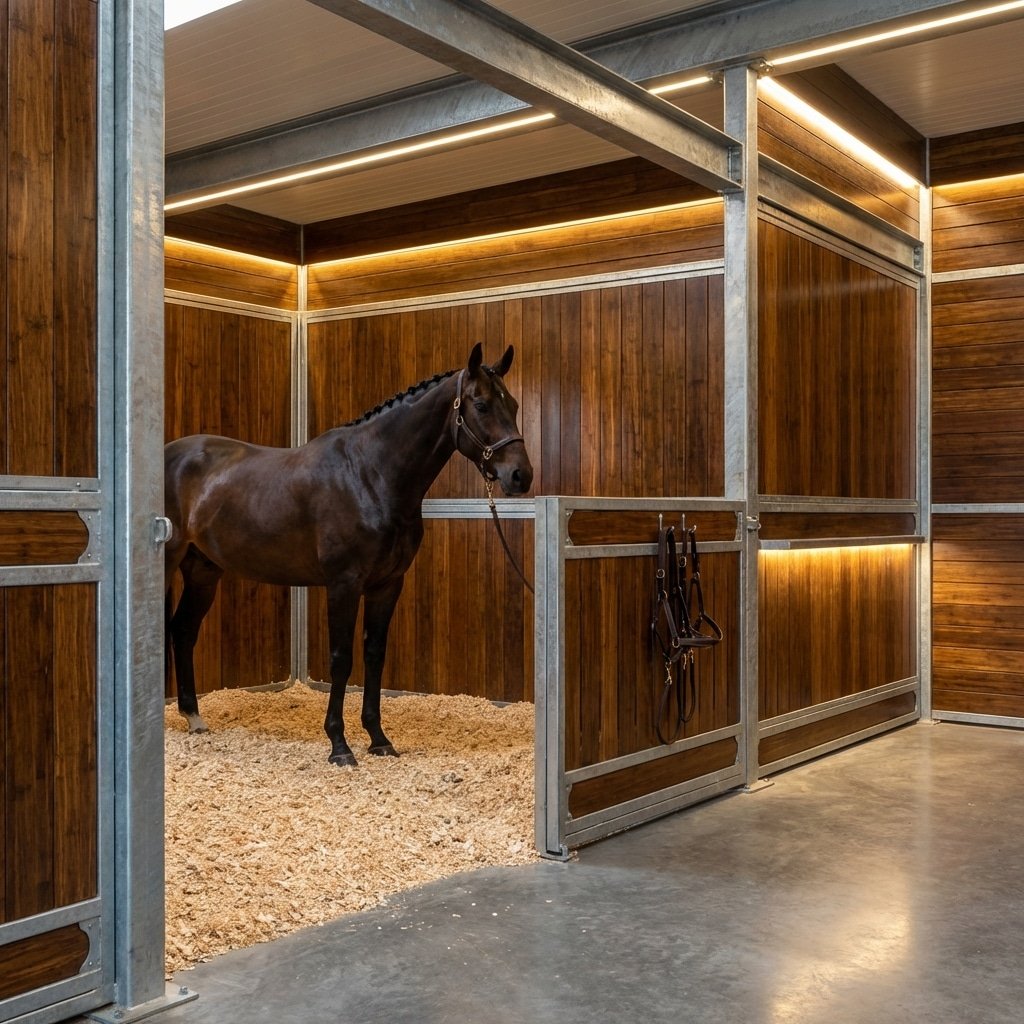
Cost differences between bamboo and pine stem primarily from processing complexity rather than raw material scarcity. Bamboo flooring prices range from $2 to $19 per sq ft, with engineered options ($2–$5.50) frequently costing less than standard Pine ($4–$10). While Pine prices rise based on the rarity of the wood species, Bamboo costs increase with manufacturing enhancements, such as strand-woven processing that rivals concrete in compressive strength.
Buyers often assume that natural wood always commands a higher price than grass-based alternatives like bamboo, but the reality lies in how the materials are prepared. Bamboo grows rapidly and is abundant, often called “poor man’s timber” in its native regions. The final price tag usually reflects the energy and technology required to turn a round, hollow grass stalk into a flat, durable plank.
| Material Type | Cost Range (Per Sq Ft) | Key Characteristic |
|---|---|---|
| Engineered Bamboo | $2.00 – $5.50 | Economical & Water Resistant |
| Vertical/Horizontal Bamboo | $2.50 – $7.50 | Classic Look & Mid-Range Durability |
| Strand-Woven Bamboo | $4.00 – $7.50 | High Density & Extreme Strength |
| Standard Pine / Wood | $4.00 – $10.00 | Traditional Aesthetic & Softer Surface |
Price Breakdown: Engineered vs. Solid Wood
Understanding the layers within the material helps explain the pricing tiers. Engineered bamboo represents the most economical entry point. Imagine this material like a sandwich where the top layer is the attractive bamboo surface, and the bottom layers are cheaper, stabilizing wood. This cross-layered construction prevents the plank from twisting, similar to how plywood is built for strength. This method keeps costs low, generally between $2 and $5.50 per square foot.
In contrast, solid pine flooring typically costs between $4 and $10 per square foot. The price here is driven by the specific type of pine and how difficult it is to source. Premium bamboo options, such as strand-woven styles, overlap with this price range at $4 to $7.50 per square foot. Average installation projects for a standard room usually land between $2,500 and $6,000, depending heavily on the preparation work required.
Mechanical Properties and Safety Standards
The physical capabilities of these materials justify their costs for different applications. Tensile strength measures how much pulling force a material can withstand before snapping. Bamboo exhibits a tensile strength of approximately 482.77 MPa, which technically exceeds that of mild steel. This makes it incredibly resilient against forces that might split typical softwoods.
- ✅ Compressive Strength: Bamboo is roughly two times stronger than concrete, meaning it resists denting from heavy furniture or hoof traffic better than pine.
- ✅ Density: Thermally modified bamboo reaches densities of 1050–1200 kg/m³, surpassing many tropical hardwoods.
- ✅ Fire Safety: The material achieves a Class A fire rating (ASTM E84) with a Flame Spread Index as low as 10.
Application Suitability and Long-Term Value
Selecting the right material involves matching the cost to the environment. Engineered bamboo offers specific water resistance, making it a viable lower-cost alternative for areas prone to moisture, such as kitchens or tack rooms. While softwoods like pine absorb water and can warp, the adhesives and structure of engineered bamboo mitigate this risk.
European market data indicates that bamboo decking costs around €100 per m² but often includes a 25-year warranty. This highlights a crucial factor in total cost of ownership: dimensional stability. Materials that resist expanding and contracting reduce waste during installation. Just as DB Stable utilizes UV-resistant HDPE to prevent degradation in harsh sunlight, choosing a dimensionally stable flooring material like strand-woven bamboo prevents the long-term replacement costs associated with warping-prone softwoods.
What Are the Hidden Shipping and Duty Costs for Import?
Import costs extend significantly beyond the base Harmonized Tariff Schedule (HTS) duty rate. Importers must budget for mandatory surcharges like the Merchandise Processing Fee (MPF) and Harbor Maintenance Fee (HMF), alongside variable operational costs such as customs examination fees and demurrage charges that accrue after free storage periods expire.
Mandatory Government Surcharges: MPF and HMF
Many first-time importers assume the duty rate is the only tax they need to pay. In reality, US Customs applies specific surcharges to process shipments entering the country. You can think of these as administrative service fees, similar to the unavoidable booking charges added to a concert ticket.
- Merchandise Processing Fee (MPF): This is a mandatory charge for formal entries. It is calculated at 0.3464% of the customs value, with a minimum fee of $32.71 and a statutory maximum of $634.62 per entry.
- Harbor Maintenance Fee (HMF): If your goods arrive via ocean freight, this fee funds port upkeep. It adds a surcharge of 0.125% on the total cargo value.
When importing substantial equipment like portable horse stables, these percentage-based fees are applied to the commercial invoice value. Even if the base duty rate for steel structures is favorable, these surcharges remain a fixed part of the total landed cost.

Operational Variables: Inspections and Demurrage
Logistics costs can fluctuate based on customs enforcement actions and timing. These expenses are often unpredictable and depend on whether authorities flag a shipment for review. Consider this similar to a random security check at an airport that delays your exit and forces you to pay for the extra time.
- Customs Examination Fees: These are pass-through charges for third-party services, including X-ray scanning, tailgate checks, or intensive physical inspections.
- Demurrage and Detention: These fees accumulate when cargo remains at the port or warehouse beyond the carrier’s allotted free period. It functions like a parking meter that becomes very expensive the longer you stay.
Because items like hot-dip galvanized steel frames and HDPE boards are heavy and bulky, storage fees can compound quickly if a container is held. Ensuring all documentation regarding the 42-micron galvanization or material composition is accurate helps minimize the risk of these delays.
Administrative Costs: Brokerage and Entry Thresholds
Filing the correct paperwork requires specific expertise, and the total value of your shipment dictates the complexity of the process. Most commercial imports require a formal entry, which involves more rigorous data submission to ensures compliance.
- Customs Brokerage Fees: These are separate from government duties and are paid to licensed brokers for filing clearance documentation.
- Formal Entry Threshold: The limit is set at $2,500. Commercial shipments above this value require a formal entry process involving higher processing fees. Since a durable stable setup generally exceeds this amount, formal entry is the standard procedure.
- Informal Entry: Shipments valued below $2,500 may qualify for informal entry, potentially reducing administrative costs.
Engineered for Safety and Durability in Every Climate
Create a secure environment for your horses with precision-engineered stables built to withstand extreme weather conditions. From hot-dipped galvanized steel frames to climate-specific ventilation, our modular designs meet international safety standards including BHS and ISO. Experience customized solutions that combine 20-year durability with rapid installation.

Horse Stable Cost Tiers: From Budget to Premium?
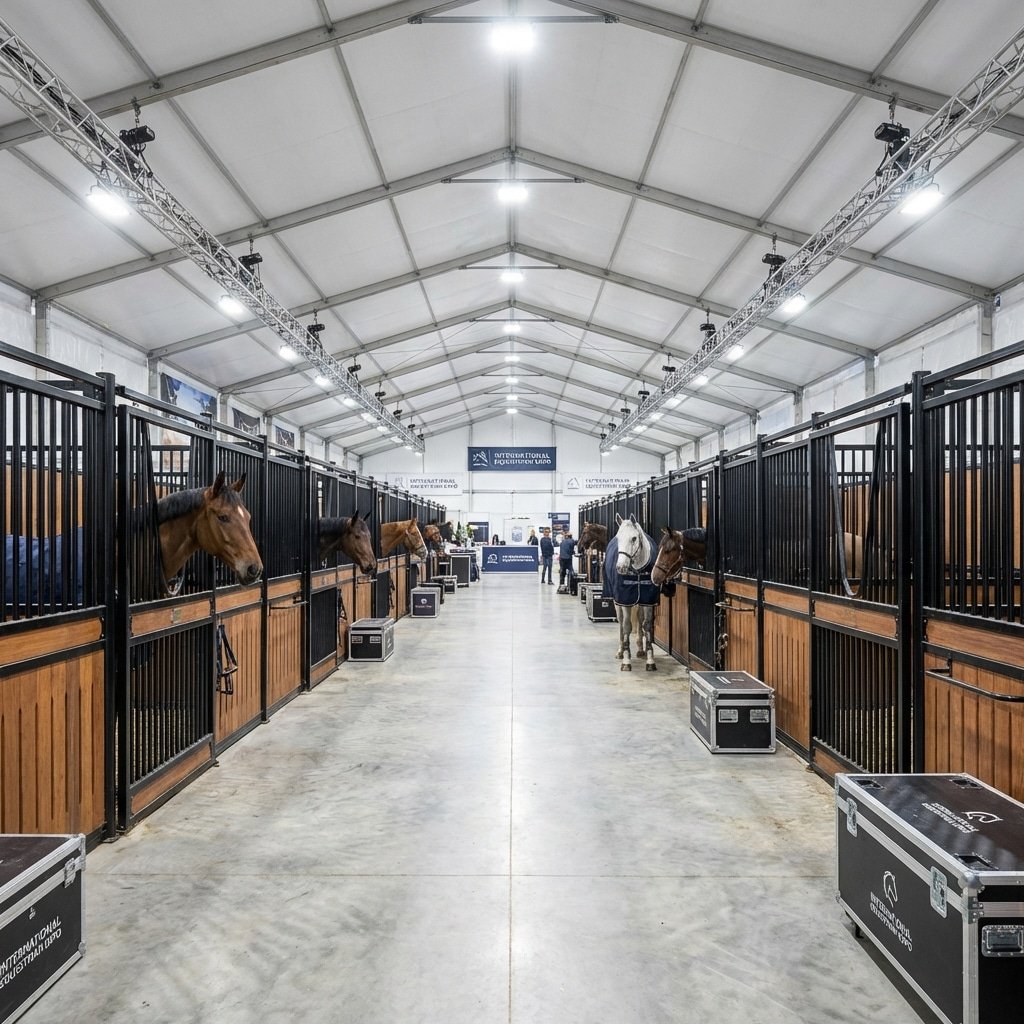
Horse stable construction costs are segmented into three primary tiers based on materials and scale. Budget modular kits typically range from $1,000 to $2,500 per stall, while Mid-Range professional barns cost between $33,600 and $103,600 ($50–$120 per sq ft). Premium custom facilities often exceed $200,000, with luxury customizations adding $8,000+ per unit.
| Tier Category | Estimated Price Range | Typical Configuration |
|---|---|---|
| Budget (DIY/Kits) | $1,000 – $2,500 per stall | Modular 12×12 kits or standalone units |
| Mid-Range (Commercial) | $33,600 – $103,600 total | Standard barns (2 to 12 stalls) |
| Premium (Custom) | $200,000 – $1,000,000+ | High-end facilities with amenities |
Analyzing the Three Main Pricing Tiers
When planning your stable, understanding the price brackets helps you avoid financial surprises. We break these down by looking at hard data to show exactly what you get for your money.
- Budget Tier (DIY/Kits): These are entry-level options. Modular 12×12 kits usually range from $1,000 to $2,500 per stall. If you are looking for a standalone installed unit, the price sits around $4,000 to $5,000 AUD.
- Mid-Range Tier (Commercial): These standard structures typically cost between $50 and $120 per square foot. A small 2-stall barn averages $33,600 to $45,000, while a larger 12-stall barn can reach $103,600.
- Premium Tier (Custom): These high-end facilities include specialized amenities like wash bays and breezeways. Prices here start at $200,000 and can easily climb over $1,000,000 for large complexes.
Cost Drivers: Kits vs. Custom Builds
The method of construction plays a huge role in the final bill. Choosing between a pre-fabricated kit and a fully custom build is often the biggest financial decision you will make.
- Kit Economics: Buying a kit is like buying a large Lego set; the parts are pre-made, which lowers the cost. Shed-row barn kits generally cost between $18,000 and $20,000, while full center-aisle kits range from $35,000 to $40,000.
- Custom Markups: Fully custom builds require more labor and specialized design fees. If you add decorative elements or integrated storage, expect to pay a premium of over $8,000 per stall.
- Scale Efficiency: Building bigger can sometimes mean paying less per unit. A commercial 20-stall barn (40×120 ft) costs around $124,300, which offers a better cost-per-stall value compared to smaller 2-stall units.
How DB Stable Optimizes Value Across Tiers
We aim to provide professional-grade equipment without the premium price tag. By focusing on smart manufacturing and direct shipping, we bridge the gap between budget pricing and mid-range quality.
- Factory Direct Pricing: We manufacture in China and export directly to Australia and New Zealand. This eliminates the middleman markups, allowing you to get the lowest price possible for professional gear.
- Material Durability: We use hot-dip galvanized steel with a coating thickness of over 42 microns. Think of this as a heavy-duty, permanent raincoat for the metal that blocks rust for over a decade. We also use 10mm UV-resistant HDPE boards, which prevents the sun from degrading the material.
- Modular Flexibility: Our prefabricated design allows for easy setup of 4m x 4m units. This provides a cost-effective alternative to expensive permanent custom construction while maintaining high security and stability.
How to Calculate the ROI for Your Stable Project?
Calculating ROI for stable projects relies on the standard formula: (Net Profit ÷ Total Investment) × 100. To ensure accuracy, planners must define Net Profit by subtracting total expenses—including shipping and maintenance—from revenue. For multi-year developments, applying an 8% discount rate and aiming for a minimum 1.25:1 cost-benefit ratio ensures the project meets financial viability standards.
The Core ROI Formula and Methodologies
The foundation of any financial assessment in construction begins with the universal industry standard formula. You calculate ROI by taking your Net Profit, dividing it by the Cost of Investment, and multiplying the result by 100. This gives you a clear percentage that represents the efficiency of your spending.
To get the numbers right, you must first calculate Net Profit by strictly subtracting Total Expenses (OpEx) from Total Revenue. This includes everything from the initial purchase to installation labor. A useful secondary check is the Cost-Benefit Ratio. Think of this as a validation metric where a 1.25:1 ratio is the minimum passing grade. This simply means for every dollar you spend, the project should generate $1.25 in value.
- Standard Formula: ROI = (Net Profit ÷ Cost of Investment) × 100.
- Net Profit Definition: Total Revenue minus Total Expenses (OpEx).
- Cost-Benefit Threshold: Aim for a 1.25:1 ratio to ensure safety against unforeseen costs.
- Payback Target: A 6-year recovery window is typical for construction and development contexts.
Accounting for Time-Value and Variance
For projects that span several years, money today is worth more than money in the future due to inflation and opportunity costs. To handle this, financial planners integrate an 8% standard discount rate into Net Present Value (NPV) calculations. This adjusts your future profit projections to reflect their value in today’s dollars.
It is also critical to conduct Performance Variance Analysis at key milestones. This involves comparing your Actual ROI against your Anticipated ROI to see if you are on track. When you find a difference, identify the specific driver. You need to distinguish between a temporary cost overrun, like a one-time freight spike, and a structural issue, like lower-than-expected revenue.
Finally, adjust your projections based on the tangible lifespan of your materials. Your depreciation schedules—how fast the asset loses value on paper—must match the physical reality of the stable. If a material degrades faster than the accounting schedule, your ROI calculation will be incorrect.

How DB Stable Maximizes Long-Term Asset Value
The quality of materials directly influences the variables in your ROI calculation. High-quality components reduce the expenses subtracted from revenue, while durability ensures the asset generates value for a longer period. DB Stable engineers products specifically to improve these financial metrics.
- ✅ Reduced OpEx: We use hot-dip galvanized steel frames with a 42-micron thickness. This acts as a permanent shield against rust for over 10 years, minimizing the maintenance costs you deduct from profit.
- ✅ Lower CapEx: By utilizing direct factory pricing, you lower the initial Cost of Investment, which improves the denominator in the ROI formula immediately.
- ✅ Prevention of Replacement Costs: Our 10mm HDPE infill boards are UV resistant. This ensures the asset remains functional without degradation or warping, preventing early replacement expenses.
- ✅ Enhanced Residual Value: The portable design allows owners to relocate or resell the modular units. Instead of writing off fixed infrastructure as a loss, you retain asset value that can be recovered later.
Frequently Asked Questions
What is the correct HS Code for horse stables?
Metal-framed horse stables typically fall under HS Code 7308.90.9090, which covers structures made of iron or steel. This classification acts like a global ID card for your product, telling customs officials exactly what the item is and how to tax it.
If the stables are used strictly for farming, you may qualify for the agricultural exemption code 9817.00.5000. This special classification can allow for duty-free entry, provided you have the necessary certification to prove the equipment is for agricultural or horticultural use.
How are import duties calculated in the USA?
Duties are calculated based on the Free on Board (FOB) value of your shipment. Think of FOB as the price tag of the product itself, excluding the costs of shipping and insurance. For example, if you buy a structure for $10,000, the tax is applied only to that amount.
For any shipment valued over $2,500, a formal customs entry is required. This process involves purchasing a customs bond, which acts as an insurance policy ensuring the government gets paid its taxes and fees.
Is VAT applicable on imported stables?
Yes, a 20% standard-rate VAT generally applies to special purpose structures, such as racing, breeding, or training facilities. This is a consumption tax added to the value of the goods when they enter countries like the UK.
However, businesses can use postponed accounting to manage cash flow. This allows you to declare the import VAT on your next tax return rather than paying the full amount upfront when the goods arrive at the border.
What are typical destination charges for barn kits?
Delivery fees typically range from $917 to $2,667. The exact cost depends heavily on the distance from the distribution center to your property. Nearby deliveries sit at the lower end of this range, while remote locations incur higher fuel and labor costs.
You can often eliminate these freight charges by arranging a local pickup. If you have the means to transport the kit yourself from the supplier’s retail location, you avoid the third-party delivery fees entirely.
How much does cargo insurance cost?
Standard cargo insurance usually costs about 1% of the total declared shipment value. This small fee protects your financial investment against damage or loss while the goods are in transit.
International shipments may see premiums increase by around 50% compared to domestic rates. This increase accounts for the longer transit times on the ocean, which naturally carry more risk than short domestic trips.
How does DB Stable minimize shipping costs?
We use collapsible designs that allow stable panels to be flat-packed. This method maximizes the use of space inside shipping containers, ensuring you are not paying to ship empty air.
Additionally, we export directly from our factory in China. This eliminates the price markups usually added by middlemen and distributors, keeping the overall logistics cost lower for the end buyer.
Final Thoughts
The true cost of a horse stable isn’t defined by the initial kit price, but by how long the structure survives heavy use and harsh weather. Opting for superior materials like hot-dip galvanized steel and high-density bamboo transforms a simple purchase into a durable capital asset that resists rust and rot.
Importing directly allows you to access these premium specifications without the retail markup, significantly improving your cost-benefit ratio. Securing the right manufacturing partner ensures your facility remains safe and profitable long after the initial shipping duties are paid.

 English
  Spanish
  French
  Arabic
  German
0 Comments