


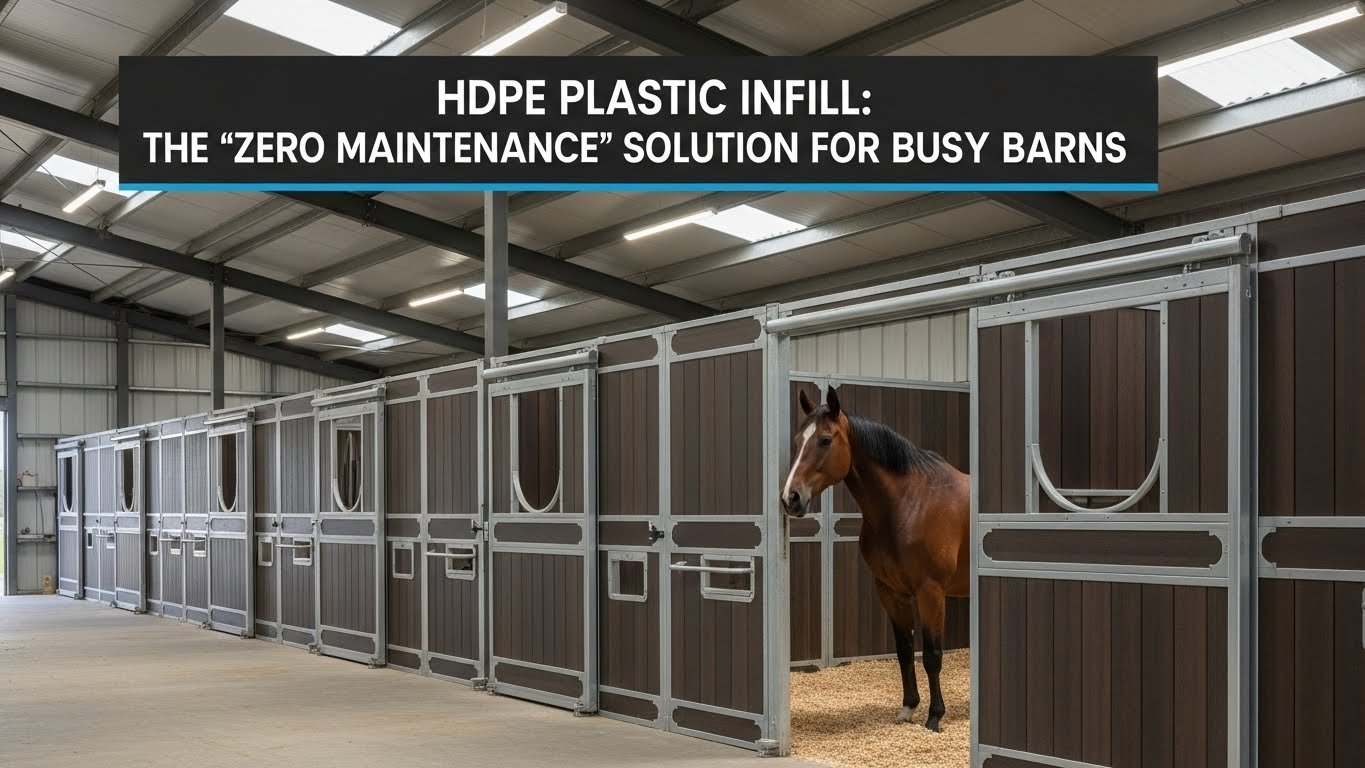
Maintaining safe, hygienic, and long-lasting horse stalls is a significant challenge for any busy barn owner or manager. Traditional wood infill often succumbs to moisture, rot, and splintering, creating an endless cycle of costly repairs and labor.
This article explores HDPE plastic infill, a material engineered to provide a truly low-maintenance solution. We’ll dive into its properties, including a projected lifespan of 10 to over 50 years, its ability to withstand extreme temperatures down to -60°F, and how its non-porous surface allows for easy cleaning with pressure washers up to 1,500 psi, transforming your barn’s upkeep.
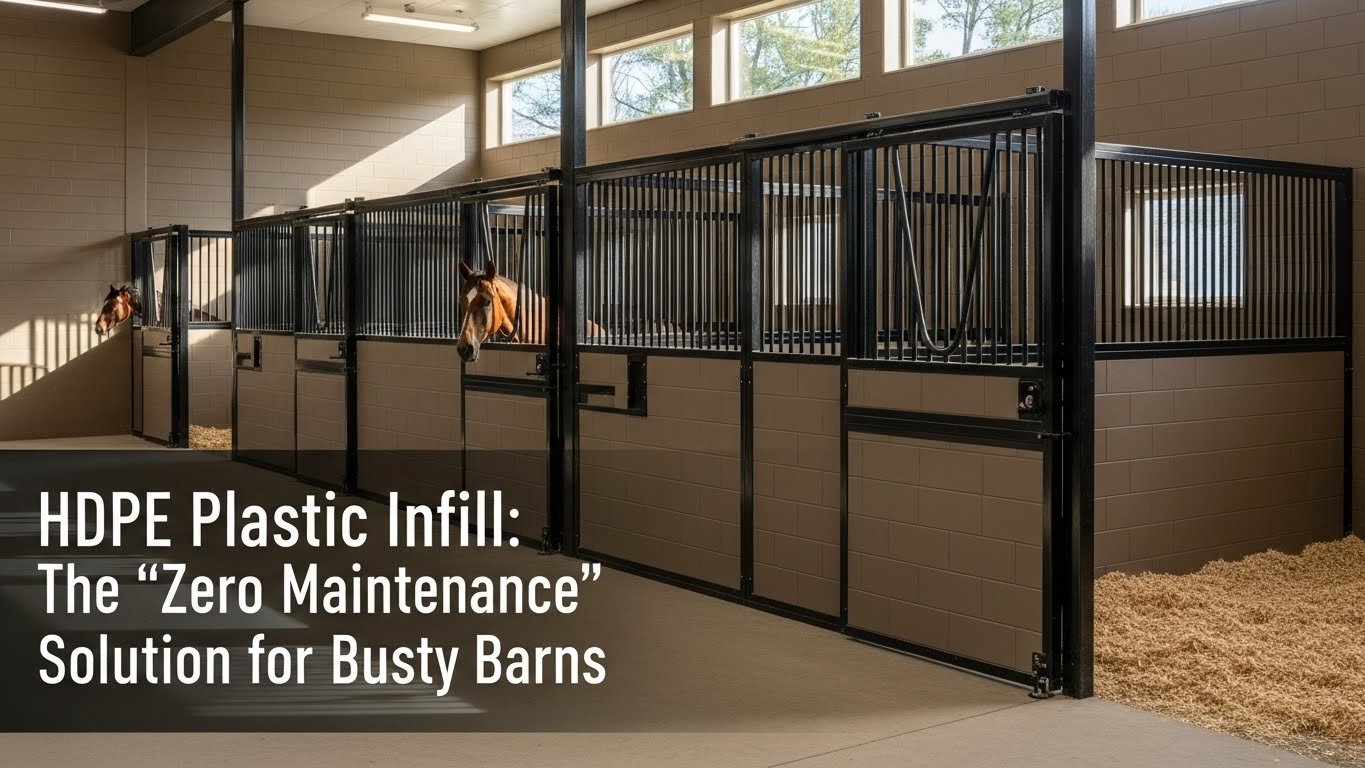
First, What is [HDPE Lumber]?
HDPE lumber is an extruded plastic material predominantly made from High-Density Polyethylene resin, designed for durable outdoor structural uses. Unlike wood, it’s impervious to moisture, resistant to rot and chemicals, and often compounded with reinforcing fillers, offering a long-lasting, low-maintenance alternative for applications like horse stalls and boardwalks.
Defining HDPE Lumber and Its Composition
HDPE lumber is an extruded, non-homogeneous profile. It primarily consists of High-Density Polyethylene (HDPE) resin, which forms at least 50% of its continuous phase. Manufacturers compound HDPE lumber with fillers, reinforcements, and additives to enhance its performance. Importantly, it excludes cellulosic materials, preventing degradation.
This material is specifically engineered for load-bearing outdoor framing. It serves as a robust alternative for joists, beams, and planks in demanding environments. Its characteristics include superior stiffness, derived from its high crystallinity, exceptionally low water absorption (less than 0.01%), and strong chemical resistance.
Key Properties and Structural Standards
HDPE lumber meets ASTM D7568-17 for Structural-Grade Plastic Lumber (SGPL), confirming its suitability for specific structural applications. It demonstrates a flexural modulus ranging from 800-1,400 MPa and a tensile strength between 26-33 MPa. The material has a Shore D hardness of 60-70, indicating notable abrasion resistance.
HDPE lumber maintains structural integrity across a continuous service temperature range from -50°C to 80°C, with a heat deflection temperature of 80-95°C. The material exhibits a thermal expansion coefficient of 100-130 × 10⁻⁶/°C, which means designers should consider expansion gaps. This lumber offers a projected lifespan of 10 to 50+ years, making it particularly advantageous in buried or infrastructure installations.
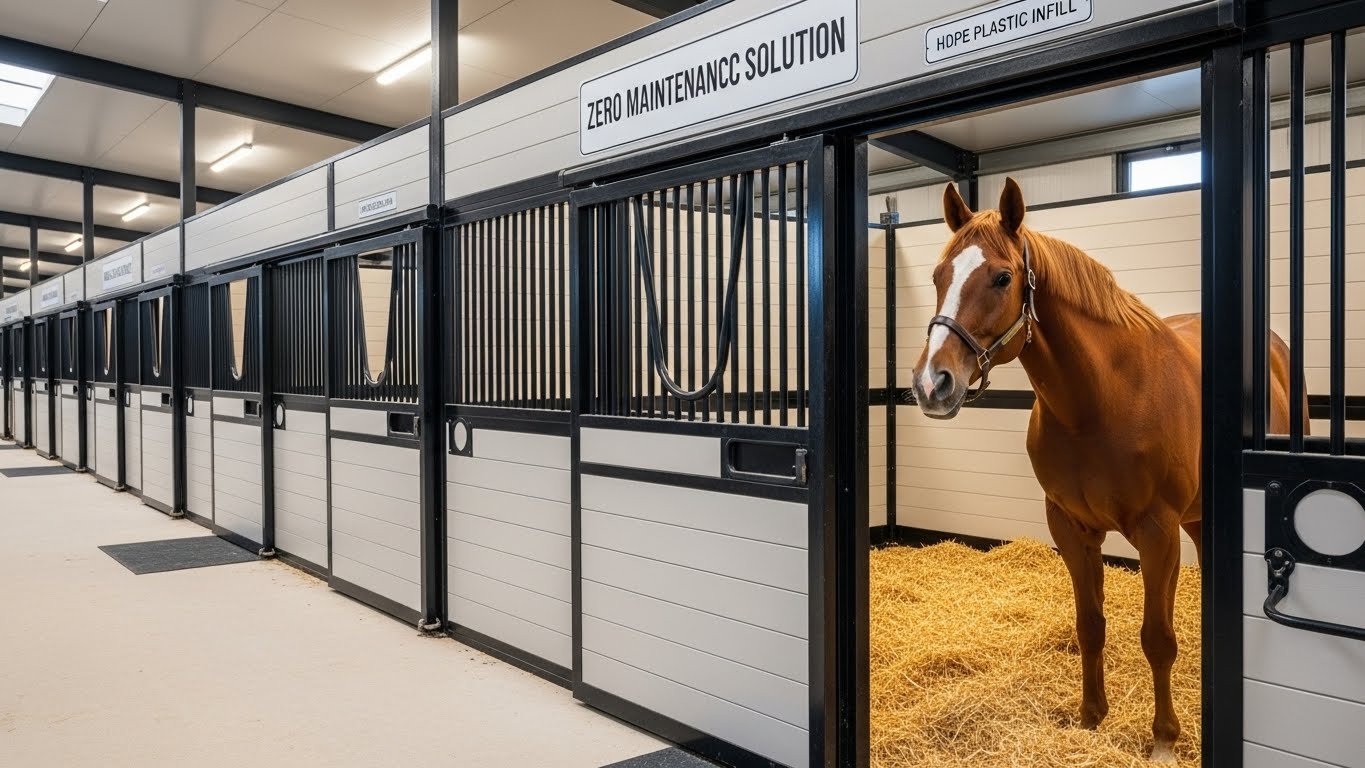
Benefit 1: Waterproof & Rot Proof
HDPE lumber, being 100% pure High-Density Polyethylene, is inherently non-porous and impervious to moisture, animal wastes, rot, mold, mildew, bacteria, and insects. Its thick-walled construction and extreme temperature resistance (-60°F) provide enduring structural integrity, supported by a 20-year warranty, ensuring a hygienic and maintenance-free solution for equine environments.
Inherent Material Resistance to Water and Decay
This material is manufactured from 100% virgin High-Density Polyethylene, creating a non-porous, thermoplastic structure.
It naturally repels moisture, acids present in animal wastes, and biological agents including mold, mildew, bacteria, and insects.
This prevents common issues found in traditional wood, such as water absorption leading to rot and structural decay.
The lumber ensures no leaching of arsenic, heavy metals, chlorides, or other contaminants into surrounding soil or groundwater.
Structural Resilience and Hygienic Performance
This material withstands extreme temperatures, performing reliably from -60°F (-51°C) without cracking, splitting, or becoming brittle.
It features thick-walled construction, up to three times thicker than competitors, alongside double internal reinforcing ribs for superior impact absorption.
A 20-year warranty covers long-term resistance to water damage, rot, and general material degradation.
Completely waterproof and moisture-resistant surfaces facilitate easy sanitization, supporting optimal hygiene in equine stalls and paddocks.
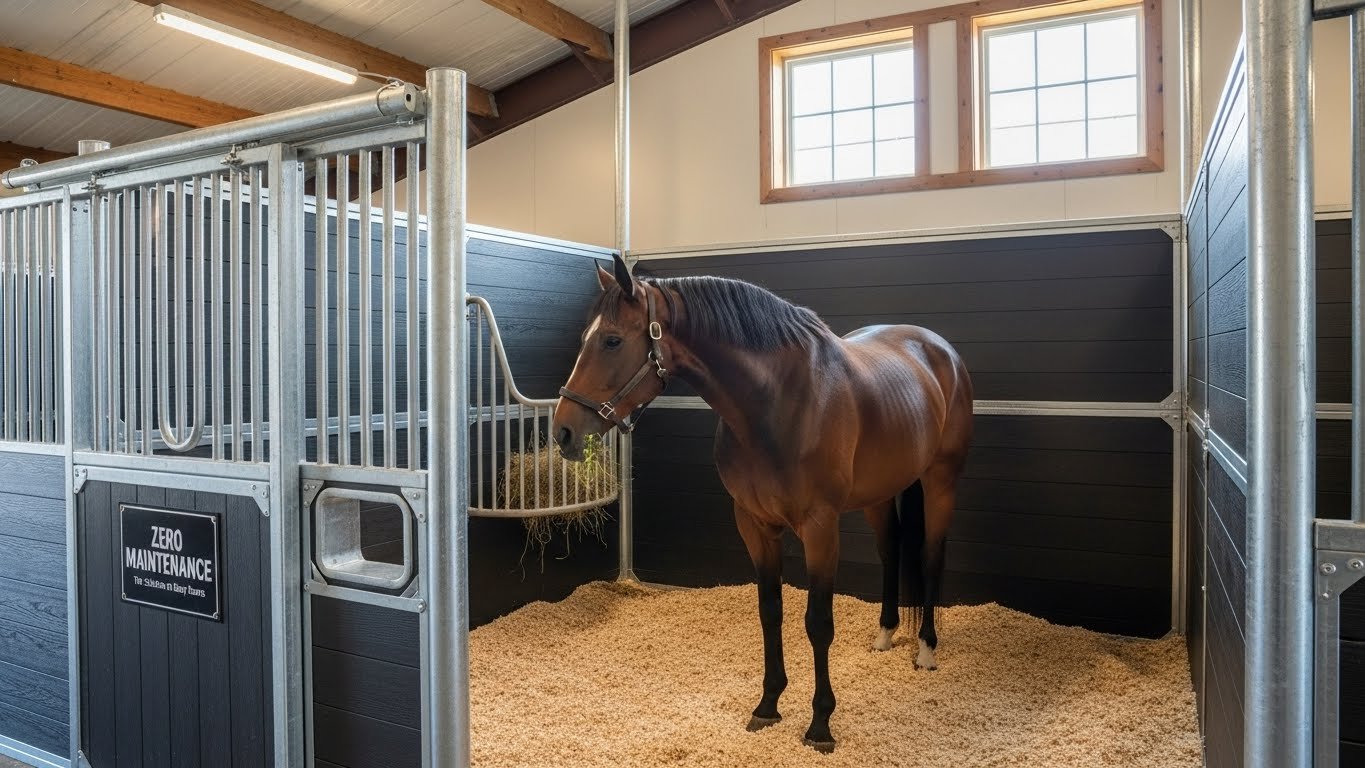
Benefit 2: Easy to Sanitize (Pressure Wash)
HDPE lumber’s non-porous and water-resistant composition makes it exceptionally easy to clean and sanitize with pressure washers and common disinfectants, avoiding issues common with traditional porous materials.
| Aspect | Detail | Source |
|---|---|---|
| Material Sanitize Claim | HDPE plastic stall lumber is marketed as “easily cleaned with a power washer” for horse stalls. | [6][4] |
| Pressure Washer Limit | Manufacturers recommend a pressure washer not to exceed 1,500 psi for deep cleaning HDPE lumber surfaces. | [5] |
| Bleach Cleaning Ratio | For stubborn contamination, a 1/3 bleach, 2/3 water mixture can be applied safely without affecting HDPE color. | [5] |
| Horse Stable Cleaning | Plastic wood boards for horse stalls and stables can be hosed down or pressure washed. | [4] |
| Wash Stall Design | Wash stall slabs need a 1-inch slope per 6 feet to prevent standing contaminated water. | [2] |
Material Advantages for Hygienic Environments
HDPE’s non-porous and water-resistant nature keeps it from absorbing moisture. This allows for repeated pressure-wash sanitation, unlike traditional wood, which often holds moisture and can harbor bacteria. Additionally, wet cleaning and disinfection with HDPE do not cause chemicals to leach into the environment.
Optimal Cleaning Protocols for HDPE Surfaces
Pressure washing offers an effective cleaning method. Manufacturers suggest using a pressure washer not exceeding 1,500 psi. For persistent contamination, a mixture of 1/3 bleach and 2/3 water can be safely applied without changing HDPE color. Proper wash stall design, including a 1-inch slope per 6 feet, helps water drain efficiently, preventing standing contaminated water. These methods help maintain high-level hygiene in equine facilities.
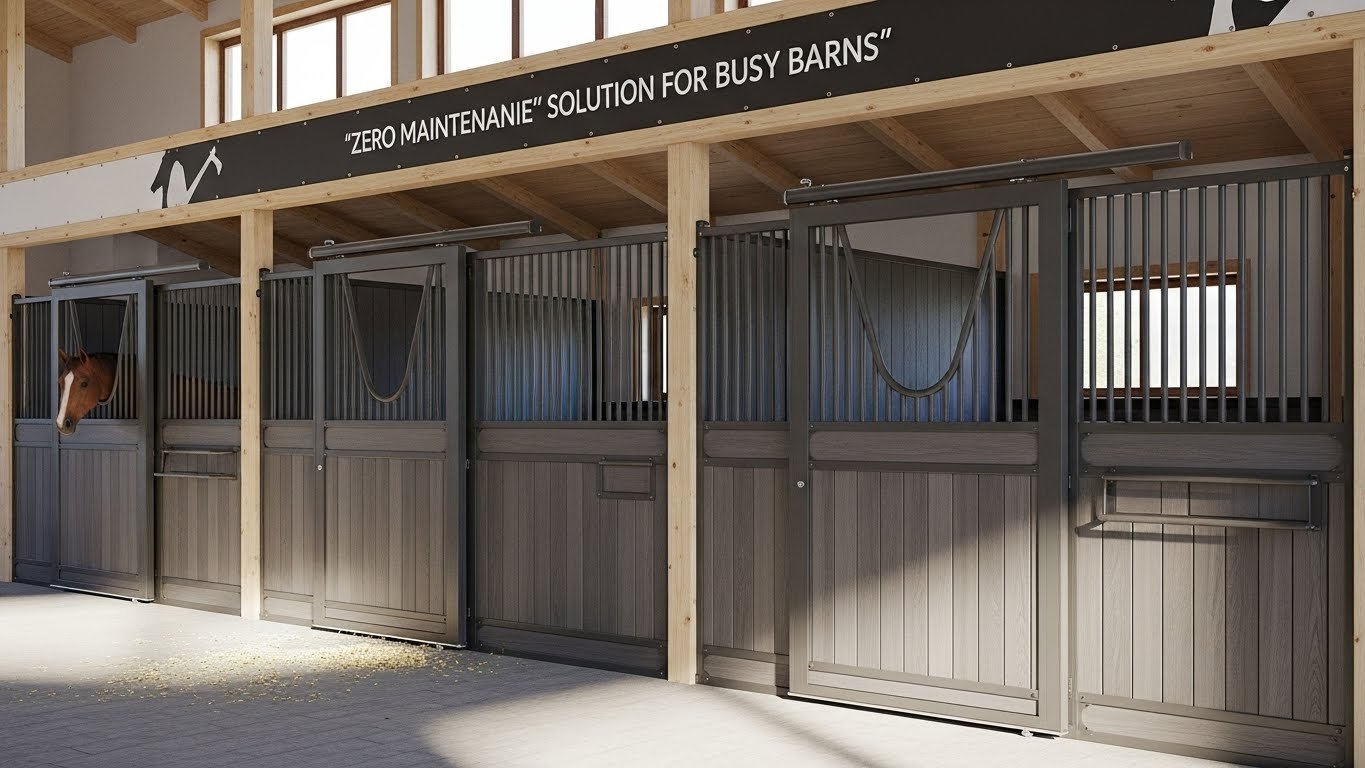
Unrivaled Horse Stables: Built for Any Climate, Anywhere.

Benefit 3: Color Customization
HDPE plastic lumber provides a broad spectrum of standard and custom color choices, enabling equestrian facilities to achieve tailored aesthetics. Engineered with UV stabilizers and uniform pigmentation, these colors resist fading and maintain their vibrancy under extreme conditions, eliminating the need for painting or sealing.
Aesthetic Integration and Custom Matching
HDPE infill panels are available in standard hues like Black, Gray, White, Blue, and Green, alongside comprehensive custom options to meet specific design requirements.
HDPE fencing for equine applications offers a palette of eight distinct colors, including White, Black, Dark Brown, Cedar, Gray, Redwood, Hunter Green, and Weathered Wood.
This allows for precise color matching with existing farm aesthetics, ensuring visual harmony and enhancing brand consistency across equestrian facilities and horse stalls.
Engineered for Lasting Color
UV stabilizers are embedded directly into HDPE polymers, providing sustained color retention and preventing material brittleness, even under extreme conditions down to -60°F.
Uniform color dispersion, achieved through polymer extrusion, prevents delamination and ensures a consistent appearance throughout the material’s lifecycle.
Frame elements of modular stall systems are complemented by durable treatments such as powder coating, hot-dip galvanization, and brushed finishes, integrating seamlessly with colored HDPE infills (6mm to 10mm thick).
Common Misconceptions
Many believe HDPE lumber is flimsy, unsanitary, or merely cosmetic. However, it is engineered as a robust structural material with enhanced impact absorption, superior hygiene due to its non-absorptive nature, and resistance to animal waste acids, making it a durable and safer alternative to traditional materials.
Beyond Cosmetic: Engineered for Structural Integrity
HDPE stall lumber is engineered as a structural material, often supplied as 2″ × 6″ × 12′ tongue-and-groove boards with thick wall sections and internal ribs to handle barn loads.
Equine-grade HDPE components incorporate double-reinforced rib designs and 6″ × 6″ posts, which can weigh almost twice as much as standard PVC posts, for enhanced stability.
HDPE is designed to absorb the impact of a fully extended horse kick without shattering or becoming brittle, maintaining integrity even at temperatures down to -51 °C.
Countering Misconceptions: Superior Sanitation and Longevity
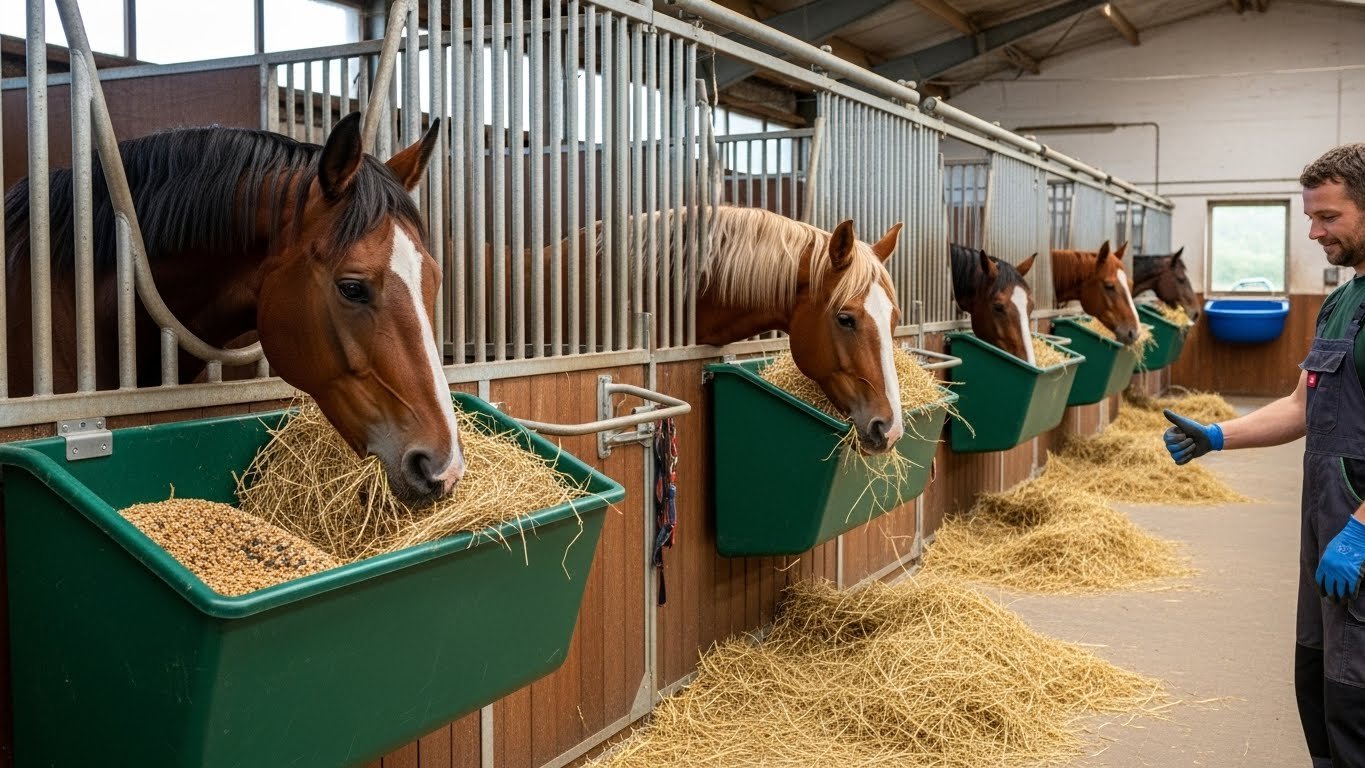
HDPE plastic infills are non-absorptive and resistant to acids found in animal waste, significantly reducing the microbial reservoirs that form in porous wood surfaces.
Unlike some treated woods or PVC, HDPE products used in stalls are free of chlorides and arsenic, eliminating concerns about leaching harmful substances into the environment.
The non-absorptive and resistant nature of HDPE makes it easier to clean and maintain, contributing to a longer lifecycle and lower maintenance requirements than conventional lumber in high-moisture, high-ammonia conditions.
Final Thoughts
HDPE plastic infill provides a reliable solution for busy barn environments. Its inherent waterproof and rot-proof properties mean it stands up to moisture, animal waste, and pests, maintaining its integrity without constant upkeep. Cleaning becomes simple with pressure washing, supporting a healthier space for horses. The wide range of color options ensures facilities can match their aesthetic, all while resisting fading thanks to built-in UV protection. This material truly delivers on its promise of durability and minimal maintenance.
Choosing HDPE plastic infill means investing in a long-term solution for equine facilities. It reduces the ongoing need for repairs, repainting, and replacements often associated with traditional materials. This translates to more time focused on animal care and less on barn upkeep, while also providing a cleaner, safer, and more visually appealing environment for both horses and handlers. The upfront cost might be higher, but the lifecycle benefits and peace of mind make it a practical choice for demanding operations.
Frequently Asked Questions
Is plastic lumber safe for horses?
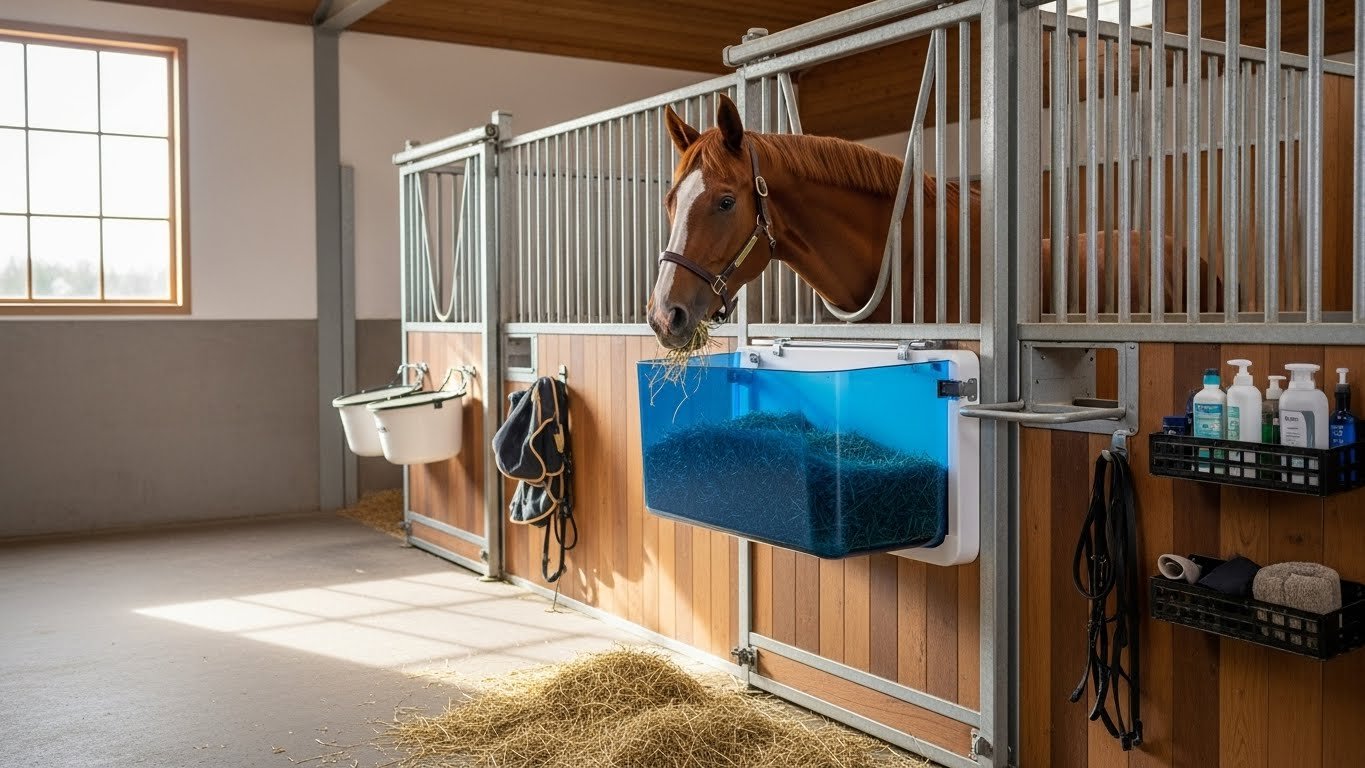
Yes, HDPE plastic lumber is safe for horses in stalls. It won’t splinter if kicked, is non-absorptive for easy cleaning, maintains hygiene, and resists impacts without becoming brittle even at -60°F or during full leg kicks.
Does recycled plastic look like wood?
Yes, recycled plastic lumber, especially HDPE-based products like PolyTuf and Polyethylene Wood-Like Foam Board, is designed to look like wood. This is achieved through imitation wood color mixing, surface wood texture processing, embossed wood grain patterns, and wood tones such as Cedar, Redwood, and Mahogany.
Can I pressure wash plastic stalls?
Yes. Solid HDPE plastic stalls can be cleaned with a pressure washer. This is a recommended cleaning method for HDPE partitions and shower stalls. HDPE building products are routinely rated for cleaning with standard commercial and industrial pressure washers.
Do plastic boards warp in heat?
HDPE plastic boards, used in applications like horse stall lumber, do not warp below their continuous use temperature of 180°F (82°C). However, they exhibit thermal expansion of 0.12 mm/m/°C and can warp or buckle if expansion is constrained by fixings. Above 180°F, softening leads to deflection or deformation under load.
Is HDPE cheaper than wood?
No. For structural products, HDPE plastic lumber is consistently more expensive upfront than wood. However, it delivers a lower lifecycle cost because it resists rot, doesn’t absorb animal waste, and doesn’t require sealing, repainting, or frequent replacement. HDPE lumber can last over 25 years outdoors, compared to about 10–15 years for a comparable wood deck that needs maintenance.
What are the pros and cons of plastic horse stalls?
Plastic (HDPE) horse stalls offer superior hygiene due to smooth, non-porous surfaces that resist acids in animal waste. They are waterproof, easy to clean, and withstand impacts without splintering or rotting. Drawbacks include slight temporary sagging in extreme heat, which reverts on cooling, and a higher initial weight compared to wood.

 English
  Spanish
  French
  Arabic
  German
0 Comments