


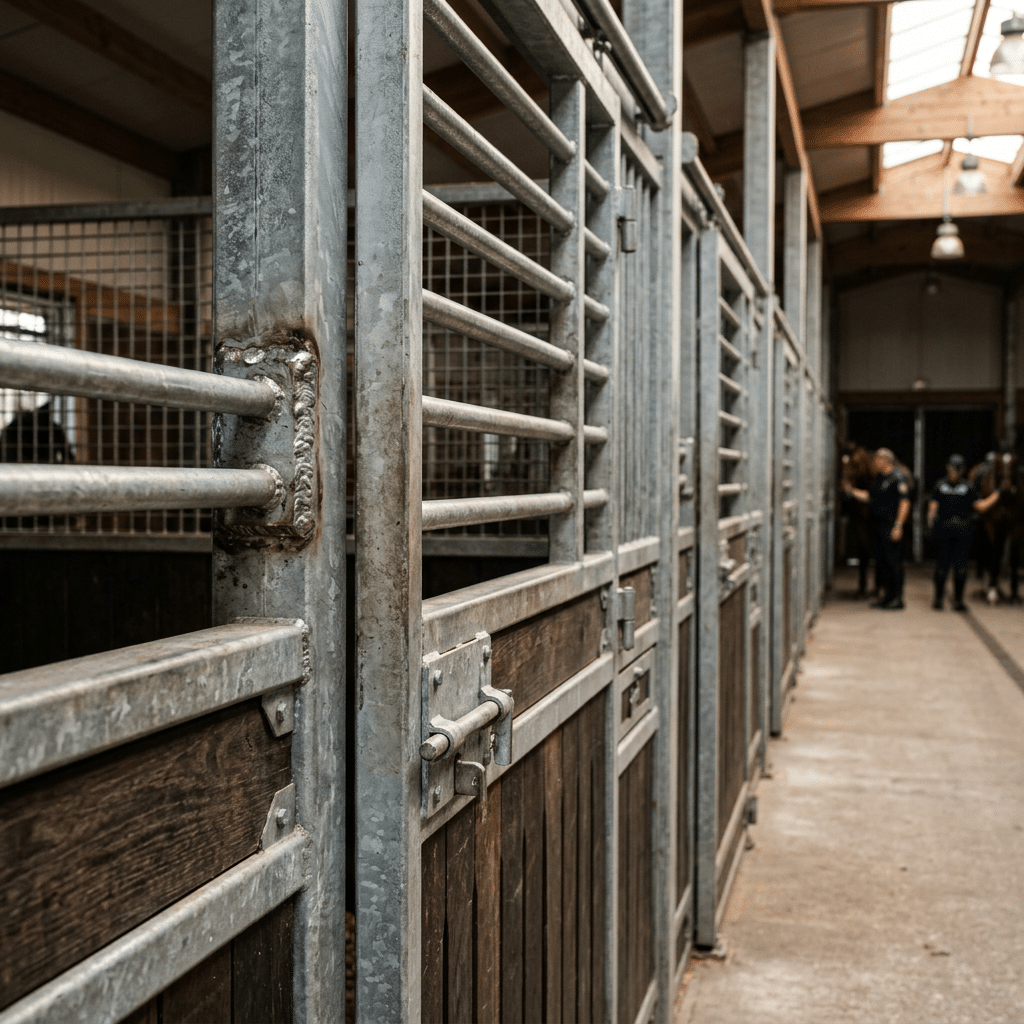
Une véritable efficacité dans le nettoyage ne passe pas par une meilleure brouette, mais par sa suppression totale. Les conceptions d’étables qui ne s’adaptent pas aux processus de travail du tracteur entraînent des décennies de coûts de main-d’œuvre élevés et de rotation du personnel, ce qui réduit directement la rentabilité et l’évolutivité à long terme d’une exploitation.
Cette analyse fournit les données techniques nécessaires à la mécanisation, en mettant l'accent sur les dégagements dans les allées et la conception de la façade des stands. Nous montrons comment des éléments tels que nos portes coulissantes de la gamme Professional Series, dotées d'un système de rails dissimulés et de ferrures affleurantes, permettent de créer un flux de travail sans obstacle, indispensable à la conception d'installations qui réduisent au minimum les coûts de main-d'œuvre.
Calculer le coût caché de la brouette
Le coût réel d'une brouette ne se résume pas à son prix d'achat. Il s'agit plutôt de la charge financière permanente liée aux réparations des pneus, aux temps d'arrêt, aux déversements de litière et à la fatigue physique.
Au-delà du prix d'achat : main-d'œuvre, réparations et temps d'arrêt
Le coût initial d'une brouette est trompeur. Les véritables dépenses se révèlent au quotidien, dans le cadre d'une exploitation stable. Les pneus sont une source constante de problèmes. Un pneu crevé n'est pas seulement un désagrément ; il interrompt complètement le flux de travail, entraînant des retards qui se répercutent sur l'ensemble des tâches de la journée. Ces problèmes apparemment mineurs finissent par représenter des coûts d'exploitation significatifs sur une année.
Ces coûts cachés ne sont pas uniquement d’ordre financier. L’effort physique constant que représente le fait de pousser des charges lourdes et souvent instables met le personnel à rude épreuve. Cela peut entraîner des blessures et contribuer à un taux de rotation du personnel plus élevé, ce qui constitue un défi majeur pour tout responsable d’écurie. Le budget nécessaire à l’achat d’une simple brouette augmente rapidement lorsqu’on tient compte de tous les problèmes qui y sont liés.
- Entretien des pneus : Prévoyez des dépenses récurrentes pour les kits de réparation, les pneus de rechange et la main-d'œuvre nécessaire à leur réparation. Pour une écurie très fréquentée, ces coûts peuvent facilement dépasser $180 par brouette par an.
- Temps d'arrêt des équipements : Lorsqu'une brouette est hors service, la productivité s'arrête. Ce temps perdu a un impact direct sur votre efficacité opérationnelle.
- Matières perdues : Les chargements instables entraînent des déversements. Chaque fois qu'une brouette se renverse, vous perdez de la litière coûteuse et cela allonge le temps nécessaire au nettoyage.
- Contrainte de travail : Le déblayage manuel est un travail physiquement exigeant qui épuise votre équipe et peut entraîner une augmentation du taux de rotation du personnel.
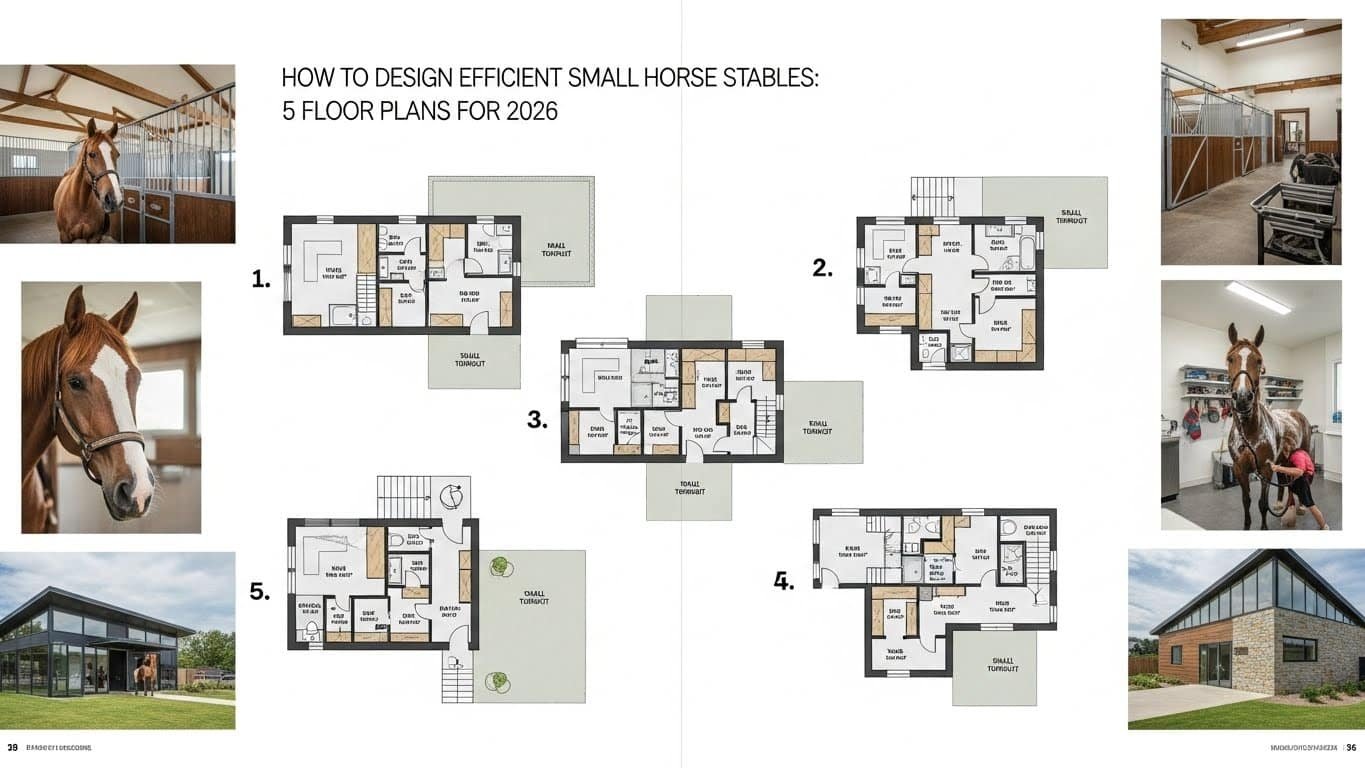
Planification de la mécanisation visant à réduire le travail manuel
Le meilleur moyen de réduire les coûts cachés liés au travail manuel est de les éliminer dès la conception de votre système. La mise en place d'un agencement stable permettant l'utilisation de petites machines, telles qu'un Bobcat ou un tracteur compact, transforme radicalement votre processus de nettoyage des boxes. L'utilisation de ces équipements réduit considérablement le nombre de allers-retours et l'effort physique nécessaire au nettoyage des boxes.
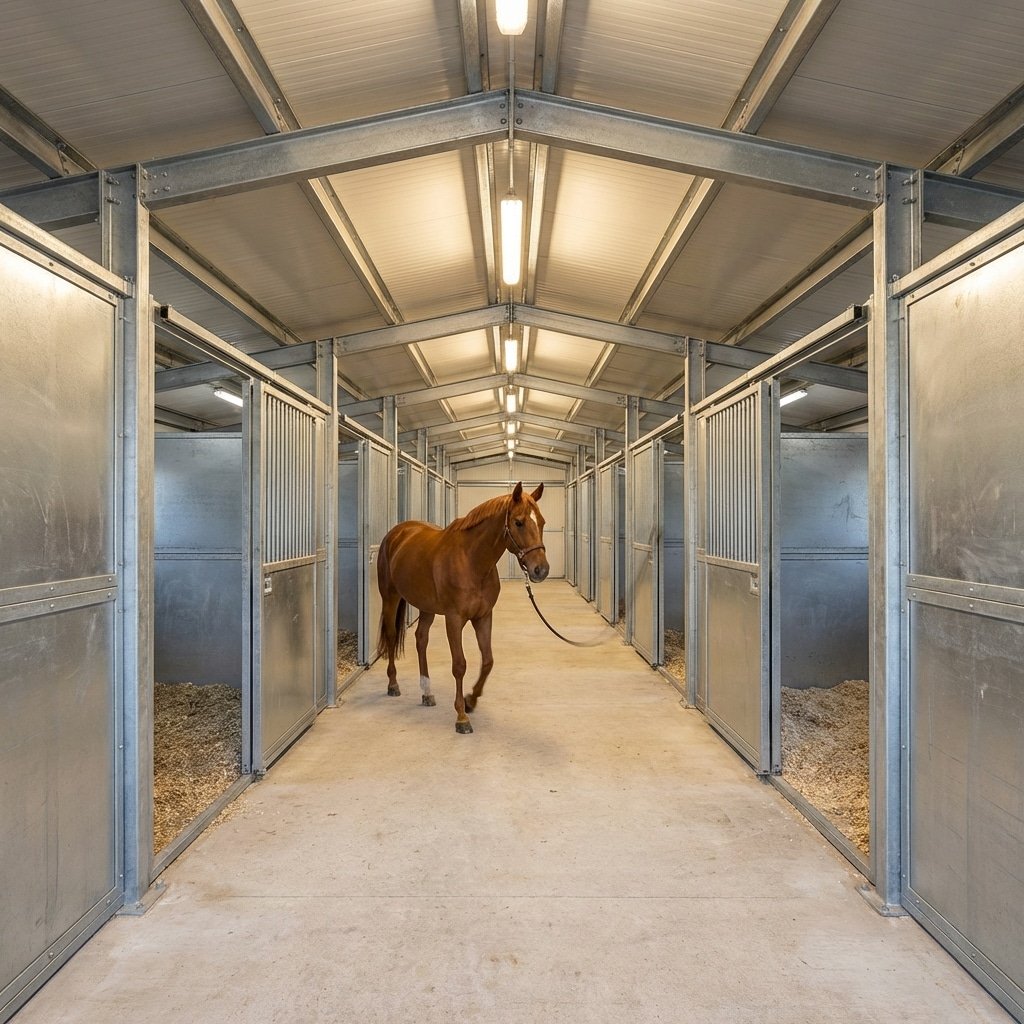
Un élément essentiel de la conception d'une écurie professionnelle consiste à prévoir des allées suffisamment larges pour permettre aux machines de circuler facilement et en toute sécurité. Il ne s'agit pas d'une réflexion après coup, mais d'une décision stratégique. Investir dans une installation conçue pour l'efficacité, c'est investir dans une réduction des coûts de main-d'œuvre à long terme et dans une exploitation plus durable. Cela permet de passer de la gestion des tâches manuelles à la gestion d'un système efficace.
Largeurs de passage : conception permettant l'accès des chargeuses Bobcat et des tracteurs
Pour pouvoir manœuvrer un Bobcat ou un petit tracteur, l'allée centrale de votre grange doit mesurer entre 12 et 16 pieds de large. Cela permet de respecter le rayon de braquage et d'éviter d'endommager les façades des boxes.
| Scénario d'équipement | Largeur minimale recommandée des allées |
|---|---|
| Petit tracteur ou Bobcat | 12 pieds (3,6 m) |
| Consignes générales de sécurité | Largeur de l'équipement le plus large + 3 pieds de chaque côté |
Calcul de la largeur minimale de sécurité pour l'exploitation
Déterminer la bonne largeur d'allée n'est pas une question de devinettes ; il s'agit d'un simple calcul basé sur votre parc de machines spécifique. L'utilisation de machines pour le nettoyage des stalles est un choix opérationnel à long terme ; par conséquent, bien concevoir l'agencement dès le départ permet d'éviter des problèmes coûteux. Une allée trop étroite entraîne des dommages aux façades des stalles et crée des risques inutiles pour la sécurité de l'opérateur.
Suivez ces étapes pour mettre en place un espace libre sûr et fonctionnel :
- Mesurez votre équipement : Commencez par mesurer la largeur maximale de votre tracteur ou de votre Bobcat, y compris les équipements tels qu'un godet. Ne vous fiez pas à la fiche technique de base de la machine ; mesurez la largeur de travail réelle.
- Prévoir une marge de sécurité : Prévoyez un espace libre d'au moins 3 pieds de chaque côté de la machine. Cette zone tampon est essentielle pour manœuvrer, tourner et éviter tout contact accidentel avec les stalles.
- Définissez votre montant minimum : En règle générale, la largeur de l'allée doit être supérieure d'au moins 3 pieds à celle du plus gros équipement qui y circule. Pour la plupart des petites machines, une largeur de 12 pieds constitue un minimum pratique, mais une largeur comprise entre 14 et 16 pieds permet une utilisation bien plus confortable et efficace.
Intégration des plans d'allées aux dimensions des panneaux DB Stable
Nos systèmes stables sont conçus pour les projets de grande envergure où les coûts d'exploitation à long terme constituent une préoccupation majeure. Le curage manuel représente un coût de main-d'œuvre important, et la conception axée sur la mécanisation constitue un investissement direct dans l'efficacité. Nous concevons nos composants afin de soutenir cette approche tournée vers l'avenir.
Les panneaux avant DB Stable sont disponibles en longueurs standard, généralement comprises entre 3,0 m et 4,0 m (environ 10 à 13 pieds), afin de s'adapter aux espacements courants entre les travées dans la construction de boxes professionnels. Cette modularité simplifie la conception des installations. En déterminant d'abord la largeur de votre allée, vous pouvez facilement configurer le nombre de panneaux de box nécessaires de chaque côté. Cela garantit un ajustement parfait sans vous obliger à faire de compromis sur l'accès des machines ou la sécurité.
Des écuries conformes aux normes internationales, conçues pour durer.

Le risque lié aux portes battantes : obstruction de la voie de déchargement
Les portes battantes s'ouvrant vers l'extérieur obstruent entièrement l'allée, bloquant le passage des brouettes et créant un risque grave pour la sécurité. Les portes coulissantes résolvent ce problème en coulissant parallèlement à la façade de l'emplacement.
Comment les portes battantes créent des goulots d'étranglement dans les allées
Une porte battante traditionnelle qui s'ouvre vers l'allée de l'étable constitue un défaut de conception classique. Elle peut bloquer complètement le passage aux brouettes, aux chariots à fourrage, voire aux petits véhicules utilitaires, ce qui paralyse complètement le travail. Ce n'est pas seulement inefficace, c'est aussi un risque.
Cet obstacle crée un goulot d'étranglement dangereux. Si un cheval prend peur ou si une situation d'urgence oblige les soigneurs à se déplacer rapidement, une allée bloquée peut transformer une situation maîtrisable en accident. Chaque fois qu'une porte est laissée ouverte, le déroulement des opérations est perturbé et le risque de blessure augmente.

La solution de porte coulissante pour un accès sans obstacle
Les portes coulissantes résolvent complètement ce problème. Les façades DB Stable sont conçues avec des portes coulissantes qui s'alignent parfaitement avec le mur du box, ce qui signifie que l'allée de nettoyage reste dégagée en permanence, que la porte soit ouverte ou fermée. Le matériel et le personnel peuvent circuler librement, sans aucune gêne.
Notre gamme « Professional Series » améliore ce système grâce à une conception à rail dissimulé. En intégrant le mécanisme à rouleaux, nous éliminons les composants en hauteur qui pourraient autrement accumuler de la poussière ou présenter un risque d'accrochage. Cela offre un aspect plus épuré ainsi qu'un système de porte encore plus sûr et plus fiable pour les centres équestres très fréquentés.
Mangeoires pivotantes : l'astuce ultime pour nourrir les animaux depuis l'allée
Un distributeur pivotant est un équipement de box qui fait pivoter un seau d'alimentation vers l'allée. Cela permet au personnel d'ajouter de la nourriture sans entrer dans le box, ce qui accélère le travail et renforce la sécurité.
Dans toute écurie de grande envergure, l'heure du repas constitue un goulot d'étranglement opérationnel majeur. Chaque minute passée à ouvrir les portails, à entrer dans les boxes et à se faufiler entre les chevaux finit par s'accumuler. Les mangeoires pivotantes constituent une solution technique simple qui résout directement ce problème en séparant le soigneur du cheval pendant le repas.
Alimentation depuis l'allée : sécurité et rapidité
La fonction principale d'un distributeur pivotant est de permettre au personnel de distribuer les céréales et les compléments alimentaires depuis l'allée de l'écurie. Le mécanisme fait pivoter le bac ou la cuvette d'alimentation à l'extérieur de la façade du box, où il peut être rempli, puis le ramène à l'intérieur pour le cheval. Cela évite ainsi complètement au personnel d'avoir à entrer physiquement dans chaque box.
Ce simple changement a un impact considérable sur la sécurité. Il réduit les risques liés au fait de pénétrer dans l'espace d'un cheval anxieux ou agressif vis-à-vis de la nourriture. Comme il n'y a pas de porte à déverrouiller et qu'il n'est pas nécessaire d'entrer à l'intérieur, l'ensemble du processus devient plus rapide et plus sûr pour le soigneur.
Structure en aluminium légère et résistante à la rouille
Les meilleurs modèles de distributeurs pivotants utilisent
de l'aluminium léger. Ce choix de matériau garantit une rotation fluide et sans effort de la mangeoire, ce qui est essentiel lorsque le personnel se déplace rapidement le long d'une longue rangée de stalles. Un mécanisme lourd ou encombrant irait à l'encontre de l'objectif d'efficacité recherché.
L'aluminium présente également une résistance naturelle à la corrosion. Une exposition constante aux aliments, aux compléments alimentaires et à l'humidité entraînerait rapidement l'apparition de rouille sur de l'acier standard. La structure en aluminium permet d'éviter ce phénomène, garantissant ainsi à la mangeoire une longue durée de vie sans dégradation ni risque sanitaire.
Quincaillerie affleurante : éviter que les équipements ne s'accrochent
Les ferrures affleurantes sont à fleur de la surface de la stalle, ce qui empêche les couvertures, les cordes et les outils de s'y accrocher. Cette conception renforce la sécurité des animaux et rend les opérations de nettoyage plus fluides et plus rapides.
Les risques pour la sécurité liés aux boulons et loquets saillants
Tout élément de quincaillerie qui dépasse du mur d'une stalle constitue un risque. Il s'agit d'un point d'accrochage constant pour tout ce qui circule dans l'allée, ce qui engendre des risques inutiles et ralentit le travail quotidien. Ces détails, apparemment insignifiants, ont un impact direct sur la sécurité et l'efficacité opérationnelle.
- Les couvertures pour chevaux et les longes peuvent facilement s'accrocher aux éléments métalliques apparents, ce qui peut provoquer la panique du cheval et entraîner des blessures graves.
- Les boulons ou les axes de charnières qui dépassent s'accrochent souvent aux brouettes, aux seaux à fumier et à d'autres outils, ce qui perturbe le déroulement du travail et rend une tâche simple particulièrement pénible.
- Les éléments de quincaillerie apparents constituent un danger physique direct tant pour les soigneurs que pour les chevaux qui circulent dans l'écurie, car ils présentent un risque d'égratignures et de coupures.
Aménagement avec des rails dissimulés et des ferrures encastrées
Pour résoudre le problème des accrocs, il faut que les éléments techniques fassent partie intégrante du mur, et non qu'ils constituent un obstacle sur celui-ci. En intégrant ces composants, nous éliminons les points de friction qui sont à l'origine des problèmes quotidiens dans un environnement d'écurie très fréquenté. Cette approche est la norme dans nos systèmes.
- Nos cabines de la gamme « Professional Series » sont équipées d'un système de rails dissimulés pour les portes coulissantes. Le rail étant masqué, la paroi extérieure reste parfaitement plane et dégagée.
- Chaque kit de montage comprend des boulons d'ancrage et des raccords en acier inoxydable 304, spécialement sélectionnés pour garantir une fixation sûre et discrète au poteau et au sol.
- Cette priorité accordée à un matériel intégré et sans faille est au cœur de notre approche en matière de conception axée sur la sécurité et la durabilité à long terme.
Questions fréquemment posées
Quelle est la largeur minimale recommandée pour les allées afin de permettre le passage d'un tracteur ?
Il n'existe pas de norme officielle unique, mais il est généralement recommandé que la largeur de l'allée soit supérieure d'au moins 36 pouces à celle de votre plus gros engin. Pour les granges où circulent régulièrement des tracteurs, les allées à sens unique doivent mesurer entre 20 et 24 pieds. Vérifiez toujours les caractéristiques techniques de votre matériel ainsi que les exigences du code de prévention des incendies local.
Comment puis-je nettoyer les boxes à chevaux plus rapidement et plus efficacement ?
Mettez en place une routine quotidienne cohérente et utilisez des outils adaptés, tels que des fourches à fumier robustes. Le moyen le plus efficace de gagner du temps consiste à déverser le fumier directement dans un tracteur compact ou un épandeur de fumier qui circule dans l'allée, ce qui évite complètement d'avoir à faire des allers-retours avec une brouette.
Quelles sont les portes les plus adaptées pour optimiser l'espace dans les allées d'une grange : les portes battantes ou les portes coulissantes ?
Les portes coulissantes sont bien plus pratiques dans les allées très fréquentées des écuries. Elles s'ouvrent parallèlement à la façade des boxes et ne s'écartent pas vers l'extérieur, ce qui évite de bloquer le passage. Cela garantit un accès dégagé et sans obstacle pour le déplacement des chevaux et du matériel, comme les tracteurs, sans créer de danger.
Qu'est-ce qu'un alimentateur pivotant et en quoi permet-il d'améliorer le rendement ?
Une mangeoire pivotante est une cuve d'alimentation rotative intégrée à la façade du box, qui permet de la remplir depuis l'allée sans avoir à entrer dans le box. Cela améliore considérablement la sécurité et peut réduire le temps consacré à l'alimentation jusqu'à 30%. Cela permet également de limiter au maximum les déversements d'aliments.
Réflexions finales
Les cabines génériques permettent de réaliser des économies immédiates, mais entraînent à long terme des coûts liés aux réparations et aux réclamations des clients. Notre norme ‘ galvanisation à chaud après fabrication ’ et nos équipements sans défaut sont conçus pour vous éviter ces soucis. Vous n’achetez pas simplement une cabine ; vous investissez dans la continuité de votre activité et dans une solide réputation.
Ne vous fiez pas uniquement à notre parole en matière de durabilité : vérifiez-le par vous-même. Une commande d'essai est le meilleur moyen de tester la résistance de nos structures aux chocs et le bon fonctionnement de nos ferrures. Contactez notre équipe pour obtenir un devis et discuter des économies de frais de transport liées aux colis en kit pour votre prochain projet.

 French
  English
  Spanish
  Arabic
  German
0 commentaires