


Splinter colic is a preventable emergency directly linked to cheap pine boards in horse stalls. This single material choice can escalate a simple chewing habit into a $10,000 surgical procedure, a catastrophic cost that often exceeds standard insurance limits and threatens a facility’s financial stability.
This risk is eliminated by specifying materials that engineer the hazard out. We evaluate infill options against a key performance benchmark: a Janka Hardness rating over 3000 lbf. This standard makes the ingestion of dangerous splinters physically impossible, removing the root cause of the problem.
The Splinter Threat: Why Vets Hate Cheap Softwood
Cheap softwood splinters when chewed, forming intestinal blockages (splinter colic) that often require surgery. This makes softwood a high-risk material for stable walls.
How Wood Splinters Cause Intestinal Obstruction
Habitual wood chewing is more than just a nuisance; it’s a direct path to a serious medical emergency. When a horse chews on soft, cheap wood panels, it ingests sharp splinters. These fragments don’t digest. Instead, they travel to the small intestine where they can accumulate and aggregate into solid, immovable masses. This creates a severe blockage, leading to a painful condition known as acute obstructive colic, or “splinter colic.” Unlike other impactions, these wood masses don’t soften, meaning medical management often fails and emergency surgery becomes the only option.
The High-Density Bamboo Solution
To eliminate this risk, we specify High-Density Strand Woven Bamboo as a primary infill material. This isn’t ordinary bamboo. The manufacturing process creates a board with extreme density, achieving a Janka Hardness rating over 3000 lbf. That makes it more than three times harder than oak. A horse simply cannot chew it effectively enough to create and ingest dangerous splinters. Its density acts as a physical barrier, directly addressing the root cause of splinter colic.
From Colic to Worn Teeth: The Medical Cost of Wood Chewing
Colic surgery from wood chewing costs $5,000-$10,000, often exceeding insurance. Chronic chewing also creates expensive dental damage, making preventative stall materials a smart capital investment.
The Financial Impact of Colic and Dental Wear
Wood chewing isn’t just a bad hab
it; it’s a direct threat to your bottom line. When a horse ingests enough wood splinters to cause an intestinal obstruction, the financial fallout is immediate and severe. Emergency colic surgery often runs between $5,000 and $10,000, a figure that easily surpasses the limits of most standard equine insurance policies.
Even if you avoid surgery, a single case of medical colic can cost over £1,500 to treat. Beyond the emergency scenarios, chronic wood chewing leads to accelerated and uneven wear on a horse’s teeth. This creates a need for continuous and expensive dental care over the animal’s lifetime, chipping away at profitability year after year.

How High-Density Bamboo Infill Reduces Financial Risk
The most effective way to eliminate these veterinary bills is to prevent the chewing behavior from the start. Installing durable materials in your stalls is a direct countermeasure. High-density, strand-woven bamboo is engineered specifically for this purpose. With a Janka Hardness rating over 3000 lbf, it is roughly three times harder than oak, making it unappealing and nearly impossible for a horse to damage.
This isn’t just about building a stronger stall; it’s a calculated business decision. A one-time capital investment in chew-proof infill like our high-density bamboo directly mitigates the recurring and unpredictable risk of catastrophic vet bills linked to wood ingestion.
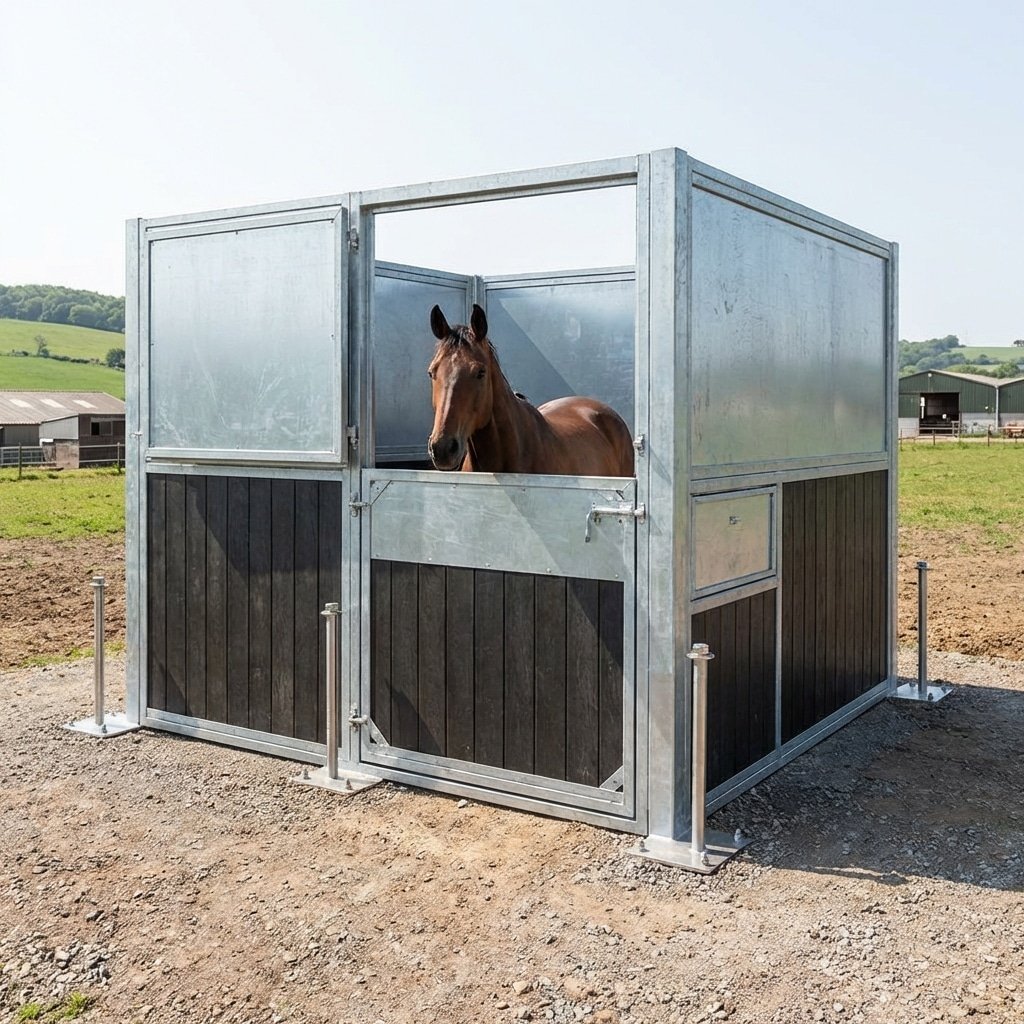
Engineered Horse Stables for Any Climate
The Limitation of Anti-Chew Sprays and Cribbing Collars
Anti-chew sprays and cribbing collars are temporary behavioral fixes. They fail to remove the actual hazard—the wood itself—making them an incomplete colic prevention strategy.
Many barn managers rely on anti-chew sprays or cribbing collars to stop horses from chewing wood. These methods attempt to manage a behavior, but they don’t solve the underlying safety issue. They are, at best, a temporary patch on a structural problem that can lead to splinter colic.
The Inconsistent Results of Surface Deterrents
Anti-chew sprays offer unreliable protection. Their effectiveness degrades quickly due to environmental factors like rain and moisture, requiring constant reapplication to maintain any deterrent effect. On porous wood surfaces, the spray can soak in unevenly, leaving areas that a horse can still target.
These sprays also fail to address the root cause. A horse with a compulsive drive to chew will often ignore the bitter taste, especially once the spray starts to wear off. This makes surface deterrents a temporary behavioral fix, not a permanent safety solution. You are managing a symptom instead of removing the source of the danger.
Eliminating the Hazard with Chew-Proof Materials
A far more reliable approach is to engineer the hazard out of the environment entirely. Instead of trying to modify horse behavior, use stall materials that are inherently chew-proof. This shifts the strategy from management to prevention.
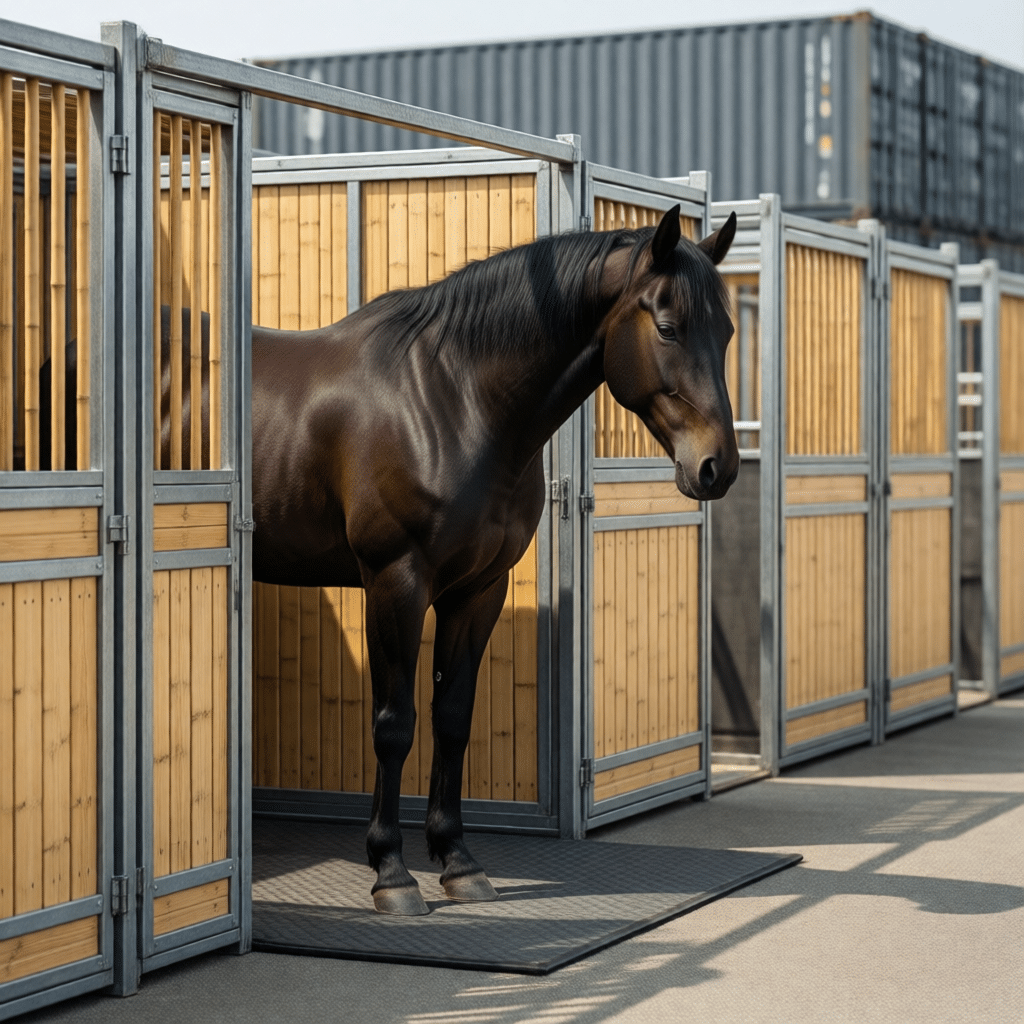
Our 28mm-32mm HDPE infill planks offer a zero-maintenance, impact-absorbing surface. Horses have no incentive to chew it, and it can’t splinter. For projects demanding extreme durability, our 28mm-38mm high-density strand-woven bamboo is the answer. With a Janka Hardness rating over 3000 lbf, it’s three times harder than oak, physically preventing damage and ingestion.
This material-based approach removes the source of wood splinters completely. It provides a reliable, one-time solution that doesn’t depend on reapplication or a horse’s temperament.
Physical Barriers: The Role of Galvanized Wall Caps
Galvanized wall caps physically block horses from chewing stall edges, preventing splinter ingestion and dental damage. Their longevity depends entirely on proper galvanization for rust protection.
Deterring Wood Chewing and Cribbing
A wall cap is a simple, effective physical barrier. By covering the exposed edges of wood or HDPE planks on stall walls and doors, it removes the horse’s ability to get a grip to chew or crib. This is a frontline defense against common but serious stable issues. Preventing this behavior helps avoid the risk of splinter ingestion, which can lead to intestinal obstruction, and reduces the excessive tooth wear associated with chronic cribbing. The cap also provides a durable, weather-resistant shield that protects the structural integrity of the stall partitions from moisture and damage.
The Standard for Long-Term Rust Protection
The difference between a functional wall cap an
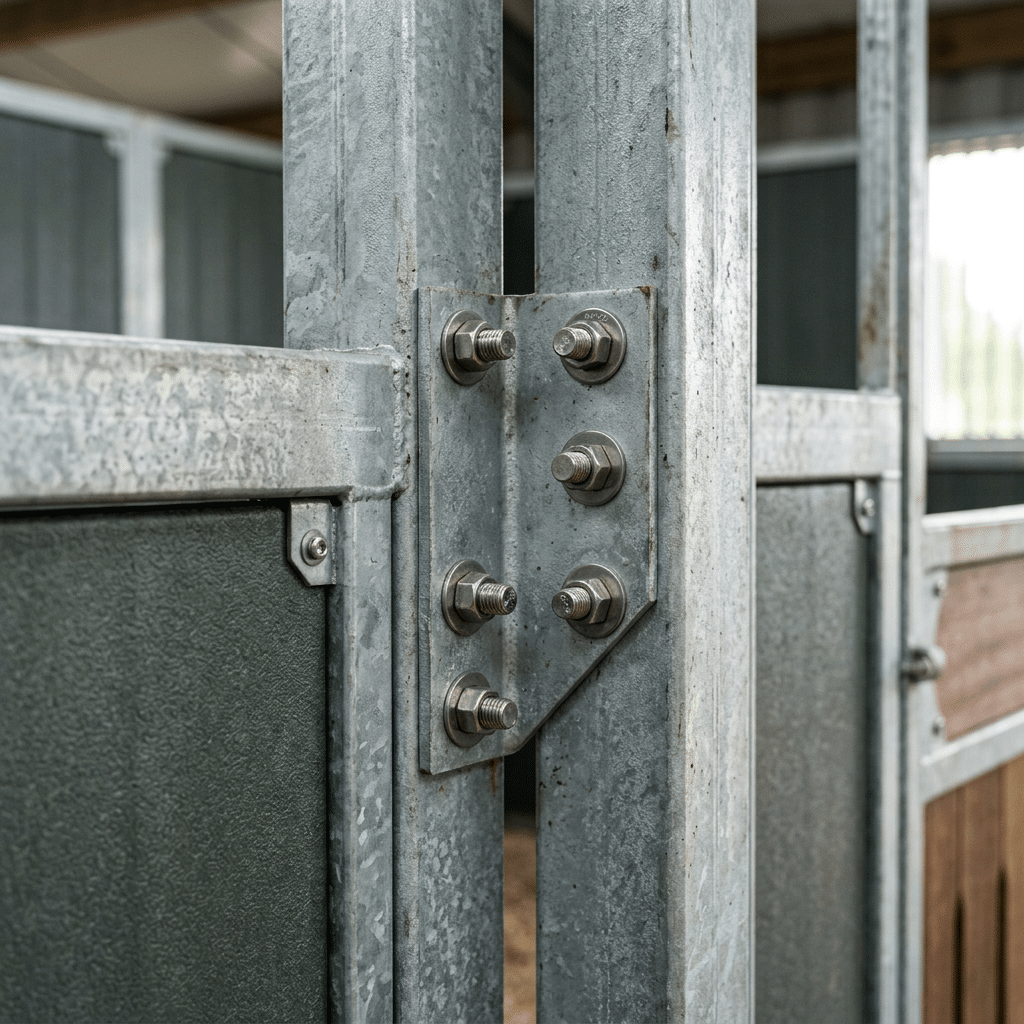
d a rusty liability is the quality of its rust protection. We weld all steel components first and then send the entire piece for galvanizing. This “Hot-Dip Galvanization After Fabrication” process ensures complete, seamless coverage, leaving no weak points for corrosion to start. It’s the only way to meet genuine heavy-duty standards.
- Norme de gouvernance : All steel components conform to the BS EN ISO 1461 standard for hot-dip galvanizing.
- Épaisseur du revêtement de zinc : The process achieves an average zinc coating of over 70 microns (μm) on all tubing, providing a substantial protective layer.
- Résistance à la corrosion : Components are proven to pass the ASTM B117 salt spray test for over 96 hours without showing any red rust.
Questions fréquemment posées
Can wood splinters cause colic in horses?
Yes. When horses ingest wood splinters from chewing on stalls, the fragments can accumulate in the digestive tract. This can lead to small intestinal obstruction, impaction colic, or the formation of enteroliths (intestinal stones) that create dangerous blockages.
Is high-density bamboo a safer alternative to wood?
Engineered high-density bamboo is a much safer option. While raw wood splinters easily, strand-woven bamboo is over three times harder than oak. Its incredible density makes it highly resistant to chewing, kicking, and splintering, preventing the core cause of wood-related injuries.
What is the strongest wood for building horse stalls?
Southern Yellow Pine is considered the strongest and most popular softwood for stall construction, offering a good balance of durability and cost. For a more premium, kick-proof option, dense Brazilian hardwood is the most durable choice, but it is also much more expensive. Woods like maple and black walnut should always be avoided as they are toxic to horses.
How can I protect existing wooden stalls from chewing?
The most effective approach combines management with physical barriers. Providing constant access to forage helps satisfy a horse’s natural urge to chew and reduces boredom. For physical protection, you can install durable metal chew guards (angle iron) along all exposed wooden edges to create a barrier.
Réflexions finales
Specifying cheap softwood saves money upfront but exposes your clients to the risk of splinter colic and $10,000 vet bills. Our engineered bamboo (Janka > 3000) removes that liability from your business. This is how you protect your reputation and secure repeat customers.
Verify our engineering for yourself. A small trial order is the best way to evaluate the material durability and our flat-pack shipping advantage. Contact our team to discuss project specifications or distributor pricing.

 French
  English
  Spanish
  Arabic
  German
0 commentaires