


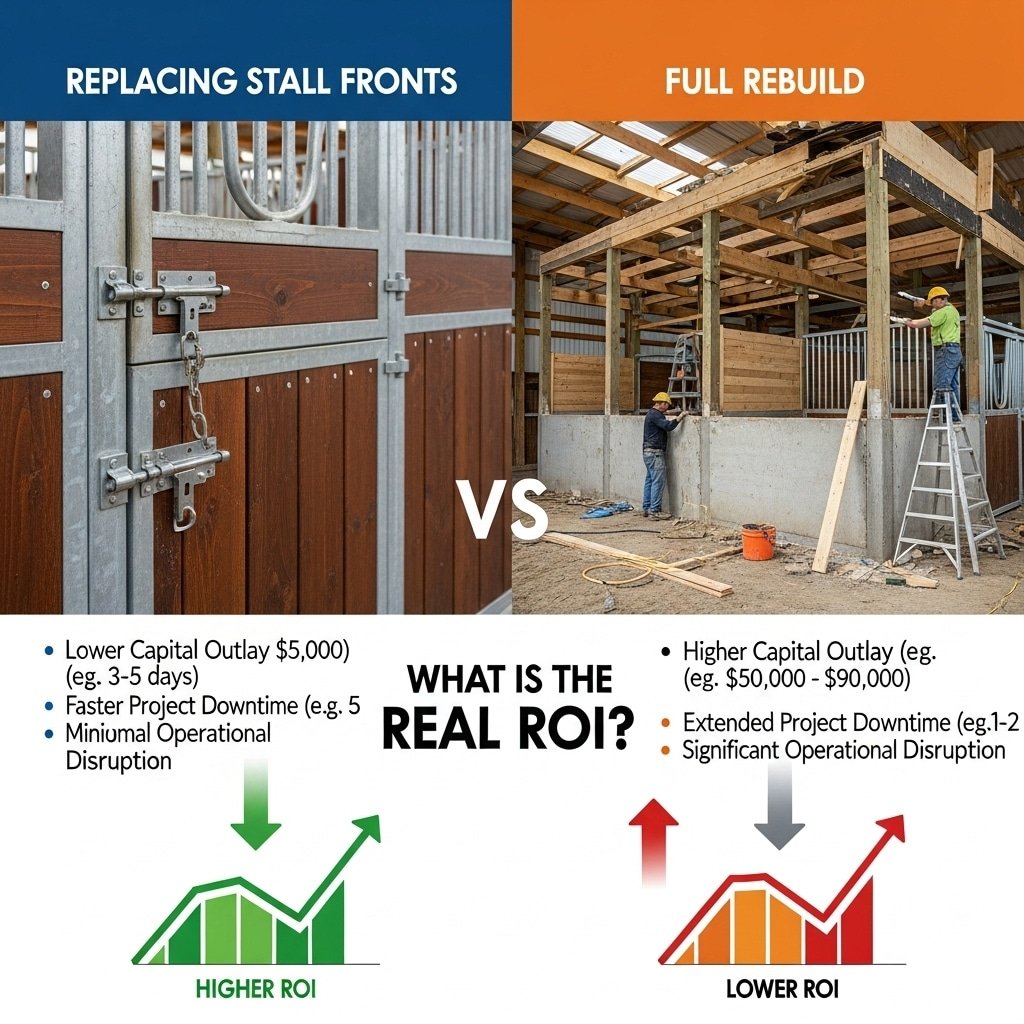
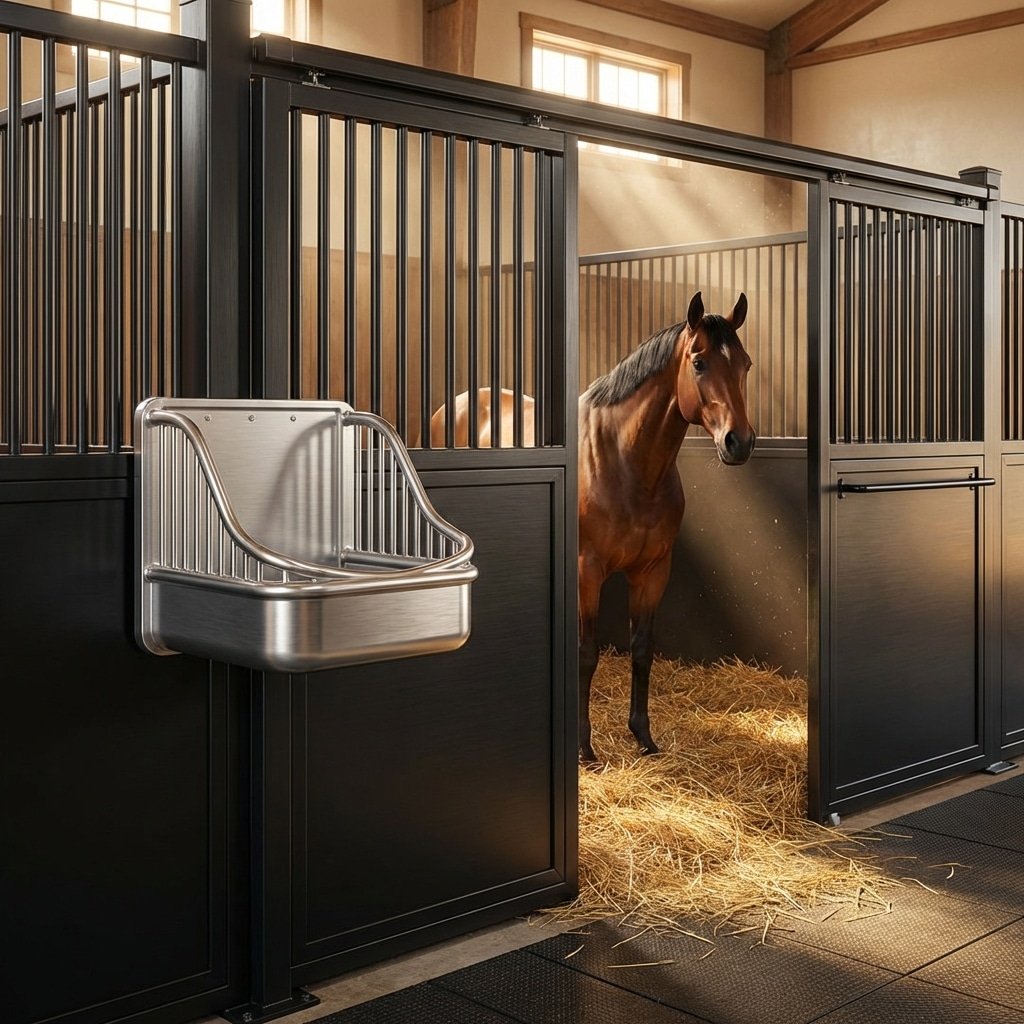
A cost analysis to replace horse stall doors reveals a critical decision: a targeted upgrade versus a full teardown. Choosing the wrong path can inflate capital outlay by 90% and extend project downtime from days to months, directly impacting operational revenue and contractor profitability.
This breakdown evaluates the ROI based on the ISO 1461 hot-dip galvanization standard and the logistical efficiency of a flat-pack system. The data shows how modular kits reduce capital costs while increasing long-term property value without requiring a full barn demolition.
Replace Fronts or Rebuild Everything: Which Pays Off?
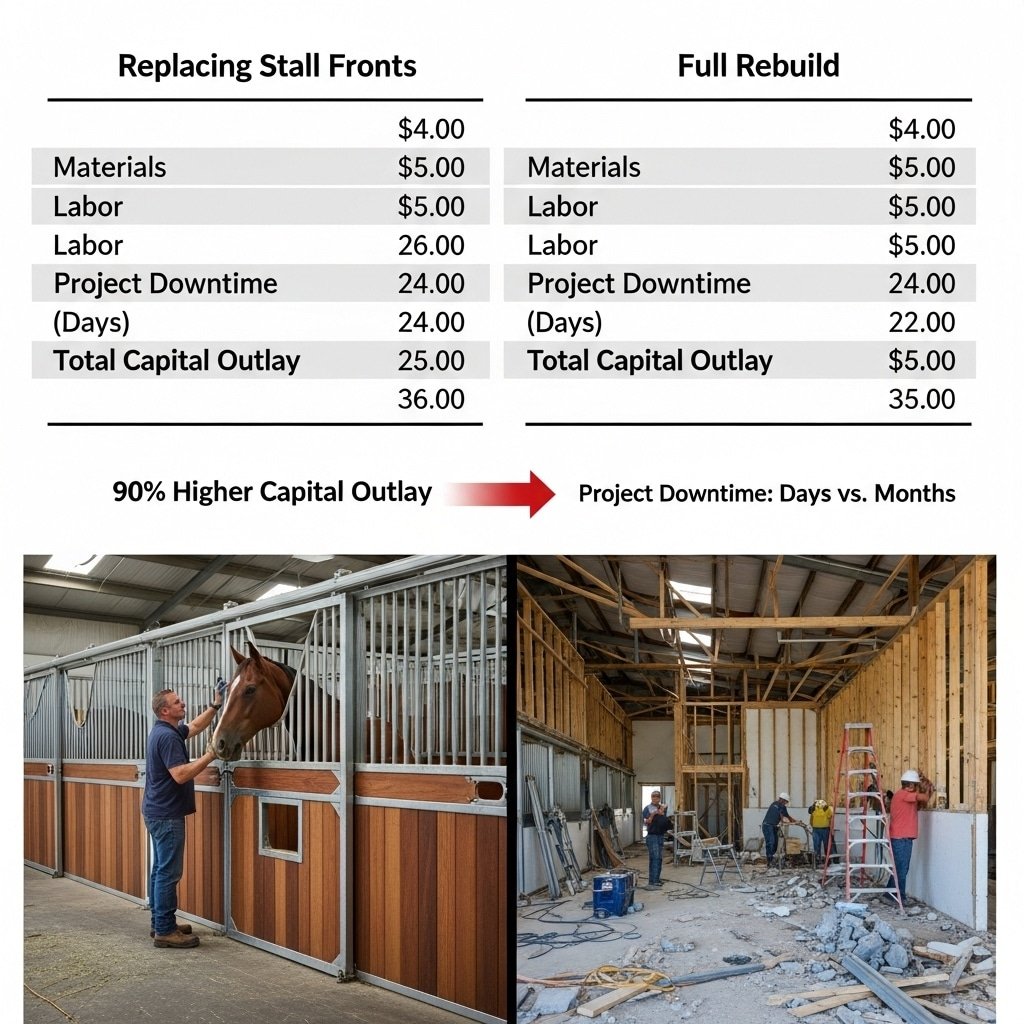
For structurally sound barns, replacing only the fronts saves up to 90% on capital compared to a full rebuild, minimizing downtime while delivering a major functional upgrade.
| Métrique | Fronts-Only Renovation | Complete Barn Rebuild |
|---|---|---|
| Capital Cost (Per Stall) | $600 – $1,000 | Starts at $7,500+ |
| Total Outlay (6-Stall) | ~$6,000 | $45,000+ |
| Project Downtime | Minimal (Days) | Extensive (Weeks/Months) |
| Capital Savings | Up to 90% | Baseline (No Savings) |
The Financial Breakdown: Renovation vs. Rebuild
The numbers are clear. Replacing individual décrochage fronts costs between $600 and $1,000 per unit. A modest 6-stall barn rebuild starts at $45,000 and climbs quickly from there. By choosing a ‘fronts-only’ approach for a structurally sound barn, project managers can cut capital investment by nearly 90%. That frees up significant funds for other operational needs instead of tying it up in unnecessary construction.
How Flat-Pack Logistics Maximize Your Return
The initial économies de coûts are only part of the equation for distributors and large-scale projects. Shipping logistics can destroy project margins. Traditional, fully welded stalls are bulky and inefficient to transport, allowing only 12-15 sets to fit in a standard 40HQ container. This inflates freight costs per unit.
Our Steel Pallet Flat-Pack system solves this problem. We designed it to fit 30-45 stable sets into a single 40HQ container. This logistical efficiency saves distributors over 60% on freight, directly protecting their margins and making a replacement strategy even more profitable.
How Much Can You Save by Keeping Existing Posts?
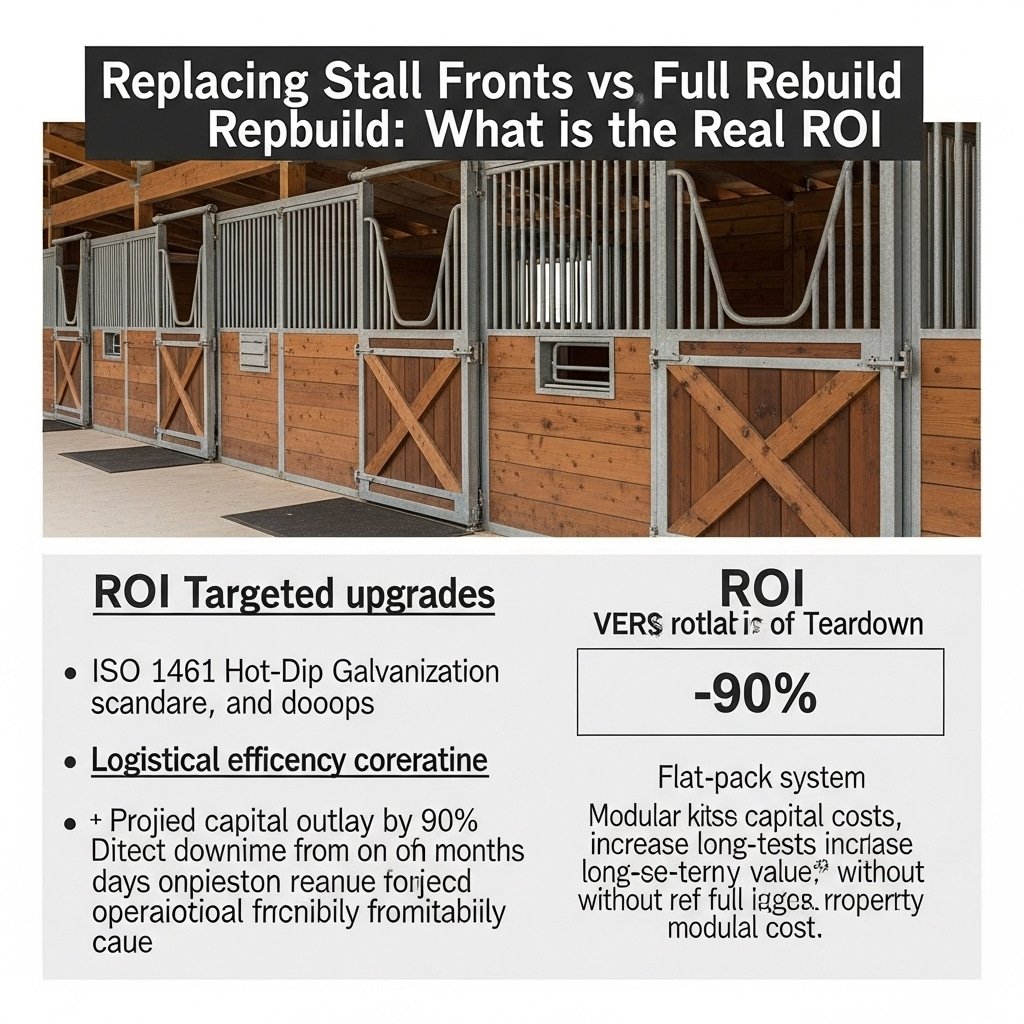
Keeping existing posts eliminates major demolition, steel, and concrete costs. This allows you to shift the budget towards high-quality modular fronts, speeding up renovation.
Calculating the Costs of New Post Installation
Opting for a complete teardown introduces significant expenses that a simple front replacement avoids. The budget isn’t just for new stall fronts; it’s consumed by foundational work that doesn’t improve the final product’s quality. A full rebuild involves three primary cost centers:
- Material Costs: This includes new heavy-gauge steel posts (like 50x50mm RHS), bags of concrete for new footings, and removal bins for the old material.
- Labor Costs: This is often the biggest expense. It covers demolition, cutting and removing old posts and concrete, site prep, and the precise welding or bolting of new posts.
- Project Timeline: Installing new posts extends the project timeline significantly, increasing barn downtime and disrupting operations. A front-only swap is much faster.
Leveraging Modular Kits for Existing Structures
A front-only renovation is the most efficient path. Our flat-pack systems are engineered specifically for retrofitting, using standardized connectors that attach directly to existing post types, whether they are 50mm RHS or round posts. This approach eliminates the need for extensive demolition and on-site welding.
Using a kit-based stall front can save up to 35% compared to a fully welded system. Every system we ship includes a dedicated hardware kit with all the necessary anchor bolts and connectors, made from 304 Stainless Steel, ensuring a secure fit to your current framework without any hidden costs for extra parts.
Get 20-Year Rust-Proof Equestrian Stables.

Does a “Front-Only” Reno Increase Property Value?
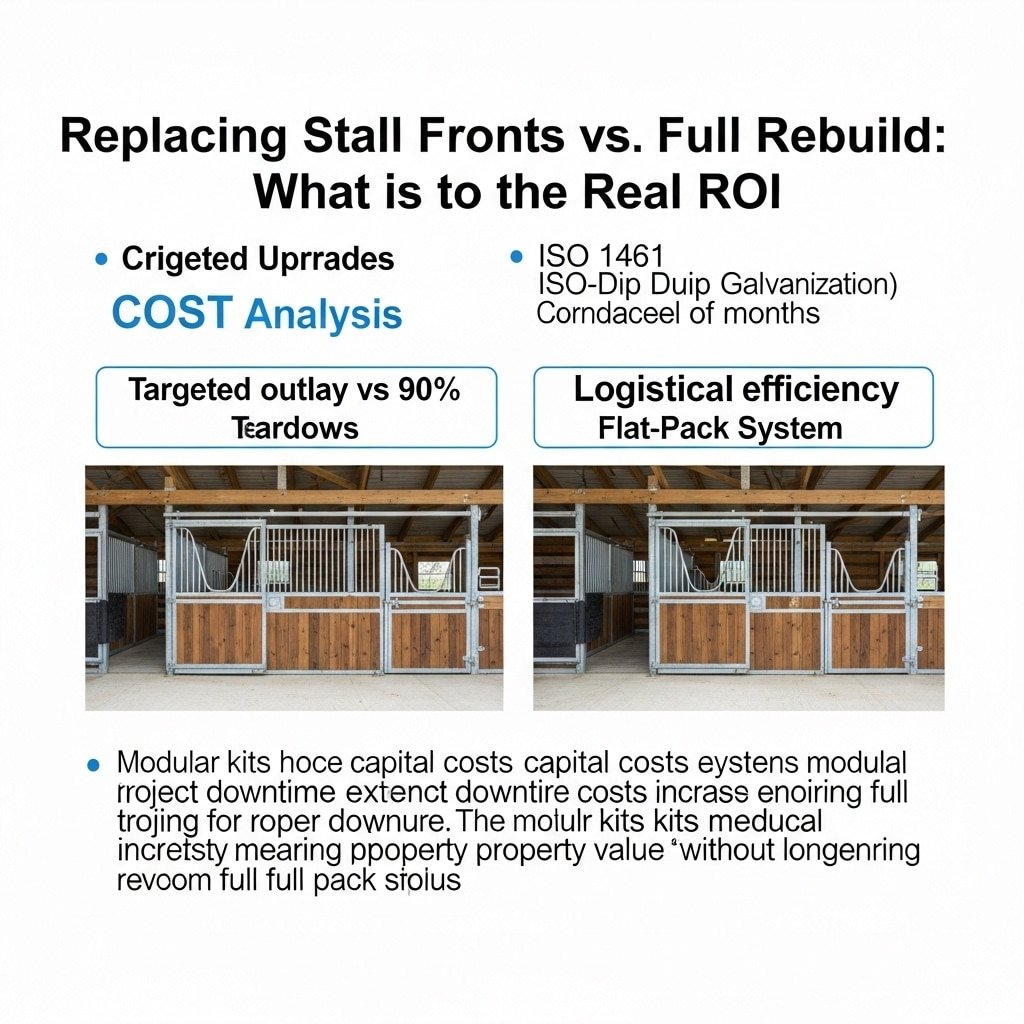
Yes. Upgrading only façades de box increases property value. Quality fronts create strong first impressions, signal good maintenance, and justify a higher valuation for potential buyers.
The Impact of First Impressions on Barn Valuation
Potential buyers form an opinion on a facility’s quality within minutes. Worn, rusted, or damaged portes de box are a major visual red flag that immediately lowers their perception of the property’s worth. It suggests deferred maintenance and potential hidden problems.
Clean, modern façades de box do the opposite. They signal that the entire property is well-maintained and that the owners prioritize high standards of le bien-être des animaux. This perception alone can justify a higher valuation and attract serious buyers.
Premium Materials That Signal Long-Term Value
The choice of materials directly contributes to perceived value. Using a process like Hot-Dip Galvanization After Fabrication ensures a thick, uniform zinc coating that prevents rust for decades. This maintains a pristine look and signals a quality, long-term investment, not a cheap fix.
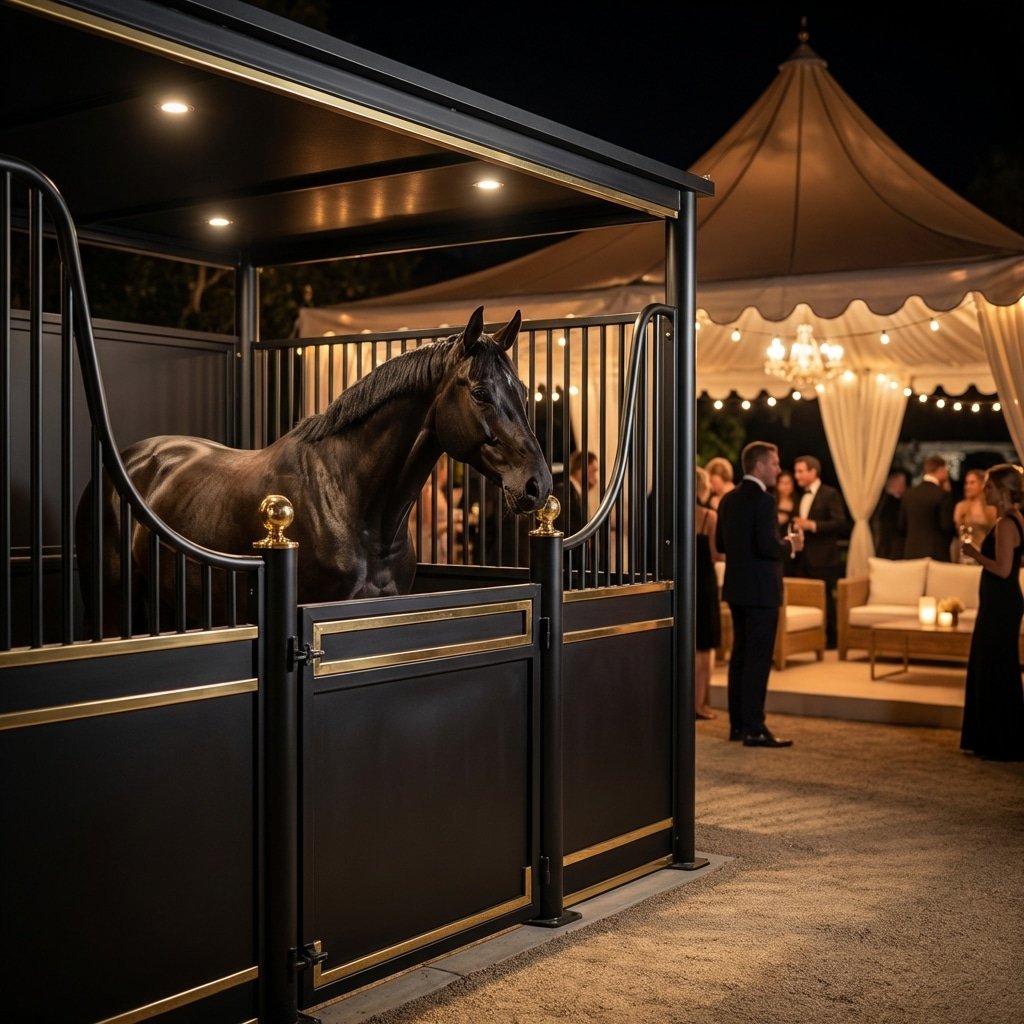
Aesthetic options also play a role. A durable Powder Coat over Galvanized finish, like that found in our Royal Series, elevates the entire barn’s appearance from purely functional to premium. This high-end look is something buyers notice and are willing to pay more for.
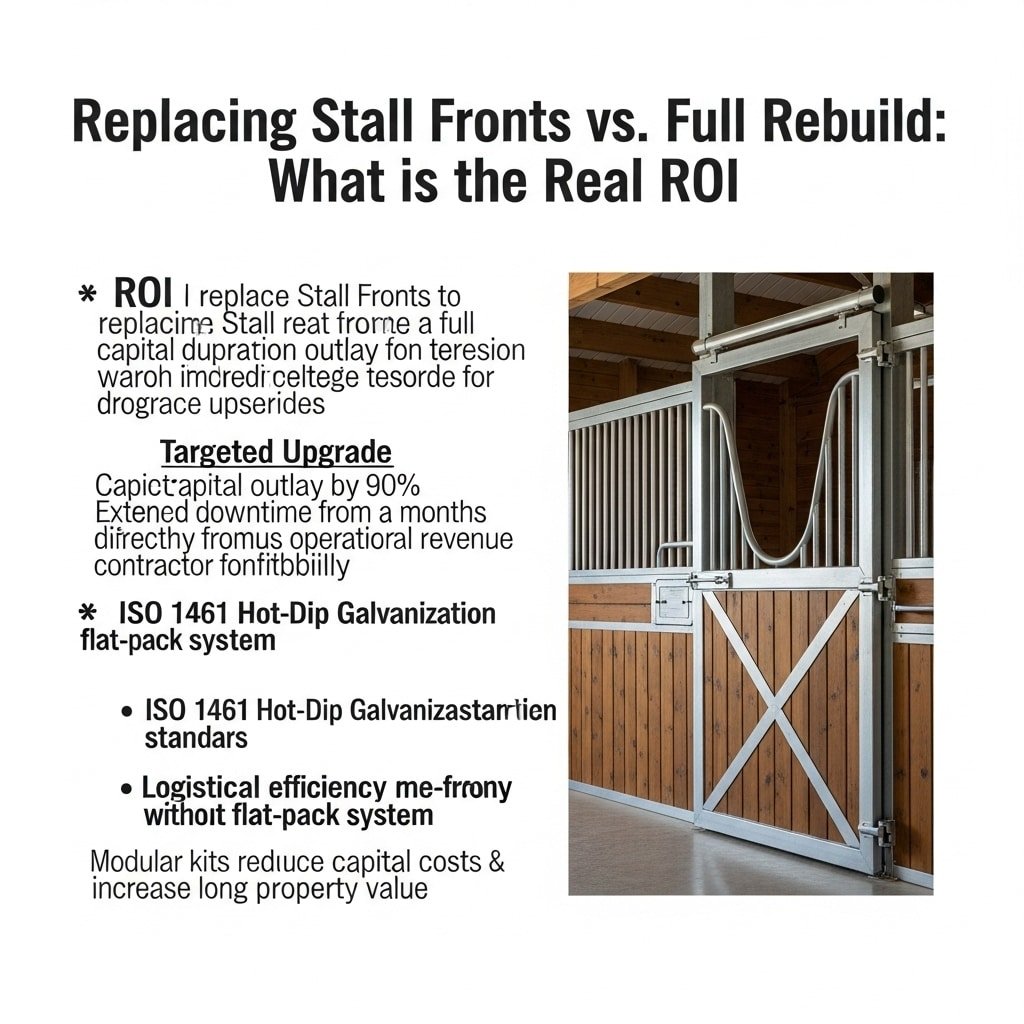
Is It Worth Repairing Rusted Doors? (The Sunk Cost)
Repairing rusted steel is a sunk cost. High labor and unstoppable internal corrosion make replacement with a hot-dip galvanized door the only permanent solution.
The Hidden Costs of Surface-Level Repairs
Trying to fix a heavily rusted door is almost always a bad investment. The labor for grinding, treating, and repainting often costs more than the aging door is worth. This kind of repair only addresses surface rust. It cannot stop the corrosion happening inside the steel tubing, where moisture is trapped. The structural decay continues unseen. This cycle of paying for temporary cosmetic fixes is a classic sunk cost, pouring money into an asset that will fail anyway.
Prevention vs. Repair: The Hot-Dip Galvanization Standard
The correct approach isn’t repair; it’s proper prevention from the factory. The only process that provides long-term protection is “Hot-Dip Galvanization After Fabrication.” This means the entire fully welded door is submerged in molten zinc, sealing every cut edge, corner, and weld from moisture. Anything less is a compromise.
- Governing Standard: The process must conform to BS EN ISO 1461.
- Coating Thickness: A zinc coating over 70 microns thick is applied to all tubing.
- Bond Type: The zinc creates a metallurgical bond with the steel, not just a surface layer.
This process provides decades of maintenance-free protection. It eliminates the entire cycle of rust and repair, making it a far more economical decision over the life of the stable.
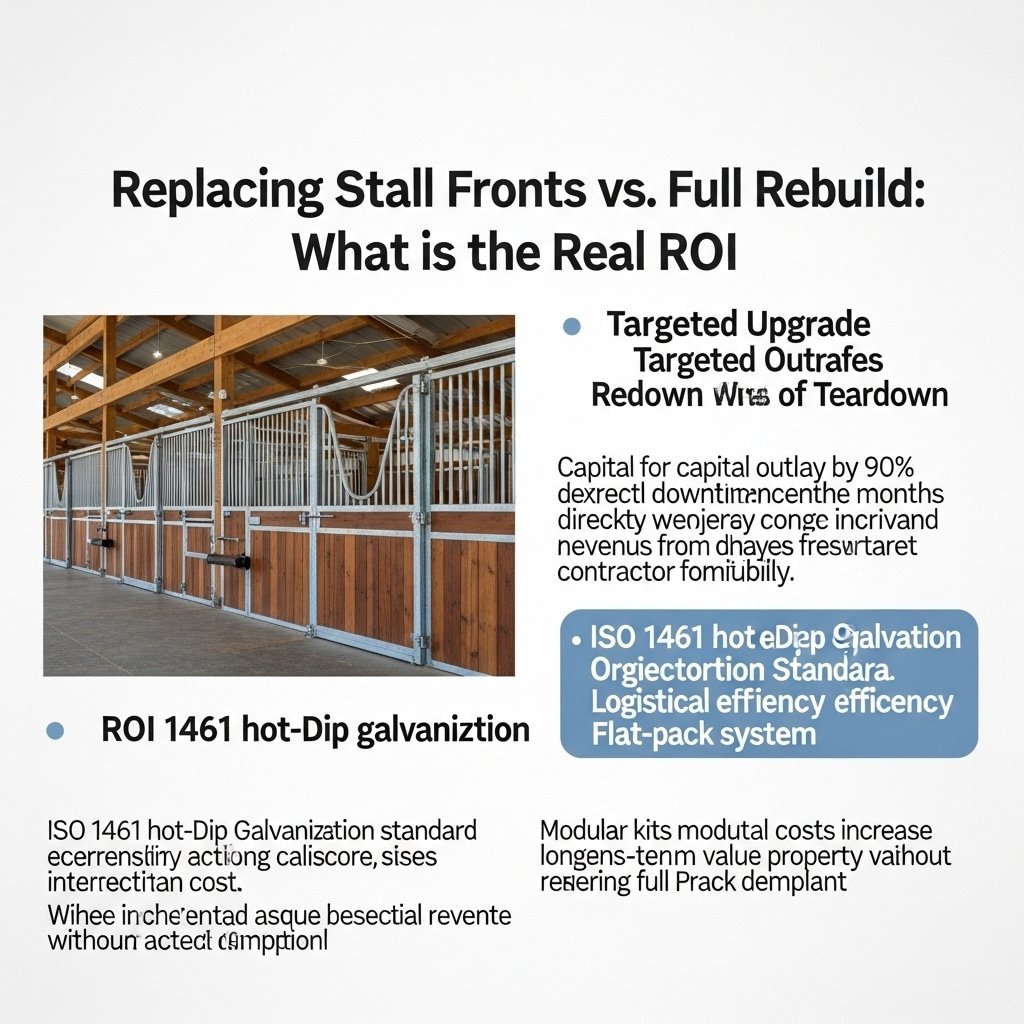
How Does Custom Sizing Eliminate Carpentry Costs?
Custom-sized des systèmes stables are pre-engineered to fit your barn layout perfectly. This removes the labor, material waste, and time costs of modifying standard parts on-site.
The Hidden Costs of ‘Standard Size’ Components
Trying to fit standard, off-the-shelf stall parts into a barn that isn’t perfectly dimensioned creates expensive problems. These unplanned expenses show up as extra labor hours, wasted materials, and project delays. The budget for “standard” parts rarely accounts for the skilled labor needed to make them actually fit.
- Needing a carpenter to cut infill boards to fit non-standard bay widths.
- Labor costs for drilling new holes or welding brackets for proper alignment.
- Material waste from off-cuts and modifications that you still paid for.
Factory Precision: Pre-Cut Infill and Ready-to-Install Panels
Our manufacturing process provides a complete, ready-to-assemble kit that requires no on-site fabrication. We engineer every component to your barn’s specific measurements, turning a complex carpentry job into a straightforward mechanical assembly. This system protects your project budget and timeline.
- Infill planks, whether UV-stabilized HDPE or high-density Bamboo, arrive pre-cut to the exact required length.
- Steel frames are fabricated to your specific measurements, ensuring a direct bolt-on installation.
- The included installation kit contains all necessary 304 stainless steel hardware, eliminating extra trips to the hardware store.
Réflexions finales
The numbers confirm that for a sound structure, a fronts-only renovation is the correct financial decision. The critical next step is choosing a system hot-dip galvanized to ISO 1461 standards *after fabrication*. This locks in your savings by eliminating the sunk costs of future rust repairs and protecting your asset’s long-term value.
Verify our engineering and finish firsthand with a small trial order of 3-5 stables. It’s the most practical way to test our system’s durability before committing to a full project or container load. Contact our team to get a detailed quote and a logistics plan built for your specific requirements.
Questions fréquemment posées
What kind of rust protection do you use on your steel stables?
We use a process called Hot-Dip Galvanization After Fabrication. This means we build the entire panneau stable from raw steel first, then dip the finished unit into molten zinc. This method meets ISO 1461 standards and guarantees a zinc coating over 70 microns thick, protecting the steel inside and out for years, even in coastal climates. We never use pre-galvanized tubes welded together, as that leaves the welds vulnerable to rust.
What are my choices for the stall wall infill material?
We offer two primary options. The first is UV-stabilized HDPE (High-Density Polyethylene), which absorbs impacts from kicks and requires zero maintenance. The second is high-density strand-woven bamboo, a material three times harder than oak (Janka hardness > 3000 lbf) and naturally resistant to mold and rot.
How do you package the stables to reduce shipping costs for distributors?
Notre stables are engineered with a flat-pack system and shipped on steel pallets. This design allows us to load 30 to 45 sets into a single 40HQ container. For our B2B partners, this reduces freight costs by more than 60% compared to shipping traditional fully-welded stalls, which typically only fit 12-15 sets per container.
Is your steel suitable for extremely cold climates?
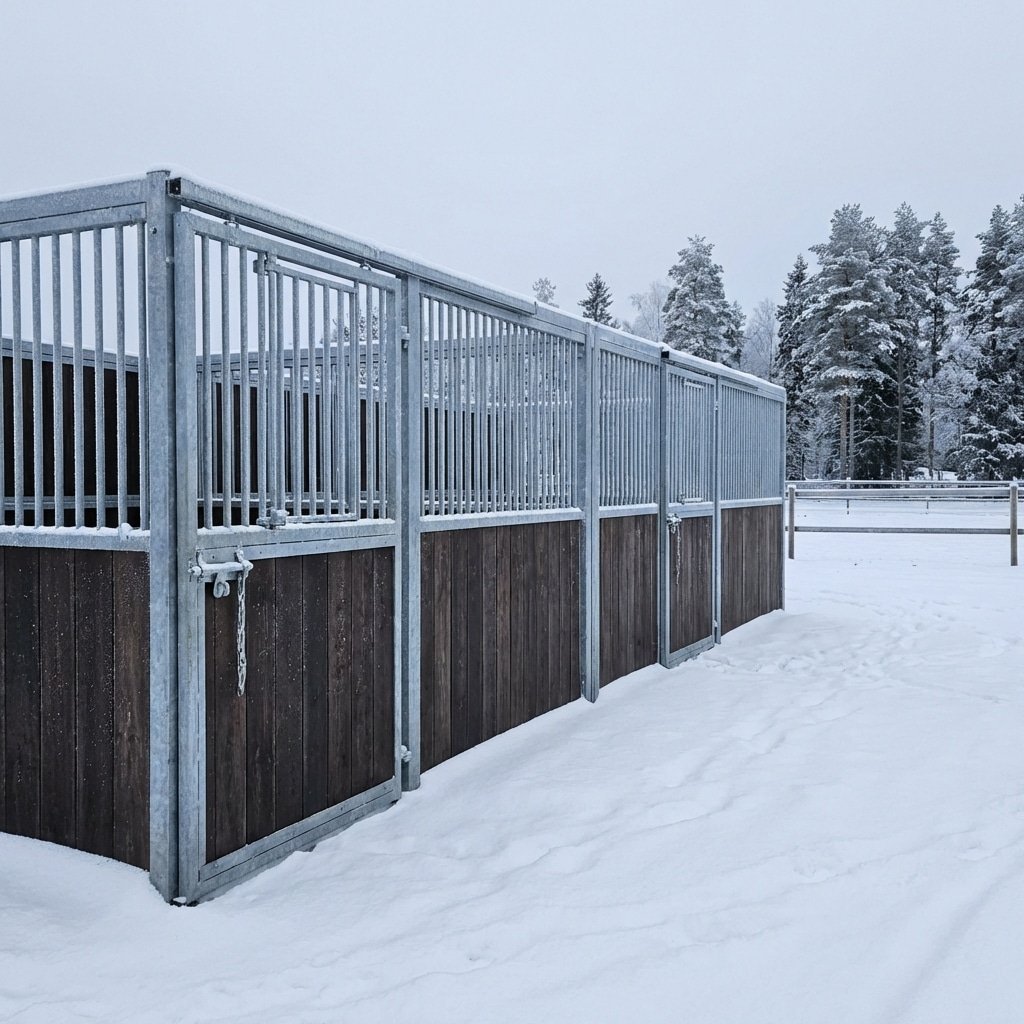
Yes. While our standard Q235B steel is robust, we offer an upgrade to Q345B steel for regions with harsh winters. This low-alloy, high-strength steel has superior low-temperature impact toughness, which prevents brittle fractures from horse kicks when the temperature drops well below freezing.
What is the minimum order quantity (MOQ) and production lead time?
Our MOQ is flexible to suit different needs: a trial order starts at 3-5 stables, a project order is typically a 20GP container, and a full distributor order is a 40HQ container. The standard production lead time is 35-45 days. This timeframe is necessary to schedule time at the galvanizing plant for the hot-dip process after fabrication.
Can I mount new fronts to old wood posts?
It’s possible, but only if an engineer confirms the posts are structurally perfect. Horse stalls take a lot of abuse. For guaranteed safety and correct alignment, our systems are engineered to work with new 50mm x 50mm steel posts designed for the load.
Is it cheaper to repaint old steel stalls or replace them?
Repainting is cheaper upfront, but it’s a short-term fix. Paint needs redoing every 5-10 years to control rust. A full replacement with a system that is hot-dip galvanized *after fabrication* to ISO 1461 standards is far more economical long-term. That finish lasts for decades with almost no maintenance.
Do new stall fronts come with tracks and hardware?
Yes, our products are sold as complete systems. A sliding front includes the door panel, a self-cleaning track, and trolleys. All kits, sliding or hinged, ship with a full hardware set of 304 stainless steel connectors and anchor bolts needed for installation.
Will a standard new front fit my 11-foot opening?
Standard fronts are typically built for 10-foot or 12-foot openings. An 11-foot space requires a custom-sized front. As an OEM manufacturer, we produce panels to your exact measurements to ensure a proper, secure fit without any unsafe gaps.
Do you sell just the door panel without the frame?
No. We only supply fully integrated kits. Our reputation is built on engineering complete, safe systems where every component, from the frame to the hardware, works together. Selling loose parts would compromise the safety and quality standards we guarantee.

 French
  English
  Spanish
  Arabic
  German
0 commentaires