


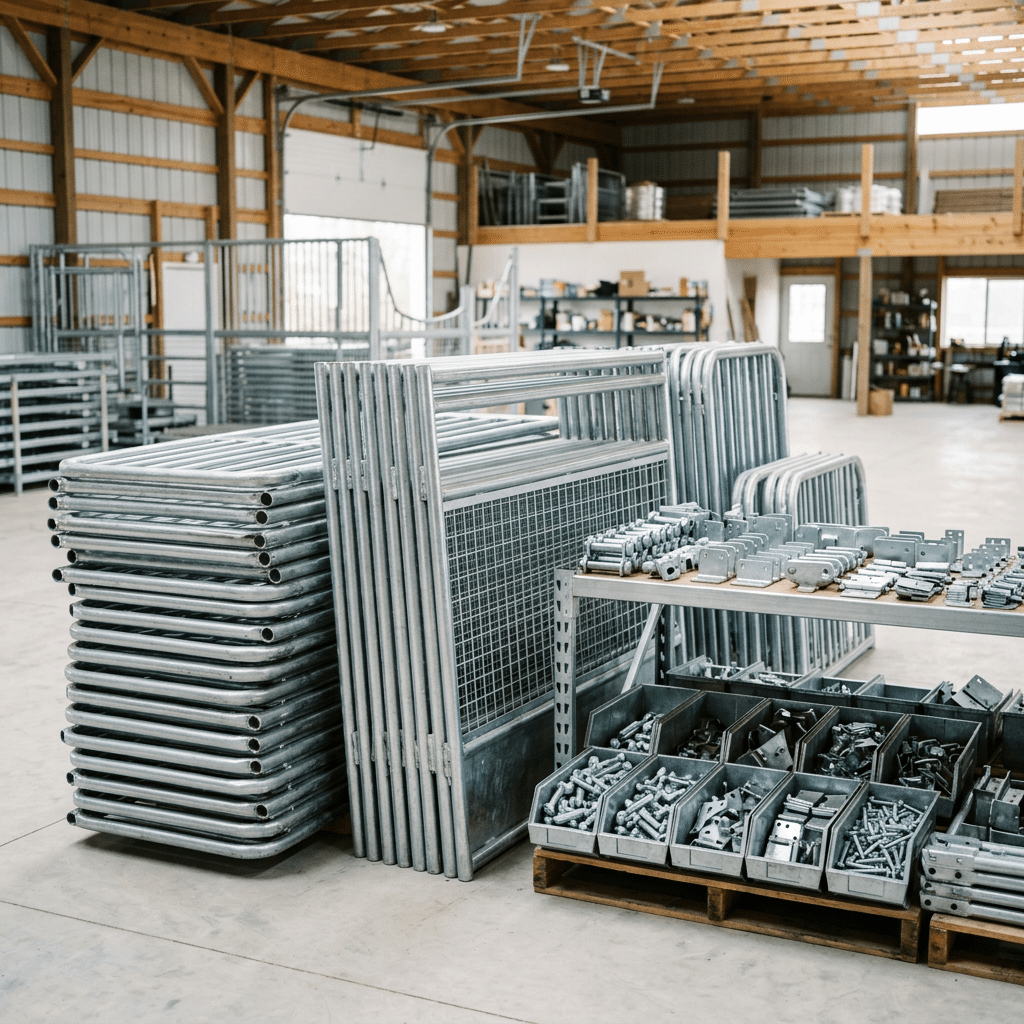
Flood washouts reveal a costly flaw in traditional barn construction. Porous materials like concrete and wood absorb contaminated water, trapping bacteria and fueling irreversible mold growth. This failure doesn’t just complicate cleanup; it often leads to structural condemnation, forcing a complete demolition instead of a simple recovery.
This analysis compares materials based on a single metric: water absorption. We benchmark traditional builds against modular stalls using non-porous, UV-stabilized HDPE and hot-dip galvanized steel. The data shows why a non-absorbent structure allows for a rapid hose-down recovery, eliminating the risk of a total tear-down.
The Rot Cycle in High-Humidity Environments
Porous wood in humid stables absorbs moisture, feeding fungus and rot. Modern designs use non-porous HDPE or dense bamboo infill, which can’t absorb water, stopping rot completely.
How Trapped Moisture and Stagnant Air Fuel Decay
The rot cycle kicks in when humidity levels rise above 55% and air circulation is poor. These two conditions work together
to create a breeding ground for fungus and decay.
Porous materials, especially untreated wood, act like a sponge. They trap ambient moisture inside their fibers, creating a damp microclimate where fungal spores can germinate and thrive. Without steady airflow to evaporate this trapped water, the material remains damp and the decay process accelerates.
Preventing Rot with Non-Porous Infill and Ventilation
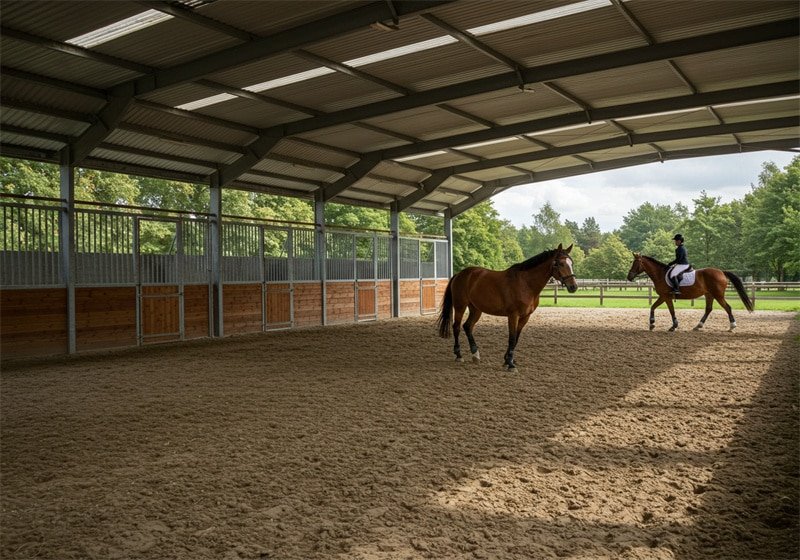
DB Stable designs directly counter these conditions by removing the key ingredient: moisture absorption. We use Remplissage en PEHD, a completely non-porous plastic that offers zero maintenance. It cannot absorb water, which stops the rot cycle before it can even begin.
High-density bambou tressé is another core material option, providing natural resistance to mold and rot. Its engineered density leaves no room for moisture to penetrate. This is paired with an open-grill design on stable fronts that promotes “Ventilation par effet de cheminée“—a constant, natural movement of air that keeps all interior surfaces dry and inhospitable to mold.
Material Comparison for Tropical Climates
En tropical climates, a material’s performance is defined by its water absorption rate. Non-porous options like HDPE and dense bamboo outperform wood, which requires constant maintenance.
Choosing the right material for a high-humidity, tropical environment isn’t about style—it’s about fighting a constant battle against moisture. When humidity stays above 60%, mold and rot can develop in as little as 24-48 hours. The key factor is how a material handles water. Porous materials become a food source for fungus, while non-porous materials starve it.
| Matériau | Absorption d'eau | Mold & Rot Resistance | Key Weakness |
|---|---|---|---|
| Pin traité | High (18-22%) | Low (Requires active ventilation) | Acts like a sponge, retaining moisture. |
| Bambou tressé | Very Low (~0.4%) | Excellent (When thermally treated) | Can swell with prolonged water exposure. |
| HDPE (High-Density Polyethylene) | Effectively Zero (<0.01%) | Immune | Requires UV stabilization for outdoor use. |
Treated Pine: A Suboptimal Choice
Treated pine is resistant to insects and initial decay, but it’s a losing battle against mold in the tropics. The material is porous and can absorb 18-22% of its weight in water. This retained moisture creates a permanent breeding ground for mold spores. Proper ventilation is not a suggestion; it’s a mandatory and constant requirement to prevent mildew and rot. For projects demanding low maintenance, treated pine is often a poor long-term investment.
Strand-Woven Bamboo: High-Density Resistance
This isn’t the decorative bamboo you see in gardens. Strand-woven bamboo is an engineered product made by compressing bamboo fibers under extreme heat and pressure. The thermal treatment removes the sugars that attract mold, and its incredible density (~1,200 kg/m³) makes it highly resistant to water ingress. With a Janka hardness over 3000 lbf, it is three times harder than oak. While it’s not fully waterproof, its 24-hour water absorption rate is only about 0.4%, making it a top performer in humid conditions.

HDPE: The Zero-Maintenance Solution
High-Density Polyethylene (HDPE) is a non-porous plastic, which means it is completely waterproof. It doesn’t absorb moisture, so it cannot rot, swell, or delaminate. This makes it structurally immune to mold and mildew. For applications like stable walls or marine components, a 28mm-32mm thick, UV-stabilized HDPE board offers impact absorption and requires no sealing, painting, or upkeep. It is the definition of a zero-maintenance material for wet and humid environments.
Material Choice Is Only Half the Battle
Even the best materials can fail if a structure is poorly designed. Effective airflow is critical in tropical climates to prevent condensation and moisture buildup. Passive strategies like cross-ventilation and stack ventilation help, but mechanical systems that actively dehumidify the air are often necessary. A sound design ensures that moisture is removed before it has a chance to settle on any surface, protecting the entire structure from decay.
Durable Horse Stables for Any Climate

Airflow Design to Prevent Tropical Fungal Infections
In tropical climates, high humidity fuels fungal growth. Stables with open-top grills create a natural “stack effect,” pulling moist, spore-filled air up and out, keeping the environment drier.
The Challenge of Humidity and Airborne Spores
High humidity is the primary driver of fungal infections in tropical stables. Building materials like wood and even bedding absorb ambient moisture, creating a perfect breeding ground for mold and other microbes. This isn’t just a surface-level problem.
The moist air also allows dangerous fungal spores, like Aspergillus, to stay suspended for much longer. Without effective air exchange, these spores concentrate in stagnant pockets of humid air, dramatically increasing the risk of respiratory infections for the horses living inside.
Using Open Grills for Stack Effect Ventilation
Warm, moisture-laden air from the horse’s breathing naturally rises. The open grills at the top of the stable fronts and partitions give this damp air a clear escape path. As it exits, it creates a gentle vacuum that pulls cooler, drier air in from lower levels. This constant, self-sustaining cycle of air exchange is critical for reducing humidity, lowering spore counts, and maintaining a healthier, drier stable environment without mechanical systems.
Questions fréquemment posées
Is HDPE plastic waterproof and suitable for wet environments?
Yes, HDPE is 100% waterproof. It has a water absorption rate below 0.01%, so it won’t swell, rot, or delaminate when exposed to moisture. Its non-porous surface acts as a complete barrier, making it the go-to material for stall walls in humid climates or areas prone to flooding.
Does the bamboo infill rot from humidity or horse urine?
No, it doesn’t. Our high-density strand-woven bamboo is engineered to be rot-resistant. Unlike regular wood, it goes through a thermal modification and resin-infusion process. This removes the natural sugars and creates an extremely dense, non-porous board that is highly resistant to moisture, mold, and decay.
What’s the best material for stalls in a high-humidity climate?
Non-porous materials are the only reliable choice. HDPE and engineered strand-woven bamboo are the best options because they are completely waterproof. They don’t absorb moisture, which prevents mold and mildew from growing. This is a common failure point for traditional wood barns that soak up humidity and eventually rot.
How does stall design contribute to ventilation and drying after a flood?
Smart stall design is critical for air circulation. Open-top grill designs create what we call the ‘stack effect.’ This natural process allows warm, moist air to rise and escape through the top of the stall front, while pulling in cooler, drier air from the aisle. This continuous airflow helps stalls dry out much faster and reduces overall humidity inside the stable.
Réflexions finales
Rebuilding with porous materials is a gamble against the next flood. A “hose-down and reopen” recovery is only possible with non-porous HDPE and a Trempage à chaud après fabrication steel frame. This isn’t just a feature—it’s the difference between a quick recovery and a total loss for your clients.
The specs on paper are one thing, but verifying the engineering is another. We recommend a small trial order to evaluate our ISO 1461 galvanization and the fitment of our flat-pack system. Contact our team to get the technical drawings or discuss your OEM requirements.

 French
  English
  Spanish
  Arabic
  German
0 commentaires