


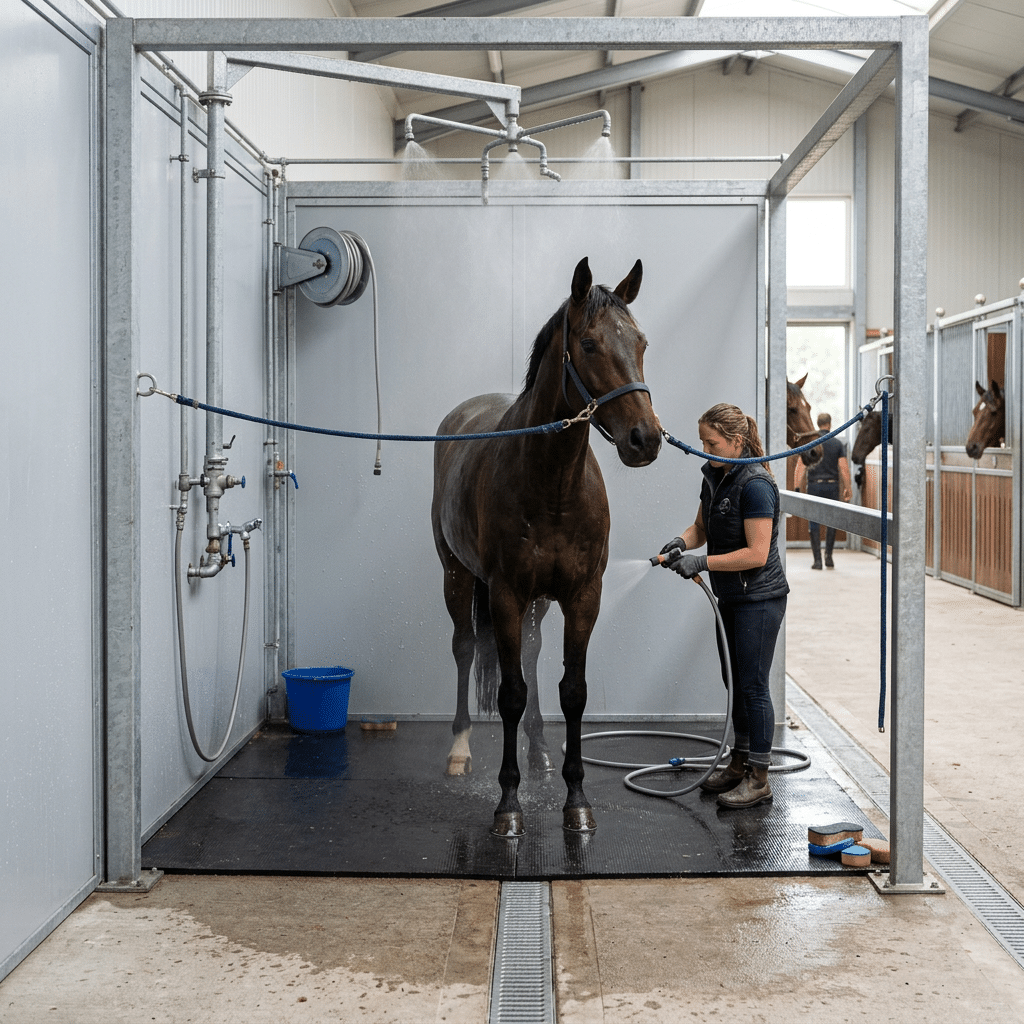
Designing effective Equine Rehab Centers requires specifying materials to mitigate the primary failure points: rot and contamination. Standard timber stalls in high-humidity hydrotherapy zones inevitably fail, leading to costly structural repairs, compromised biosecurity, and a direct threat to operational viability and patient safety.
This analysis provides the engineering data for a durable, hygienic facility. We benchmark waterproof HDPE against rot-resistant bamboo and detail why 304 stainless steel hardware is the required specification for mounting critical medical equipment in these environments.
The Rot Cycle in High-Humidity Environments
High humidity traps moisture, weakening materials and a horse’s skin to create a breeding ground for bacteria and rot. Non-porous materials like high-density bamboo and HDPE stop this cycle.
The Vicious Cycle of Moisture and Bacterial Growth
In environments with high humidity, evaporation slows to a crawl. This traps a persistent layer of moisture on every surf
ace, from stall walls to the horse’s own skin. Sweat doesn’t evaporate efficiently, and condensation settles on cooler surfaces, creating a perpetually damp environment.
This sustained dampness is the trigger for decay. It softens and weakens the protective barriers of both building materials and skin. Porous materials like traditional wood absorb this moisture, becoming a perfect substrate for mold and bacterial colonies to take hold and begin the process of rot.

Selecting Rot-Resistant Infill: Bamboo and HDPE
To break the cycle, you need materials that don’t participate in it. High-Density Strand Woven bamboo is an excellent solution. With a Janka hardness rating over 3000 lbf, this material is engineered to be incredibly dense and non-porous. The thermal treatment process removes the natural sugars that feed mold, giving it a powerful, built-in resistance to rot, even in constantly damp conditions.
HDPE offers a complete barrier to moisture. As a non-porous plastic, it has virtually zero water absorption. This means there’s nowhere for bacteria or mold to get a foothold. It cannot rot, swell, or delaminate. For stable environments where hygiene is critical and maintenance time is short, HDPE delivers a zero-maintenance infill that permanently starves the rot cycle of its key ingredient: absorbed moisture.
Material Comparison for Tropical Climates
In tropical climates, materials must resist moisture, UV, and pests. Hot-dip galvanized steel, UV-stabilized HDPE, and high-density bamboo excel, outperforming wood that rots and warps.
Distributors serving tropical regions face a simple reality: material choices that work in dry climates will fail fast. Constant high humidity (often over 70%), intense UV radiation, and aggressive pests create a brutal environment. The wrong material leads to rot, rust, and structural failure, resulting in unhappy customers and damaged reputations. Below is a direct comparison of materials based on their performance in these conditions.
| Matériau | Performance in High Humidity | UV & Pest Resistance | Maintenance Requirement |
|---|---|---|---|
| Acier galvanisé à chaud (DB Stable Frame Standard) | Excellent. Our hot-dip after fabrication process (ISO 1461) creates a zinc coating over 70μm thick. It resists rust from constant moisture and salt spray where pre-galvanized tubes fail. | Excellent. The metallic coating is unaffected by UV radiation. It is also impervious to termites and other boring insects. | Minimal. Requires only occasional cleaning to remove surface dirt. No re-coating needed. |
| UV-Stabilized HDPE (DB Stable Infill Option) | Excellent. HDPE is 100% waterproof with virtually zero water absorption. It cannot rot, swell, or support mold growth. | Excellent. UV stabilizers are mixed into the material, preventing the brittleness and fading common in standard plastics. Completely pest-proof. | Zero. A key selling point for distributors. The material is non-porous and needs no sealing, painting, or treatment. |
| Bambou haute densité (DB Stable Infill Option) | Excellent. The strand-woven boards are thermally treated to remove all sugars and starches, making them highly resistant to rot and mold. | Excellent. With a Janka hardness over 3000 lbf, it is three times harder than oak and naturally pest-resistant. Good UV stability. | Low. The dense, treated material is durable and does not require the frequent treatments needed for other woods. |
| Pin traité (Common Competitor Material) | Poor. Even when pressure-treated, pine absorbs significant moisture (18-22% by weight). This creates ideal conditions for mold and eventual rot without constant ventilation. | Fair. Chemical treatments offer initial pest resistance but can degrade with UV exposure, compromising protection over time. | High. Needs regular inspection for mold, cleaning, and potential resealing to maintain its integrity in a tropical setting. |
Durable, Climate-Ready Stables for Any Facility.

Airflow Design to Prevent Tropical Fungal Infections
Effective airflow design is a primary defense against tropical fungal infections. Open grills create a natural ‘stack effect,’ removing moist air to inhibit mold and fungus growth.
How Stagnant Air and Humidity Foster Fungal Growth
Tropical climates maintain high humidity levels year-round, creating the perfect breeding ground for airborne fungal spores. When a stable lacks constant air exchange, this warm and moisture-heavy air gets trapped inside.
This stagnant environment dramatically accelerates mold growth. Bedding becomes persistently damp and structural surfaces collect condensation, providing the fuel fungi need to colonize and spread throughout the stall.
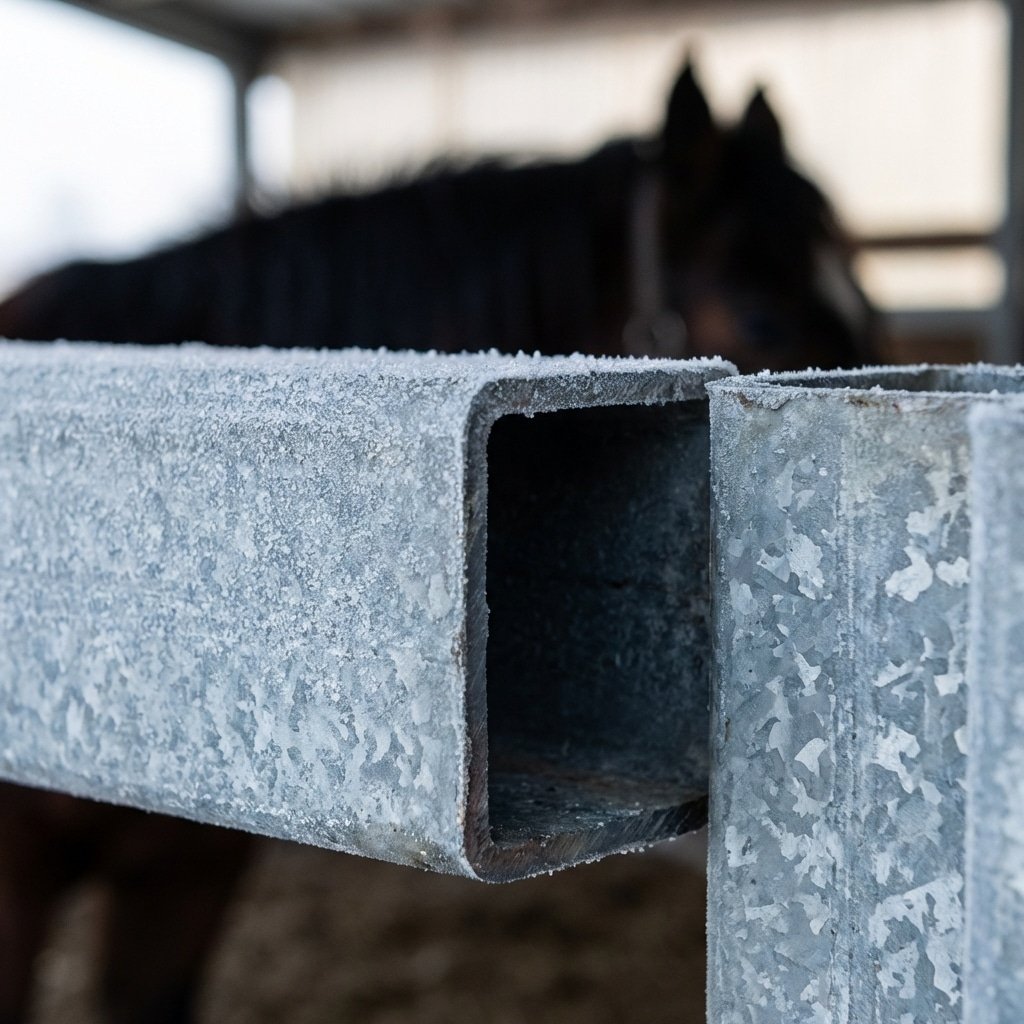
Using Open Grills for Stack Effect Ventilati on
Our open top grill designs are engineered to create a natural air circulation process known as ‘Stack Effect Ventilation’. This is a passive but highly effective way to manage the stable’s internal climate.
The principle is simple. Warm, moist air from the horse’s breath and body heat naturally rises. The open grills at the top of the stable front provide an unrestricted exit path. As this air escapes, it creates a pressure difference that pulls cooler, drier air in from lower levels. This continuous cycle constantly flushes out humid air, lowering the ambient humidity and making it difficult for fungus to develop.
Réflexions finales
Using standard wood or pre-galvanized steel guarantees failures from rot and rust in these high-humidity environments. Our specification—hot-dip galvanizing with non-porous HDPE or high-density bamboo—is the only way to protect your clients from structural risks and liability. Compromising on materials is a direct compromise on animal welfare and your professional reputation.
Before committing to a full facility fit-out, validate the engineering and material quality firsthand. We recommend a trial order to test the system’s strength, finish, and ease of assembly. Contact our team to review technical drawings and discuss custom hardware integration for your project.

 French
  English
  Spanish
  Arabic
  German
0 commentaires