


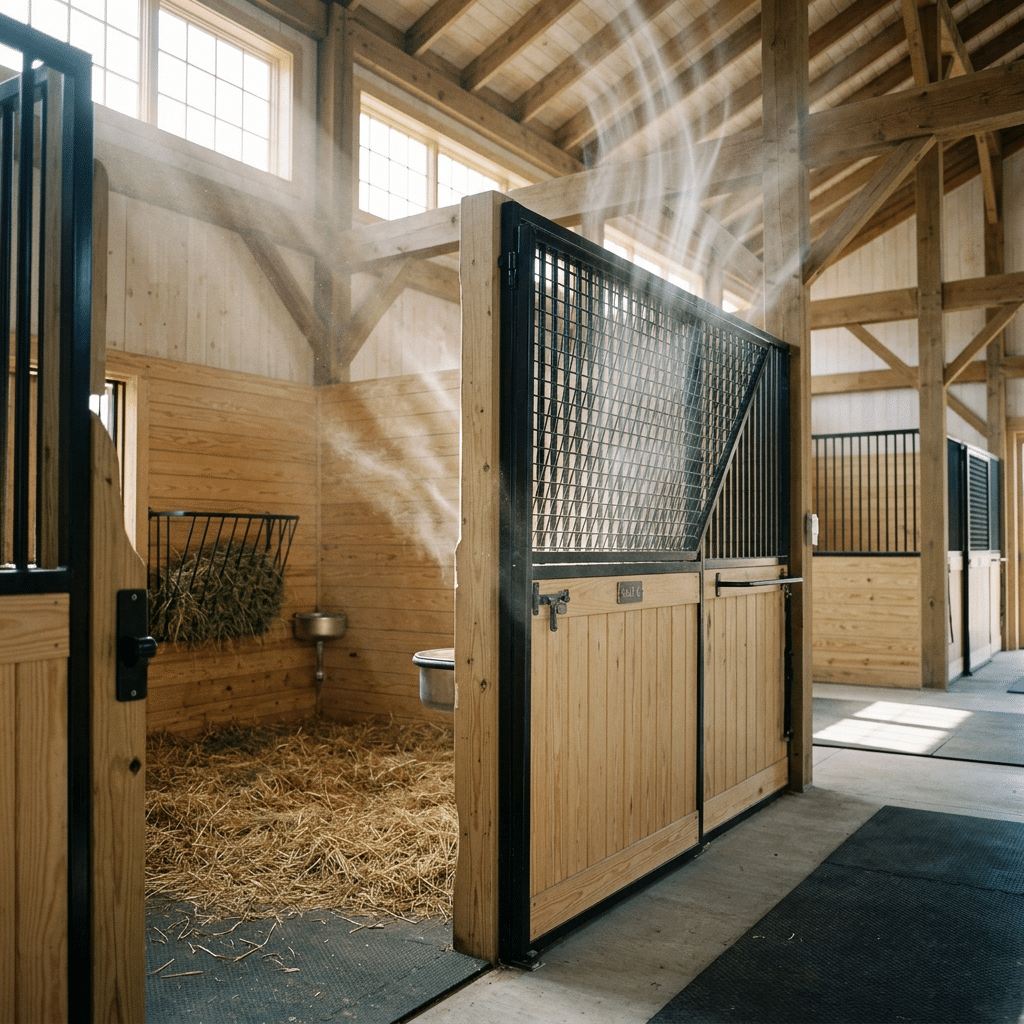
Insurance companies don’t mess around with fire safety compliance. A barn fire goes from a spark to a total inferno in under 60 seconds. Build with a combustible timber frame, and you’re basically feeding the fire—accelerating structural collapse and guaranteeing a catastrophic loss.
Let’s benchmark building materials on one metric: time. We’re looking at how non-combustible Q235B steel frames and fire-retardant HDPE infill actually perform—how engineered materials buy those critical extra minutes for evacuation.
The Reality of Barn Fires: Speed of Ignition
A barn fire can go from spark to inferno in under 60 seconds. Dry hay, bedding, and dust are powerful accelerants, making the initial moments critical.
Ignition Timelines: From Spark to Blaze in Seconds
The speed of a barn fire isn’t theoretical. Research shows that in dry, windy conditions, a match-sized fire can engulf an entire acre in 30 to 60 seconds. A discarded cigarette on hay? Open flame in under a minute. You don’t have time to debate what to do. The window for action is measured in seconds.
The Importance of a Non-Combustible Framework
With a fire spreading that fast, the building’s structure cannot add fuel to the blaze. A wooden frame acts as kindling. That’s why we build exclusively with Q235B and Q345B structural steel. DB Stable’s framework is non-combustible. It won’t ignite. It won’t add energy to a fire. That helps contain the blaze and buys precious time for people and animals to get out.
The Combustible Load: Hay, Dust, and Pine Wood
Hay, dust, and pine shavings create a major fire hazard. Fine airborne particles from these materials can form an explosive mixture, acting as the primary fuel for barn fires.
Why Fine Dust Is More Dangerous Than Solid Wood
The biggest fire accelerant in a barn isn’t a pile of wood shavings. It’s the fine, almost invisible dust floating in the air. Solid wood burns slowly. But grind that same wood into fine particles suspended in the air, and its surface area explodes exponentially. That massive surface area lets the dust ignite almost instantly—creating conditions for a violent explosion, not just a fire.
A combustible dust explosion requires five specific conditions—the “dust explosion pentagon.” Remove any one of these elements, and you prevent the catastrophe.
- Fuel: Combustible dust from hay, wood, or grain.
- Dispersion: The dust must stay suspended in the air at a sufficient concentration.
- Confinement: The event happens within an enclosed space like a barn or silo.
- Ignition Source: A spark from faulty wiring, a hot surface, or static electricity.
- Oxygen: Standard air provides more than enough.
Designing Stables That Don’t Add to the Fuel Load
Material selection is a critical, and often overlooked, fire prevention strategy. Traditional timber-frame barns are built entirely from fuel. Every post and beam contributes to the combustible load. Modern stable designs engineer this risk out from the start. Using a non-combustible steel framework, like Q235B or Q345B steel, eliminates the structural components as a fuel source. The frame itself cannot burn or help a fire spread.
The same issue comes up with infill materials. Wood planks splinter, get chewed up, and degrade over time, releasing fine dust that coats every surface. High-Density Polyethylene (HDPE) doesn’t contribute to that combustible dust problem. It absorbs impact, won’t splinter, and sheds no fine particles, cutting down the fuel load in a fire scenario.
Custom Horse Stables for Any Climate
Steel Framework vs. Timber Framing in a Fire
Steel frames are non-combustible and maintain integrity longer in a fire. Timber frames are combustible, fuel the fire’s spread, and lead to faster structural collapse.
| Facteur | Steel Frame | Timber Frame |
|---|---|---|
| Combustibility | Non-combustible. Will not burn or ignite. | Combustible. Burns and acts as fuel. |
| Ignition Point | N/A (Does not ignite) | ~280°C |
| Fuel Contribution | Zero. Helps contain a fire by not adding fuel. | High. Actively fuels the fire, accelerating its spread. |
| Structural Behavior | Retains shape and load-bearing capacity longer under heat. | Weakens as it is consumed by flames, leading to rapid collapse. |
Combustibility and Structural Behavior Under Heat
The core difference is simple: steel doesn’t burn, and wood does. Timber ignites at roughly 280°C and actively feeds a fire once it catches. In a barn environment already packed with hay and dry bedding, that’s a serious problem.
Steel is non-combustible. It won’t ignite or contribute fuel at any temperature. That alone can slow fire growth significantly, keeping the damage contained to a smaller zone. Extreme heat will eventually weaken steel, but a steel frame holds its shape and structural integrity far longer than timber that’s actively burning away. That extra time can mean the difference between getting everyone out safely and a total loss.
The Safety Standard of Q235B Structural Steel
Our stable frames use Q235B structural steel, which adds zero combustible load to the building. Choosing a non-combustible frame is one of the most straightforward ways to manage fire risk from the start. It helps stop a small fire—say from faulty wiring or a heat lamp—from consuming the entire structure.
That’s a major safety advantage in barns where hay and bedding are always present. Insurance companies factor this in. Many barn owners find that a non-combustible steel frame actually lowers their annual premiums, which puts a clear financial benefit alongside the obvious safety gain.
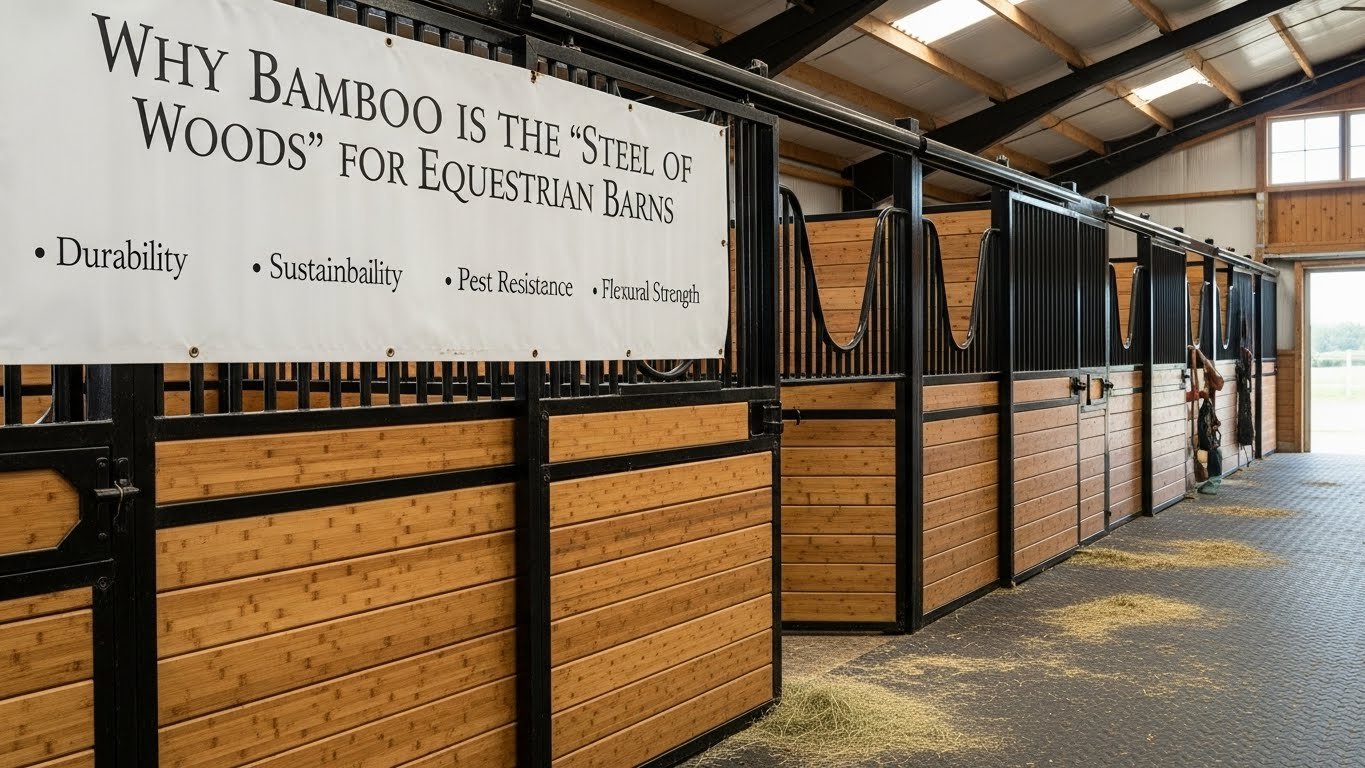
Infill Materials: Does HDPE or Bamboo Burn?
Both untreated HDPE and bamboo will burn. The key difference is engineering—HDPE can be made with fire retardants to slow ignition and reduce smoke, a critical safety advantage.
The Combustibility of Untreated Materials
Let’s be honest about material science. In their raw, untreated state, both HDPE and bamboo are flammable. That’s just how the chemistry works. HDPE is a thermoplastic polymer—give it enough heat and it will ignite and burn.
Bamboo burns. It’s a natural material, similar to wood, and when a fire gets going, it adds fuel to the load. If it catches, it helps the fire spread.
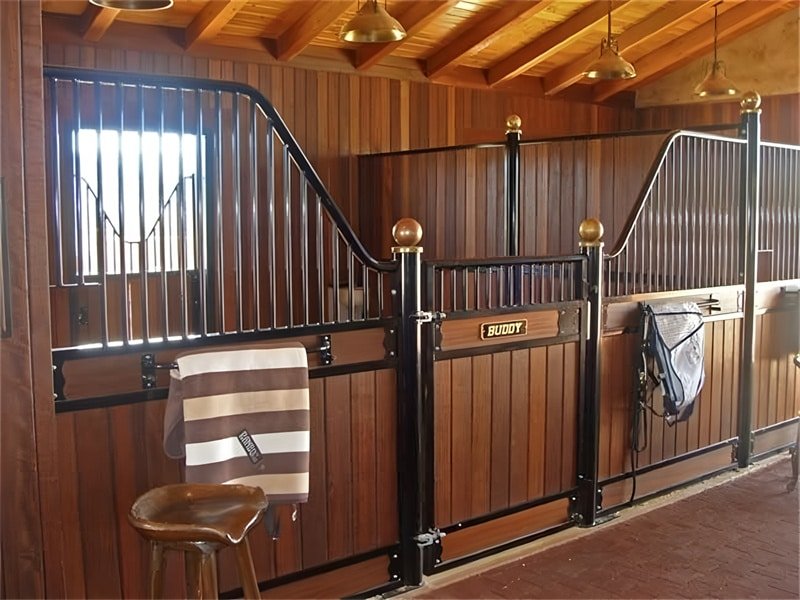
Engineered Safety: The Role of Fire Retardants in HDPE
The real issue isn’t raw materials—it’s what modern manufacturing can do with them. You can’t easily change bamboo’s basic nature. But with HDPE, you can engineer safety into the material itself. That’s where the specification game starts.
Modern HDPE gets fire-retardant additives mixed right into the polymer during production. These slow ignition, cut flame spread speed, and produce less smoke than untreated plastics. If fire risk is a serious concern at your facility, this engineered option gives you a safety layer natural materials can’t match without heavy secondary chemical treatments.
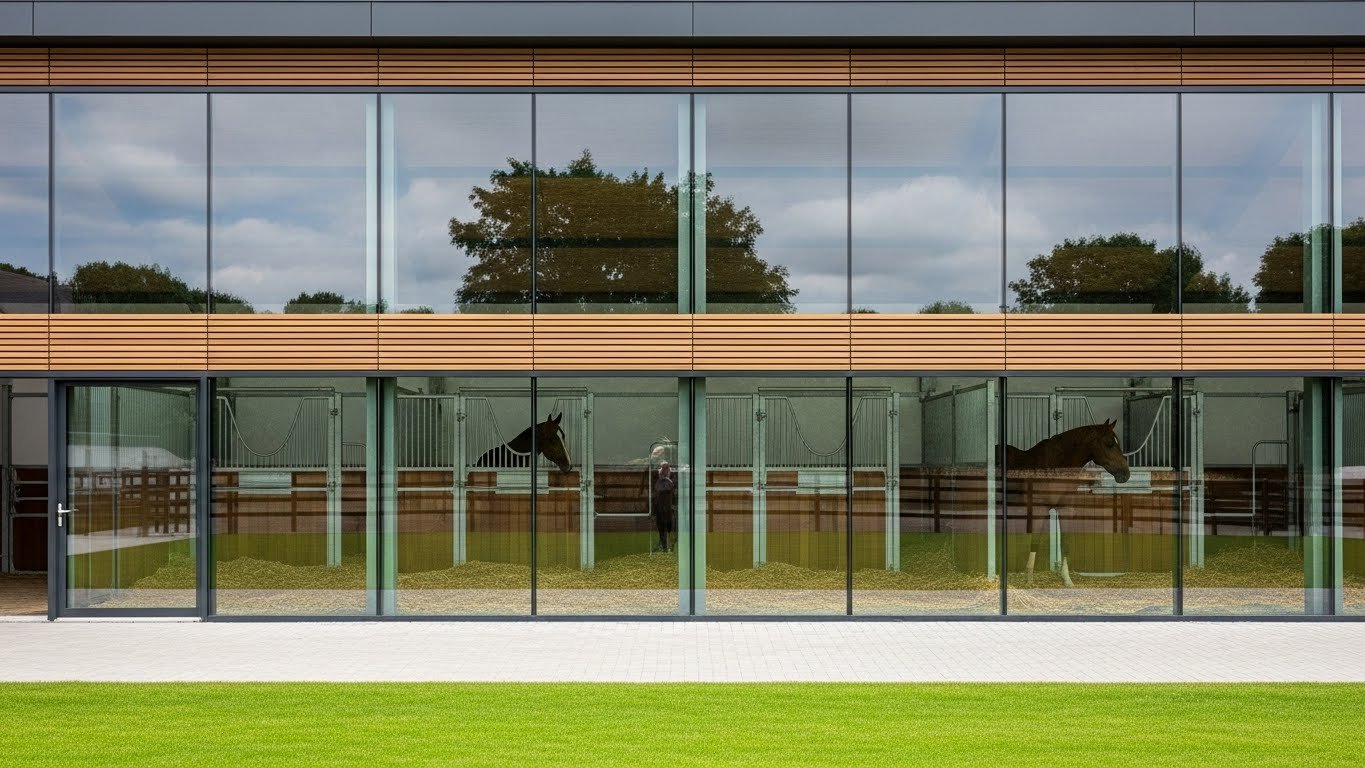
Egress Design: Fast-Release Latches for Emergencies
Fast-release latches allow immediate stall door opening during a fire. Their reliability depends entirely on using high-grade, corrosion-resistant materials that won’t seize under pressure.
How Manual Release Mechanisms Work
These latches unlock with minimal force. Barn staff can open doors fast, even panicked during an emergency. Standard latches balance security with access—emergency latches prioritize speed. The whole design is about rapid evacuation, not keeping a determined horse contained.
The Role of Corrosion-Resistant Hardware
Frequently Asked QuestionsAre steel horse barns safer than wood barns in a fire?Yes. Steel is non-combustible—it won’t ignite or feed a fire. Wood acts as fuel and makes fires spread faster. That’s why steel structures get higher fire safety ratings.Is bamboo a safe infill material regarding fire?Untreated bamboo can be flammable. But the high-density, engineered bamboo used in quality stables goes through treatments that achieve top fire safety ratings, like Class A. It’s a safe, durable option.What is the best way to prevent a barn fire?Layer your approach. Enforce a strict no-smoking policy. Maintain all electrical systems to prevent sparks. Store hay and chemicals in a separate building away from the main stables.How do emergency latches improve horse safety during a fire?Every second counts. The best latches offer simple, one-handed operation. Handlers can release horses fast, even in smoke or high stress. Reflectors on latches help people find them in low visibility.Does using fire-resistant materials like steel affect barn insurance?Often yes. Steel is non-combustible and lowers fire risk, so many insurers offer lower premiums for steel barns compared to wood. That means long-term savings on top of better safety.Final ThoughtsChoosing materials on price alone is a liability. A non-combustible Q235B steel frame isn’t just a feature—it’s an insurance-compliant standard that protects your clients from catastrophic loss. That specification builds a safety reputation and locks in long-term dealer trust.Verify the engineering before you commit to a container load. Start with a trial order. Test our fitment, finish, and the performance of our non-combustible materials firsthand. Our team can discuss OEM specs that align with your clients’ insurance and compliance needs.

 French
  English
  Spanish
  Arabic
  German
0 commentaires