


The argument for PVC vs wood horse fencing usually starts with looks and ends with maintenance, but the decision is really about impact behavior and climate. A horse that spooks into a fence meets the fence’s material physics: wood splits, PVC flexes or breaks away at designed points, and the injury outcome follows from that difference. Everything else — paint, rot, replacement boards, UV degradation — is the cost of living with the choice, and the costs run in opposite directions over the years.
DB HorseStable manufactures both fence families for export: economical galvanized steel horse fence panels and UV-resistant PVC arena fencing rated for a 15-year lifespan in climates reaching 40°C, including the Australian and Spanish markets it serves. This guide compares PVC and wood on impact safety, maintenance and lifespan — using the factory’s ratings where they exist and comparison logic where only your site can supply the numbers.
Key Takeaways
- Impact safety is the deciding criterion: wood splinters on impact, while PVC rails are designed to flex and give under a horse’s weight — the injury patterns differ accordingly.
- UV-resistant PVC carries a 15-year lifespan rating in hot climates up to 40°C; wood’s lifespan depends on treatment, drainage and maintenance with no equivalent rating.
- Wood asks for recurring work — painting or treating, board replacement, rot and chew repair; PVC asks for washing and post-impact rail replacement.
- Climate decides the matchup: high-UV markets favor rated PVC; consistently wet climates are the hardest test for timber and its fasteners.
- Fence panel orders start at 50 panels with tiered bulk discounts of 5-15%, and the comparison should be priced per installed meter, not per rail.
Impact Safety: What Happens When a Horse Hits the Rail
Fencing safety is decided in the half-second of a spook, a slip or a kick-out at the rail. A wooden rail transmits that event as physics deals it: the board either holds and the horse takes the full stop, or the board splinters — and splintered wood around a panicked horse is laceration risk, not just fence damage. The failure is ungraceful, and the debris is hazardous. Timber’s stiffness is the property that makes it a durable fence and a hard landing at the same time.
PVC arena fencing is engineered around the opposite assumption — that the fence will be hit and should fail safely. Rails flex under pressure and give way at designed points rather than shattering into sharp fragments, so the horse’s impact spreads over time and distance instead of stopping at a rigid line. The same logic applies to kicks from inside the paddock: a flexible rail absorbs what a stiff board reflects. The neighboring question — PVC versus steel’s shatter risk — is covered in its own guide on this site; wood sits at the stiff end of the same spectrum, with splinters as its signature hazard.
One honest caveat belongs here: flexibility and containment trade off. A rail that gives easily is gentler on the horse and less effective as an absolute barrier, which is why arena and paddock fencing is a different specification from boundary security. Match the fencing’s job to the horse population it holds, and treat impact behavior as the first specification line, not the last.
Maintenance: Two Different Jobs
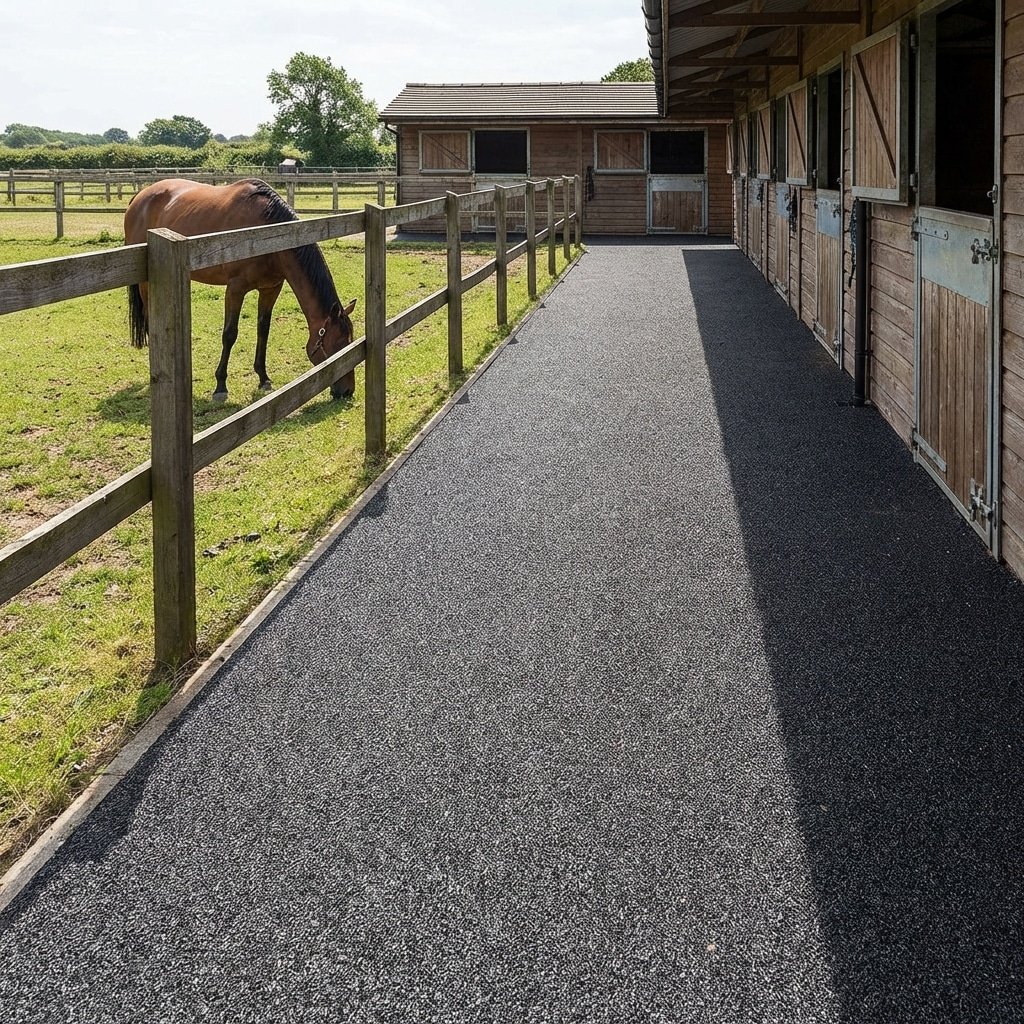
Wooden fencing is a maintenance subscription. The boards need treating or painting on a recurring cycle; moisture works on posts at ground level; fasteners loosen as timber swells and shrinks; horses chew rails wherever they can reach, and chewed wood both looks bad and decays faster. None of these jobs is difficult, and all of them recur — the five-year ledger for a timber fence is labor plus treatment plus replacement boards, and the yard below shows the other side of the deal: even a well-kept timber facility carries rails that weather and demand their next round of care.
PVC’s maintenance job is smaller and different. The material needs no painting or chemical treatment; the work is washing, checking post mounts, and replacing the occasional rail after a genuine impact — a swap rather than a carpentry job. Chewing is a non-event: the rail gives a chewer nothing to splinter off. The failure mode to respect is UV degradation, and that is a specification question rather than a maintenance one: rated, UV-resistant PVC carries a 15-year lifespan even in hot climates, while unrated product in the same sun will embrittle years earlier. Buy the rating, not the color.
Lifespan and Climate: Where Each Material Wins
The factory’s UV-resistant PVC line is rated for 15 years of service in climates that reach 40°C — a rating built for exactly the Australian and Spanish markets in its export range. That is the number to hold suppliers to: written, UV-specific, and matched to your climate’s actual sun exposure. Wood offers no comparable rating because its lifespan is a function of treatment quality, drainage, fastener maintenance and local moisture — the same fence can serve decades in a dry climate and rot in a fraction of that time where posts stand in wet ground.
So climate sorts the matchup. In high-UV, hot-summer markets, rated PVC ages predictably and timber ages better than its reputation only if the maintenance is actually performed. In consistently wet climates — the UK and New Zealand end of the factory’s range — timber’s enemy is moisture at the post line, and PVC’s advantage is that it does not care: no absorption, no rot, no treatment cycle. The wind question is separate and cuts both ways, which is why the wind-exposed arena fencing guide on this site is required reading before either material is ordered for an exposed site.

Specifying and Pricing the Comparison
Price the comparison per installed meter of containment, over the years you will actually run the fence, and the line items sort into three groups. The table below is the structure — your site fills the numbers.
| Line item | PVC arena fencing | Wood post-and-rail |
|---|---|---|
| Initial supply | UV-resistant PVC rails and posts; 50-panel minimum order; 5-15% bulk tiers | Treated timber and posts from local supply; priced per meter |
| Installation | Post setting and rail mounting; no treatment step | Post setting, rail fixing, initial treatment |
| Recurring maintenance | Washing; checking mounts | Treating/painting; board and fastener replacement; chew repair |
| Impact event | Rail replacement — a swap | Board replacement — carpentry, plus injury risk from splinters |
| Rated lifespan | 15 years, UV-rated to 40°C climates | No equivalent rating; depends on treatment, drainage and upkeep |
On the supply side, the fence panel minimum order is 50 panels with tiered bulk discounts of 5-15% — the same tiered-discount structure as the stabling line, which matters for facilities pricing both together. And note what the table does not contain: a per-meter number. Those belong to your quotes, and the discipline that makes them comparable is the same eight-line habit the walker pricing guide on this site describes — specify identically, then compare.
Questions fréquemment posées
Is PVC fencing safer than wood for horses?
On impact behavior, yes: PVC rails flex and give way at designed points, while wood either holds rigid or splinters — and splintered rails are a laceration hazard around a panicked horse. The trade-off is containment: a flexible fence is gentler and less absolute, so match the specification to the job the fence does.
How long does PVC horse fencing last?
The factory’s UV-resistant PVC arena fencing is rated for a 15-year lifespan in climates reaching 40°C. The rating is the purchase criterion: buy PVC with a written UV rating matched to your climate, because unrated product in strong sun embrittles years earlier.
Does PVC fencing need maintenance?
It needs a different and smaller job: washing, checking post mounts, and replacing the occasional rail after a genuine impact — a swap rather than carpentry. No painting, no chemical treatment, and chewing is a non-event because the rail gives a chewer nothing to splinter off.
Which is better in a wet climate?
Wet climates are the hardest test for timber — moisture works on posts at ground level and the treatment cycle gets shorter. PVC does not absorb, rot or need treatment, which is why the UK and New Zealand markets in the factory’s range lean toward it. Confirm drainage and post-setting details for either material before ordering.
Conclusion
PVC vs wood horse fencing resolves into three questions. Impact: PVC flexes and gives where wood holds or splinters. Maintenance: PVC swaps rails while wood runs a treatment-and-repair subscription. Climate: a written 15-year UV rating for PVC in hot markets, versus timber’s dependence on upkeep and drainage. Price the two per installed meter over your actual horizon, and the answer is usually decided before the quotes come back.
If your climate and horses point to PVC, review the horse fence options on the product pages — and read the 40°C UV performance guide first so the rating you buy is the rating your site needs.

 French
  English
  Spanish
  Arabic
  German
0 commentaires