


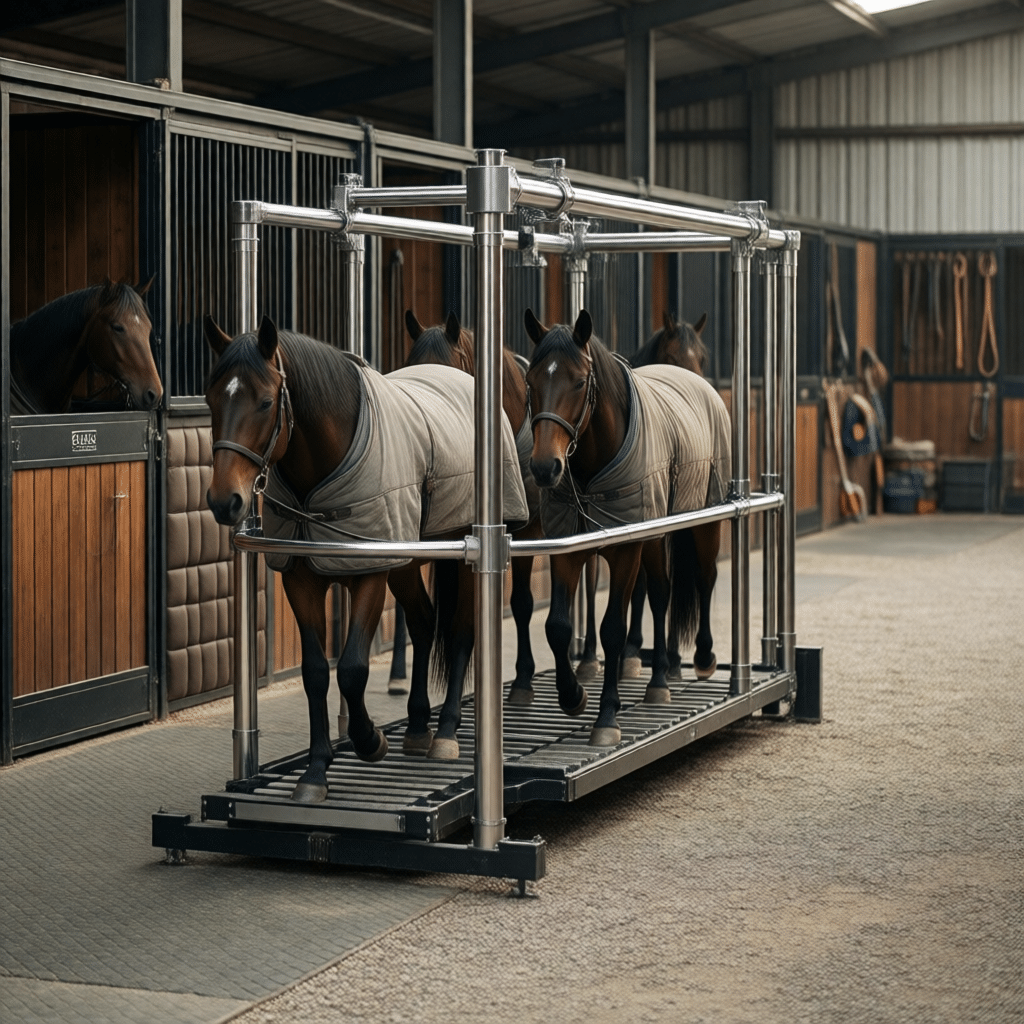
Horse walkers are the pieces of training infrastructure that quietly set the daily rhythm of a professional yard: warm-ups before work, conditioning on rest days, cooling down after schooling. But not all walkers are built to the same standard, and the differences that matter — motor quality, drive system, roof compatibility and diameter sizing — are exactly the ones a spec sheet can hide. For training centers and commercial yards buying at wholesale volume, the purchase decision is a long-term commitment, so it deserves a component-level look rather than a brochure-level one.
This guide covers the four decisions that define a horse walker purchase: the drive and motor system (including why Italian motor systems carry a reputation worth paying for), the case for buying with a roof option in climates that punish open-air machinery, how to size the diameter for your horses and training program, and how the buying mechanics — MOQ, tiered wholesale pricing and delivery timelines — actually work for volume orders from this factory.
Key Takeaways
- The motor is the walker: the drive unit determines noise, smoothness and maintenance intervals more than any other component — Italian motor systems are the reference standard this factory builds its training equipment around.
- Roof options are cheaper at order stage: specifying a walker ready for roof integration upfront costs less than retrofitting structural anchoring later.
- Diameter follows horse count and gait: more horses or faster gaits demand a larger circle — undersized walkers force crowding and uneven loading on the inside limbs.
- Volume pricing is tiered: wholesale orders carry 5-15% tiered discounts on this factory’s equipment lines.
- Plan the lead time: global delivery runs 4-6 weeks from this manufacturer, with 1-2 week expedited options from regional warehouses in Sydney and Warsaw.
Drive Systems and Why Italian Motors Set the Standard
Every walker on the market looks similar from fifty meters: a central column, radial arms, horses walking in a circle. From two meters, the differences concentrate in one place — the drive unit that turns the arms. A poor motor announces itself within a season: jerky starts that unsettle horses, a whine that carries across the yard, and maintenance intervals measured in months instead of years. A good drive does the opposite: it ramps smoothly, holds speed under uneven loading (one horse leaning, one lagging), and runs quietly enough that you can hold a conversation beside it.
Italian motor systems have earned their reference status in equestrian equipment for exactly these reasons — precision speed control and durability under daily professional use — and the training equipment line from this manufacturer is built around them. When you compare walkers, ask three questions about the drive: what is the speed range and how smoothly does it step between speeds (horses benefit from gradual transitions, not lurches); how does the system handle an obstruction or a horse stopping (slip clutches and pressure-sensitive cut-offs protect both horse and machine); and what does the maintenance schedule actually require. A supplier who cannot answer those three questions from the spec sheet is reselling, not manufacturing.
Roof Options: Weather Protection as a Spec Decision
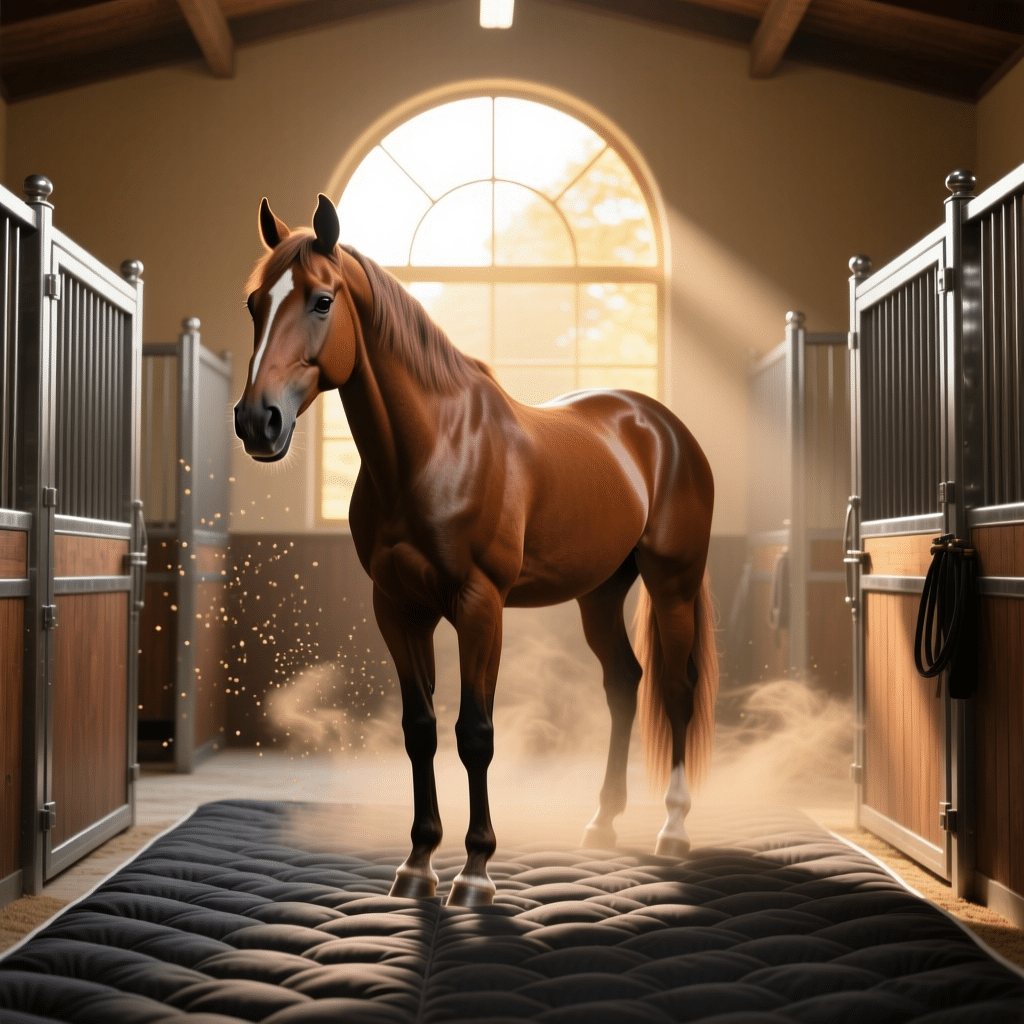
An open-air walker in a mild climate is a reasonable choice; the same machine in a climate with punishing sun, driving rain or snow loads needs a roof, and the roof needs to be part of the structure, not an afterthought bolted onto columns that were never designed to carry it. Roofed walkers keep footing consistent (a wet walker circle turns to slippery rutted ground fast), protect the drive electronics from weather ingress, and keep the training schedule running through seasons that would otherwise idle the equipment.
The order-stage decision is structural: a walker specified for roof integration ships with the anchoring, column reinforcement and load paths the roof requires, while a retrofit roof on a standard walker often means compromising the structure or re-fabricating components on site. Buyers in the nine markets this factory serves — from the 40°C UV exposure of Australian and Spanish summers to Polish winters that drop to -10°C — should match the roof specification to the worst season their yard operates in, not the average one. The regional climate engineering that goes into this manufacturer’s stable systems applies equally to its training equipment line: materials are specified for the destination market’s conditions.
Sizing the Walker: Diameter, Horse Count and Gait
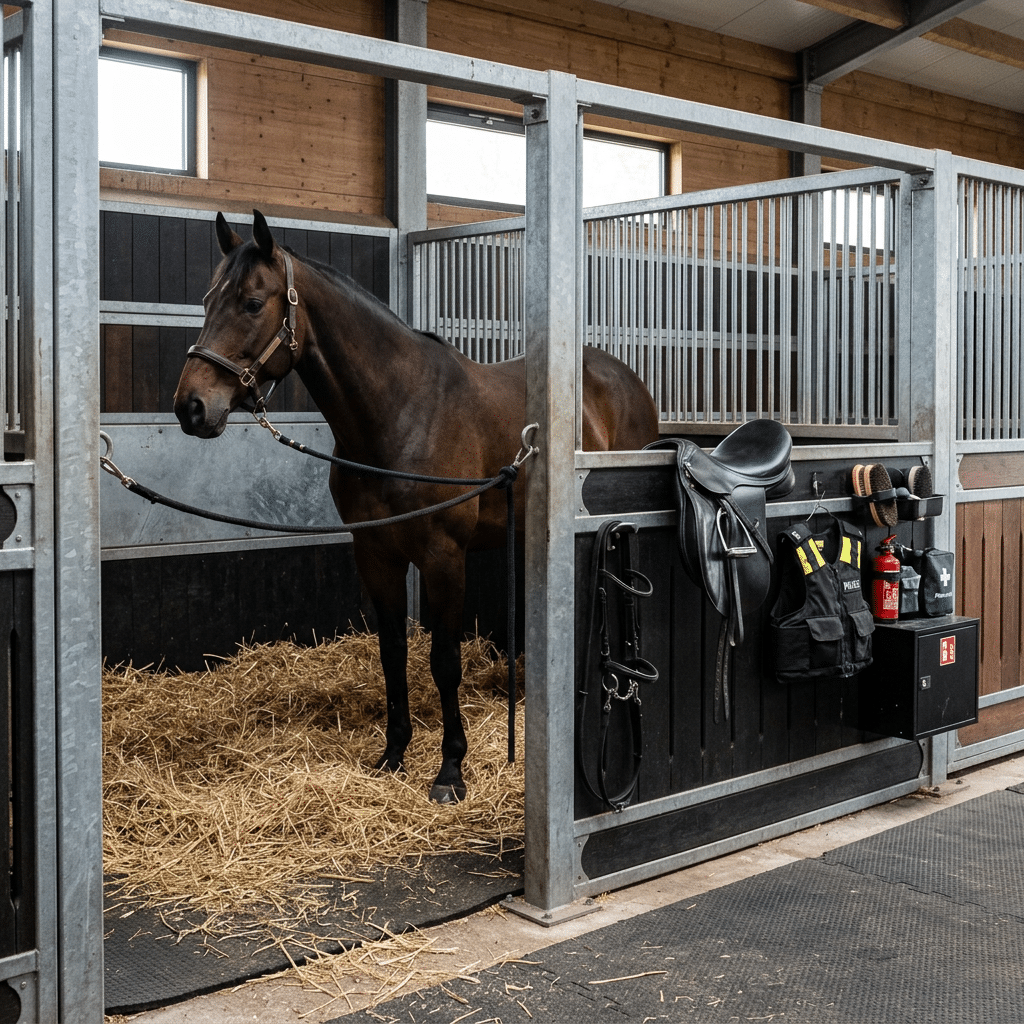
Diameter is the sizing decision, and it compounds: too small a circle forces horses onto a permanently bent posture, loads the inside limbs unevenly, and caps the gaits you can train — while too large a circle consumes yard space and budget for capacity you do not use. The honest sizing method starts from your program: count the horses that need simultaneous work, then decide the fastest gait the walker must support. Walking-only programs fit smaller diameters; walk-and-trot work demands more circle for the same horse count. Whatever capacity you choose, each step up in horse count should come with a step up in diameter, not more arms squeezed onto the same circle.
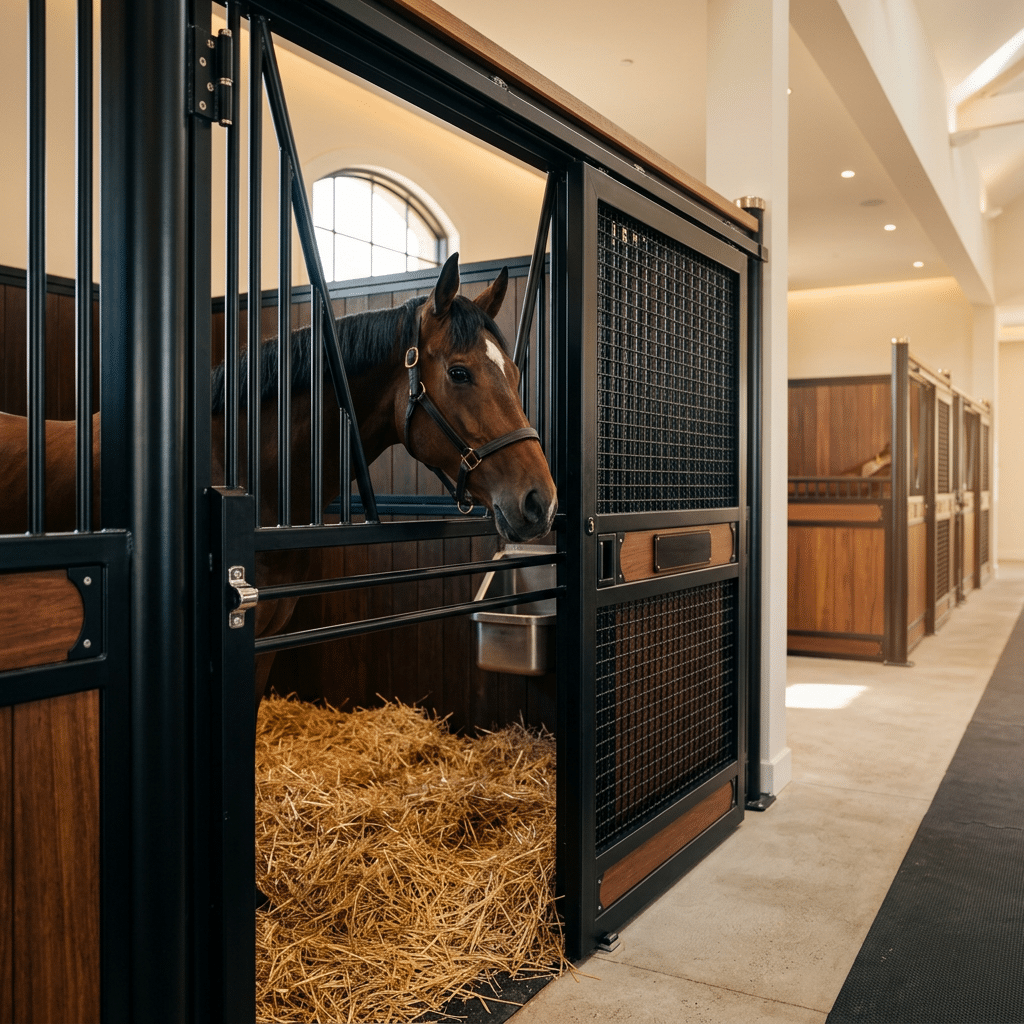
Two practical checks keep the sizing honest. First, measure the installed footprint including the clearance a horse needs at the outer rail — the walking circle diameter is not the footprint diameter, and site planning that confuses the two discovers the error during installation. Second, if the walker shares a facility with other training infrastructure — lunging pens, show jumps, arena fencing — plan the layouts together, because a walker anchors traffic patterns across the whole yard. This manufacturer’s training equipment range covers walkers and lunging pens as a family for exactly that reason, and pairing them in one order keeps the steel finish, component standards and delivery schedule consistent.
| Program Requirement | Sizing Priority | Trade-off to Watch |
|---|---|---|
| Walking-only program | Compact diameter | Future capacity — arms added later must not crowd the circle |
| Walk-trot program | Larger diameter first | Footprint planning — circle diameter is not site footprint |
| All-weather professional yard | Roof-integrated spec | Order the roof anchoring with the walker, not after |
Wholesale Buying: MOQ, Tiered Pricing and Delivery
The commercial mechanics of a walker order from this manufacturer are built for volume buyers. The wholesale entry point for stable systems is 10 sets — or 50 panels for fencing programs — and volume orders carry tiered discounts of 5-15% as order size increases. Large projects — 20 stable sets or more — come with a dedicated regional account manager who handles both customization and logistics coordination. Manufacturing capacity is not a bottleneck: the factory runs CNC machining and automated 360° welding with a monthly output above 500 sets across its product lines, so a multi-unit walker and pen order is a normal production slot rather than a special favor.
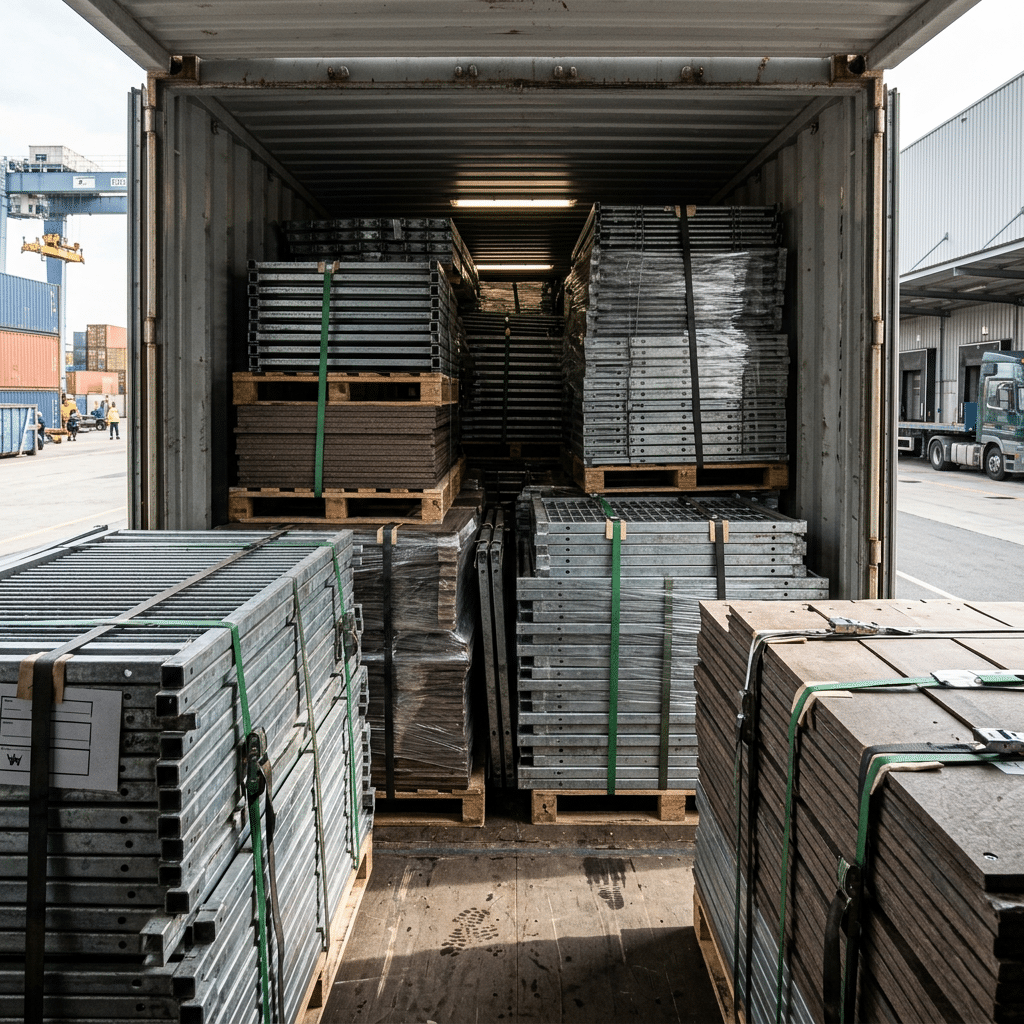
Delivery planning is where professional buyers separate themselves. Standard global delivery runs 4-6 weeks; the Sydney and Warsaw regional warehouses can expedite to 1-2 weeks where stock and destination align — a meaningful option for yards racing a season start. Quality assurance runs on ISO 9001 and CE certification with compliance to BHS (UK), ASPCA (US) and EU Directive 98/58/EC frameworks depending on destination market. When you request a quote, specify the destination market up front: the climate engineering, compliance documentation and even the spelling convention on your manuals should match where the equipment will spend its working life. For the pricing mechanics in detail — how MOQ thresholds and volume tiers interact — see our guide to MOQ and negotiation strategy for equestrian businesses.
Questions fréquemment posées
Why do horse walker buyers emphasize Italian motors?
Italian motor and drive systems are the reference standard in professional equestrian equipment for smooth speed control and durability under daily yard use — the drive unit determines noise, start smoothness and maintenance intervals more than any other walker component.
Should I order a horse walker with a roof?
In climates with harsh sun, heavy rain or snow, yes — a roof keeps footing consistent and protects the drive electronics. Order the walker with roof integration at the factory rather than retrofitting structure that was never designed to carry the load.
How do I size a horse walker for my training center?
Start from simultaneous horse count and the fastest gait you need to train, then choose the diameter that fits both — more horses or faster gaits require a larger circle. Remember the walking circle diameter is smaller than the installed footprint you must plan for.
What are the wholesale terms and lead times for walkers?
Volume orders carry tiered discounts of 5-15%, standard global delivery runs 4-6 weeks, and the Sydney and Warsaw regional warehouses can expedite qualifying orders to 1-2 weeks. Projects of 20 stable sets or more get a dedicated account manager.
Conclusion
A horse walker purchase comes down to four deliberate choices: a drive system built around Italian motor standards, a roof decision made against your worst season rather than your average one, a diameter sized to your horses and program, and wholesale terms planned with the tier structure and lead time in view. Get those right and the walker becomes the most reliable scheduling tool on the yard.
Next step: map your horse count, gait requirements and climate against the options. The walker and lunging pen range shows the configurations, and the MOQ negotiation guide covers the pricing mechanics before you request a quote.

 French
  English
  Spanish
  Arabic
  German
0 commentaires