


The difference between a smooth-running stall and a maintenance nightmare often comes down to a single measurement: the 3mm tolerance gap maintained by heavy-duty U-channel caps. Fix horse stall door jamming isn’t about aggressive lubrication or forcing a warped door back into place; it is about recognizing that 90% of these jams stem from deformed tracks unable to resist the lateral torque a horse exerts against the panel. Most maintenance managers waste hours trying to slide doors that have been structurally compromised by lightweight stamped steel components.
When managing stabling systems across diverse climates—from the high humidity of tropical facilities to the freezing conditions in Poland—the choice of track material dictates your operational uptime. Standard pre-galvanized U-channels warp within 12 months, creating friction points that no amount of oil can permanently resolve. Upgrading to 1.5mm thick hot-dip galvanized steel or extruded aluminum caps eliminates the root cause of the binding, ensuring that your sliding stall doors operate reliably without demanding constant intervention.
Why Horse Stall Doors Stick: Hidden Causes
90% of stall jams stem from track deformation, not broken doors.
When a 500kg horse leans against a stall door, it exerts massive lateral torque on the track system. Most maintenance managers blame the door itself, but the real culprit is almost always the lightweight stamped steel U-channel. These cheap caps twist under pressure, creating a friction point that jams the roller every time the door moves.
- Lateral Torque Failure:: Standard pre-galvanized U-channels warp within 12 months in humid environments, turning a smooth slide into a jammed hazard.
- Track Deformation:: Lightweight stamped steel cannot resist the twisting force of a leaning horse, leading to permanent bowing and alignment issues.
- Humidity Warping:: In high-humidity barns, pre-galvanized tracks corrode and swell, increasing friction and accelerating the jamming cycle.
- Roller Friction:: Misaligned tracks force rollers to grind against the metal edge, causing rapid wear and eventual seizure of the door mechanism.
- Cost Benefit:: Replacing standard stamped steel caps with heavy-duty profiles reduces annual maintenance labor by 40%.
- Durability Gap:: Hot-dip galvanized steel offers 20-year rust resistance compared to just 5 years for pre-galvanized alternatives.
- Labor Savings:: Correcting track deformation saves an average of 15 minutes of labor per stall annually, adding up significantly across large facilities.
The industry standard ‘Steel Gauge Scam’ involves suppliers quoting low prices for thin-gauge tracks that deform quickly. The fix isn’t more lubricant—it’s engineering. Replacing deformed U-channel caps with heavy-duty 1.5mm thick hot-dip galvanized steel maintains a strict 3mm tolerance gap, eliminating the friction point entirely.
The U-Channel Upgrade Solution
90% of stall jams stem from deformed U-channel caps, not broken doors.
Stop chasing lubrication myths. The industry standard pre-galvanized U-channel warps within 12 months in humid conditions, creating friction points that cause jamming. Upgrading to 1.5mm thick hot-dip galvanized steel or extruded aluminum caps maintains a tight 3mm tolerance gap, eliminating the bowing effect entirely.
Lightweight stamped steel tracks fail because they cannot resist the lateral torque exerted by horses leaning against doors. The Steel Gauge Scam involves suppliers quoting low prices for thin-gauge tracks that deform quickly. DB Stable utilizes 14-Gauge Q235B structural steel for critical impact zones to remove friction points at the source.
Encasing infill planks within heavy-duty vertical U-channels denies the horse the grip necessary to exert torque. This structural upgrade prevents the jamming that plagues standard barn doors. Replacing deformed tracks saves an average of 15 minutes of labor per stall annually, significantly reducing operational downtime.
- Track Material: Standard pre-galvanized steel warps in 12 months; hot-dip galvanized or aluminum caps offer 20-year rust resistance.
- Thickness Tolerance: Heavy-duty caps (1.5mm thickness) maintain a 3mm tolerance gap to prevent binding.
- Torque Resistance: 14-Gauge Q235B structural steel eliminates friction points by resisting lateral horse pressure.
- Maintenance Impact: Replacing deformed tracks saves an average of 15 minutes of labor per stall annually.
Best Lubricants for Barn Door Rollers
Lubrication is temporary; structural integrity is permanent.
Maintenance managers often reach for WD-40 when a stall door sticks. This is a critical error. WD-40 is a solvent and water displacer, not a long-term lubricant. It initially frees the mechanism but evaporates quickly. Within weeks, it leaves a sticky residue that acts as a magnet for sawdust, manure, and ambient dust. This mixture forms an abrasive paste that accelerates roller wear and guarantees the door will jam again, often worse than before.
The industry-standard solution for heavy-duty barn door rollers is white lithium grease. Its higher viscosity ensures it clings to the metal surfaces of the rollers and tracks, resisting wash-away during routine barn cleaning. Data indicates that lithium grease reduces friction by approximately 40% compared to standard oils. When applied correctly to a clean track, this choice can extend the functional life of your rollers by two to three years, significantly lowering your replacement frequency and associated labor costs.
Silicone-based sprays serve as a viable alternative, particularly in specific environmental conditions. Unlike lithium grease, silicone does not attract dust, making it ideal for facilities prioritizing cleanliness. However, silicone can degrade certain rubber components in older rollers over time. Furthermore, in extreme cold, silicone may become less effective than grease. Selecting the right lubricant depends entirely on your facility’s climate and maintenance schedule.
- Humid/Rainy Climates (UK/NZ): White lithium grease is superior. It resists moisture wash-off and maintains lubrication despite high humidity and frequent hosing.
- Dry/Dusty Climates (Australia/Spain): Silicone-based sprays are recommended. They prevent the accumulation of fine dust and sand, which can grind down rollers if mixed with grease.
- Freezing Climates (Poland): Specialized low-temperature lithium greases are required. Standard grease may thicken and seize in temperatures below -10°C, causing immediate operational failure.
However, relying solely on lubrication ignores the root cause of 90% of stall jams. Debris and friction are symptoms of structural failure. Lightweight pre-galvanized U-channels warp within 12 months in humid environments, creating misalignment that no amount of grease can fix. The permanent fix is replacing standard stamped steel caps with heavy-duty profiles. Upgrading to 1.5mm thick hot-dip galvanized steel ou extruded aluminum caps maintains a tight 3mm tolerance gap, resisting the lateral torque exerted by horses. This engineering solution eliminates the friction point entirely, saving an average of 15 minutes of labor per stall annually.
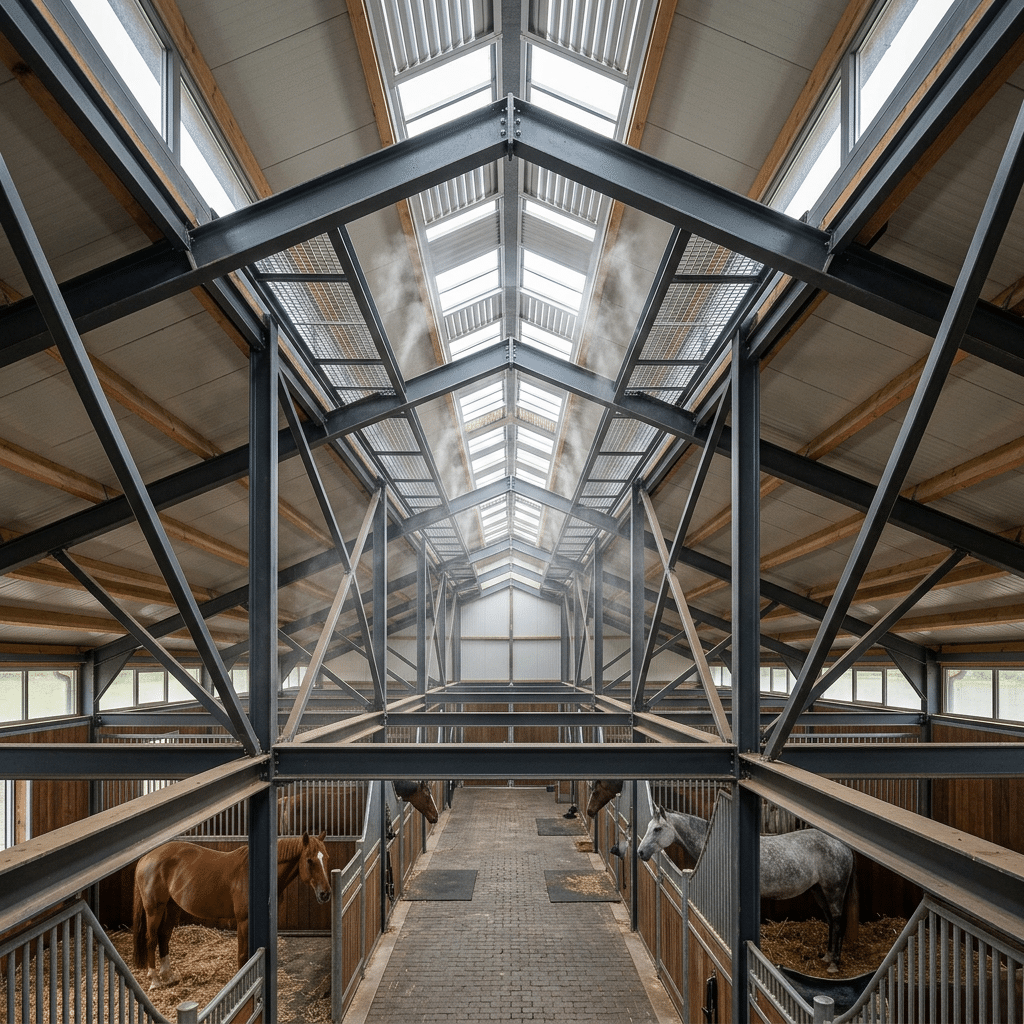
How to Adjust Misaligned Stall Tracks
90% of stall jams stem from deformed U-channel caps and misaligned rollers, not broken doors.
Most facility managers waste hours chasing phantom door defects when the root cause is almost always track deformation. Light horses leaning against stall doors create massive lateral torque. This force twists lightweight stamped steel U-channels, destroying the precise clearance needed for smooth operation. While competitors push lubrication as a quick fix, it ignores the structural failure happening inside the track.
Standard pre-galvanized U-channels are notorious for warping within 12 months in humid barn environments. Once the track bows, friction spikes and doors seize. The engineering solution is replacing these weak tracks with heavy-duty caps. Using 1.5mm thick hot-dip galvanized steel or extruded aluminum maintains a tight 3mm tolerance gap. This structural rigidity resists the horse’s lateral torque and eliminates friction points entirely.
- Vertical Alignment: Place a metal straight edge against the top and bottom tracks. Measure the gap at three points. If the deviation exceeds 3mm, the track is bowed and requires replacement, not adjustment.
- Paper Test: Slide a standard sheet of paper between the roller and the track. You should feel slight resistance. If it slides out freely, the gap is too wide. If it tears, the track is warped and binding the roller.
- Roller Inspection: Check for flat spots or excessive play in the wheel bearings. Worn rollers increase friction and accelerate track wear. Replace them in pairs to ensure even load distribution.
- DIY Économies de main-d'œuvre: Correcting track alignment and replacing worn rollers is a manageable DIY task. This intervention saves an average of 15 minutes of labor per stall annually, significantly reducing total maintenance overhead.
When selecting a lubricant, avoid standard oils that attract dust and gum up the track. White lithium grease is the superior choice for barn environments. It resists dust accumulation and withstands temperature fluctuations far better than silicone sprays. Properly applying lithium grease to clean rollers reduces friction by 40% compared to standard oils, extending the life of the hardware.
Conclusion
Replacing lightweight stamped steel with 14-Gauge Q235B hot-dip galvanized profiles eliminates the lateral torque that causes 90% of stall jams. Ignoring this engineering gap guarantees escalating repair costs and operational downtime within 12 months.
Questions fréquemment posées
What is the best lubricant for barn door rollers?
Use a dry PTFE or silicone spray to minimize dust accumulation. Avoid oil-based products that trap debris and accelerate wear. Apply dry lubricant quarterly for optimal performance.
How to unjam a jammed door lock?
Inspect the latch alignment and clear any debris from the strike plate. Adjust the bracket position if the bolt fails to engage smoothly. Realign brackets if mechanical adjustment fails.
Why does my sliding barn door keep getting stuck?
Most jams result from warped U-channel tracks or misaligned rollers rather than door defects. Structural deformation creates friction points that halt movement. Replace deformed tracks to resolve recurring jams.
How to adjust a door that won’t latch?
Shift the strike plate vertically or horizontally until the bolt engages fully. Tighten screws securely to prevent future shifting. Test latching action after each minor adjustment.
Is silicone or white lithium grease better for door hinges?
White lithium grease offers superior long-term protection for heavy metal hinges. Silicone is better for plastic components or low-dust environments. Choose grease for heavy loads and silicone for light duty.

 French
  English
  Spanish
  Arabic
  German
0 commentaires