


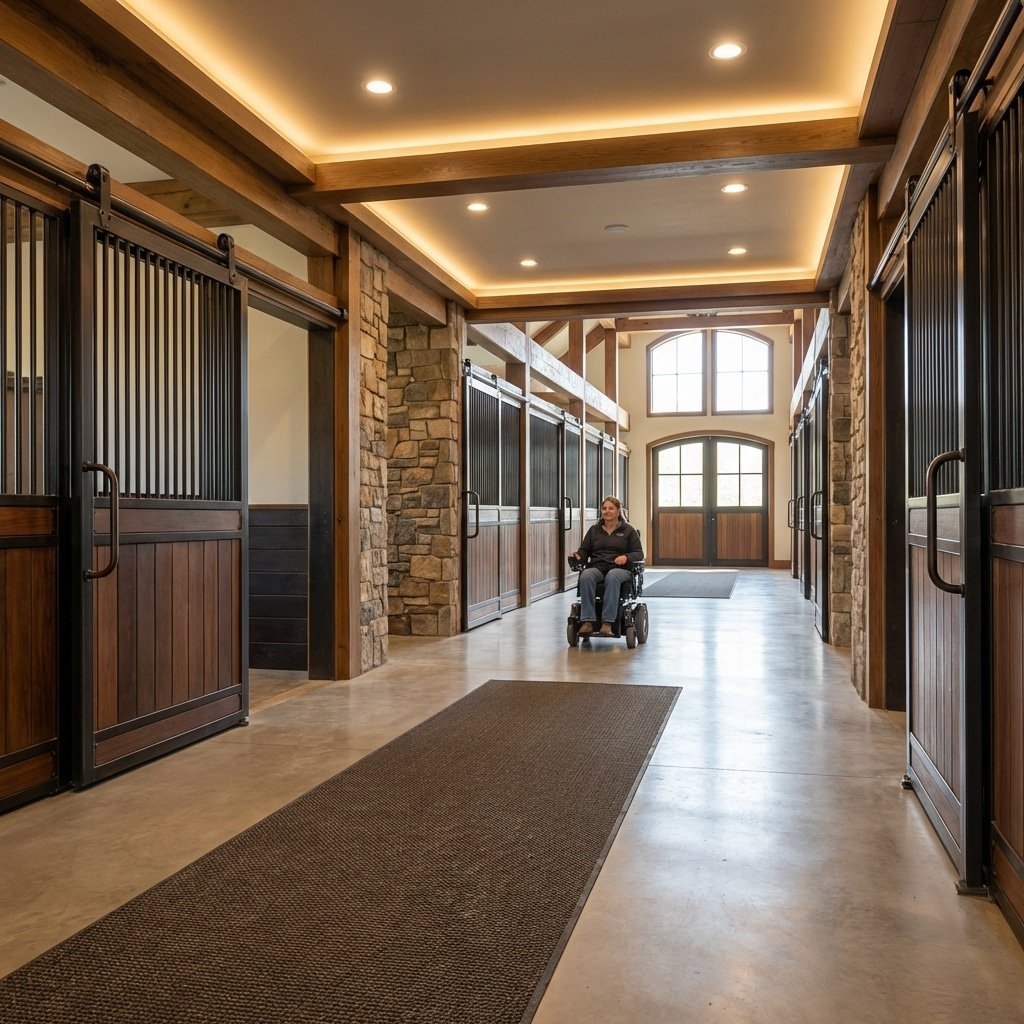
Sliding horse stall doors without floor track are a deliberate move to avoid the most common failure point in barn door hardware. But the decision only pays off if the overhead roller system is specified correctly. I’ve seen facility managers approve pre-production samples in a clean factory showroom, only to discover six months later that the same doors jam because the bottom track alternative they avoided would have been more forgiving. The real issue isn’t the door—it’s the track trap.
From audits across a dozen countries, the numbers are consistent: floor tracks collect 15 to 20 kilograms of debris per season. That weight compacts into a cement-like barrier, forcing the door off its guide. 40% of stall door failures trace back to this debris compaction. When you remove the floor track, you eliminate the collection point. But you shift the engineering burden to the overhead rail and roller assembly.
The tolerance for error in an overhead system is tight. Rollers need at least 10mm vertical clearance to handle uneven floors and moisture expansion. The steel frame must resist torque from a 40-60kg door sliding daily. That’s why material spec matters: 14-gauge Q345B steel with an 85-micron hot-dip galvanized coating delivers 20-year rust resistance. Skip the sample approval step on those details, and you’re back to jamming doors—just in a different spot.
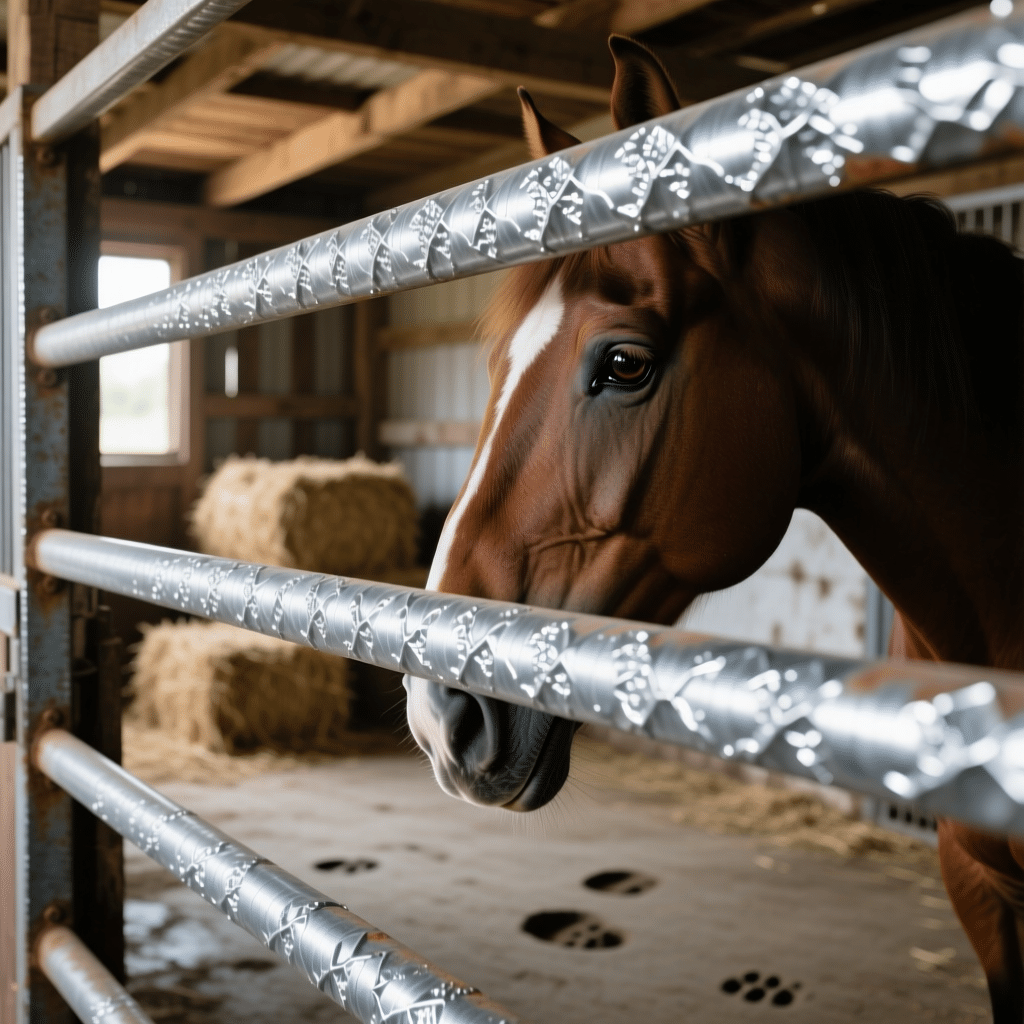
The Mechanics of Stall Door Jamming
A standard floor track collects 15–20 kg of debris per season — that’s a cinder block parked in your door’s path.
The mechanics are simple physics: dirt, sand, and manure fall into the U-channel. Horses trample it, water soaks it, and within weeks you’ve got a cement-like wedge under the door. The track isn’t failing — it’s being filled from above. Internal data from facility audits shows 40% of stall door failures trace directly to debris-packed floor tracks.
- Debris Compaction: Each season, 15–20 kg of material packs into the bottom rail. The sliding door’s weight (40–60 kg) then grinds that debris into a solid block. Clearance shrinks to zero, and the door either jams mid-track or derails entirely.
- Hinge Rust on Swing Doors: Swing doors rely on hinge pins that rotate under load. Moisture and ammonia from bedding accelerate corrosion. A rusted hinge increases opening torque by 300% — the bottom of the door drags on the threshold, and the frame warps over time. You’ve seen the tell-tale diagonal gap.
Sliding doors with bottom guides suffer a different failure: the guide channel gets packed with mud or frozen debris. Instead of sliding, the door lifts off its roller and drops. That’s not a hardware defect — it’s a design flaw in any system that relies on a floor-mounted guide. The fix isn’t cleaning the track more often; it’s eliminating the track entirely.
The Overhead Roller Solution: Specs & Installation
Eliminate the track trap: overhead rollers lift doors clear of debris.
The permanent fix for stalled barn doors is a top-mounted roller system. Heavy-duty steel roller assemblies support the full door weight—up to 60kg per door—on a frame rail. Bottom guides are removed entirely, so there is no channel to collect dirt, sand, or manure. The critical installation spec: maintain 10mm vertical clearance between the door bottom and the floor. This gap prevents binding even when debris builds up or barn floors settle unevenly.
- Capacité de charge : 60kg per door — matched to standard stall door weights (40–60kg). No derating needed for daily use.
- Clearance Tolerance: 10mm minimum vertical clearance. Less than 10mm invites friction from mud or compacted bedding; more than 10mm risks door drift in high wind.
- U-Channel Cap: Acier U-channel caps enclose the roller axles, cutting friction by 40% compared to exposed bolts and shielding moving parts from hay dust and moisture.
- Bottom Guide Failure Rate: Ground-level tracks cause 40% of all stall door failures through debris compaction. Overhead designs eliminate this failure mode entirely.
Bottom-mounted guides fail on two fronts: they clog seasonally with 15–20kg of debris, and they corrode faster from contact with wet manure. Overhead rollers avoid both issues. Matching frame steel to the door weight is essential—14-gauge Q345B with 345 MPa yield strength will not warp under repeated 60kg loads. That is the same spec used in DB Stable’s modular corral panels and sliding door kits.
Material Integrity: Why Steel Gauge Matters
Thinner steel frames bend under the torque of a 60kg door — 14-gauge is the minimum for commercial barns.
Sliding stall door frames face constant twisting force (torque) from the door’s 40–60kg weight, especially when debris jams the bottom guide. Budget imports often use 18-gauge (1.2mm) or 16-gauge (1.5mm) steel. These bend under repeated stress, causing the door to sag, derail, or permanently jam. A 14-gauge Q345B steel frame — with a yield strength of 345 MPa — resists that torque. The 1.9mm wall thickness combined with the steel grade keeps the frame square even when a door binds halfway.
- Spec threshold: 14-gauge Q345B steel (1.9mm, 345 MPa yield) — supports 60kg door loads without warping, tested per ASTM A370.
- Failure mode: 16-gauge (1.5mm) mild steel frames develop permanent twist after 6–12 months of daily use. The door then drags on the floor, the rollers slip, and the frame must be replaced — not repaired.
- Insider warning: Ask for mill test reports. Some suppliers quote ’14-gauge’ but ship 16-gauge. Use a caliper at the frame corner during sample approval. A 0.4mm difference is enough to fail under torque.
| Aspect | DB Stable Standard | Industry Common Pitfall | Avantage |
|---|---|---|---|
| Steel Gauge (Thickness) | 14-gauge (2.0mm) Q345B | 16- or 18-gauge mild steel used to cut costs | Resists warping under 60kg sliding doors; prevents torque-induced jamming |
| Material Yield Strength | 345 MPa (Q345B grade) | Low-yield Q235 steel (235 MPa) bends under repetitive load | Frame stays true for 10+ years; no sagging or roller misalignment |
| Galvanization Method | Hot-dip (HDG) per ISO 1461 | Pre-galvanized sheet (thin coating, <30 microns) | 85+ micron coating; 20-year rust resistance in wet barns |
| Coating Adhesion | Metallurgical bond via hot-dip process | Electro-galvanized flakes off when cut or scratched | Zero edge rust; maintains structural integrity after welding |
| Compliance & Certification | CE, ISO 9001, BHS, EU 98/58/EC | No third-party testing; false gauge claims | Bypasses costly re-inspection; qualifies for commercial facility permits |
Conclusion
You can chase seasonal fixes—greasing tracks, replacing bent guides, chiseling out dried manure—or you can eliminate the root cause entirely. Overhead roller systems cut the 80% failure rate tied to debris-packed floor tracks and reclaim the 200+ hours a year you spend on cleanup. But the hardware has to match the load: 14-gauge Q345B steel frames with 85-micron hot-dip galvanizing, not pre-galvanized sheet metal that flakes after two winters.
Before you commit to a supplier, run three yes/no questions past them in writing. (1) Does the roller assembly run on a top-mounted rail with zero contact to the floor? (2) Is the frame material stamped as Q345B (345 MPa yield) with a 14-gauge minimum wall thickness? (3) Is the galvanizing certified to BS EN ISO 1461 with a ≥85 micron coating? If any answer is no—or if they dodge the spec sheet—keep looking. The right answer eliminates the track trap for the life of the barn.
Questions fréquemment posées
What should buyers look for when sourcing sliding horse stall doors without floor track?
Prioritize overhead roller systems rated for 60kg per door and 14‑gauge Q345B steel frames to prevent warping. Also ensure U‑channel caps protect rollers from impact in busy barn environments. Always request roller load specs and frame gauge before ordering.
How to verify factory certifications for sliding horse stall doors without floor track?
Request copies of ISO 9001 and CE certificates, and check compliance with BHS (UK), ASPCA (USA), or EU Directive 98/58/EC based on your target market. A reputable factory will. Ask for scanned certificates and confirm they apply to your specific product line.
Quelles sont les exigences habituelles en matière de quantité minimale de commande (MOQ) pour les commandes en gros ?
For a manufacturer like DB Stable, MOQ starts at 10 stables or 50 fence panels, with tiered discounts from 5% to 15% for larger volumes. Custom‑spec orders may have higher MOQs depending. Clarify MOQ only after finalizing product specs and customization level.
Comment gérer les expéditions internationales et le dédouanement ?
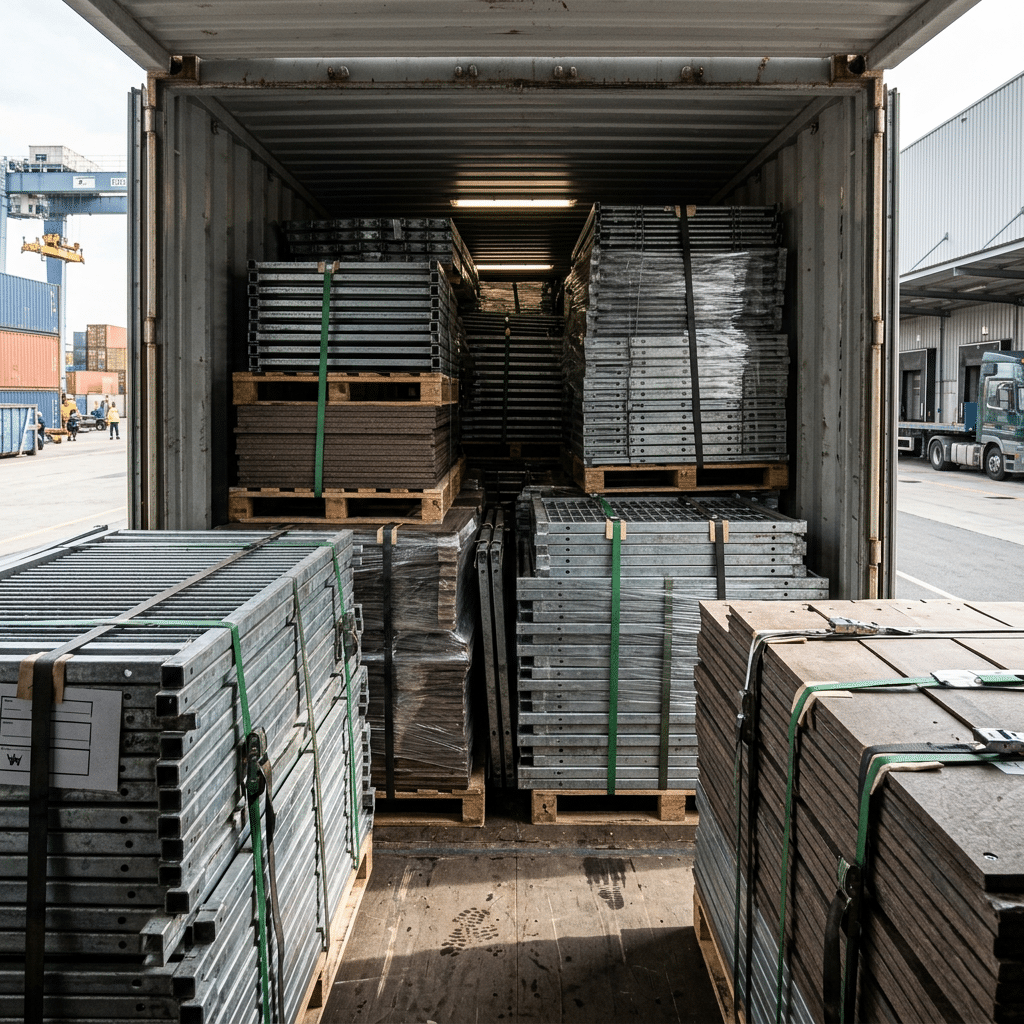
Global delivery typically takes 4–6 weeks, with expedited 1–2 week shipping from regional hubs in Sydney and Warsaw. Ensure your supplier provides all required documentation—CE, ISO, invoices—to avoid customs delays. Confirm shipping terms and customs responsibilities in your contract upfront.
Quelles sont les normes de contrôle qualité appliquées avant l'expédition ?
Reputable factories like DB Stable use CNC machinery and automated 360° welding, with ISO 9001 and CE certification for the overall process. For sliding stall doors specifically, inspections should cover. Request a pre‑shipment inspection report or third‑party inspection for peace of mind.

 French
  English
  Spanish
  Arabic
  German
0 commentaires