


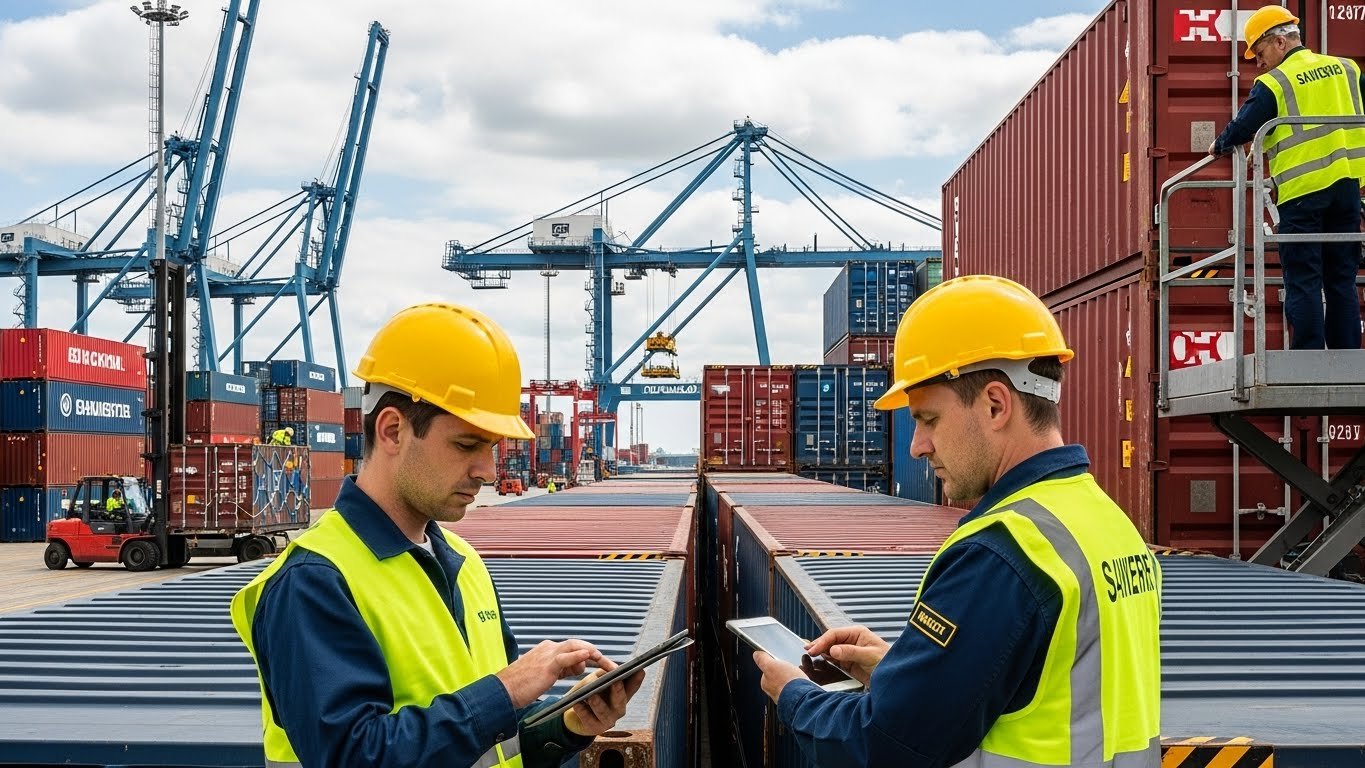
Most importers fixate on the factory price of metal horse stables, only to see their margins evaporate upon arrival due to hidden logistics fees. Costs such as destination port charges—often ranging from $300 to $600 per container—and standard import duties of 5.7% can significantly inflate the final invoice if not planned for early. A precise landed cost calculation is the only way to protect your budget from these predictable yet often overlooked financial shocks.
Este guide breaks down the total financial commitment required to import equine infrastructure in 2026. We examine the specific duty implications under HS Code 7308.90.9090, compare the real-world costs of FOB versus CIF, and detail current inland trucking rates averaging $3–$4 per mile. You will gain a clear method to calculate every expense line item, from the initial sea freight to the final delivery at your facility.
What Is the Correct HS Code for Horse Stables (and Duty Rate)?
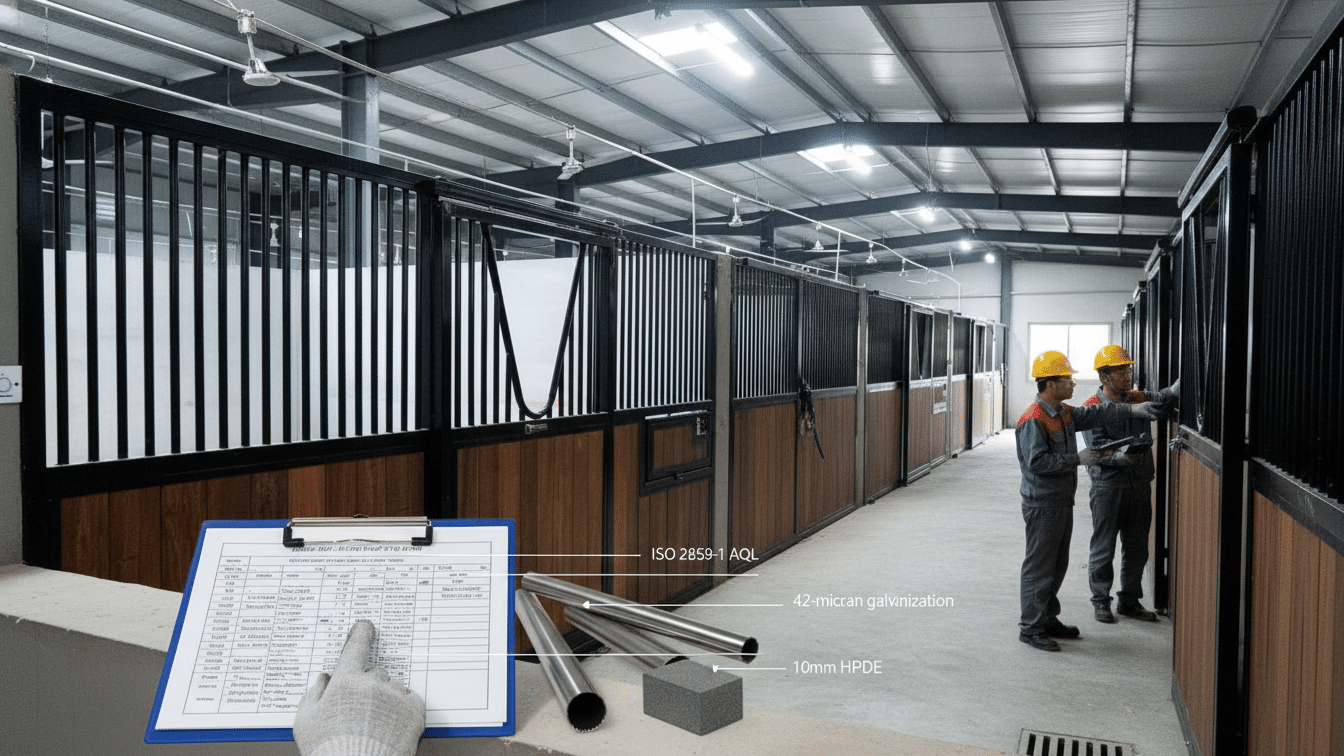
Free-standing metal horse stables are classified under HS Code 7308.90.9090 as iron or steel structures, attracting a standard duty rate of 5.7%. Importers can reduce this to 5.1% by filing under the agricultural provision 9817.00.50, provided they submit an ‘Actual Use Certification’ proving the structures are for agricultural or horticultural purposes.
Standard Classification: HS Code 7308.90.9090
Customs authorities categorize horse stables as ‘Structures and parts of structures, of iron or steel’ under Chapter 73, distinguishing them from live animal classifications found in HS 0101. The specific code 7308.90.9090 applies directly to pre-fabricated metal stalls and frames used in these installations.
Imports processed under this standard classification incur a base ad valorem duty rate of 5.7%. This rate applies automatically unless the importer actively files for specific exemptions based on the intended utility of the structure.
Cost Optimization: Agricultural Exemption (Code 9817.00.50)
Importers can reclassify estable shipments under 9817.00.50 to lower the duty rate to 5.1%. This classification recognizes the goods as agricultural machinery or equipment, provided the importer substantiates the claim with proper documentation.
Securing this rate requires submitting an ‘Actual Use Certification’ in compliance with Section 10.131-139 of Customs Regulations. This document verifies that the stables serve agricultural or horticultural purposes exclusively. For a $100,000 shipment, this adjustment reduces duties from $5,700 to $5,100, saving $600 per container.
How Do You Calculate Sea Freight per Stall Unit?
Calculate the chargeable weight by comparing the shipment’s actual gross weight against its volumetric weight (using the standard 1 CBM = 1,000 kg ratio). Multiply the higher value by the carrier’s rate per CBM or ton, add applicable surcharges (like BAF), and finally divide the total freight cost by the number of stall units to get the per-unit price.
Determining Chargeable Weight: CBM vs. Actual Weight
Carriers base freight bills on “chargeable weight,” a metric that accounts for both the physical weight and the space cargo occupies on a vessel. To determine this, you first calculate the shipment’s volume in Cubic Meters (CBM) by multiplying the length, width, and height of the cargo in meters. This volume calculation establishes the baseline for how much physical space the goods require within the container or hold.
After establishing the volume, you apply the standard maritime conversion factor where 1 CBM is equivalent to 1,000 kg (1 metric ton). You then compare the actual gross weight of the shipment against this calculated volumetric weight. Shipping lines always bill based on whichever figure is higher. If a shipment is light but bulky, the volumetric weight dictates the cost; if it is dense and heavy, the actual gross weight is used.
The Per-Unit Formula: Rates, Surcharges, and Allocation
Once the chargeable weight is confirmed, you determine the base cost by multiplying that weight by the carrier’s specific rate per CBM or per ton. This figure represents the core shipping fee but does not cover the total expense. You must add fixed surcharges to this base amount, including Bunker Adjustment Factors (BAF) for fuel fluctuations, Currency Adjustment Factors (CAF), and Terminal Handling Charges (THC).
The final step defines the cost per stall unit. Take the sum of the base freight cost and all applicable surcharges to get the Total Freight Cost. Divide this total by the specific number of stall units loaded. This allocation method delivers a precise per-unit price, allowing for accurate financial planning and cost distribution across individual units in the shipment.

What Are “Destination Port Fees” and Why Are They So High?
Destination port fees are mandatory charges levied after arrival for terminal handling (THC), documentation, and infrastructure usage, distinct from sea freight. Costs typically range from USD $300–$600 in the US or AUD $400–$700 in Australia per container. They appear disproportionately high, especially for LCL, because fixed operational costs (cranes, labor, security) remain constant regardless of shipment volume.
| Fee Category | Qué cubre | Estimated Cost |
|---|---|---|
| Terminal Handling (THC) | Crane lifts, internal drayage, labor | $200 – $500 |
| Port Infrastructure | Facility maintenance, ISPS security | $50 – $150 |
| Documentation (D/O) | Admin release processing, customs handover | $100 – $250 |
| Congestion/Peak Surcharges | Workload management during high traffic | $150+ (Seasonal) |
Breakdown of Common Destination Charges (THC, D/O, & Infrastructure)
Destination invoices consist of several distinct line items rather than a single flat fee. The largest component is typically the Terminal Handling Charge (THC), which ranges from $200 to $500. This fee covers the heavy mechanical operations required to lift containers from the vessel, move them to the stack, and load them onto trucks for final delivery. These costs apply regardless of the value of the goods inside the container.
Beyond mechanical handling, ports levy infrastructure and security fees to maintain facilities and comply with international safety protocols (ISPS). For example, the Port of Brisbane charges a specific Port Service Charge (e.g., AUD $46.60 per TEU) to fund ongoing maintenance. Administrative costs also play a role; the Documentation Fee covers the processing of the Delivery Order (D/O) and the electronic handover to customs, typically costing between $100 and $250 per shipment. In regions with strict biosecurity laws like Australia, importers also face mandatory quarantine inspection fees to prevent environmental contamination.
Cost Ranges and The “LCL Trap” (Operational Cost Allocation)
Importers should budget for standard destination charges between USD $300–$600 for US imports and AUD $400–$700 for Australian imports per container. Fluctuations occur based on seasonal demand; during high-traffic periods, ports often implement congestion surcharges (around $150) or increase handling rates to manage the influx of cargo. European ports may also include specific environmental surcharges, while Australian ports have recently increased Vehicle Booking System (VBS) fees.
A common issue for smaller importers is the “LCL Trap,” where destination fees for Less than Container Load (LCL) shipments exceed the sea freight cost. This disparity exists because fixed infrastructure costs—such as crane operation, labor, and security gates—are not fully pro-rated by volume. The terminal expends similar resources processing an LCL shipment as it does a full container, resulting in higher per-cubic-meter costs for smaller loads compared to Full Container Load (FCL) shipments.
World-Class Stables, Engineered for Any Climate


Do You Need a Customs Broker for a Single Container?
While U.S. regulations permit an importer to self-file for a single container, it is rarely practical. Commercial imports over $2,500 require a formal entry and a customs bond. Most one-off importers hire a broker to secure a single-entry bond (approx. $100) and handle the mandatory ISF transmission 24 hours before departure, avoiding costly compliance errors.
Self-Filing vs. Brokerage: Legal Requirements and Practical Risks
Under U.S. regulations (19 CFR Part 142), the “importer of record” retains the legal right to clear their own goods without a license. However, specific valuation thresholds trigger mandatory formal entry procedures. Commercial shipments valued over $2,500 require a formal entry and a customs bond, even if the goods are duty-free. While self-filing remains legally valid, the complexity of these requirements creates significant liability for inexperienced importers.
Operationally, self-filing presents immediate barriers because individuals rarely possess the specific software required to transmit the Importer Security Filing (ISF) to Customs and Border Protection. Additionally, surety companies frequently hesitate to sell bonds directly to one-time importers, preferring to work through licensed brokers to mitigate risk. Consequently, most importers use brokers not because the law demands it, but because accessing the necessary surety markets and digital filing systems is otherwise prohibitive.
Single-Entry Bond Costs and the 24-Hour ISF Rule
For a single container, brokers utilize a single-entry bond, which is designed for isolated transactions. The minimum premium for this bond is typically around $100, or $50–$100 for a shipment valued at $10,000. This is significantly more economical than a continuous bond, which requires a minimum $50,000 coverage and generally only becomes cost-effective for businesses importing more than four times per year.
Beyond the bond, brokers ensure the Importer Security Filing (ISF) is transmitted at least 24 hours before the vessel departs the port of origin. Failure to meet this deadline can result in penalties up to $5,000. Brokers also manage complex bond calculations for regulated cargo; if a shipment involves agencies like the USDA or EPA, the single-entry bond amount automatically triples. Brokers handle these adjustments proactively to prevent clearance delays and subsequent port storage fees.
How Does the Exchange Rate Impact Your Final Invoice?
The final cost in your local currency rarely matches the initial invoice value due to exchange rate fluctuations between the invoice date and the payment date. If your currency weakens before payment, you pay more to settle the same foreign amount, creating a realized FX loss. Furthermore, customs and tax authorities often mandate specific exchange rates for VAT calculations, directly influencing your recoverable tax amounts.
The “Realized” Cost Gap: Invoice Date vs. Payment Date
Invoices are initially valued using the spot rate on the day they are issued, calculating the local liability as the foreign amount multiplied by the current rate. Yet, the cash actually leaves the account on the payment date, which may be weeks or months later. This time lag creates a discrepancy between the recorded cost and the actual cash outlay.
A weakening home currency directly increases the final cost of settling these debts. For example, if the EUR/USD rate moves from 1.10 to 1.15 between booking and payment, a €1,000 invoice rises from a $1,100 liability to a $1,150 cash expense. This creates a $50 realized FX loss. Accounting standards require businesses to book these differences as “Realized FX Gains/Losses” on the P&L, keeping them separate from the cost of goods sold to maintain accurate margin analysis.
To manage this, most ERP systems, including Microsoft Dynamics 365 Finance, automatically revalue open foreign invoices. These systems pull data from official rate tables to adjust the liability daily, ensuring the balance sheet reflects the true financial obligation before the payment is even made.
Financial Magnitude and Tax Compliance Risks
Small shifts in exchange rates can drastically alter profit margins on high-value payables. Data shows that a rate move from 0.71 to 0.69 on a US$10,000 liability increases the cost from AU$14,084 to AU$14,492. This 0.02 shift results in a nearly 2.9% cost hike on a single payable, highlighting the financial risk of leaving foreign invoices unhedged.
Beyond direct costs, exchange rates dictate regulatory compliance. VAT calculations in jurisdictions like Germany strictly tie to the exchange rate stated by the supplier. You must mirror the supplier’s FX rate in your accounts payable system to ensure the VAT amount matches exactly. Discrepancies here can lead to under-recovery of tax or penalties during audits.
For long-term projects or grants, currency fluctuation alters reported budget consumption in the sponsor’s reporting currency, even if local spending remains on track. Importers and project managers often mitigate these risks by using hedging contracts, such as forwards, or maintaining foreign currency accounts to fix rates and stabilize landed costs.

Is It Cheaper to Buy EXW, FOB, or CIF?
While EXW offers the lowest factory price, FOB typically yields the lowest total landed cost. CIF is frequently the most expensive option because sellers bundle freight and insurance with hidden markups, which artificially inflates the customs value and results in higher duty payments.
FOB vs. CIF: A Real-World Cost Comparison
A Trade Risk Guaranty (TRG) case study comparing identical shipments shows clear financial advantages for FOB. In this analysis, the FOB buyer’s total landed cost was $548,075, compared to $549,180 for CIF. This difference resulted in the CIF shipment costing $1,104.84 more per container, primarily due to seller markups on logistics services.
On an annual basis of just three shipments, choosing FOB saved the buyer $3,314.52. The data revealed that CIF unit prices included a $0.01 per unit markup—raising the price from $1.12 to $1.13—specifically to bundle freight and insurance into the final invoice.
The Hidden “Duty Trap”: How CIF Inflates Taxes
CIF increases customs duties because taxes are calculated based on the total invoice value. Since CIF includes freight and insurance costs in that value, importers pay duty on those services. In the TRG example, customs duties totaled $61,020 on the CIF shipment versus $60,480 for FOB.
FOB allows the buyer to pay freight and insurance separately, keeping these costs out of the dutiable base. While EXW offers the lowest nominal product price, it carries significant financial risk. Mismanagement of origin trucking and export clearance often leads to unplanned costs that exceed the savings found in the raw factory price.
How Much Does Inland Trucking Cost for a 40HQ?
Inland trucking for a 40HQ typically costs $3–$4 per mile for the line haul, often totaling $400–$1,200 for moves under 300 miles. However, the final invoice usually includes $75–$300+ in accessorials (fuel, chassis, port fees). Heavy payloads near the 28.5-ton limit may trigger significant overweight surcharges depending on local axle-weight laws.
Calculating Base Drayage Rates vs. Hidden Accessorial Fees
Standard line-haul rates for full truckload 40HQ moves typically average $3–$4 per mile in developed markets. For short-haul drayage operations ranging from 100 to 300 miles, this pricing model generally translates into a flat rate bracket of $400–$1,200. This base rate covers the driver’s time and fuel for the transit but excludes the variable costs associated with port operations and equipment usage.
The final invoice almost always exceeds the quoted per-mile rate due to mandatory accessorials. Common additions include $75–$300 for fuel surcharges, chassis rentals, and port congestion fees. Furthermore, logistics planners must account for detention charges, which apply if the driver remains at the loading dock longer than the standard 1–2 free hours. These “hidden” costs can increase the total inland spend by 20% or more compared to the initial quote.
How 40HQ Weight Limits (approx. 30.5t) Trigger Surcharges
A 40HQ container technically supports a maximum gross weight of 30,480–32,500 kg, with a practical payload limit of roughly 28,550 kg. While the steel box can physically contain this mass, filling a container to its payload capacity often pushes the truck above local road axle limits. Legal road weight regulations dictate the pricing structure for heavy shipments.
Standard drayage rates usually cap cargo weight at approximately 36,000 lbs (16,300 kg). Exceeding this weight often necessitates the use of tri-axle chassis equipment to distribute the load, triggering overweight/OSOW premiums. On long-distance inland routes, such as the China–Turkey rail corridor, these weight-driven complexities contribute to costs reaching $2,100–$2,400 per TEU, a figure that can sometimes exceed the ocean freight cost itself.
Reflexiones finales
The factory invoice represents only a fraction of the total investment for imported cuadras de caballos. Real expenses accumulate through the layers of logistics—duty classifications, port handling fees, and inland drayage often add 30% or more to the bottom line. A simple adjustment in the HS code or a strategic choice between FOB and CIF significantly alters the final landed cost. Precision in these early calculations prevents budget overruns and ensures the project remains financially viable.
Importers who proactively manage specific details—such as filing for the agricultural duty exemption or locking in exchange rates—protect their margins against volatility. Weighing the container correctly to avoid heavy load surcharges and selecting a broker to handle the bond requirements turns a complex supply chain into a predictable process. Treating the logistics strategy with the same care as the diseño estable ensures the shipment arrives without unexpected financial penalties.
Preguntas frecuentes
What is the import duty for horse stables in the USA?
Prefabricated metal stables typically fall under HTSUS 7308.90.9090 with a 5.7% duty rate. If you certify them for agricultural use under HTSUS 9817.00.50, they may qualify for duty-free (0%) treatment.
How much does shipping a 40ft container from China cost?
Current spot rates for a 40ft FCL container from China to major US ports generally range from $2,500 to $4,200. Prices vary significantly based on the destination coast (West vs. East) and seasonal demand.
What is the HS Code for prefab steel buildings?
The primary HS Code is 9406. Most metal prefab structures fall under 9406.90 or 9406.20 (modular units). In the US, these codes usually carry a general duty rate of 2.9%.
Do I have to pay VAT on imported barns?
Yes. In most VAT jurisdictions (like the EU or UK), customs applies the standard VAT rate (often 17–27%) to the full landed cost. This includes the value of the goods plus shipping and import duties.
How much do customs brokers charge per shipment?
A standard ‘entry fee’ for a single commercial shipment usually runs between $100 and $175. When you add bond fees and administrative charges, the total brokerage bill is typically $200–$400.
What does FOB mean on my invoice?
FOB (Free on Board) means the supplier pays to manufacture, pack, truck, and load the goods onto the vessel. You take over financial responsibility for ocean freight and insurance once the cargo crosses the ship’s rail.



 Spanish
  English
  French
  Arabic
  German
0 comentarios