


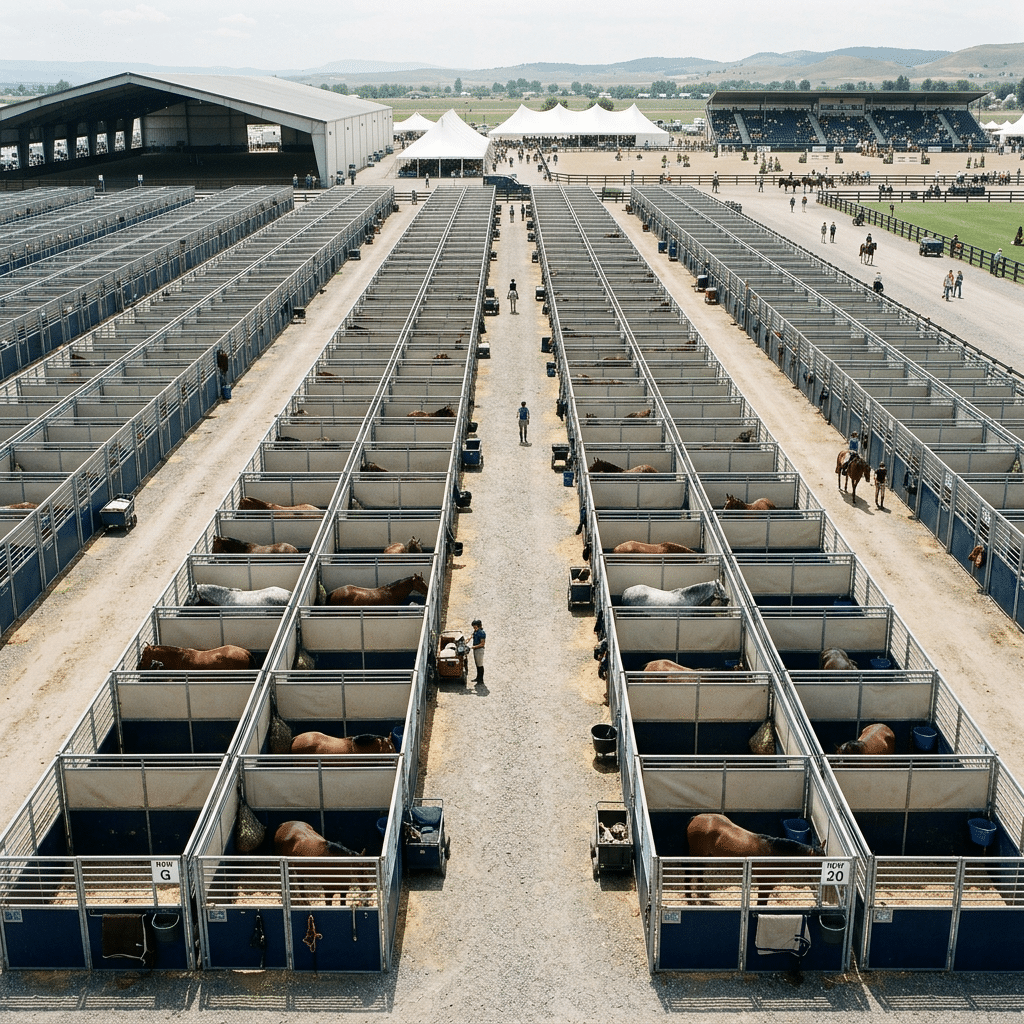
Perfect Laser Leveling can’t fix a project budget destroyed by hidden shipping fees. Importing horse stables on what appears to be a low-cost CIF basis often exposes you to surprise Destination Terminal Handling Charges, a non-negotiable fee that erodes your profit margin before the project even begins.
This analysis shows how to control landed costs with FOB terms and strategic packaging. We detail how our Steel Pallet Flat-Pack system loads 30-45 stable sets per 40HQ container, giving you the freight density needed to absorb fixed port costs and protect your bottom line.
Decoding Shipping Jargon for Large-Scale Importers
For importers, understanding FCL vs. LCL is key. FCL is for bulk orders, LCL for trials. Our flat-pack system maximizes FCL space, saving over 60% on freight.
Full Container vs. Less Than Container Loads (FCL & LCL)
When you’re importing, your order volume determines the shipping method. You don’t need a PhD in logistics, just a clear understanding of these two options.
- Full Container Load (FCL): This is the standard for serious volume. When you place a project or distributor order, your goods fill an entire 20ft or 40ft container. It’s your space, exclusively.
- Less than Container Load (LCL): This is for dipping your toe in the water. It’s ideal for trial orders of 3-5 stables. Your product shares container space with goods from other shippers, which is cost-effective for small quantities.
How Flat-Pack Design Protects Your Profit Margin
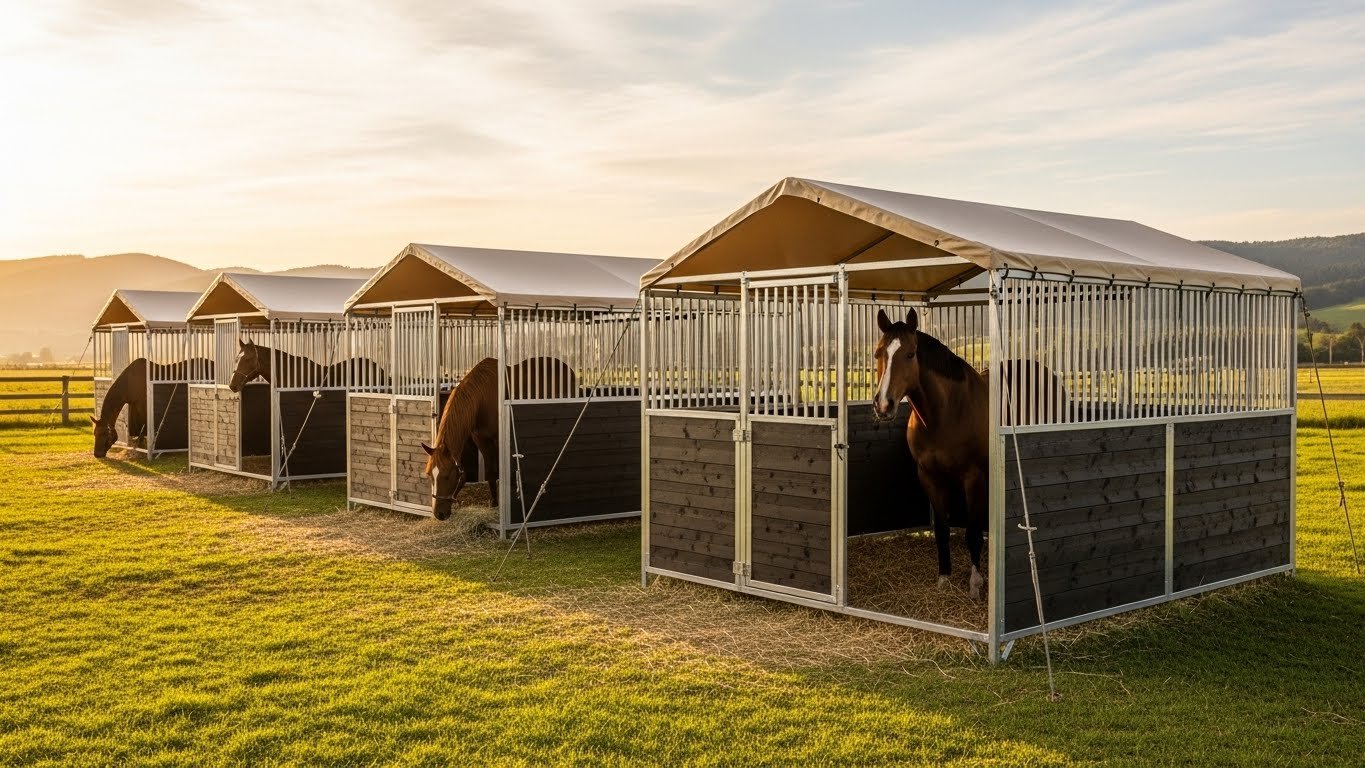
Shipping air is expensive. Fully assembled or poorly packed stables waste container space, which kills your profit margin on freight. We designed our Steel Pallet Flat-Pack system specifically to solve this problem for distributors.
This system allows us to load 30-45 stable sets into a single 40HQ container. Competitors using fully welded alternatives can only fit 12-15 sets. That density difference translates to a freight saving of over 60%. This isn’t a minor detail; it’s a core part of protecting your bottom line.
The CIF Trap: Hidden Destination Terminal Handling Charges (DTHC)
The CIF trap hits when you assume all port fees are covered, but then get billed for mandatory Destination Terminal Handling Charges (DTHC) upon your shipment’s arrival.
A common mistake for first-time importers is choosing CIF (Cost, Insurance, and Freight) terms and thinking the price is all-inclusive. While the seller pays to get your goods to your countryR
17;s port, their responsibility ends there. You, the buyer, are always on the hook for the final, non-negotiable fees to get the container off the ship and out of the terminal. These are called Destination Terminal Handling Charges, and they are mandatory.
What DTHC Actually Covers at the Destination Port
DTHC isn’t a junk fee; it pays for the physical labor and port services required to handle your container. Because the destination agent is chosen by your supplier’s forwarder, you have zero leverage to negotiate these costs. You either pay them, or your cargo doesn’t get released. The fee is charged per container and is separate from the ocean freight bill your seller paid.
- It covers the cost of unloading containers from the vessel and moving them to a stack within the terminal yard.
- It includes a short period of free storage at the port, usually around 7 days, before expensive demurrage fees kick in.
- The charge is always paid by the buyer and is not part of the original freight cost paid by the seller.
Reducing Per-Unit Landed Costs Through Smart Packaging
You can’t avoid fixed per-container fees like DTHC, but you can dilute their impact. The key is to maximize the value inside each container. Getting more product into a single shipment lowers the per-unit logistics cost, which directly protects your profit margins.
- Our flat-pack system is engineered to fit 30-45 stable sets into one 40HQ container, a huge increase over the 12-15 sets of traditional welded stalls.
- This high-density loading saves our distributors over 60% on ocean freight alone, making each shipment more profitable.
- By maximizing container value, you effectively absorb fixed port charges and protect your final landed cost from unexpected erosion.
Engineered Horse Stables Built for Decades

Why FOB (Free On Board) Gives You Maximum Control
FOB makes you responsible for the main freight, giving you control over your shipping forwarder, rates, and schedule. This directly protects your final costs and timeline.
| Control Aspect | Direct Benefit for Your Business |
|---|---|
| Freight & Scheduling | You select the shipping carrier and route, negotiating your own rates for better cost predictability. |
| Per-Unit Landed Cost | Combine your freight control with high-density packing to significantly lower the shipping cost per stable. |
Direct Authority Over Freight and Scheduling
When you buy horse stables on FOB terms, the responsibility for the main sea freight shifts to you once the goods are loaded on the vessel. This puts you in the driver’s seat for the most expensive part of the journey. Instead of accepting the supplier’s bundled shipping price, you manage the logistics directly.
- You choose and pay for the ocean freight carrier, allowing you to work with your own trusted logistics partners.
- You can find the best shipping rates and routes, leveraging your own volume or relationships to secure better deals.
- You get full control over the vessel’s schedule, which gives you much better predictability for project timelines.
Optimizing Freight Costs with High-Density Packing
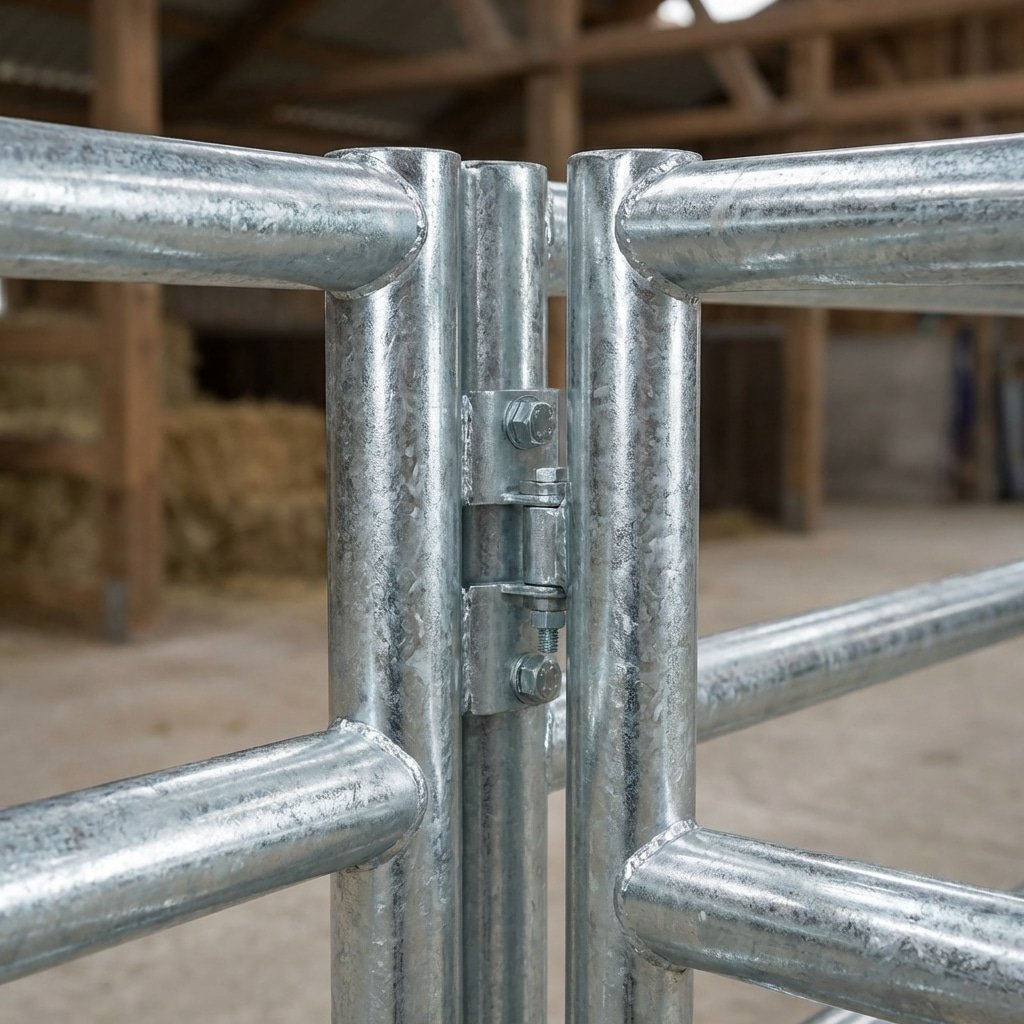
Your control over freight is only as valuable as the space you fill. This is where efficient product design makes a huge difference. Shipping air is just burning money. Our system is designed to maximize container space and protect your profit margins.
The DB Stable Steel Pallet Flat-Pack system allows 30-45 stable sets to fit into a single 40HQ container. Competitors using traditional, fully welded stalls can only fit 12-15 sets. This high-density packing directly cuts your per-unit shipping cost. This is a core part of our ‘Profit Protection’ strategy for distributors—we engineer the product to save you money on logistics.
DDP (Delivered Duty Paid): The “Hands-Off” Premium Option
With Delivered Duty Paid (DDP), DB Stable manages all logistics, customs, and duties for a final, all-inclusive price. This eliminates import complexity and risk for you.
What All-Inclusive Shipping Means for You
DDP is the simplest way to import. You get a single, landed price for the goods delivered directly to your specified address. There are no surprise invoices for port fees, customs duties, or local taxes when the container arrives. We handle everything.
- DB Stable manages all logistics, including ocean freight, customs clearance, import duties, and local taxes.
- You receive one transparent price with zero hidden import fees.
- All risk and responsibility remain with us until the stables are physically delivered to your door.
How Stee
l Pallet Flat-Packing Enables Seamless DDP
Offering a reliable DDP service isn’t possible without total control over logistics costs. Our Steel Pallet Flat-Pack system is the key. By engineering our stables to pack efficiently, we can load 30-45 stable sets into a single 40HQ container. This dramatically reduces the per-unit freight cost.
This efficiency is a core part of our ‘Profit Protection’ strategy for distributors. Because we control the packing density, we can accurately forecast and manage the total landed cost. This control gives us the confidence to handle all the complexities of a DDP shipment, making the entire process smooth and predictable for you.
Cargo Insurance: Protecting $50k of Steel at Sea
Cargo insurance provides financial protection for shipments like $50,000 worth of steel against physical loss or damage during sea transit, covering gaps left by standard carrier liability.
Shipping high-value steel products internationally involves real risk. Relying solely on the shipping line’s liability is a common and expensive mistake. Their coverage is minimal, often calculated by weight, which leaves a massive financial gap if your $50,000 cargo is damaged or lost. Proper cargo insurance closes that gap, protecting your investment from the moment it leaves the factory until it arrives at your port.
What Standard Cargo Insurance Covers
A good policy isn’t just about a total loss scenario. It covers the most common incidents that occur during a long sea voyage. Think of it as a financial shield for your assets while they are completely out of your control.
- It protects against physical damage. This includes damage from being dropped during loading, fire on the vessel, or water intrusion from rough seas.
- It provides liability coverage. If your steel freight shifts and injures a port worker or damages other cargo, the policy can cover the resulting claims.
- It fills the financial gap where carrier liability ends. A carrier might only be liable for a few hundred dollars on a ton of steel; insurance covers its actual market value.
How Smart Packaging Reduces Your Risk
Insurance is the financial backstop, but preventing a claim in the first place is always better for your project timeline. The way cargo is packed is your first line of defense. All DB Stable horse stall systems ship via our Steel Pallet Flat-Pack method. This approach locks every component in place with secure bracing. It prevents individual parts from shifting or rolling loose inside the container—one of the main causes of scratches, dents, and structural damage for steel products at sea. This ensures the system arrives ready for installation, not for a lengthy insurance claim.
Reflexiones finales
Choosing a supplier based on the lowest ex-works price is a common trap. Our Steel Pallet Flat-Pack system is engineered to protect your final landed cost and your profit. This logistics efficiency is the difference between a predictable margin and a shipment that costs you money.
The numbers prove the strategy. Let us run a landed cost comparison for your next project using your port and our flat-pack density. Request a formal quote to see the per-unit savings for yourself.


 Spanish
  English
  French
  Arabic
  German
0 comentarios