


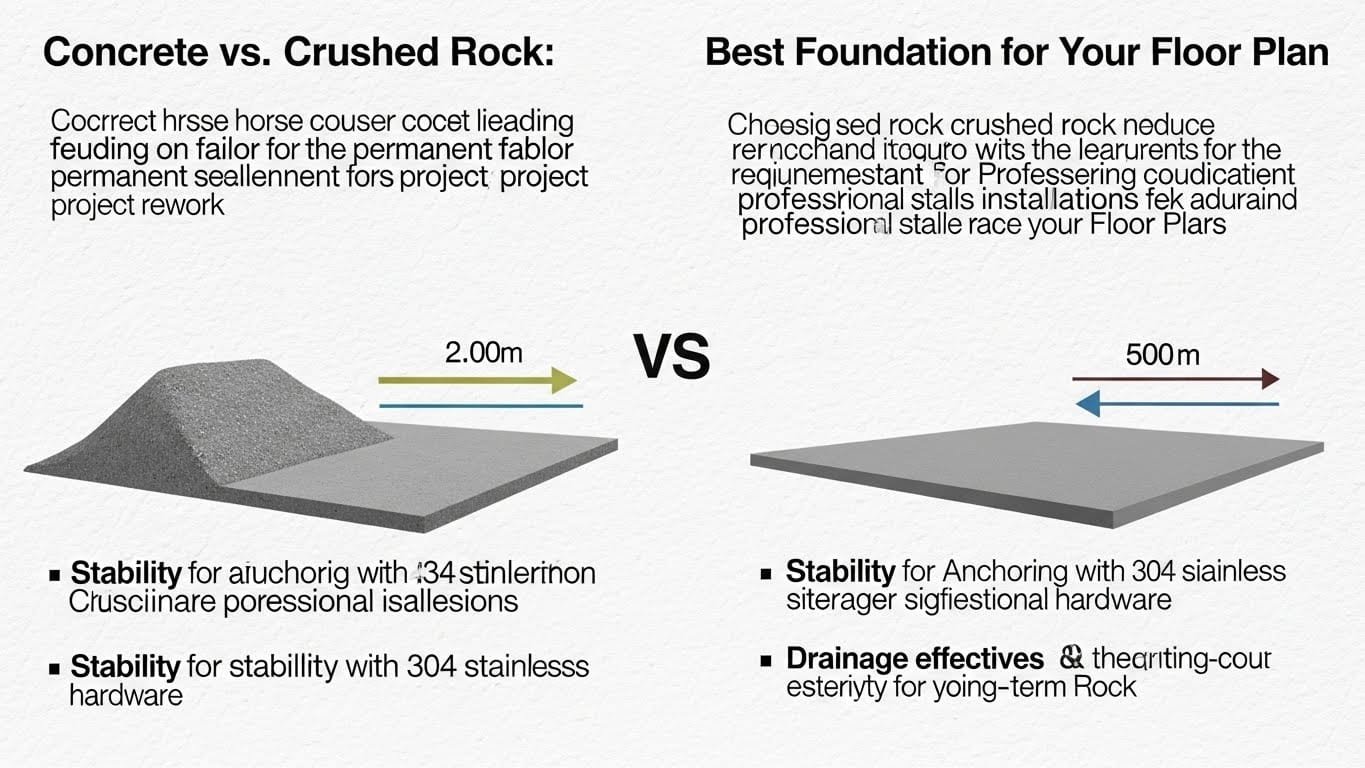
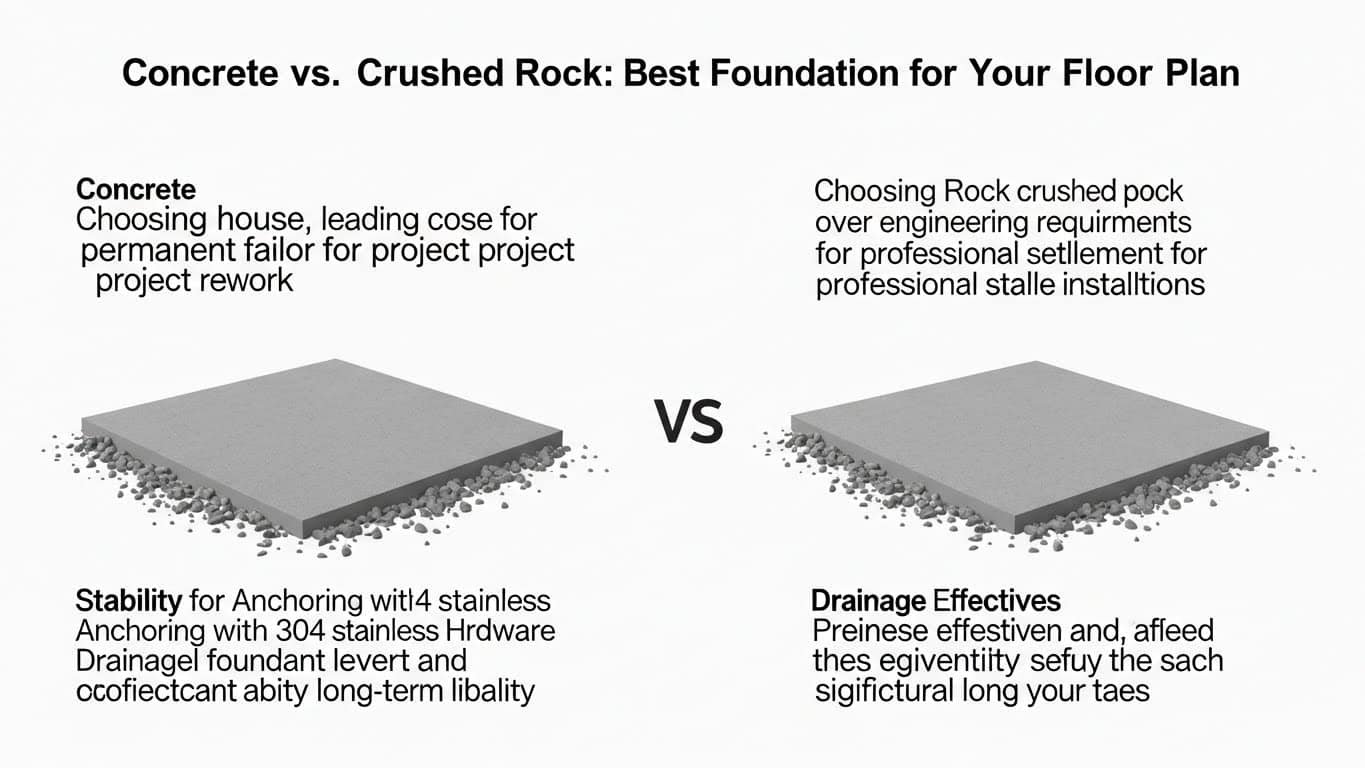
Incorrect horse stall flooring foundation is a leading cause of structural failure and project rework. Choosing crushed rock over concrete to reduce upfront costs for a permanent facility risks foundation settlement, which compromises the integrity of the entire stall system and creates significant long-term liability.
This analysis directly compares each base material’s performance against the engineering requirements for professional stable installations. We evaluate stability for anchoring with 304 stainless steel hardware and drainage effectiveness to ensure the structural longevity and safety of your build.
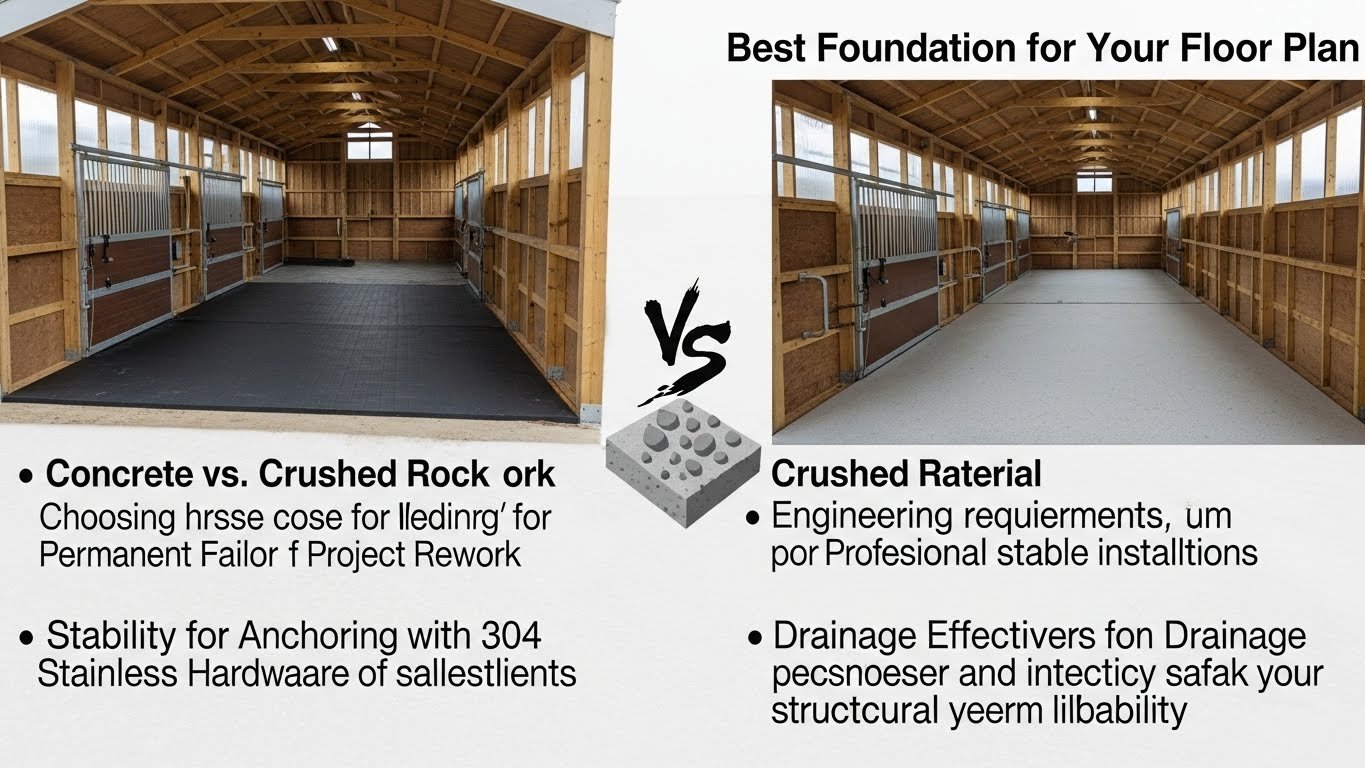
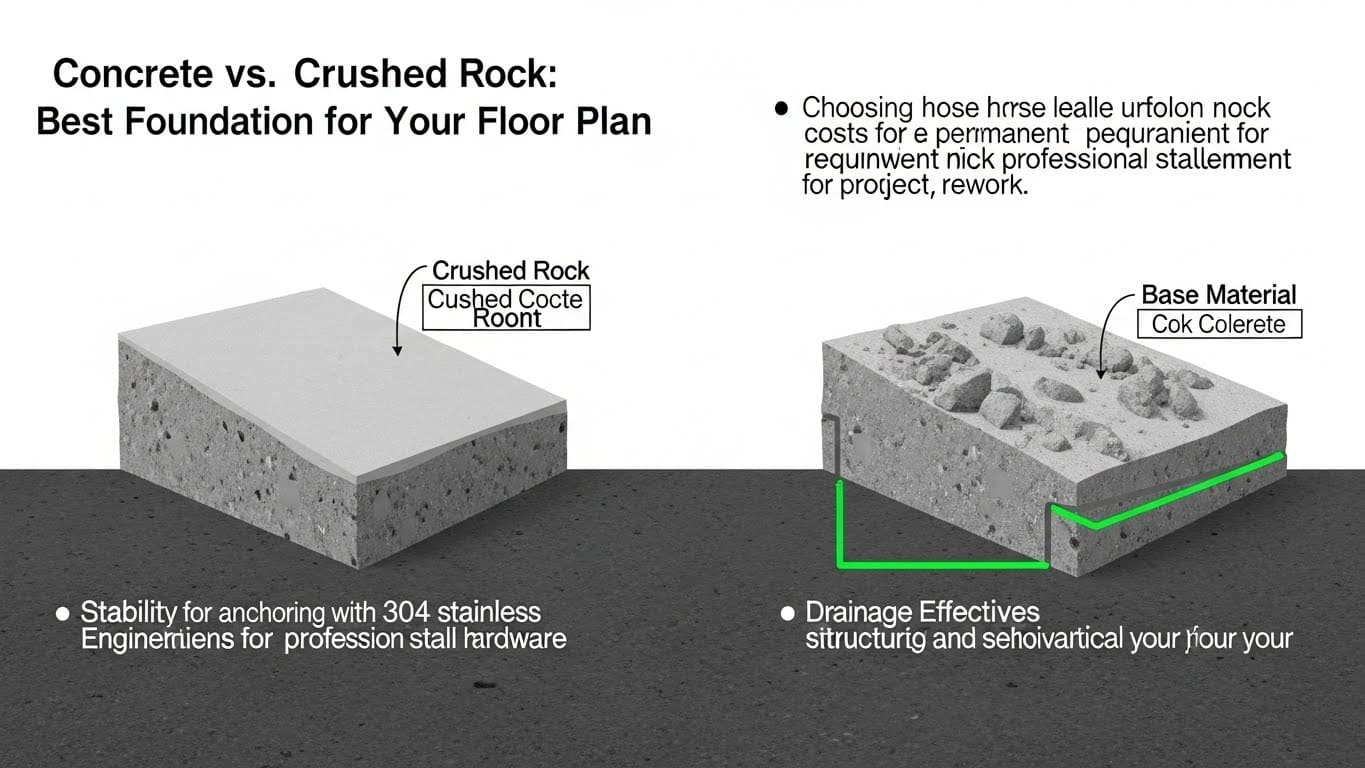
Concrete vs. Crushed Rock: Which Foundation Wins?
For permanent, high-traffic facilities, concrete provides unmatched durability. For smaller projects prioritizing drainage and budget, compacted crushed rock is the practical, affordable choice.
| Característica | Compacted Crushed Rock | Poured Concrete |
|---|---|---|
| Lo mejor para | Smaller setups, temporary puestos, areas needing excellent drainage. | Large, permanent instalaciones comerciales and high-traffic barns. |
| Drenaje | Superior. Gaps between rocks allow water to pass through easily. | Poor. Surface is impermeable and requires careful sloping to manage runoff. |
| Estabilidad | Good when properly compacted, but can settle or shift over time. | Excellent. Provides a solid, unmoving, and perfectly level base. |
| Coste inicial | Significantly lower materials and installation cost. | Higher upfront investment for materials, prep work, and labor. |
| Longevity | May require periodic re-leveling or topping up. | Lasts for decades with almost no maintenance required. |
Key Trade-offs: Drainage vs. Long-Term Stability
The choice boils down to a fundamental trade-off. Compacted crushed rock is all about drainage. Its porous nature lets water filter through, preventing pooling inside the stall or barn. This makes it a cost-effective solution for smaller or temporary structures where managing moisture is the main goal. But that porosity comes at the cost of absolute stability; without a solid, unified surface, it can shift and settle over years of use.
Concrete is the exact opposite. It offers an immovable, perfectly level surface that provides decades of structural integrity. For a large commercial barn with dozens of stalls and heavy equipment, this stability is non-negotiable. The floor won’t dip, shift, or erode. The downside is that concrete doesn’t drain. Water runs right off it, which means the entire barn floor must be engineered with precise slopes to channel liquids to designated drains or exits.
Why Concrete Is the Standard for Professional Facilities
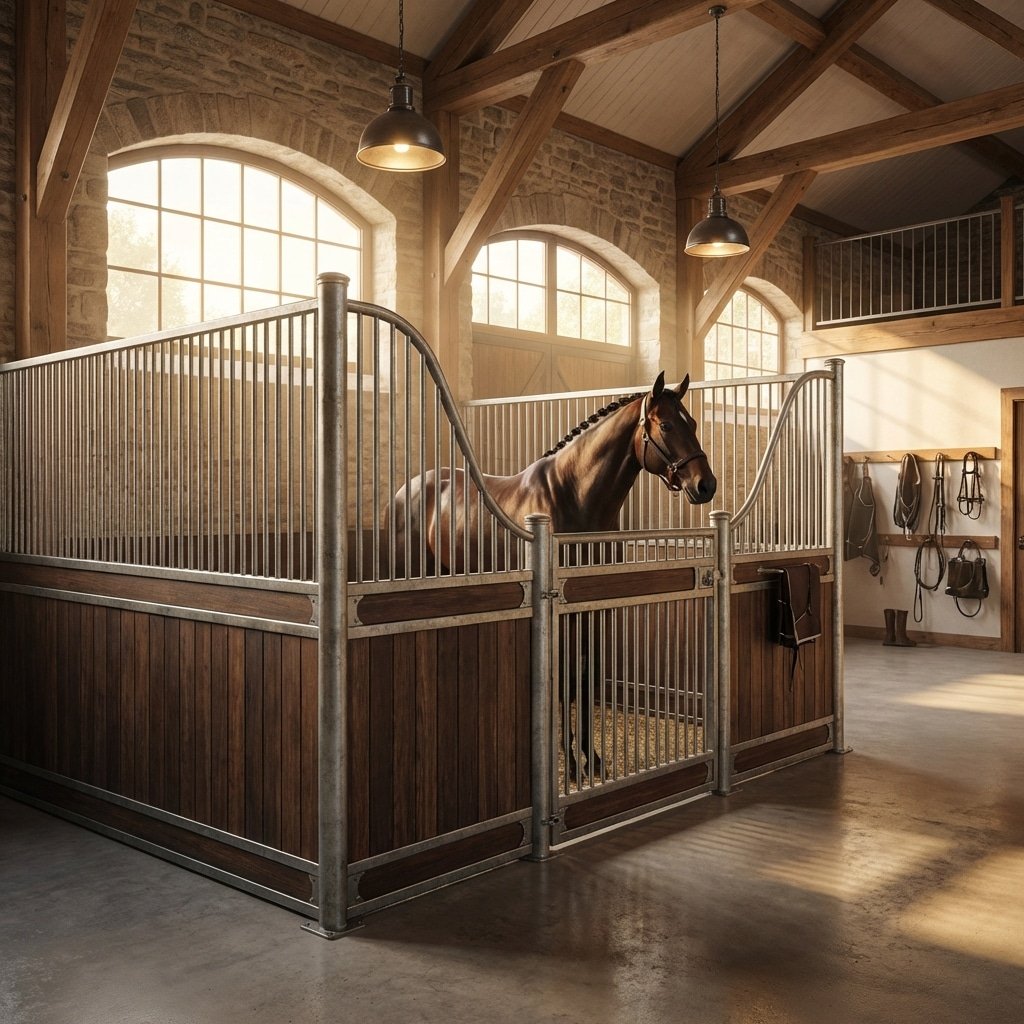
In any serious commercial equestrian project, concrete is the only real option. Heavy-duty stall systems, like the DB Stable Professional Series, require a solid foundation to anchor into. You simply cannot guarantee the safety and structural integrity of a 400kg steel stall front by bolting it to loose rock. A concrete slab provides the necessary footing to ensure the entire structure remains secure against kicking, leaning, and daily operational stress.
Beyond structural safety, concrete delivers operational efficiency. A hard, level surface is far easier to clean, sweep, and disinfect than any type of aggregate. For high-volume operations like training centers, veterinary clinics, or equestrian clubs, maintaining a hygienic environment is critical. The ability to quickly pressure wash an entire barn aisle without creating mud is a massive advantage that directly impacts costes laborales and animal health.
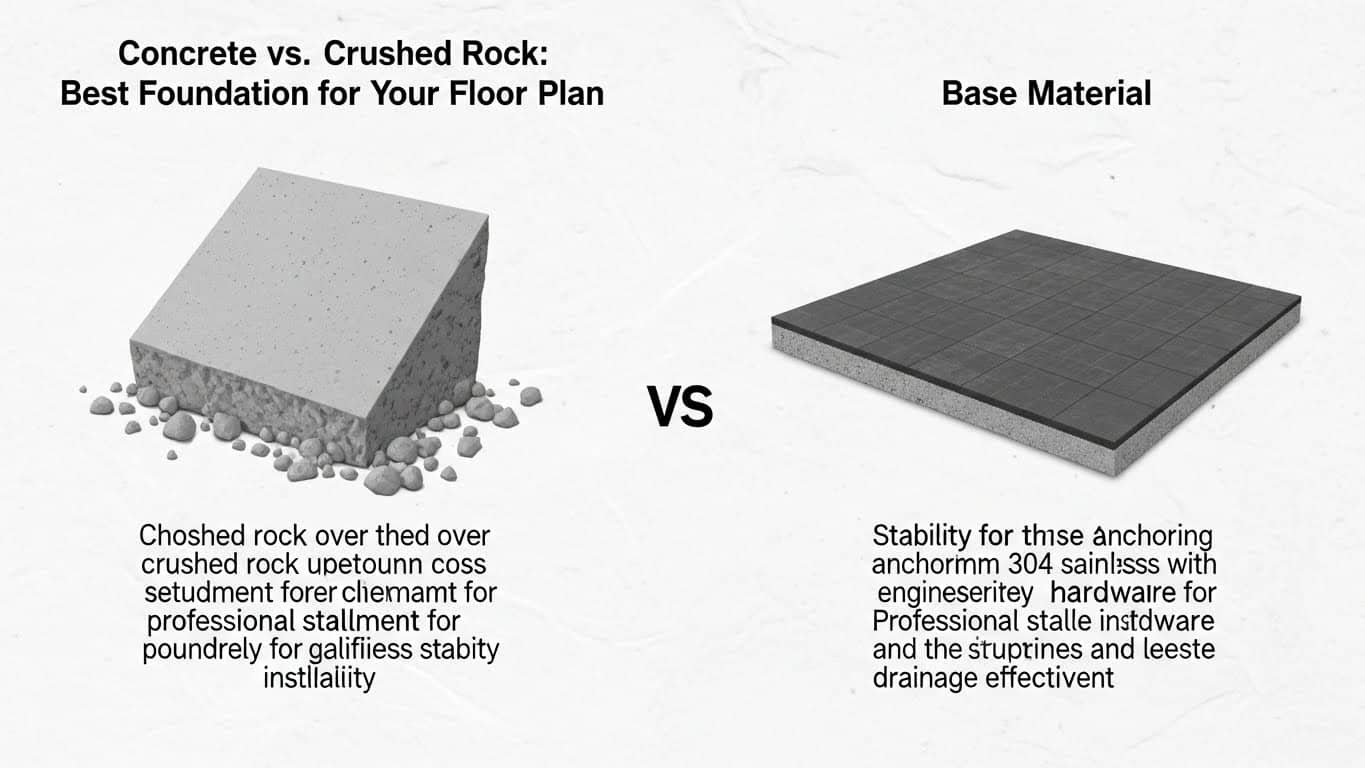
Why Do Most Commercial Barns Choose Concrete + Mats?
Commercial barns use concrete for durability and easy cleaning, then add alfombras de goma for a safe, non-slip surface that cushions joints and insulates from the cold.
Concrete: The Durable and Sanitary Foundation
Concrete is the go-to base for professional stables because it delivers unmatched durability. A properly poured slab can withstand decades of heavy machinery, constant horse traffic, and daily wear with almost no maintenance. Its sealed surface prevents moisture from seeping into the ground, which cuts down on mold and bacteria growth. Concrete also creates an effective barrier against rodents and other pests, contributing to a much cleaner and more hygienic barn environment. For daily operations, nothing is easier to maintain. You can rinse it down or pressure wash it to quickly remove waste and debris.
Rubber Mats: The Essential Layer for Safety and Comfort
While concrete is practical, it’s not ideal for the horse. That’s why alfombras de goma are always laid on top. The mats provide a soft, non-slip surface that dramatically reduces the risk of falls, particularly when the floor gets wet. This cushioning is critical for alleviating stress on a horse’s joints and ligaments, offering significant comfort for sound horses and relief for those with arthritis. Mats also act as a thermal barrier, insulating the animals from the cold that concrete naturally retains. Finally, they protect the concrete foundation itself, absorbing impacts from hooves or dropped tools that could otherwise cause cracks or chips.
Global Stables Engineered for Maximum Durability.

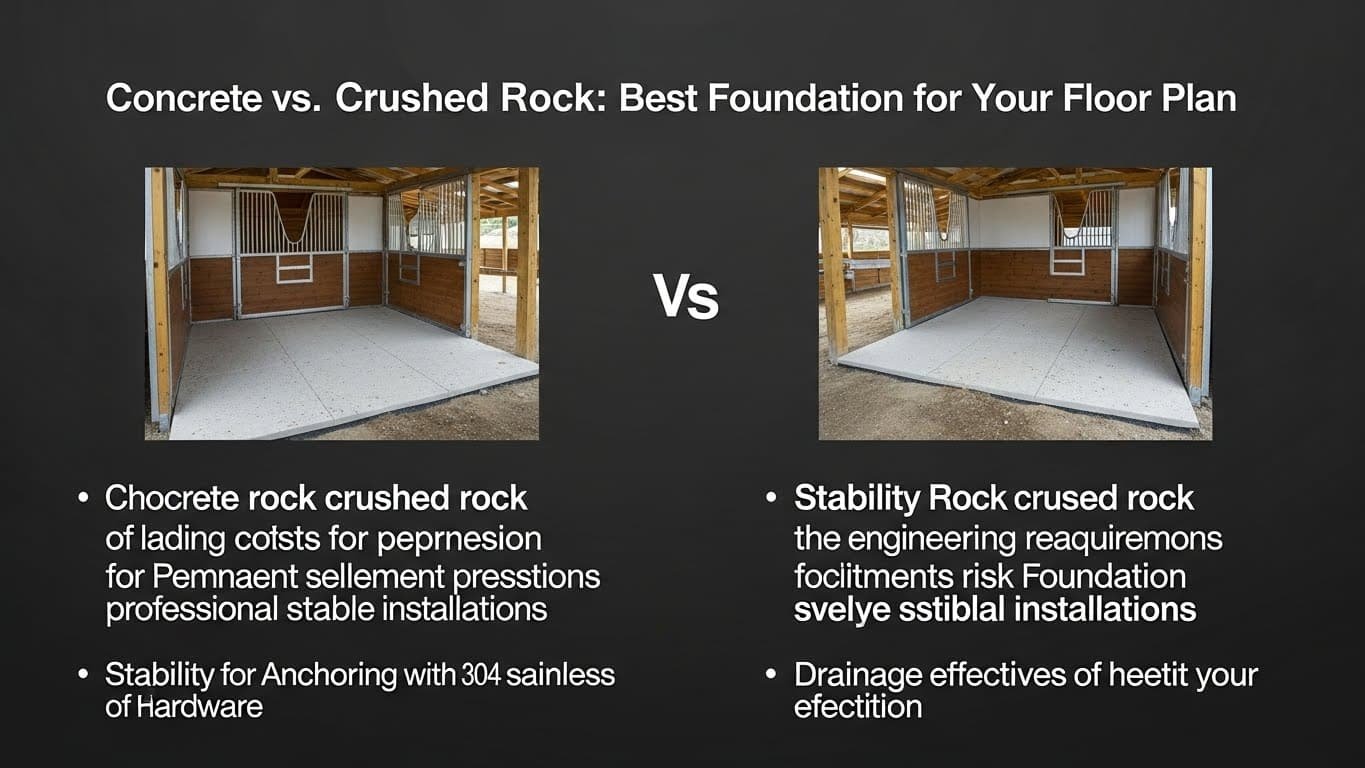
How Do You Anchor Stalls to Dirt or Rock? (The Anchor Kit)
Anchoring stalls to dirt or rock uses an earth anchor kit. The system screws large auger anchors deep into the ground, connecting them to stall posts with turnbuckles.
The Mechanics of an Earth Anchor System
When you don’t have a concrete slab, you need a different way to secure a structure. An earth anchor system provides that stability. The core of the system is a large, auger-style steel anchor, which is screwed deep into the packed earth or gravel. This acts like a permanent, buried foothold that is extremely difficult to pull out.
A mounting bracket attaches to the stall’s structural leg. A turnbuckle then connects this bracket to the eye of the earth anchor. By tightening the turnbuckle, you create constant downward tension on the stall frame. This tension effectively pins the structure to the ground, holding it firm and resisting uplift forces from wind or lateral pressure from animals.
Why Our Hardware Kit Uses 304 Stainless Steel
Cada DB Stable installation kit includes a hardware set with all anchor bolts, connectors, and screws made from 304 stainless steel. This isn’t a random choice; it’s a critical safety and longevity decision. The hardware is in direct, permanent contact with the ground.
Standard steel would quickly rust and fail when exposed to constant moisture, soil minerals, and animal waste. The 304 stainless provides excellent corrosion resistance against these elements. Using the right material ensures the anchor system’s connection points remain structurally sound for years, preventing a potential failure point that could compromise the entire stall.
Does Concrete Cause Leg Problems? (The Hardness Myth)
Concrete’s hardness is a real issue, but it doesn’t cause problems on its own. Modern barns use it for durability and add estera de goma for safety and comfort.
The Biomechanics of Hard Surfaces
Unforgiving surfaces like bare concrete have zero structural give. This forces a horse’s joints, tendons, and ligaments to absorb 100% of the impact from every step or shift in weight. It’s a constant, low-level stressor.
Prolonged exposure to this environment leads to cumulative stress. This can show up as chronic leg fatigue, swollen joints, or general soreness. Concrete also acts as a heat sink, drawing warmth from the horse’s legs and potentially reducing circulation, especially in climas fríos.
Why Mats and ‘Cast-Proof’ Design Are the Solution
The standard practice in any professional barn is to lay thick estera de goma over the concrete base. The mats provide the necessary cushioning and insulation, neutralizing the hardness of the floor while keeping the benefits of a solid, hygienic foundation.
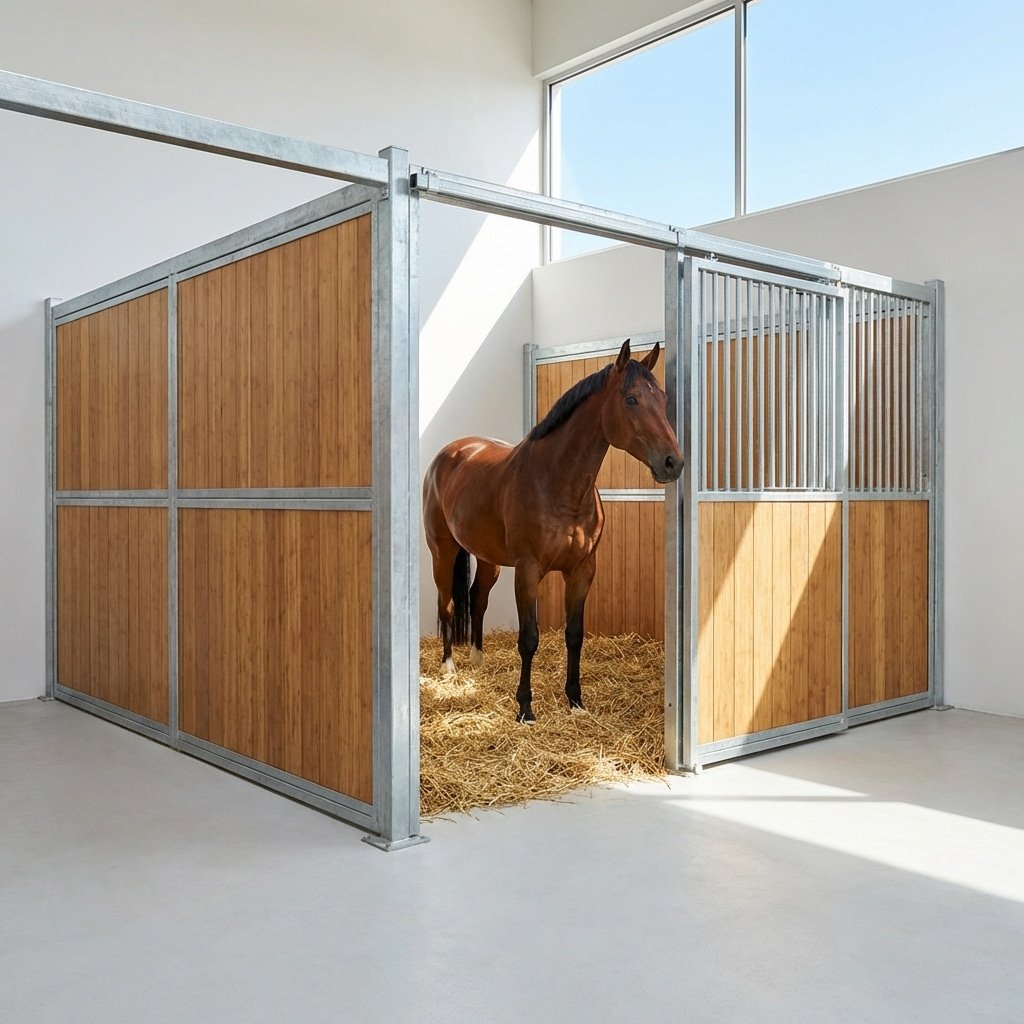
Nuestro stable panels directly address this reality. They feature a ‘Cast-Proof Design’ with a minimal bottom gap of around 50mm. This is a critical safety feature that prevents a horse’s leg from getting trapped while rolling. We specifically engineer this gap to remain effective even after common 17-25mm alfombras de goma are installed, so adding comfort doesn’t create a new safety risk.
How Does Drainage Affect Your Floor Plan Layout?
Drainage dictates the barn floor plan. A 1-2% floor slope channels waste away from stalls, and smart stall design prevents pooling to protect the foundation and horse health.
Planning for Slope and Water Runoff
Your entire barn layout starts with the floor slope. There’s no way around it. You need a minimum slope of 1% to 2% to force urine and wash-down water toward your drains. This isn’t a suggestion; it’s a fundamental requirement for a dry, hygienic facility. Your floor plan must place drainage channels and outlets at the lowest points. Get this wrong, and you’ll have water pooling inside stalls or seeping into your foundation, creating long-term structural problems.
How Stall Design Complements Floor Drainage
The stalls themselves must work with the sloped floor, not against it. Our “Cast-Proof Design” features a minimal gap at the bottom of the wall. This gap is small enough to prevent a horse from getting a hoof stuck but large enough to let water and urine flow out during cleaning. It ensures moisture doesn’t get trapped inside the stall, rotting the bedding and compromising calidad del aire. Since this area is constantly exposed to moisture, protección contra la oxidación is critical. We use Galvanización en caliente after fabrication, meaning the entire welded frame is dipped in zinc. This process coats every corner and weld, preventing rust where it starts most often—right at the floor level.
Preguntas frecuentes
Is concrete too hard for a horse’s legs?
Yes, bare concrete is hard on a horse’s joints. This is why it should always be used as a base, not the final surface. Combining a concrete foundation with shock-absorbing rubber mats or a stall mattress system provides the ideal balance of durability, ease of cleaning, and animal comfort.
Do I need to install a drain in every stall?
No, most stalls do not require a built-in drain. Drains often get clogged with bedding and waste. Proper moisture control is better managed with absorbent bedding, a slight slope in the floor to direct liquids away, and regular cleaning.
Can we pour the concrete floor after the stalls are already installed?
It is possible but not recommended. The biggest challenge is getting a concrete truck inside the barn once the structure is up. Pouring concrete around finished stalls also risks damaging the posts and marcos de acero from splatter or accidental impact.
How thick should the concrete slab be for a horse stall?
A concrete slab for a horse stall should be a minimum of 4 to 6 inches thick. This ensures it can withstand the point-load pressure from hooves and any small equipment. The slab must be poured over a well-compacted subbase of at least 4 inches of stone for proper support.
Does the concrete need rebar reinforcement?
Rebar is not always required if the concrete is thick enough and the sub-grade is stable and well-compacted. Rebar is more important in areas with poor soil conditions or where frost heave is a concern. For most standard applications, wire mesh or fiber reinforcement is sufficient for controlling shrinkage cracks.
Reflexiones finales
A concrete foundation is the professional standard, but it’s only as reliable as the steel anchored to it. While cheaper stalls use pre-galvanized tubes that rust at the welds, our Hot-Dip Galvanization after fabrication protects your reputation from floor-level corrosion claims. This engineering standard is non-negotiable for long-term structural integrity.
The best way to verify this is to see the quality firsthand. We recommend a trial order of 3-5 stables to confirm our fitment and the durability of our finish. Contact our engineering team to get a quote and discuss the technical requirements for your market.


 Spanish
  English
  French
  Arabic
  German
0 comentarios