


Sourcing for the New Zealand market demands stable systems engineered for constant damp and high winds. Choosing a supplier based on price alone often results in premature rust and structural failure, leading to costly warranty claims and significant damage to a builder’s reputation when frames can’t handle local conditions.
This analysis benchmarks suppliers against the BS EN ISO 1461 galvanizing standard, requiring over 70 microns of zinc. We evaluate partners on their use of Q235B structural steel and ability to streamline MPI clearance, ensuring projects avoid material failures and costly import delays.
Durable, Climate-Proof Stables Built to Last.
The Kiwi Climate: Designing for Dampness and Gales
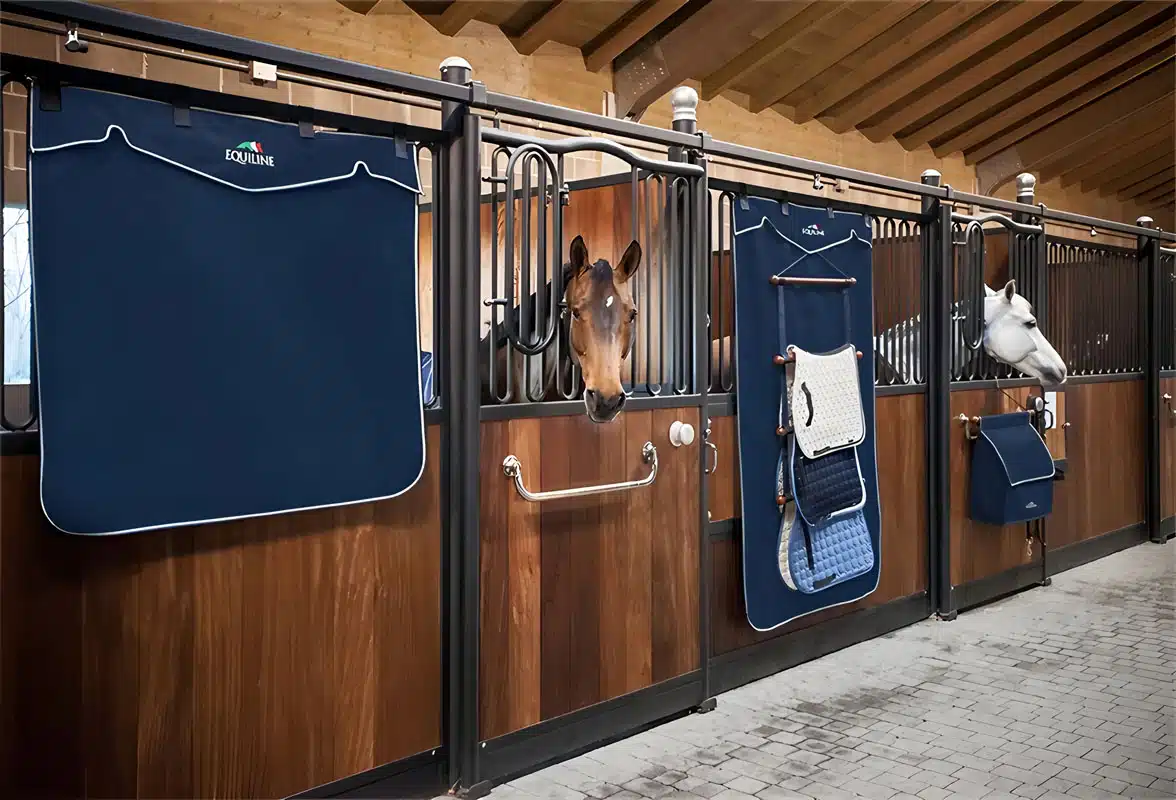
New Zealand’s wet, high-wind climate demands structures that resist both corrosion and physical stress. Our stable systems are engineered for these conditions, using a comprehensive hot-dip galvanizing process after fabrication to seal every weld against moisture, paired with heavy-gauge structural steel to ensure stability during strong gales.
Combating Constant Dampness with Rot-Proof Materials
To prevent rust in New Zealand’s high-humidity environments, we submerge every steel component in molten zinc after all welding and fabrication is complete. This “hot-dip after fabrication” method conforms to ISO 1461 standards, creating a zinc coating over 70 microns thick that fully seals welds, corners, and surfaces against moisture penetration. This process delivers significantly more protection than welding pre-galvanized tubes, which leaves vulnerable seams exposed to corrosion.
Our infill options directly address the risk of moisture damage. We offer high-density strand woven bamboo, which is naturally resistant to mold and rot, making it ideal for damp conditions. For a completely waterproof solution, our non-porous HDPE planks provide a zero-maintenance barrier that will not absorb water, warp, or degrade over time.
Structural Integrity for High Wind Zones
We build our stable frames from Q235B structural steel, using heavy-duty 50mm x 50mm RHS profiles with a wall thickness of at least 2.0mm. This robust construction provides the necessary strength to manage stress from the high wind loads common in many parts of New Zealand, ensuring the safety of the horses and the longevity of the structure.
The post-weld galvanizing process does more than just prevent rust; it enhances the structural integrity of the entire panel. By dipping the fully welded frame, the galvanizing process fuses with the steel and reinforces the welded joints. This creates a single, rigid structure that is more secure and resistant to flexing or failure during severe weather events.
The Rust Battle: Why 42 Microns of Zinc is Required
While 42 microns of zinc is a baseline for protecting small steel fasteners in New Zealand, it is insufficient for the demands of large structural frames. For true longevity in a high-moisture stable environment, a much thicker coating of 70 to 85 microns is required to provide lasting sacrificial protection against rust.
The 42-Micron Minimum: NZ’s Baseline for Fasteners
In New Zealand’s building standards, a 42-micron zinc coating represents the minimum baseline for hot-dip galvanizing on steel fasteners. This thickness provides essential sacrificial protection for smaller components, especially those used in less severe environments or internal applications where constant exposure to harsh elements isn’t a primary concern.
Beyond Fasteners: Why Structural Steel Demands 70-85 Microns
A coating that works for a bolt is simply not enough for the main frame of a horse stable. These large steel structures face constant exposure to high humidity, ammonia from animal waste, and physical wear. This is why we engineer our stable systems to a much higher standard. We perform Galvanización en caliente después de la fabricación, conforming to BS EN ISO 1461. This process achieves a robust protective zinc layer that averages over 70 microns (μm) on steel tubing and exceeds 85 micras (μm) on structural parts, ensuring your investment is protected for decades.
Wind Load Ratings (AS/NZS 1170.2) for Shelters
Designing horse shelters to comply with AS/NZS 1170.2 is essential for ensuring structural safety in Australia and New Zealand. This standard requires calculating wind loads based on site-specific factors like wind region and terrain. Our stable systems are engineered to meet these demands, using high-strength Q235B structural steel and robust, thick-walled tubing to withstand calculated forces and prevent failure in extreme weather.
Key Parameters in Wind Load Calculation
The AS/NZS 1170.2 standard provides a clear process for determining the wind forces a shelter will face. The calculation starts by establishing the site’s regional wind speed based on its geographical location. This base speed is then adjusted using several multipliers that account for terrain, structure height, and any shielding from nearby objects. A shelter in an open field (Terrain Category 2) will face higher wind loads and require a more robust design than one in a shielded suburban area (Category 3).
Designing for Ultimate vs. Serviceability States
Our stable systems are engineered for two key scenarios. The first is the Ultimate Limit State (ULS), which ensures the structure will not collapse even in extreme gales, protecting the animals and the asset. The second is the Serviceability Limit State (SLS), which prevents minor damage and ensures the structure remains usable under more common windy conditions. Achieving ULS compliance is critical. We use high-grade Q235B structural steel with a minimum wall thickness of 2.0mm, ensuring the frame has the integrity to handle the calculated wind forces without failure.
Importing to NZ: The Biosecurity (MPI) Advantage of HDPE
For distributors importing into New Zealand, our horse stables with HDPE infill offer a key advantage for clearing MPI biosecurity. Because HDPE is a non-organic polymer, it avoids the complex and costly timber treatment regulations, resulting in faster customs clearance and protecting your project timelines.
Why HDPE is a Low-Risk Material for MPI
HDPE is a non-organic and non-porous polymer. This makes it inherently resistant to moisture, mold, and rot, which are primary concerns for New Zealand’s Ministry for Prima
ry Industries (MPI) inspections. In a climate known for dampness, this material provides long-term stability and hygiene.
Unlike timber, our synthetic HDPE infill provides no food source or habitat for insects or pathogens. This dramatically lowers the risk of introducing invasive species during shipment and simplifies biosecurity risk assessments at the border.
The material is simple for us to clean and sanitize at the factory before we flat-pack the stable systems onto steel pallets. This ensures every component arrives ready for a smooth inspection without unexpected contamination risks that can cause costly delays.
Streamlining Imports by Avoiding Timber Treatment Rules
Importing timber products into New Zealand requires specific, regulated treatments like fumigation or heat processing to meet strict MPI standards. These procedures add significant costs and lead time to any project schedule.
By choosing our horse stable systems with HDPE infill, your business can bypass these complex timber-related regulations entirely. This leads to a much more predictable and streamlined customs clearance process, giving you a competitive edge.
This simplification is a direct benefit for our distributors. It protects your profit margins by avoiding unforeseen biosecurity fees and keeps your projects on schedule. It’s a logistical advantage that aligns perfectly with our “Zero Maintenance” product promise, saving you time and money from the moment the stables arrive in port.
Reflexiones finales
Stables built from pre-galvanized tube are a commercial risk in New Zealand, leading to inevitable rust claims and reputational damage. Our system, with post-weld hot-dip galvanizing to ISO 1461 and MPI-friendly HDPE, is engineered to protect your profit margins. It’s the difference between a short-term sale and building a trusted local business.
The specifications are clear, but the finish must be seen. Verify our engineering firsthand with a sample panel or a small trial order for your showroom. Contact our team to request a full OEM catalog and discuss how our flat-pack system protects your freight costs.
Preguntas frecuentes
Best horse stable builders in NZ?
As an OEM/ODM manufacturer, we don’t build stables directly. Instead, we partner with New Zealand’s best local builders and large-scale project managers. We supply the core engineered components—like our hot-dip galvanized steel frames and durable HDPE or bamboo infills—that local professionals trust to install. Our focus is on empowering local experts with high-quality, reliable systems.
Importing stables to New Zealand?
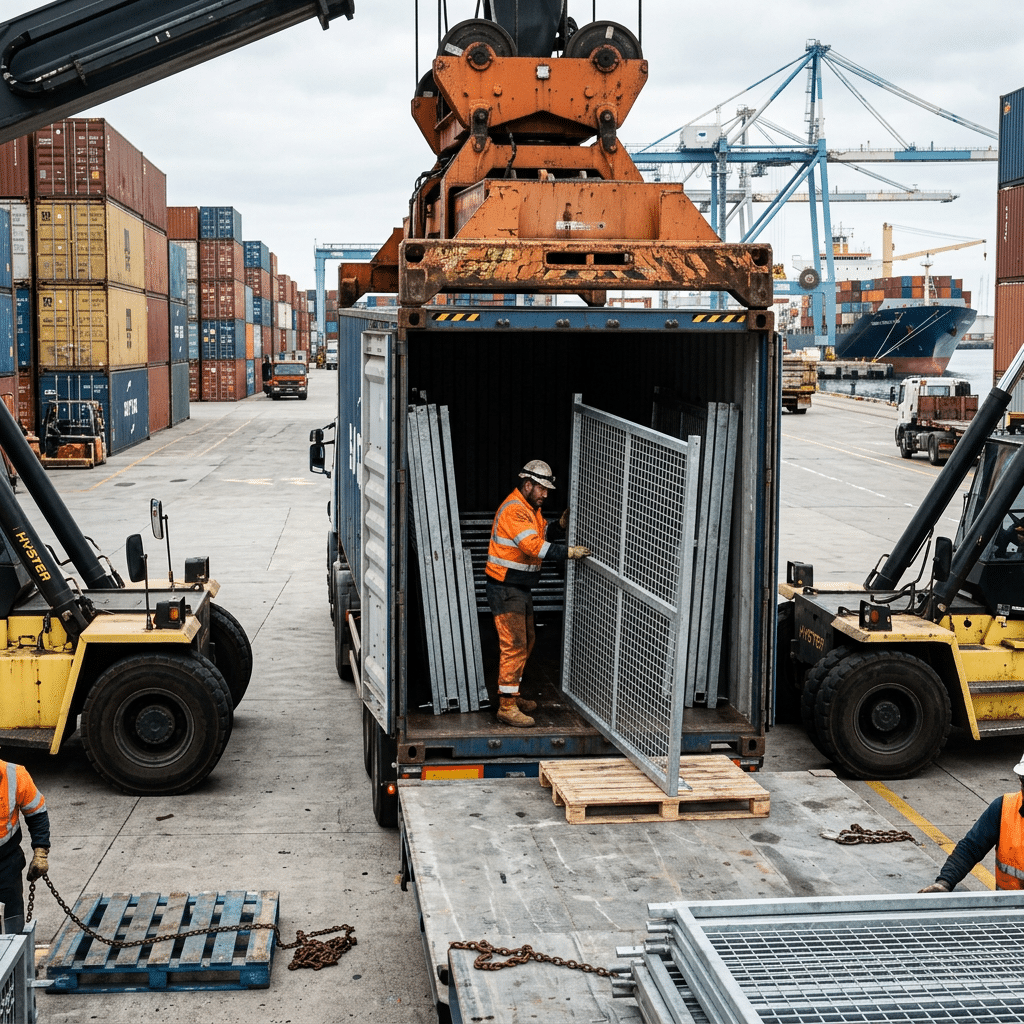
We designed our system to make importing simple and cost-effective for our B2B clients. Our stables ship in a flat-pack format on steel pallets, allowing 30-45 sets to fit in a single 40HQ container. This saves our distributors over 60% on freight costs compared to fully welded panels. We use HS code 7308.90 for smooth customs processing and provide all necessary documentation for a seamless logistics chain from our factory to your site in New Zealand.
NZ wind load ratings for horse shelters?
Our stable panels provide a robust structural framework built from high-strength Q235B or Q345B steel. While these components are engineered for durability, the final wind rating of the complete structure depends on the overall building design, foundation, and installation method. Your local engineer in New Zealand must certify the final assembly to ensure it meets site-specific requirements under standards like AS/NZS 1170.2 for your region’s wind zone.
Do I need MPI clearance for horse stalls?
Yes, biosecurity is a critical consideration. Our choice of materials can simplify MPI clearance. Our HDPE infill is a significant advantage because it is non-organic, non-porous, and easy to sterilize, posing no risk of carrying pests or diseases. For our high-density bamboo infill, we ensure it is properly treated and provide all necessary documentation to meet New Zealand’s strict biosecurity and import health standards.
Hot dip galvanizing standards in NZ?
Our galvanizing process conforms to the BS EN ISO 1461 standard, a globally recognized benchmark for quality that meets or exceeds local NZ requirements. We apply a thick zinc coating of over 70 microns. Critically, we perform “hot-dip galvanization after fabrication,” meaning the entire panel is dipped after all welding and cutting is complete. This method ensures every edge, corner, and weld is fully sealed against rust, providing lifetime protection ideal for New Zealand’s damp and demanding climate.

 Spanish
  English
  French
  Arabic
  German
0 comentarios