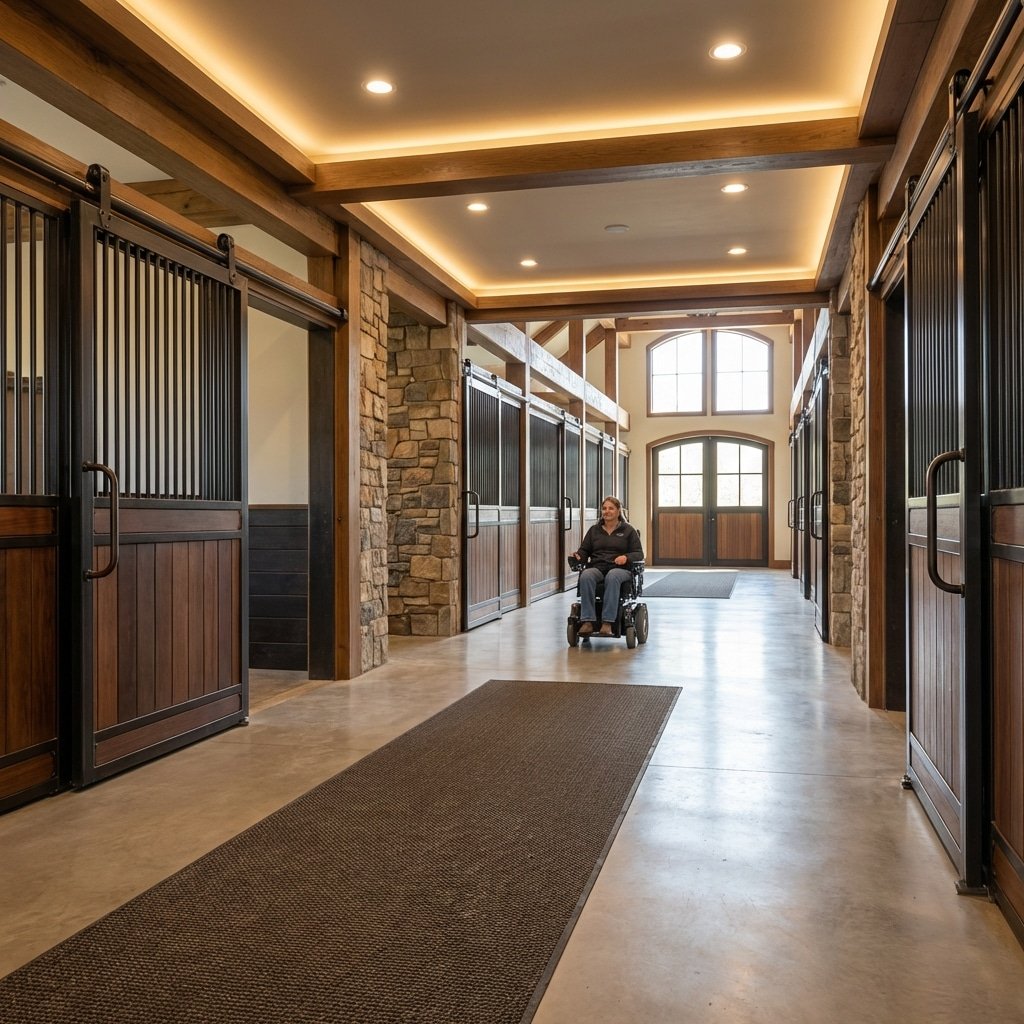
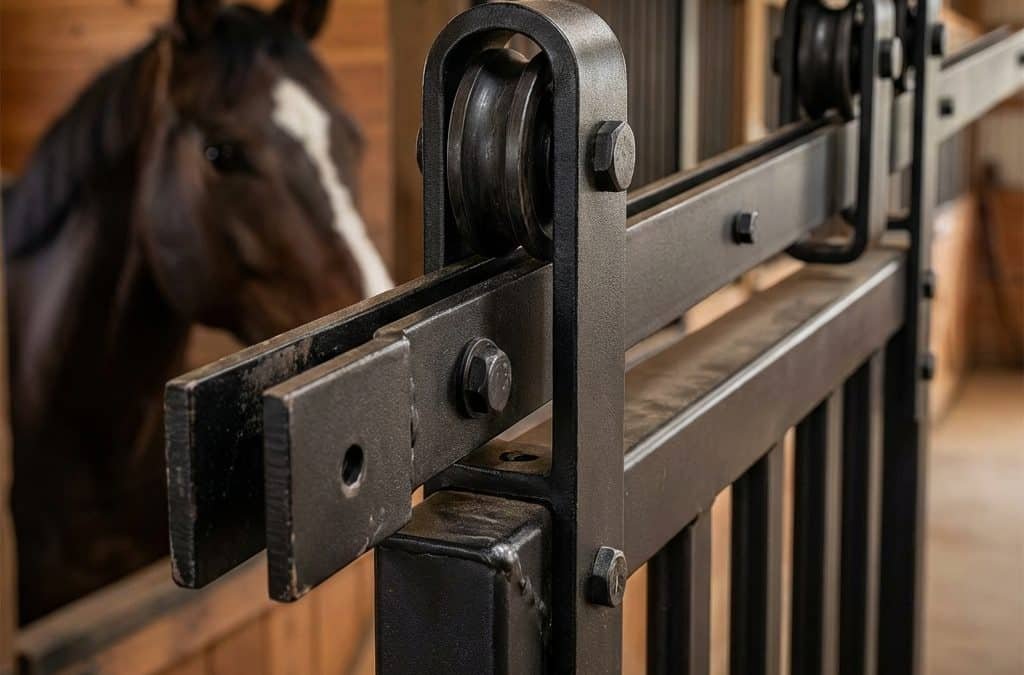
Sliding horse stall doors without floor track are a deliberate move to avoid the most common failure point in barn door hardware. But the decision only pays off if the overhead roller system is specified correctly. I’ve seen facility managers approve...
The debate over sliding vs hinged doors is a critical decision that directly impacts barn safety and long-term maintenance costs. A hinged door in a narrow aisle creates a predictable liability risk from obstructions. A poorly engineered sliding door introduces...
The Yoke vs Fully Grilled stable front decision is less about aesthetics and more about managing liability. Choosing a supplier based on a low price often means receiving fronts built with thin-gauge steel and inadequate galvanization. This leads to weld failures and...
The choice between mesh vs solid partitions is a critical engineering decision that directly impacts animal health and operational safety. Using open grills in feeding zones invites resource guarding and injuries, while solid walls in main stalls trap ammonia gas,...
Foaling stall design is a critical control for mitigating respiratory damage and protecting the value of a newborn. Stalls that fail to manage floor-level ammonia concentrations directly contribute to chronic airway inflammation, leading to recurring veterinary...
A sliding horse stall door jamming fix often starts with a simple inspection of the bottom guide, yet most maintenance teams waste hours adjusting trolleys that aren’t the problem. At DB Stable, this error is seen repeatedly across large-scale training centers...

 Spanish
 English
 French
 Arabic
 German