


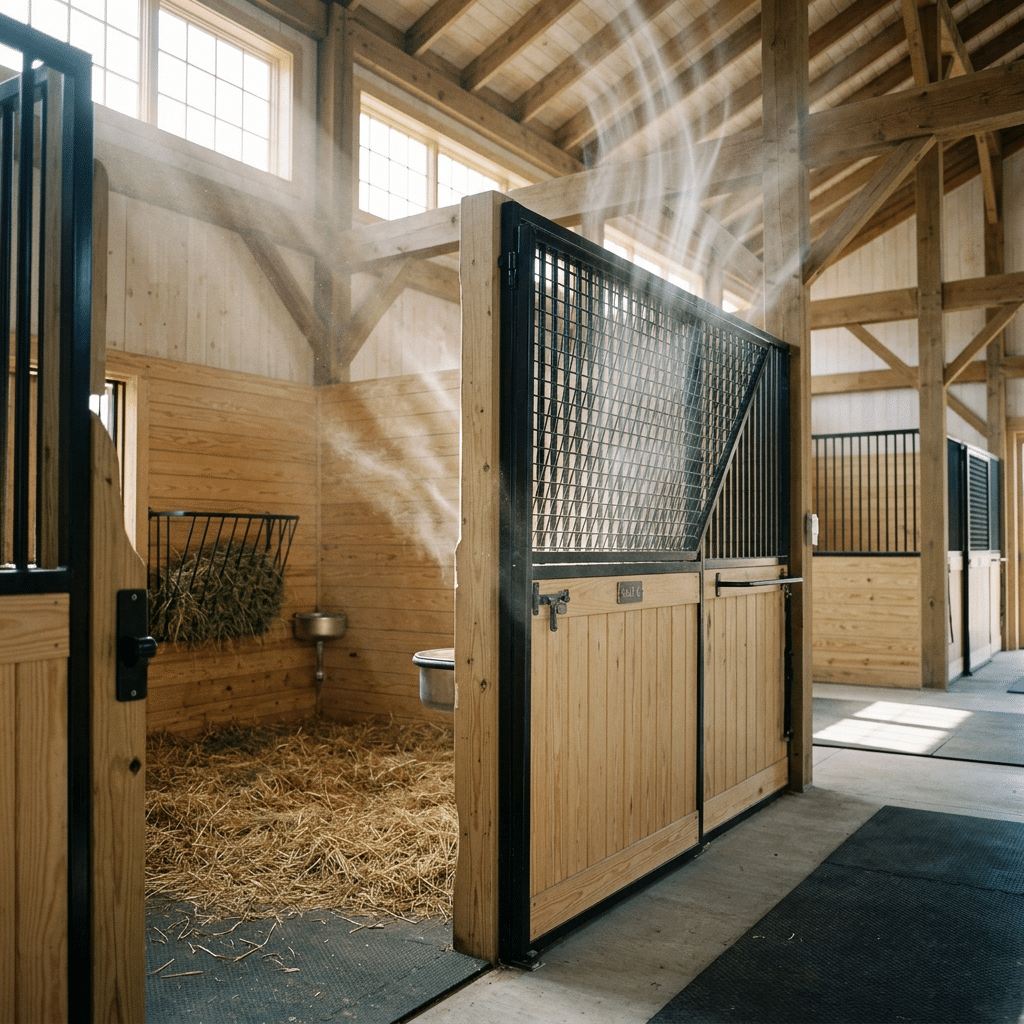
Therapeutic Riding facility design demands rigorous adherence to ADA protocols where standard agricultural specs expose owners to significant liability. Installing generic stable fronts with raised thresholds or narrow openings creates immediate trip hazards and operational bottlenecks that invite injury claims. For non-profits and architects, the financial risk of retrofitting non-compliant steelwork far outweighs the initial investment in purpose-built, accessible infrastructure.
This analysis benchmarks manufacturers based on critical engineering standards, including heavy-duty Q345B steel frameworks capable of supporting 4-foot clear openings without structural sag. We evaluate supplier capabilities in delivering flush-threshold systems and enclosed tracks that ensure single-handed operation for users with limited mobility. By prioritizing ISO 1461 hot-dip galvanization and kick-proof durability, we help you secure a facility that balances inclusivity with industrial-grade safety.
Diseño de establos accesibles para sillas de ruedas (ADA)
Comparación rápida
| Característica | Categoría | Key Requirement | Veredicto |
|---|---|---|---|
| Pathways and Routes | Design Standards | Requires min. 36″ width (32″ at points) and firm, slip-resistant surfaces. | Ensures safe passage for wheelchair users |
| Wheelchair Spaces | Planificación del espacio | 30″ x 48″ clear floor space adjoining an accessible route. | Provides dedicated space for stationary wheelchairs |
| Ramps | Elevation Management | Max slope 1:12 for >½ inch elevation; requires dual handrails. | Allows safe navigation of elevation changes |
Pathways and Routes
Essential for ADA compliance, ensuring a **36-inch continuous width** and stable footing for safety.
According to general ADA principles applicable to programming, accessible routes require a minimum continuous width of 36 inches. This width allows for safe maneuvering, reducing to 32 inches only at specific passage points.
Beyond dimensions, the physical characteristics of the path are critical. Surfaces must be stable, firm, and slip-resistant to accommodate wheelchair users effectively within the stable environment.
📊 De un vistazo:
- 📍 Categoría: Design Standards
- 🏭 Key Features: Accessible Aisles, Stable Flooring
- 🌍 Primary Application: Therapeutic Riding Centers
Por qué lo hemos elegido:
| ✅ Las ganancias | ⚠️ Compensaciones |
|---|---|
|
|
Wheelchair Spaces
Mandates a **30×48 inch clearance**, creating safe, obstruction-free zones for stationary users within active stable areas.
Standard compliance requires clear floor space measuring at least 30 inches by 48 inches for a stationary wheelchair. This defined footprint ensures users can remain comfortable and stationary without obstructing general barn traffic or blocking pathways.
For full functionality, the area must include one unobstructed side adjoining an accessible route. Strict adherence to these dimensions is vital for integrating accessibility seamlessly into viewing areas and tack rooms.
📊 De un vistazo:
- 📍 Ubicación: Planificación del espacio
- 🏭 Fuerza del núcleo: Viewing Areas, Tack Rooms
- 🌍 Mercados clave: Public Programming Facilities
Por qué los elegimos:
| ✅ Las ganancias | ⚠️ Compensaciones |
|---|---|
|
|
Ramps
**Critical for accessibility**, ramps bridge elevation gaps safely using specific 1:12 slope gradients and dual handrails.
For elevation changes exceeding ½ inch, ramps provide the necessary infrastructure for wheelchair users to navigate stables. They transform otherwise impassable barriers into smooth access points at barn entrances and internal splits.
Safety standards mandate a maximum slope of 1:12 to ensure the incline is manageable. To further enhance stability, handrails are required on both sides, offering support for users during ascent and descent.
📊 De un vistazo:
- 📍 Ubicación: Elevation Management
- 🏭 Fuerza del núcleo: Barn Entrances, Level Changes
- 🌍 Mercados clave: ADA Compliant Facilities
Por qué los elegimos:
| ✅ Las ganancias | ⚠️ Compensaciones |
|---|---|
|
|
Premium Custom Stables Built for Extreme Climates

Diseño de establos accesibles para sillas de ruedas (ADA)
Designing for accessibility requires more than just wider doors; it demands a structural rethink of the stable front to ensure safety for both the rider and the horse. We engineer our accessible layouts using heavy-duty Q345B steel to support wider 4-foot openings without structural sag, ensuring smooth operation for wheelchair users while maintaining the kick-proof durability required for therapeutic riding centers.
Mandatory Clearance Zones and Door Widths
While private stables often fall outside strict ADA public accommodation rules, therapeutic centers must strictly adhere to accessible route standards. A minimum clear width of 36 inches is non-negotiable for stall entry, though we recommend designing 48-inch openings to accommodate larger electric wheelchairs and safe horse handling simultaneously.
We engineer our custom stall fronts to integrate with wider structural openings without compromising the strength of the Q345B steel framework. Standard 4-foot stall doors often lose 2 to 4 inches of clearance to stops and jambs, so specifying a 1.4-meter (approx. 4.5ft) rough opening ensures full compliance.
Turning space is equally critical; a 60-inch diameter clear floor space allows a wheelchair user to perform a 180-degree turn safely. In our Professional Series layouts, we utilize sliding doors rather than hinged options to maintain this unobstructed radius in the aisle, ensuring users remain mobile even when leading a horse.
Accessible Latch Systems and Viewing Heights
Traditional gravity latches positioned at standard heights (60+ inches) are unreachable for seated users. We modify our locking mechanisms to operate within the ADA-recommended 34 to 48-inch vertical range, utilizing spring-loaded or sliding bolt systems that require minimal grip strength and allow one-handed operation.
Visibility is a key component of interaction. Standard 52-inch bottom solid partitions block the view for wheelchair users. We offer lowered yoke sections or “mesh-bottom” designs in our Professional Series that maintain kick-proof safety using high-tensile wire or narrow-gap bars, permitting seated riders to visually check on the horse before entering.
Safety dictates that protruding hardware must be eliminated. Our flush-mounted door pulls and recessed track systems prevent snagging hazards for users navigating close to the stall front, aligning with PATH Intl safety guidelines for therapeutic riding centers.
Suelos sin umbral: Eliminación del riesgo de tropiezos
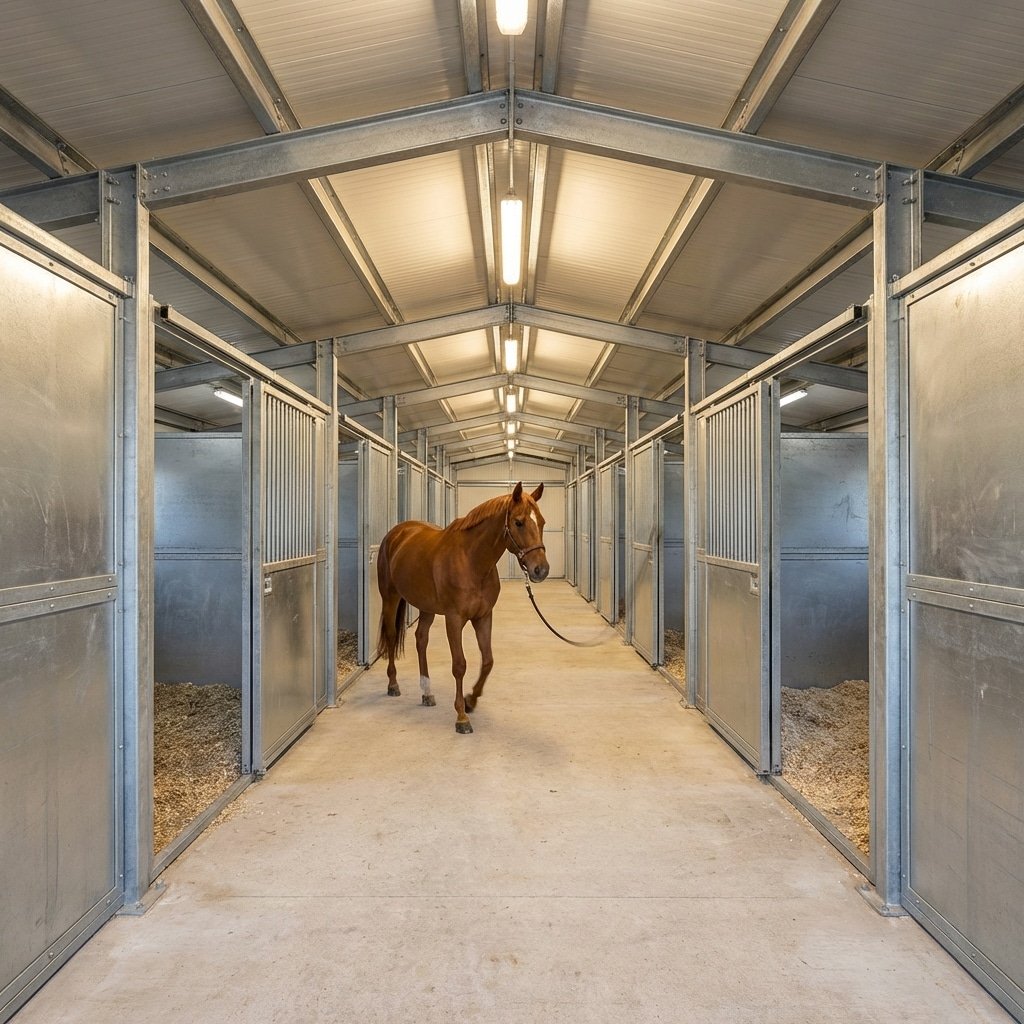
We engineer stable fronts that anchor directly into level concrete to eliminate dangerous bottom threshold bars. This design supports therapeutic riding standards by allowing rubber mats or pavers to run seamlessly from the aisle into the stall, ensuring safe, trip-free access for wheelchairs and riders with limited mobility while maintaining structural rigidity through high-strength steel frameworks.
Accessibility Standards for Therapeutic Riding Centers
Therapeutic riding facilities operate under stricter safety requirements than standard boarding barns. P
articipants often face mobility challenges or balance issues, meaning a standard raised metal threshold creates an immediate trip hazard and blocks wheelchair access. This physical barrier contradicts the primary goal of these centers, which is to promote rider independence and confidence.
We recommend establishing a continuous floor surface—typically smooth concrete or rubber brick—that flows uninterrupted from the barn aisle into the stall. Eliminating vertical obstacles allows riders and side-walkers to focus entirely on therapeutic outcomes rather than navigating environmental hazards. This flush design is essential for compliance with accessibility best practices in adaptive sports facilities.
Engineering Flush Transitions with DB Stable Systems
To achieve a zero-threshold entry without compromising the stable’s structural integrity, we utilize our Professional Series “Hidden Track System.” This heavy-duty overhead track carries the full weight of the sliding door, removing the need for a floor-level guide bar. The door posts are anchored deeply into the concrete, allowing the flooring material to pass through the doorway seamlessly.
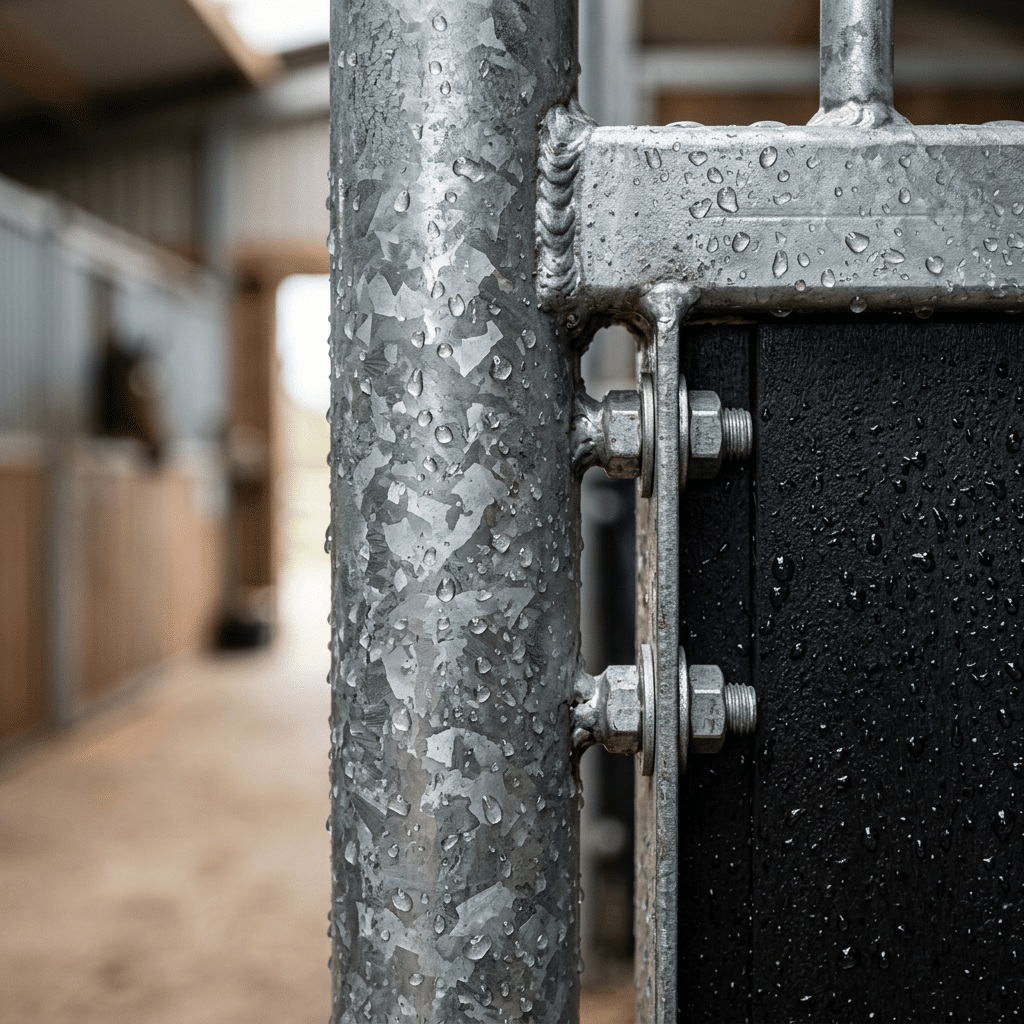
We rely on Q345B Low Alloy High Strength Steel (equivalent to ASTM Grade 50) for these applications. This material provides the necessary rigidity to the door frame so it remains square and secure without a bottom crossbar tie. The design maintains our “Cast-Proof” safety standard by keeping the bottom gap minimal (approximately 50mm) to prevent hoof entrapment, while ensuring wheelchairs and walkers glide effortlessly into the stall. All steel components undergo Hot-Dip Galvanization to BS EN ISO 1461 standards, protecting the floor-level anchor points from corrosion caused by daily washing and ammonia exposure.
Sistema de carriles cerrados Smooth-Glide de DB
Our Professional Series incorporates a fully enclosed, top-hung track system designed to eliminate the friction and jamming caused by barn debris. By shielding the roller mechanism and utilizing precision bearings, we ensure a lifetime of smooth, single-handed operation that protects both the facility’s workflow and the structural integrity of the stall front.
Debris-Proof Engineering for Maximum Reliability
We utilize a fully enclosed header design found in our Professional Series to shield the roller mechanism effectively. In traditional open-trolley systems, common barn contaminants like hay, dust, and bedding accumulation frequently cause jams and derailments. Our enclosed profile creates a physical barrier that prevents this debris from entering the track, ensuring the door operates consistently without the need for constant maintenance or cleaning.
The system incorporates 304 Stainless Steel hardware components to resist corrosion and maintain smooth operation. This specification is critical for maintaining functionality in high-moisture environments, such as wash stalls or humid coastal climates, where standard galvanized rollers often rust and seize over time.
Our design eliminates the risk of door derailment through a secure, captive roller assembly. Unlike simple hanger systems that can jump the track during an impact, our captive design ensures the door remains safely suspended even if the bottom guide receives a direct kick from a horse, protecting both the animal and the handler.
Low-Resistance Operation for Accessible Barns
The precision bearing system reduces the physical force required to slide heavy stall doors, making them manageable for a diverse range of users. This ease of operation is particularly vital for therapeutic riding centers, where volunteers or riders with limited strength need to operate stall doors safely and independently.
We integrate this track with our heavy-duty Q345 steel frames to prevent structural sagging. Lighter-gauge headers often bow under the weight of solid infill materials, causing the door to bind in the center. Our structural steel framework ensures the header remains rigid and the door remains perfectly aligned for a lifetime of effortless gliding.
This top-hung configuration removes the need for floor tracks, creating a seamless, trip-free entry. This design choice supports wheelchair accessibility and prevents debris buildup in the threshold, allowing for easier mucking out and safer passage for horses entering or exiting the stall.
Reflexiones finales
Cutting corners on structural materials for therapeutic centers creates liability risks rather than savings. We engineer our Professional Series with Q345B Low Alloy High Strength Steel to support critical 4-foot ADA openings without the structural sag found in standard Grade A36 alternatives. Relying on this heavy-duty, “Cast-Proof” engineering validates your facility for PATH Intl standards and safeguards against costly long-term maintenance.
Do not leave accessibility compliance to guesswork or generic catalogue options. Send our engineering team your facility layout today to optimize aisle widths and zero-threshold transitions for your specific operational needs. We provide factory-direct pricing on Hot-Dip Galvanized systems that secure your commercial budget without compromising on rider safety.
Preguntas frecuentes
¿Cómo diseñar un establo para caballos que cumpla la normativa ADA?
We recommend prioritizing wide, obstruction-free aisles and level flooring to accommodate wheelchairs. Our modular Hot-Dip Galvanized stall systems allow for flexible layouts, enabling you to create wider stall front openings and spacious tack rooms that meet accessibility requirements without compromising structural strength.
Anchura mínima de la puerta para el acceso de sillas de ruedas en los establos?
While standard ADA guidelines suggest a minimum of 36 inches (approx. 915mm), we advise a clear opening of at least 1.2 meters (4 feet) for barn environments. Our sliding door systems are integrated into 3.0m to 4.0m panels, providing generous clearance for wheelchairs and side-walkers to pass safely alongside the horse.
¿Las mejores puertas de cuadra para centros de equitación terapéutica?
We strongly recommend our Professional Series sliding doors for therapeutic settings. Unlike swinging doors that intrude into the aisle, these stay contained within the stall line. They feature a hidden top track system and kick-proof HDPE infill, eliminating floor-level trip hazards and ensuring a safe environment for students.
¿Son más fáciles de abrir las puertas correderas?
Yes, especially with our smooth-glide enclosed track system. Hinged doors can be heavy and difficult to manage in windy conditions or for individuals with limited upper body strength. Our sliding mechanism is engineered to glide effortlessly, allowing easy operation by volunteers and riders alike.
¿Normas de seguridad para establos PATH Intl?
PATH International standards emphasize minimizing risk. We align with these by using Q345B High Strength Steel and a “Cast-Proof” design with minimal bottom gaps (approx. 50mm) to prevent leg entrapment. Furthermore, our post-fabrication hot-dip galvanizing ensures there are no sharp welds or rough edges that could injure horses or handlers.

 Spanish
  English
  French
  Arabic
  German
0 comentarios