


Rub a white glove across an arena rail that faces the morning sun for two summers and you may come away with a dry, powdery film on the fabric. That is chalking: the surface of a plastic profile breaking down faster than the body underneath it. On a chalking PVC rail used around an outdoor school it is usually cosmetic at first, and it is almost never investigated until a buyer, an insurer or an event auditor asks a question about it.
Work from what is actually stated. This supplier’s fencing line is economic galvanized horse fence panels plus UV-resistant PVC arena fencing, at a stated MOQ of 50 panels or 10 stall systems, a stated 500+ sets a month of capacity, a stated 15-year service life for UV-resistant PVC, and market positions that put Australia and Spain on UV-resistant materials rated for 40-degree heat. Not stated: a resin formulation, an ultraviolet package, a cap thickness, a gloss figure, a permitted cleaning agent or a price. The difference between those two lists is the whole of this article.
Key Takeaways
- Chalking is a surface loss, not a crack. Powder that transfers to a cloth and a permanently dull patch underneath identify it; dirt wipes off and the original sheen returns.
- It is uneven on purpose. South- and west-facing rails in an open school advance fastest; shaded north runs and the underside of a rail lag behind. Compare like with like.
- Nothing is published about this material’s makeup. No resin, stabilizer package, cap layer or appearance warranty is stated for the PVC rails here, so those become written questions, not assumed answers.
- Cleaning can end a claim. Abrasives, solvents and close-range pressure washing scar a polymer surface; get the permitted method in writing before the first wash of a new batch.
- Inspect on a calendar, not on a complaint. One walk per season, same rail faces, same light, with a photo card and a section list, turns an opinion into a record.
- Age the whole line, not one rail. Fixings, post caps and any steel in the assembly weather on their own clock — the stated 20-year figure covers hot-dip galvanized steel, not the plastic.
What chalking is, and what it is not
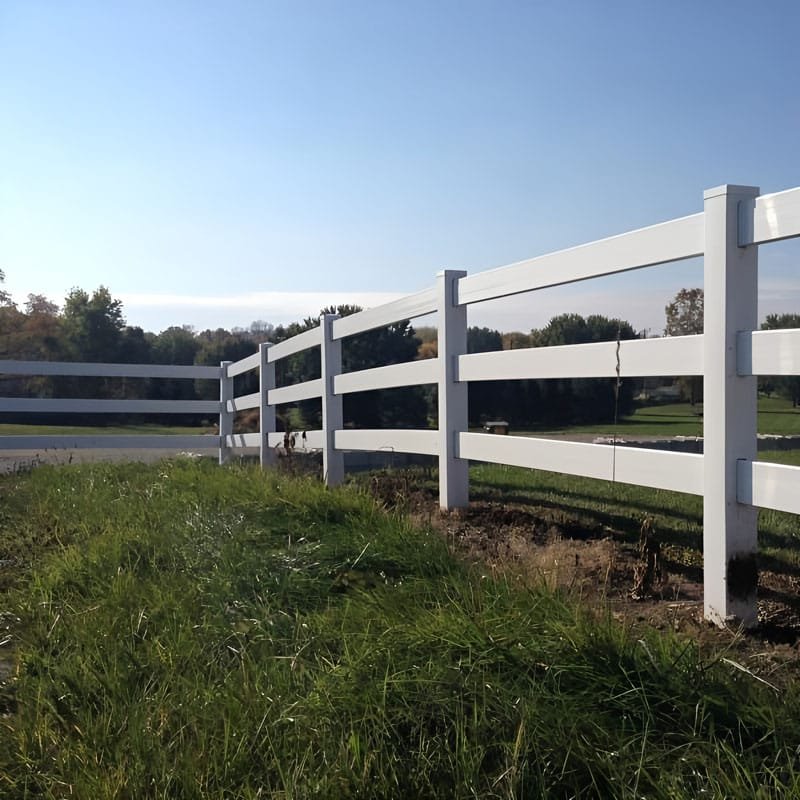
The usual explanation is that ultraviolet light breaks the binder at the surface of a polymer profile. Pigment is left sitting on a weakened layer and lifts off as powder when touched or washed. The telling part is not the powder; it is what is underneath. If the wiped area has lost its original sheen permanently, that is chalking. If the sheen returns once the film is off, you were looking at road dust, pollen, hay silica or spray from a footing additive.
Three other conditions get mislabeled as chalking. A green or black streaked face in a shaded, wet-climate run is biological growth, common where drainage and BHS-style wet-season expectations already dominate the specification. A white crusty deposit after hard-water rinsing or a disinfectant is a residue, not a failing surface. And a stiff, bright-colored rail that cracks at a fixing hole has a different problem again — impact and stress, not sunlight. Sorting these three from real chalking is the difference between a cleaning job and a replacement order.
The inspection you can actually keep
Set one walk per season, at the same time of day, and check the same rail faces. Bring a white cloth, a camera and a list of sections by gate or corner rather than by the whole fence line. Record four things per section: powder transfer to the cloth, whether the sheen returns after wiping, any color shift against a shaded rail of the same batch, and any crack, chip or loose fixing.
Two details make the record useful. Compare only like with like — the weathered face of a rail against a shaded spare from the same delivery, never against a catalog image. And date the record against your delivery paperwork, because a claim window, a spare parts order and a batch replacement all turn on when a section arrived, not on when you noticed it.
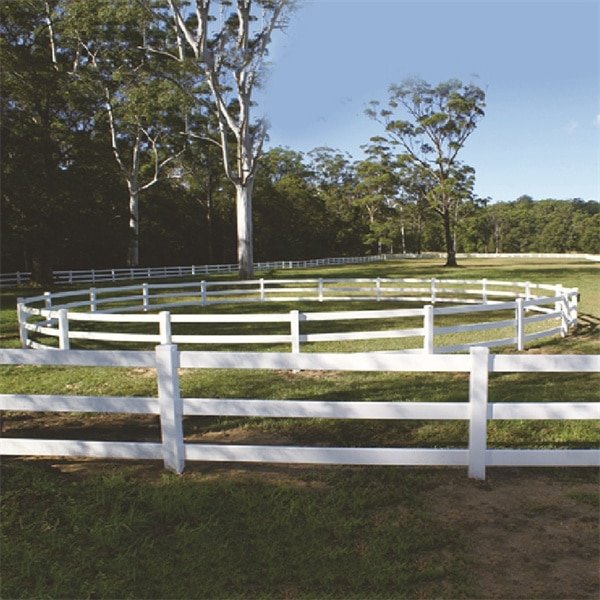
Our position: photograph and record before you scrub. A washed rail hides the very evidence you may need, and a facility that can show four seasonal records for the same section is in a different negotiating position from one that can show a phone photograph taken the week a complaint was raised.
Cleaning without making it worse
The safe default on an unknown polymer is the boring one: soft brush or cloth, lukewarm water with a mild detergent, work top down, rinse with clean water and let it dry. Test on a short hidden section first and look at the wipe, not only at the rail — powder on the cloth after washing tells you the surface is still breaking down.
What to avoid is where buyers get hurt. Abrasive pads and scouring powders cut the surface and make dull patches permanent. Solvents, degreasers, undiluted bleach and patio or weedkiller run-off can attack the outer layer and the color. A pressure washer on a narrow nozzle setting at close range drives water into joints and can etch the face — if you use one, keep the lance far back and wide. Then get the answer you actually need: which cleaning method the supplier permits without treating the rail as modified. That is a written line in a thread, not a forum post.
What to ask the manufacturer before you order more
Four questions separate a real answer from a brochure. Is the profile through-pigmented or capped with a separate outer layer, and what happens at a cut end or a drilled hole. What ultraviolet stabilization is used, and against which exposure the stated 15-year service life was assessed — material property, color, or appearance. Whether a gloss or color-change tolerance exists at all. And what the supplier’s own inspection interval is for a market they already ship into, such as the 40-degree Australian and Spanish conditions this range is stated for.
Ask for test evidence the right way. Accelerated weathering reports, the standard used and what the certificate actually covers are dealt with in uv-stabilized pvc rail weathering certificates; this article stops at field identification and cleaning. When a section is past cleaning, the decision is which rails get swapped and what spares to hold — that is covered in pvc arena rail replacement and spare parts. Ordering either way runs against a stated MOQ of 50 panels and a stated 4-6 week lead time, with 1-2 weeks from the Sydney or Warsaw warehouse when expedited, so a seasonal record is what lets you place a matched batch instead of a mixed one.
Preguntas frecuentes
Does chalking mean the rail has to be replaced?
Not on its own. Surface powder is a finish loss; a rail usually stays in service until cracking, chips at fixings or stiffness appear. Replace on your inspection record, not on the powder alone.
Can the original gloss be restored?
Sometimes partially, and only by removing material, which shortens the interval to the next round. Polishers and coatings are not covered by anything published for this range, so ask before applying either.
How often should arena fencing be inspected?
Once a season is the practical minimum, and after any storm, chemical application or change of cleaning contractor. Keep the walk, the light and the rail faces the same so the records compare.
Does surface chalking affect the 15-year statement?
Nothing published here says what the 15-year figure is measured against. Ask in writing whether it covers material performance, color retention or appearance, and quote your section record in the question.
Conclusión
Chalking is easy to identify and easy to misread, and both mistakes cost money — one buys rails you did not need, the other leaves a line that fails a client walk-through. A seasonal record and one written question about permitted cleaning settle most of it.
Walk the exposed faces this month, write down what transfers to the cloth, and put the four manufacturer questions in the same thread as your next order. The galvanized panel and PVC arena fencing range is on the horse fence page.

 Spanish
 English
 French
 Arabic
 German
0 comentarios