


Managing Auto-Waterer Floods requires more than just a sump pump; it demands infrastructure that survives submersion. When a float valve jams, standard pine or plywood stall fronts absorb moisture immediately, leading to irreversible warping and dangerous mold growth. This structural degradation turns a simple plumbing failure into a capital expenditure crisis for facility managers.
We examine how replacing hygroscopic timber with 28mm-32mm solid HDPE infill eliminates the sponge effect entirely. By integrating Q235B structural steel with ISO 1461 hot-dip galvanizing after fabrication, facilities can maintain zero-maintenance sanitation standards even after catastrophic water exposure.

The Midnight Flood: When Auto-Waterer Floats Stick
The “Midnight Flood” occurs when automatic waterer float valves jam open due to mineral scale, debris accumulation, or mechanical obstruction, leading to continuous overflow and saturated flooring.
Understanding Mechanical Float Jamming
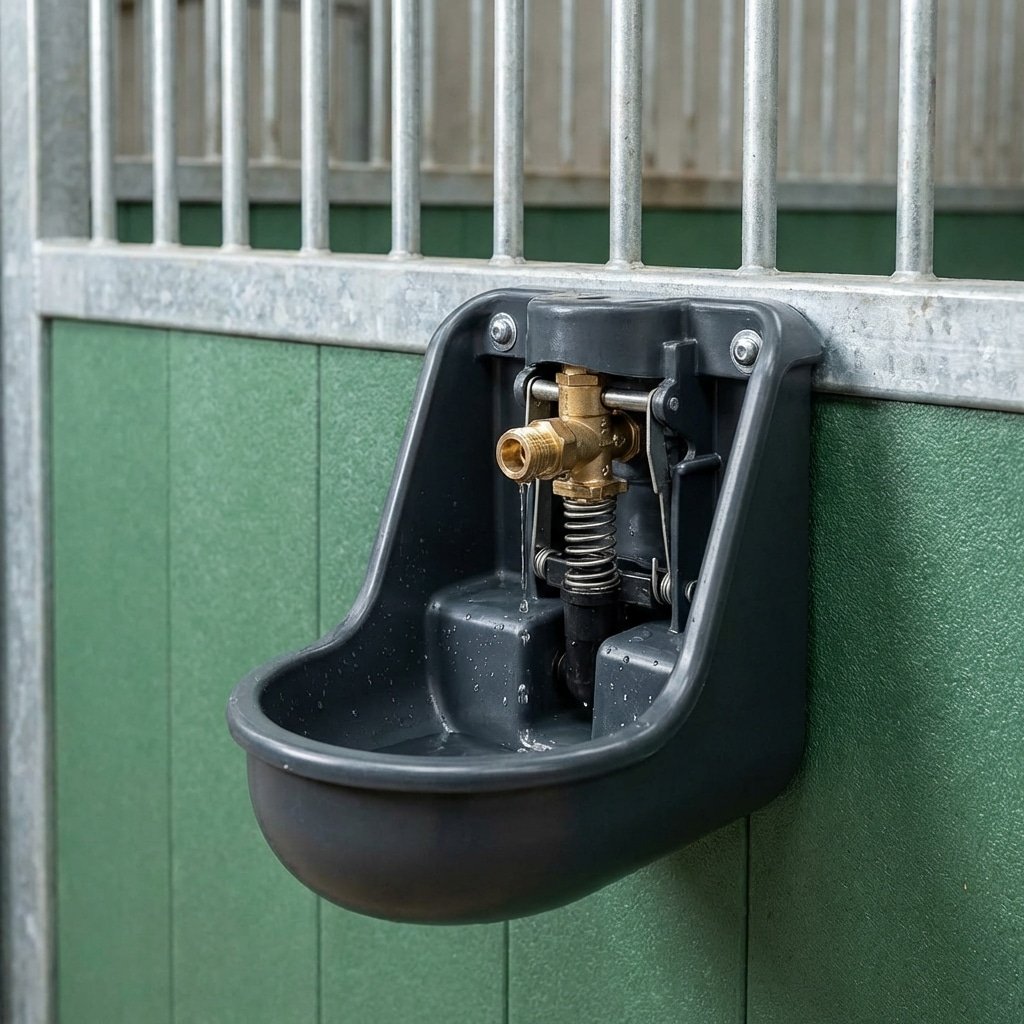
Automatic waterers rely on a simple buoyancy principle: water drops, the float drops, and the valve opens. Conversely, water rises, the float rises, and the valve seals. While elegant in theory, this mechanism frequently fails in barn environments. The “Midnight Flood” is rarely a complex electronic error; it is almost always a physical obstruction preventing the float arm from completing its upward stroke to shut off the flow.
- Mineral Scale Accumulation: Calcium and lime deposits build up on rubber seals and valve seats. This creates a rough surface where the seal cannot sit flush, allowing water to trickle continuously even when the float is fully raised.
- Debris Obstruction: Unfiltered sediment, algae, or grit from supply lines lodges in the valve mechanism. A single grain of sand trapped in the diaphragm prevents a complete seal.
- Mechanical Friction: Corrosion on the pivot pin or misalignment of the float arm creates drag. If the float rubs against the side of the housing, it lacks the buoyancy force to overcome that friction and close the valve.
Ensuring Valve Stability with Rigid Framework
A perfectly functioning valve will still fail if its mounting surface shifts. In many stables, waterers are mounted to wood or thin-gauge metal that warps under moisture or animal pressure. When the mounting wall twists, the waterer housing tilts. This misalignment forces the float arm to scrape against the basin wall, jamming it in the open position regardless of the valve’s condition. Structural rigidity is the only permanent fix.
- Structural Steel Integrity: We utilize Q235B (Standard) or Q345B (Cold Climate) structural steel. Unlike wood, which swells and warps, this steel maintains absolute dimensional stability, keeping the valve mechanism perfectly level.
- Rigid Mounting Profiles: Our 50mm x 50mm RHS (Square Hollow Section) posts provide a zero-flex surface for mounting hardware. This prevents the “twisting” effect common in sheet metal stalls that leads to float misalignment.
- Resistencia al impacto: Horses often rub or kick waterers. Heavy-duty construction ensures that physical impact does not dislodge the plumbing alignment, preventing mechanically induced leaks.

The Sponge Effect of Pine and Plywood Stalls
Pine and plywood act like sponges, swelling perpendicularly to the grain during floods. This causes warping and rot, unlike hydrophobic engineered alternatives which maintain structural integrity.
Hygroscopic Swelling and Structural Distortion
Wood is naturally hygroscopic. It constantly exchanges moisture with its environment, effectively acting like a sponge during a stall flood or auto-waterer failure. When submerged, wood fibers saturate and expand. This dimensional change occurs primarily perpendicular to the grain—meaning the boards swell in width and thickness rather than length.
Solid pine boards are particularly vulnerable because they absorb moisture unevenly. One side of the board often takes in water faster than the other, creating internal stress that twists, cups, or bows the timber. This movement exerts tremendous force on the steel channels of the stall front, potentially bending the frame or popping rivets.
Plywood attempts to mitigate this through engineering. Manufacturers glue thin layers of wood with alternating grain directions to restrict movement. While this cross-grain construction offers better dimensional stability than solid pine, it is not waterproof. Prolonged exposure to manure, urine, or floodwater eventually causes the wood layers to swell, leading to delamination where the plies separate and rot sets in.
The Alternative: Bambú tejido en hebras de alta densidad
To eliminate the risks associated with softwood absorption, DB Stable utilizes High-Density Strand Woven Bamboo. This material is not cut from a single log but engineered by compressing bamboo fibers under extreme pressure with resin. This process closes the cellular gaps that typically hold water in softwoods like pine.
- Densidad extrema: We spec bamboo with a Janka Hardness rating > 3000 lbf, making it significantly denser and harder than Oak.
- Resistencia a la humedad: The resin-infused strand woven technology creates a barrier against mold and rot, unlike standard timber.
- Espesor estructural: Available in 28mm, 32mm, and 38mm profiles to match specific impact requirements.
- Resistencia a prueba de patadas: The high density prevents the splintering and snapping common in dry pine during impact events.
For facilities requiring absolute zero moisture uptake, we recommend our HDPE infill options. But for clients who demand the aesthetics of wood with industrial-grade durability, strand woven bamboo provides the necessary resistance to the wet, harsh environment of an active stable.
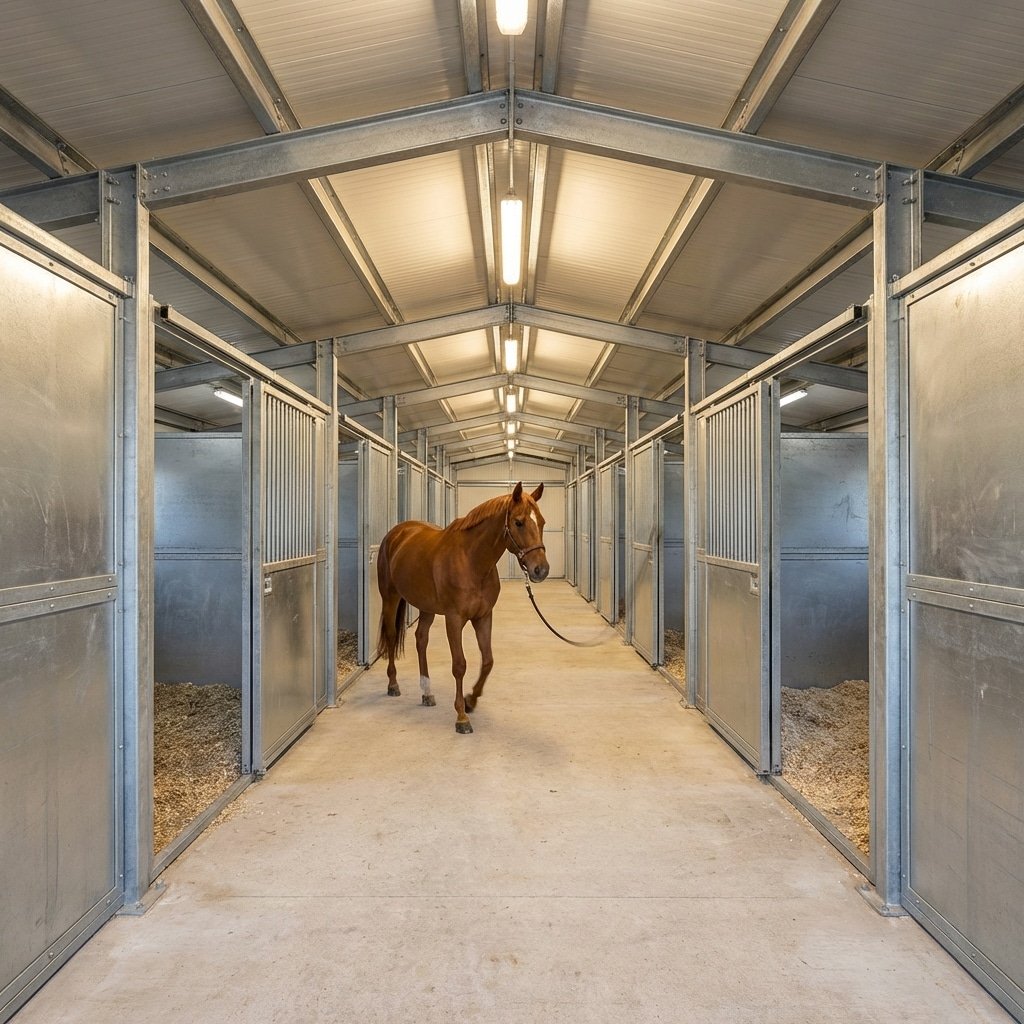
Premium Global Stables Built for Extreme Durability
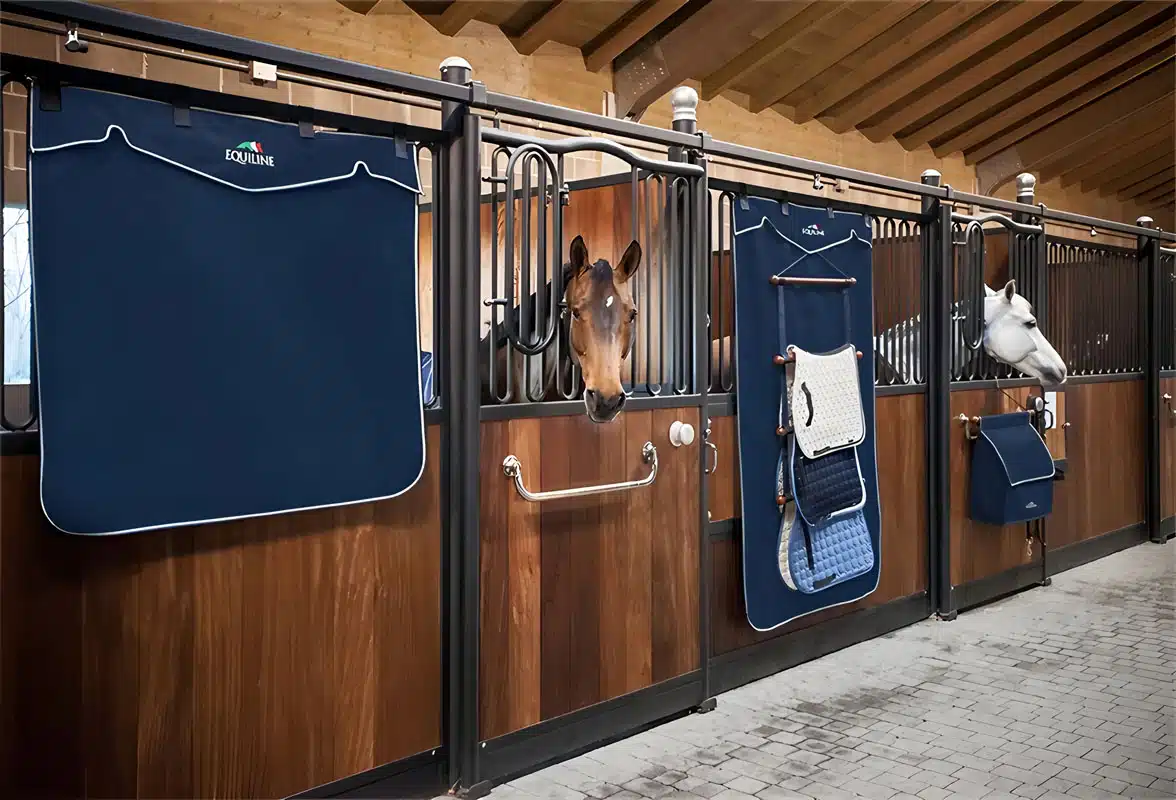
Solid HDPE Plastic: 100% Hydrophobic Defense
Unlike timber which acts like a sponge, solid HDPE plastic provides a naturally hydrophobic surface that repels 100% of water intrusion, preventing swelling even during prolonged submersion.
| Característica | Traditional Wood / Plywood | Solid HDPE (DB Stable) |
|---|---|---|
| Absorción de agua | Hygroscopic (Absorbs moisture) | Hydrophobic (Zero absorption) |
| Flood Reaction | Swells, warps, and delaminates | Remains structurally inert |
| Sanitization | Traps ammonia and bacteria | Surface wipe/Spray clean |
| Mantenimiento | Requires regular sealing | Zero Maintenance |
The Mechanics of Hydrophobic Protection
Wood and plywood are naturally hygroscopic materials. In the event of an auto-waterer failure or flooding, these organic materials behave exactly like a kitchen sponge. They draw moisture deep into their grain structure, causing dimensional changes that lead to warping, swelling, and structural stress. Once water penetrates the core of a wooden board, it becomes a breeding ground for deep-set mold and retains the sharp odor of ammonia.
High-Density Polyethylene (HDPE) fundamentally alters this dynamic through its non-porous molecular structure. The material creates a physical barrier that water cannot penetrate. During a flood event, the water sits on the surface rather than soaking in. This eliminates the “sponge effect” entirely. When the water recedes, the structural integrity of the stall remains unchanged, and sanitization is immediate. You simply pressure wash the surface to remove surface contaminants without worrying about internal rot or trapped bacteria.
28mm-32mm High-Density Infill Specifications
At DB Stable, we engineer our infill specifically for abuse and exposure. We do not use thin veneer plastics that bow under pressure. We strictly utilize solid profiles ranging from 28mm to 32mm in thickness. This density ensures the board remains rigid even if submerged for extended periods, preventing the bowing common in thinner plastic sheets exposed to hydraulic pressure or thermal fluctuation.
- Heavy-Duty Thickness: 28mm-32mm profiles prevent bowing and withstand the force of a trapped, panicking animal.
- Estabilización frente a los rayos UV: Prevents the plastic from becoming brittle or cracking, ensuring it remains impact-resistant for decades.
- Sin mantenimiento: No sealants, paints, or treatments are ever required to maintain water resistance.
- Chemical Inertness: Completely resistant to urine, ammonia, and harsh cleaning agents used during post-flood sanitization.
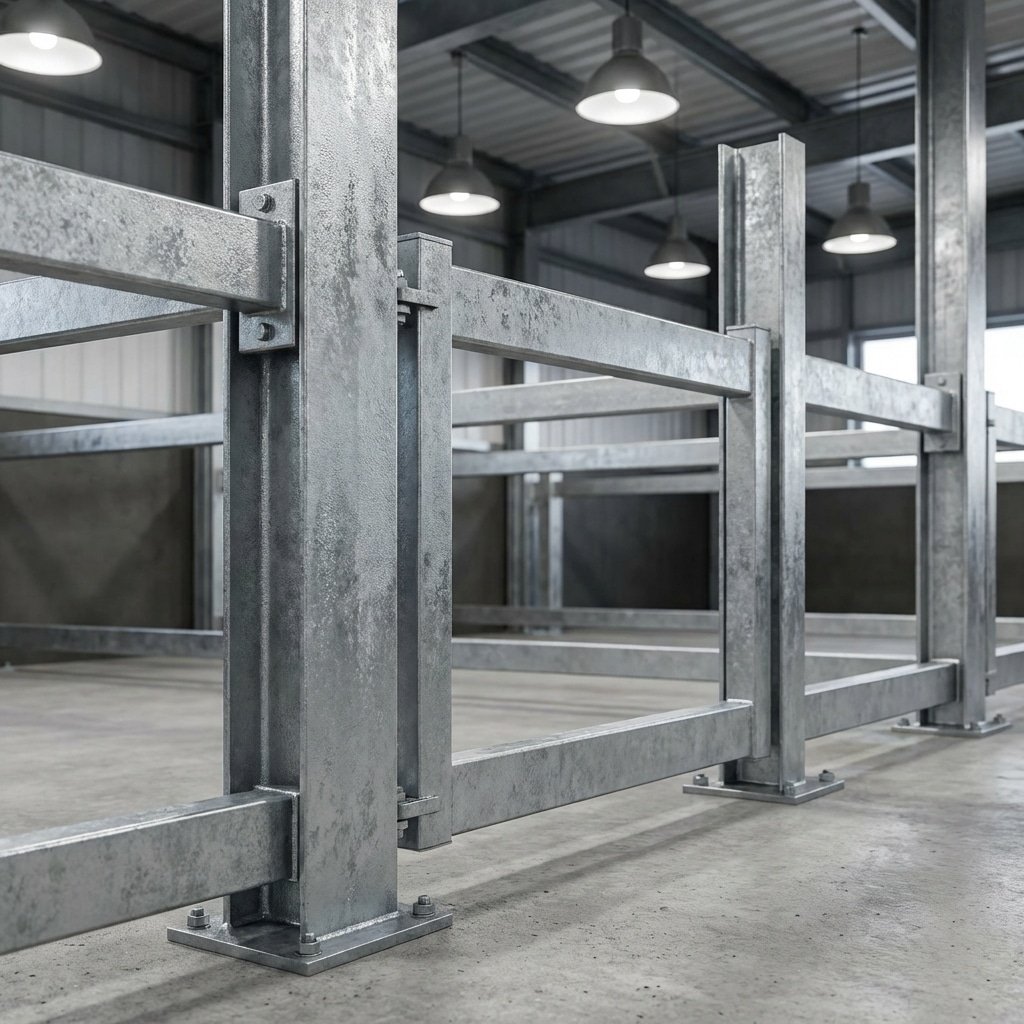
Hot-Dip Galvanizing: Preventing Base Plate Rust from Floods
Hot-dip galvanizing creates a metallurgical bond where zinc acts as a sacrificial anode. Unlike paint, which allows rust to creep underneath, zinc corrodes preferentially to protect the steel during submersion.
The Sacrificial Zinc Barrier
Standard paint or powder coating provides a passive barrier. It works only as long as the seal remains perfect. In a stable environment, horses kick and equipment scrapes the base plates. Once that paint seal breaks during a flood, water enters through capillary action. This causes “under-film” corrosion, where rust spreads unseen beneath the paint until the coating peels off in sheets.
Hot-dip galvanizing functions differently. It relies on a cathodic protection mechanism that is chemically active rather than passive.
- Sacrificial Action: Zinc is more electronegative than steel. When floodwater acts as an electrolyte, the zinc consumes itself to protect the base steel. Even if the coating is scratched down to the bare metal, the surrounding zinc will corrode to seal the breach.
- Hard Water Scale: In freshwater flood scenarios, zinc reacts with minerals to form insoluble salt scales (like calcium carbonate). This creates a secondary, hard barrier that further slows down corrosion rates after the water recedes.
ISO 1461 Standard: Dipping After Fabrication
The timing of the galvanizing process defines the lifespan of the stable. Many manufacturers use “Pre-Galvanized” tubing—steel sheets galvanized at the mill, then cut and welded later. This leaves the weld seams exposed and the interior of the tube vulnerable. In a flood, water fills the hollow posts, and the unprotected interior rots from the inside out.
At DB Stable, we strictly adhere to the “Hot-Dip After Fabrication” method. We weld the entire black steel frame (using Q235B or Q345B structural steel) first, then submerge the completed unit into the zinc bath.
- Internal Coating: Molten zinc flows into the 50mm RHS posts, coating the interior surfaces just as thickly as the exterior. This is the only way to prevent internal structural failure after water submersion.
- Heavy-Duty Thickness: We bond zinc to the steel at temperatures exceeding 450°C, achieving an average coating thickness over 85 micras for structural parts. This exceeds the typical 20-30 microns found on pre-galvanized competitors.
- Engineered Drainage: Our base plates feature specific vent and drain holes. These allow floodwater to enter and exit the tubing freely, preventing stagnant water retention that accelerates corrosion.
Preguntas frecuentes
What happens if a barn automatic waterer breaks?
The most common failure is a “Midnight Flood”—a stuck float valve that runs unattended overnight. Beyond the immediate water waste, the overflow saturates stall bedding and creates severe slip hazards for livestock. The real damage, however, is structural. If your stall walls use absorbent materials like solid pine or plywood, they act like a sponge. This moisture absorption leads to warping, rot, and dangerous mold growth that compromises the stall’s integrity long after the water is drained.
What are the best waterproof wall options for horse stalls?
For professional facilities, High-Density Polyethylene (HDPE) is the industry standard. Unlike wood or bamboo, which require sealing, solid HDPE is naturally 100% hydrophobic. It does not absorb urine, water, or bacteria. This makes it the only viable option for wash bays or flood-prone areas, as you can pressure wash it daily without risk of degradation. At DB Stable, we use 28mm-32mm UV-stabilized HDPE infills specifically to ensure a “Zero Maintenance” lifespan in wet environments.
How should I handle cleanup after a stable flood?
Immediate water removal via sump pumps is critical to stop saturation. Once drained, strip all organic bedding and pressure wash surfaces with phenolic disinfectants to kill pathogens. This scenario is exactly why we insist on Hot-Dip Galvanizing After Fabrication (ISO 1461). Stalls built with pre-galvanized or painted steel will rust rapidly after submersion, especially near the base plates. A fully hot-dip galvanized frame, with zinc coating exceeding 70 microns, withstands the floodwater and the harsh chemical cleaning required afterward.
Reflexiones finales
Opting for traditional timber in wet environments guarantees rot and costly warranty claims when auto-waterers eventually fail. Our ISO 1461 Hot-Dip Galvanized frames paired with hydrophobic HDPE infill provide the only permanent defense against these inevitable floods. This “Zero Maintenance” approach protects your long-term reputation and eliminates the liability of structural degradation.
Do not wait for a client complaint to upgrade your inventory standards. We recommend requesting a physical sample kit to verify our 85-micron zinc coating and high-density 32mm profiles against your current stock. Reach out to our project team to discuss how our flat-pack logistics can improve your shipping margins on your next container order.

 Spanish
  English
  French
  Arabic
  German
0 comentarios