


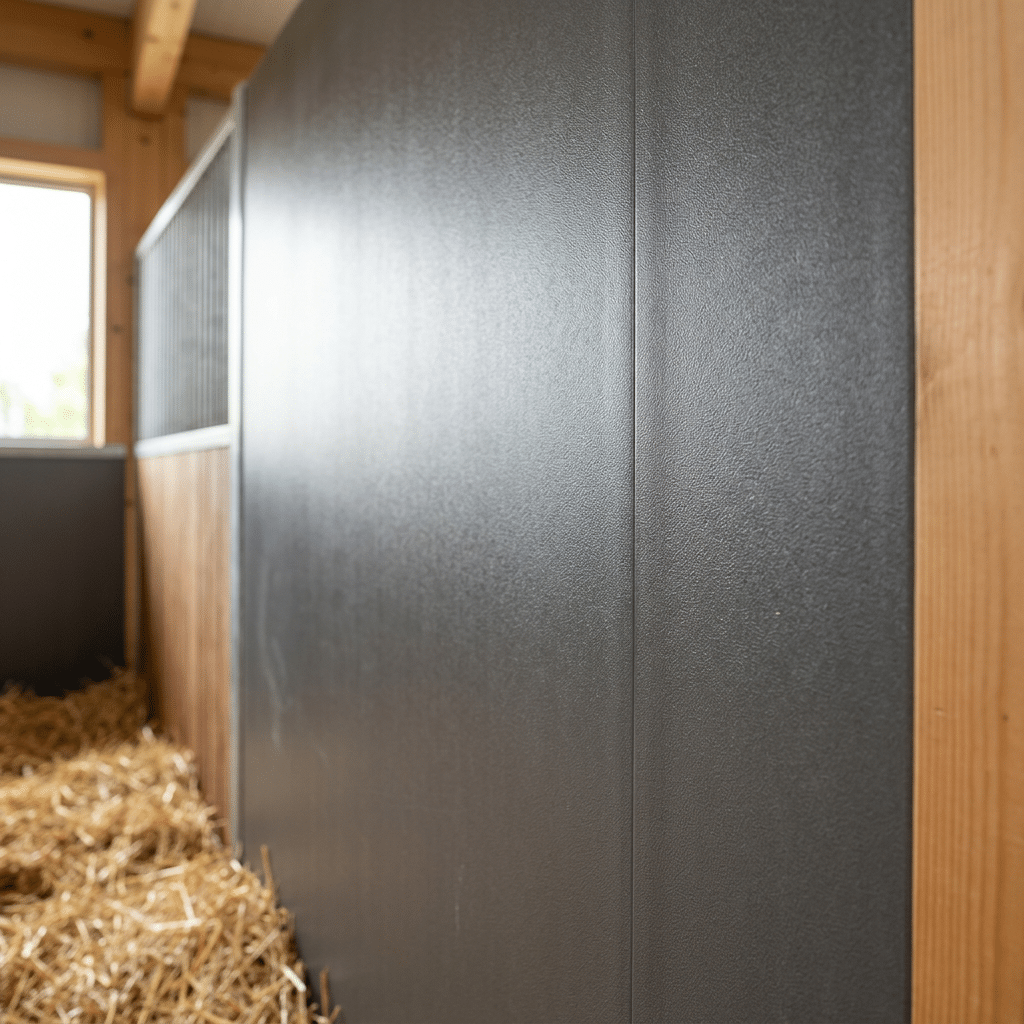
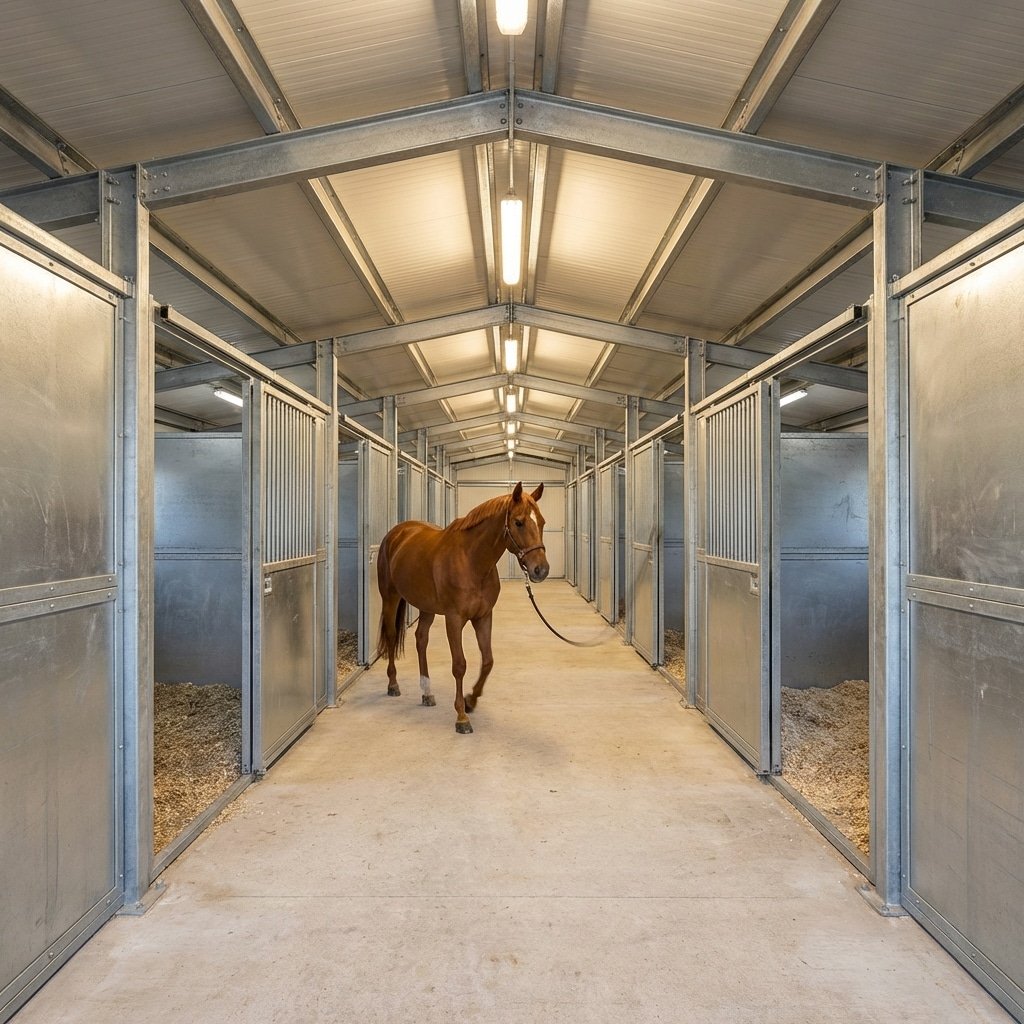
A successful Equine Clinic Layout directly addresses biosecurity and patient safety from the ground up. Specifying the wrong materials, like porous wood or standard painted steel, creates permanent pathogen reservoirs and risks structural failure from harsh disinfectants. These oversights lead to cross-contamination events, compromised recoveries, and significant operational liability.
This design guide details the engineering standards for a clinical setting. We focus on critical specifications like non-porous HDPE infill, ‘Hot-Dip After Fabrication’ galvanizing (ISO 1461) to withstand bleach, and the 50mm cast-proof gap that prevents recovery injuries. These are the details that define a safe, functional hospital.
The Clinical Standard: Zero Tolerance for Porous Wood
Porous wood is a liability in clinical settings because it harbors pathogens and can’t be properly disinfected. The standard requires non-porous materials like HDPE or dense bamboo to ensure biosecurity.
The Biosecurity Risk of Absorbent Materials
Untreated wood is essentially a sponge for bacteria, viruses, and moisture. Its porous surface makes complete disinfection impossible, as pathogens hide deep within the material where cleaners can’t reach. This creates a permanent breeding ground for contaminants.
In any veterinary or quarantine environment, this failure is unacceptable. Absorbent materials directly compromise biosecurity protocols and create a high risk of cross-contamination between sick, recovering, or quarantined horses. You can’t run a clean facility with materials that refuse to come clean.
HDPE and Bamboo: The Non-Porous Solution
To meet modern clinical standards, stall infill must be non-porous, durable, and easy to sanitize. Two materials have proven to be the most effective replacements for wood in these demanding environments.
- HDPE (polietileno de alta densidad): This engineered polymer offers a completely non-porous and non-absorbent surface. It requires zero maintenance and can be easily sanitized with harsh cleaning agents without degrading.
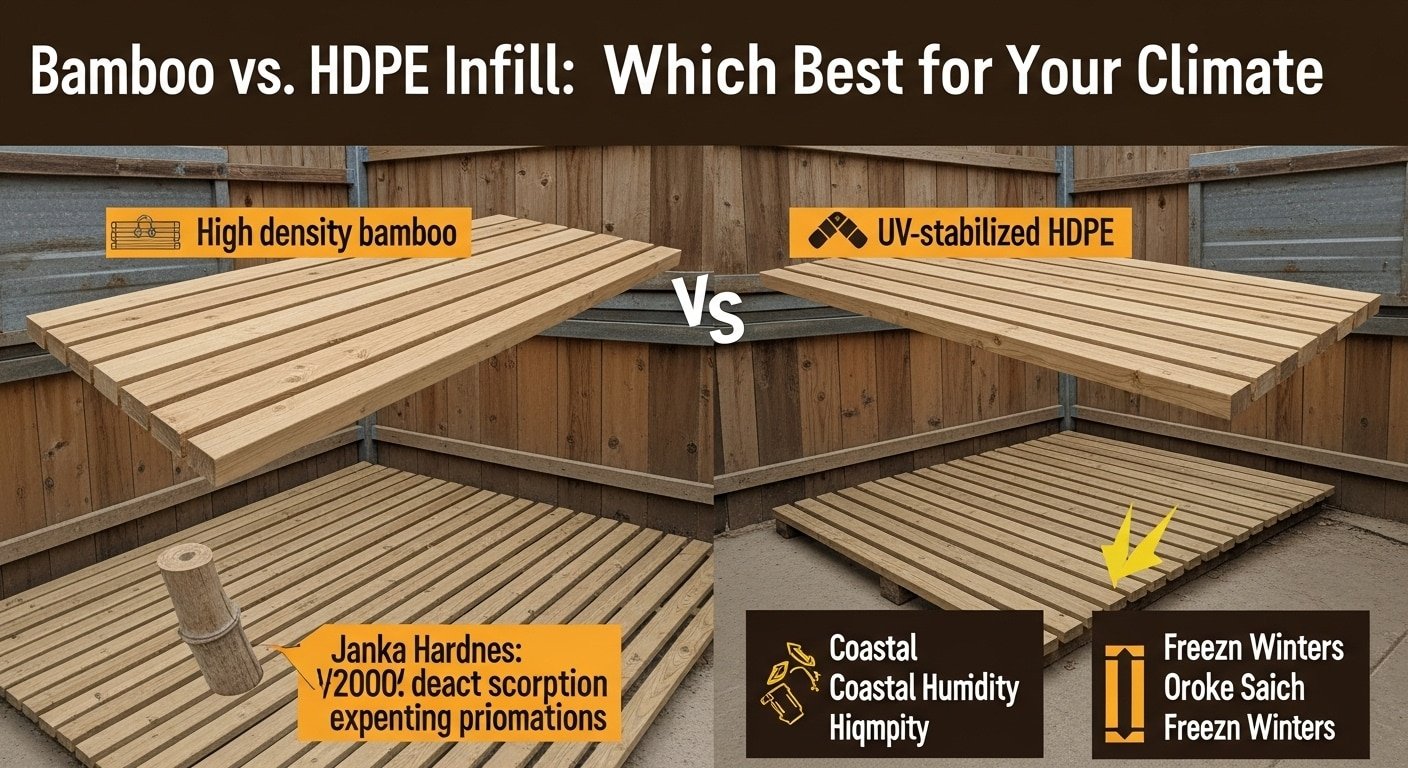
- Bambú de alta densidad: Our strand-woven bamboo is naturally resistant to mold and rot. With a Janka Hardness rating over 3000 lbf, it’s three times harder than oak, providing extreme durability against kicks and impacts.
Both options ensure that stall surfaces can be properly disinfected, supporting strict infection control protocols and maintaining a safe clinical setting for every animal.
ICU Stalls: Over-sized Doors for Sling and Hoist Access
ICU stall doors are engineered wider and taller than standard doors. This provides the unobstructed clearance needed for staff to move non-ambulatory horses with mechanical slings and hoists.
The Clinical Need for Unobstructed Access
In an intensive care setting, standard door dimensions create dangerous bottlenecks. An oversized door provides the essential vertical and horizontal clearance for the safe passage of mechanical slings and patient hoists. This allows veterinary teams to maneuver sedated or non-ambulatory horses efficiently, minimizing stress and eliminating the risk of the animal or the lifting equipment striking the door frame during a critical transfer.
Reinforced Framing with Q345B Steel
A larger door is significantly heavier and places greater stress on its frame. To manage this, we specify Q345B low alloy high-strength steel (equivalent to ASTM Grade 50) for the framework. This material is chosen for its superior impact toughness, especially at low temperatures, which prevents brittle fractures. The reinforced frame ensures the structure maintains absolute rigidity and safety, even when handling the dynamic loads exerted by a hoist system or a compromised, unstable animal.
Durable, Custom Horse Stables for Any Climate

Cast-Proof Engineering for Sedated Horses
Our cast-proof stalls use a minimal 50mm floor gap. This engineered space prevents a recovering horse’s legs from getting trapped when it rolls against the wall.
Understanding the Risks for a Recovering Horse
A horse coming out of sedation has poor coordination and limited control over its body. It’s common for them to lie down and roll into a position where they are too close to a stall wall. In a standard stall with a large gap at the bottom, this situation quickly becomes dangerous.
If a horse gets a leg trapped under the partition, its instinct is to panic and thrash. This can lead to serious injuries, torn ligaments, or circulation problems. The added stress significantly complicates what should be a straightforward recovery period, posing a real risk in any clinical or post-op environment.
The 50mm Gap: Our Cast-Proof Design Standard
All DB Stable systems feature our ‘Cast-Proof Design’ as a core safety standard. We engineer the gap between the bottom of the stall panel and the floor to be approximately 50mm. This clearance is precise—it’s too small for a hoof or lower leg to become wedged underneath. The design effectively removes the primary cause of casting injuries, creating a safer recovery space for the animal.
The Biosecurity Zone: Hot-Dip Galvanizing for Bleach Resistance
In biosecurity zones, bleach-based disinfectants destroy paint and thin coatings. Hot-dip galvanizing provides a thick, non-porous zinc barrier that withstands chemical corrosion and ensures a sterile structure.
The Corrosion Risk from Clinical Disinfection Protocols
Equine clinics and quarantine facilities depend on harsh disinfection protocols to stop pathogens. Bleach-based solutions are effective, but they are also highly corrosive. Standard finis
hes like paint or pre-galvanized coatings can’t handle the repeated chemical exposure. They eventually chip, peel, or break down at weld points. Each failure creates a porous surface where bacteria and viruses can hide, compromising the entire biosecurity effort.
ISO 1461 Galvanization as a Non-Porous Shield
Our process addresses this directly. We use a ‘Hot-Dip After Fabrication’ method, which means the entire steel structure is welded first and then submerged in molten zinc. This process coats every surface—inside and out—according to the BS EN ISO 1461 standard. The result is a thick zinc coating, averaging over 70 microns, that forms a non-porous, metallurgically bonded barrier. This shield is fundamentally resistant to the corrosive disinfectants used in clinical settings, preventing rust and eliminating pathogen hiding spots.
| Coating Comparison | Standard Paint | Hot-Dip Galvanizing (ISO 1461) |
|---|---|---|
| Barrier Type | Thin, porous layer susceptible to scratching and peeling. | Thick, non-porous metallurgical bond that is part of the steel itself. |
| Bleach Resistance | Low. Fails quickly, requiring frequent and costly reapplication. | High. Withstands repeated chemical cleaning without degradation. |
| Pathogen Risk | High. Creates pockets for bacteria to hide under peeling paint. | Low. A continuous, seamless surface offers no place for pathogens to colonize. |
| Avg. Coating Thickness | ~25 microns | >70 microns |
Flooring: Seamless Rubber vs. Sealed Pavers
Seamless rubber provides superior cushioning, grip, and low maintenance for animal safety. While pavers are individually replaceable, they risk shifting and creating dangerous tripping hazards.
Surface Properties: Cushioning, Grip, and Maintenance
The fundamental difference starts at the surface. Seamless poured rubber provides significant impact absorption. This cushioning reduces stress on horse hooves and joints, a critical benefit in high-traffic areas like wash bays or treatment rooms. It makes a ta
ngible difference in long-term animal comfort and health.
Grip is a non-negotiable safety feature in any equine facility. Rubber’s natural slip-resistant texture maintains reliable traction even when wet, which is essential for preventing dangerous slips and falls for both horses and handlers. Pavers, depending on their material and finish, can become hazardous when wet.
From a maintenance perspective, the two are worlds apart. Sealed pavers come with grout lines that inevitably trap dirt, manure, and other debris. These lines also become a prime spot for weed growth, demanding constant attention. Seamless rubber presents a continuous surface that you can simply hose down, drastically cutting cleaning time and effort.
Long-Term Stability and Animal Safety
The biggest long-term failure of pavers in an equine environment is their tendency to shift and settle. Over time, individual pavers can move, creating an uneven surface with dangerous tripping hazards. A poured rubber floor is a continuous, stable surface that eliminates this risk entirely.
Climate also plays a major role. Rigid pavers are vulnerable to cracking during freeze-thaw cycles. Rubber’s inherent flexibility allows it to expand and contract with temperature changes without failing, giving it much greater durability in variable climates.
Ultimately, the flooring choice reflects a facility’s commitment to animal welfare. Opting for a stable, cushioned, and slip-resistant system like seamless rubber directly minimizes the day-to-day risks of injury from falls or uneven ground. It’s a foundational decision that prioritizes safety over aesthetics or outdated construction methods.
Preguntas frecuentes
What is the recommended size for an equine ICU or recovery stall?
Standard 12×12 foot stalls are often too small for specialized medical care. A minimum of 14×14 feet is recommended for ICU stalls to provide enough space for veterinary staff and equipment to work safely around an unstable horse. Some facilities may even use larger 16×16 foot stalls for this purpose.
What is the best flooring material for a veterinary horse stall?
For veterinary clinics, sealed concrete is the most practical choice. It is durable, easy to clean, and can be effectively disinfected to maintain biosecurity. Because concrete is hard, you must combine it with a thick layer of bedding like wood shavings or straw to provide the necessary cushioning and shock absorption for the horse’s comfort.
How should an isolation stall be properly disinfected?
Effective disinfection is a multi-step process. First, remove all organic matter like bedding and manure, since this material neutralizes most disinfectants. Next, wash all stall surfaces with a detergent and let them dry completely. Finally, apply an appropriate disinfectant, like a phenolic compound, and allow it to air dry so it has time to work.
What features make a stall ‘cast-proof’?
A cast-proof stall is designed to prevent a horse from getting stuck against a wall. Key features include anti-cast strips on the walls to give the horse leverage to push off, strong partitions with minimal bottom gaps (around 50mm) to prevent trapped legs, and appropriate stall dimensions to reduce the overall risk.
What is the standard door size for a recovery stall?
The industry standard for an equine stall door is a minimum width of 48 inches (4 feet). This is usually wide enough for the safe passage of the horse and any handlers. For larger breeds like draft horses, it’s a good idea to add 6 to 12 inches to the standard width for extra clearance.
Reflexiones finales
The choice in clinical equipment is straightforward: manage upfront cost or manage long-term risk. Our ISO 1461 hot-dip galvanizing standard is non-negotiable for facilities where bleach corrosion and pathogen control are daily realities. This engineering protects the animal, the veterinarian, and your reputation as a supplier of professional-grade equipment.
Every hospital and quarantine project has unique requirements for layout and biosecurity. Our engineering team is ready to review your plans and provide a detailed material specification. Contact us to schedule a project consultation or to arrange a trial order.

 Spanish
  English
  French
  Arabic
  German
0 comentarios