


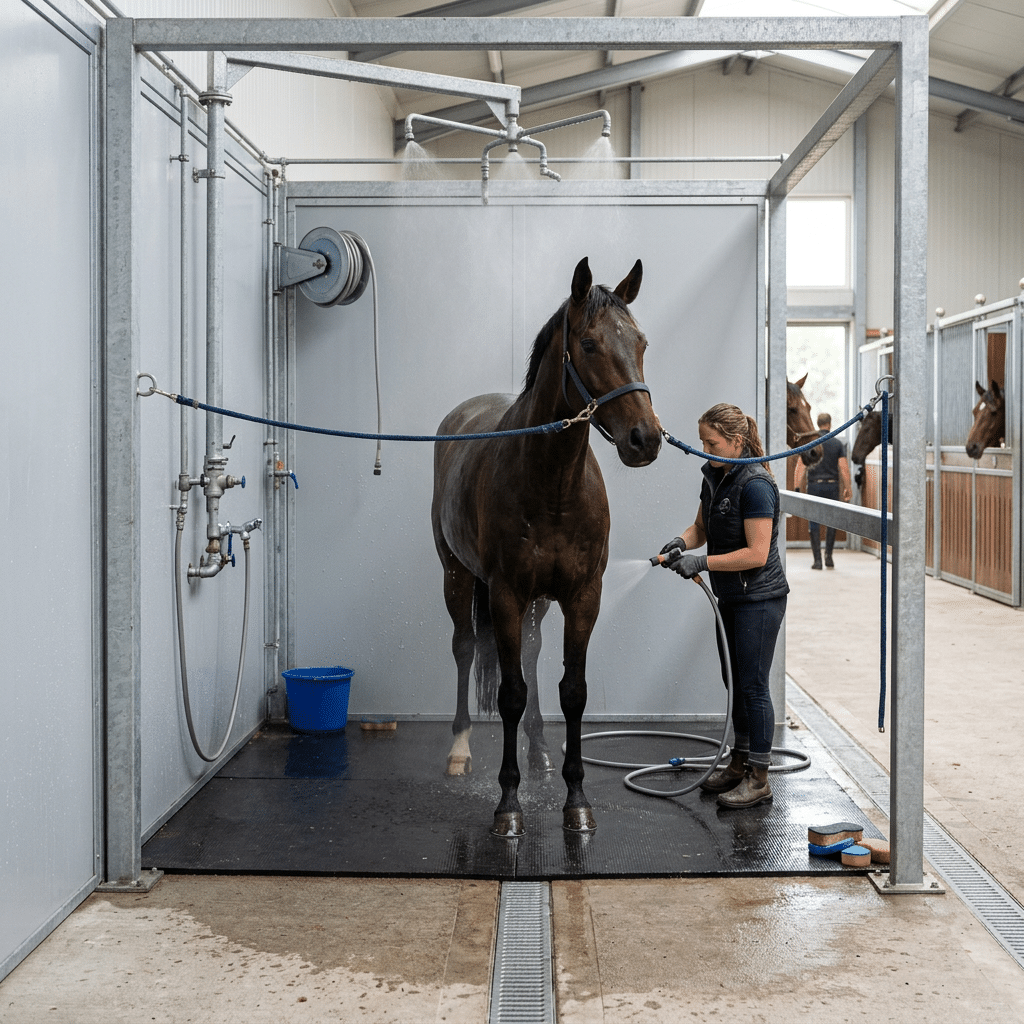
Build a tack room without strict moisture control, and you’re just paying for early replacement. Constant humidity turns leather into a mold buffet. Rust eats through cheap hardware. These aren’t “maintenance quirks.” They are total failures from poor material specs.
Here are the specs to stop those failures. We use 100% waterproof HDPE wall panels. Steel framework hits ISO 1461 galvanization standards. Hardware is 304 stainless steel. This combo creates a facility that lasts. Low maintenance. High durability.
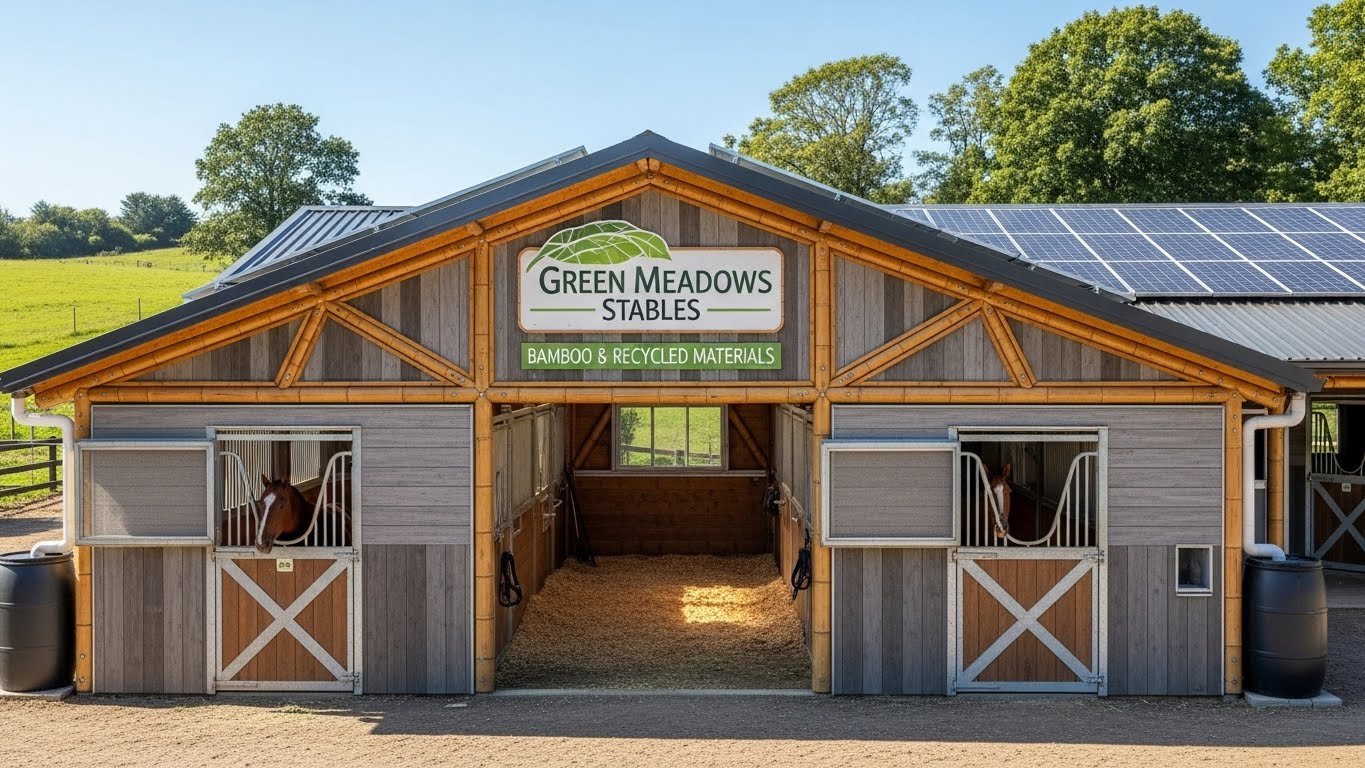
The Humidity Threat: Mold on Saddles
Mold damages saddles when humidity exceeds 65%. Control requires proper airflow, storage, and using materials that don’t trap dampness.
Why Damp Air Damages Leather Tack
Damp, stagnant air kills expensive leather. Mold feeds on sweat trapped in leather pores. It needs moisture to grow. Once relative humidity passes 65%, mold takes over. That’s the tipping point. Protect your gear before it hits that mark.
Control the air first. Move damp air out. Open windows. Run fans. Consistent circulation stops mold before it settles. Simple. Cost-effective. It keeps the environment dry without breaking the bank.
The Advantage of Mold-Resistant Bamboo Linings
Building materials matter too. Traditional wood paneling absorbs moisture from the air. It traps humidity inside the walls. That makes the dampness problem worse. Don’t use materials that fight against you.
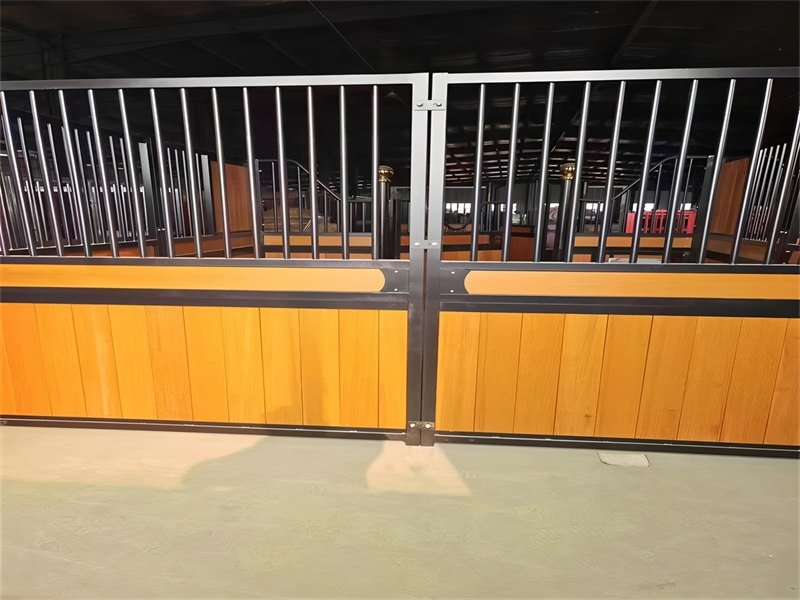
That’s why DB Stable uses high-density strand-woven bamboo for stable infill. It resists mold and rot naturally. Dense structure. Doesn’t hold moisture like porous wood. Keeps the space drier. Protects your equipment. Quality and durability in one material.
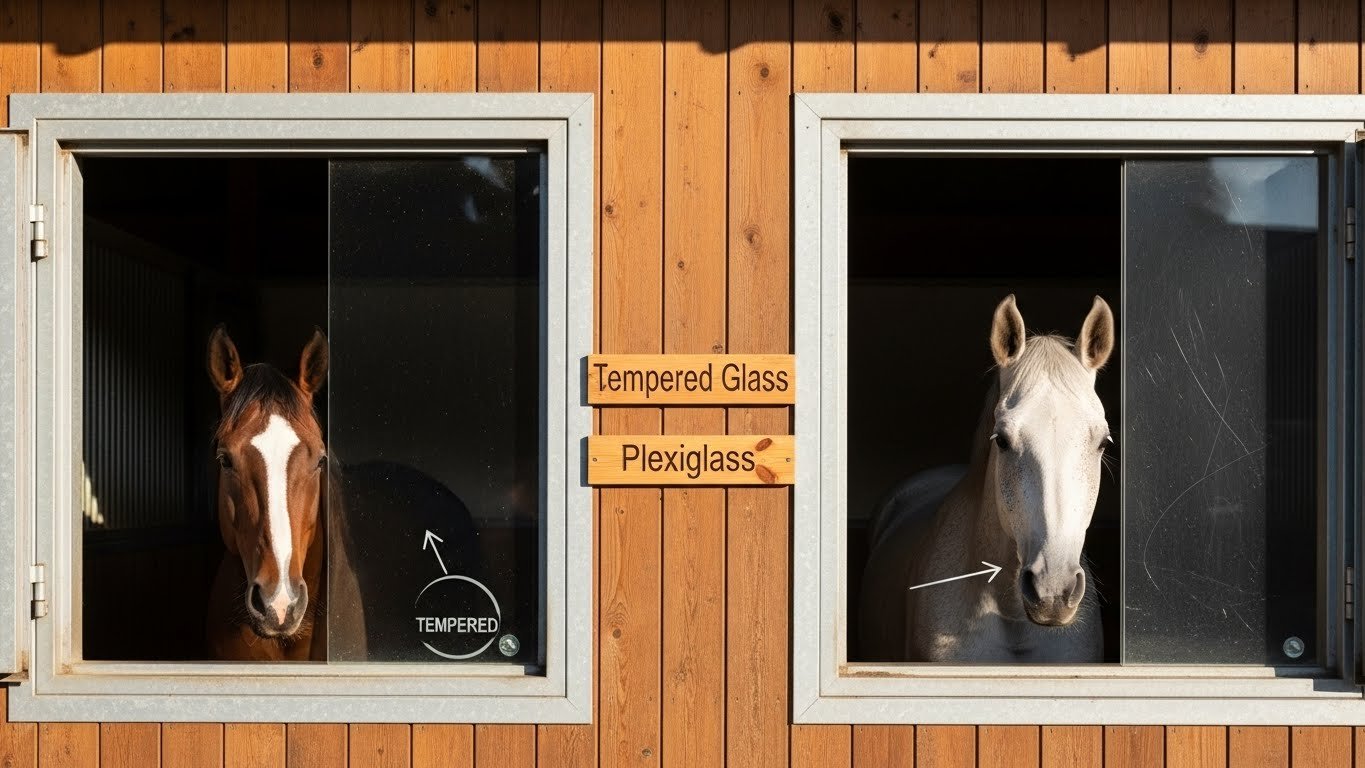
Wash Bay Walls: Why You Need 100% Waterproof HDPE
HDPE is the best materia
l for wash bay walls. It’s 100% waterproof, impact-absorbing, and requires zero maintenance, unlike traditional materials that crack, leak, and grow mold.
Why Traditional Walls Fail in High-Moisture Environments
Standard tiles and FRP panels fail in commercial wash bays. Tiles crack under temperature swings, letting water seep through. Grout is worse—porous, so it traps moisture and grows mold. FRP has seam weak points where water rots the backing. None of these hold up long-term.
The Advantages of UV-Stabilized HDPE Panels
HDPE panels fix this permanently. We use 28mm-32mm thick, UV-stabilized HDPE. It’s a 100% waterproof barrier. Chemicals and water can’t penetrate it. It absorbs impacts from horse kicks or equipment without denting. No sealing, no grouting—just pressure wash it clean. That’s real zero-maintenance durability.
| Característica | Traditional Walls (Tile, FRP) | HDPE Panels |
|---|---|---|
| Waterproofing | Relies on grout and seams, which fail and allow water seepage. | Creates a 100% impermeable, non-porous barrier. |
| Durabilidad | Brittle; tiles crack under impact and temperature changes. | Impact-absorbing; resists kicks and equipment bumps without damage. |
| Mantenimiento | Requires constant re-grouting, sealing, and mold removal. | Zero maintenance required. Can be easily pressure washed. |
| Health & Safety | Porous grout becomes a breeding ground for mold and bacteria. | Solid, non-porous surface that resists microbial growth. |
Engineered Horse Stables Built for Decades.

Rust-Proofing the Wash Bay: The 42-Micron HDG Standard
In a wash bay, rust protection is determined by the galvanized coating thickness. While 42 microns offers baseline protection, robust industrial standards like ISO 1461 specify much thicker coatings.
Why Galvanization Thickness Matters
Hot-dip galvanization bonds zinc into the steel surface—it’s not paint. Scratches expose the zinc first, which corrodes sacrificially to protect the steel underneath. The protection lifespan comes down to one metric: zinc coating thickness.
Coating thickness is measured in microns (µm). More microns equals longer steel life. A wash bay sees constant water, humidity, and chemical cleaners. That aggressive environment demands heavy zinc coverage to prevent early rust and failure.
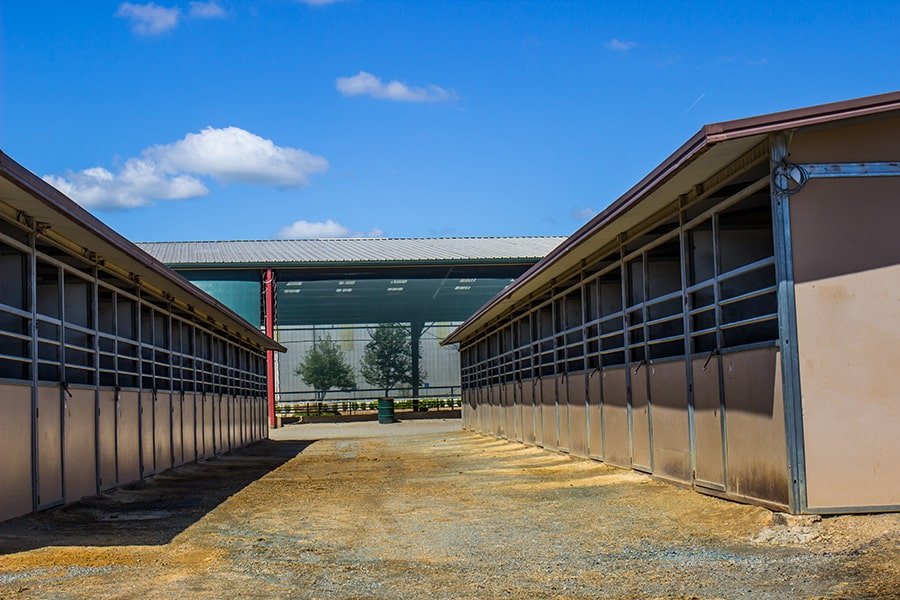
Our Commitment to the ISO 1461 Standard
We galvanize after all cutting and welding is done. That coats every edge, corner, and weld seam completely—no bare spots where rust starts. Pre-galvanized tubes welded later leave joints exposed. That’s a failure point we avoid.
Our process follows BS EN ISO 1461. It delivers coating thickness well above minimum standards. Tubing averages over 70 microns. Structural parts get over 85 microns. That’s decades-grade protection for demanding equestrian facilities—not just passing an inspection.
Tack Room Security: Locking Sliding Doors
Securing a sliding tack room door requires specialized latches or heavy-duty bolts. The lock’s reliability depends on its components—using 304 stainless steel hardware prevents seizing from rust.
Latch and Bolt System
s for Sliding Doors
Standard hooks won’t hold valuable equipment. Sliding doors need locking mechanisms built to stop forced entry. The right choice depends on how your barn balances security against daily use.
- Specialized Latches:These fit sliding barn doors specifically. They work with the roller hardware to hold the door flush against the wall.
- Custom Bolt Systems:For higher security setups, custom welded bolt systems deliver serious protection. These handle significant force and prying attempts.
- Hasp and Padlock Latches:Flip-lock or hasp-style latches balance security with convenience. They accept a standard padlock, which deters casual theft while keeping access simple.
The Importance of 304 Stainless Steel Hardware
A lock is only as tough as its weakest part. In a barn where moisture never lets up, the hardware material makes or breaks long-term security. Cheap hardware will fail.
- Corrosion Resistance:Every DB Stable kit ships with a full 304 stainless steel hardware set. It resists rust and corrosion, so locks won’t seize or weaken over time.
- 304 stainless steel is tough. You’re not going to bend it with a crowbar or crack it at a stress point the way galvanized hardware sometimes does. That matters when you’re locking a stall or a tack room door and you need it to stay shut.
- Here’s the reality with a locking system: it’s only as strong as its weakest screw. If the latch is stainless but the screws rust out in two years, the whole system fails. Using stainless for every component — main latch, screws, strike plates — keeps the integrity intact without corrosion eating away at it.
Drainage Slopes and Grates
Proper drainage requires a floor with a consistent, gentle slope leading to a channel drain, covered by a strong, non-slip grate to keep the area safe and dry.
Designing an Effective Floor Slope
The single most important goal for a wash bay or tack room floor is getting water out efficiently. Standing water creates slip hazards, degrades building materials, and encourages mold growth. The solution is a deliberate, consistent slope built into the concrete slab. A common and effective grade is around 1.5–2%, or a drop of about one inch for every six feet of floor space. That’s subtle enough not to bother a horse but effective enough to move water exactly where you want it.
Modern designs make this straightforward. You’re not reinventing the wheel here — the technology is simple and proven.
- Use modular trench drains. These systems create a clear collection channel, usually along one wall, giving the water a single destination.
- Ensure a continuous slope. The floor must be graded without any low spots, guiding all surface water directly toward the drain channel.
- Water pools. Slippery floors lead to injuries and costly downtime. The fix isn’t magic—it’s physics. You need proper slope during installation. Without it, standing water breeds bacteria and ruins the subfloor. Slope it right, and you eliminate the hazard before it starts.
Selecting Grates for Longevity and Safety
Horses and staff walk on these grates daily. The material must survive the abuse. Look for heavy-gauge steel that won’t bend under a 1,000-pound horse. It needs to grip hooves and boots, even when wet. Cheap grates warp or corrode quickly, creating tripping hazards and replacement costs.
- Acero galvanizado en caliente is the standard for a reason. It survives the harsh chemicals used in wash bays. The zinc layer sacrifices itself to protect the underlying iron. Expect 10–15 years of service life before significant maintenance is needed. It’s cost-effective for most commercial operations.
- Stainless steel offers superior corrosion resistance. Specifically, 304 grade handles moisture and cleaning agents without pitting. Our systems include 304 stainless hardware for all connectors and bolts. This ensures uniform durability across the entire stall, not just the grate. It’s the premium choice for high-hygiene environments.
- Don’t guess at load ratings. Check the manufacturer’s specification sheet. Class A or Class B ratings usually suffice for horse wash bays. They handle pedestrian traffic and the occasional hoof impact. If the rating is missing or vague, assume it’s undersized for heavy equine use.
Preguntas frecuentes
What are the best materials for wash bay walls?
The most suitable walls for a horse wash bay are made from waterproof, durable, and easy-to-clean materials. Top choices include specialized PVC or HDPE stable panels, fiberglass, and sealed concrete blocks. These materials prevent water absorption, resist mold, and can be easily sanitized. Avoid standard metal panels which can rust and create noise.
Can I use standard horse stable panels to build a wash bay?
Yes, using stable panels is a highly effective and common method for constructing wash bays. Modern panels made from materials like HDPE are 100% waterproof, non-porous, and resistant to mold and bacteria. They offer a low-maintenance, impact-resistant solution that can be repeatedly pressure-washed without damage.
How do I prevent mold from growing in my tack room?
To prevent mold, you must control moisture and increase air circulation. The most effective solution is to run a dehumidifier to keep humidity levels low. Additionally, ensure tack is completely dry before storing it, improve ventilation with fans or windows, and consider using desiccant bags to absorb excess moisture from the air.
What is the correct drainage slope for a wash rack floor?
The recommended slope for a wash rack is approximately 1 inch of fall for every 6 feet of length, which is a grade of about 1.5-2%. This gentle slope is enough to ensure water drains effectively but is not so steep that it causes stress on a horse’s tendons or becomes a slipping hazard.
Will hot-dip galvanized steel rust in a high-moisture wash bay?
Hot-dip galvanized steel offers excellent long-term rust protection in a wash bay, but it is not completely immune forever. The zinc coating provides a protective barrier and will sacrificially corrode to protect the steel, typically lasting over 15 years even with frequent water exposure. Rust can eventually form if the coating is mechanically damaged or constantly exposed to harsh chemicals without being rinsed.
Reflexiones finales
Moisture management is a system, not a single part. Cheap materials might lower the initial quote, but they guarantee rust and rot within a few years. Specifying ISO 1461 galvanization and 304 stainless hardware protects your investment. It’s about long-term durability and maintaining a professional reputation.
—
Skip the guesswork on quality—verify it instead. Start with a trial order to test our ISO-standard galvanization and 304 stainless hardware yourself. Talk to the team about your distributor or project specs.

 Spanish
  English
  French
  Arabic
  German
0 comentarios