


Constructing stables in New Zealand requires specific defense against the acidic mud poultices that dissolve standard steel finishes. Relying on traditional timber or pre-galvanized tubes accelerates depreciation through rot and red rust, often forcing facility operators into expensive renovation cycles within just three years of installation.
This analysis benchmarks waterproof infrastructure using the BS EN ISO 1461 Hot-Dip Galvanization standard to withstand coastal salt spray. We evaluate the long-term ROI of substituting porous pine with impermeable 32mm HDPE profiles, eliminating maintenance labor and securing structural integrity in high-humidity environments.
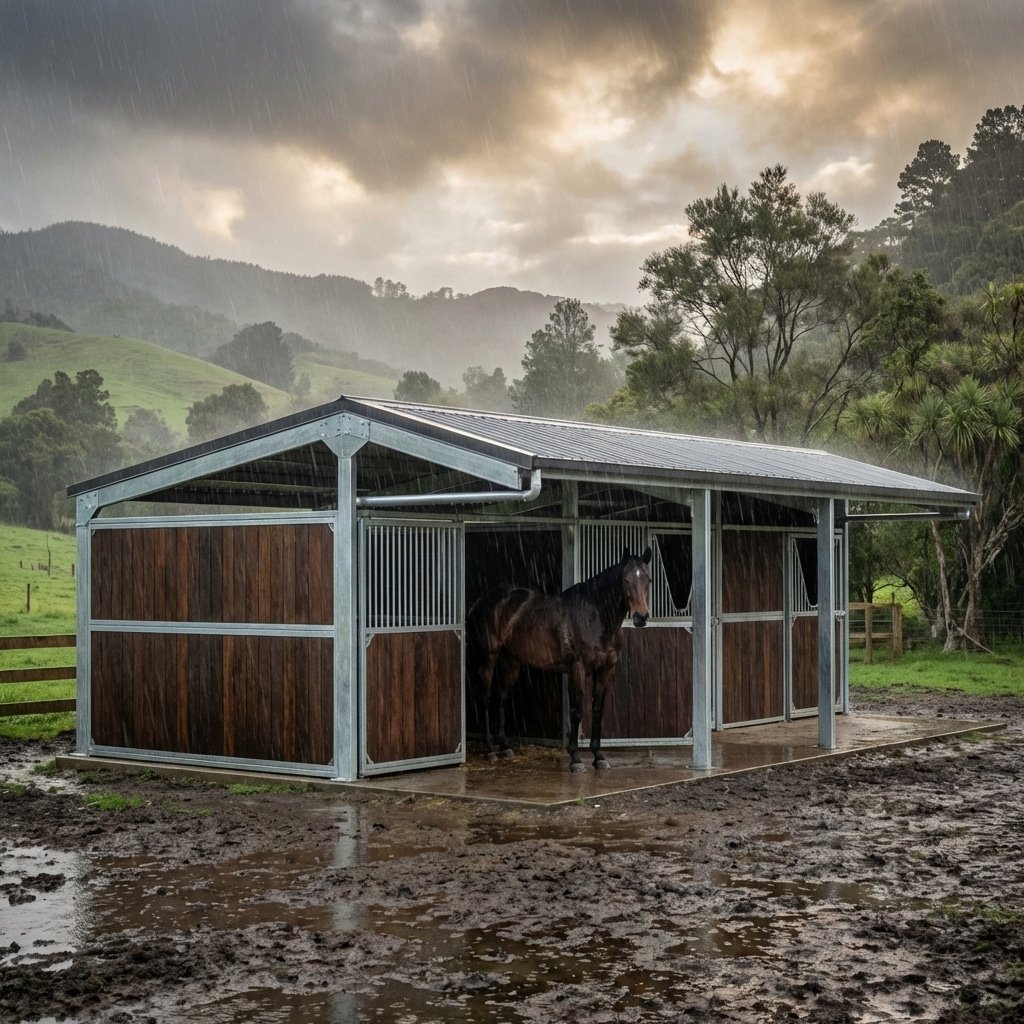
New Zealand Winters: High Rainfall and Constant Mud
NZ’s intense rainfall creates acidic mud “poultices” that destroy standard steel. Only Hot-Dip Galvanization (BS EN ISO 1461) with >85 micron zinc thickness withstands this corrosive environment.
Seasonal Rainfall Patterns and Ground Conditions
Data from Winter 2025 confirms the severity of the moisture control challenge for New Zealand stable owners. Regions including Waikato, Taranaki, and Auckland recorded rainfall at 120-149% of normal levels. This volume of precipitation leads to total soil saturation, meaning the ground effectively never dries out during the winter months.
The geography dictates the specific threat level. While Northern areas face peak saturation in winter, the West Coast—specifically Westport and Hokitika—averages over 170 wet days annually. For stable infrastructure, this constant moisture creates a corrosive “poultice” effect. Mud accumulates around the base of the frame, trapping acidic moisture against the steel column. In this environment, standard steel finishes do not just rust; they degrade structurally.
Implementing BS EN ISO 1461 for Corrosion Resistance
To survive a New Zealand winter, generic “galvanized” tubing is insufficient. Most competitors use pre-galvanized steel (shiny tubes welded together), which burns the zinc off at the weld points. This creates immediate entry points for “Red Rust,” often visible within 1-2 seasons. We strictly engineer our stables using Hot-Dip Galvanization After Fabrication, adhering to the BS EN ISO 1461 standard.
By dipping the entire frame into molten zinc after all welding is complete, we seal the steel inside and out. This metallurgical bond provides a sacrificial zinc layer thick enough to withstand the abrasive and corrosive nature of constant mud exposure.
- Global Standard: Full compliance with BS EN ISO 1461.
- Structural Thickness: Zinc coating > 85 microns (μm) on structural parts (>6mm steel).
- Tubing Protection: Average coating > 70 microns (μm) on 3-6mm tubing.
- Weld Security: No exposed weld seams; the zinc encapsulates the entire join.
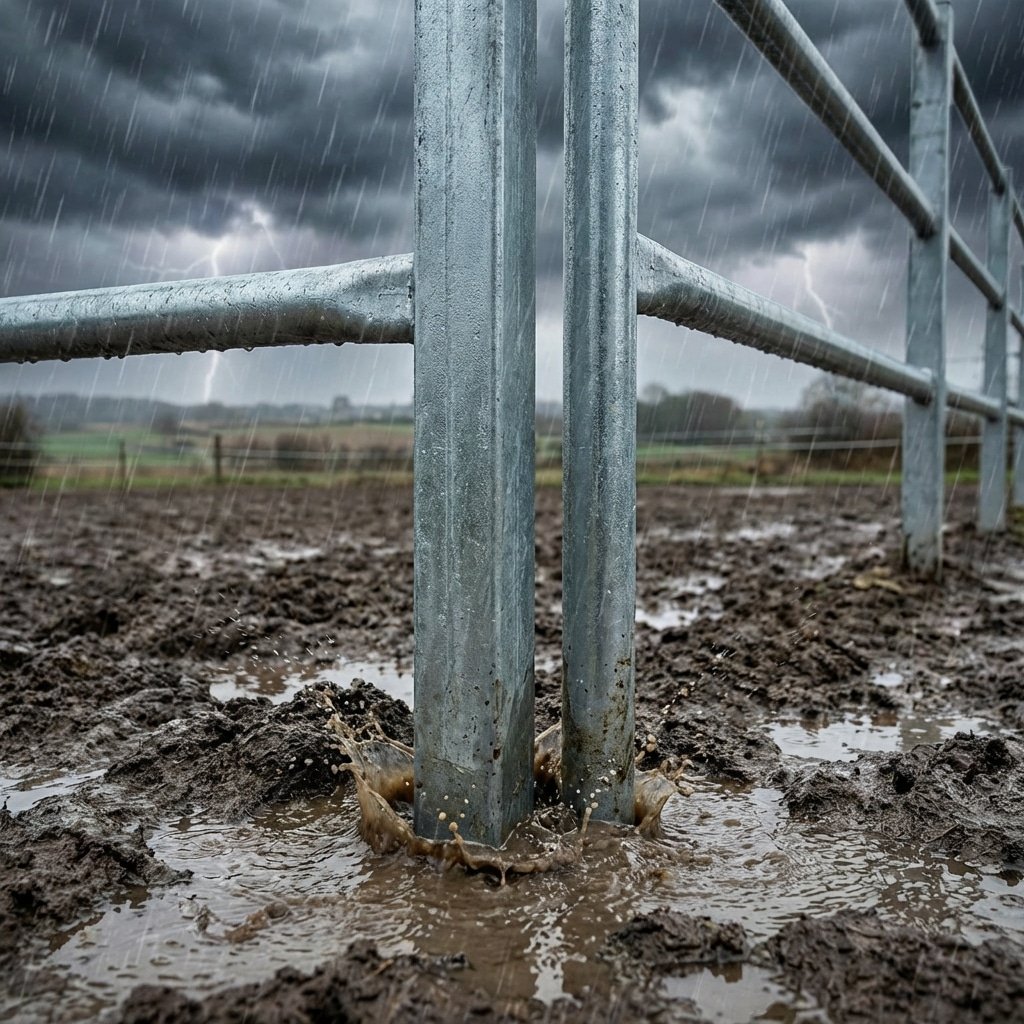
The Base Plate Problem: Wood Rotting from the Ground Up
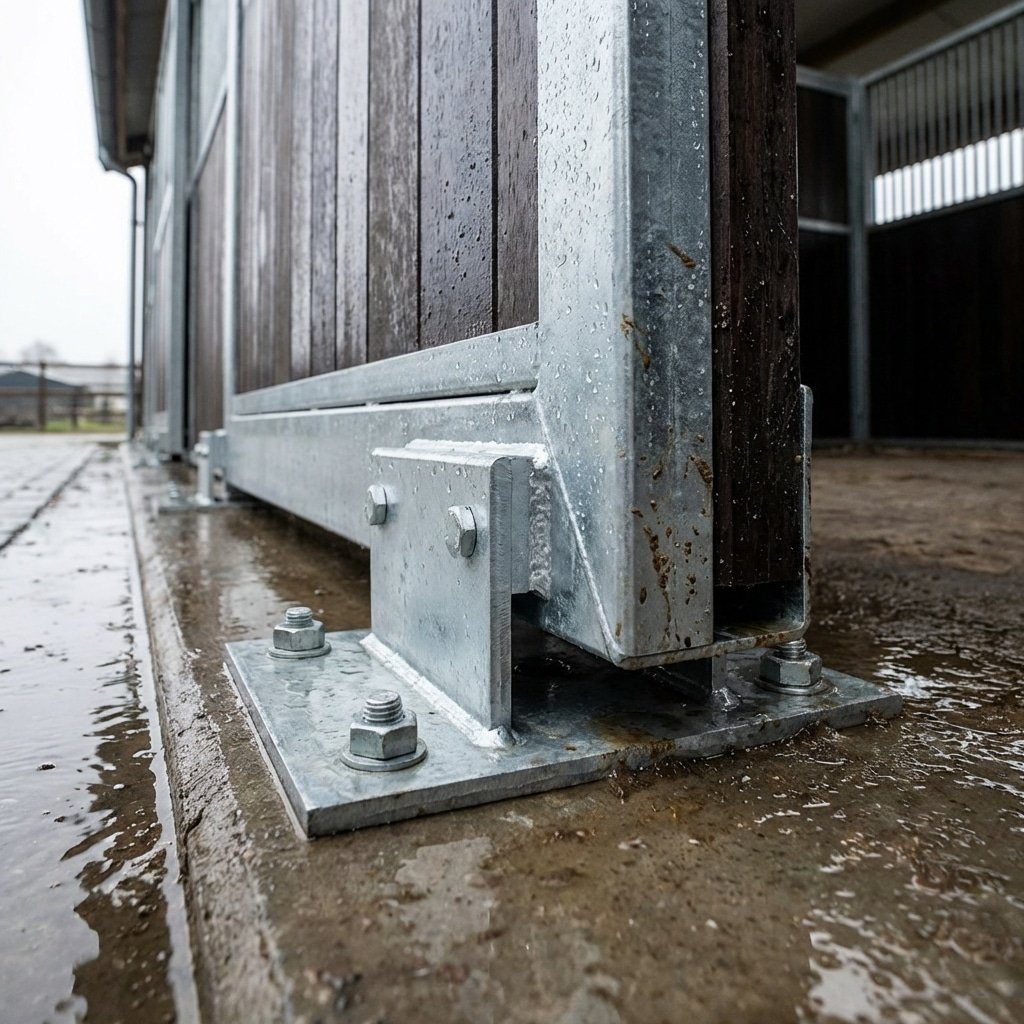
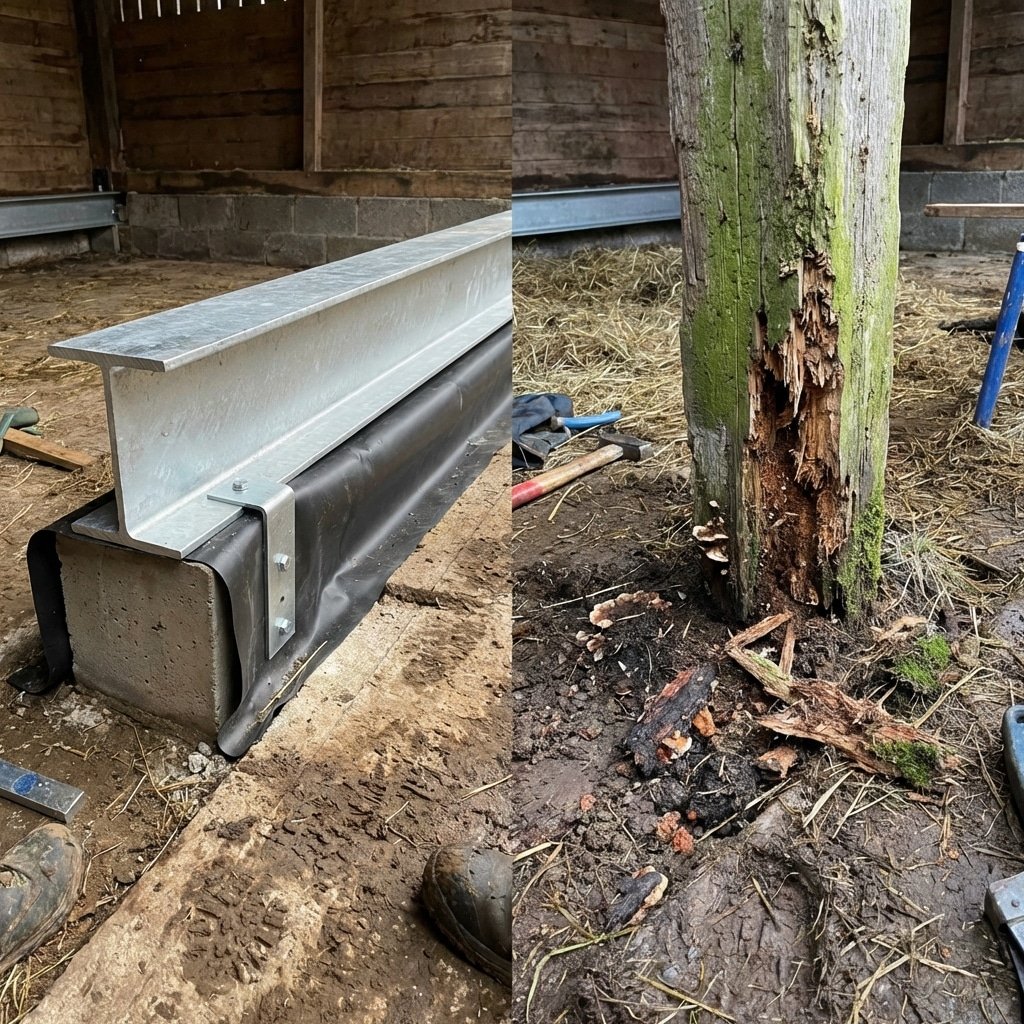
Traditional timber base plates fail rapidly in damp stable environments. We replace vulnerable wood with Hot-Dip Galvanized steel profiles to create a zero-absorption foundation that cannot rot.
Why Traditional Timber Base Plates Fail in NZ Climates
New Zealand’s climate presents a specific challenge for timber foundations. With annual rainfall reaching up to 1,600mm in some regions and high humidity levels, timber remains in a state of high moisture content. In a stable environment, this natural moisture is compounded by wet bedding, urine, and manure. This creates a “perfect storm” for biological decay at the ground level, often referred to as the “base plate problem.”
- Fungal Decay: Wood rot is not just water damage; it is a biological process. Dormant fungal spores exist on most timber. When the wood remains damp (above 20% moisture content) due to contact with wet bedding or mud, these spores activate and feed on the timber fibers, destroying structural integrity.
- Moisture Saturation: Wood is porous and functions like a sponge. In stables, the base plate absorbs not just water but ammonia from urine. This chemical exposure accelerates the breakdown of even H-treated timber, causing it to soften and rot within weeks in severe conditions.
- Structural Risk: The bottom plate supports the vertical load of the stable wall. When this foundation rots, the entire wall system becomes unstable. This poses a severe safety hazard, as a compromised wall may not withstand the impact of a horse kick.
The Steel Solution: Q235B Hot-Dip Galvanized Bottom Profiles
We solve the base plate problem by removing the timber from the ground equation entirely. Instead of a wooden bottom plate, DB Stable systems utilize a structural steel foundation that is impervious to biological decay and moisture absorption. This engineering choice ensures the stable wall retains its strength for decades, regardless of ground moisture or bedding conditions.
- Material Upgrade: We replace the vulnerable wooden rail with a 50mm x 50mm RHS (Square Hollow Section). We use Q235B Structural Steel with a minimum wall thickness of 2.0mm (14-Gauge), ensuring the base can withstand heavy impacts without deformation.
- Process Standard: We utilize Hot-Dip Galvanization After Fabrication. Unlike competitors who weld pre-galvanized tubes (leaving welds exposed to rust), we weld the black steel frame first and then submerge the entire unit in molten zinc. This creates a coating exceeding 70 microns, conforming to BS EN ISO 1461 standards.
- Impervious Barrier: The steel bottom rail provides a zero-absorption barrier. It cannot soak up urine, it cannot harbor fungal spores, and it is immune to the rot that destroys timber. This significantly reduces long-term maintenance costs for facility operators.
Precision-Engineered Stables For 20-Year Durability
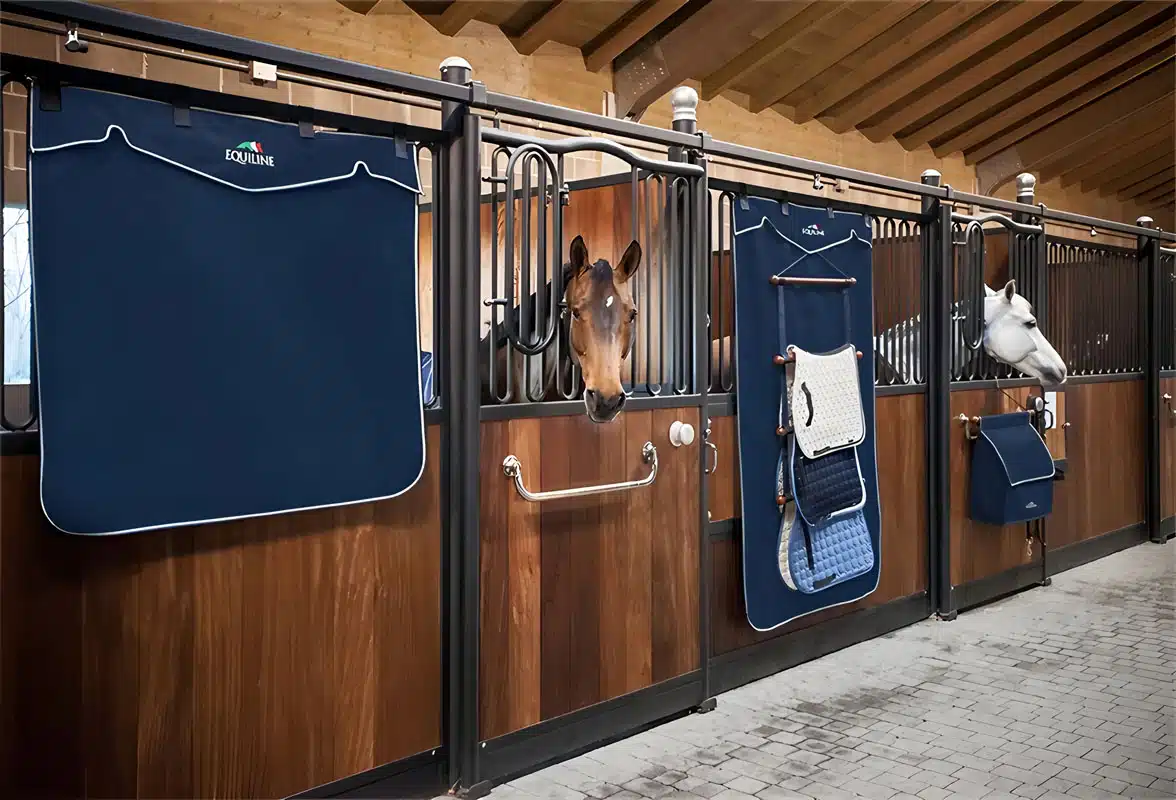
100% Waterproof Horse Stall Panels (HDPE vs Pine)
HDPE panels outperform pine by providing a 100% impermeable barrier against moisture and bacteria. This “Zero Maintenance” solution eliminates the sanding and sealing cycles required by traditional timber.
| Feature | DB Stable HDPE | Traditional Pine |
|---|---|---|
| Water Resistance | 100% Impermeable | Highly Porous |
| Hygiene | Anti-Bacterial / Mold Free | Absorbs Urine & Bacteria |
| Maintenance | Zero Maintenance (Wash Only) | Requires Sealing/Painting |
| Durability | Kick-Proof / UV Stabilized | Prone to Rot & Splintering |
Softwood Limitations: Moisture Absorption and Bacterial Risks
Pine acts like a sponge in stable environments. The cellular structure of softwood absorbs atmospheric moisture and urine, creating an ideal breeding ground for bacteria and dangerous ammonia buildup. In high-humidity regions like New Zealand, this porosity accelerates rot from the inside out, compromising the structural integrity of the stall wall.
Facility managers using timber face significant long-term labor costs. Preventing rot requires a strict regimen of sanding, staining, and sealing. Without this constant maintenance, wet timber softens and loses its density. This structural weakness creates a safety hazard; when a horse kicks a softened pine board, it is liable to splinter, causing severe leg injuries that synthetic options eliminate entirely.
HDPE Technical Specs: 32mm UV-Stabilized Impact Profiles
DB Stable engineers our synthetic option specifically for commercial durability using 28mm to 32mm solid HDPE (High-Density Polyethylene) boards. Unlike wood, these profiles are 100% impermeable to water and harsh cleaning solvents. You can pressure wash the stalls daily to maintain high biosecurity standards without worrying about the material degrading or warping.
- UV Stabilization: We formulate our HDPE to withstand high UV indexes found in Australia and New Zealand, preventing the brittleness and fading common in cheaper plastics.
- Kick-Proof Guarantee: The dense molecular structure absorbs shock energy rather than shattering, ensuring the board remains intact under heavy impact.
- Zero Maintenance: These profiles require no painting, sealing, or treatment for the lifespan of the product.
Hot-Dip Galvanizing: Rust-Proofing Your Stable Frame
Hot-dip galvanizing immerses the entire fabricated frame into molten zinc at 460°C, creating a metallurgical bond that outperforms paint or pre-galvanized steel in New Zealand’s coastal environments.
New Zealand’s climate is aggressive. High humidity, frequent rainfall, and coastal salt spray eat through standard steel protection quickly. While paint sits on top of the surface, hot-dip galvanizing creates a metallurgical bond where the zinc sacrifices itself to protect the steel. We process our frames at 460°C, ensuring the zinc penetrates the steel surface rather than just covering it.
The Critical Difference: Galvanizing After Fabrication
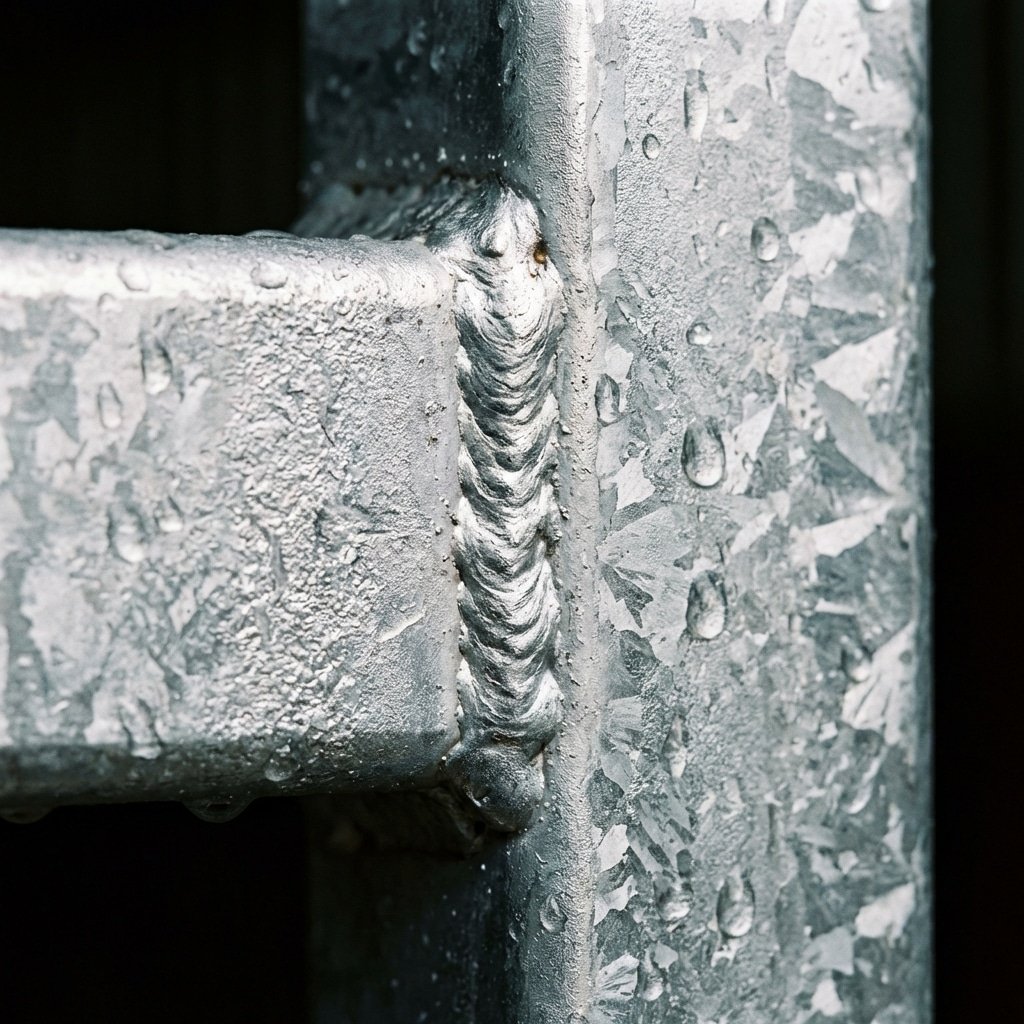
There is a massive difference between “pre-galvanized” materials and the “Hot-Dip After Fabrication” process we use. Most budget stables are made from pre-galvanized tubes (steel sheets galvanized before being rolled into tubes). When manufacturers weld these tubes, the heat burns the zinc off the joints. They typically cover these burns with cold spray paint, but the damage is done. The weld seam becomes the weak point where rust begins almost immediately.
DB Stable uses a stricter method:
- Full Immersion: We weld the entire frame using raw black steel first. Only after all fabrication is complete do we dip the entire door or panel into the zinc bath.
- Internal Protection: Because the frame is dipped whole, the molten zinc flows inside the tubes. This coats the interior surfaces, preventing condensation from rotting the frame from the inside out—a common failure point in humid climates that painting cannot address.
- Sealed Joints: The zinc builds up around weld points, sealing them completely against moisture ingress.
Zinc Coating Standards: Exceeding ISO 1461
We don’t guess with coating thickness. Our process adheres strictly to BS EN ISO 1461 standards, ensuring the barrier is thick enough to withstand decades of abuse and environmental exposure. A thin coating might look shiny on day one, but it fails quickly under physical impact or constant moisture.
- Structural Parts (>6mm): These receive an average coating greater than 85 microns (μm).
- Tubing Components (3-6mm): These receive an average coating greater than 70 microns (μm).
- Validation: Materials undergo ASTM B117 salt spray testing for over 96 hours with zero red rust appearance.
This level of specification ensures that the frames handle the physical demands of a working stable while resisting the corrosive nature of manure, urine, and salt air.
Designing Open-Front Stalls for Easy Mucking
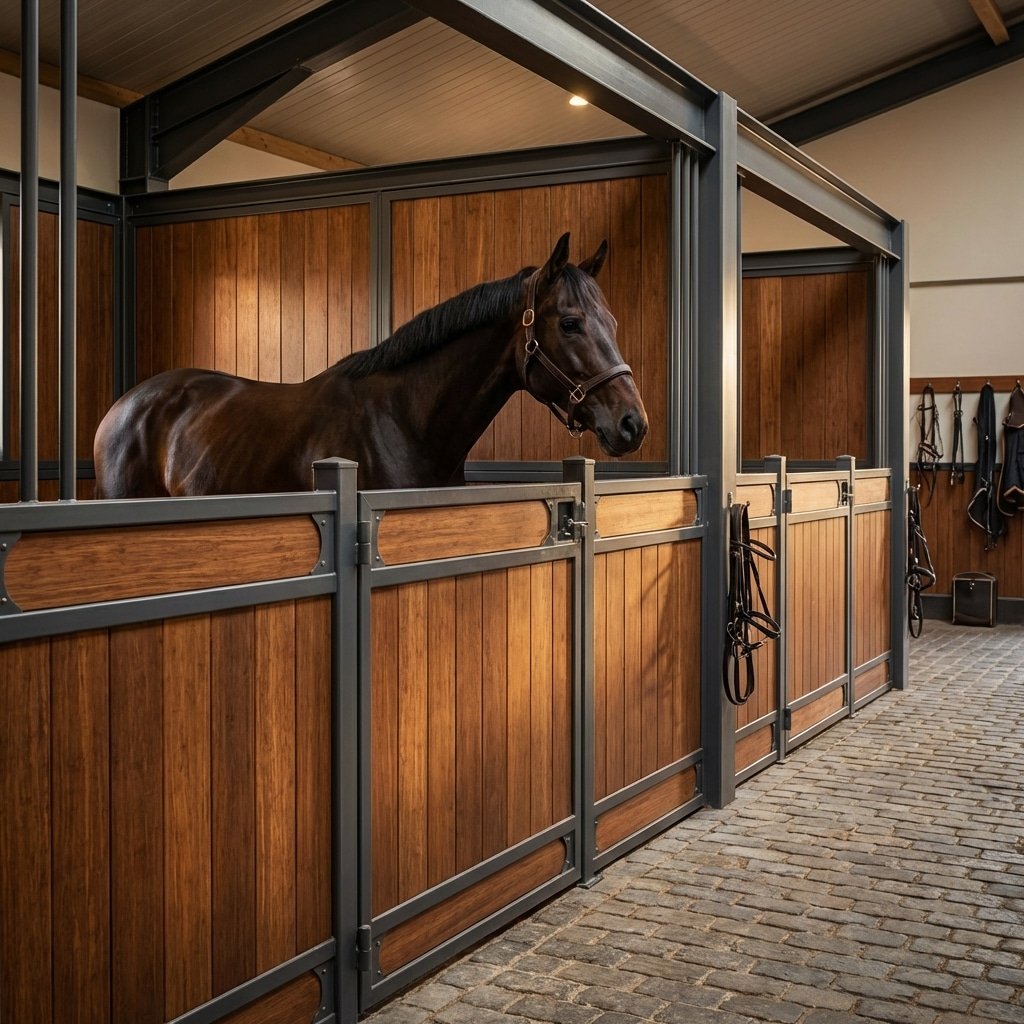
Open-front designs with sliding doors and swivel feeders cut labor costs by eliminating aisle obstructions and reducing stall entry time, while better ventilation keeps bedding drier.
Streamlining Workflow with Accessible Layouts
Labor is the single highest operational cost in any equestrian facility. The design of the stall front dictates how fast a stable hand can move from one unit to the next. Traditional high-walled or closed-front boxes force staff to manually open heavy barriers and navigate tight squeezes with wheelbarrows, wasting seconds that compound into hours over a week. We design open-front layouts to remove these friction points entirely.
- Unobstructed Aisles: Sliding doors eliminate the swing radius of hinged doors, keeping the walkway clear for machinery and muck carts.
- Stack Effect Ventilation: Open grills promote vertical airflow, which dries out bedding faster and significantly reduces ammonia buildup compared to solid walls.
- Machinery Access: We recommend passageways between 1.4m and 1.8m wide, allowing skid steers or tractors to pass without risking damage to the frame.
- Ergonomic Handling: Reducing the physical weight and complexity of latches minimizes strain on handlers who repeat these motions hundreds of times a day.
Integrating Sliding Track Systems and Swivel Feeders
Hardware selection is not just about aesthetics; it is about mechanical reliability in a dirty environment. Standard exposed door tracks clog with dust, bedding, and hay, eventually causing the door to jam and requiring maintenance. Our Professional Series addresses this with a “Hidden Track System” located above the door, shielding the rollers from debris falling from the hayloft or kicked up by hooves.
- Swivel Feeders: Staff can feed horses directly from the aisle without entering the stall. This prevents bedding disruption and saves time during feeding rounds.
- Sliding vs. Hinged: Hinged doors block aisles and trap handlers when leading horses out. Sliding systems keep traffic flow linear and safe.
- Impact Resistance: We use Q345B High Strength Steel for our frames. This handles accidental impacts from wheelbarrows and shovels far better than standard Q235 steel.
- Self-Cleaning Tracks: The upper track housing prevents bedding accumulation, ensuring the door glides smoothly even after years of heavy use.
Frequently Asked Questions
What are the best waterproof horse stall panels for New Zealand’s wet climate?
For New Zealand’s high-rainfall environment, High-Density Polyethylene (HDPE) infill is the superior choice over traditional pine or plywood. Unlike wood, our 28mm-32mm HDPE profiles are 100% waterproof, do not absorb moisture, and are immune to mold, rot, and bacteria buildup. They require zero maintenance and you can power-wash them directly. While recycled plastic sheeting (like Tuffboard) is a viable option, professional facilities typically prefer the structural integrity of specific stable-grade HDPE planks.
How can I stop my wooden stable boards from rotting at the bottom?
Wood rot typically starts where planks meet damp flooring. To prevent this, we engineer a 50mm bottom gap (often called a ‘cast-proof’ gap) into our steel frames. This lifts the timber off the ground, preventing moisture absorption from urine or wash-down water. If you must use wood near the ground, replace the bottom boards with High-Density Bamboo (Janka Hardness > 3000 lbf) or switch to synthetic HDPE planks for the lower sections to eliminate the risk entirely.
Why is ‘Hot-Dip Galvanizing After Fabrication’ recommended over pre-galvanized steel?
In coastal or humid climates like New Zealand, standard pre-galvanized steel often rusts at the weld points where the protective zinc layer burns off during manufacturing. Hot-Dip Galvanizing After Fabrication (ISO 1461 standard) involves dipping the entire finished door or panel into molten zinc after all welding is complete. This seals every joint, weld, and internal surface with a coating exceeding 85 microns, providing significantly longer protection against salt spray and rust compared to pre-galv alternatives.
Do horses legally require constructed shelter in New Zealand?
Yes. Under the Animal Welfare Act 1999, owners are legally obligated to provide adequate shelter to protect horses from cold, wet, or extreme heat. While natural cover (like trees) can sometimes suffice, a constructed three-sided shelter with a roof is recommended to ensure horses can remain dry and warm during prolonged rain events, which are common in many NZ regions.
What foundation is best for stables in muddy areas?
For areas prone to mud, a concrete slab with a slight gradient for drainage is the most hygienic option. However, for a more budget-friendly approach in paddocks, an all-weather dry lot system is effective. This involves removing topsoil, laying geotextile fabric to separate layers, and compacting a base of A40 grade stone topped with fines or crusher dust. This ensures water drains away quickly, keeping the stable floor dry.
Final Thoughts
New Zealand’s aggressive rainfall demands more than standard protection; generic pre-galvanized steel simply cannot survive the corrosive mud “poultice” effect. By standardizing on Hot-Dip Galvanization to BS EN ISO 1461 and impermeable HDPE infills, you eliminate the risk of structural rot and costly warranty claims. Your market reputation depends on supplying infrastructure that withstands the environment, not just the price tag.
Secure your inventory against the elements by verifying our manufacturing quality firsthand. We recommend initiating a trial order of our Professional Series to test the >85 micron zinc coating and flat-pack logistics efficiency in your local market. Contact our engineering team today to configure a container load tailored specifically to NZ specifications.


 English
  Spanish
  French
  Arabic
  German
0 Comments