


V-Drop Chewing destroys standard stable doors by turning the horizontal ledge into a structural fulcrum for incisors. Most manufacturers ignore this focal pressure, using thin sheet metal that crimps and tears under the force of a cribber. This mechanical failure creates jagged spurs, risking severe mouth injuries and forcing immediate, expensive replacements.
Engineering a permanent defense requires increasing material mass and eliminating leverage points. DB Stable utilizes 14-Gauge Q235B Structural Steel profiles to withstand localized bite pressure without deformation. By fully encasing raw edges in a welded U-channel before Hot-Dip Galvanization, we create a seamless, bite-proof barrier that resists both mechanical grinding and saliva-induced corrosion.

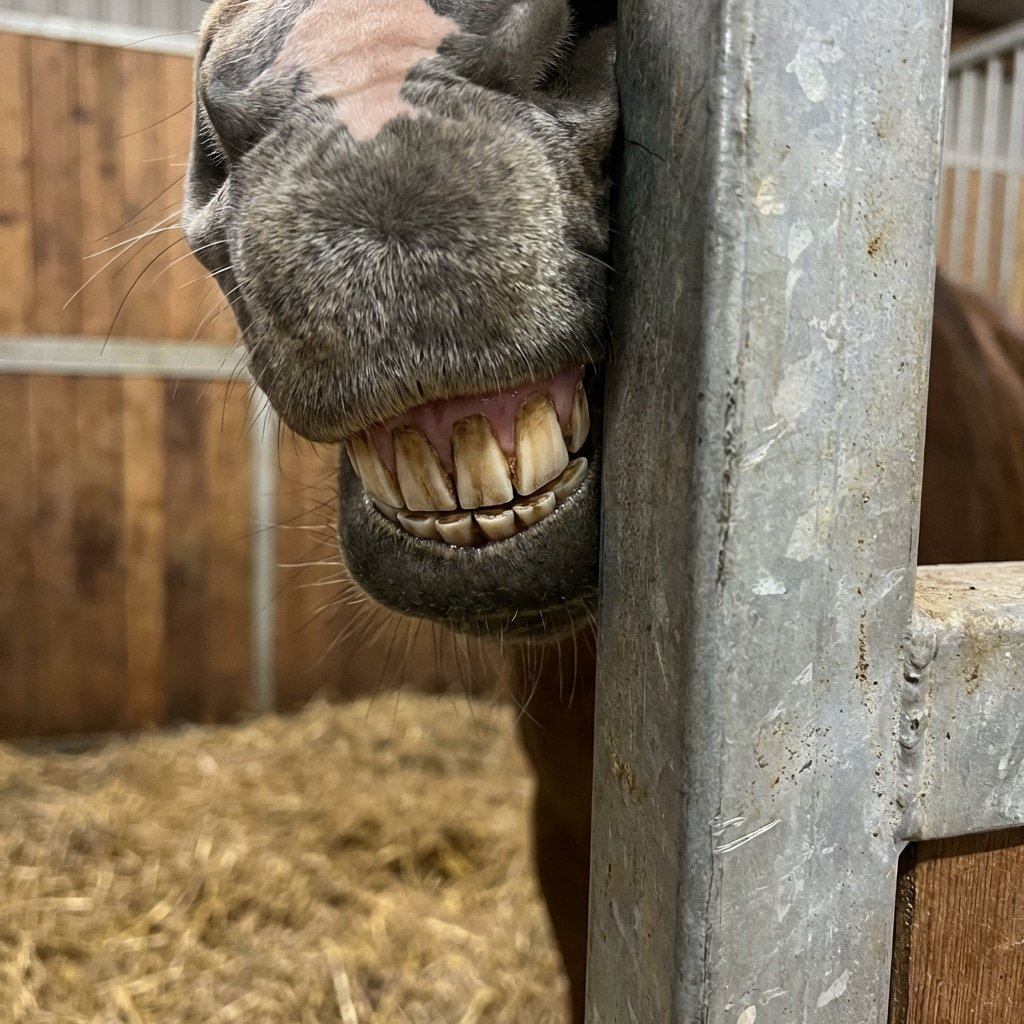
The Behavioral Quirk: Resting Teeth on the Folded Panel
Horses use V-drop ledges as incisor anchors, crushing thin metal. We use 14-gauge Q235B structural steel to withstand this specific focal pressure.
The Mechanics of Incisor Pressure on Horizontal Surfaces
Stable design must account for biology, not just aesthetics. The V-drop design creates a distinct horizontal ledge at head height. For a stabled horse, this geometry acts as an inviting fulcrum. They anchor their upper incisors onto this ridge, using it to stabilize their jaw while they scan their environment or rest.
This behavior often precedes wind-sucking or serves as a boredom relief mechanism. The problem lies in the physics of the bite. The pressure is not distributed; it is localized entirely on the incisors. When a horse bears down on this specific point, they apply significant downward force combined with a grinding motion.
Standard manufacturing methods frequently fail here. Competitors often use thin, folded sheet metal to form these V-drops. Under repeated grinding and downward pressure, thin edges crimp, warp, and eventually tear. This destroys the panel’s structural integrity and creates sharp, jagged metal spurs that pose a severe laceration risk to the horse’s mouth.
Preventing Edge Distortion with 14-Gauge Q235B Steel
To counteract this force, material mass is non-negotiable. While many competitors cut costs by using 1.2mm or 1.6mm folded sheet metal, DB Stable strictly adheres to a heavier industrial standard. We engineer these contact points to resist deformation regardless of the animal’s habits.
- Material Thickness: We utilize a minimum of 14-Gauge (2.0mm – 2.5mm) wall thickness. This provides enough steel density to withstand bite force without crimping.
- Structural Grade: We employ Q235B Structural Steel (equivalent to ASTM A36). This ensures the necessary tensile strength to resist bending under oral pressure.
- Saliva Resistance: This contact area is constantly wet. Paint and powder coats eventually chip under tooth abrasion. Our Hot-Dip Galvanization (applied after fabrication) bonds zinc to the steel at a molecular level, preventing rust despite constant moisture and friction.

Why Exposed Wood Edges on Windows Get Shredded
Standard wood edges fail because paint offers zero structural resistance. Once claws breach the coating, the soft, porous grain underneath shreds instantly under mechanical pressure.
The “Soft Grain” Vulnerability in Residential Wood
Standard residential windows rely entirely on paint or varnish for surface protection. In an animal environment, this is a fatal engineering flaw. Paint acts as a temporary cosmetic shell, not a structural barrier. A single paw scratch or tooth scrape is enough to breach this thin layer.
Once that seal breaks, the internal wood grain is exposed. Unlike the hard outer coating, the inner grain of pine or fir is soft, porous, and fibrous. This material lacks the density to resist the point-load pressure of teeth. Worse, the texture of splintering wood often triggers a natural chewing response, causing animals to obsessively work the damaged area until the sill is destroyed.
Material Density: Softwood vs. High-Density Bamboo
The root cause of shredded windows is insufficient material density. Residential timber is designed for aesthetics and insulation, not impact resistance. To prevent this failure mode, we utilize materials that physically resist tooth penetration.
- Extreme Hardness: DB Bamboo Infill carries a Janka Hardness rating > 3000 lbf, making it 3x harder than Oak.
- Strand Woven Technology: We compress bamboo fibers under high pressure to eliminate the soft grain pockets found in natural timber.
- Gouge Resistance: The high-density structure prevents teeth from finding purchase, stopping the “shredding” cycle before it starts.
Premium Galvanized Stables Built for Longevity

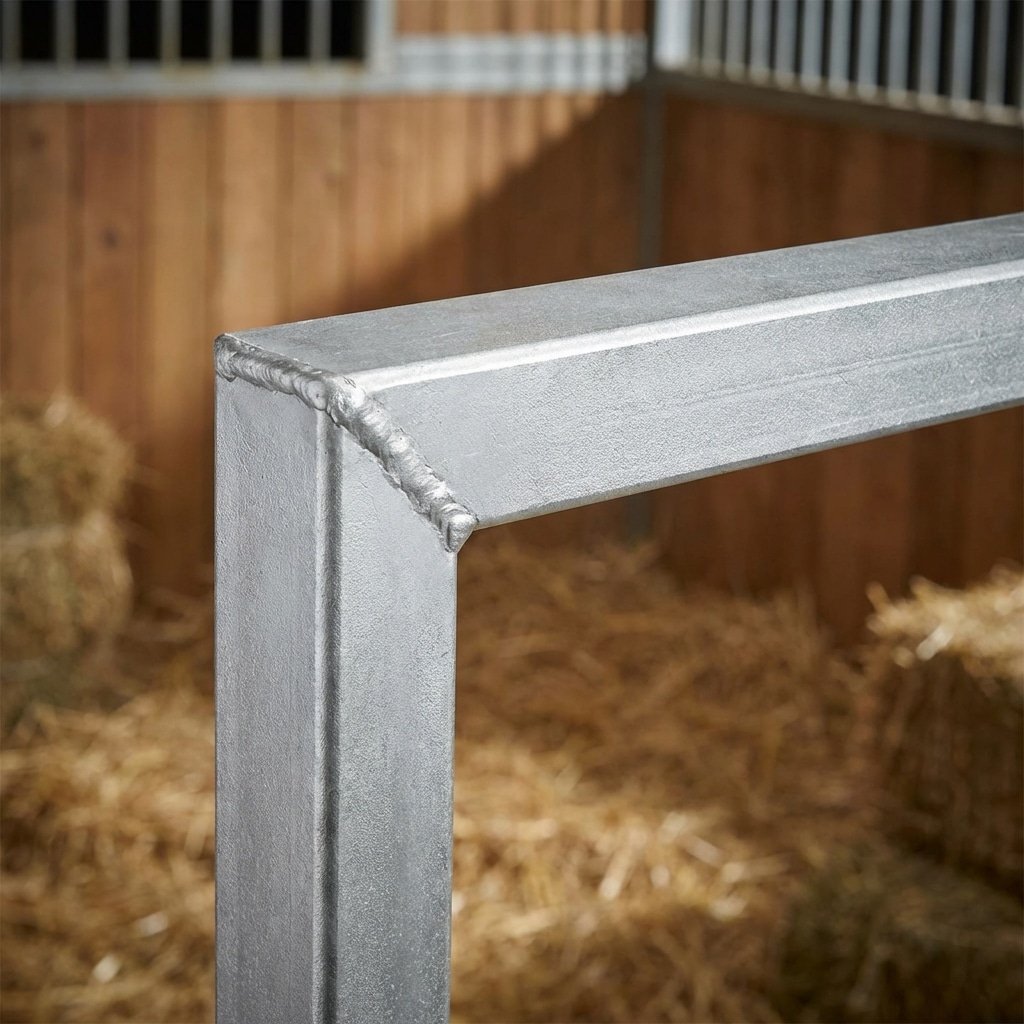
DB’s Fully Capped U-Channel V-Drop Frames
Our system welds the U-channel prior to galvanization, creating a seamless, bite-proof steel barrier that encases raw board edges and eliminates hidden rust points.
Eliminating Bite Points with U-Channel Profiles
Standard stable manufacturing often cuts corners by screwing infill planks behind a simple flat bar. This leaves the edge of the HDPE or Bamboo exposed, creating a “lip” that horses can grip with their teeth. Once a horse finds purchase on that edge, they will shred the material. We reject this method explicitly. Our V-Drop frames utilize a structural steel U-channel that fully encases the board edge, removing the physical leverage point required for cribbing or chewing.
- Steel Specification: We use Q235B structural steel (equivalent to ASTM A36) rather than soft decorative alloys.
- Profile Thickness: 14-Gauge (2.0mm – 2.5mm) walls deflect teeth impact without denting.
- Edge Protection: Completely covers the vulnerable cross-section of Bamboo or HDPE to prevent splintering.
Seamless Integration via Hot-Dip Galvanization
The sequence of assembly dictates the lifespan of the steel. Competitors often rivet U-channels onto pre-galvanized tubes, leaving a microscopic gap between the channel and the frame. Ammonia and wash-down water wick into this crevice, causing “rot from within.” At DB Stable, we execute the “Hot-Dip After Fabrication” process. We weld the U-channel to the frame first, creating a single monolithic unit, and then submerge the entire structure in molten zinc.
- Zinc Coverage: Achieves >70 microns of coating inside the U-channel track where moisture naturally accumulates.
- Standard Compliance: Adheres strictly to BS EN ISO 1461 regulations.
- Bond Strength: The metallurgical bond prevents the protective cap from being ripped off by aggressive horses.
Securing the Drop-Hinge to Prevent Rattling
Loose drop-hinges cause noise that stresses horses and invites chewing. DB Stable uses precision-engineered 304 stainless steel hardware to ensure a tight, rattle-free fit.
The Rattle Risk in Drop-Down V-Panels
A loose hinge is more than an annoyance; it is a structural vulnerability. When drop-down mechanisms lack tension, they create a feedback loop of noise and damage. A rattling component draws the horse’s attention, turning a safety feature into a target for boredom-induced behavior.
- Vibration Causes Stress: Constant metal-on-metal clatter during feeding or movement spikes equine anxiety levels, affecting rest and digestion.
- Invitation to Chew: Loose components create accessible gaps. Horses exploit this “play” to rest their teeth on the mechanism, leading to cribbing.
- Mechanical Wear: continuous vibration accelerates the degradation of zinc coatings on standard steel latches, stripping rust protection.
Precision Fit with 304 Stainless Steel Hardware
To eliminate movement, we bypass standard galvanized latches. DB Stable equips every drop-down panel with an installation kit containing exclusively 304 Stainless Steel components. This material choice ensures the mechanism remains static and silent, regardless of the stable environment.
- Material Superiority: We use 304 Stainless Steel for all hardware to prevent rust-induced loosening common in cheaper mild steel fittings.
- Tight Tolerances: Precision manufacturing ensures the drop-hinge locks firmly into place, eliminating the “wiggle” that attracts horses.
- Longevity: Stainless steel maintains structural integrity against heavy impacts, unlike standard latches that deform and loosen over time.
Frequently Asked Questions
How do I stop horses from chewing the edges of a V-drop door?
The most effective solution is installing physical barriers like metal anti-chew strips or fully capped U-channel steel frames over the exposed edges. While taste deterrents (like hot cinnamon sprays) offer temporary relief, hot-dip galvanized steel capping provides a permanent barrier that withstands persistent gnawing.
What is the best way to protect drop-down barn windows from breakage?
Install heavy-duty protective grills or welded wire mesh (typically 1/4″ rods) on the interior side of the window to prevent direct contact. Additionally, ensure the window uses tempered glass rather than standard float glass to withstand impact, and verify that all frames are securely flashed to prevent moisture intrusion.
Final Thoughts
Sourcing thin, pre-galvanized stalls invites structural failure and costly warranty claims from injured horses. DB Stable’s strict adherence to 14-gauge Q235B steel and post-weld Hot-Dip Galvanization ensures a bite-proof barrier that withstands chronic cribbing. Choosing industrial-grade resilience over cosmetic shortcuts is the only way to safeguard your inventory and your reputation.
Do not compromise your catalog with products that cannot survive a stable environment. Contact our engineering team today to review technical drawings or schedule a trial order to verify our build quality firsthand. We are ready to manufacture the high-safety, low-maintenance stock your clients demand.


 English
  Spanish
  French
  Arabic
  German
0 Comments