


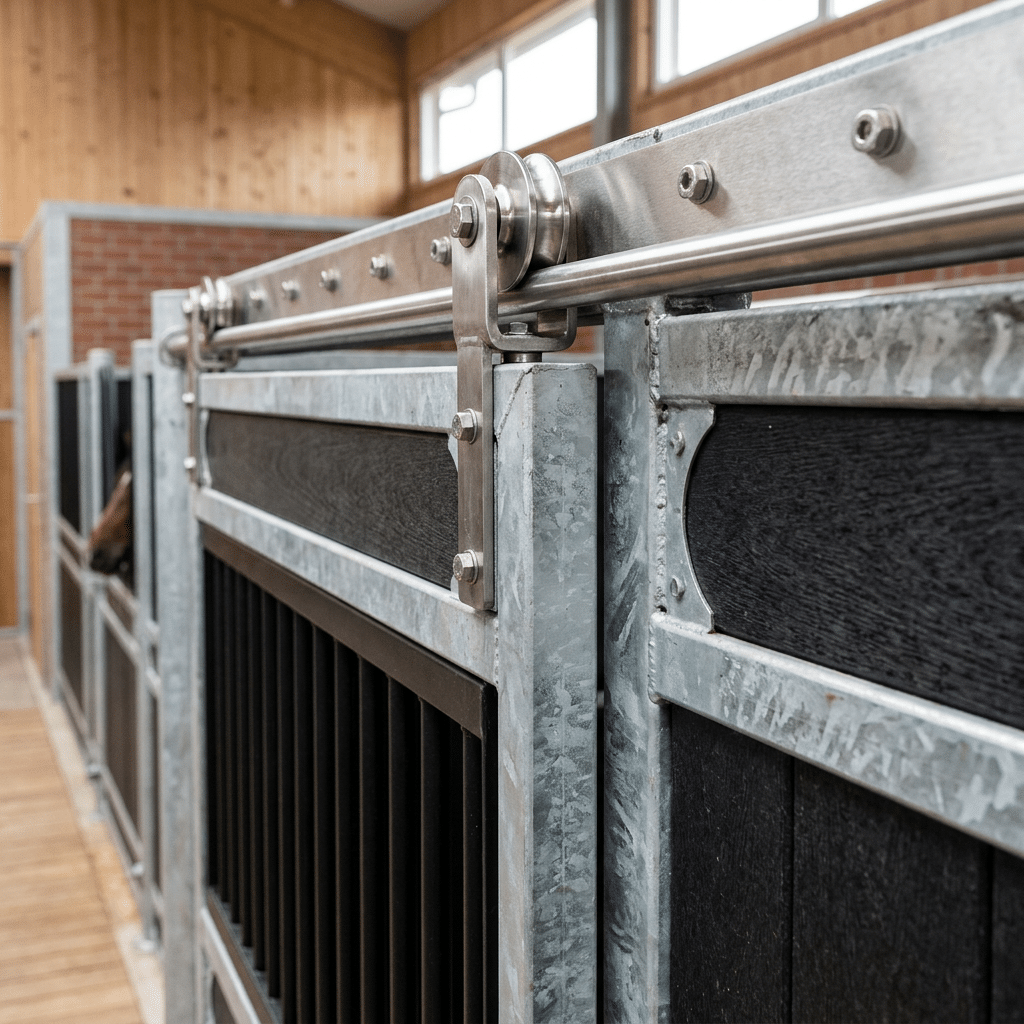
Specifying equipment for a Vet University Hosp. project directly impacts long-term liability and operational costs. The use of standard materials like treated pine in high-humidity stalls or underspecified steel for ceiling hoists creates vectors for disease and structural failure, leading to expensive retrofits and potential safety incidents.
This guide provides the engineering specifications for these critical components. We analyze hoist-compatible frameworks built with ISO 9001-compliant Q235B structural steel and observation grills designed for student visibility. The focus is on rot-proof materials like HDPE and dense bamboo that ensure biosecurity and reduce lifetime maintenance costs.
The Rot Cycle in High-Humidity Environments
High humidity fuels a rot cycle where pathogens thrive on compromised horse skin. You disrupt this cycle with rot-resistant materials and designs that ensure stalls stay dry.
In damp, poorly ventilated stables, a self-perpetuating cycle of moisture and pathogen growth takes hold. This isn’t just about mold on the walls; it’s a direct threat to equine health, creating the exact conditions needed for skin infections like dermatophilosis (rain rot) to flourish. Understanding this process is the first step to engineering a solution.

How Sustained Moisture Fuels Pathogen Growth
The rot cycle isn’t random. It follows a predictable, three-stage process that turns a damp stall into a breeding ground for bacteria and fungi.
First, prolonged moisture softens the horse’s skin, compromising its natural protective barrier. This creates microscopic entry points for pathogens that are always present in the environment. Once that barrier is breached, dormant bacteria and fungal spores activate. In the damp, warm conditions of a humid stall, they multiply rapidly, leading to lesions and scabs.
Finally, the high humidity and stagnant air perpetuate the problem. The environment allows pathogens to spread easily from horse to horse or from contaminated surfaces, ensuring the cycle continues. The stable itself becomes part of the disease vector.
Disrupting the Cycle with Ventilation and Material Choice
You can’t control the weather, but you can control the stall’s micro-environment. The right design and material specifications directly counter the factors that enable the rot cycle. It’s a matter of engineering, not just cleaning.
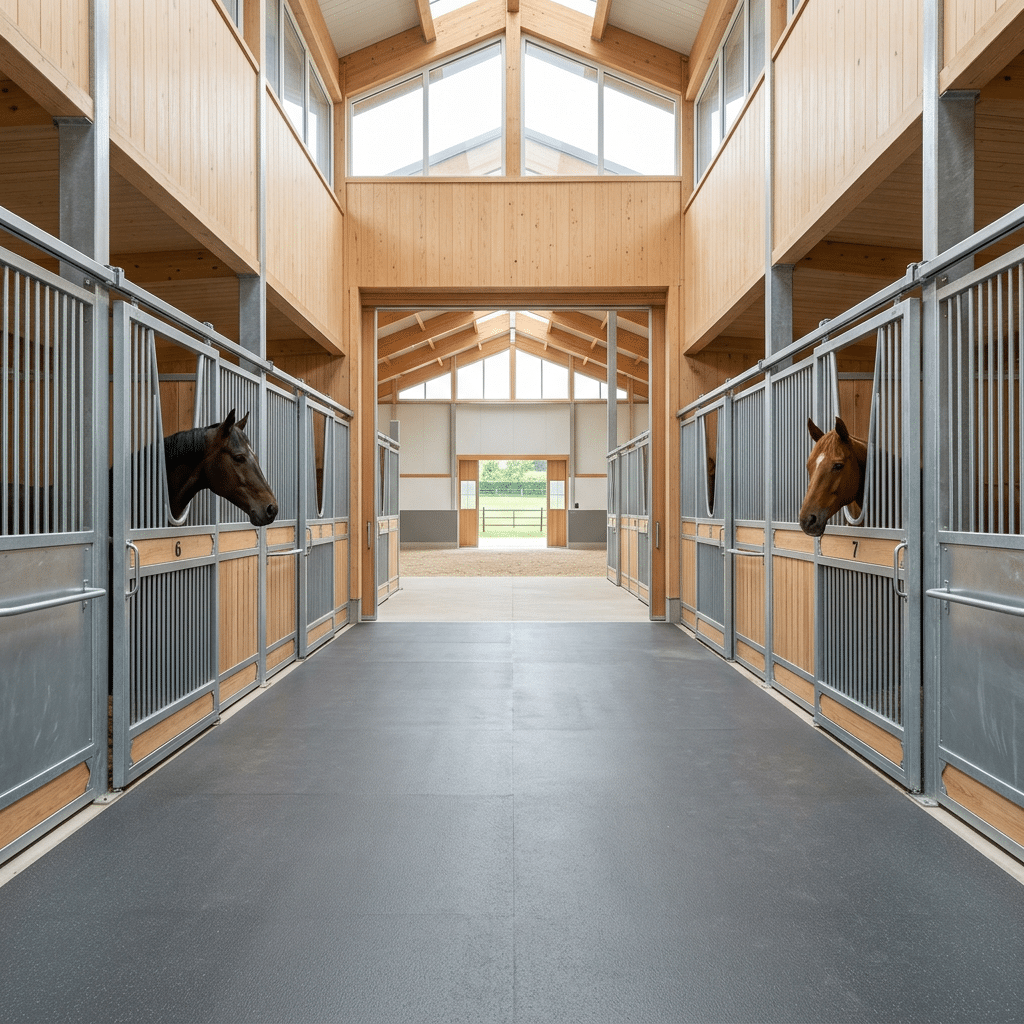
- Stack Effect Ventilation: Open-top grill designs are not just for socializing. They promote a natural airflow pattern where warm, moist air rises and exits, while cooler, drier air is drawn in from below. This constant circulation dries surfaces and eliminates the stagnant air pockets where pathogens thrive.
- Rot-Resistant Bamboo Infill: Standard wood absorbs moisture and can become a food source for mold. Our high-density, strand-woven bamboo (with a Janka Hardness over 3000 lbf) is naturally resistant to mold and rot. The structure itself refuses to harbor or contribute to pathogen growth.
- Zero Maintenance HDPE Option: For the ultimate rot-proof barrier, 28-32mm UV-stabilized HDPE is the solution. As a non-porous plastic, it cannot absorb moisture. It offers a completely inorganic surface that gives bacteria and fungi nothing to feed on, guaranteeing a sterile and easy-to-clean wall.
Material Comparison for Tropical Climates
In tropical climates, moisture resistance dictates performance. Engineered materials like dense bamboo and non-porous HDPE offer superior mold and rot prevention over traditional treated pine.
| Material | Moisture Resistance Profile | Verdict | |
|---|---|---|---|
| Treated Pine | Poor. Pressure-treated wood absorbs 18-22% water by weight, creating a substrate for mold. | Requires constant ventilation and maintenance to prevent inevitable mold and rot. | Suboptimal. A high-maintenance choice unsuited for persistent high humidity. |
| Strand-Woven Bamboo | Excellent. Extremely high density (approx. 1,200 kg/m³) and thermal treatment result in just 0.4% water absorption. | Can be sensitive to dramatic humidity fluctuations if not properly acclimated, potentially causing cupping. | Excellent. The dense, rot-resistant structure provides a durable, long-term solution. |
| HDPE (High-Density Polyethylene) | Absolute. As a non-porous plastic, it has virtually zero water absorption (<0.01%). It is waterproof. | Raw, untreated HDPE can degrade with high heat and UV exposure. Requires proper formulation. | Excellent. UV-stabilized grades offer a zero-maintenance, completely waterproof barrier against mold. |
Treated Pine: A Losing Battle
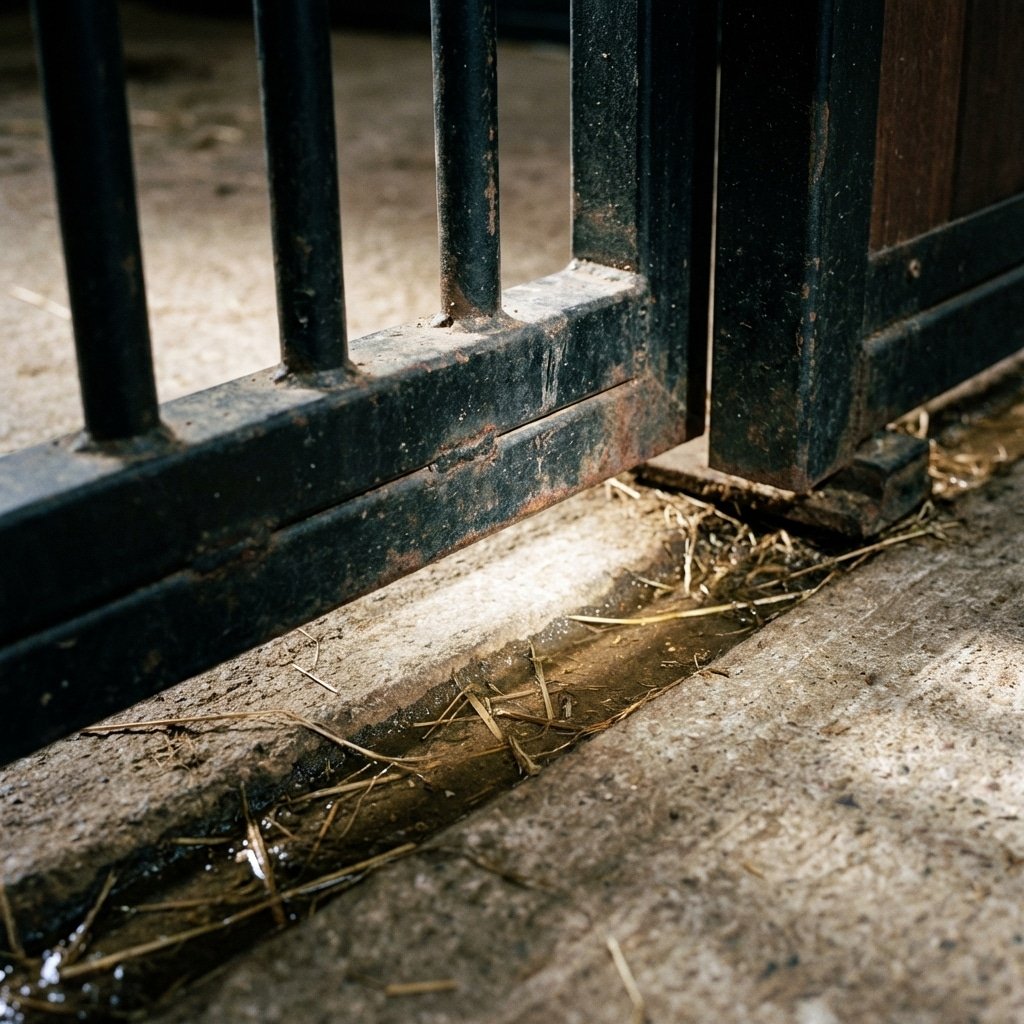
While treated pine is designed to resist insects and initial decay, it fails in environments with persistent high humidity. The material is porous and readily absorbs moisture from the air, creating the exact conditions needed for mold to thrive. Its performance depends entirely on external factors like ventilation and maintenance. In a tropical climate, this makes it a fundamentally flawed choice that requires constant upkeep to delay, not prevent, eventual decay.
Strand-Woven Bamboo: Density as a Defense
Strand-woven bamboo is an engineered material, not natural bamboo. The manufacturing process involves shredding bamboo fibers, compressing them under extreme pressure, and using a thermal treatment. This removes the sugars that attract mold and creates an incredibly dense board with a Janka hardness over 3000 lbf. Its low water absorption rate makes it highly resistant to the rot and mold that plagues other wood-based materials in the tropics.
HDPE: The Non-Porous Barrier
HDPE offers a straightforward solution: it’s waterproof. Since the material does not absorb moisture, it provides no substrate for mold or mildew to grow on. While basic HDPE can be susceptible to UV degradation, the UV-stabilized formulations used in quality building applications are engineered specifically for outdoor and harsh climate use. This makes it a true zero-maintenance option, providing a reliable, long-term barrier that is immune to the effects of humidity and moisture.
Globally Compliant Stables Built to Last
Airflow Design to Prevent Tropical Fungal Infections
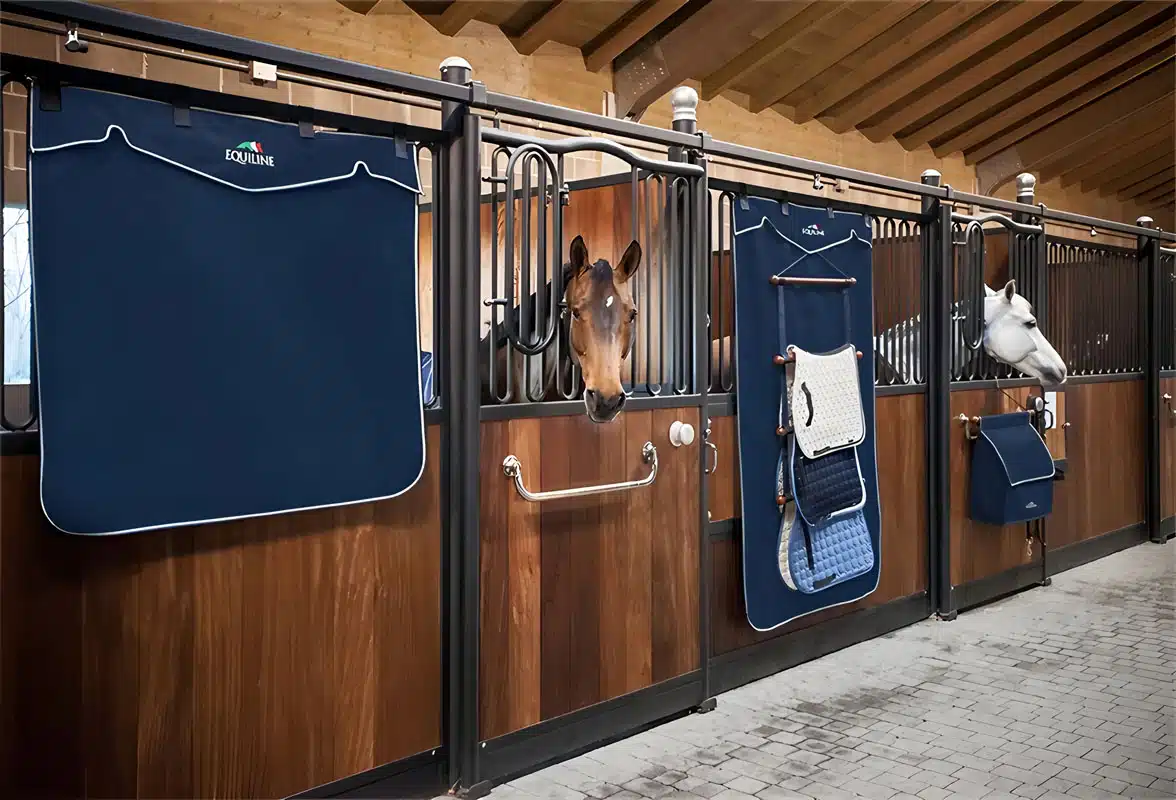
Proper airflow in horse stables is critical for preventing fungal infections in tropical veterinary settings. Smart designs use open-top grills to exhaust humid air, reducing the moisture that fungi need to grow.
Controlling Moisture and Airborne Fungal Spores
Fungal growth isn’t random; it’s a direct result of the environment. Proliferation requires high humidity, warm ambient temperatures, and organic matter on surfaces to act as nutrients. In a clinical or stable setting, these conditions create a perfect breeding ground for pathogens.
The primary threat comes from airborne spores, like Aspergillus fumigatus, which can concentrate in poorly ventilated spaces. Tropical climates amplify this risk significantly. The persistent high humidity demands stable designs that do more than just shelter the animal; they must actively manage the air quality by reducing moisture and bioaerosols.
Promoting Stack Effect Ventilation with Open Grills
The open grill design on our stable fronts and partitions is not just for socialization or aesthetics. It’s an engineered feature that facilitates natural ventilation through a process called the “Stack Effect.”
This principle is simple: warm, moist air exhaled by the horse is less dense, so it naturally rises. The open top of the stall allows this humid air to escape into the larger barn aisle, drawing cooler, drier air in from below. This creates continuous air exchange within the stall, preventing the stagnant, damp conditions where fungi thrive.
This airflow works best when paired with the right materials. Combining the stack effect with non-porous HDPE or dense, mold-resistant bamboo infill eliminates the moisture and nutrient sources that fungi depend on. This integrated system provides a robust defense against common fungal infections.
Frequently Asked Questions
What are the best stall materials for high-humidity or wet climates?
You need materials that don’t absorb moisture. High-Density Polyethylene (HDPE) is the best choice for stall infill because it’s 100% waterproof, so it won’t rot or grow mold. High-density strand-woven bamboo is also a top performer; the manufacturing process makes it incredibly resistant to moisture and decay. Combine either of these with open-grill stable fronts for good ventilation, and you create a dry, healthy environment.
Will high-density bamboo panels rot over time?
No. Quality strand-woven bamboo is engineered specifically to be rot-resistant. The process uses thermal treatment and extreme compression, which removes the natural sugars and creates a board three times harder than oak. This density prevents moisture from getting in, giving it a service life that often exceeds 25 years, even in constantly damp conditions.
How does hot-dip galvanization prevent rust?
Hot-dip galvanization creates a thick, protective zinc coating that is metallurgically bonded to the steel. The entire welded frame is dipped into molten zinc, which seals every surface, corner, and weld from oxygen and moisture. This process provides a robust barrier against corrosion that meets ISO 1461 standards and holds up against the ammonia and moisture found in stables.
What does ‘Hot-Dip After Fabrication’ mean and why is it important?
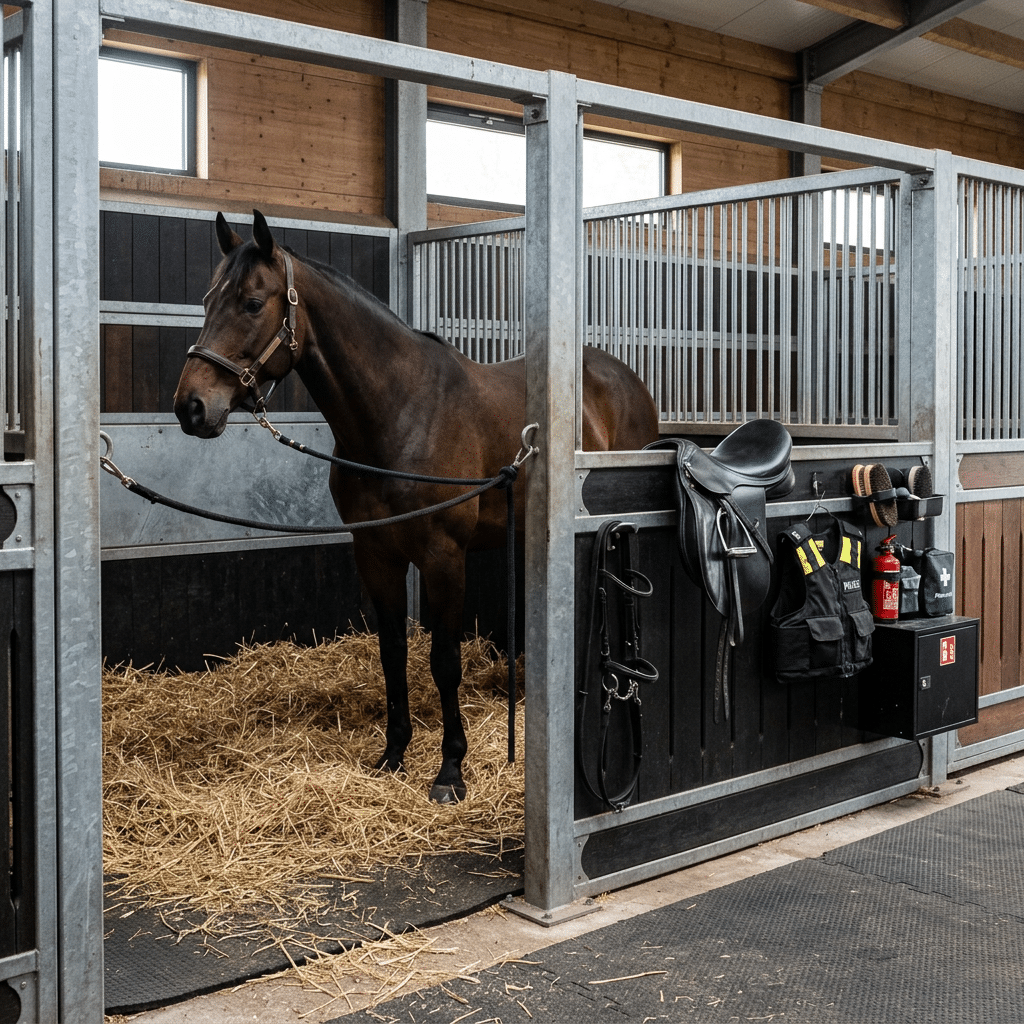
It means the entire stable panel is welded together first, and *then* the complete unit is submerged in molten zinc. This is the only proper way to guarantee rust protection. The cheap alternative is welding pre-galvanized tubes together, which burns off the coating at the welds, leaving them exposed and guaranteed to rust. Our method ensures a seamless zinc layer over the whole structure for true longevity.
What is Q345B steel and is it necessary for cold climates?
Q345B is a high-strength, low-alloy steel specifically for freezing temperatures. Standard steel (Q235B) can become brittle in the cold, but Q345B has superior low-temperature impact toughness. This means it can take a powerful kick from a horse in the middle of winter without fracturing. It’s a critical safety feature for any stables located in regions that experience frost or snow.
Final Thoughts
Specifying for a university equine hospital isn’t about comparing prices; it’s about eliminating liability. Treated pine and pre-galvanized steel are guaranteed failure points in clinical environments, leading to rot, rust, and compromised biosecurity. Hot-dip galvanization after fabrication and non-porous HDPE infill are the baseline for ensuring structural integrity and patient safety.
Your project has unique requirements for hoist integration, observation access, and workflow. Contact our engineering team to review technical drawings and material specifications for your facility. We will provide the CAD files and data needed to integrate a fully compliant system into your architectural plans.

 English
  Spanish
  French
  Arabic
  German
0 Comments