


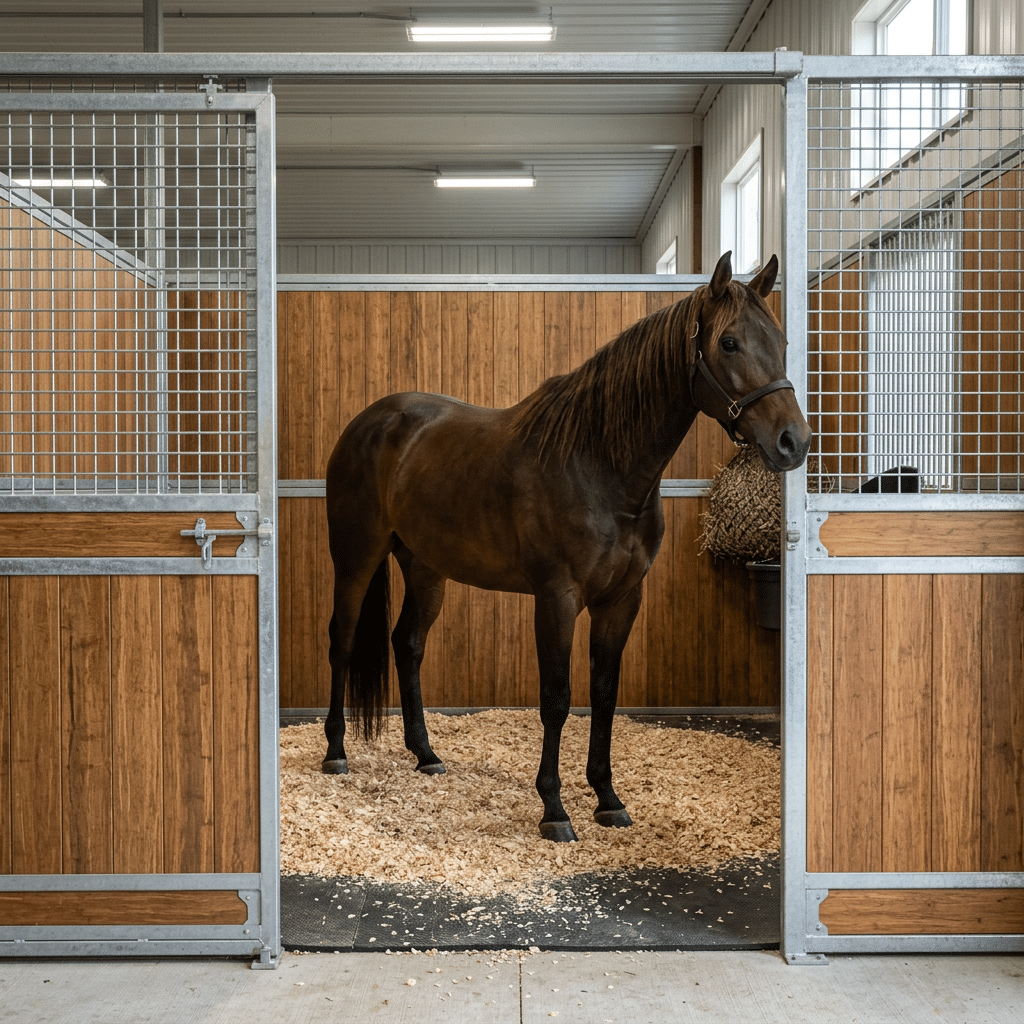
Sourcing infrastructure for a Vet University Hospital project now demands strict adherence to the 2026 ESG mandates for embodied carbon. While generic stabling offers lower initial capital expenditure, it fails Whole Life Carbon assessments due to rapid corrosion and frequent replacement cycles. Deans and architects cannot afford the operational risk of specifying materials that degrade under harsh clinical sanitation protocols.
We benchmark hoist-compatible frameworks against the ISO 1461 Hot-Dip Galvanization standard for 50-year durability. By utilizing Q235B structural steel and high-density flat-pack logistics, we reduce Scope 3 transport emissions by over 60%. This analysis prioritizes clinical hygiene and load-bearing observation grills to help you secure sustainable, LEED-compliant infrastructure.
The Rise of ESG (Environmental, Social, Governance) in Construction
By 2026, ESG shifts from voluntary guidelines to strict mandates. For equestrian builds, compliance relies on extended material lifecycles (galvanized steel) and high-density logistics to slash Scope 3 emissions.
The 2026 Mandate: Decarbonization and Lifecycle Assessment
The construction industry is hitting a regulatory wall. What used to be voluntary corporate responsibility statements are turning into hard operational requirements. By 2026, the market will move past simple energy efficiency (Scope 1 and 2) and target the supply chain itself—Scope 3 emissions. This includes the “embodied carbon” of the materials you buy and how they get to your site.
Investors and planning committees now demand explicit carbon budgets alongside financial ones. For large-scale equestrian projects, this means every component must justify its existence through Whole Life Carbon (WLC) accounting. You can no longer specify materials that require replacement every decade; the carbon cost of manufacturing and shipping replacements ruins the project’s sustainability rating.
- Mandatory Disclosure: Regulatory bodies are enforcing strict reporting on supply chain emissions.
- Carbon Budgets: Projects face caps on embodied carbon, forcing a switch to high-durability materials.
- Data Transparency: Suppliers must provide compliance-grade data on manufacturing impact and logistics efficiency.
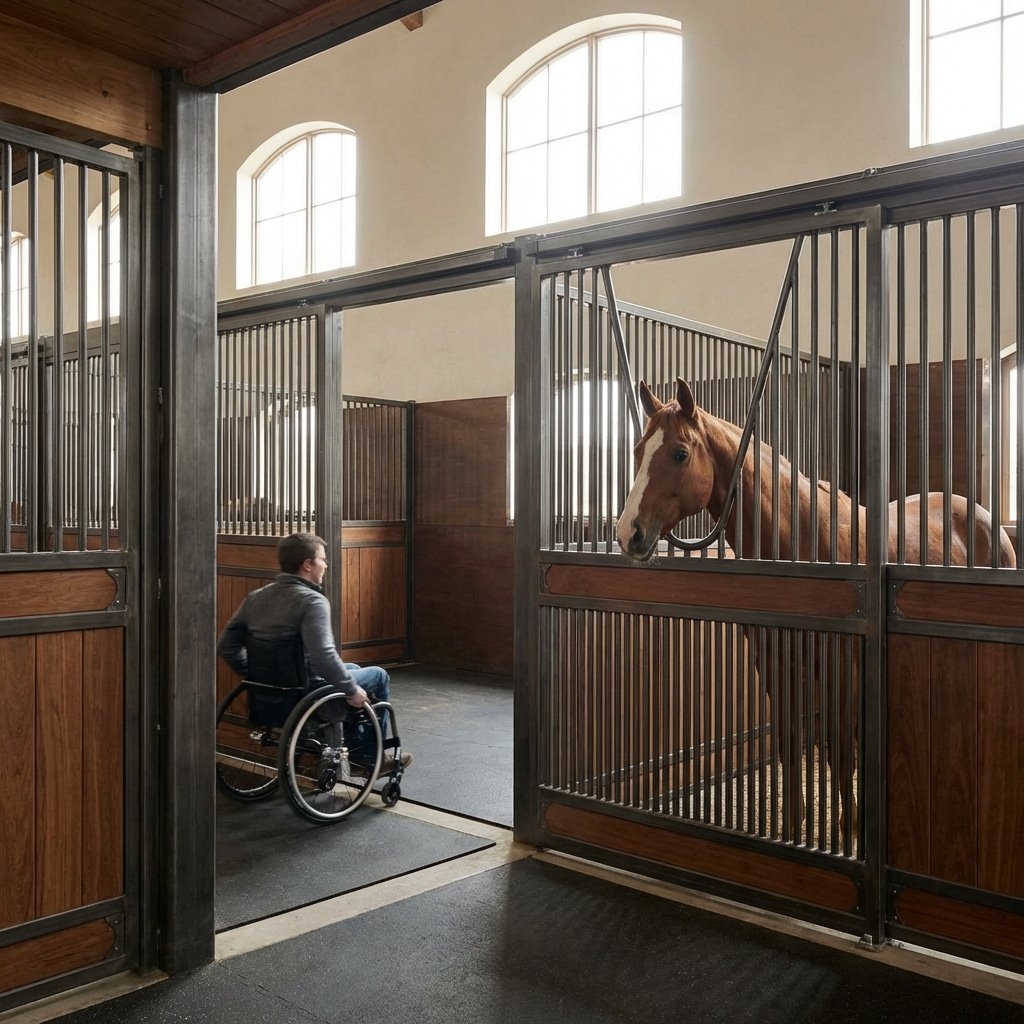
Reducing Carbon Footprint with Hot-Dip Galvanization and Flat-Pack Systems
We align directly with these 2026 mandates through engineering decisions that prioritize longevity and logistical density. The most effective way to reduce a facility’s carbon footprint is to build it once. Our adherence to ISO 1461 Hot-Dip Galvanization ensures a lifecycle exceeding 30 years. This eliminates the carbon-intensive cycle of stripping, repainting, or replacing rusted steel typical of lower-grade pre-galvanized alternatives.
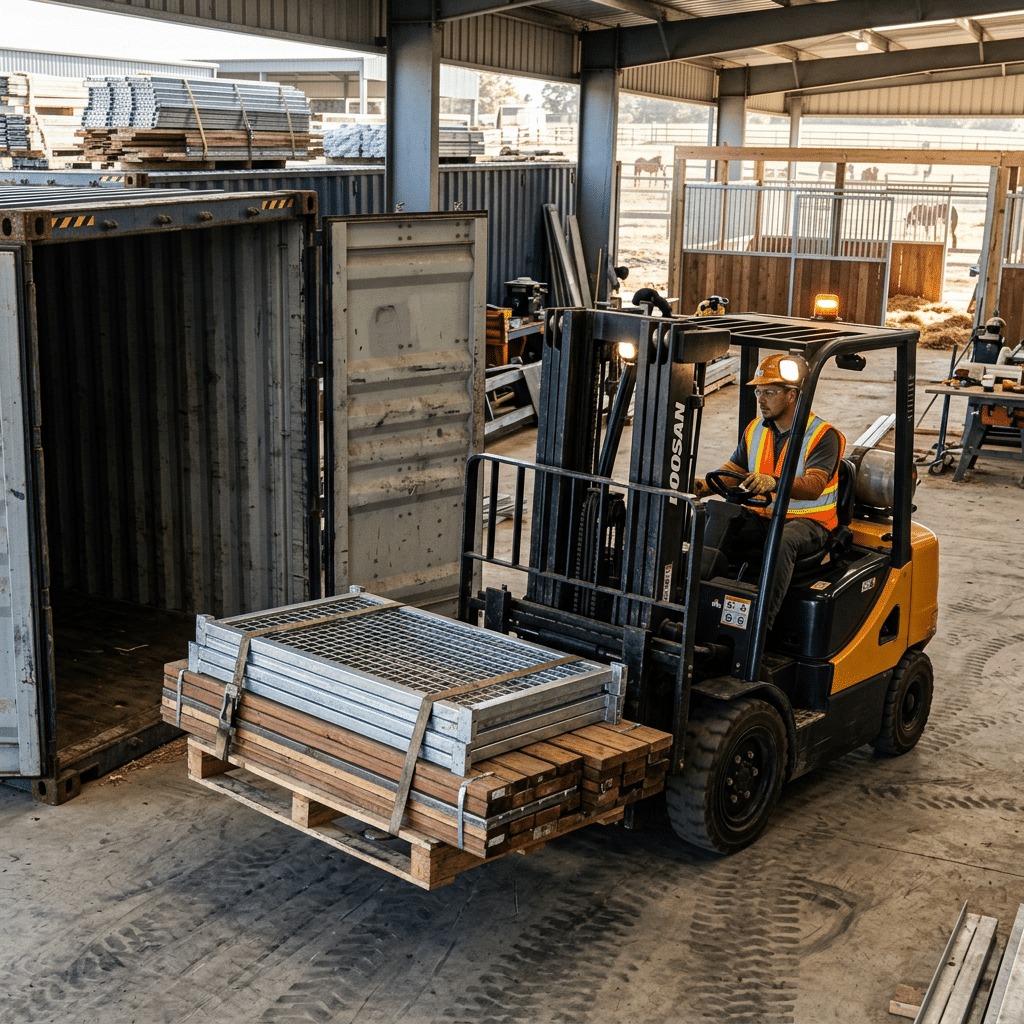
Logistics represent a massive, often overlooked portion of Scope 3 emissions. Shipping “air” is environmentally expensive. Traditional welded stable fronts fill a container with just 12-15 sets. Our engineered Flat-Pack System loads 30-45 sets per 40HQ container. This efficiency slashes the freight carbon footprint per stall by over 60%, a critical metric for ESG-compliant procurement.
- Extended Lifecycle: Hot-Dip Galvanization (>85 microns) prevents corrosion, removing the need for replacement materials for decades.
- Logistics Efficiency: High-density loading (30-45 sets/container) significantly lowers fuel consumption and transport emissions per unit.
- Sustainable Infill: High-Density Bamboo offers a rapidly renewable (3-5 year growth cycle) alternative to slow-growth hardwoods like Oak, without sacrificing hardness (Janka > 3000 lbf).
Moving Away from Old-Growth Timber (Oak/Pine)
Veterinary universities are phasing out Oak and Pine for High-Density Bamboo due to 3-5 year maturity cycles, 3x higher hardness, and superior clinical hygiene.
The Sustainability Deficit of Traditional Hardwoods
Large-scale institutional projects now operate under strict environmental mandates that old-growth timber simply
cannot meet. Oak and Pine require decades to regenerate, creating a supply chain bottleneck that conflicts directly with the rapid sustainability goals of modern university campuses. Relying on slow-growth forestry for high-volume stall infills is no longer a viable strategy for LEED-focused developments.
Beyond the environmental cost, natural timber presents a functional failure point in clinical settings. Wood is porous. It absorbs moisture, urine, and cleaning fluids, turning stall walls into breeding grounds for bacteria. In a veterinary teaching hospital, sterility is non-negotiable. Traditional timber also suffers from inconsistent grain density, which introduces structural weaknesses. A 500kg horse kicking a timber board with a grain defect will snap it; a teaching hospital cannot afford that safety risk.
High-Density Bamboo: The Clinical Standard for Stall Infills
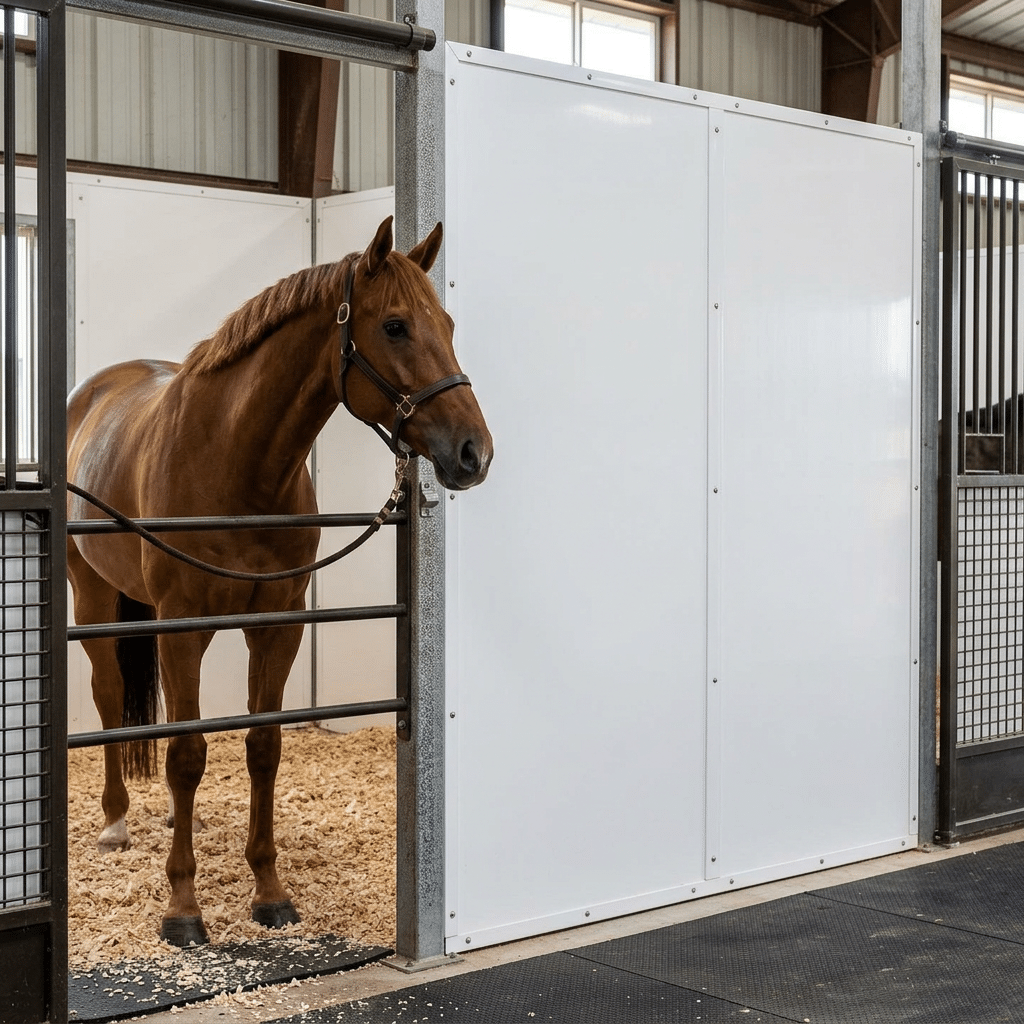
We specify High-Density Strand Woven Bamboo for our Professional Series because it solves the durability and hygiene problems inherent in wood. This is not the hollow bamboo used in garden furniture; it is a solid, engineered board compressed under extreme pressure to create a material that outperforms hardwoods in every metric relevant to equine safety.
- Rapid Renewability: Bamboo reaches full maturity in just 3-5 years. This allows for high-volume harvesting without depleting natural resources, making it a preferred material for LEED-certified projects.
- Superior Strength: Our strand woven bamboo carries a Janka Hardness rating of over 3000 lbf. This is approximately three times harder than Oak, providing exceptional resistance to cribbing and heavy kicks.
- Hygiene & Durability: The high-density processing eliminates air pockets, rendering the boards resistant to mold, rot, and moisture absorption. This maintains the sterile conditions required in hospital environments.
- Spec Detail: We supply these boards in 28mm, 32mm, and 38mm thicknesses to fit securely into heavy-duty steel channel profiles, preventing rattling or displacement.
Frequently Asked Questions
How to build an ESG compliant equestrian center?
Building an ESG-compliant facility requires a structured approach across environmental, social, and governance pillars. Environmentally, you must prioritize renewable energy, such as solar generation, to offset high consumption from arena lighting and equipment. Water management is equally critical; implement rainwater harvesting and closed-loop systems for wash bays. For the social aspect, focus on staff safety and welfare, ensuring rigorous safety protocols and decent working conditions. Governance involves transparent reporting of these metrics and ensuring your supply chain—from feed to stall manufacturing—adheres to ethical labor and environmental standards.
Is bamboo a sustainable building material?
Yes, but the type of bamboo matters. High-Density Strand Woven bamboo is highly sustainable because it regenerates in 3-5 years compared to the 30-50 years required for hardwoods. It sequesters carbon rapidly during growth and, when processed correctly, becomes a durable carbon sink. For horse stables, the sustainability factor is reinforced by its longevity; unlike softwoods that horses chew through in months, high-density bamboo withstands abuse for years, reducing the need for replacement materials and waste.
Environmental impact of steel vs wood barns?
This is a trade-off between embodied carbon and lifecycle durability. Wood barns typically have lower initial embodied carbon because trees absorb CO2 while growing. But, wood rots, warps, and requires chemical treatments or frequent replacement. Steel has higher initial production emissions but is 100% recyclable and offers infinite durability with proper galvanization. For a high-traffic commercial facility, steel often wins on long-term sustainability because it does not become landfill waste after 15 years. We use Q235B and Q345B steel which feeds into the global circular economy of scrap metal recycling.
Green certifications for horse stables?
There is no specific “Green Stable” certification in the industry. However, commercial equestrian projects often adapt broader standards like LEED (Leadership in Energy and Environmental Design) or regional codes like CalGreen in California. To achieve these, facilities focus on site planning (drainage/stormwater), energy efficiency (solar/LEDs), and material selection (recycled steel/rapidly renewable bamboo). You certify the building as a commercial or agricultural structure using these universal criteria rather than a niche equestrian label.
Eco-friendly horse barn manufacturers?
Manufacturers fall into two categories: Timber and Steel. Timber companies like DC Structures focus on responsibly sourced heavy timber. Prefab steel manufacturers, including MD Barnmaster and our own DB Stable production lines, focus on waste reduction through factory precision. Prefab steel is often the more “eco-friendly” choice for large projects because it minimizes on-site construction waste and utilizes recycled steel inputs. When evaluating a manufacturer, ignore the marketing buzzwords and ask for their material sourcing specs—specifically regarding FSC-certified wood or the recycled content of their steel.
World-Class Stables Built For Any Climate
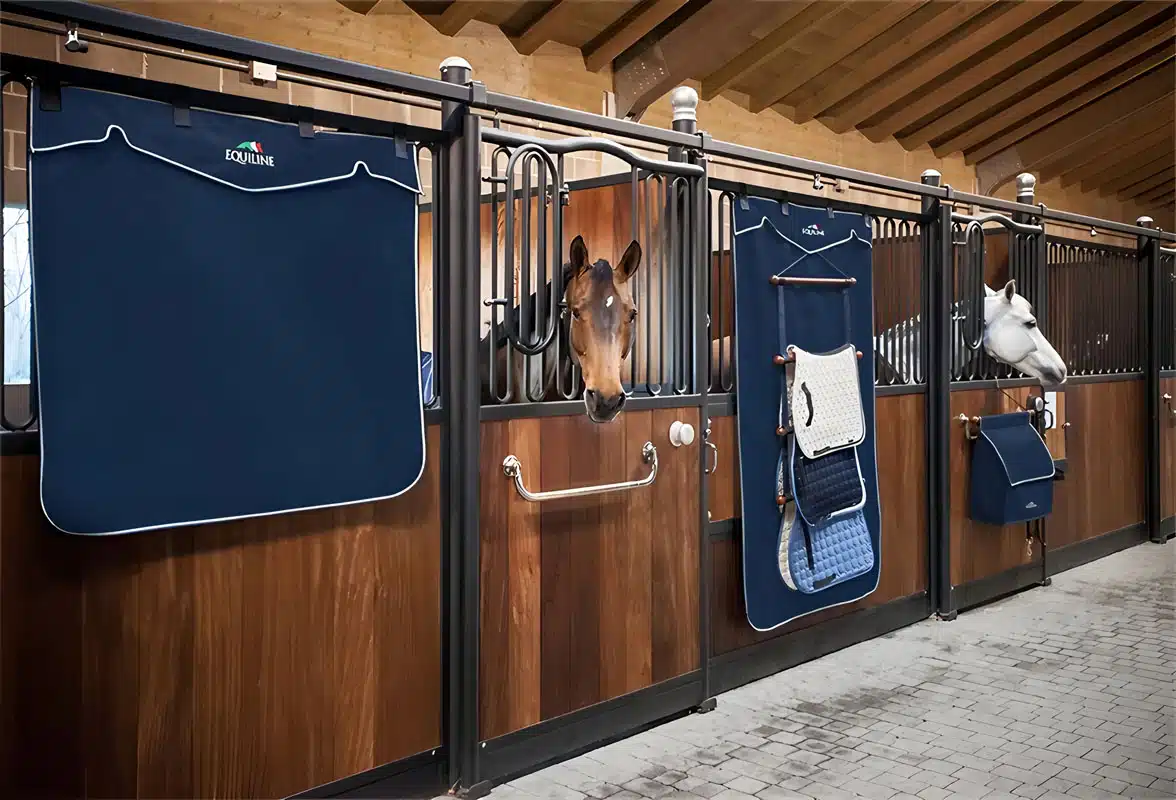
Top Factories Embracing Sustainable Materials
Leading manufacturers are pivoting from slow-growth timber to high-yield bamboo and recyclable HDPE, prioritizing supply chain stability and verifiable carbon reduction over traditional aesthetics.
The B2B manufacturing landscape is undergoing a hard correction. For decades, the industry relied on old-growth timber like oak and pine, ignoring the 30-50 year regeneration cycles that created volatile pricing and supply shortages. Today, top-tier factories—including our own DB Stable facilities—have shifted focus to materials that align with circular economy principles and stable pricing models for distributors.
This isn’t just about “going green” for marketing brochures. It is a strategic operational decision. By utilizing rapid-renewal materials and fully recyclable polymers, we stabilize production costs and offer products that meet the strict ESG requirements of modern equestrian projects in Europe and Australia.
| Material Standard | Regeneration Cycle | Performance (B2B Spec) | Lifecycle Impact |
|---|---|---|---|
| Strand-Woven Bamboo | 3-5 Years (Rapid) | Janka Hardness > 3000 lbf (3x Oak) | High Carbon Sequestration |
| Recycled HDPE | Continuous Recyclability | Impact Absorbing & UV Stabilized | Zero Maintenance / Waste Reduction |
| Q235B Structural Steel | 100% Recyclable | ISO 1461 Hot-Dip Galvanized | Indefinite Lifespan (No Landfill) |
1. High-Density Strand Woven Bamboo
Bamboo is technically a grass, not a wood, which allows it to reach maturity in 3-5 years rather than the decades required for hardwoods. For a high-volume manufacturer, this speed is critical. It ensures we are not depleting forests faster than they can regrow.
We specifically utilize high-density strand woven bamboo for our Professional Series. The manufacturing process compresses bamboo fibers under extreme pressure (2,500+ tons), creating a board with a density of roughly 1,150 kg/m³. This material solves two major B2B headaches: durability and consistency.
- Carbon Sink: Industrial bamboo products can achieve a negative carbon footprint over their lifecycle, acting as a durable carbon pool.
- Kick-Proof Guarantee: With a Janka hardness exceeding 3000 lbf, it resists hoof impact far better than softwoods like pine.
- Stable Supply: Unlike oak, which faces export bans in certain regions, managed bamboo forests provide a reliable raw material stream for large project orders.
2. Recyclable HDPE (High-Density Polyethylene)
In environments requiring “Zero Maintenance,” such as rental stables or high-turnover racing yards, recycled HDPE has replaced timber entirely. We strictly use 28mm-32mm UV-stabilized profiles. This material supports the circular economy by repurposing industrial plastics into structural infill that will never rot, warp, or require chemical staining.
From a manufacturing perspective, HDPE eliminates the waste associated with wood defects (knots, splits). It allows for precision CNC machining, ensuring every plank fits our Economy Series frames perfectly without on-site modification.

3. The Steel Loop: Q235B & ISO 1461
Sustainability in steel is defined by longevity and recyclability. We fabricate using Q235B structural steel (and Q345B for cold climates), which is 100% recyclable at the end of its life. However, the true environmental cost of steel is often in the replacement frequency. Cheap, pre-galvanized steel rusts within years, forcing early replacement and doubling the carbon footprint.
Our “Hot-Dip After Fabrication” process ensures the product lasts 20+ years. By dipping the entire welded door into molten zinc (avg. coating > 70 microns), we seal the steel against corrosion. This extends the asset’s lifecycle significantly, reducing the need for new raw materials.
Also, our flat-pack logistics system plays a direct role in emission reduction. By optimizing packing density (30-45 sets per 40HQ container vs. the industry average of 15), we cut shipping-related carbon emissions per unit by over 50%. This is where engineering directly supports profit protection and environmental responsibility.
Strand-Woven Bamboo: A High-Yield Carbon Sink
Strand-woven bamboo locks away 50–60kg of CO2 per culm and exceeds 1,000 kg/m³ in density, effectively functioning as a decades-long carbon storage unit in high-traffic stables.
Sequestration Mechanics of Compressed Bamboo
Bamboo operates differently from traditional timber in its carbon capture cycle. A single culm absorbs approximately 50 to 60 kilograms of CO2 during its rapid growth phase, which takes only 3 to 5 years compared to decades for hardwoods. However, the real engineering value lies in how we process this raw material into a stable construction element. Through high-pressure compression, we increase the density to between 1,080 and 1,200 kg/m³. This process effectively locks the captured carbon into a dense, fiber-reinforced structure that resists degradation.
- Rapid Biological Capture: Bamboo matures and sequesters peak carbon levels in under 5 years, continuously replenishing the supply.
- Regenerative Harvesting: The rhizome system remains intact after cutting, preventing soil erosion and allowing immediate regrowth without replanting.
-
Avoided Emissions:
utilizing bamboo displaces higher-carbon alternatives like concrete, reducing the project’s overall embodied carbon footprint.
Engineering Durability: 3,000+ lbf Janka Hardness
Carbon sequestration data is meaningless if the material fails and requires replacement within a few years. For DB Stable’s Professional Series, we utilize strand-woven bamboo specifically for its mechanical resilience. The weaving and compression process yields a Janka Hardness rating exceeding 3,000 lbf—making it three times harder than Oak. This extreme density serves two purposes: it withstands the heavy impact of equine kicks, and it creates a barrier against moisture and rot.
- Impact Resistance: At 3x the hardness of Oak, these boards prevent the splintering and breakage common in softwoods.
- Material Thickness: We specify 28mm to 38mm heavy-duty boards to ensure structural integrity under direct hoof impact.
- Decay Prevention: High-density weaving eliminates air pockets where mold typically thrives, keeping the carbon locked in the fiber rather than releasing it through decomposition.
Frequently Asked Questions
How to build an ESG compliant equestrian center?
Building an ESG-compliant facility requires a structured approach to infrastructure and operations rather than just “green” marketing. On the environmental side, you must prioritize renewable energy (solar integration is standard now) and closed-loop water systems that recycle rainwater for wash bays. Social responsibility involves documenting safety risks and ensuring staff welfare, while governance requires transparent reporting on your supply chain. You cannot simply claim sustainability; you need an emissions inventory and a documented plan to reduce waste year-over-year.
Is bamboo a sustainable building material?
Yes, but the manufacturing method matters. Bamboo is a grass that regenerates in 3-5 years without replanting, contrasting sharply with the 30-50 year cycles of hardwoods. It absorbs massive amounts of CO2 during growth. However, natural raw bamboo has poor durability and rots quickly. To be a truly sustainable building material, it must be strand-woven and compressed (like the high-density boards we use), which extends its lifespan to match or exceed traditional timber, ensuring the sequestered carbon stays locked away.
Environmental impact of steel vs wood barns?
This is a trade-off between production emissions and lifecycle longevity. Wood typically has lower embodied carbon during the initial production phase. However, steel—specifically the Q235B/Q345B grades we utilize—is 100% recyclable and retains its structural properties indefinitely. Steel barns generally offer a longer service life with lower maintenance requirements, preventing the waste generated by rotting or warping wood. If your priority is a circular economy and long-term asset retention, steel is the superior choice.
Green certifications for horse stables?
There is no single “Horse Stable Green Cert.” Most facilities adapt broader commercial standards. You can pursue LEED certification by treating the stable as a commercial agricultural facility, focusing on credits for natural ventilation (stack effect), recycled materials, and site water management. In regions like California, the CalGreen Code sets mandatory baselines for water efficiency and waste reduction that stables must meet regardless of voluntary certification.
Eco-friendly horse barn manufacturers?
The market is split between timber traditionalists and modern modular engineers. Companies like DC Structures focus on heavy timber from managed forests in the Pacific Northwest. In the modular steel sector, manufacturers like MD Barnmaster and our own DB Stable systems prioritize pre-fabrication to reduce on-site waste. We specifically combine recyclable steel frames with high-yield bamboo infill to balance durability with carbon sequestration, whereas others may focus purely on domestic lumber or metal-only shells.
Q235B Steel: The 100% Recyclable Framework
Q235B structural steel delivers a circular lifecycle for university projects, offering 100% recyclability and a 50-year lifespan when hot-dip galvanized to ISO 1461 standards.
The Chemistry Behind Infinite Recyclability
True sustainability in construction relies on material recovery, not just sourcing. Q235B (the direct equivalent to ASTM A36) is engineered with a specific chemical balance—moderate carbon (≤0.20%) and manganese (≤1.4%)—that makes it an ideal candidate for the circular economy. Unlike complex composites or treated timber that end up in landfills, Q235B can be re-smelted endlessly.
This chemical simplicity ensures that when the steel is recycled, it retains its original structural integrity. It does not suffer from “down-cycling,” where materials degrade into lower-quality products (like turning plastic bottles into carpet padding). Scrap recovery facilities globally prioritize this grade because it returns to the supply chain as high-strength structural steel, maintaining the value loop without degradation.
Durability as a Sustainability Metric
The most sustainable product is the one you don’t have to replace. For institutional projects, we measure sustainability through the lens of lifecycle longevity. A standard Q235B framework, when left untreated, is vulnerable. But when processed through our hot-dip galvanization line (ISO 1461 standard), the environmental math changes completely.
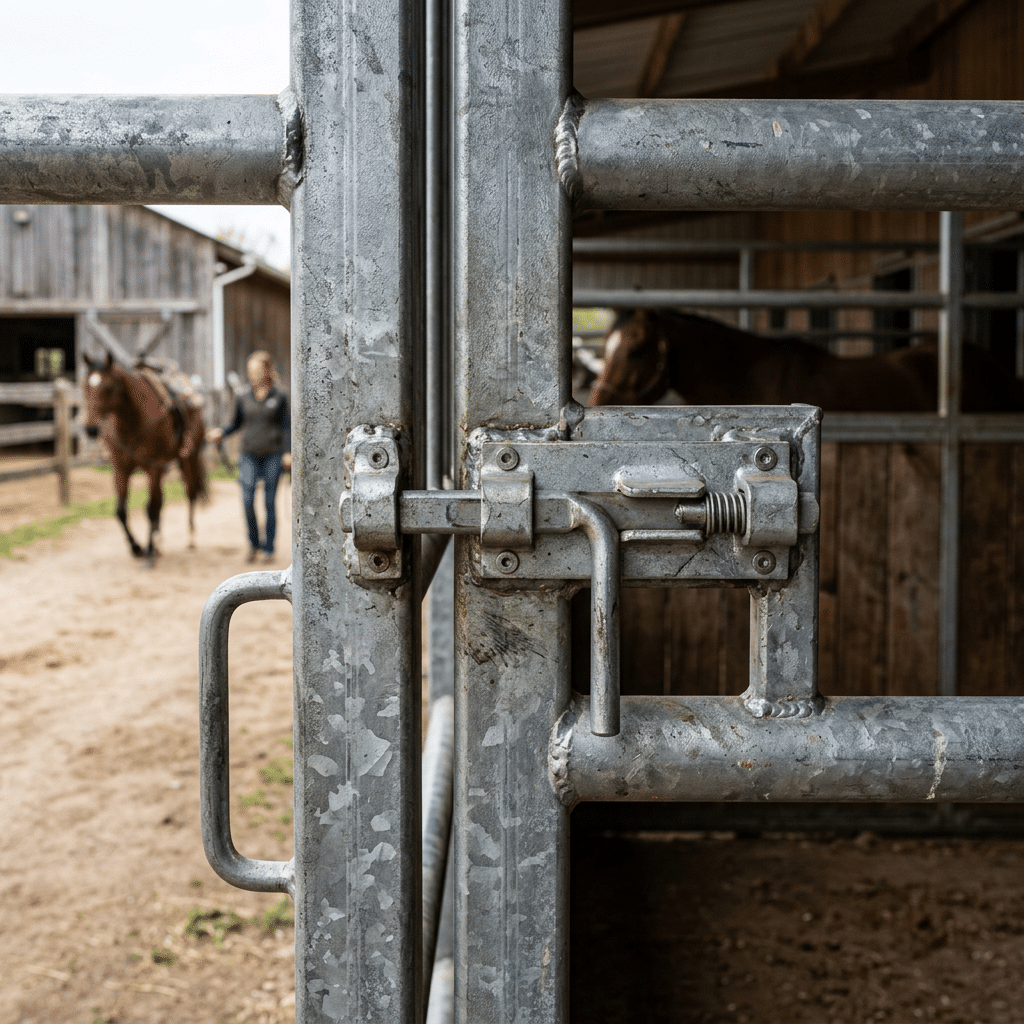
We apply a zinc coating averaging over 85 microns to structural parts. This metallurgical bond creates a barrier that extends the service life to 30–50 years, even in high-ammonia equine environments. This longevity directly reduces the project’s carbon footprint by eliminating the manufacturing, transport, and installation emissions associated with replacing rusted equipment every decade. In the context of Green Building standards, this durability is a critical factor in reducing whole-life carbon emissions.
Frequently Asked Questions
How does material selection impact ESG compliance for new equestrian centers?
Achieving ESG (Environmental, Social, and Governance) compliance requires infrastructure with a traceable supply chain and low lifecycle impact. We recommend selecting ISO 9001-certified manufacturers to ensure governance standards are met. Environmentally, prioritizing materials like Q235B hot-dip galvanized steel—which is 100% recyclable—and rapidly renewable bamboo infill helps reduce the facility’s carbon footprint compared to traditional deforestation-heavy timber construction.
Is bamboo infill durable enough for high-traffic veterinary teaching hospitals?
Yes. High-density strand woven bamboo is engineered to be significantly harder than traditional hardwoods, with a Janka hardness rating exceeding 3,000 lbf. This makes it three times harder than Oak, providing superior resistance to kicks and impacts in a clinical setting. Additionally, bamboo is naturally resistant to moisture and rot, making it a hygienic choice for wash bays and isolation stalls where frequent sterilization occurs.
Why is hot-dip galvanized steel preferred over wood for infection control?
In veterinary teaching hospitals, biosecurity is paramount. Wood is porous and can harbor bacteria, mold, and pathogens within its grain and cracks. Hot-dip galvanized steel provides a sealed, non-porous surface that withstands rigorous disinfection protocols without degrading. Our process of galvanizing after fabrication ensures that even welded joints are fully coated with over 85 microns of zinc, preventing rust accumulation where bacteria could otherwise thrive.
How does the flat-pack delivery system reduce the project’s carbon footprint?
Logistics is a major component of a project’s environmental impact. Traditional fully welded stables limit shipping capacity to approximately 12-15 sets per container. Our flat-pack engineering allows us to load 30-45 sets into the same 40HQ container. This optimization reduces the shipping emissions per stall by over 60%, aligning with the sustainability goals and Scope 3 emission tracking of modern university campuses.
Are there specific ‘Green Certifications’ for horse stable structures?
While there is no single global “Green Stable” certification, university projects should look for manufacturers compliant with ISO 14001 (Environmental Management) and ISO 1461 (Galvanizing Standards). Using materials with documented longevity—such as our Q235B steel which lasts decades—contributes to credits in broader building certification schemes like LEED by minimizing the need for replacement and maintenance.
Final Thoughts
Meeting strict 2026 ESG mandates requires structural longevity, not just temporary fixes. Choosing hot-dip galvanized Q235B steel over short-lifecycle timber ensures your facility remains a permanent asset rather than a recurring liability. We engineer our flat-pack systems to secure your carbon budget and protect your long-term operational margins.
Do not risk your institutional accreditation on unverified materials. Request our technical specification sheets and a sample of our high-density bamboo to personally test the 3,000+ lbf Janka hardness. Contact our engineering team today to align your project’s supply chain with global sustainability standards.

 English
  Spanish
  French
  Arabic
  German
0 Comments