
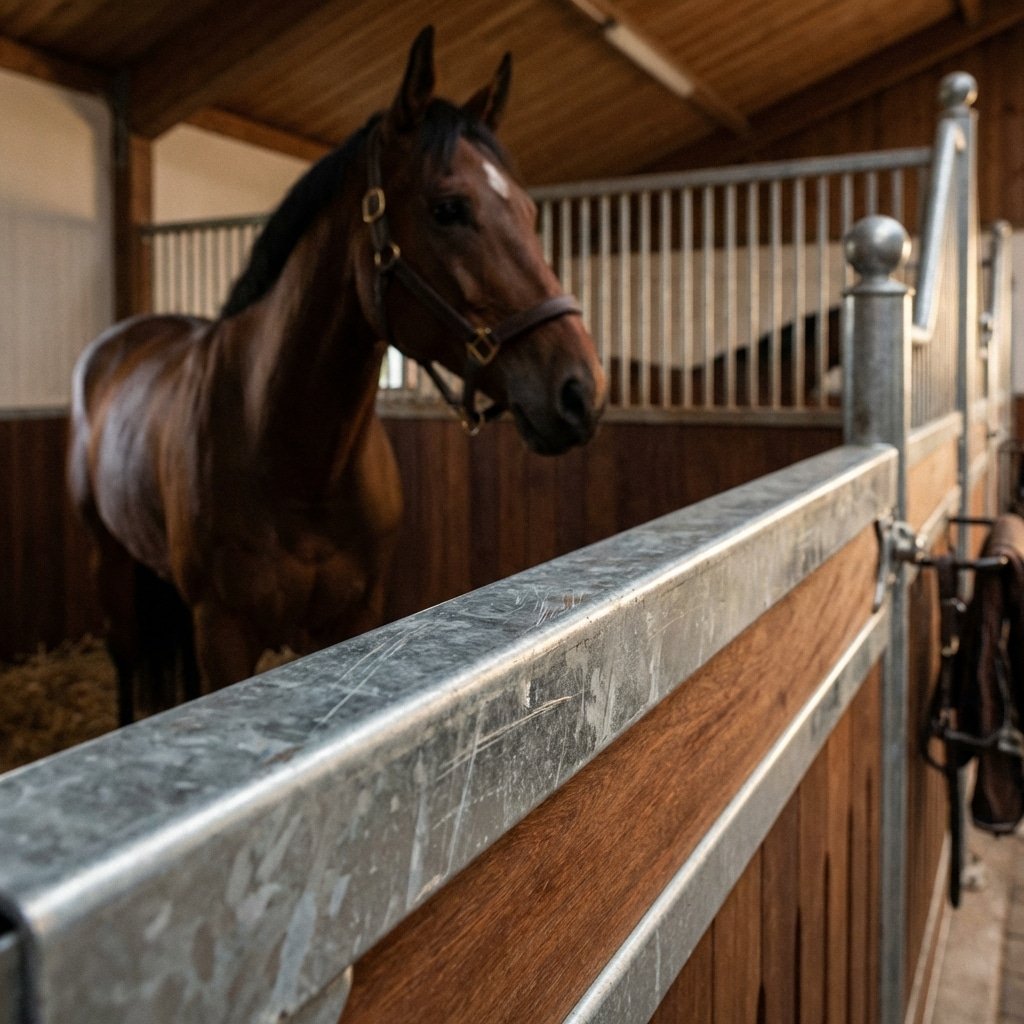
Uncontrolled cribbing & chewing destroys stable infrastructure and exposes horses to fatal impaction colic. Relying on topical pastes creates a dangerous maintenance gap, as saliva and rain wash away deterrents long before the behavior stops. Without physical barriers, soft lumber edges become ingestion hazards, leading to emergency surgeries that far exceed the cost of proper hardware installation.
We resolve this by encasing vulnerable lumber in 14-gauge Q235B structural steel U-channels. This mechanical zero-edge design removes the leverage points required for destructive habits, offering superior protection compared to thin aluminum retrofits. By utilizing hot-dip galvanization after fabrication, we ensure these impact-resistant caps withstand corrosive stable environments without rusting or deforming.
The Medical Dangers of Wood Chewing (Splinter Colic)
Wood splinters cause impaction colic and intestinal stones, often requiring surgery. We eliminate this veterinary risk by replacing softwood with high-density bamboo and impact-absorbing HDPE.
Internal Risks: Impaction, Punctures, and Enteroliths
Wood chewing is not just a maintenance annoyance; it is a direct medical threat. When horses grind down softwood boards, they ingest sharp fragments that the equine digestive tract cannot process. Unlike forage, these splinters do not break down, creating immediate internal hazards.
- Gut Punctures: Sharp fragments can pierce the stomach or intestinal lining. This leads to septic peritonitis, a condition that is frequently fatal without immediate surgical intervention.
- Enterolith Formation: Ingested wood acts as a nidus (core) for intestinal stones. Mineral layers build up around the wood fragment over time, eventually creating a stone large enough to block the colon completely.
- Impaction Colic: Even without forming stones, a mass of indigestible wood fibers can create a physical blockage. This impaction colic often demands aggressive medical treatment or surgery to clear.
- Physical Deterioration: Chronic chewing prematurely wears down teeth. This compromises the horse’s ability to chew actual feed, leading to weight loss and poor body condition.
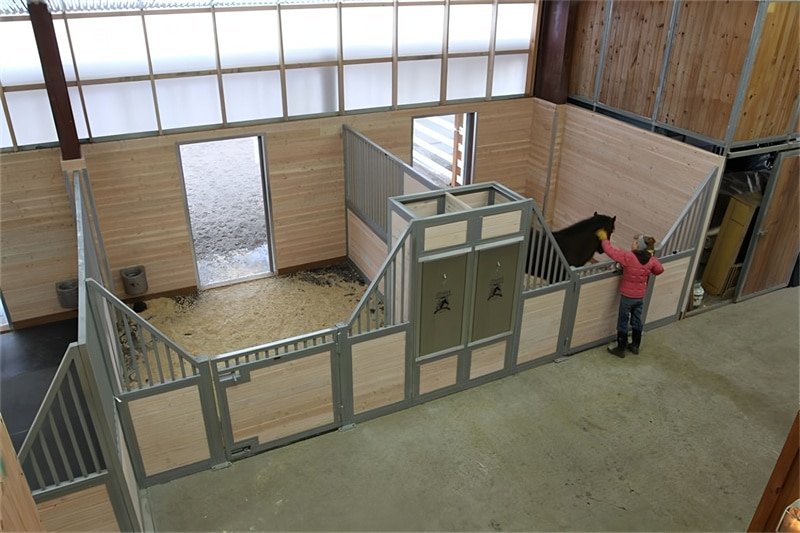
Eliminating Splinter Hazards with HDPE and Bamboo Infill
The root cause of splinter colic is material failure. Standard softwood stable boards degrade easily under tooth pressure, creating the very fragments that kill horses. We solve this by engineering the “chewability” out of the equation using materials that horses physically cannot fragment.
Our High-Density Bamboo is manufactured to a Janka Hardness rating greater than 3000 lbf. For context, this is 3x harder than Oak. A horse cannot bite into this surface to generate splinters, effectively removing the raw material for enteroliths and impaction.
For facilities requiring absolute zero maintenance, we use UV-stabilized HDPE infill. This material offers a smooth, impact-absorbing surface that provides no purchase for a horse’s teeth. By replacing traditional lumber with these dense alternatives, you eliminate the primary environmental cause of splinter-induced veterinary emergencies.
Why Sprays and Pastes Fail Over Time
Chemical deterrents fail due to rain washout and saliva erosion. Determined horses often ignore bitter tastes, making physical barriers like hot-dip galvanized steel the only permanent solution.
Physical Degradation and Environmental Washout
The primary failure mode for topical anti-cribbing solutions is simple physical erosion. Unlike structural hardware, chemical coatings act as sacrificial layers. Rain and ambient moisture degrade these treatments rapidly, stripping away the bitter agents that provide protection.
- Environmental Vulnerability: Outdoor elements wash away topical treatments, drastically shortening their lifespan compared to permanent structural materials.
- Surface Porosity: Unpainted wood absorbs sprays unevenly. Without multiple expensive applications, the barrier remains too thin to deter chewing effectively.
- Erosion from Contact: A horse’s saliva and physical mouthing actively wear down the coating. Most products require reapplication within 24 months—or much sooner for determined cribbers.
The Limits of Taste Aversion vs. “Zero Maintenance” Hardware
Beyond physical wear, chemical deterrents suffer from a fundamental behavioral flaw: habituation. Research shows that determined cribbers often overcome the initial aversion to bitter tastes, continuing to chew despite the flavor. This renders the chemical approach unreliable for long-term facility management.
- Behavioral Habituation: Horses can develop a tolerance to taste deterrents. Once the shock value fades, the destructive behavior returns despite the chemical presence.
- The “Zero Maintenance” Alternative: We engineer out the need for monitoring. DB Stable’s **HDPE Infill** creates a permanent, chew-resistant surface that eliminates the reapplication cycle entirely.
- Structural Permanence: While pastes degrade, our **Hot-Dip Galvanized Steel** (BS EN ISO 1461) provides a “Lifetime” standard of protection. It is physically impossible for a horse to chew through or ingest this material.
Premium Modular Stables With 20-Year Durability
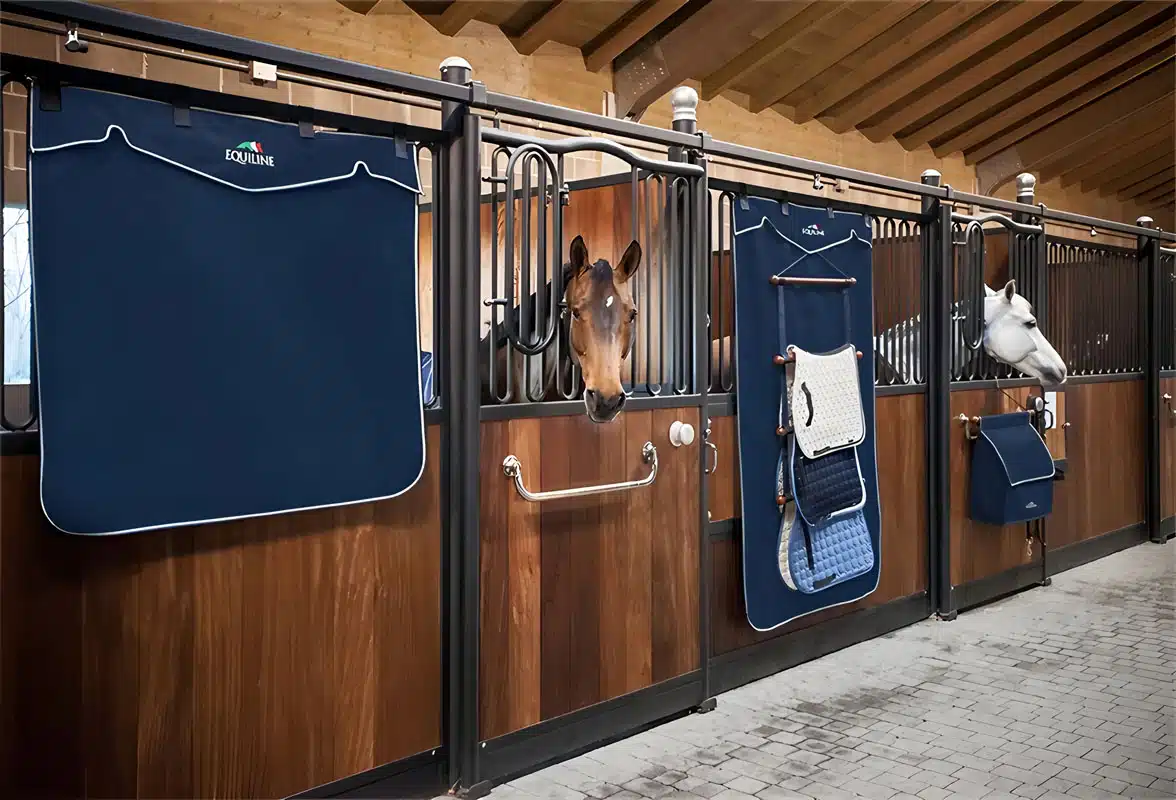
U-Channel Steel: The Ultimate Horse Stall Cap
U-channel caps encase exposed 1.5-inch lumber edges, removing the surface area horses need to grip. This mechanical barrier stops cribbing and reinforces walls against lateral impact.
Eliminating Exposed Wood Edges to Prevent Cribbing
The primary function of U-channel steel in a stable system is behavioral management through mechanical design. Cribbing (wind-sucking) and wood chewing require the horse to anchor their upper incisors onto a horizontal ledge. By capping the top and side edges of infill planks with heavy-duty steel, you remove the bite point entirely.
Standard lumber creates a vulnerable 1.5-inch edge that softens with moisture, making it easy for horses to tear off splinters. This leads to “splinter colic,” a severe condition where ingested wood fragments cause intestinal obstruction or enterolith formation. Chemical deterrents like sprays or pastes often fail because they require frequent reapplication and do not address the physical accessibility of the wood. A steel cap provides a permanent solution that requires no maintenance or monitoring.
Beyond behavioral deterrence, U-channels protect the structural integrity of the infill material itself:
- Seals End Grain: Capping the ends of lumber or bamboo prevents moisture ingress from urine and washing, which is the leading cause of board swelling and rot.
- Lateral Reinforcement: The steel profile acts as a spine for the wall, distributing impact force from kicks across the entire vertical plane rather than a single board.
- Grip Elimination: A 1.75-inch wide smooth steel surface exceeds the grip capacity of most cribbers, physically preventing the behavior before it starts.
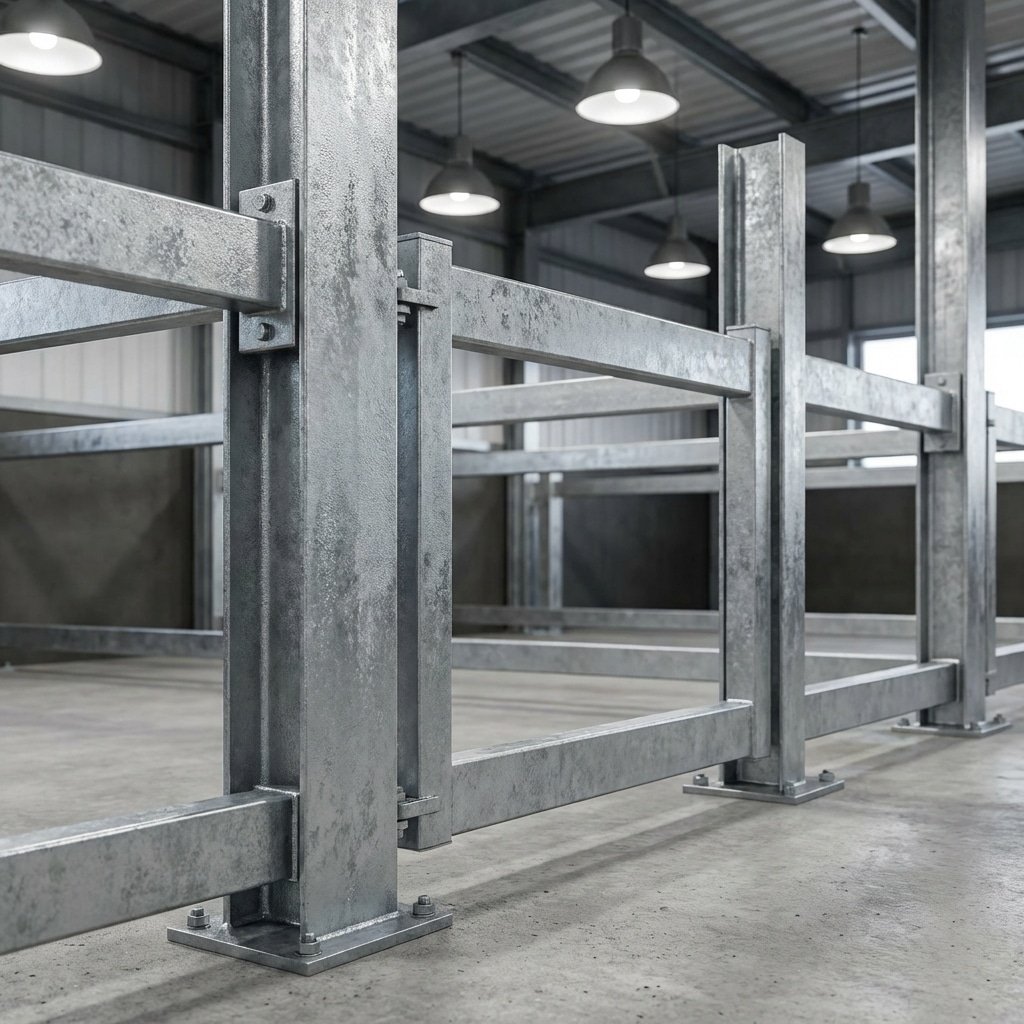
The Hot-Dip Galvanized Specification for Longevity
In professional equine facilities, U-channels face constant exposure to ammonia, moisture, and physical abuse. Standard painted steel or thin-gauge aluminum will corrode or deform within months. DB Stable engineers these components using Q235B structural steel (equivalent to ASTM A36) to ensure high tensile strength capable of withstanding direct kicks.
We strictly adhere to a minimum wall thickness of 14-gauge (2.0mm). Many competitors reduce costs by using 16-gauge or 18-gauge steel, which bends under pressure and creates sharp, dangerous edges when deformed. A 2.0mm profile maintains its shape even under heavy impact, ensuring the infill boards remain valid and secure.
To combat rust, we utilize the ISO 1461 hot-dip galvanization process. Crucially, this is done after fabrication. We weld the profile first, then dip the entire component into molten zinc. This ensures that every edge, weld point, and pre-drilled hole is coated with a zinc layer exceeding 70 microns. Pre-galvanized alternatives (where steel is galvanized before cutting/welding) leave raw steel exposed at the cut lines, leading to rapid corrosion in humid stable environments.
Enclosing All Exposed Wood Edges in the Stable
Effective cribbing prevention relies on a “Zero-Edge” design, encasing all wood perimeters in metal to eliminate the leverage points horses need to latch onto.
The “Zero-Edge” Exposure Principle
Cribbing and wood chewing are mechanical behaviors that require specific physical conditions to occur. A horse needs a ledge, a ridge, or a sharp 90-degree wood corner to anchor its upper incisors before it can pull back and swallow air (cribbing) or tear off fibers (wood chewing). The “Zero-Edge” principle removes this opportunity entirely. By capping every accessible perimeter, we deny the horse the physical leverage required to engage the behavior.
This approach does more than just frustrate a bad habit; it addresses significant veterinary risks. Exposed wood absorbs saliva and environmental moisture, softening the fibers and making them easier to tear. When horses ingest these fragments, the risk of “Splinter Colic” increases—a condition where wood accumulation causes intestinal impaction or perforation. Sealing these edges protects the timber core from this degradation cycle.
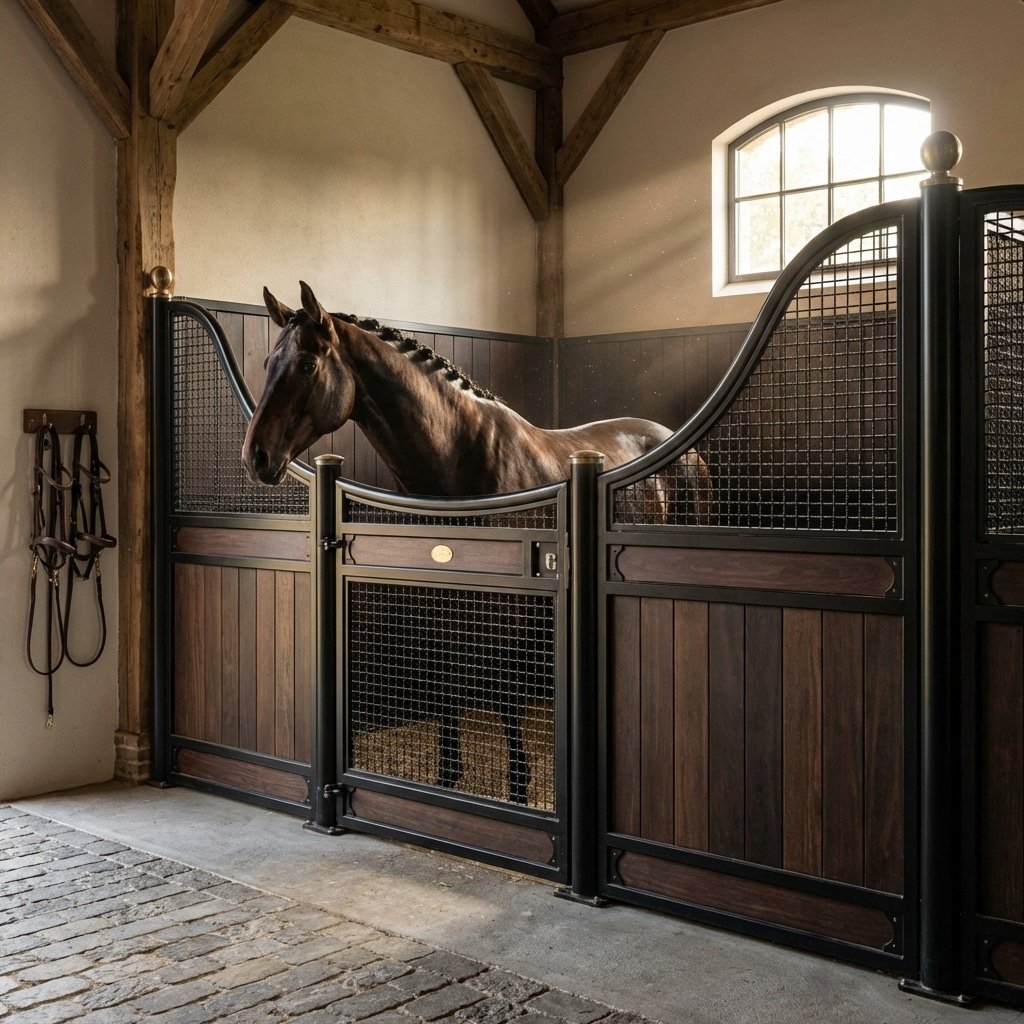
Cheap stables often use thin, bolt-on “anti-chew strips” made of aluminum or light-gauge steel that deform under pressure. At DB Stable, we integrate edge protection directly into the structural frame. We utilize **Q235B Structural Steel** (equivalent to ASTM A36) for all channel profiles. This material choice ensures the capping is not just a cosmetic cover but a structural component capable of withstanding the crushing force of a horse’s jaw without crimping or detaching.
- Full-Perimeter Framing: Unlike retrofit strips, our channels are welded into the frame, creating a rigid enclosure that prevents boards from shifting or warping.
- 14-Gauge Thickness (2.0mm): We strictly prohibit tubing thinner than 2.0mm, ensuring the edge profile resists impact and biting forces.
- Hot-Dip Galvanization (ISO 1461): Since these edges face constant exposure to acidic saliva, we use a “Hot-Dip After Fabrication” process. This coats the steel in over 70 microns of zinc after welding, eliminating the rust points common in pre-galvanized alternatives.
Frequently Asked Questions
Why do horses chew on wooden stable boards?
Wood chewing (lignophagia) is usually a reaction to confinement, boredom, or a lack of forage. Horses are biologically wired to graze constantly; when you restrict them to a stall with high-concentrate diets, they often redirect that chewing urge onto the softest available material: your facility infrastructure. While increasing hay intake and turnout addresses the root biological cause, you must protect the asset immediately. Exposed soft wood—especially pine—is essentially an invitation for damage. Physical barriers like steel U-channels or anti-chew strips are the only reliable way to stop the destruction of the stable walls.
How do U-channels help with cribbing and chewing?
U-channels eliminate the surface a horse needs to grip. Cribbing and chewing almost always start at an exposed edge where the horse can leverage its incisors. By capping the raw ends of planks within a steel channel, you remove that vulnerability entirely. For professional applications, we strictly prohibit the use of thin 1.6mm steel often found in retail kits; effective prevention requires heavy-duty 14-gauge (2.0mm minimum) steel profiles that can withstand direct impact. If the horse cannot grip the edge, they generally stop attempting to chew the flat surface of the wall.
Are there maintenance-free alternatives to wood infills?
Yes, and they are superior for commercial facilities. High-Density Polyethylene (HDPE) is the true “Zero Maintenance” option. We use 28mm-32mm UV-stabilized recycled plastic that provides a smooth, slightly elastic surface horses cannot splinter or grip. It simply does not taste like food, removing the temptation entirely.
For clients who demand the aesthetics of wood, High-Density Bamboo is the industrial standard. With a Janka hardness rating over 3000 lbf (making it 3x harder than oak), it resists tooth marks and impact far better than traditional softwoods. Unlike pine, bamboo does not rot or harbor bacteria, solving both the chewing issue and long-term sanitation concerns.
Can I retrofit existing wooden stalls to stop chewing?
Yes, you do not always need a full tear-down. Retrofitting involves installing galvanized steel “bite caps” or “anti-chew strips” over the exposed ledges, door frames, and partition tops. This effectively armors the soft wood edges with metal. While a full hot-dip galvanized steel frame system is the permanent solution for new builds, retrofitting these caps instantly stops the horse from damaging specific high-traffic areas on existing wooden structures.
Final Thoughts
Relying on chemical sprays or thin aluminum strips leaves your horses vulnerable to life-threatening impaction colic. We engineer our U-channels using 14-gauge Q235B structural steel to withstand direct biting force without deforming or exposing edges. This hardware upgrade completely eliminates the medical risk of wood ingestion and protects your facility’s long-term value.
Verify the durability of our ISO 1461 “Hot-Dip After Fabrication” finish against standard pre-galvanized alternatives. Request a material sample to inspect the zinc coating thickness and edge protection firsthand. Secure your facility’s safety standards by contacting our engineering team today.

 English
  Spanish
  French
  Arabic
  German
0 Comments