


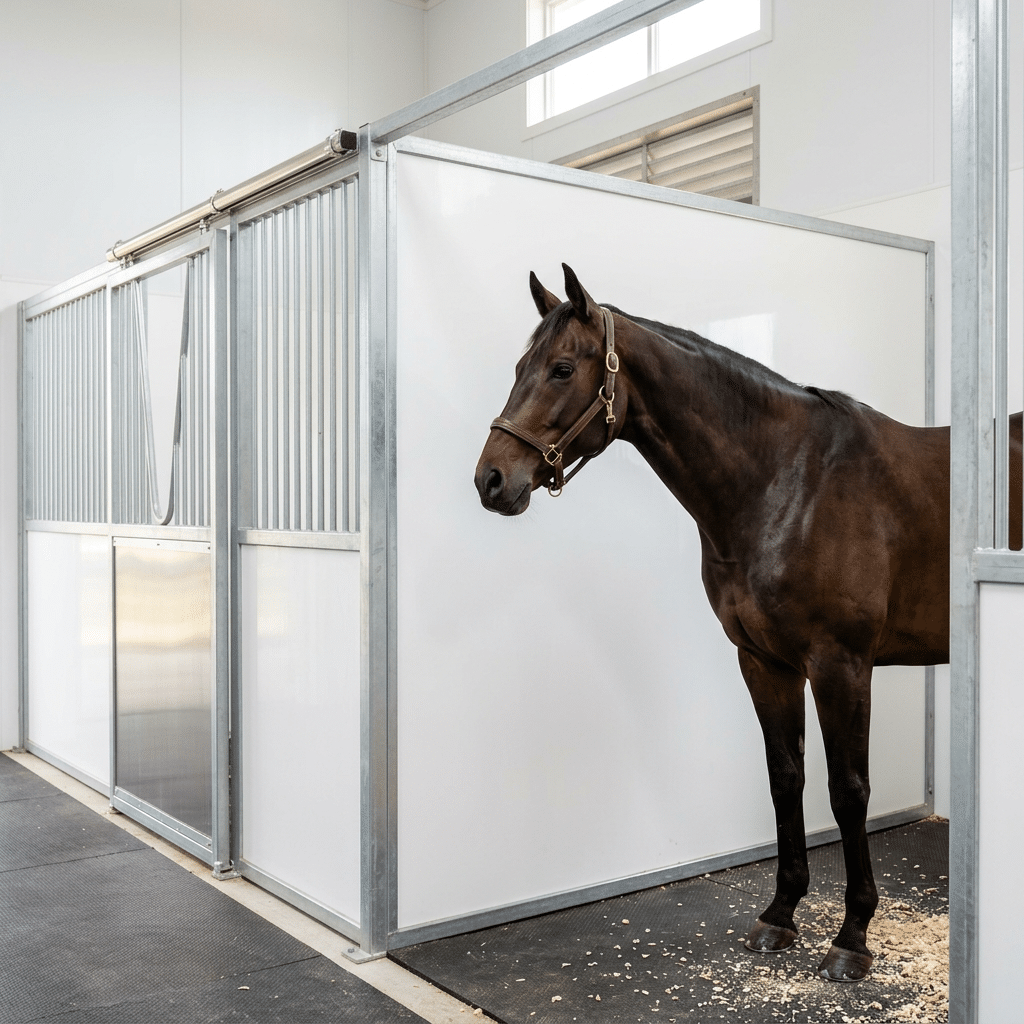
Effective Trade Show Sourcing determines if your facility ROI survives the first winter or collapses under preventable maintenance costs. Relying solely on the visual polish of European expo prototypes often leads to expensive structural failures once the equipment faces real equine environments.
This analysis strips away the showroom finish to benchmark suppliers against the ISO 1461 Hot-Dip Galvanization standard. We evaluate the essential trade-off between Spoga aesthetic trends and the Q345B structural integrity required for commercial safety, ensuring your logistics strategy prioritizes flat-pack density over shipping air.
Designing Stables for Wheelchair Accessibility (ADA)
Accessible stables require 60-inch turning circles and flush thresholds. Our Professional Series sliding doors eliminate swing barriers, ensuring safe operation for adaptive riders.
Critical Clearances and Maneuvering Space
Standard building codes often fail to account for the specific equipment used in equestrian environments. For a stable to be functional for a wheelchair user, the geometry of the aisle and stall entry is the deciding factor. The primary constraint is the turning radius. Main barn aisles must support a full 60-inch (1525mm) rotation. Anything less forces the user into multi-point turns, which is dangerous when leading a horse.
- Door Openings: ADA standards mandate a minimum 32-inch clearance. Fortunately, our standard stall doors are 1.2m (approx. 48 inches), providing ample passing room without special modification.
- Thresholds: This is the most common failure point. Entryways must be flush or beveled. We strictly avoid high bottom door guides, as these act as immediate barriers to front caster wheels.

Implementing the Professional Series Sliding Track System
The mechanical design of the door directly impacts the independence of the rider. Swinging doors create a “swing arc” barrier, forcing a wheelchair user to back up to open the door—a maneuver that complicates horse handling. Sliding doors are the only viable option for accessible facilities as they preserve the maneuvering path in the aisle.
We specifically recommend the DB Stable Professional Series for therapeutic riding centers due to the hardware configuration. The Hidden Track System is engineered to minimize rolling resistance. This heavy-duty system allows users with limited upper body strength to slide the door with minimal force, unlike bottom-rolling systems that easily clog with bedding and increase friction.
- Force Reduction: The hidden overhead track protects rollers from dust, ensuring consistent low-effort operation.
- Custom Latch Heights: Standard latches are often mounted too high for seated users. As an OEM manufacturer, we adjust mounting points during fabrication to ensure locking mechanisms sit below the 48-inch maximum reach limit mandated by ADA guidelines.
The Aisle Experience: Wide Sliding Doors vs. Swing Doors
Sliding doors maximize aisle space by eliminating swing radius, critical for high-traffic barns. Swing doors offer faster entry but demand significant clearance. We engineer both for heavy-duty commercial use.
Traffic Flow Dynamics: The Clearance Arc Constraint
Space is the most valuable asset in a commercial barn. Swing doors require a radial clearance area that effectively reduces your usable aisle width whenever a stall is accessed. If you have a standard 12-foot
aisle and open a 4-foot swing door, you instantly lose 33% of your maneuvering space. This creates a choke point that complicates machinery movement and increases the risk of injury when leading horses past open stalls.
Sliding doors solve this by operating horizontally within the frame. They preserve maximum floor space and eliminate the “swing zone” entirely. For high-traffic facilities where multiple horses move simultaneously, this configuration prevents obstructions and keeps the central corridor clear for safe movement. This setup is particularly effective in preventing accidents in narrow corridors during peak activity hours.
Hardware Specification: Hidden Tracks vs. Heavy-Duty Hinges
Operational longevity depends entirely on the hardware. Cheap sliding doors often fail because open tracks collect dust and bedding, leading to jams. We equip our Professional Series sliding doors with a **Hidden Track System**. This enclosed design prevents debris accumulation, ensuring the door glides smoothly without constant maintenance.
For projects requiring swing doors, sagging is the primary enemy. We utilize adjustable hinges that allow for easy realignment if the post shifts or the building settles. To combat corrosion, all hardware is hot-dip galvanized to **BS EN ISO 1461** standards after fabrication. Regardless of the door style, we construct every frame using **Q345B** or **Q235B** structural steel to withstand significant impact forces.
Premium Custom Horse Stables Direct From Factory

Top Suppliers Engineering for the PATH/RDA Community
Most equestrian catalogs sell hobbyist gear, not healthcare infrastructure. A true supplier for therapeutic centers must function as an engineering partner, modifying standard B2B designs to meet strict ADA and PATH safety protocols.
Finding a dedicated “PATH-certified supplier” is often a dead end because the market is too niche for mass-produced, branded retail lines. Instead, the top suppliers for Riding for the Disabled Association (RDA) and PATH International facilities are OEM manufacturers capable of customizing heavy-duty infrastructure. You don’t need a medical supplier; you need a fabrication partner who understands the intersection of ADA law and equine safety.
Standard stable fronts are designed for able-bodied grooms. In a therapeutic setting, the engineering priority shifts to zero-threshold access, single-hand operation, and impact absorption. Suppliers must move beyond “standard stock” and offer fabrication flexibility to widen door frames and lower latch heights without compromising structural integrity.
The Engineering Gap: What Defines a “Top” Supplier?
For a facility to be compliant and functional, the manufacturing specs must align with therapeutic realities. A supplier is only viable if they can deliver on three specific engineering fronts:
- ADA-Compliant Dimensions: Standard stalls feature 40-inch openings. Suppliers must be able to fabricate 48-inch (1220mm) clear openings to accommodate wide wheelchairs and side-walkers.
- Zero-Trip Thresholds: Traditional door guides create tripping hazards. We engineer bottom guides that are flush or minimal, using overhead track systems to keep the floor clear for wheels and crutches.
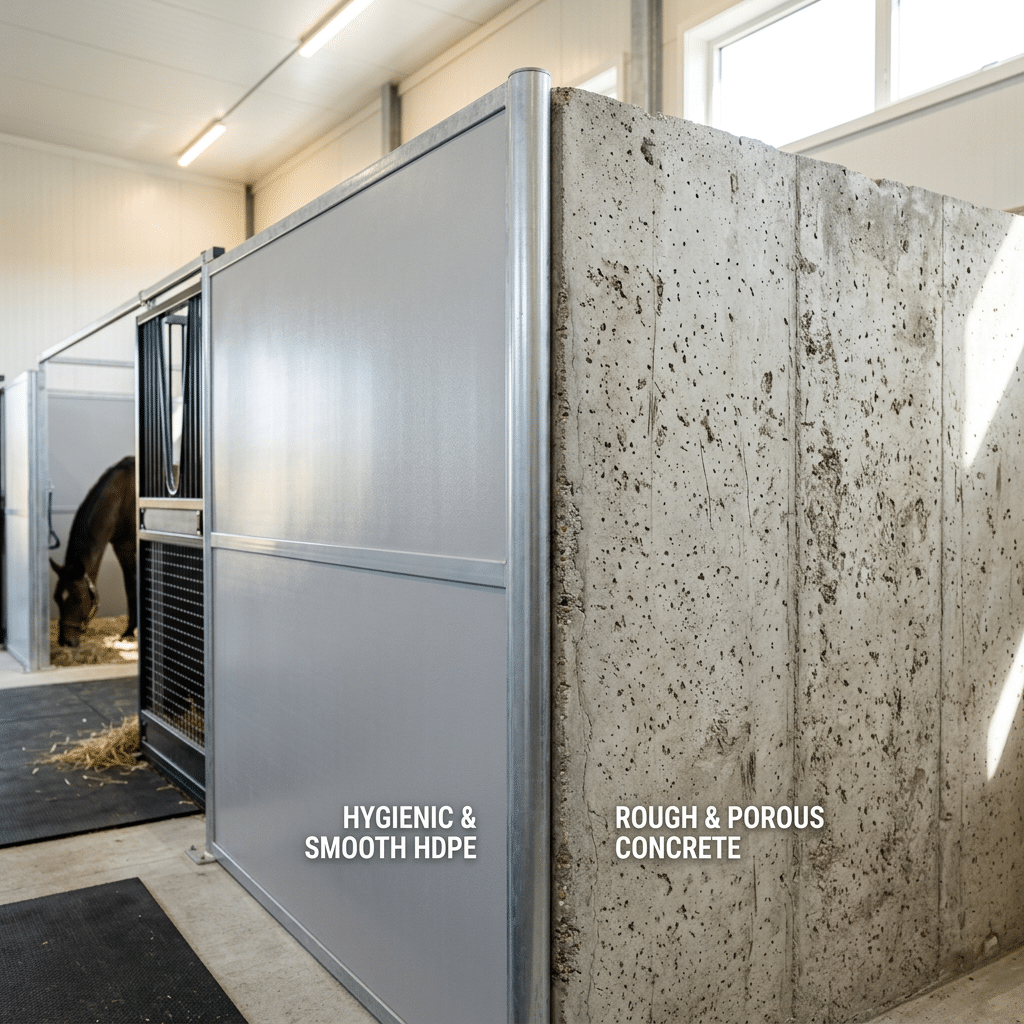
- Impact Safety (Kick-Proof): Therapeutic horses can be unpredictable. We utilize Q345B High Strength Steel and HDPE infill, which absorbs impact rather than splintering like wood, ensuring safety for riders with limited mobility who may be nearby.
| Component | Standard Hobby Barn Spec | PATH/RDA Engineering Requirement |
|---|---|---|
| Door Opening Width | 40 inches (Standard) | 48 inches minimum (Accommodates wheelchairs + turning radius) |
| Flooring Threshold | Raised bottom guide (Trip hazard) | Zero-threshold or flush guide (ADA Compliant Route) |
| Latch Operation | Two-hand complex mechanisms | Single-hand operable (No strenuous wrist action required) |
| Door Style | Hinged/Swing Doors | Sliding Doors (Eliminates aisle swing risks) |
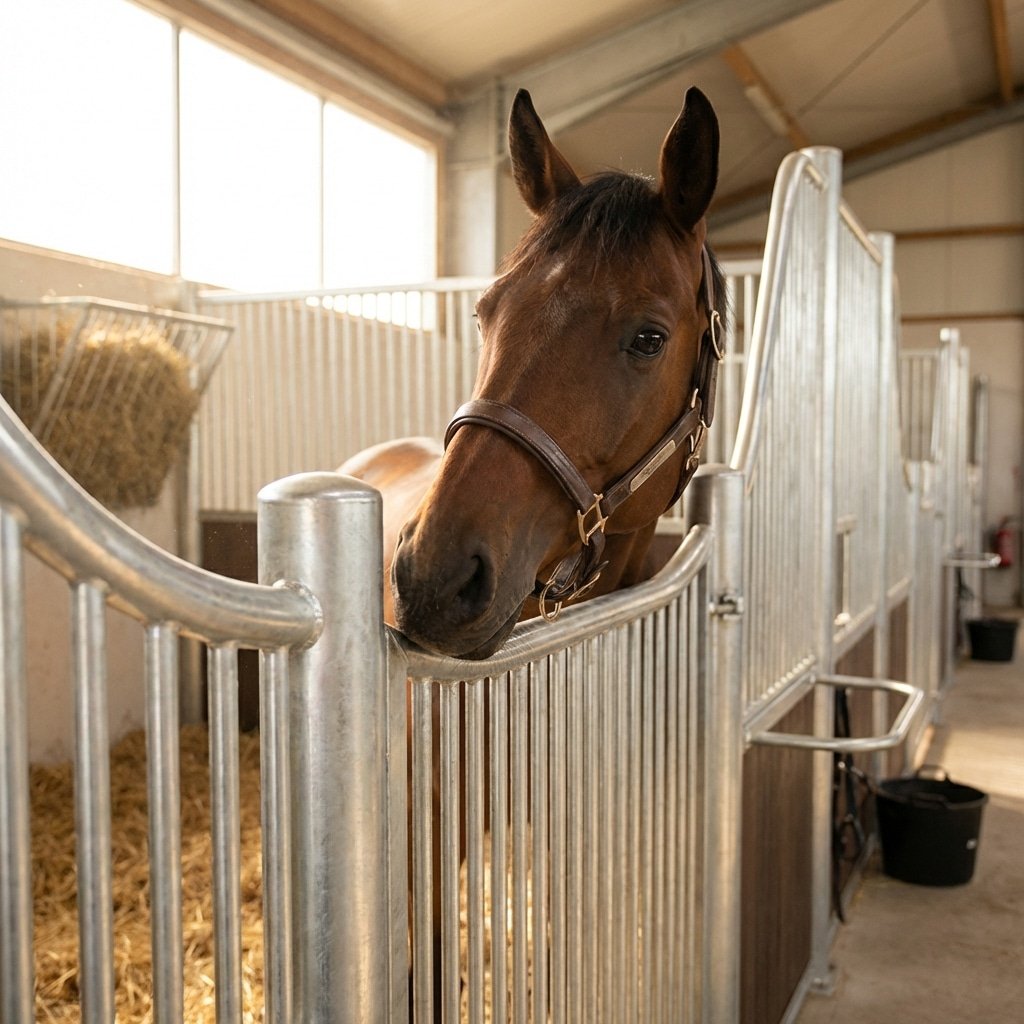
Sliding vs. Swing: The Safety Protocol
In therapeutic environments, sliding doors are the only logical engineering choice. Hinged doors require swing space that can block narrow aisles, creating immediate hazards for wheelchair users or volunteers managing horses. A swinging door caught by the wind can injure a participant with slower reaction times.
Our sliding systems utilize enclosed overhead tracks protected from dust and debris. This ensures the door can be operated with one hand—critical for a handler leading a horse while managing a student. By eliminating the swing radius, we maximize the usable aisle width, maintaining the 36-inch continuous clearance required for accessible routes.
Frequently Asked Questions
How to design an ADA compliant horse barn?
Designing an ADA-compliant barn requires focusing on circulation, surface stability, and clearance. Aisleways must be wider than the standard 12 feet to allow safe passing of horses and wheelchairs. Doorways should offer a minimum 32-inch clear width (ideally 48 inches) with zero-threshold entries to prevent tripping. Surfaces must be firm and slip-resistant—rubber bricks or concrete with flush mats work best. Additionally, essential fixtures like tack storage and light switches should be mounted no higher than 48 inches to remain accessible to wheelchair users.
Minimum door width for wheelchair access in barns?
The absolute legal minimum clear width under ADA standards is 32 inches (815 mm). However, this measures the open space, not the door slab itself. For therapeutic barns, we strongly recommend a 48-inch (1220 mm) opening. Standard wheelchairs are 24–30 inches wide, but powered or bariatric chairs can reach 40 inches. The 48-inch standard ensures volunteers and side-walkers can navigate safely without equipment getting caught on doorframes.
Best stable doors for therapeutic riding centers?
Sliding doors and Dutch doors are the industry standards for these facilities. Sliding doors are superior for safety because they do not swing into the aisle, preserving the clear path of travel required for accessibility. Dutch doors (split doors) are excellent for equine mental health, allowing horses to see out and socialize without fully exiting the stall. For materials, we use Hot-Dip Galvanized Steel with HDPE infill because it is sanitary, splinter-proof, and requires zero maintenance.
Are sliding stall doors easier to open?
Yes. A properly engineered sliding door on a sealed-bearing track system requires significantly less physical force to operate than a heavy hinged door. They can often be opened with one hand, which is a critical safety feature for handlers leading a horse. Unlike hinged doors, they are not affected by wind pressure and do not require the handler to step backward or maneuver around the door swing radius.
PATH Intl barn safety standards?
PATH International standards focus on risk management and facility integrity. Core requirements include mandatory helmet usage (“No Helmet = No Ride”), clear emergency evacuation protocols, and strict access control to feed rooms and pastures. Physically, the facility must have functioning safety equipment (fire extinguishers, first aid kits) and accessible posted rules. Participants are never to be left unattended, and all areas must be free of hazards like loose equipment or uneven footing.
DB’s Smooth-Glide Enclosed Track System
Our Professional Series replaces jam-prone open tracks with an enclosed, self-cleaning design using 304 stainless steel rollers to support heavy infills without maintenance.
The Engineering Challenge of Heavy Sliding Doors
Most standard barn door hardware fails because it cannot handle the realities of a working stable. High-density bamboo and solid HDPE infills are significantly heavier than the hollow pine or plywood used in hobbyist kits. When you hang thousands of pounds of material on a standard open-top track, the metal fatigues and sags.
Environmental factors aggravate this mechanical stress. Traditional “barn door” tracks remain open to the air, acting as shelves for dust, bedding, and hay. Over time, this debris compacts into a layer of grime that increases friction. The result is a door that requires excessive force to move, often leading to derailment or the rollers grinding flat spots.
- Weight Overload: Heavy bamboo requires industrial-grade support to prevent track warping.
- Debris Accumulation: Open tracks collect dust that mixes with moisture to freeze or jam
rollers.
- Hardware Failure: External mounting points on cheaper systems often rust or detach under the impact of a kicking horse.
Professional Series: The Hidden Track & Stainless Roller Solution
We engineered the Professional Series to solve the weight and debris issues simultaneously. The core of this solution is the “Hidden Track System,” which encases the operating mechanism inside the steel header. This design shields the rollers from falling dust and prevents bedding from fouling the glide path.
Inside the track, we use exclusively 304 Stainless Steel rollers. Unlike carbon steel bearings that seize when exposed to stable ammonia and moisture, these rollers remain rust-proof for the lifespan of the stall. The system handles the heavy load of our 32mm HDPE or 38mm Bamboo infills with zero drag.
- Enclosed Design: Protects moving parts from dust, bedding, and weather.
- 304 Stainless Steel Rollers: guarantees rust-proof, lifelong smooth operation unlike nylon or carbon steel alternatives.
- Cast-Proof Safety: We engineered a strict 50mm bottom gap tolerance to prevent cast horses from trapping legs while ensuring easy door movement.
Frequently Asked Questions
Can I trust product quality without visiting a trade show booth?
Yes. Trade shows often feature “Golden Samples”—perfect prototypes that do not reflect mass production reality. We replace this visual bias with hard data and strict adherence to ISO 9001 and ISO 1461 standards. Instead of a quick glance at an expo, we provide digital testing reports verifying Q235B/Q345B steel grades and zinc coating thickness (>70 microns). This data offers far more transparency and security than a physical booth visit.
How does the flat-pack system reduce my landed costs?
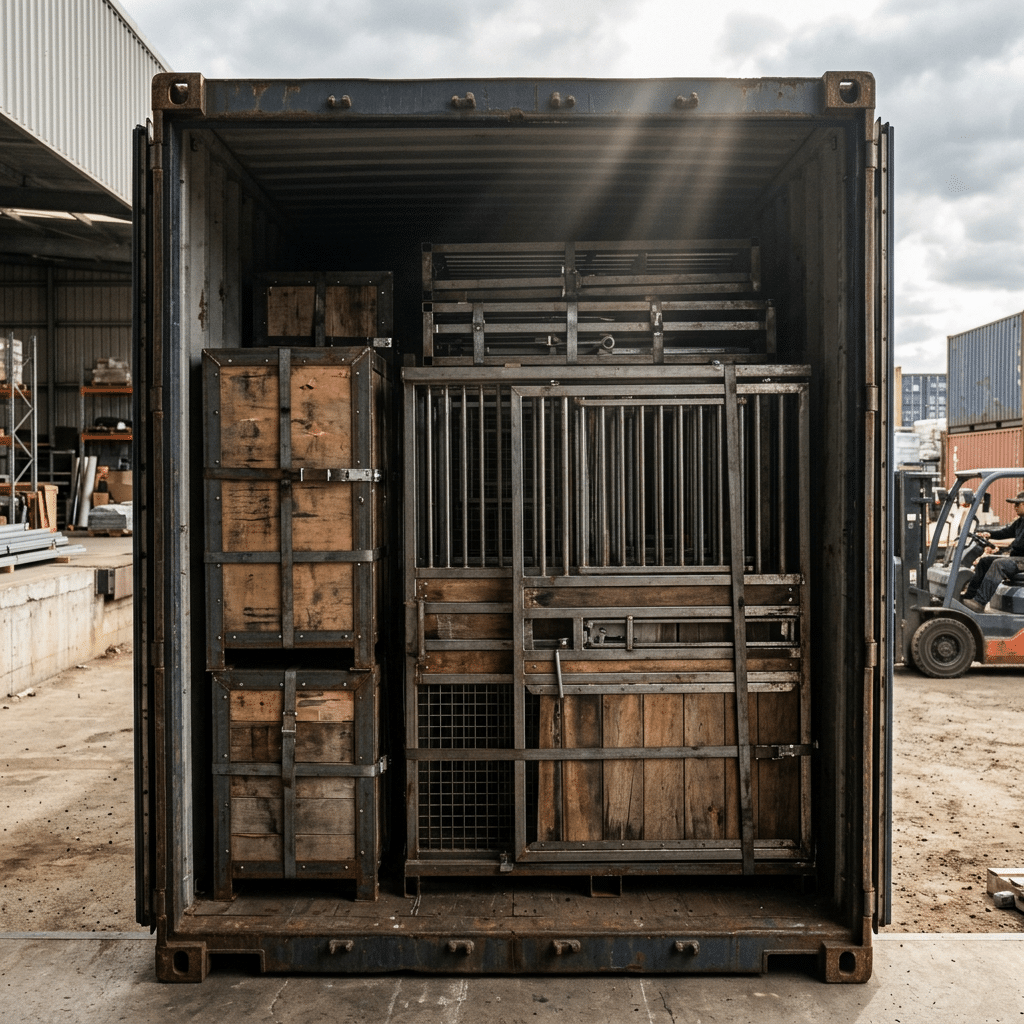
Shipping fully welded fronts is essentially paying to ship air. A standard 40HQ container fits only 12-15 fully welded sets, leading to exorbitant freight costs per unit. Our modular flat-pack engineering allows us to load 30-45 sets in the same container. This density reduces the shipping freight cost per stable by over 60%, directly protecting your profit margins against volatile logistics rates.
Should I choose sliding or hinged doors for my facility?
Sliding doors are the operational standard for busy aisles because they require zero swing space. They allow for safe, one-handed operation, which is critical when leading a horse. Hinged doors offer a classic aesthetic and a completely open doorway, which can be better for large or spirited horses that need extra clearance. But you must have wide aisles (typically 12ft+) to accommodate the swing without blocking traffic.
What is the difference between pre-galvanized and ‘Hot-Dip After Fabrication’?
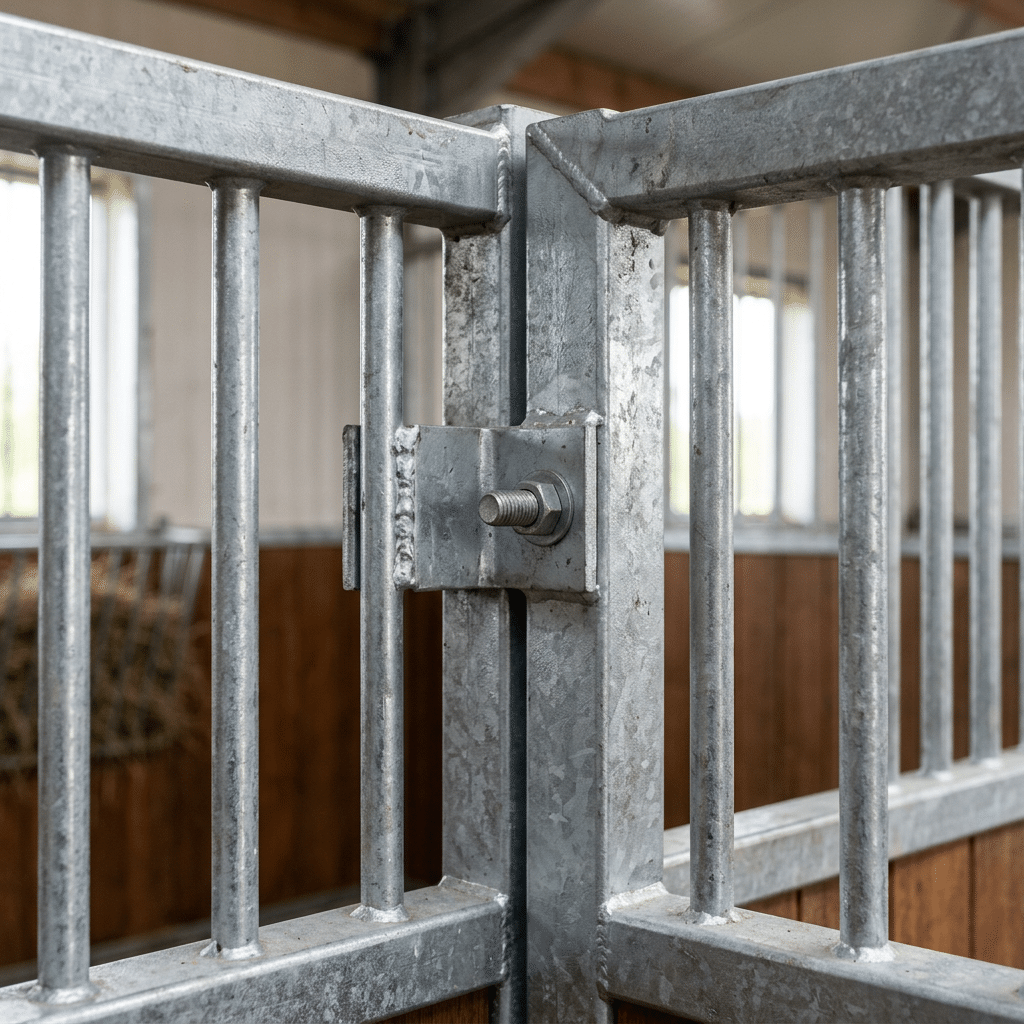
This is the difference between a 3-year product and a 20-year product. Pre-galvanized material is coated before it is cut and welded, leaving the weld joints exposed as raw black steel that will rust. We strictly use “Hot-Dip After Fabrication.” We weld the raw black steel frames first, then dip the entire door into the zinc bath. This seals every weld and joint, ensuring a true lifetime guarantee against corrosion.
Do you offer custom designs if I don’t see them in your catalog?
Yes. As a B2B OEM/ODM manufacturer, we specialize in custom fabrication based on your CAD drawings. Whether you need specific bamboo density, European-style arches from our Royal Series, or modifications for ADA compliance, we produce exact specifications. You get the custom build without the high markups associated with local custom trade show orders.
Final Thoughts
Sourcing decisions shouldn’t rely on showroom aesthetics but on engineering realities like Hot-Dip Galvanization After Fabrication. While European trends often prioritize visual flair, our Professional Series anchors your facility with the structural integrity of Q345B steel and safety-critical Hidden Track Systems. Choosing compliant, rust-proof infrastructure protects your reputation from liability and eliminates long-term replacement costs.
Stop paying to ship air; our Flat-Pack Modular System loads 30-45 sets per container, slashing your landed freight costs by over 60%. We invite you to verify our ISO 1461 zinc coating reports or request a trial order to test our smooth-glide hardware firsthand. Send us your CAD drawings today to engineer a solution that fits both your safety protocols and your budget.

 English
  Spanish
  French
  Arabic
  German
0 Comments