


Securing equestrian infrastructure in New Zealand requires navigating aggressive rainfall patterns that destroy standard timber rapidly. Relying on traditional pine or pre-galvanized steel invites structural failure within five years, turning initial savings into a cycle of costly maintenance and replacement.
This analysis examines the necessity of Hot-Dip Galvanization After Fabrication and waterproof HDPE infills for wet climates. We benchmark durability against the ISO 1461 standard and Q235B structural steel specifications to ensure your facilities withstand saturation without succumbing to rust or rot.

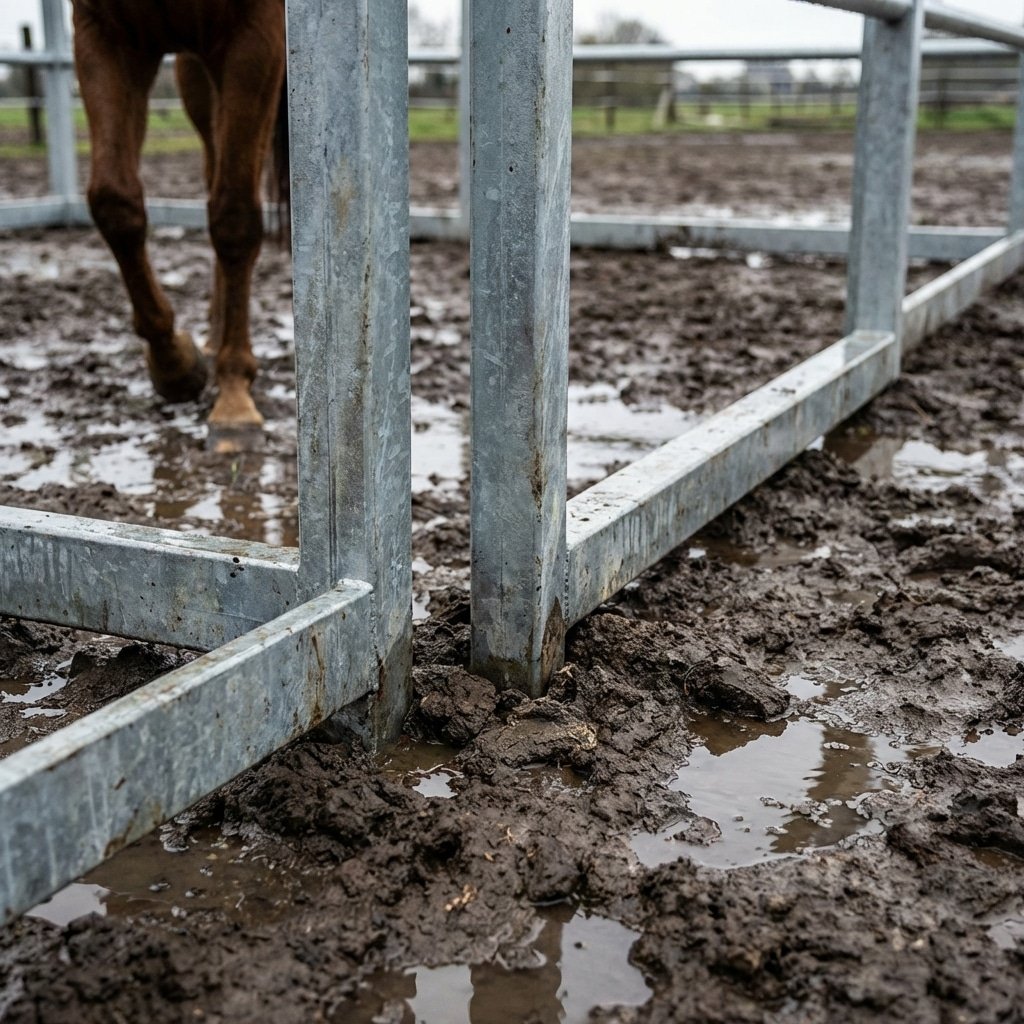
New Zealand Winters: High Rainfall and Constant Mud
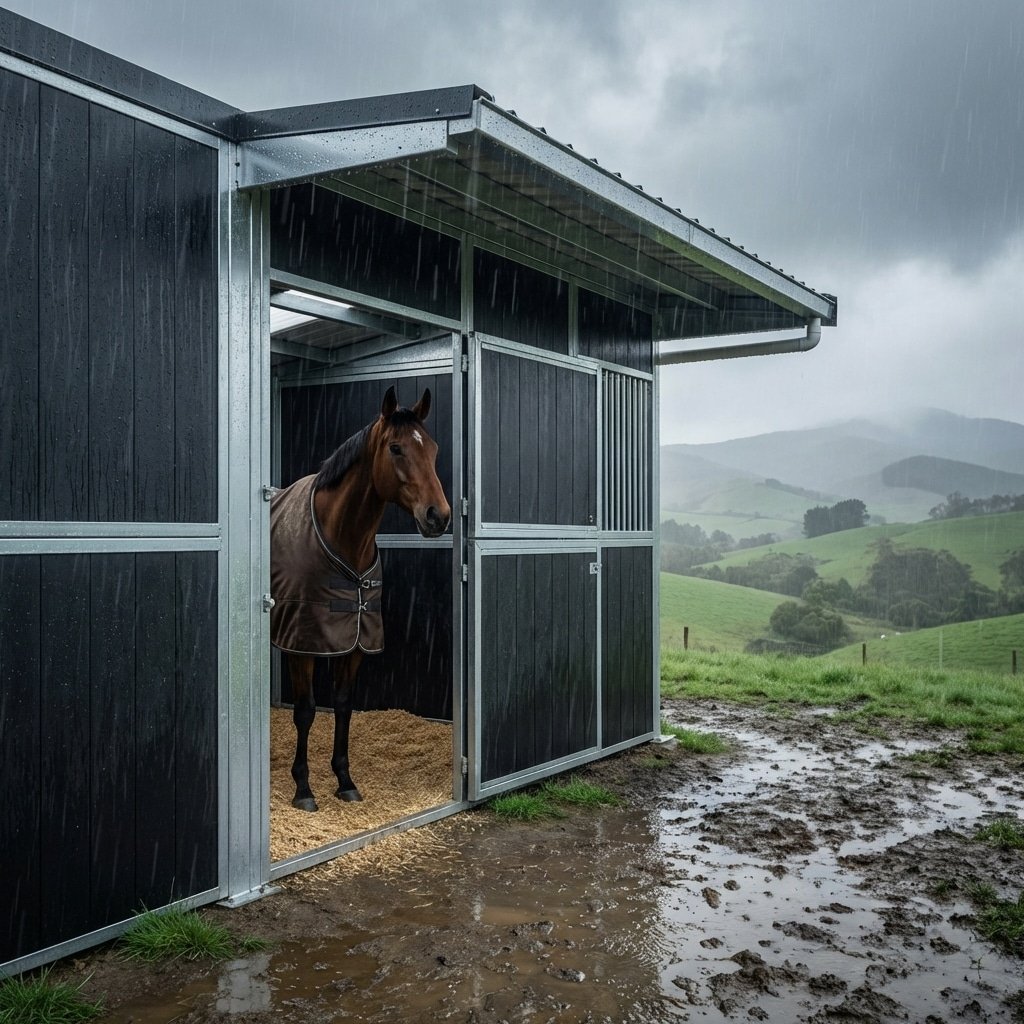
New Zealand’s high soil saturation accelerates timber rot. Combating this requires non-absorbent materials and hot-dip galvanized steel frames meeting ISO 1461 standards.
Regional Rainfall Patterns and Soil Saturation
New Zealand’s climate poses a unique threat to equestrian infrastructure because rainfall distribution is aggressive and uneven. Recent climate data indicates a stark divide between the North and South Islands. While southern regions often experience winter as their driest season, northern and central areas face compounding moisture levels that prevent ground structures from drying out.
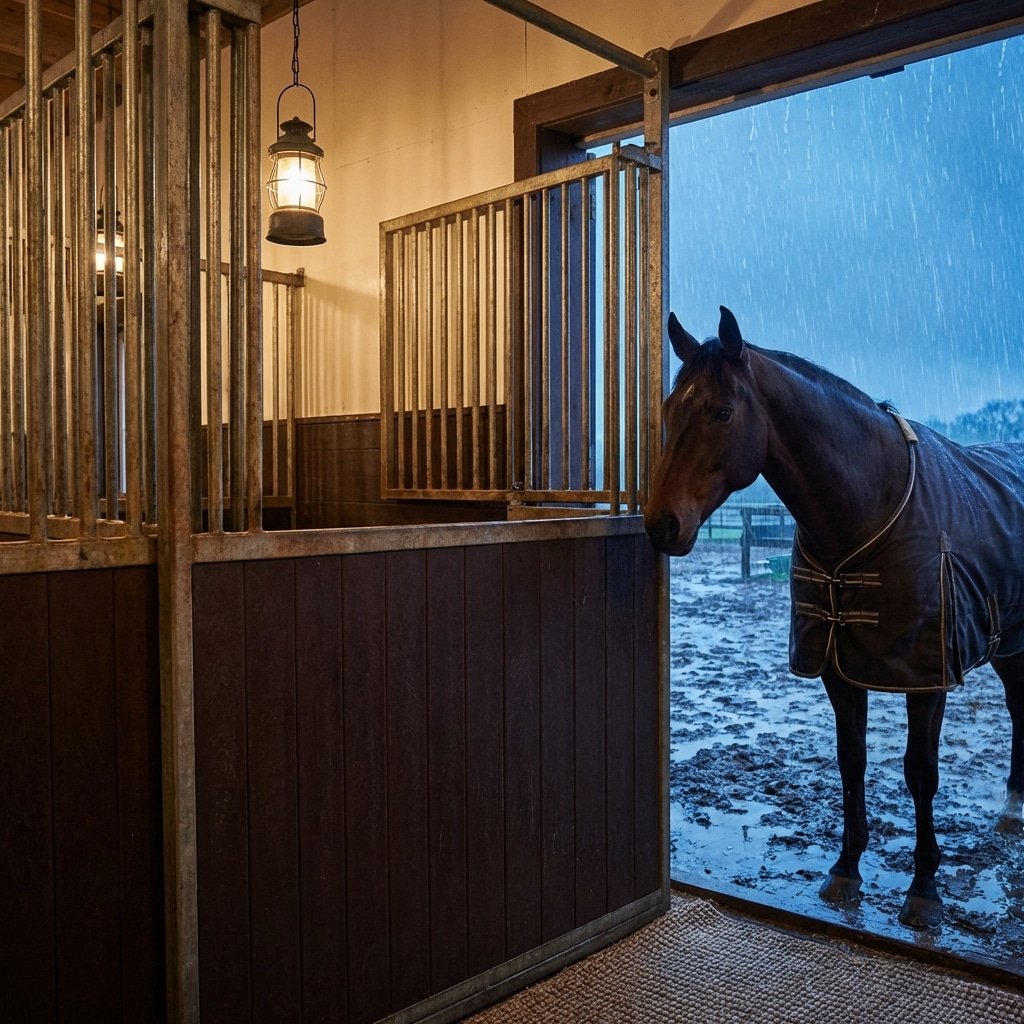
The data paints a clear picture for builders and facility managers. During the 2025 winter season, regions including Waikato, Taranaki, and Auckland recorded rainfall levels 120% to 149% above normal. This volume of water pushes soil moisture beyond saturation points, turning paddocks and stable perimeters into permanent mud zones. Mud is not just a nuisance; it acts as a constant poultice against stable walls. When timber base plates or standard cladding sit in this saturated soil, fungal decay begins almost immediately.
Traditional timber construction struggles here. Once moisture content in wood exceeds 20%, rot fungi activate. With ground saturation levels remaining high throughout the winter in key equestrian regions like the Waikato, materials that absorb water become a liability. You cannot rely on “treated timber” alone when the ground conditions keep the material permanently wet.
Engineering for Wet Climates: The ISO 1461 Standard
To survive New Zealand’s wet season, steel fabrication must move beyond basic aesthetic coatings. Standard paint and “pre-galvanized” steel (where black tube is welded after being coated) fail rapidly in these environments. The heat from welding burns off the zinc protection at the joints, creating an immediate entry point for rust. The only viable industrial solution for this climate is Hot-Dip Galvanization After Fabrication.
We strictly adhere to the BS EN ISO 1461 standard to ensure structural longevity. This process involves submerging the fully welded frame into molten zinc, coating every surface—inside and out—to a specific thickness. This creates a metallurgical bond that prevents moisture from reaching the steel core.
- Structural Parts (>6mm steel): Average coating thickness > 85 microns (μm).
- Tubing (3-6mm steel): Average coating thickness > 70 microns (μm).
- Corrosion Testing: ASTM B117 Salt Spray Test > 96 hours with zero red rust.
- Material Base: Q235B or Q345B Structural Steel (superior to standard commercial grade).
This engineering approach addresses the specific risks of coastal and high-rainfall environments. Salt laden air in coastal regions accelerates corrosion on standard metals. By verifying our galvanization through the ASTM B117 Salt Spray Test, we ensure the frames can withstand the dual threat of constant mud at the base and salt spray in the air. For New Zealand stables, this isn’t an upgrade; it is a baseline requirement for avoiding structural failure within the first five years.
The Base Plate Problem: Wood Rotting from the Ground Up
Timber acts like a sponge at ground level, letting fungal spores destroy structural integrity in 1–3 years. Hot-dip galvanized steel eliminates this risk by removing the organic food source entirely.
How Moisture Traps Destroy Timber Bottom Plates
The base plate sits in the most vulnerable position of any structure: the ground interface. In New Zealand’s humid climate, timber framing at this level acts as a sponge, absorbing ground moisture, urine, and washdown runoff. Once the wood saturation hits a critical threshold, fungal spores activate.
These spores view your timber foundation as a food source. In consistently damp conditions, untreated or compromised wood begins to lose structural integrity in as little as 1 to 6 months. By the time visible rot appears, the internal fibers are often already destroyed.
Modern cladding systems exacerbate this issue. Materials like stucco or fiber cement frequently trap water against the base plate rather than shedding it. Without airflow to evaporate the moisture, the timber stews in a sealed, damp environment, accelerating the decay process significantly compared to older, breathable designs.
The Galvanized Alternative: Q235B Steel Foundations
The only permanent fix for base plate rot is removing the organic material entirely. We replace traditional timber bottom plates with Q235B Structural Steel (or Q345B for superior cold-weather impact resistance). Fungi cannot colonize steel, effectively eliminating the biological risk factor from the foundation.
To prevent rust, we refuse to use pre-galvanized materials that leave weld points exposed. Instead, we use a strict Hot-Dip Galvanization After Fabrication process, adhering to ISO 1461 standards. This submerges the entire welded frame into molten zinc, creating a metallurgical bond that seals every joint and seam.
- Zinc Thickness: We apply >70 microns of coating to bottom rails to withstand constant wet bedding.
- Material Standard: Q235B or Q345B Structural Steel (no thin-walled architectural tubing).
- Process: Full immersion after welding to ensure 100% coverage, inside and out.
This approach ensures the bottom rail survives daily washdowns and acidic ammonia exposure without compromising the stable’s structural integrity.
Premium Horse Stables Direct From Manufacturer
100% Waterproof Horse Stall Panels (HDPE vs Pine)
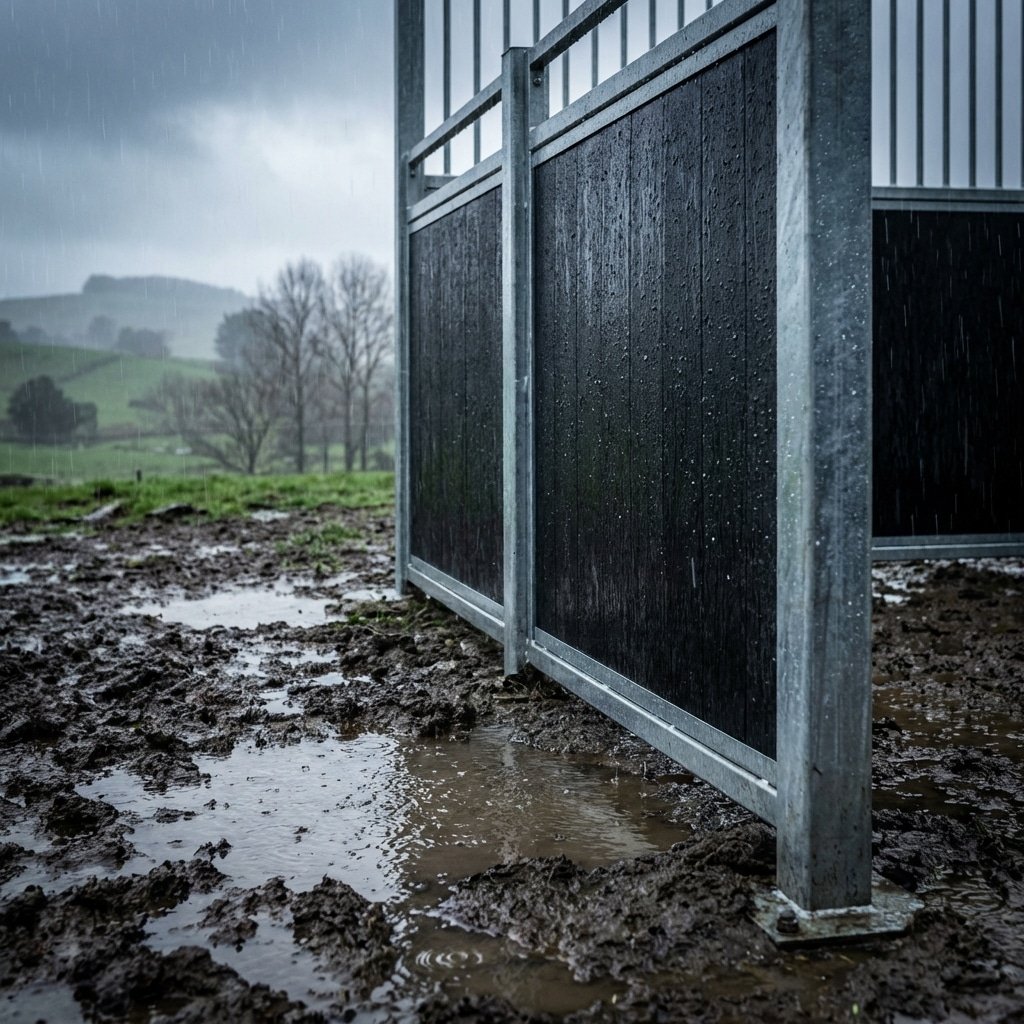
Traditional pine rots and traps ammonia in wet climates. HDPE infills provide a 100% waterproof, kick-proof solution that creates a zero-maintenance, sterile environment for professional stables.
| Feature | Traditional Pine Wood | DB Stable HDPE |
|---|---|---|
| Water Resistance | Absorbs moisture (High Rot Risk) | 100% Waterproof & Non-Porous |
| Maintenance | Requires sanding, sealing & painting | Zero Maintenance (Pressure Wash) |
| Hygiene | Traps ammonia, bacteria & mold | Impervious to bacterial growth |
| Impact Durability | Splinters and cracks under force | Kick-Proof (Shock Absorbing) |
The Hidden Costs of Traditional Pine Infill
Many stable managers view pine as the cost-effective default, but this calculation fails when you factor in operational lifespan. In high-rainfall environments like New Zealand, softwood acts like a sponge. Even treated timber eventually succumbs to the “base plate problem,” where moisture wicks up from the ground, causing the boards to rot from the inside out. Beyond structural failure, porous wood creates a biological hazard by trapping urine and ammonia, which compromises air quality and equine respiratory health.
- Rapid Degradation: Moisture absorption leads to warping and rotting, forcing frequent board replacements.
- Hygiene Risks: Porous surfaces harbor bacteria and fungal spores that standard cleaning cannot remove.
- Operational Drain: Requires regular labor-intensive sanding, varnishing, and sealing to maintain integrity.
Engineered HDPE: UV-Stabilized and Impact Resistant
For commercial facilities and B2B distributors, High-Density Polyethylene (HDPE) is the logical upgrade. We engineer our panels specifically for the abuse inherent in equestrian environments. Unlike wood, which can shatter into dangerous shards when kicked, our HDPE formulation is designed to absorb shock without failing. The material is fully UV-stabilized to prevent the brittleness often seen in cheaper plastics, ensuring the “Kick-Proof Guarantee” holds up even after years of exposure to harsh sunlight.
- 28mm-32mm Thickness: Heavy-duty profile provides superior impact resistance compared to standard hollow PVC.
- UV-Stabilized Composition: Prevents fading and structural degradation from long-term sun exposure.
- Zero Maintenance: Impervious to fluids and chemicals; simply pressure wash to sanitize.

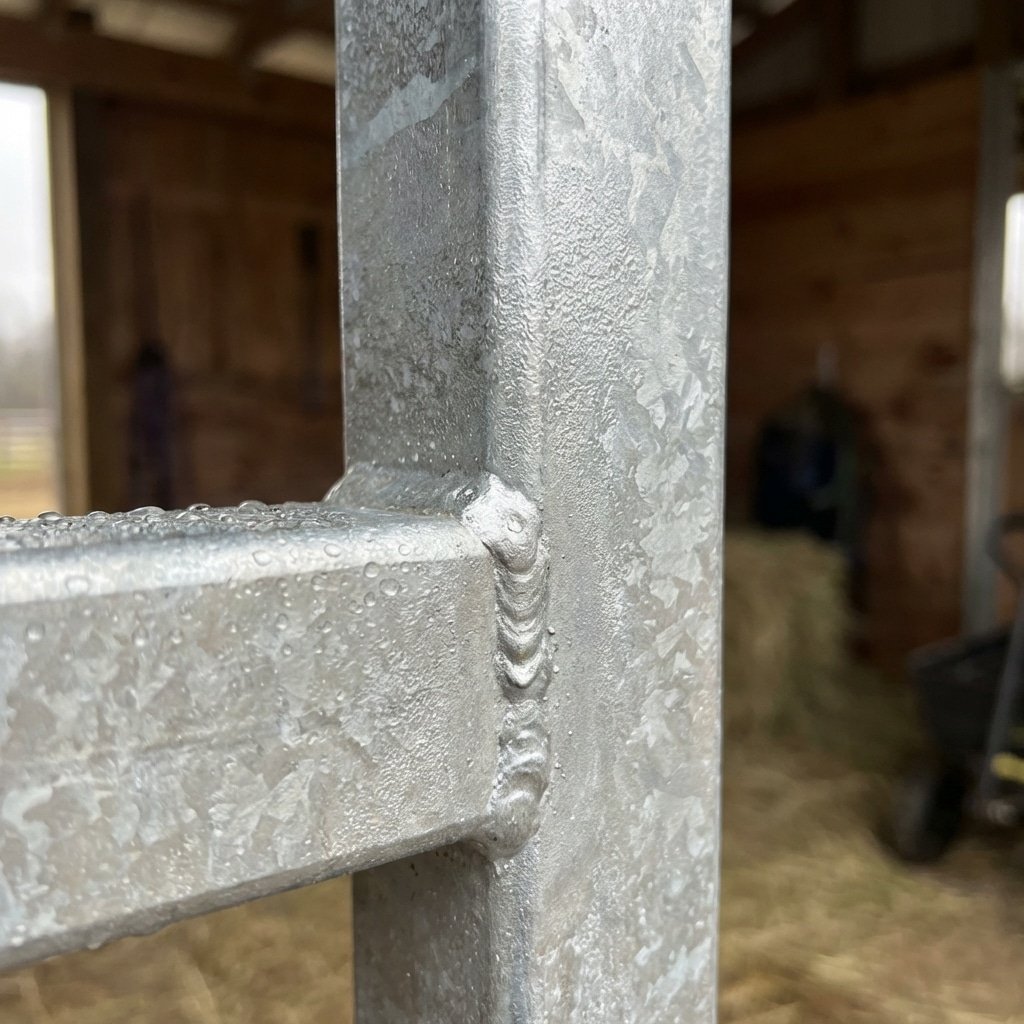
Hot-Dip Galvanizing: Rust-Proofing Your Stable Frame
Hot-dip galvanizing immerses welded frames in molten zinc at 460°C, creating a metallurgical bond. DB Stable adheres to ISO 1461, ensuring 85+ micron coating thickness for maximum corrosion resistance.
The Science Behind the Dip: 460°C Protection
Generic paint jobs fail because they merely sit on top of the steel. Hot-dip galvanizing is different because it changes the metallurgy of the frame itself. The process involves submerging the steel into a bath of molten zinc heated to approximately 460°C. At this temperature, the zinc reacts with the iron in the steel to form a series of zinc-iron alloy layers, capped with pure zinc.
This immersion method guarantees 100% coverage. Unlike spray painting or powder coating, which rely on line-of-sight application, the liquid zinc flows into the interior of the tubular steel. This protects the internal surfaces that are otherwise impossible to reach and often serve as the starting point for invisible structural rot.
- Cathodic Protection: In New Zealand’s high-moisture environments, the zinc acts as a sacrificial anode. If the coating is scratched, the surrounding zinc corrodes in preference to the steel, self-healing the wound.
- Lifecycle Economics: While the initial cost is higher than painting, the maintenance-free service life extends for decades, significantly lowering the total cost of ownership.
DB Stable Standard: Galvanizing After Fabrication
There is a critical distinction in manufacturing protocols that defines the lifespan of a stable: when the galvanizing happens. Many competitors cut costs by using “pre-galvanized” tubes—steel that was galvanized at the mill before being cut and welded. When they weld these tubes together, the intense heat burns the zinc off at the joints. They typically cover these burns with cold spray paint, but the metallurgical bond is gone. We call this the “burnt zinc” problem, and it is where rust begins almost immediately.
We strictly adhere to a “Hot-Dip After Fabrication” protocol. We build the entire door unit from raw black steel (Q235B or Q345B) and complete all welding first. Only then do we dip the entire finished structure. This seals every weld point, edge, and crevice under a uniform layer of zinc.
- ISO 1461 Compliance: Our process meets strict international standards for coating thickness.
- Structural Thickness: We achieve an average zinc coating greater than 85 microns (μm) on structural parts (>6mm).
- Tubing Thickness: Profiles between 3mm and 6mm receive an average coating greater than 70 microns (μm).
- Verified Resilience: We validate these specifications using ASTM B117 Salt Spray testing (96+ hours) to ensure the frames withstand the ammonia and moisture common in active stables.
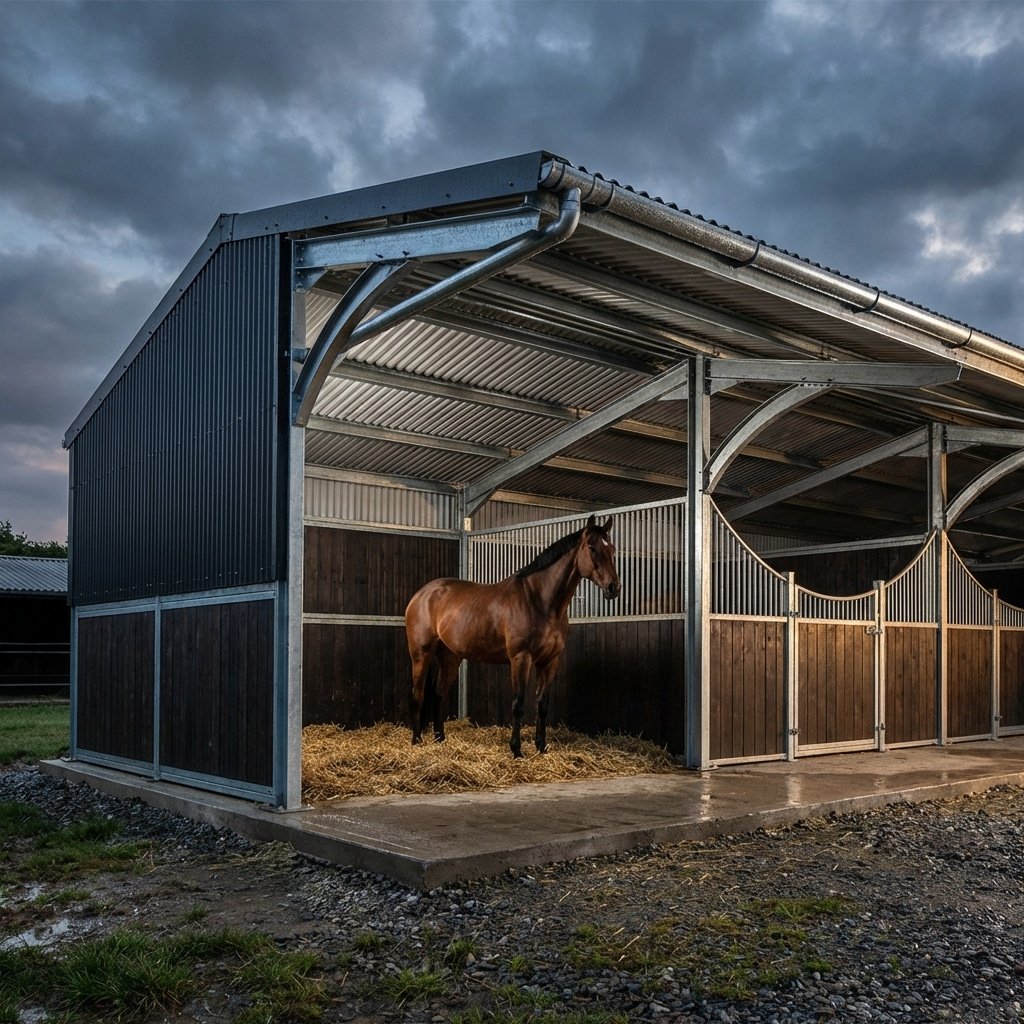
Designing Open-Front Stalls for Easy Mucking
Open-front designs boost efficiency through clear sightlines and “stack effect” ventilation. The Professional Series adds hidden overhead tracks and swivel feeders to eliminate floor hazards and streamline daily chores.
Enhancing Workflow with High-Visibility Designs
Open-concept stalls are not just an aesthetic choice; they are a functional necessity for safe, efficient barn management. High-visibility fronts allow handlers to assess a horse’s mood and position instantly before unlatching the door. This split-second assessment prevents accidents during busy mucking shifts, ensuring staff are never walking blindly into a volatile situation.
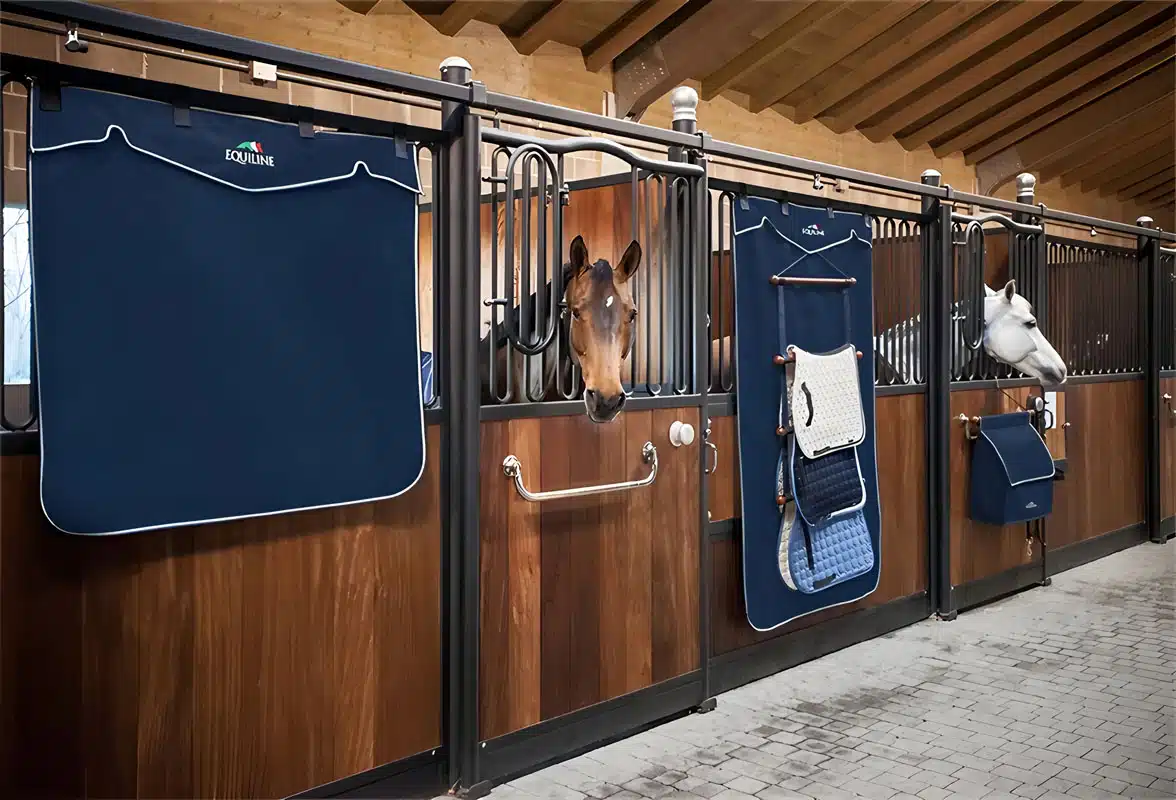
Ventilation plays a critical role in moisture management. Designs featuring open grills or European arches promote “Stack Effect” ventilation. This vertical airflow helps wet bedding and tracked-in mud dry significantly faster than in enclosed box stalls. Faster drying reduces ammonia buildup and preserves bedding quality, directly impacting the speed and cost of daily cleaning.
Social access also impacts the handler’s workflow. Horses with visual access to neighbors are less prone to boredom-induced vices like cribbing or weaving. A calmer horse creates a safer working environment for staff entering with wheelbarrows and tools, making the entire mucking process smoother and less stressful for both animal and handler.
Streamlining Daily Tasks with the Professional Series
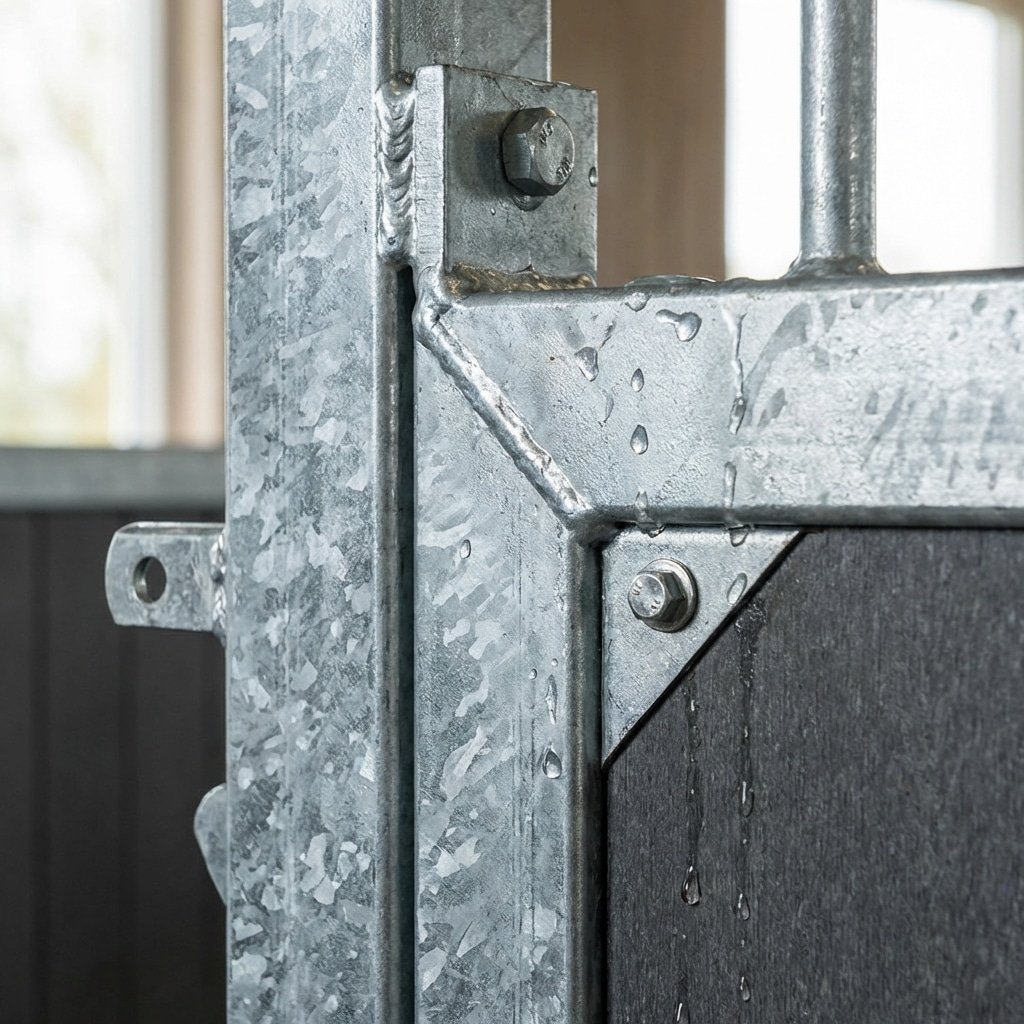
We engineered the DB Stable Professional Series specifically to address the friction points of daily maintenance. Standard sliding doors often rely on floor guides that trap bedding, dirt, and manure. We replaced this with a Hidden Track System using overhead rollers. This eliminates the floor threshold entirely, preventing debris buildup that jams doors and creates tripping hazards.
- Swivel Feeders: These allow staff to dispense grain and hay from the aisle without entering the stall. This separates feeding logistics from mucking schedules, allowing operations to move faster without cross-traffic conflicts.
- Kick-Proof Durability: Mucking exposes stalls to accidental impacts from heavy wheelbarrows and metal pitchforks. We construct the Professional Series using Q345B structural steel (equivalent to ASTM Grade 50), which offers superior impact resistance compared to standard Q235B.
- Maintenance-Free Infill: Options like high-density bamboo or HDPE withstand moisture and impact, requiring zero painting or sealing compared to traditional pine that rots from wet bedding contact.
Final Thoughts
Relying on traditional pine or pre-galvanized steel in New Zealand’s saturated conditions guarantees structural failure and warranty claims within three years. Shifting to ISO 1461 Hot-Dip Galvanized frames with HDPE infill is the only commercial strategy to secure your inventory against the inevitable rot of the Waikato winter. Dealers who prioritize these “Zero Maintenance” materials protect their reputation and eliminate costly replacements for their clients.
Do not gamble on steel quality; verify our >85-micron zinc thickness and kick-proof HDPE durability firsthand. We recommend requesting a Sample Kit or scheduling a Trial Order to validate our flat-pack logistics and fitment before the next rainy season. Contact our engineering team today to discuss your specific B2B volume requirements and lock in your production slot.


 English
  Spanish
  French
  Arabic
  German
0 Comments