
Hot-dip galvanized steel frame (20-year rust protection) validation defines Trade Show Sourcing strategies for Spoga Horse and the Canton Fair. Importing stables that fail ASTM B117 salt spray tests destroys distributor reputation faster than shipping delays. Locating a vendor takes little effort. Distinguishing true manufacturers from trading companies who sell cosmetic welds drives the real challenge. Every credible Horse Stable Supplier understands corrosion resistance defines product life.
We benchmark factory capabilities against the ISO 1461 hot-dip standard and container yield efficiency. We prioritize suppliers who validate 85-micron zinc coatings and utilize steel pallet flat-pack systems to triple 40HQ volume. This approach ensures landed costs protect margins against volatile freight rates.
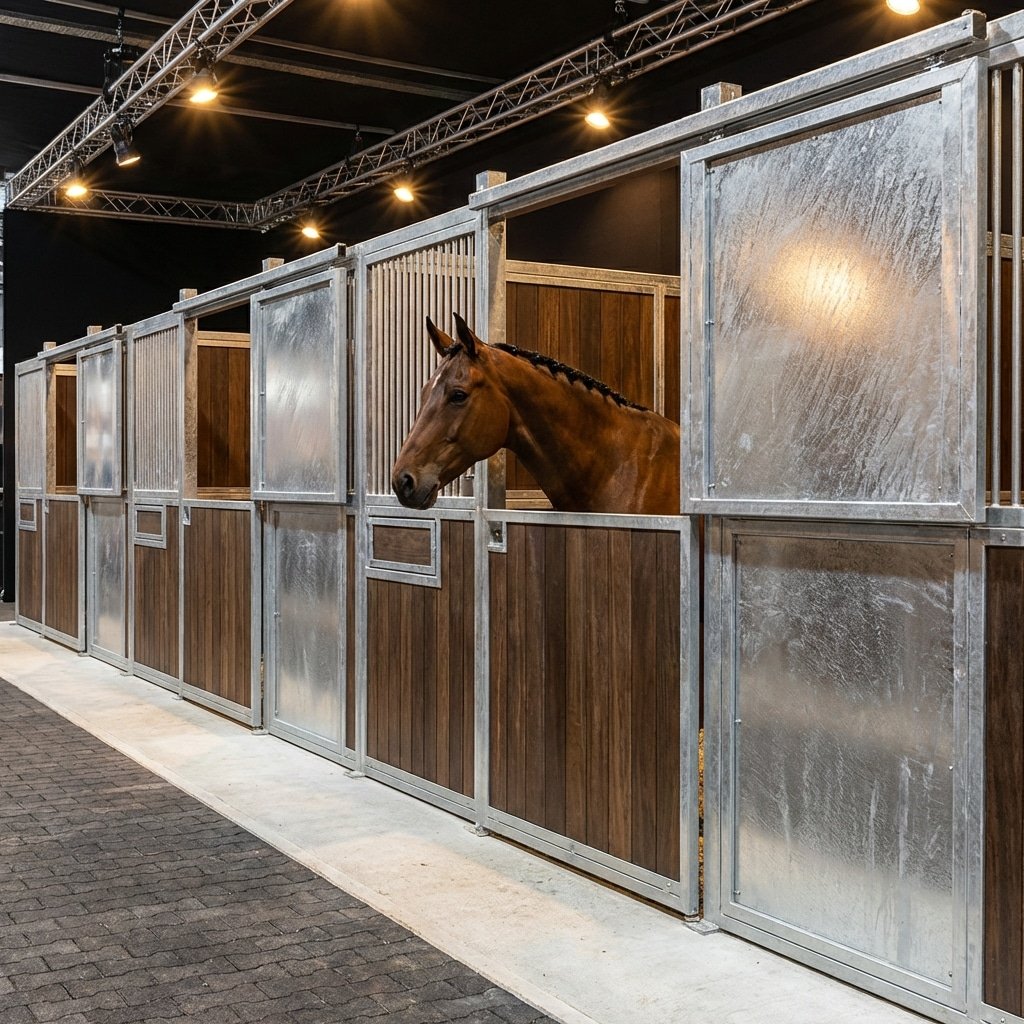
Designing Stables for Wheelchair Accessibility (ADA)
Designing for ADA compliance requires integrating 12-foot aisles, 60-inch turning radiuses, and recessed sliding door tracks to ensure independent access for wheelchair users.
Critical Dimensions: Aisle Widths and Turning Zones
Accessible stable design fails primarily because of insufficient maneuvering space. General ADA guidelines specify minimums for human traffic, but equestrian facilities must account for dual safety: the wheelchair user and the horse. A standard residential hallway width creates danger in a barn environment.
- Minimum Clear Width: ADA mandates 36 inches, but functional barn aisles require 12 to 14 feet. This width allows a wheelchair user to turn safely even when a horse is cross-tied or led in the opposite direction.
- Turning Radius: Grooming bays, tack rooms, and feed rooms need a 60-inch (1525mm) diameter open circle. This dimension accommodates the turning geometry of standard wheelchairs.
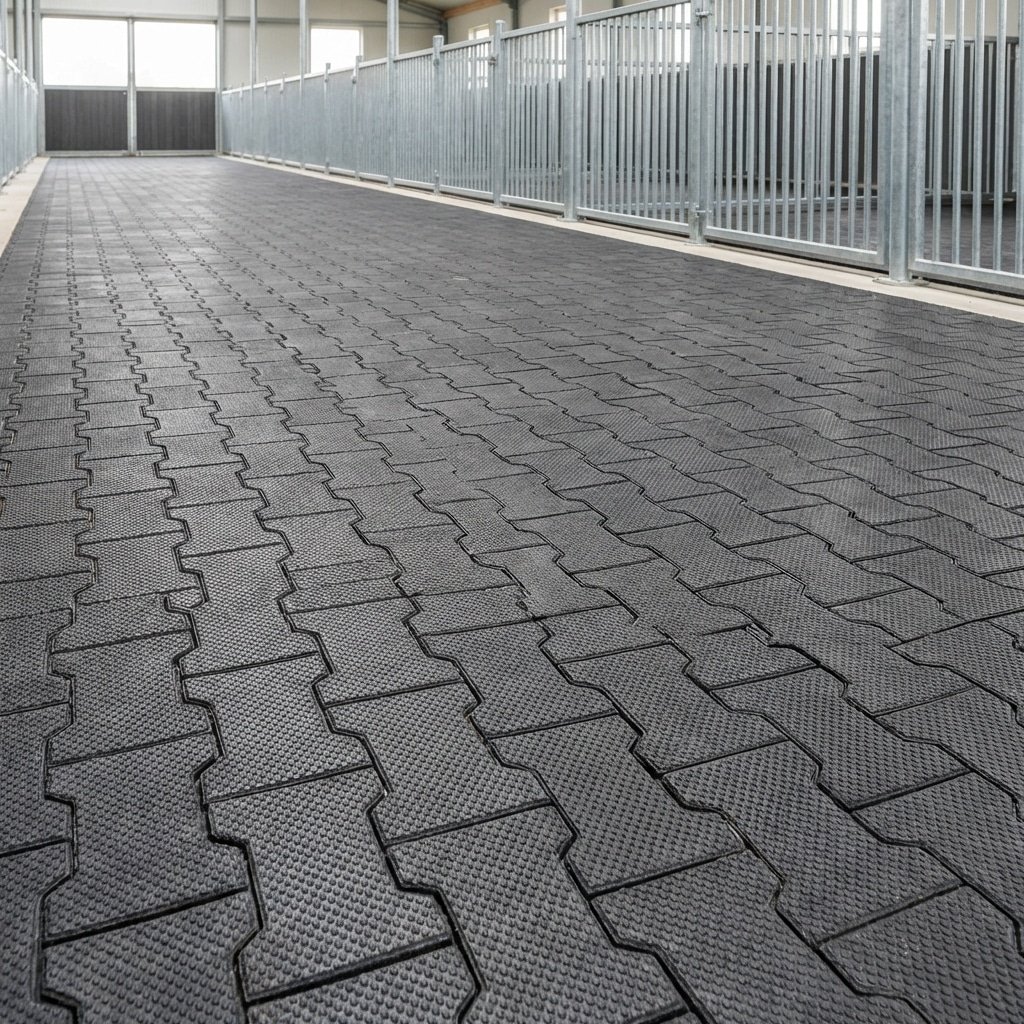
- Surface Consistency: Deep sand and loose gravel increase rolling resistance to impossible levels. Interlocking rubber pavers or concrete aisles with non-slip mats provide traction without drag.
Integrating Sliding Doors and Accessible Feeder Systems
Hardware selection dictates whether a facility supports independent use or requires constant staff assistance. Standard hinged doors create an immediate barrier. Opening them forces a wheelchair user to back up awkwardly, often into aisle traffic flow.
- Sliding Door Advantage: DB Stable’s sliding track systems eliminate the swing arc. Users slide the door open laterally without obstructing their own path or the aisleway. A professional Horse Stable Supplier specifies hardware that removes physical barriers.
- Our “Professional Series” includes 360-degree swivel feeders. Staff or riders with limited mobility feed grain and hay directly from the aisle. Staff avoid entering the stall or navigating bedding.
- Standard equestrian latches sit above 55 inches, positioned for standing adults. We fabricate custom fronts for accessible projects. We position heavy-duty latches at 48 inches for reachable, independent operation.
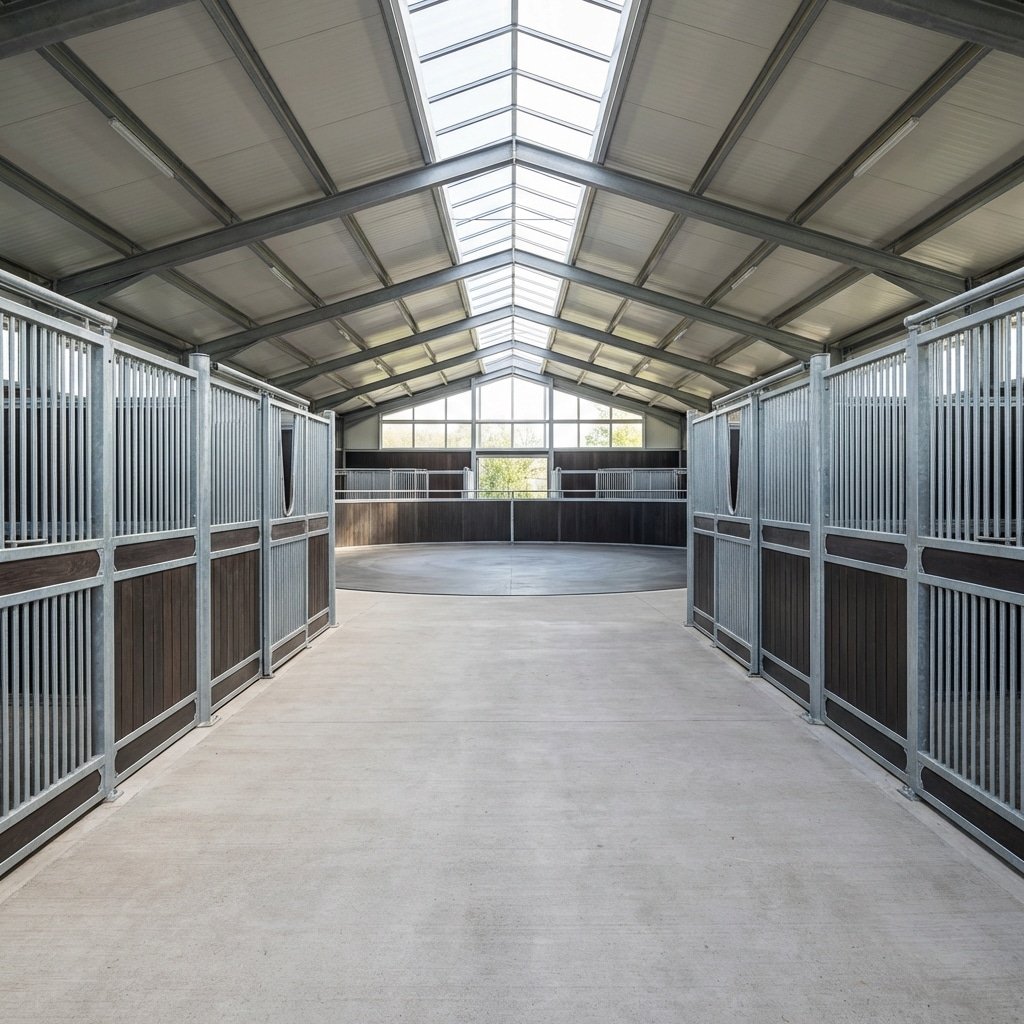
The Aisle Experience: Wide Sliding Doors vs. Swing Doors
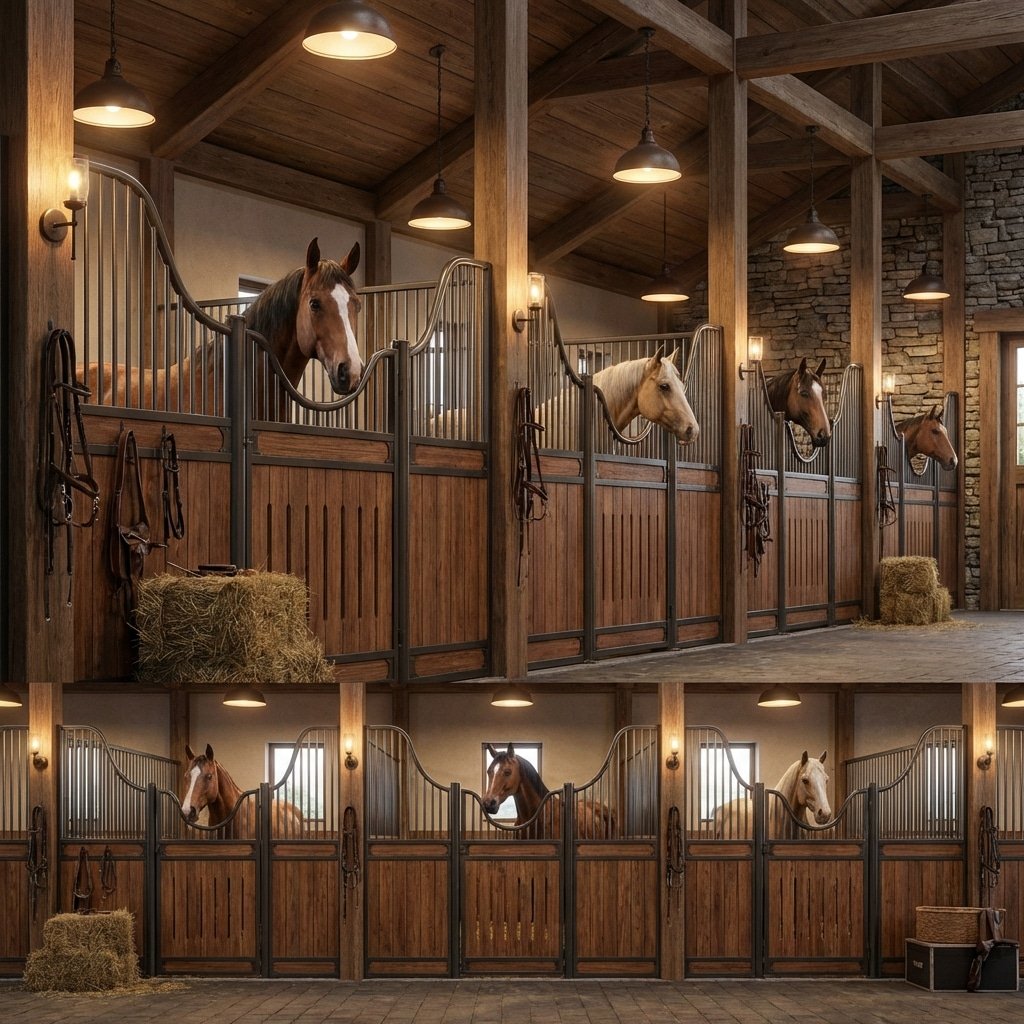
Sliding doors maximize operational flow in commercial barns, while swing doors offer a traditional aesthetic for private estates. Both require specific hardware to prevent sagging and jamming.
Maximizing Aisle Space and Safety
Sliding and swing doors dictate barn traffic flow. Aisle width is premium real estate in commercial environments like riding schools. A standard 4-foot swing door creates a large “dead zone” when open. Two horses tied in the aisle create a bottleneck. A spooking horse turns this into a safety hazard.
Sliding doors operate horizontally. They eliminate the swing arc. The central walkway stays clear for machinery, wheelbarrows, and handlers. Wind gusts cannot catch sliding doors. Handlers open the stall with one hand while leading a horse. Control remains at the threshold without stepping backward.
Hardware Architecture: Hidden Tracks vs. European Hinges
Operational longevity depends on hardware engineering. A cheap track system ruins a sliding door. Weak hinges ruin a swing door. We distinguish systems based on mechanical load and environmental exposure.
- Professional Series sliding doors utilize a Hidden Track System. Open tracks collect dust, shavings, and nesting birds. Our enclosed design shields rollers from debris. Rollers operate smoothly for decades.
- Royal Series swing doors feature European Arches. Heavy-duty hinges support the weight of 40mm bamboo infill and hot-dip galvanized steel frames. Frames do not sag.
- We strictly use 304 Stainless Steel for all latches, connectors, and anchor bolts. Standard zinc-plated hardware rusts quickly in ammonia-rich stable environments. Stainless steel does not. Any credible Horse Stable Supplier adheres to this material standard.
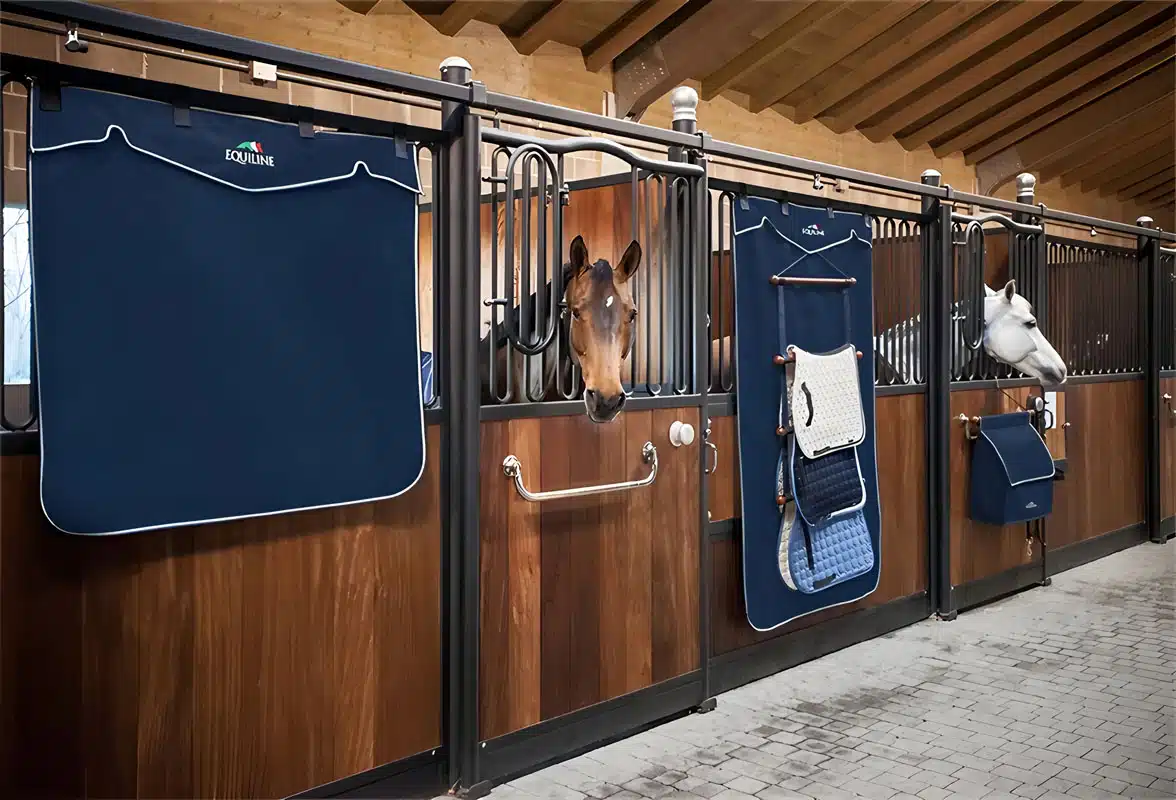
Premium Modular Stables Built for Every Climate
Top Suppliers Engineering for the PATH/RDA Community
Most “equestrian suppliers” sell generic hobby-farm kits. For PATH/RDA compliance, you need industrial OEM partners who engineer specifically for ADA clearances and zero-maintenance safety protocols.
You will not find a unified list of Therapeutic Riding Suppliers. The industry relies on fragmented networks of specialized manufacturers. Top vendors operate behind the scenes. Engineering firms like DB Stable fabricate custom steel infrastructure. Medical device manufacturers adapt human rehab tech for equine use.
Facilities meeting PATH International or RDA standards require curated vendors. These partners understand specific load-bearing and dimensional requirements for adaptive equestrianism. A generic stall manufacturer sells a standard 4-foot hinged door. A therapeutic-focused engineer recognizes that door as a wind-sail hazard for volunteers managing horses and wheelchairs simultaneously.
The Engineering Supply Chain Hierarchy
Successful centers bypass retail catalogs. They work directly with manufacturers who modify steel and HDPE specs to withstand heavy use. This protects vulnerable riders. The table below outlines critical engineering categories. Every Horse Stable Supplier you engage must meet these specific technical benchmarks.
| Facility Component | Engineering Standard (PATH/ADA) | Why Generic Suppliers Fail |
|---|---|---|
| Stall Front Systems | Sliding Doors with >48″ Clearance Must use heavy-duty track systems (e.g., DB Stable Smooth-Glide). | Standard doors are 40-44″ wide, creating pinch points for wheelchairs and sidewalkers. |
| Infill Materials | HDPE or High-Density Bamboo Must be impact-absorbing and sanitizable (ISO 1461 Galvanized frames). | Softwood rots and splinters. Pine boards require constant maintenance and pose injury risks. |
| Flooring Transitions | Zero-Threshold Design Level transitions (<0.5 inch variance) or 1:12 ramps. | Standard barn builds use raised door guides or steps that block wheelchair access. |
| Gait Training | Overhead Enclosed Tracks Load-rated for harness systems/lifts. | Residential barn trusses cannot support the dynamic weight of therapeutic lift equipment. |
Frequently Asked Questions
How to design an ADA compliant horse barn?
Open-rail systems create maintenance nightmares in active equestrian environments. Dust, hay, and bedding settle on exposed tracks. They mix with lubricant to form grinding paste. This jams rollers and degrades bearings. We enclosed the track mechanism within the steel header. This design shields running gear from debris and moisture. Doors glide smoothly in dusty feed rooms or high-traffic aisles.
Minimum door width for wheelchair access in barns?
Safety remains critical. Horses rub against doors or kick partitions. This creates lateral force that pops standard rollers off rails. Our enclosed system locks the carrier inside the track profile. It cannot derail. This holds true regardless of aggressive horse interaction. The design protects internal bearing lubrication. Maintenance cycles drop drastically compared to traditional open systems.
Best stable doors for therapeutic riding centers?
Hardware failure is not an option when managing heavy livestock. We refuse standard galvanized fasteners. They rust and seize over time. The Smooth-Glide system relies exclusively on industrial-grade components. These ensure longevity and high load capacities.
Are sliding stall doors easier to open?
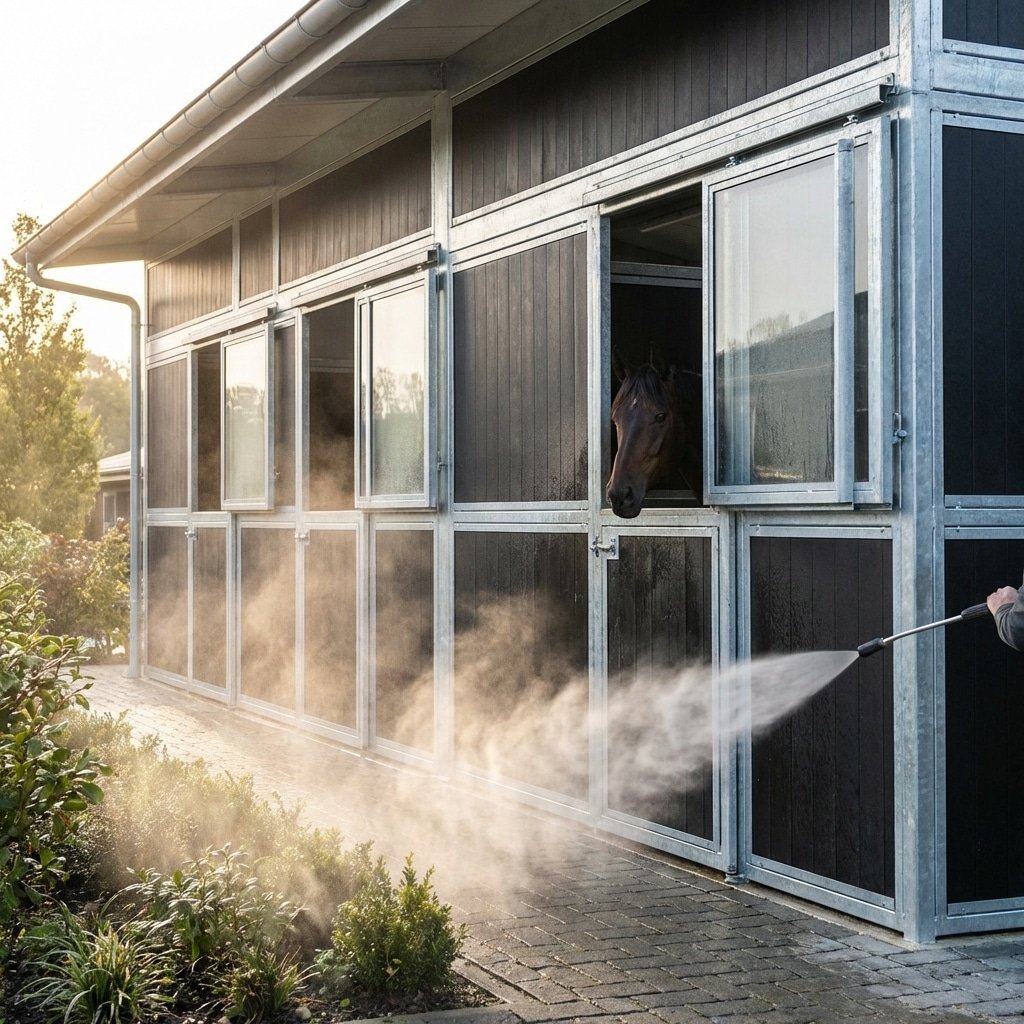
304 Stainless Steel: We use this grade for all anchor bolts, connectors, and assembly hardware. This ensures superior corrosion resistance. It holds up even in wash bays.
PATH Intl barn safety standards?
Heavy-Duty Load Capacity: The roller bearings support substantial weight. Our solid infill doors range from 250kg to 450kg. Density depends on bamboo or HDPE material.
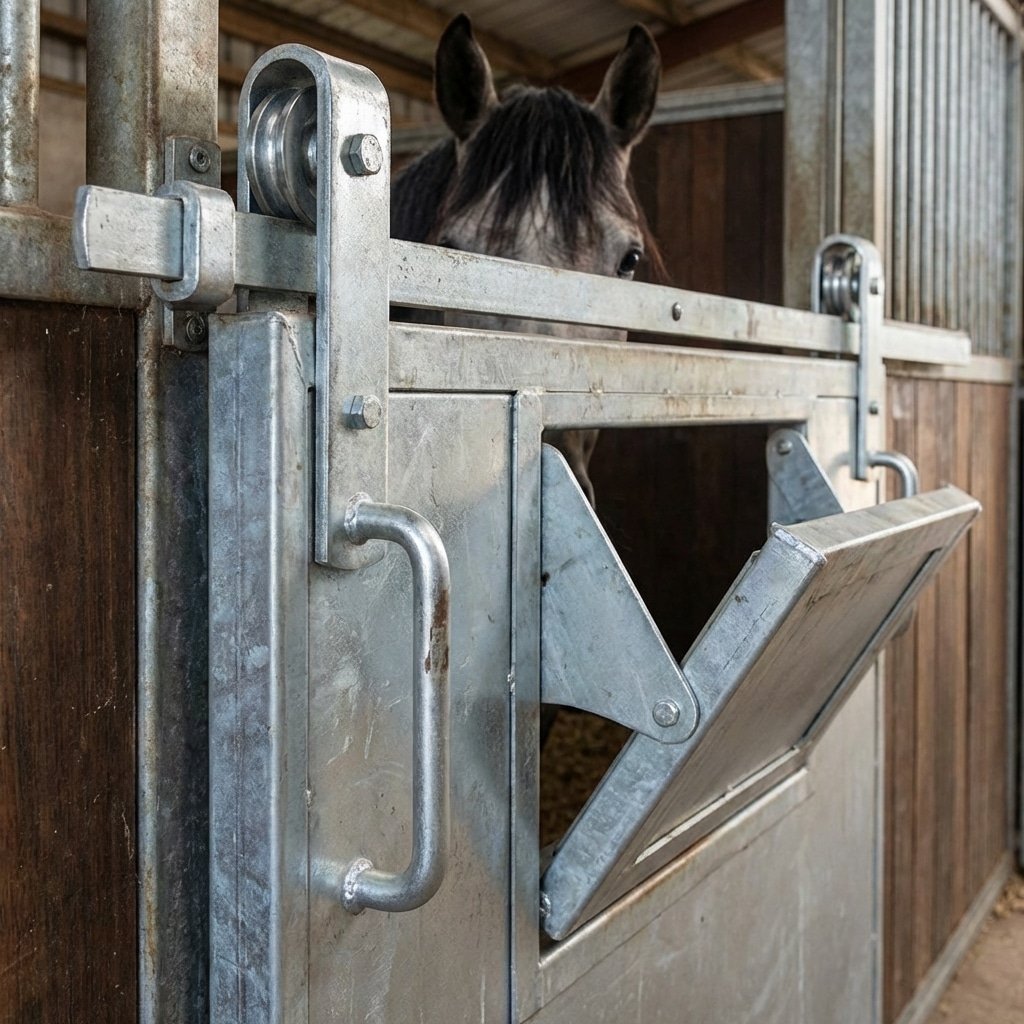
DB’s Smooth-Glide Enclosed Track System
Our enclosed track design prevents the #1 cause of stable door failure: debris accumulation. By shielding the mechanism, we ensure zero-jam operation and eliminate the need for monthly greasing.
The Engineering Behind “Zero-Jam” Performance
Professional Series Integration: This track system defines our Professional Series frames. We eliminate gaps. Halters and blankets slide free without catching.
Therapeutic centers demand a Kick-Proof standard. Cheap pre-galvanized alternatives fail. We combine Q345B structural steel with Hot-Dip After Fabrication. Your facility withstands heavy daily use without rust. This industrial-grade specification reduces liability risks. It protects your operational budget.
Professional Series Specs: 304 Stainless Steel Hardware
Stop estimating logistics costs. Improve landed margins with our Profit Protection flat-pack system. Request a precise container loading plan. Test our Smooth-Glide hardware with a physical sample kit. Contact our engineering department. We configure solutions for your site requirements.
- Title: Spoga Horse vs Canton Fair: Selecting a Horse Stable Supplier
- Description: Source Wheelchair Accessible Stables. 48-inch sliding doors. Q345B steel with kick-proof HDPE. PATH and RDA compliant manufacturer.
- Professional Series Integration: This track system is a core specification of our Professional Series frames, providing a seamless, gap-free aesthetic that eliminates catch points for halters or blankets.
Frequently Asked Questions
What is the optimal stall door width for ADA compliance and therapeutic riding centers?
Keywords: wheelchair accessible stables, Horse Stable Supplier
Should I choose sliding doors or hinged doors for a commercial facility?
For high-traffic or therapeutic barns, sliding doors are the superior choice. They permit safe, one-handed operation without blocking the aisle, eliminating collision hazards for passing horses or wheelchairs. Hinged doors require a significant clear swing radius and can be caught by the wind, creating a safety risk. Sliding doors keep the aisle clear and controlled.
How does the flat-pack system compare to shipping fully welded stables?
Logistics efficiency is the biggest hidden cost in sourcing. Traditional fully welded frames take up massive volume, limiting a 40HQ container to just 12–15 sets. Our Steel Pallet Flat-Pack system allows us to stack 30–45 sets in the same container. This density reduces per-unit freight costs by over 60%, directly protecting distributor profit margins against rising shipping rates.
What is the difference between ‘Pre-Galvanized’ and your ‘Hot-Dip After Fabrication’ process?
Pre-galvanized tube is zinc-coated before it is cut and welded, leaving the weld joints exposed to rust (manufacturers often just paint over these spots). Our Hot-Dip After Fabrication process involves welding the raw black steel first, then dipping the entire structure into molten zinc (ISO 1461 compliant). This seals the steel inside and out, including the welds, ensuring 360-degree protection and a true lifetime guarantee against corrosion.
Are the stable infills suitable for horses that kick?
Yes. We adhere to a strictly “Kick-Proof” standard. Our heavy-duty Q235B/Q345B steel frames are paired with either 28mm–32mm HDPE (High-Density Polyethylene), which absorbs impact shock without splintering, or high-density Bamboo. Our bamboo registers a Janka Hardness > 3000 lbf, making it three times harder than Oak and capable of withstanding aggressive impact.
Final Thoughts
Sourcing for therapeutic centers demands a “Kick-Proof” standard that cheap, pre-galvanized alternatives simply cannot meet. We combine Q345B structural steel with Hot-Dip After Fabrication to ensure your facility handles heavy daily use without structural failure or rust. Investing in this industrial-grade specification prevents liability risks and secures your long-term operational budget.
Stop estimating logistics costs and start optimizing your landed margin with our “Profit Protection” flat-pack system. We invite you to request a precise container loading plan or a physical sample kit to test our Smooth-Glide hardware. Connect with our engineering department now to configure a solution that fits your exact site requirements.


 English
  Spanish
  French
  Arabic
  German
0 Comments