


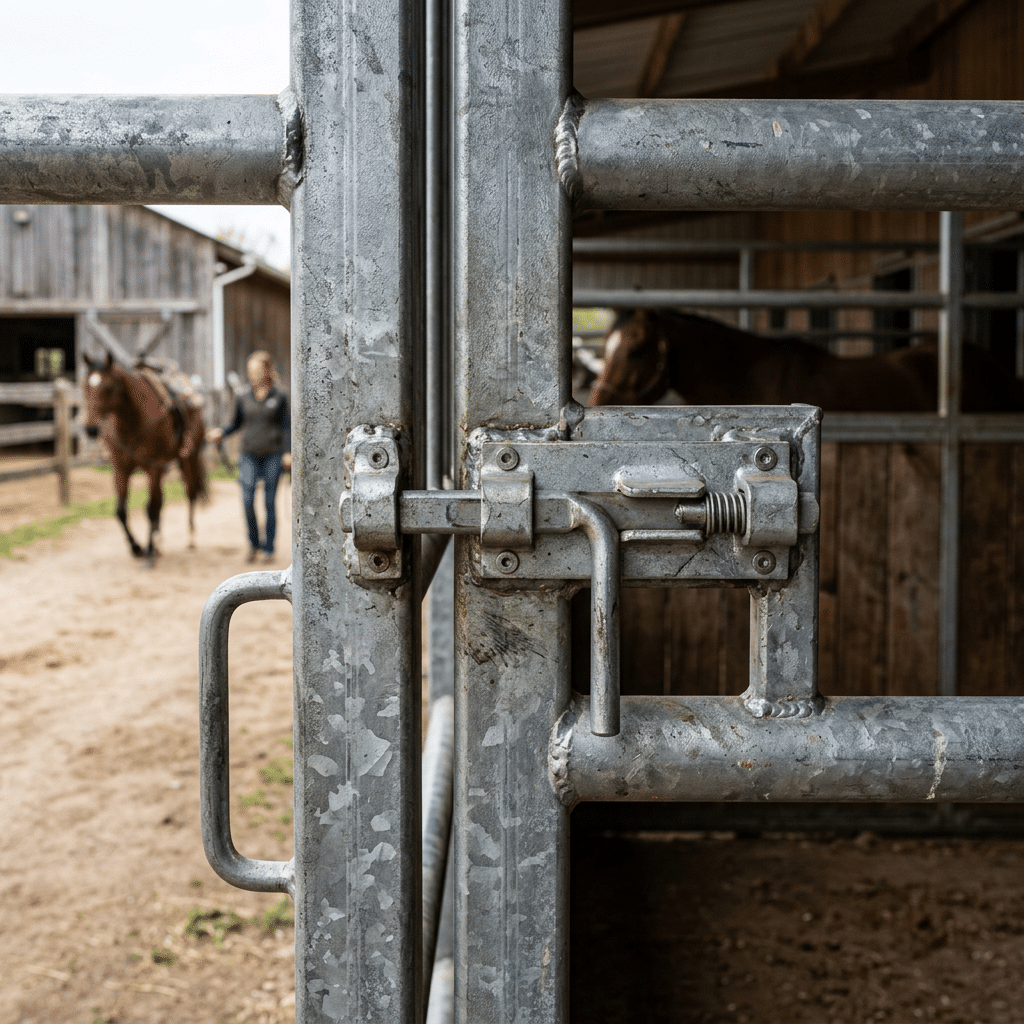
An Olympic training program’s success depends on infrastructure that prevents catastrophic material failure. Standard timber and steel stables rot and corrode in high-use, humid environments, directly risking equine health and devaluing the capital investment in the facility.
This analysis defines the engineering specifications for elite base camps. We examine the performance of non-porous materials like high-density bamboo and steel hot-dip galvanized to ISO 1461, standards essential for structural integrity and athlete safety.
The Rot Cycle in High-Humidity Environments
In humid stables, constant moisture rots wood and corrodes steel, compromising safety and air quality. The fix is using materials built for it: mold-resistant bamboo and fully hot-dip galvanized steel frames.
How Trapped Moisture Degrades Standard Stable Materials
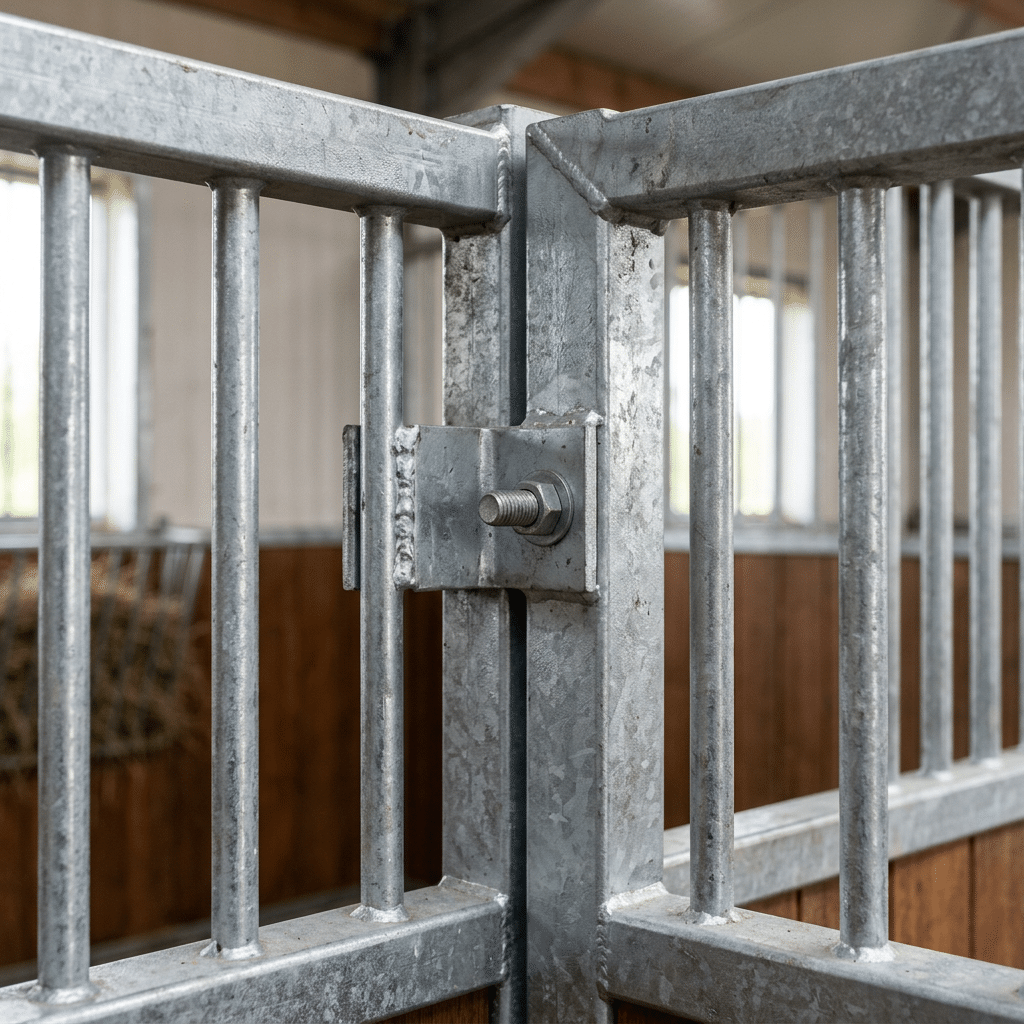
Persistent dampness is a breeding ground for fungus and mold, especially on porous materials like pine. As moisture seeps in, the wood weakens from the inside out, creating a structural hazard. At the same time, ammonia and moisture from horse waste form a highly corrosive gas that attacks steel. This environment aggressively rusts unprotected welds, which is why cheap pre-galvanized tubing fails so quickly.
High-Density Bamboo: An Impervious Barrier to Rot
High-density strand-woven bamboo is fundamentally different from traditional wood infills. It’s inherently resistant to mold and rot because it’s non-porous. With a Janka hardness rating over 3000 lbf, the material is too dense for moisture to penetrate and initiate the decay cycle. It simply can’t absorb the water that allows fungus to grow, making it a reliable, long-term solution for high-humidity stable environments.
Material Comparison for Tropical Climates
In tropical climates, material failure comes from moisture absorption, not just weather. The best choices are non-porous (HDPE, PVC) or engineered to resist rot (Treated Bamboo).
| Material | Perfo rmance in High Humidity | Primary Weakness / Requirement |
|---|---|---|
| HDPE (High-Density Polyethylene) | Waterproof. As a non-porous plastic, HDPE has virtually zero water absorption (<0.01%). It will not rot, swell, or delaminate, making it immune to mold growth on its surface. | Requires proper UV stabilization for outdoor applications to prevent long-term degradation from sun exposure. |
| Strand-Woven Bamboo | Highly Rot-Resistant. Thermal treatment removes sugars, making it resistant to mold and fungus. Extremely dense (~1200 kg/m³) with low water absorption (0.4% in 24 hours). | Water-resistant, not fully waterproof. Extended water exposure can still cause warping or cupping, so it requires good drainage. |
| PVC (Polyvinyl Chloride) Panels | 100% Waterproof. PVC is completely weatherproof and non-absorbent. It offers total protection against rot, mold, and mildew, making it ideal for hygienic or constantly wet areas. | Can have a higher upfront cost compared to wood-based materials. Quality varies significantly between manufacturers. |
| Treated Pine | Suboptimal. While treated to resist insects and decay, it’s still porous and absorbs significant moisture (18-22%). This creates favorable conditions for mold growth in humid climates. | Requires constant and sufficient ventilation to prevent mold and mildew. A poor choice for enclosed, humid spaces. |
Get 20-Year Rust-Proof Stables Worldwide
Airflow Design to Prevent Tropical Fungal Infections
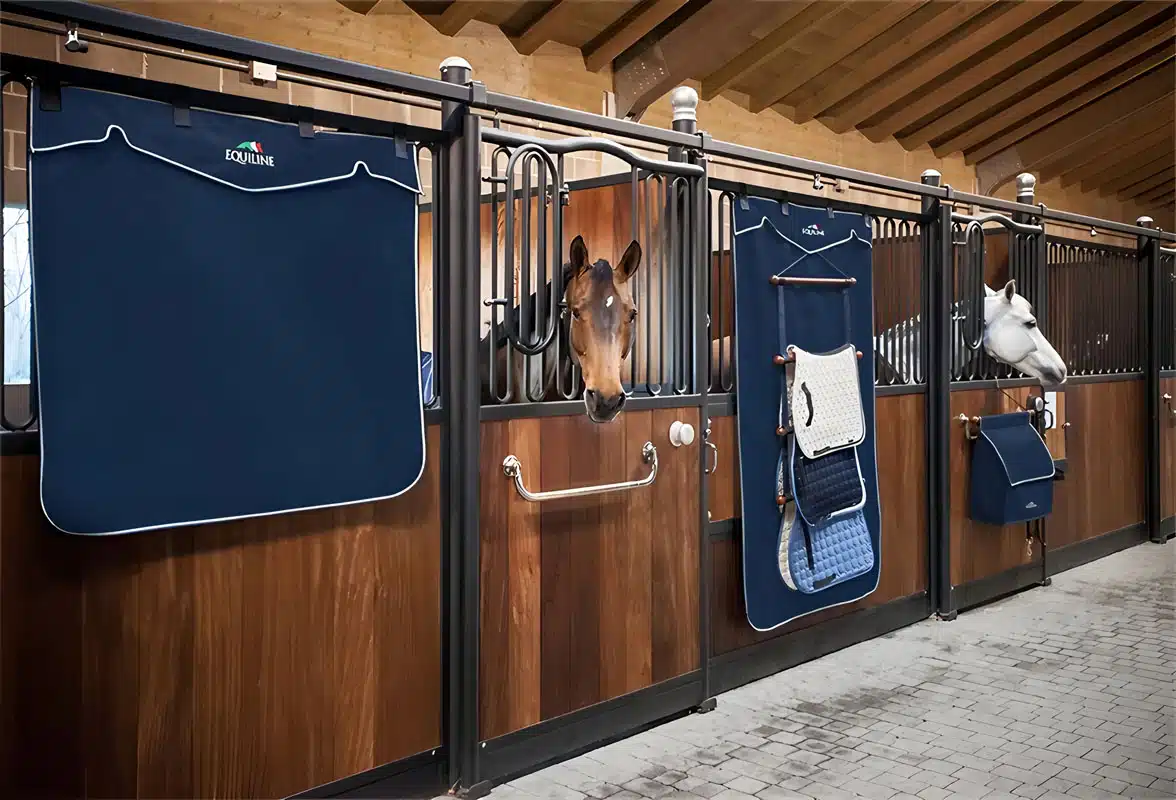
Proper airflow is critical for preventing fungal infections by managing humidity. DB Stable designs use open-grill fronts to create a natural ‘stack effect,’ circulating air to keep bedding dry.
How Air Circulation Disrupts Fungal Growth
Fungus and mold thrive in moist, stagnant air. Constant ventilation is the most practical way to fight back in humid climates. It works by helping moisture evaporate from bedding, floors, and other surfaces, which directly lowers the ambient humidity inside the stall. Keeping the environment dry is the primary strategy for preventing common skin and respiratory problems horses face in the tropics.
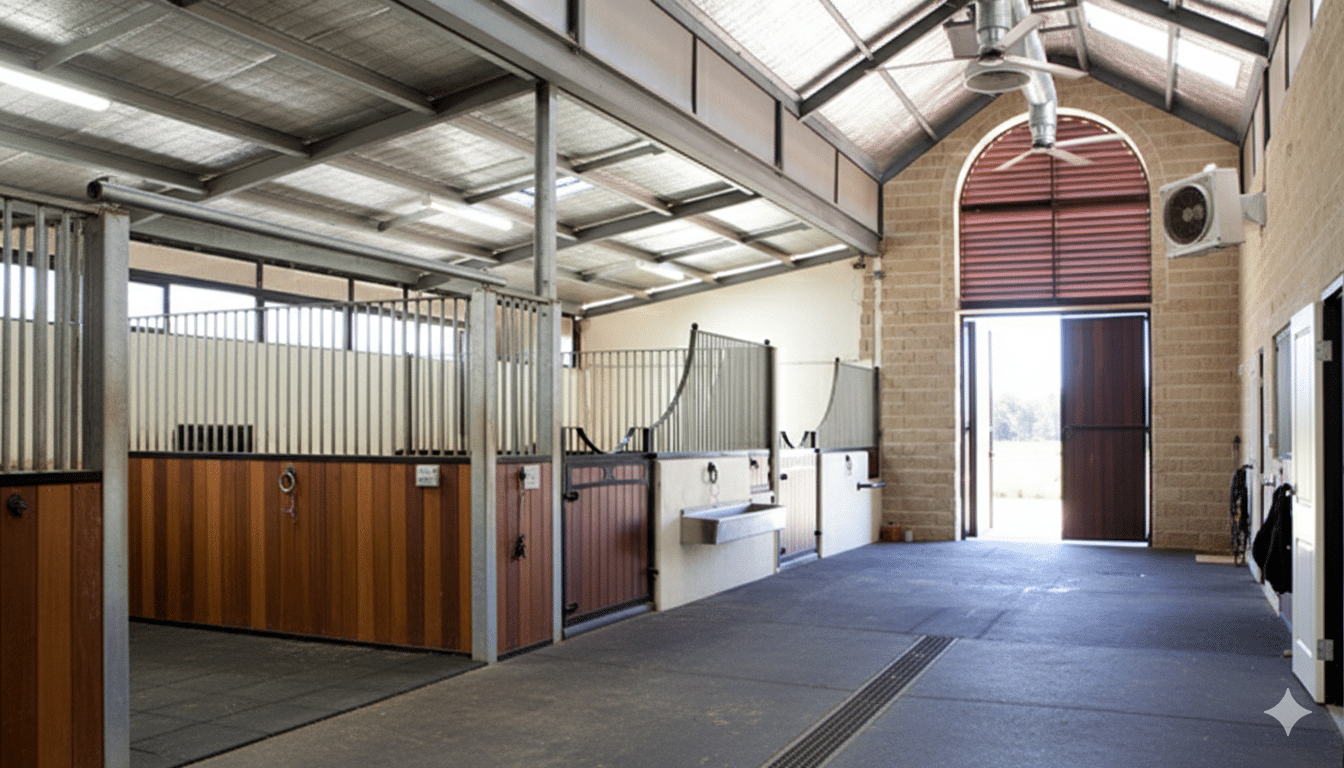
Achieving Stack Effect Ventilation with Open-Grill Designs
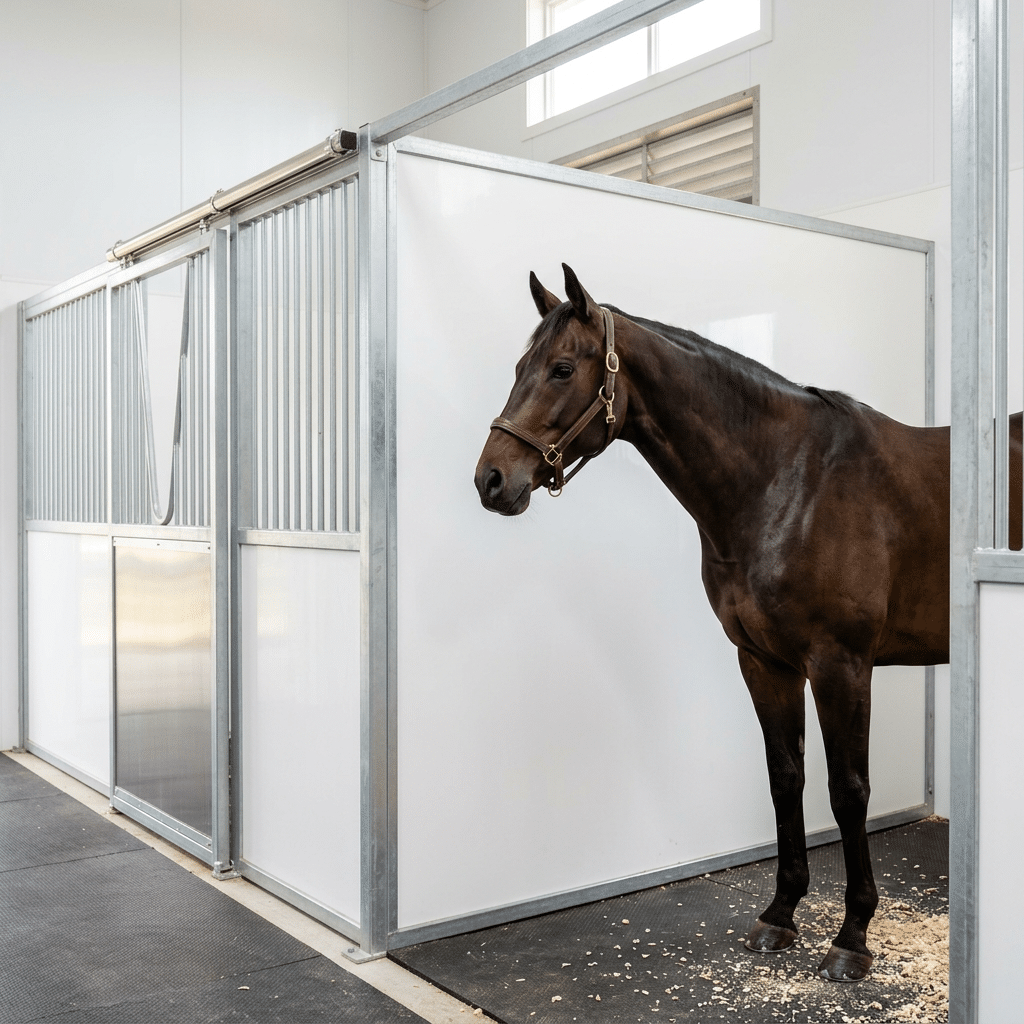
DB Stable’s open top grill design is engineered specifically to promote natural air circulation. This creates what’s known as ‘Stack Effect Ventilation.’ Warmer, humid air naturally rises and escapes through the top grills, pulling cooler, drier air in from below. It’s a continuous, passive system that maintains a healthier micro-environment inside the stall without needing fans or mechanical systems.
Frequently Asked Questions
What are the best horse stall materials for high-humidity climates?
For stall walls in humid environments, materials like PVC panels or dense hardwoods are ideal due to their moisture-repellent properties that prevent rot and mold. For flooring, a layer of crushed limestone over a well-drained sub-base creates a hard, dry surface. Highly absorbent bedding, such as wood pellets, also helps manage moisture effectively.
How can I prevent mold from growing on my stable walls?
Mold prevention requires controlling moisture through proper drainage and ventilation, using mold-resistant materials like specific paints, and maintaining regular cleaning. Ensuring good airflow prevents humidity buildup, while consistent cleaning removes the organic dust that mold feeds on.
Does the bamboo infill used in your stables rot?
No, high-density strand-woven bamboo does not rot. The manufacturing process uses thermal treatment and high compression to remove natural sugars and create a dense material that is nearly impervious to water. This gives it a Durability Class 1 rating with an expected lifespan of 25 years or more against rot.
Is the HDPE infill completely waterproof?
HDPE is highly water-resistant and suitable for nearly all equine applications. It is hydrophobic, meaning it repels water and has an extremely low moisture absorption rate (less than 0.01%). This prevents it from swelling, rotting, or delaminating, making it a zero-maintenance choice for environments with high moisture and frequent washing.
What is the best way to ventilate a horse barn in a tropical region?
Ventilation in tropical climates focuses on maximizing natural airflow to manage heat and humidity. Key strategies include installing ridge vents for hot air to escape, designing for cross-ventilation with large windows or open sidewalls, and orienting the barn to capture prevailing winds. Proper drainage and vapor barriers are also crucial to manage condensation.
Final Thoughts
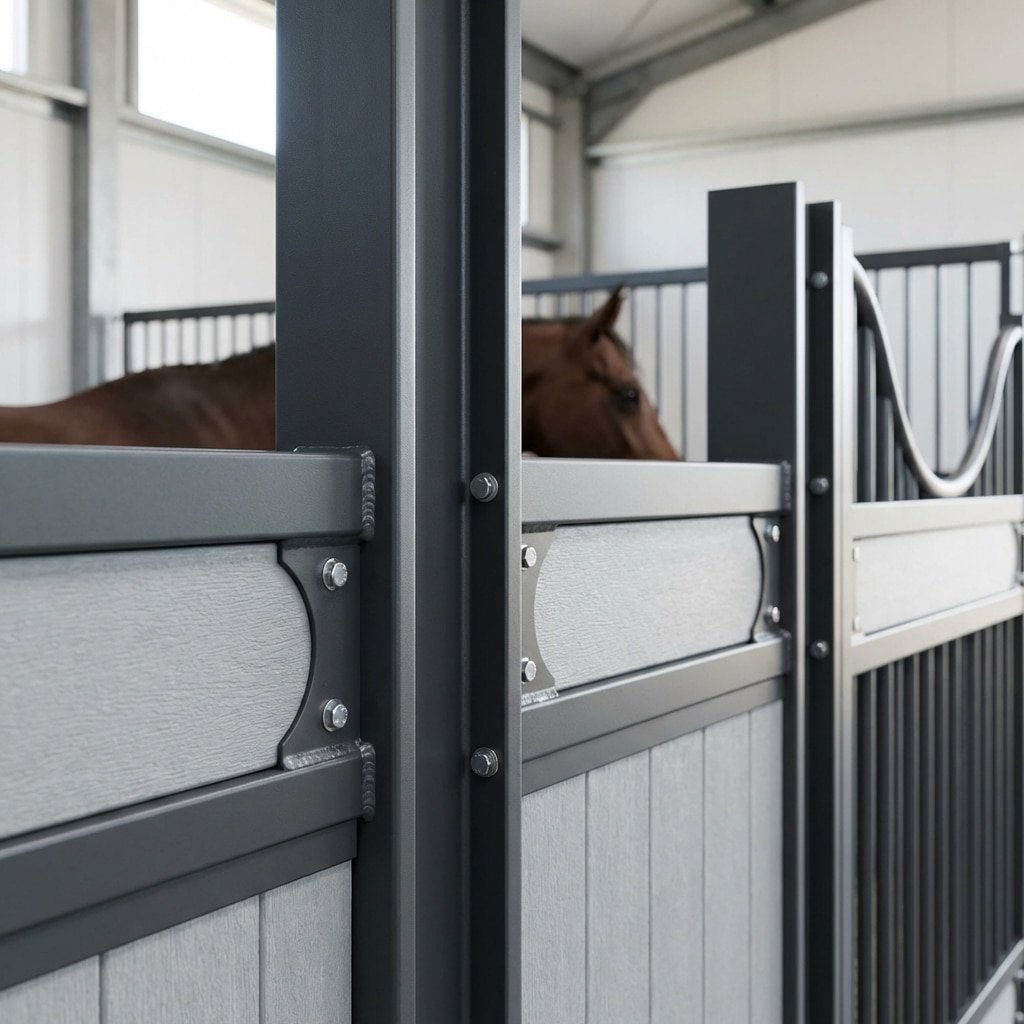
While standard pine and pre-galvanized stalls offer a lower upfront cost, they guarantee rot and rust in high-humidity environments. The DB Professional Series, with its hot-dip galvanized Q345B steel and rot-proof bamboo, is engineered specifically to protect your capital investment. This isn’t an expense; it’s asset protection for elite equestrian operations.
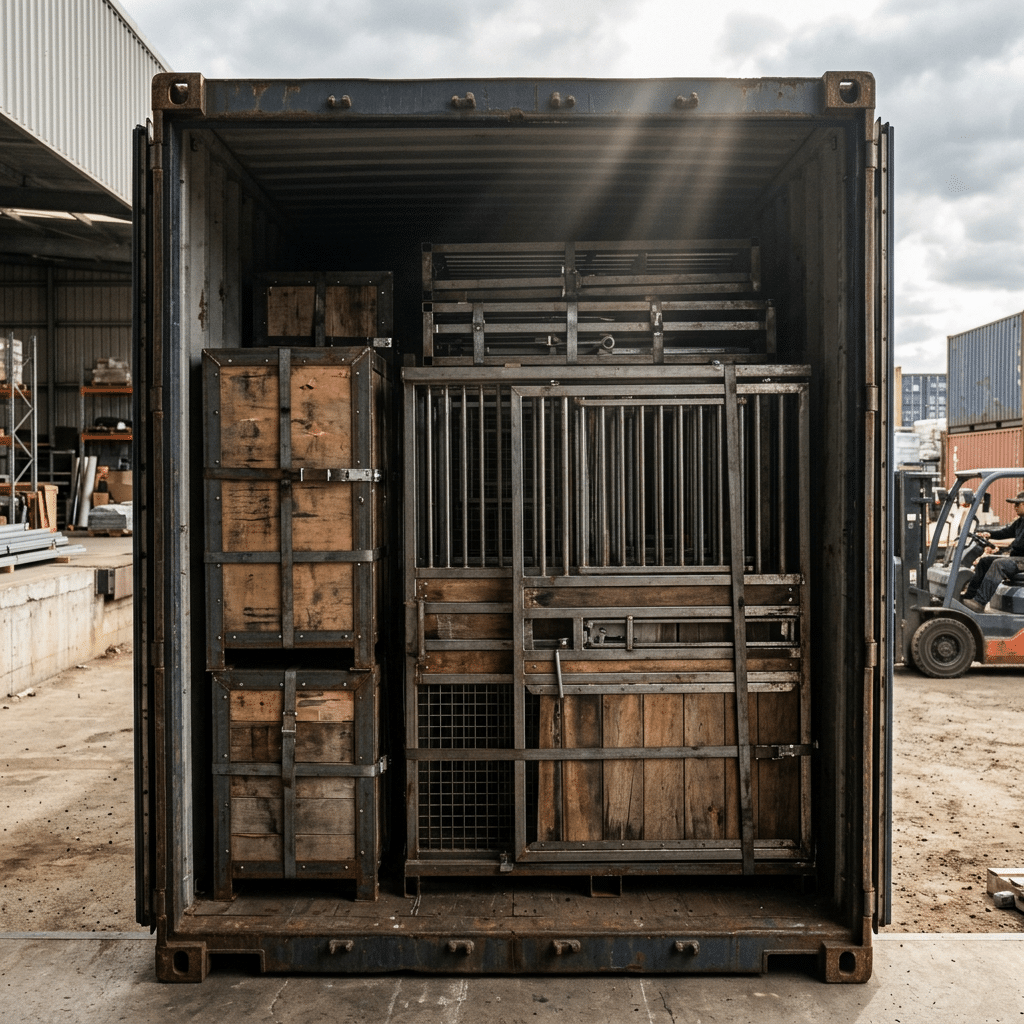
Don’t guess on the engineering—verify it. We recommend a trial order of 3-5 stable sets to test our fitment, finish, and material durability firsthand. Contact our team to configure your trial shipment or discuss the OEM specifications required for your market.

 English
  Spanish
  French
  Arabic
  German
0 Comments