


Eliminating the Teeth Chipping Coating hazard is the primary safety challenge when housing aggressive cribbers. Standard powder coats rely on weak mechanical adhesion that shatters under bite force, turning cosmetic finishes into ingestion risks while exposing the underlying steel to immediate rust and structural decay.
This analysis contrasts failing paint applications against the metallurgical permanence of ISO 1461 Hot-Dip Galvanization After Fabrication. We examine how fusing zinc to 14-gauge Q235B structural steel creates a bond harder than the base metal itself, preventing delamination and ensuring lifetime durability in high-impact stable environments.
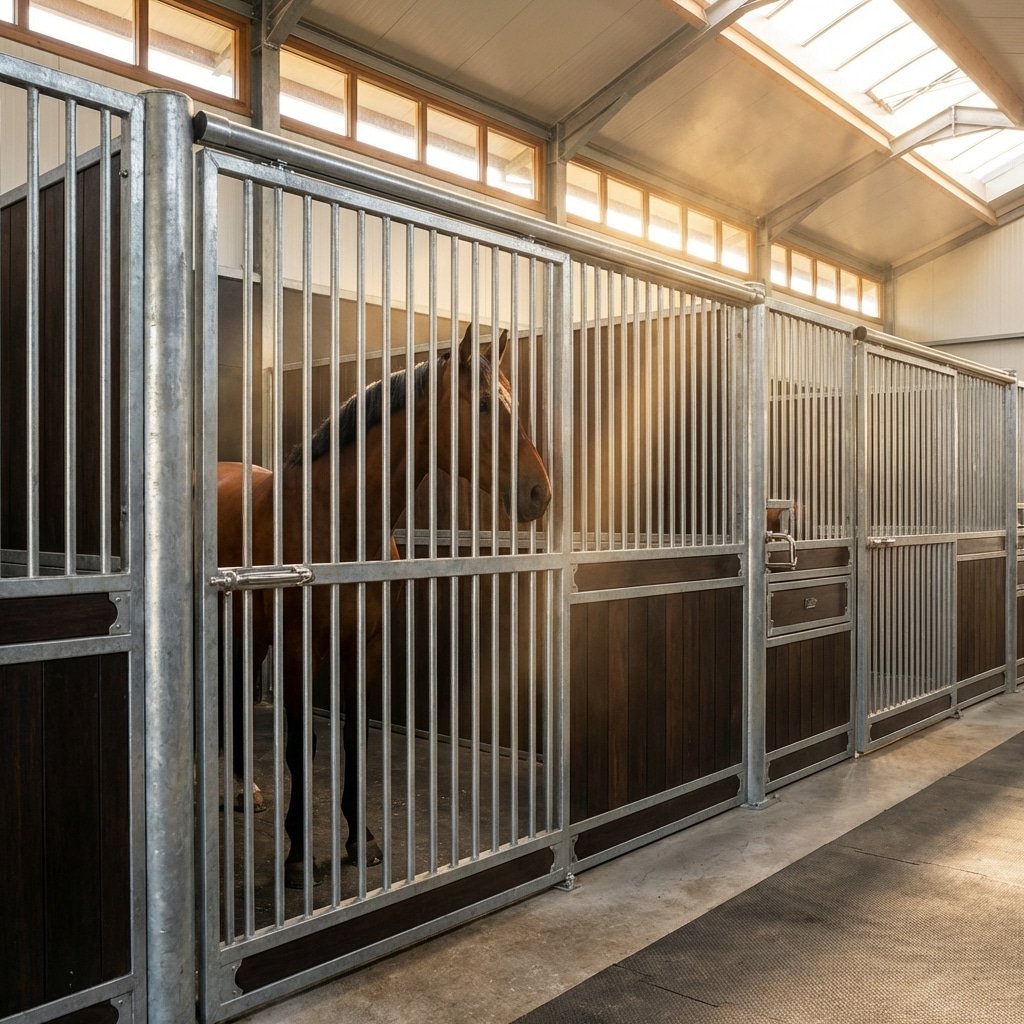
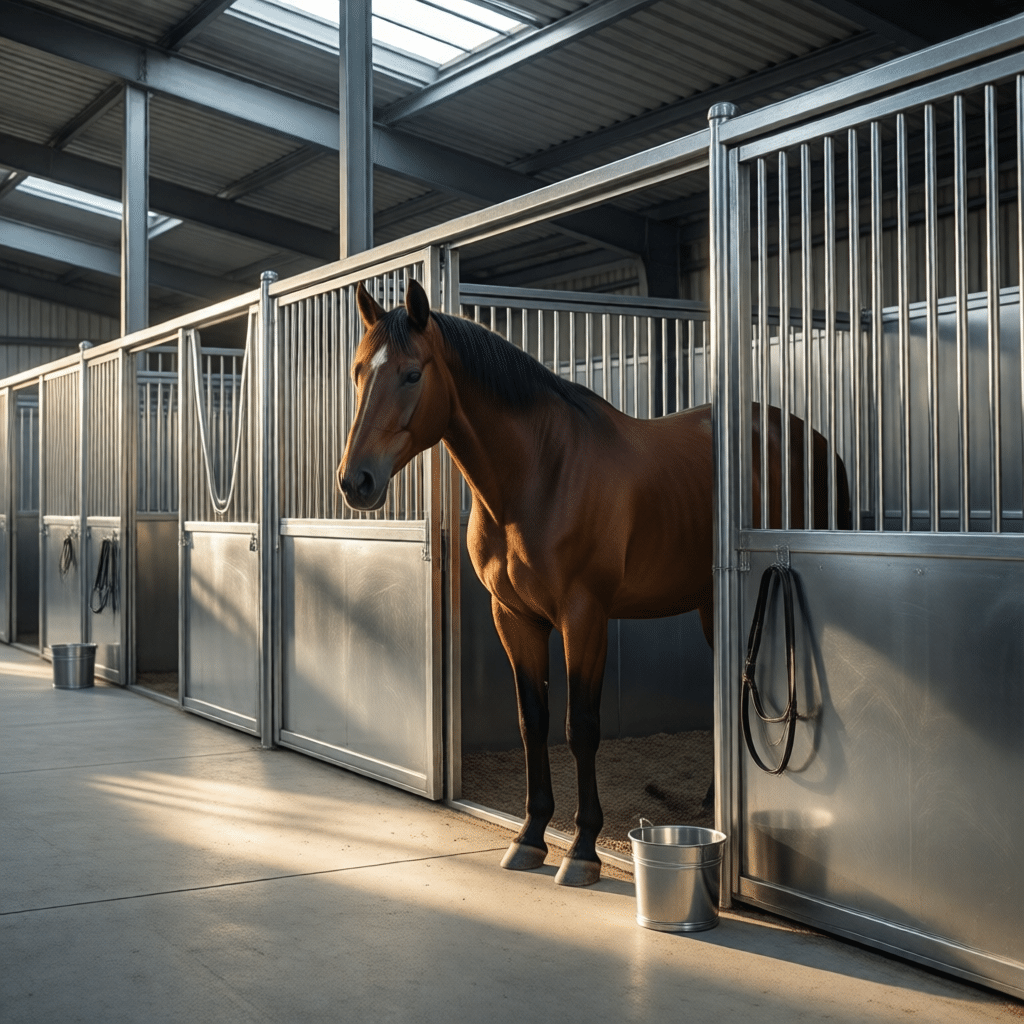
The Metal Chewer: When Horses Bite the Grills
Horses exert massive point-load pressure when cribbing. To prevent jaw entrapment from crimped metal, we strictly use 14-gauge structural steel where competitors risk using thinner, malleable tubing.
Understanding Cribbing and Metal Biting
Stabled horses often develop oral stereotypies, commonly known as cribbing or wind-sucking, usually driven by boredom, isolation, or a lack of long-stem forage. This isn’t just a bad habit; it is a mechanical action where the horse anchors its upper incisors onto a horizontal bar, arches its neck, and pulls back. This exerts hundreds of pounds of focused pressure on a very small surface area of the stable grill.
- The Mechanical Action: The horse does not just “bite” the metal; they clamp and leverage their body weight against it.
- Root Causes: High-concentrate diets, limited turnout, and lack of social interaction increase these behaviors.
- Facility Risks: Beyond dental wear, this behavior tests the structural integrity of the steel. Weak fittings loosen, and thin bars collapse.
The Role of 14-Gauge Steel in Resisting Deformation
Cheap stables fail here. When a manufacturer cuts costs by using standard 1.6mm (16-gauge) or thinner furniture-grade tubing, the metal lacks the compressive strength to withstand a cribbing horse. Under bite force, thin tubing doesn’t just bend—it crimps. This creates a terrifying scenario: the metal collapses around the horse’s jaw or teeth, trapping them. When the horse panics and pulls back, the result is catastrophic injury.
DB Stable eliminates this risk by over-engineering the steel specification. We do not use tubing thinner than 2.0mm in any structural capacity.
- Minimum Thickness: We utilize 14-gauge (2.0mm – 2.5mm) wall thickness for all grill bars and posts.
- Material Grade: We use Q235B structural steel as the baseline, upgrading to Q345B for cold climates to prevent brittle fracture.
- Safety Consequence: Thicker walls maintain rigidity under bite pressure, preventing the “crimping effect” that traps jaws.
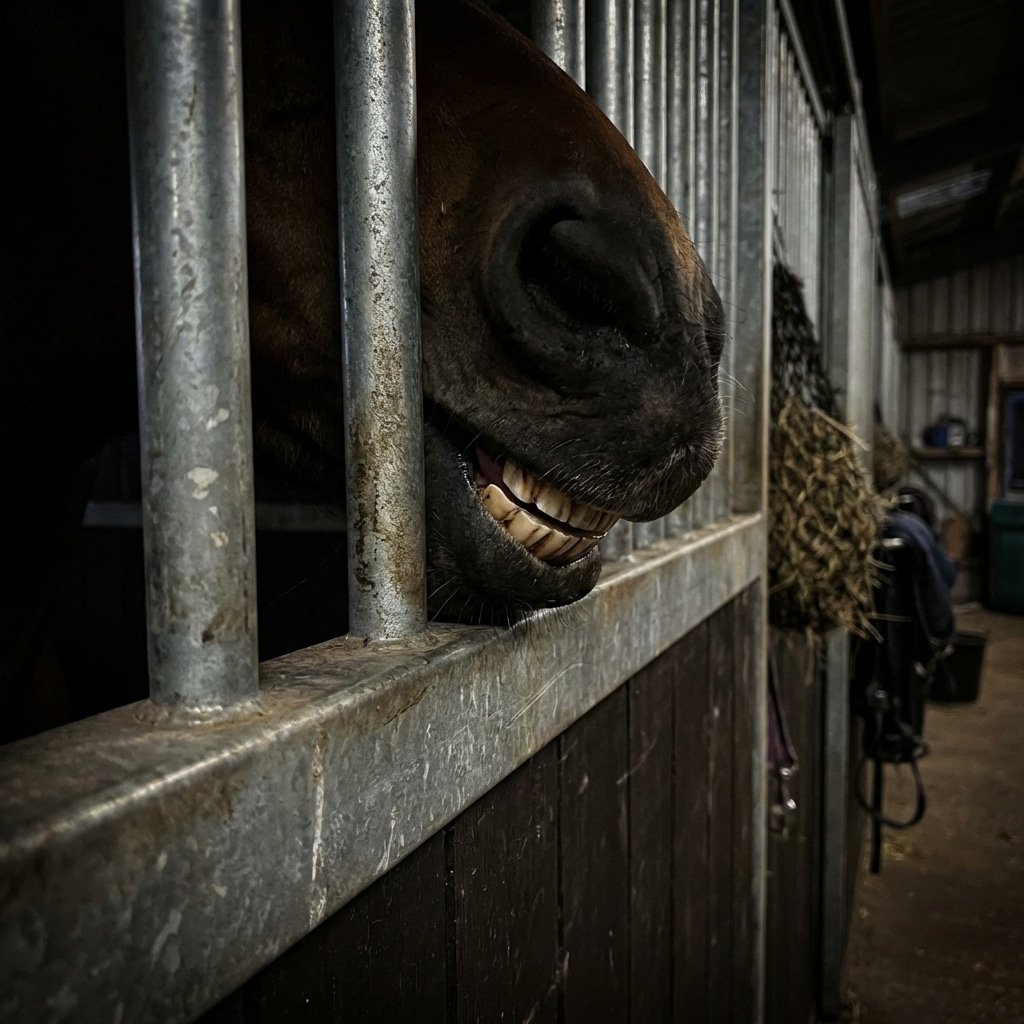
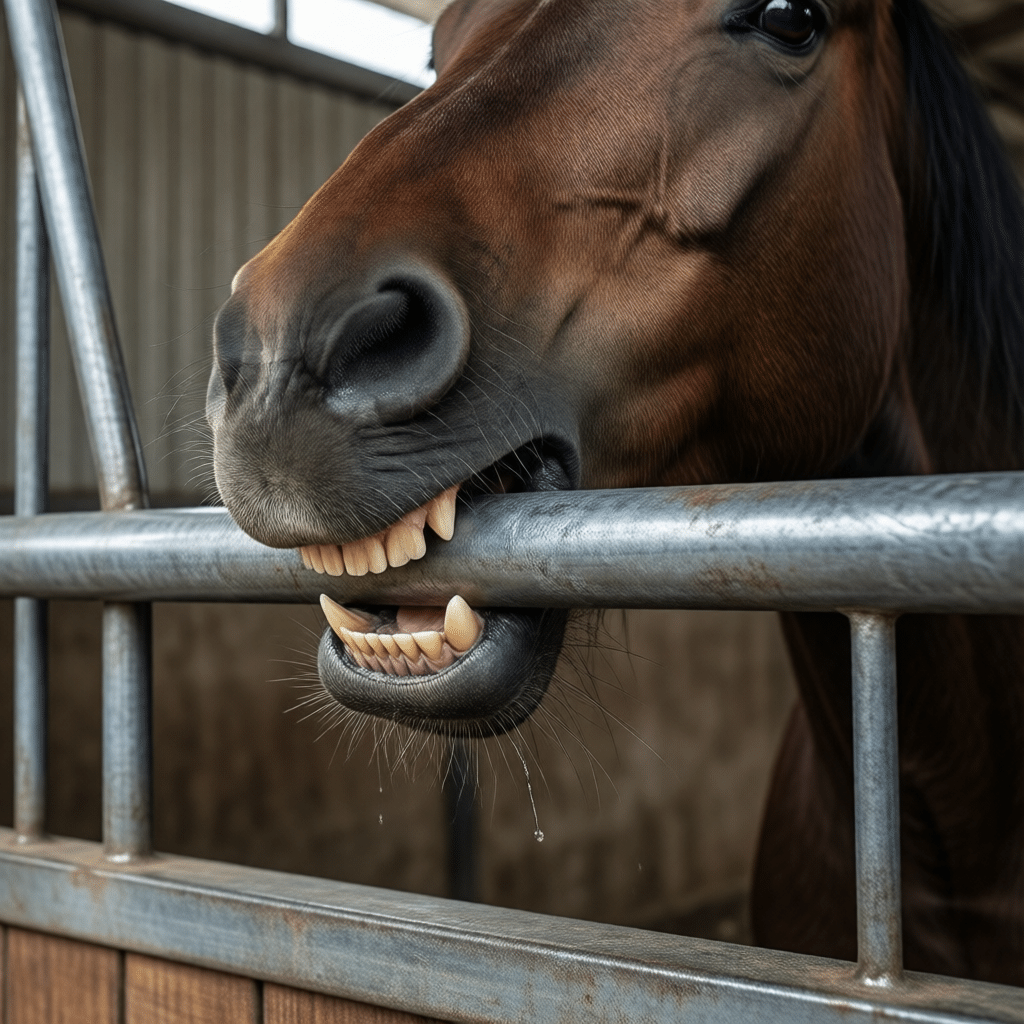
The Danger of Flaking Powder Coat and Sharp Steel
Executive Summary: Standard powder coating on black steel lacks a metallurgical bond, causing it to shatter when bitten. Unlike hot-dip galvanization, which creates a fused alloy, paint chips pose ingestion risks while hidden steel burrs cause oral lacerations.
Ingestion Hazards from Chipped Powder Coating
Horses naturally explore their environment with their mouths, frequently chewing on stable grills due to boredom, stress, or habit. This behavior exposes the fundamental flaw in standard powder coating applied over black steel. Unlike hot-dip galvanization, which forms a metallurgical bond with the steel substrate, powder coating is merely a mechanical surface layer. It sits on top of the metal rather than becoming part of it.
When a horse bites a standard powder-coated bar, the impact breaks the surface tension. The coating shatters into brittle flakes rather than deforming. This creates two immediate hazards:
- Toxin Ingestion: The horse inevitably swallows the chipped paint flakes. Depending on the chemical composition of the powder used by the manufacturer, this introduces unnecessary toxins and irritants into the equine digestive tract.
- Rapid Corrosion: Once the chip falls away, the underlying black steel is exposed to stable moisture and ammonia. Rust forms immediately, undercutting the remaining paint and causing larger sections to flake off, creating a cycle of deterioration.
Laceration Risks from Pre-Galvanized Steel Welds
A common manufacturing shortcut involves using pre-galvanized tubing. Competitors buy tubes that are already galvanized, cut them, and weld them together. The welding process burns the zinc off the joints, leaving a raw, sharp steel scar. Factories typically grind these welds down quickly and cover them with a silver spray paint. This method leaves microscopic burrs and sharp edges hidden beneath a thin layer of paint.
DB Stable rejects this method. We strictly utilize Hot-Dip Galvanization After Fabrication (ISO 1461). We weld the raw black steel frames first, and then submerge the entire completed door into molten zinc. This process makes a tangible difference in safety:
- Liquid Smoothing: The molten zinc flows over the weld seams and edges, filling in small pits and smoothing out sharp burrs.
- Edge Protection: When a horse runs its tongue along the bars or welds, they encounter a thick, smooth layer of zinc alloy (typically 70-85 microns) rather than jagged steel.
- Bond Integrity: Because the zinc is chemically bonded to the steel, it cannot chip or flake off like paint, eliminating the risk of sharp paint edges cutting the horse’s gums.
Premium Horse Stables: Engineered for Extreme Durability


ISO 1461 Hot-Dip Galvanizing: A Metallurgical Bond
ISO 1461 isn’t just a coating; it’s a chemical fusion. By immersing steel at 450°C, we create a metallurgical bond often harder than the base metal itself.
| Performance Metric | Standard Paint/Powder | ISO 1461 Hot-Dip Galvanizing |
|---|---|---|
| Bond Mechanism | Mechanical Adhesion (Surface stick) | Metallurgical Reaction (Chemical fusion) |
| Hardness | Softer than steel (Easy to scratch) | Harder than base steel (Abrasion resistant) |
| Coverage | External surfaces only | 100% Internal & External coverage |
| Target Thickness | Typical 40-60 microns | > 85 microns (Structural Steel) |
Understanding the Zinc-Iron Alloy Layers
Real protection happens at the molecular level. When we submerge steel into the galvanizing bath at roughly 450°C, the zinc doesn’t just sit on top like paint. It reacts with the iron in the steel to form a series of zinc-iron alloy layers. This is the difference between wrapping a package and welding a safe shut.
The resulting coating consists of distinct layers—Gamma, Delta, and Zeta—topped by a layer of pure Eta zinc. Here is why this matters for horse stables: the inner alloy layers are actually harder than the base steel itself. This provides exceptional abrasion resistance. When a horse kicks a panel or chews on a bar, they are meeting a surface that fights back, preventing the deep scratches that usually lead to rust. Unlike paint, this bond prevents under-film corrosion, so even if the surface sustains minor damage, rust cannot creep underneath the coating.
The Importance of Galvanizing After Fabrication
Many competitors cut costs by using “pre-galvanized” tubes—steel that was galvanized at the mill before being cut and welded. This creates a fatal flaw: the welding process burns the zinc off at the joints, leaving the most critical structural points exposed to rust. We reject this method entirely.
At DB Stable, we utilize the “Hot-Dip After Fabrication” method. We weld the entire stable front using raw black steel (Q235B or Q345B) first. Only after the fabrication is complete do we dip the entire unit. This sequence ensures three critical outcomes:
- 100% Coverage: Molten zinc flows inside the hollow tubes and covers every weld seam, eliminating weak points.
- Superior Thickness: Our structural parts achieve a coating thickness greater than 85 microns (μm), significantly exceeding standard residential requirements.
- Lifetime Protection: This heavy-duty barrier is necessary to withstand the high-ammonia environments typical of active stables.
Why Pure Zinc is Safer and Smoother on Equine Teeth
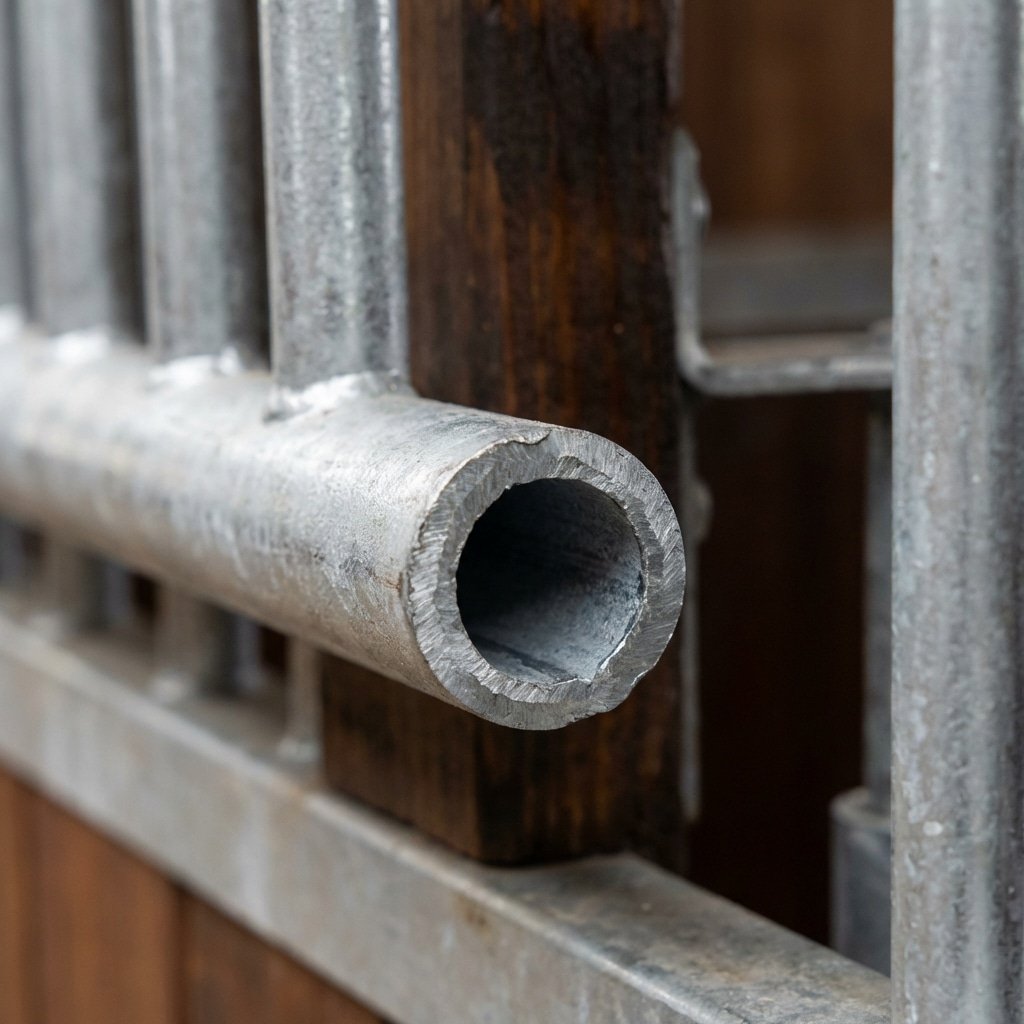
Unlike brittle paint that flakes into sharp shards, pure zinc is naturally softer than equine enamel. Our hot-dip process creates a ductile layer that absorbs impact, reducing dental fracture risks.
Comparing Material Hardness: Zinc vs. Equine Enamel
When a horse cribs or bites a stall grill, the material hardness dictates the extent of the damage. Zinc measures significantly lower on the Mohs hardness scale than equine tooth enamel. This metallurgical reality means the metal yields before the tooth does, acting as a sacrificial buffer during impact.
Standard powder coats and paints present a hidden danger often overlooked in the industry. As these organic coatings age, they become brittle. When a horse bites down, the coating shatters into microscopic, sharp flakes that embed in the gums or digestive tract. Conversely, raw hardened steel offers zero ductility, transferring the full force of the bite back into the tooth root, which frequently causes vertical fractures.
- Natural Ductility: Zinc coatings dent or deform slightly under jaw pressure rather than fracturing like ceramic or hardened steel.
- Impact Absorption: The softer outer zinc layer absorbs the kinetic energy of the bite, protecting the brittle structure of the tooth enamel.
- Metallurgical Bond: Unlike paint that sits on top, the zinc alloys with the steel, preventing the formation of sharp, peeling edges.
The Smooth Finish of Post-Fabrication Galvanizing (BS EN ISO 1461)
Safety relies heavily on the manufacturing sequence. Many competitors cut costs by using pre-galvanized tubing, welding it together, and then spraying the joints with silver paint. This method leaves sharp weld burrs and abrasive seams exposed, which act like sandpaper on a horse’s gums during cribbing.
DB Stable strictly adheres to **Hot-Dip Galvanization After Fabrication**. We weld the black steel framework (Q235B or Q345B) first, clean it, and then submerge the entire chassis into molten zinc. This process conforms to **BS EN ISO 1461**, ensuring a uniform thickness greater than **70 microns** on tubing and **85 microns** on structural parts. The thick zinc layer does more than prevent rust; it physically smooths the steel.
- Sealed Micro-Pits: The molten zinc floods microscopic weld pits, creating a continuous, non-abrasive surface.
- Burr Encapsulation: Sharp metal edges from cutting and welding are covered by a thick, rounded zinc layer.
- Gingival Protection: The process eliminates the rough, abrasive surfaces that cause chronic gum irritation and lesions in horses.
Frequently Asked Questions
Will the finish chip if my horse bites the bars?
Unlike paint or standard powder coating, Hot-Dip Galvanizing does not chip or flake. The zinc creates a metallurgical bond with the Q235B/Q345B steel, becoming part of the metal rather than just a surface layer. This ensures that even if a horse gnaws on the grills, there are no sharp paint flakes to ingest, and the steel remains protected against rust.
Why is ‘After Fabrication’ galvanizing safer than pre-galvanized tubes?
Pre-galvanized tubes are dipped before welding, which leaves the weld joints exposed to rust and often creates sharp burrs. DB Stable uses Hot-Dip Galvanization After Fabrication, meaning we weld the raw steel frames first and then dip the entire panel into molten zinc. This seals every weld in a thick (>70μm) zinc layer, ensuring a smooth, burr-free finish that protects your horse’s mouth and skin.
Is the zinc coating toxic to horses?
No, the high-grade zinc used in our ISO 1461 galvanizing process is safe for equine contact. Also, because the galvanized surface is harder and smoother than wood or peeling paint, horses often find it difficult to grip with their teeth, which can help discourage cribbing and chewing behaviors.
Can I still get a black finish that resists rust?
Yes, but the base layer matters. For our Royal Series, we apply a heavy-duty powder coat over a fully hot-dip galvanized frame. This gives you the aesthetic appeal of a black stable with the underlying corrosion resistance of galvanization. We advise against buying stables that are simply painted directly onto raw steel, as they will rust quickly in ammonia-rich stable environments.
Final Thoughts
Stocking standard powder-coated stalls for aggressive cribbers creates an inevitable cycle of warranty claims and safety liabilities. By standardizing on our ISO 1461 Hot-Dip Galvanized specification, you eliminate the risks of toxic paint ingestion and structural crimping. This level of manufacturing durability protects your dealer reputation and ensures long-term client retention.
Verify the difference in manufacturing quality before committing to a supplier. We invite you to request a welded sample section to test the 14-gauge wall thickness and zinc bond integrity yourself. Reach out to our trade team today to secure your territory’s supply of high-safety equine infrastructure.



 English
  Spanish
  French
  Arabic
  German
0 Comments