


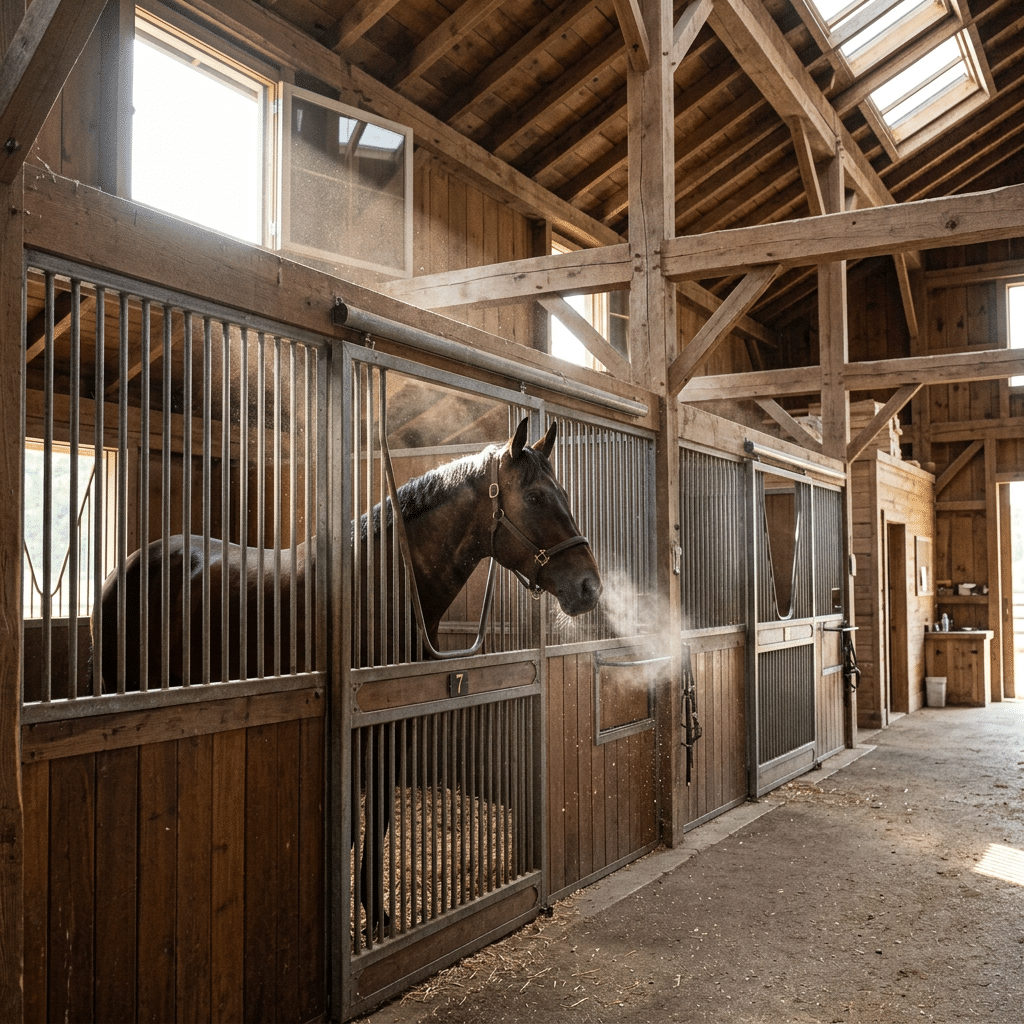
Auction Houses managing high-volume turnover cannot afford the liability risks associated with splintering timber stalls. While temporary setups often prioritize low upfront costs, failing to secure million-dollar bloodstock against injury or infection destroys buyer confidence and invites litigation.
This brief evaluates stabling infrastructure against the ISO 1461 Hot-Dip Galvanization standard for biosecurity and longevity. We assess flat-pack logistics density and Q235B structural integrity to help facility managers secure modular systems that reduce long-term operational costs.
The Rise of ESG (Environmental, Social, Governance) in Construction
ESG is shifting from voluntary guidelines to strict regulatory mandates. By 2026, projects will require whole-life carbon accountability, demanding durable, recyclable materials like galvanized steel to meet net-zero targets.
The Transition to Whole-Life Carbon Accountability
Construction currently drives approximately 34% of global CO2 emissions. This reality has forced regulators to move beyond simple energy efficiency and impose strict limits on embodied carbon. The industry is rapidly shifting toward a circular economy model, where the priority is now on material reuse, waste minimization, and significantly extended product lifecycles.
For developers and project managers, this changes the procurement landscape. Investors and clients are no longer just asking for green certifications; they require credible Scope 3 measurement. Sustainability is now a hard metric in asset valuation and project viability, meaning the materials chosen today must account for their carbon footprint decades into the future.
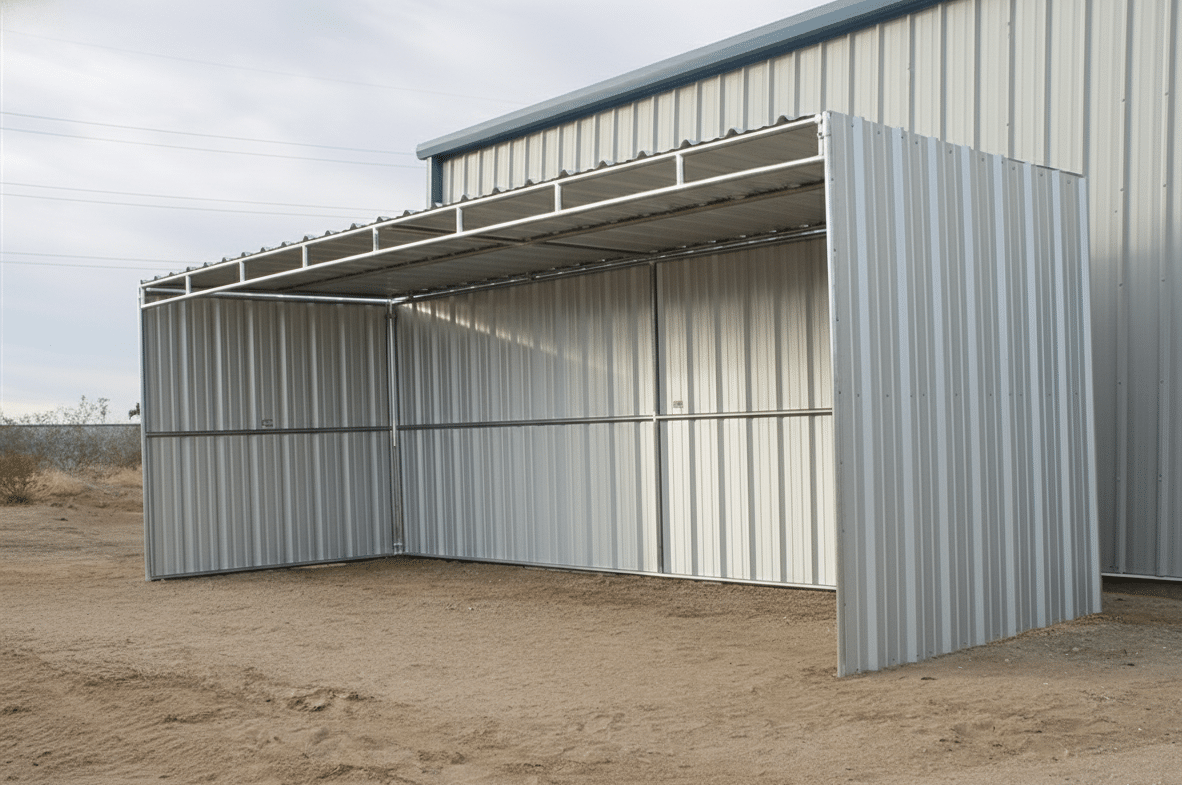
Optimizing Scope 3 Emissions with Hot-Dip Galvanized Durability
Meeting modern ESG goals requires a manufacturing approach that prioritizes longevity and logistics efficiency. DB Stable aligns with these mandates through specific material standards and shipping methods designed to minimize carbon impact.
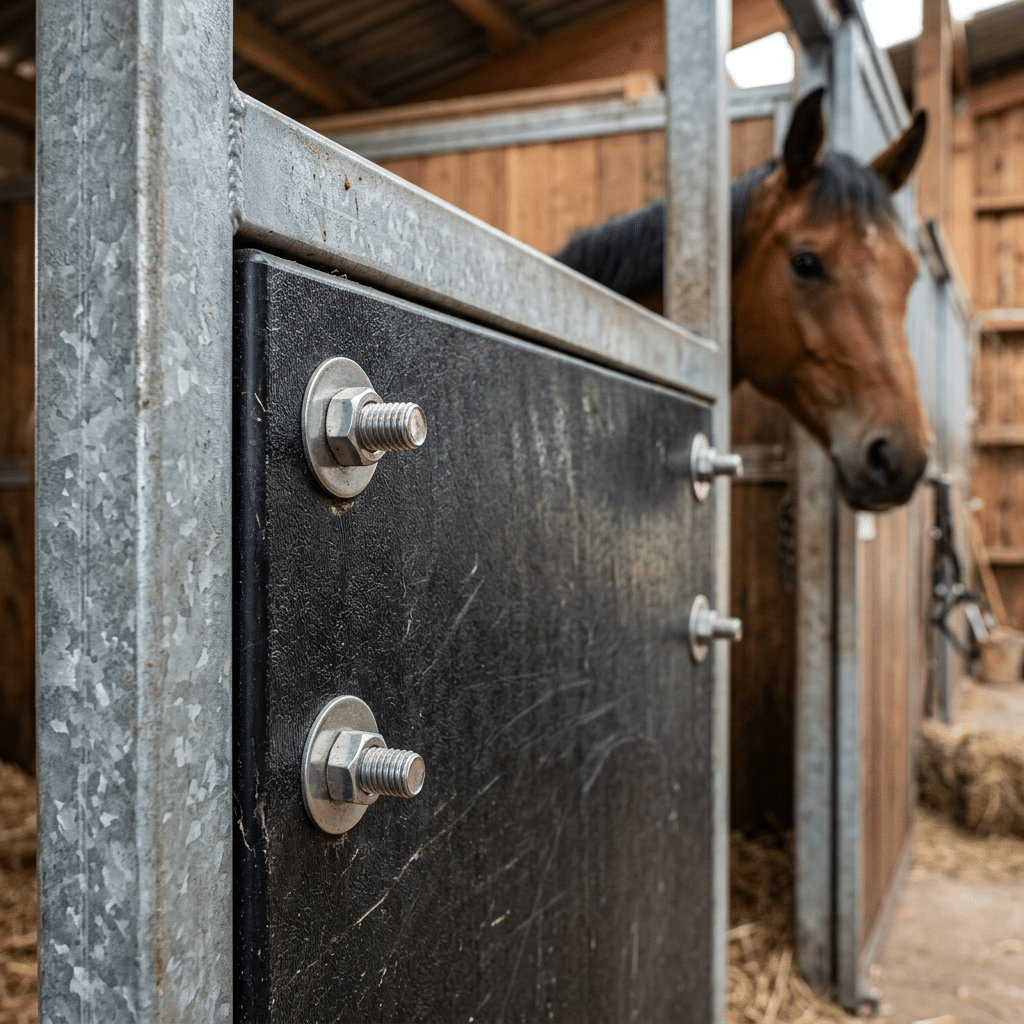
- Hot-Dip Galvanization (BS EN ISO 1461): We apply an 85-micron zinc coating after fabrication. This significantly extends the structural lifespan compared to pre-galvanized alternatives, preventing early replacement and reducing long-term material waste.
- Renewable Infill Materials: Our High-Density Bamboo infill (Janka > 3000 lbf) offers a robust, renewable alternative to traditional hardwoods. This supports sustainable sourcing without sacrificing the durability required for heavy equestrian use.
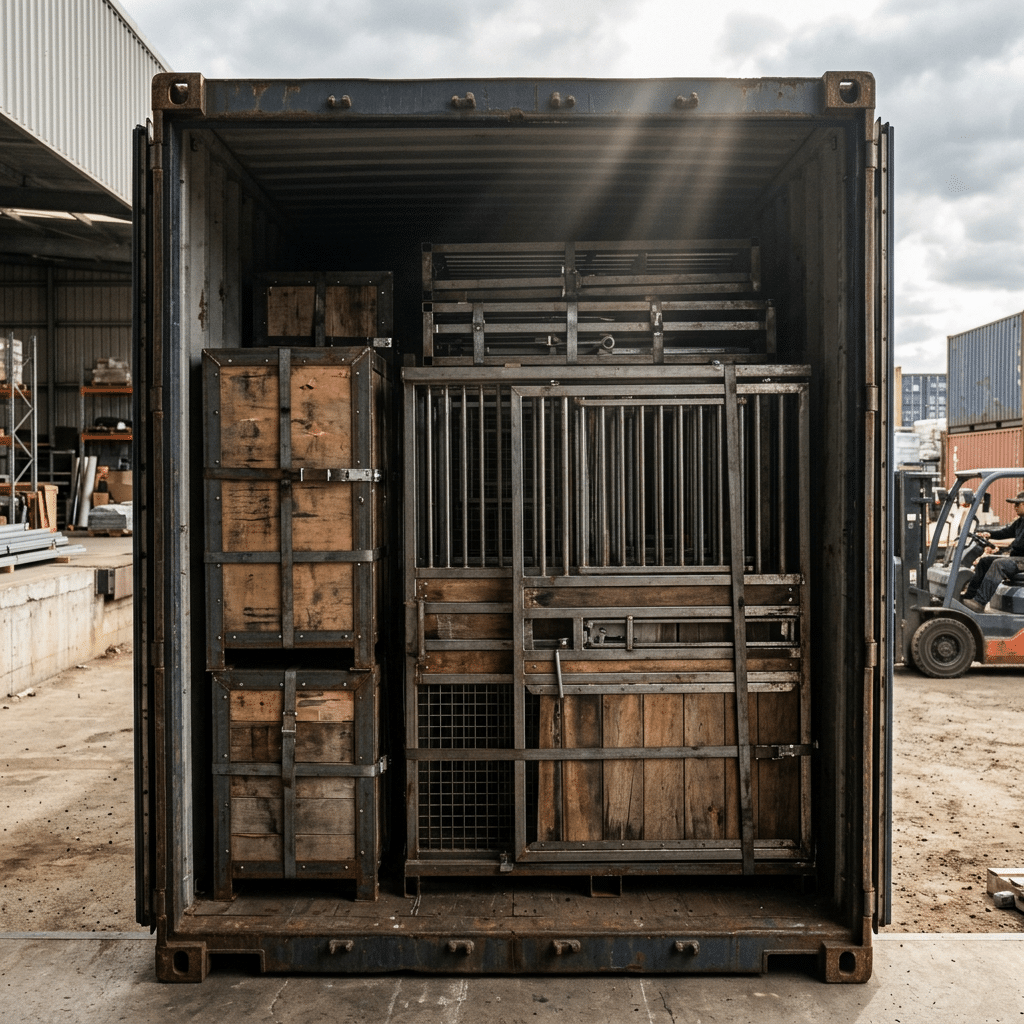
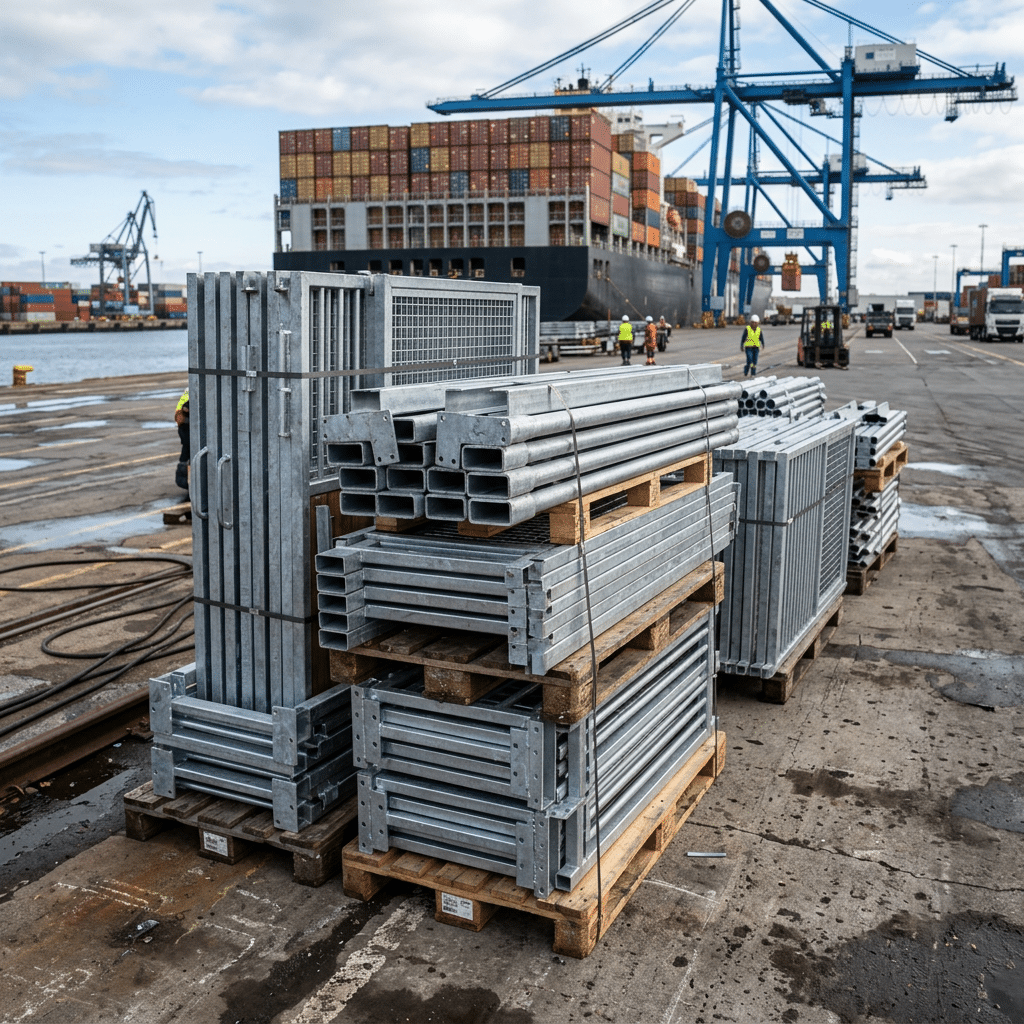
- Logistics Efficiency: Transportation is a major contributor to Scope 3 emissions. Our flat-pack system allows for 30-45 sets per 40HQ container, compared to just 12-15 welded sets. This density drastically lowers the carbon emissions associated with global freight.
Moving Away from Old-Growth Timber (Oak/Pine)
Traditional oak and pine are being replaced by engineered bamboo due to maintenance liabilities and sustainability issues. Bamboo matures in 5 years and offers superior density.
Environmental and Structural Limitations of Traditional Lumber
>Old-growth oak requires decades to reach maturity. This creates unsustainable harvest cycles that modern supply chains cannot support ethically or economically. While traditional pine offers a cheaper upfront price point, it lacks the structural density required for equine safety. A direct kick from a large Thoroughbred will often splinter pine boards, creating immediate sharp-edge injury risks for the animal.
Moisture management is the other critical failure point. Natural timber acts like a sponge in stable environments, absorbing ammonia from urine, water from wash-downs, and humidity from the air. This absorption leads to inevitable rot, warping, and deep-seated bacterial growth that standard cleaning cannot remove. In professional facilities, this represents a significant biosecurity risk.
High-Density Bamboo: The 3,000 Janka Force Standard
DB Stable utilizes High Density Strand Woven Bamboo as the technical successor to hardwood. This is not the hollow or vertical-grain bamboo found in residential flooring. Our manufacturing process compresses bamboo fibers under extreme pressure to create a solid, heavy-duty board designed specifically for stall environments.
- Extreme Hardness: We mandate a Janka Hardness rating exceeding 3000 lbf, making our boards roughly 3x harder than traditional Red Oak.
- Cribbing Immunity: The fiber compression creates a density that prevents horses from biting into or “cribbing” on the wood, eliminating the need for metal chew strips.
- Climate Resilience: Unlike solid wood, this engineered infill is resin-bonded to resist mold and rot, making it the standard specification for humid climates in Australia and Europe.
This material achieves maturity in just 3-5 years, compared to the decades required for hardwood. It provides a sustainable solution that actually improves upon the physical durability of the material it replaces.
Engineered for Durability: 20-Year Rust Warranty
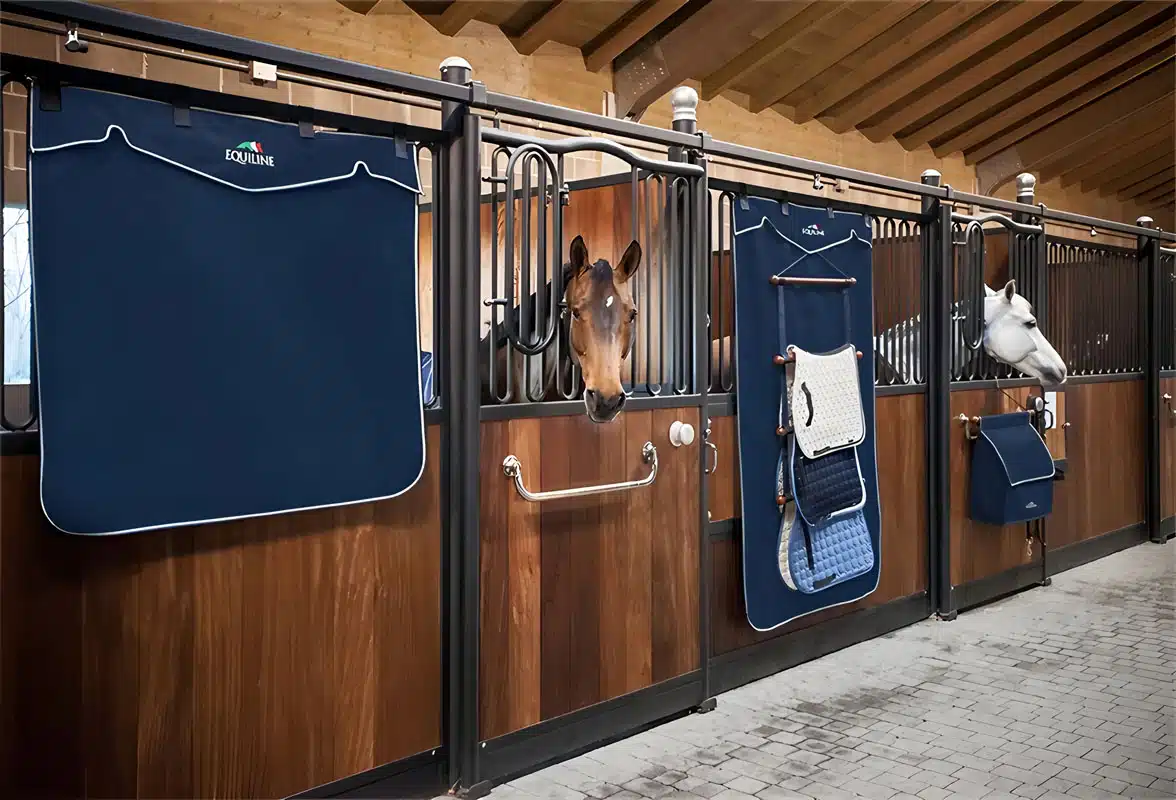
Top Factories Embracing Sustainable Materials
Executive Summary: True industrial sustainability isn’t just about planting trees; it’s about material longevity and circular economics. While giants like Siemens and Lego lead with digital tracking and renewable energy, DB Stable aligns with these standards by engineering steel and bamboo systems designed to last decades, not years, eliminating the waste of the “repair and replace” cycle.
| Sustainability Metric | Global Industry Benchmark | DB Stable Specification |
|---|---|---|
| Material Circularity | Closed-loop recycling systems | 100% Recyclable Q235B/Q345B Steel |
| Lifecycle Duration | Minimizing replacement waste | BS EN ISO 1461 Galvanization (>70μm) |
| Chemical Reduction | Eliminating volatile organic compounds (VOCs) | UV-Stabilized HDPE (Zero Varnish/Paint) |
| Logistics Carbon | Optimized freight density | Flat-Pack System (3x Capacity vs Welded) |
Global Benchmarks for Sustainable Manufacturing
To understand where the industry is heading, we look at the heavy hitters. These corporations are not just “going green” for PR; they are fundamentally altering their production lines to reduce operational costs and future-proof their assets against tightening environmental regulations. We monitor these benchmarks to ensure our B2B manufacturing processes remain competitive.
- Siemens (Chengdu/Fort Worth): They have integrated “Digital Twins” and the SiGREEN system to track the carbon footprint of individual components. This moves beyond facility-level tracking to product-level accountability.
- Lego Factory (Vietnam): A $1B investment focused on carbon-neutral operations. Their strategy relies heavily on on-site renewable energy and regenerative landscaping, proving that large-scale plastic molding can exist in harmony with local ecosystems.
- Procter & Gamble: P&G has implemented closed-loop water systems and a strict “zero waste to landfill” policy. This standard drives the requirement for materials that can be fully recycled at the end of their life rather than discarded.
The Longevity Standard: DB Stable’s Sustainable Approach
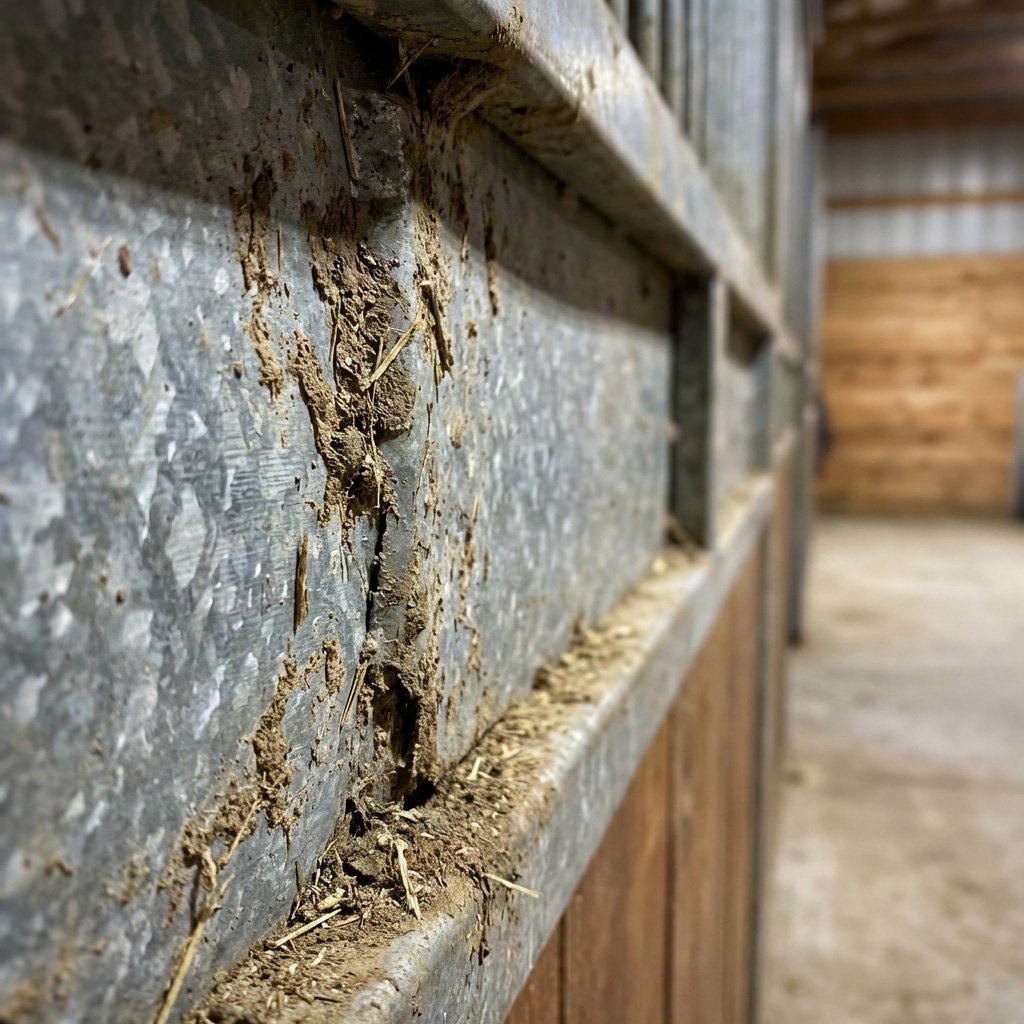
In the equestrian sector, “sustainability” is often greenwashed as simply using wood. But wood rots, horses chew it, and it requires annual chemical treatment. True sustainability is durability. If you have to replace a stable front every five years, your carbon footprint doubles. We engineer our systems to break this cycle of waste through material science and industrial standards.
- Hot-Dip Galvanization (BS EN ISO 1461): We do not use pre-galvanized tubing that rusts at the weld points. Every DB Stable frame is dipped after fabrication. With zinc coatings exceeding 85 microns on structural parts, we extend the steel lifecycle to 20+ years, significantly reducing the environmental tax of manufacturing replacement steel.
- HDPE Infill Technology: Our 28mm-32mm High-Density Polyethylene is UV-stabilized and impact-absorbing. Unlike wood, it requires zero varnishes, stains, or chemical preservatives over its lifetime, preventing toxic runoff into the soil and reducing maintenance labor to zero.
- Steel Circularity: We utilize Q235B and Q345B structural steel. Steel is one of the few materials that is 100% recyclable without loss of quality. At the end of a stable’s long life, the entire framework can be melted down and repurposed, aligning perfectly with the circular economy principles championed by global leaders.
Frequently Asked Questions
How to build an ESG compliant equestrian center?
Building an ESG-compliant facility requires a three-pillar approach: Environmental, Social, and Governance. Environmentally, you must prioritize renewable energy (like solar) and closed-loop water systems (rainwater harvesting) to reduce resource dependency. Socially, the focus is on safety—implementing strict protocols for staff interacting with animals and using equipment designed to minimize injury risks. Governance involves ethical supply chain management; ensuring your steel and materials come from factories (like ours) that adhere to labor laws and ISO quality standards, rather than undocumented sources.
Is bamboo a sustainable building material?
Yes, but the grade matters. Bamboo is a grass that regenerates to maturity in 3-5 years, compared to 30-50 years for hardwoods like Oak, making it a rapidly renewable carbon sink. For equestrian use, however, raw bamboo is insufficient. At DB Stable, we use High Density Strand Woven Bamboo with a Janka Hardness over 3000 lbf (3x harder than Oak). This processing ensures the material is not just sustainable to grow, but durable enough to withstand horse kicks without splintering, combining eco-friendliness with industrial-grade safety.
Environmental impact of steel vs wood barns?
Wood has lower initial embodied carbon but suffers in the “wet” environment of a stable. Wood absorbs moisture, harbors bacteria, and rots, often requiring replacement every 5-10 years and constant chemical treatment. Steel, specifically Hot-Dip Galvanized Q235B/Q345B, has a higher initial production energy cost but lasts 30+ years with zero maintenance and is 100% recyclable at end-of-life. Over a 50-year horizon, the steel structure often proves more sustainable by eliminating the material waste associated with multiple wood replacement cycles.
Green certifications for horse stables?
While LEED is the global standard, it is primarily designed for commercial office buildings and can be difficult to apply to agricultural structures. However, regionally specific codes like California’s CalGreen are now mandating sustainable practices in agricultural buildings, covering water conservation and material recycling. For stable owners, the most practical “certification” is often ensuring your equipment manufacturer holds ISO 1461 (Galvanizing) and ISO 9001 certifications, ensuring the materials installed meet rigorous quality and environmental processing standards.
Eco-friendly horse barn manufacturers?
The market includes retail-focused brands like MD Barnmaster and Coffman Barns who offer excellent prefab modular solutions. For large-scale B2B projects and distributors, DB Stable operates as a source factory (OEM). We differentiate ourselves through our flat-pack logistics technology. By fitting 30-45 sets in a 40HQ container (compared to 12-15 welded sets from competitors), we reduce shipping carbon emissions by over 60% per unit. This logistics efficiency makes our galvanized steel and bamboo systems one of the most carbon-efficient choices for large facility build-outs.
Strand-Woven Bamboo: A High-Yield Carbon Sink
Strand-woven bamboo acts as a structural carbon vault, sequestering 12 tons of carbon per hectare while delivering tensile strength that outperforms standard steel.
The Ecological Lifecycle of Compressed Bamboo
Bamboo is often dismissed as simple grass, but industrial cultivation tells a different story regarding carbon metrics. A single bamboo culm captures between 50 and 60 kilograms of CO2 during its rapid growth cycle. When managed in dedicated plantations, this translates to approximately 12 tons of carbon sequestered per hectare annually—nearly double the rate of typical forestry.
The sustainability advantage is solidified during manufacturing. We strip the bamboo, shred the fibers, and compress them under extreme pressure (strand weaving). This process effectively locks the captured carbon into the material for the product’s lifespan. Because the biological sequestration rate is so high, the finished material frequently maintains a negative carbon footprint, even after accounting for processing and transport energy.
<
h3 style=”margin-top: 30px; margin-bottom: 15px; font-weight: 600; line-height: 1.3;”>3000+ Janka Hardness: A Structural Alternative to Hardwood
For equestrian applications, environmental specs mean nothing without physical durability. We strictly utilize 28mm to 38mm High Density Strand Woven Bamboo because it bridges the gap between timber aesthetics and industrial strength. This material eliminates the need for the toxic chemical preservatives often injected into softwoods to prevent rot and mold.
- Impact Resistance: Ratings exceed 3,000 lbf on the Janka Hardness scale, making it 3x harder than Oak.
- Tensile Strength: Tested at 28,000 PSI, surpassing standard structural steel (approx. 23,000 PSI).
- Pathogen Resistance: Naturally dense fibers prevent moisture ingress, blocking mold and rot without creosote or arsenic.
Q235B Steel: The 100% Recyclable Framework
Q235B structural steel balances high tensile strength with ductility, preventing brittle failure. Paired with ISO 1461 galvanization, it offers a fully recyclable, multi-decade lifecycle solution.
The Mechanics of Q235B: Strength and Circular Economy
In the industrial sector, Q235B serves as the global benchmark for heavy infrastructure. It equates directly to ASTM A36, providing consistent load-bearing capacity that lesser steel grades cannot match. For stable construction, this material choice is not just about weight; it is about safety mechanics.
The primary advantage of Q235B is its high ductility. Unlike rigid materials or cast iron that may snap under the sudden pressure of a kicking horse—creating dangerous sharp edges—Q235B absorbs impact through slight deformation. It bends rather than breaks, maintaining the containment barrier and protecting the animal from injury.
From an environmental perspective, steel operates in a closed-loop lifecycle. Unlike treated timber or composite materials that often end up in landfills, 100% of the stable framework can be melted down and repurposed without losing structural integrity. This allows facilities to recover scrap value at the end of the product’s life, aligning economic recovery with environmental responsibility.
DB Stable Standards: 14-Gauge Thickness and Galvanized Protection
Raw material quality relies entirely on the manufacturing specifications applied to it. We reject the industry trend of using lighter 1.5mm or 1.6mm tubing to cut costs. Instead, we strictly implement a 14-gauge standard to ensure the framework resists deformation over decades of use.
- Profile Spec: 50mm x 50mm RHS (Square Hollow Section).
- Wall Thickness: Minimum 14-Gauge (2.0mm – 2.5mm) for superior impact resistance.
- Galvanization Standard: ISO 1461 Hot-Dip Galvanization after fabrication.
- Zinc Volume: Average coating > 70 microns on tubing components.
Once fabricated, the raw “black” Q235B steel undergoes Hot-Dip Galvanization. We submerge the completely welded frame into molten zinc, ensuring internal and external coverage. This metallurgical bond prevents rust degradation, ensuring the steel remains structurally sound—and fully recyclable—long after painted or pre-galvanized alternatives have failed.
Final Thoughts
Auction complexes and fairgrounds cannot afford the operational downtime caused by rotting timber or rusted frames. By specifying Hot-Dip Galvanized Q235B steel and High-Density Bamboo, you secure a 20+ year asset lifespan that satisfies strict ESG mandates and eliminates maintenance liabilities. This investment breaks the wasteful “repair and replace” cycle, directly protecting your bottom line against future material inflation.
Maximize your procurement budget with our Flat-Pack System, which loads up to 45 sets per container to slash freight carbon emissions by over 60%. Request our technical specifications and a material sample kit today to validate the structural density before your next facility upgrade. Contact our engineering team to align your infrastructure with the next generation of environmental regulations.

 English
  Spanish
  French
  Arabic
  German
0 Comments